
Tallinn - Pt 1 First Impressions
All three Baltic States (Lithuania, Latvia and Estonia) were part of the Soviet Union during the 20th century – not by choice I might add, but having been to all three capital cities (Vilnius, Riga and Tallinn), I can honestly say that each one has something to offer, but for me, Tallinn is the one that had the most appeal, and in this post I’m going to tell you why.
The Baltic States in the middle of winter may not be everyone’s idea of a pleasant trip abroad, but we curtailed our traditional summer holidays when low-cost flights enabled us to become travellers rather than holidaymakers. Places I would never have considered as a destination before suddenly appeared on my wish list, as I quickly realised that I was more welcome in a back street bar in Wroclaw for example than a pavement café on the Champs-Élysées.
We don’t normally get a lot of snow where we live, and although I wouldn’t be so keen now, I wanted to book a trip to Tallinn in the winter of 2010. My wife Kay was initially up for it, but after memories of our trip to Riga in January 2007 came flooding back, she changed her mind. Nothing new there then! She’s never stopped me doing stupid things though, and I had her blessing as I headed off towards Stansted Airport.
Easyjet not only had flights to Tallinn but Helsinki as well which also appealed to me, and although they’re in two different countries, I thought it might be possible to cover both cities on one trip. I’ll be talking about how I managed to get to Helsinki in another post, but for now I was just going to book a return flight to Tallinn.
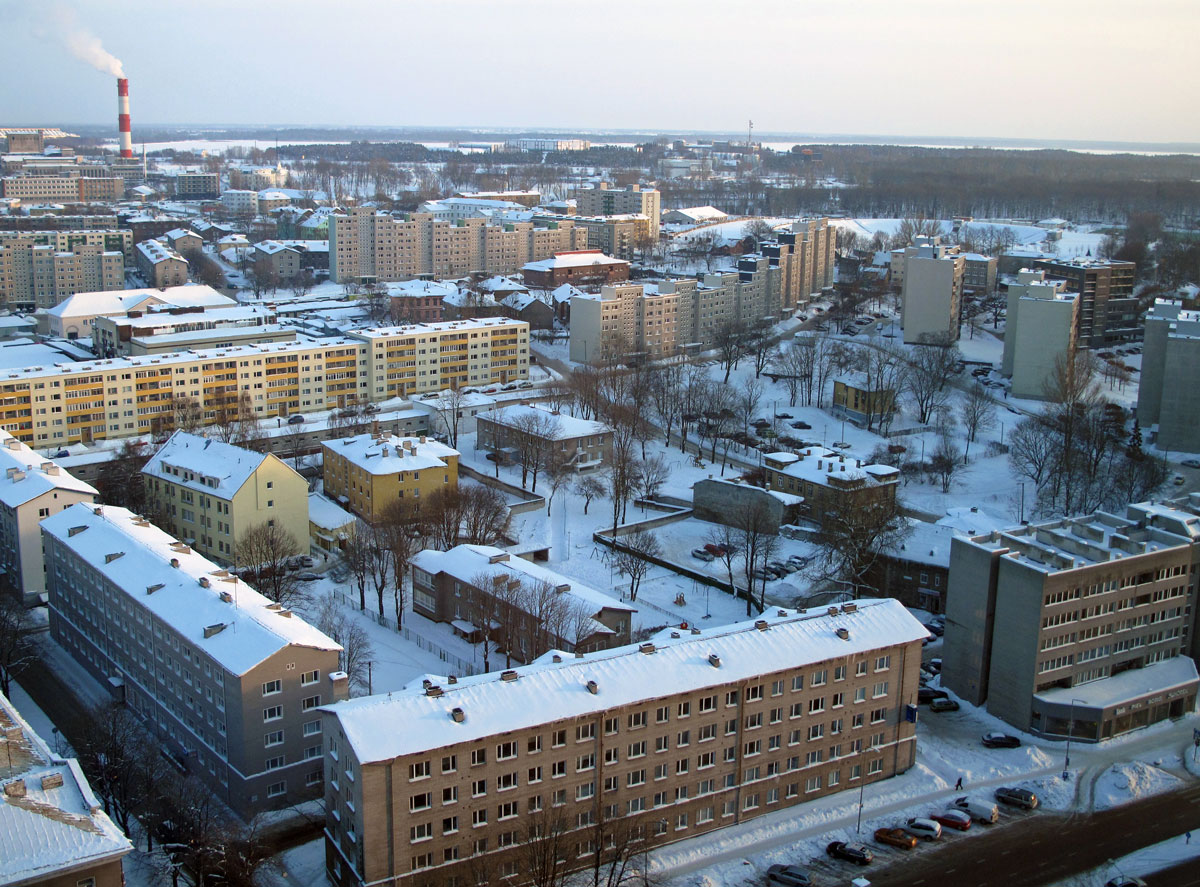
For me, coming to cold places means staying in a comfortable hotel, and the one we stayed at in Riga was brilliant. It was called the Hotel Reval, which was the name of Tallinn between the 13th and 20th centuries. With that in mind, I booked the modern Swissotel in Tallinn which was a little way out of the old town but within walking distance, and very reasonably priced compared to western hotels of the same standard. Not only that, with a room on the 19th floor, I had some great views as well, or I would have if it stopped snowing. When I arrived it was not only snowing but getting dark as well, and so I decided to unpack and have a meal in the hotel and start some serious sightseeing in the morning.
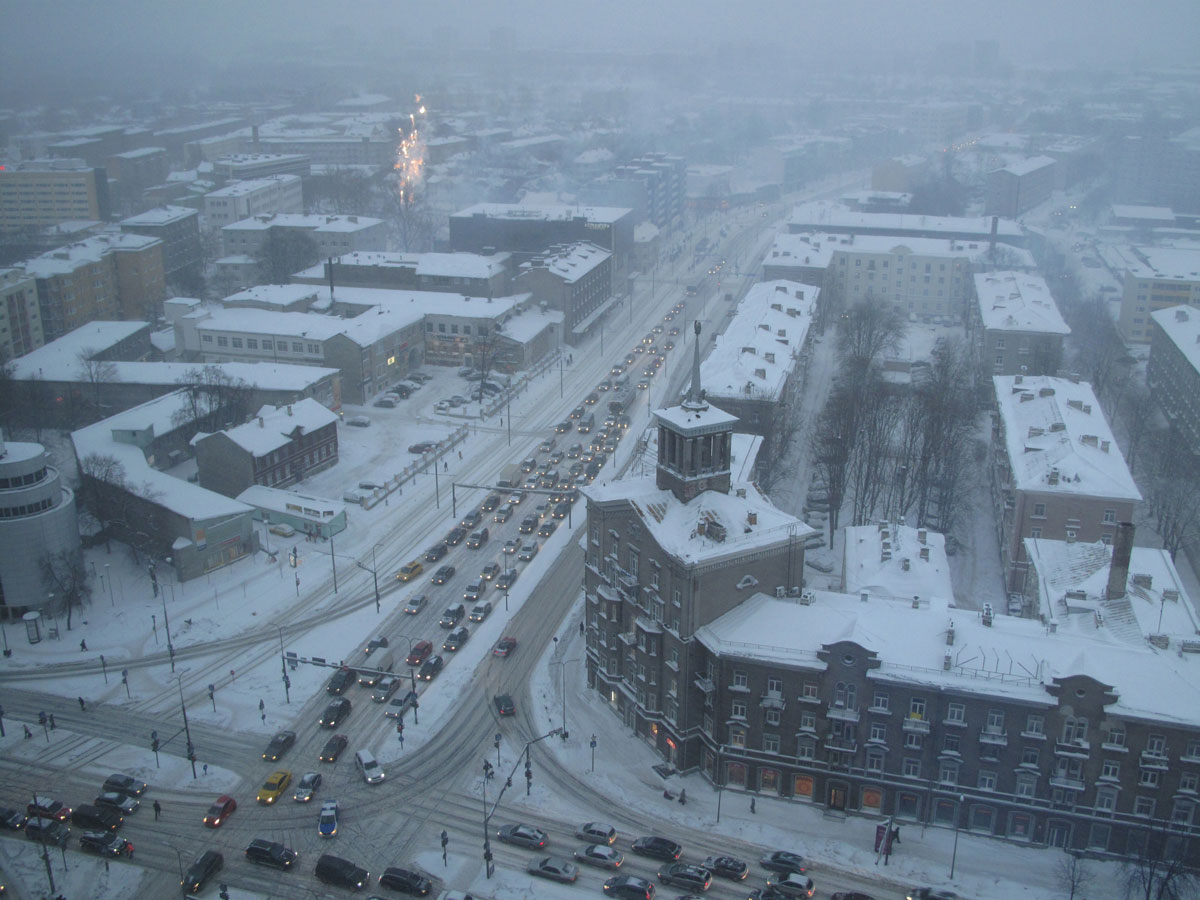
When I woke up and looked out of the window it was grey, miserable and, according to the weather forecast on the tely, -11 degrees centigrade, but the good news if you can call it that, was that the temperature was going to climb to -7 later on. Undeterred, I had a quick breakfast and ventured out of the hotel where my face was almost immediately introduced to the icy pavement. I must have been lulled into a false sense of security because the weather doesn’t seem to get in the way of everyday life in this part of the world and I expected the footpaths to be clear, but to be fair, the taxi driver who brought me from the airport yesterday told me that they were having a bad winter. Apparently, one day it snows and the next it doesn’t, but when it doesn’t snow the temperature plummets down to between -25 and -30 degrees. Blimey! I was beginning to think I should have stayed at home now – or at least in the Old Town, but I’m counting myself lucky that it’s only -11 and not snowing.
Normally, when I’m on my own, I try and work out some sort of itinerary before I come away, but that didn’t happen this time. Even so, I knew roughly what I wanted to do, and so I gingerly headed off towards the Old Town via Tammsaare Park.
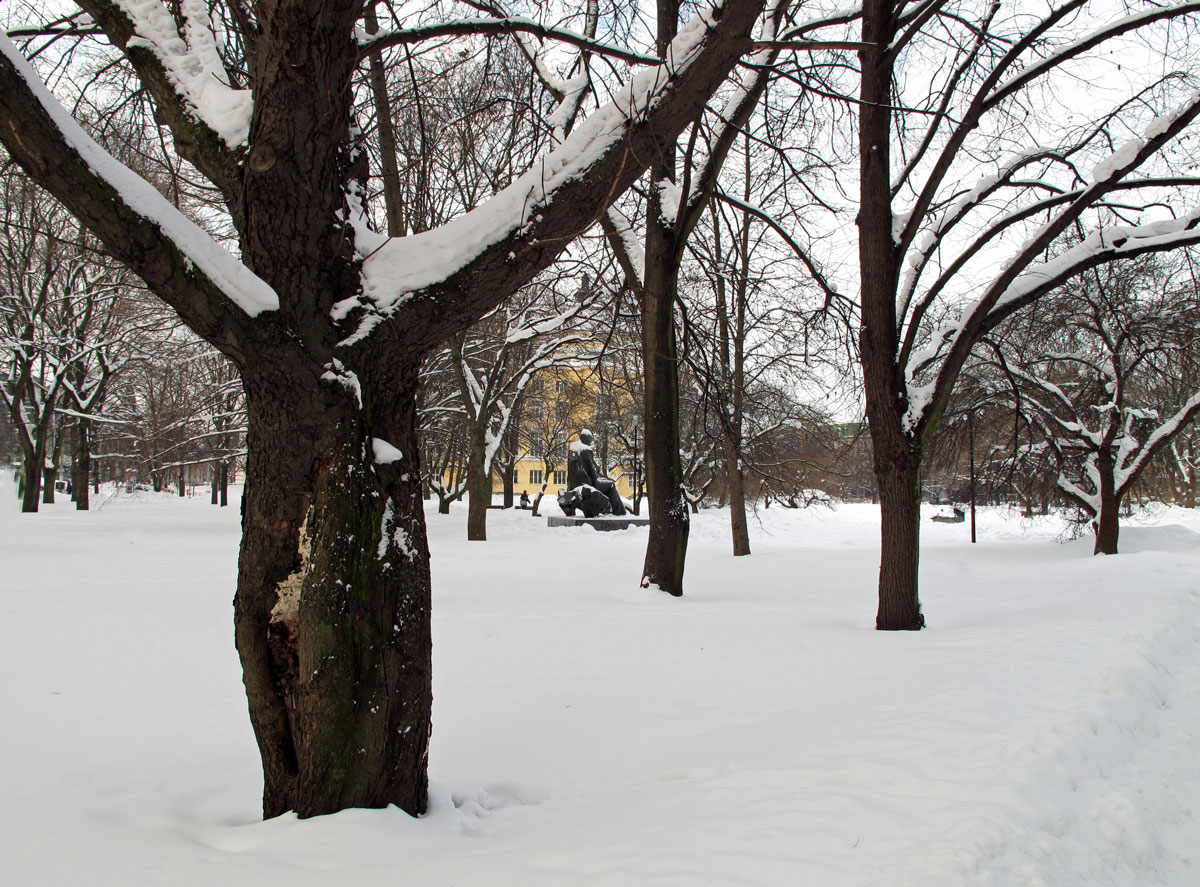
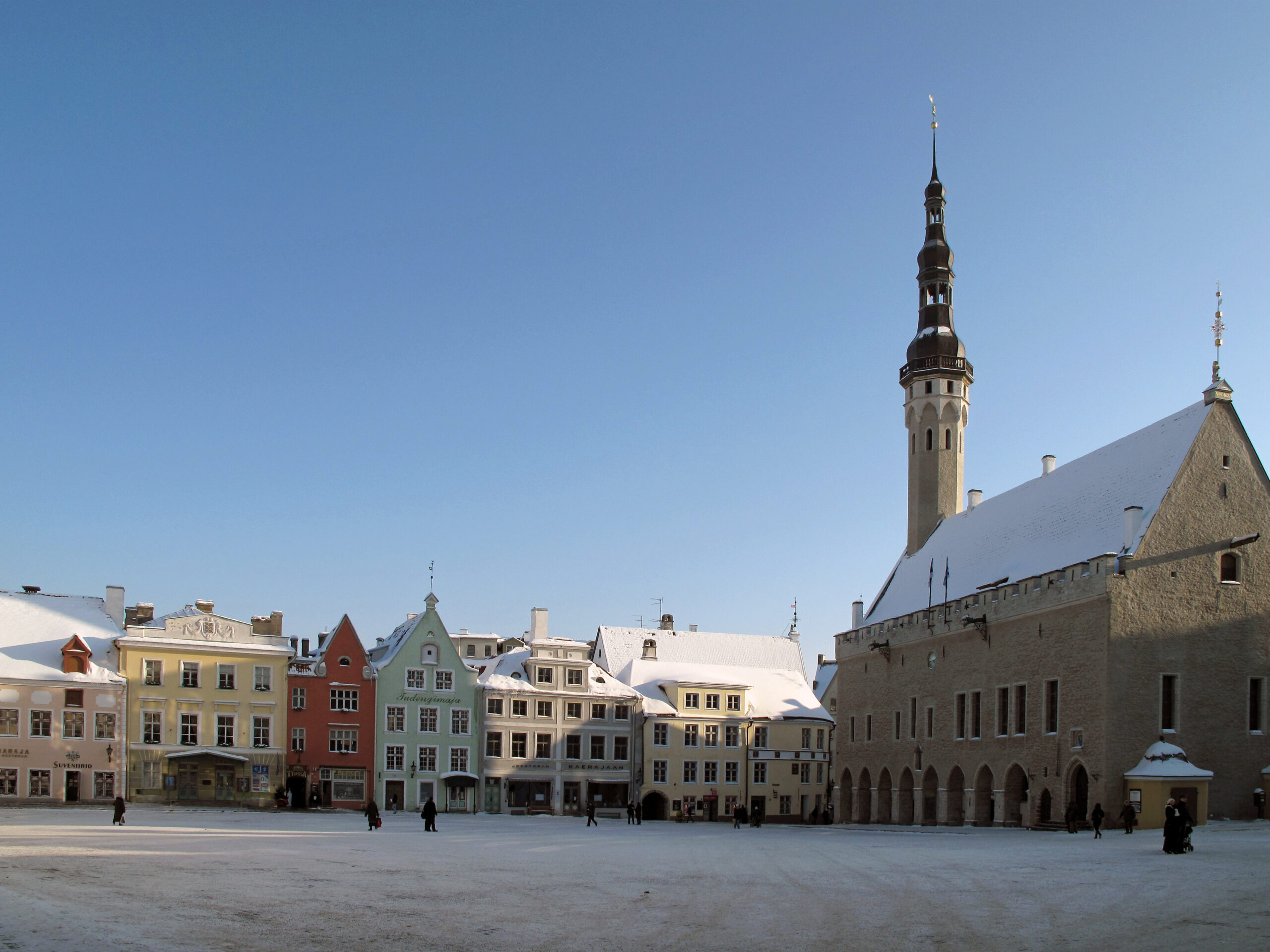
I didn’t find it easy staying upright in these conditions and I didn’t do myself any favours by walking the long way round to get to the Old Town Square. When I finally got there it was eerily quiet, but it was bound to come to life soon as it’s the obvious place to start a tour of this city of over 450,000 people.
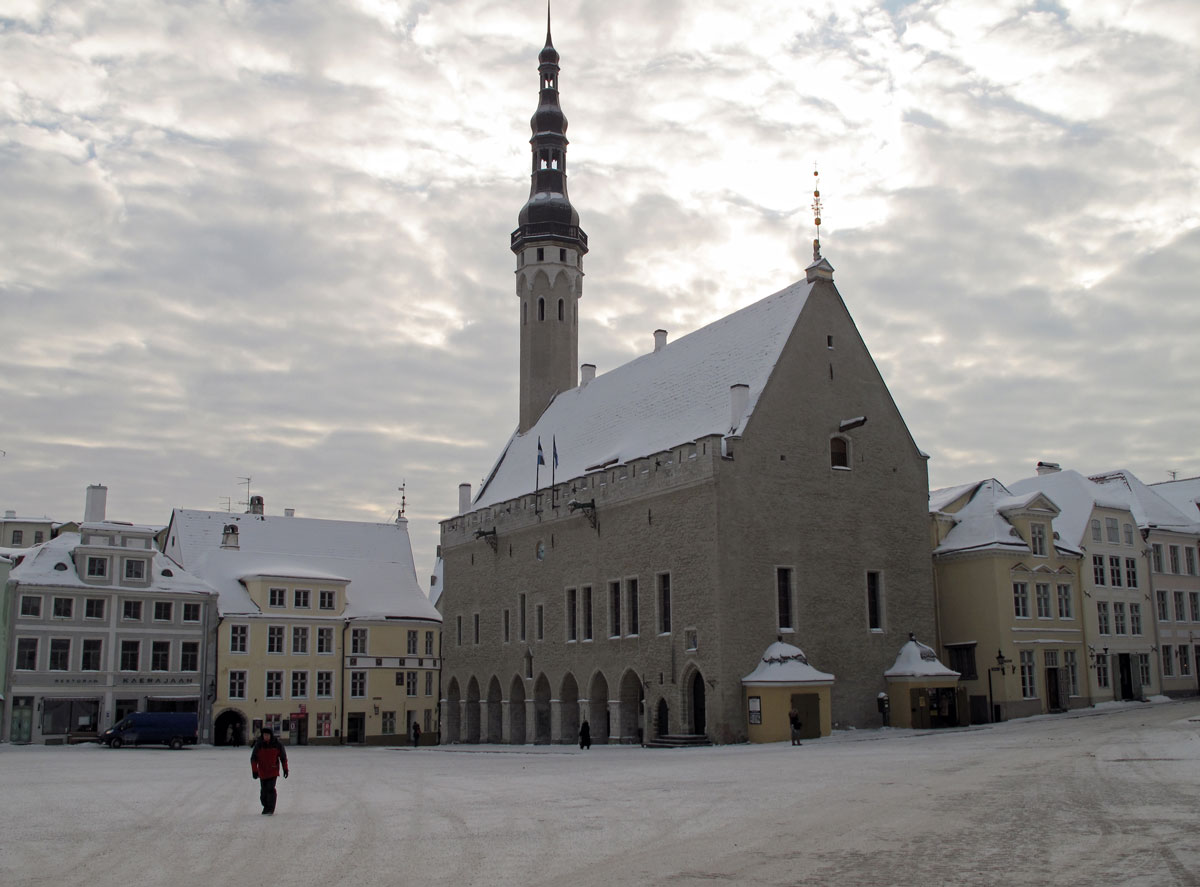
The square has been a market and meeting place for the last 800 years and there’s even been a town hall here since 1322: The one that stands here now replaced the original and was built between 1402 and 1404 making it the oldest town hall in the whole Baltic and Scandinavia region.
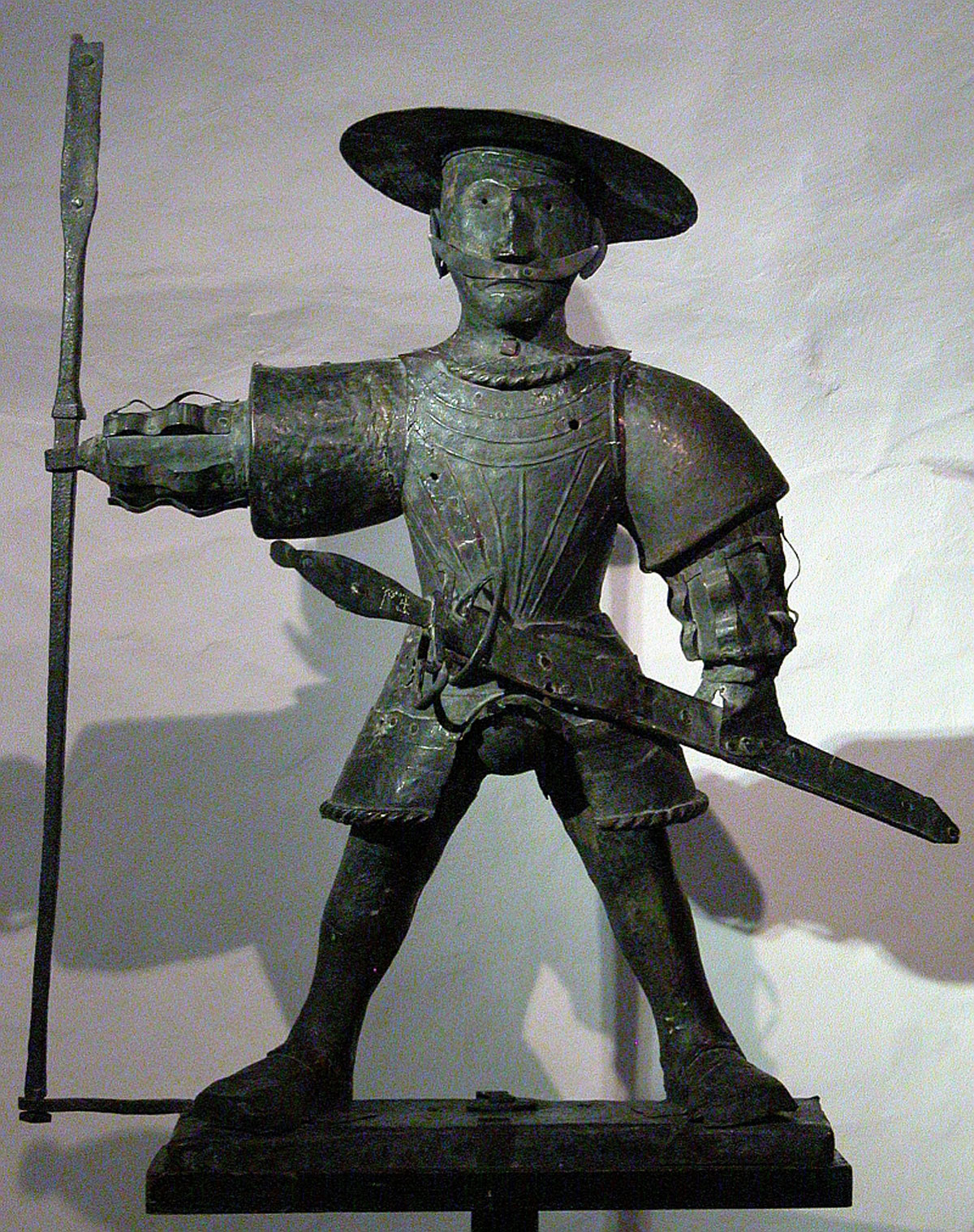
On top of the 64 metre spire is a weathervane where Old Thomas keeps vigil as he has done since 1539. He has become the symbol of Tallinn, but who is Old Thomas? According to legend, he was a simple peasant boy and Tallinn’s equivalent of William Tell: The story goes that each spring a competition was held to find out who was the best shot at firing crossbow bolts at a painted wooden parrot on top of a pole. It was organized by, and for, the city’s wealthy citizens, but as you’ve probably already guessed, the winner of one of these competitions was none other than Thomas, but because of his lowly status he couldn’t claim the prize and instead was awarded the job of town guard. Thomas spent his time handing out sweets to children in the square, but when it was time to meet his maker the kids wondered where he’d gone to and so when the weathervane was erected, parents would say that he was watching over them to see how well they behaved, and if they were good he would leave sweets under their pillow. The present Old Tomas weathervane is a replica as the original is being kept safe and sound inside the town hall.
Unfortunately, without prior permission, the Town Hall isn’t open to the general public in wintertime, but I thought my luck was in when I was approached by a couple of beautiful young girls dressed in traditional Estonian costume, but instead of giving me sweets they were just handing out flyers for a café that was offering the best deal in Tallinn: I could understand them touting for business in the summer because many of the fine handsome merchant’s houses that surround the square are occupied by an array of establishments that extend their premises with al fresco tables enticing people to take a seat – but it’s not summer now. Having said that, the clouds were starting to lift, and therefore so were my spirits.
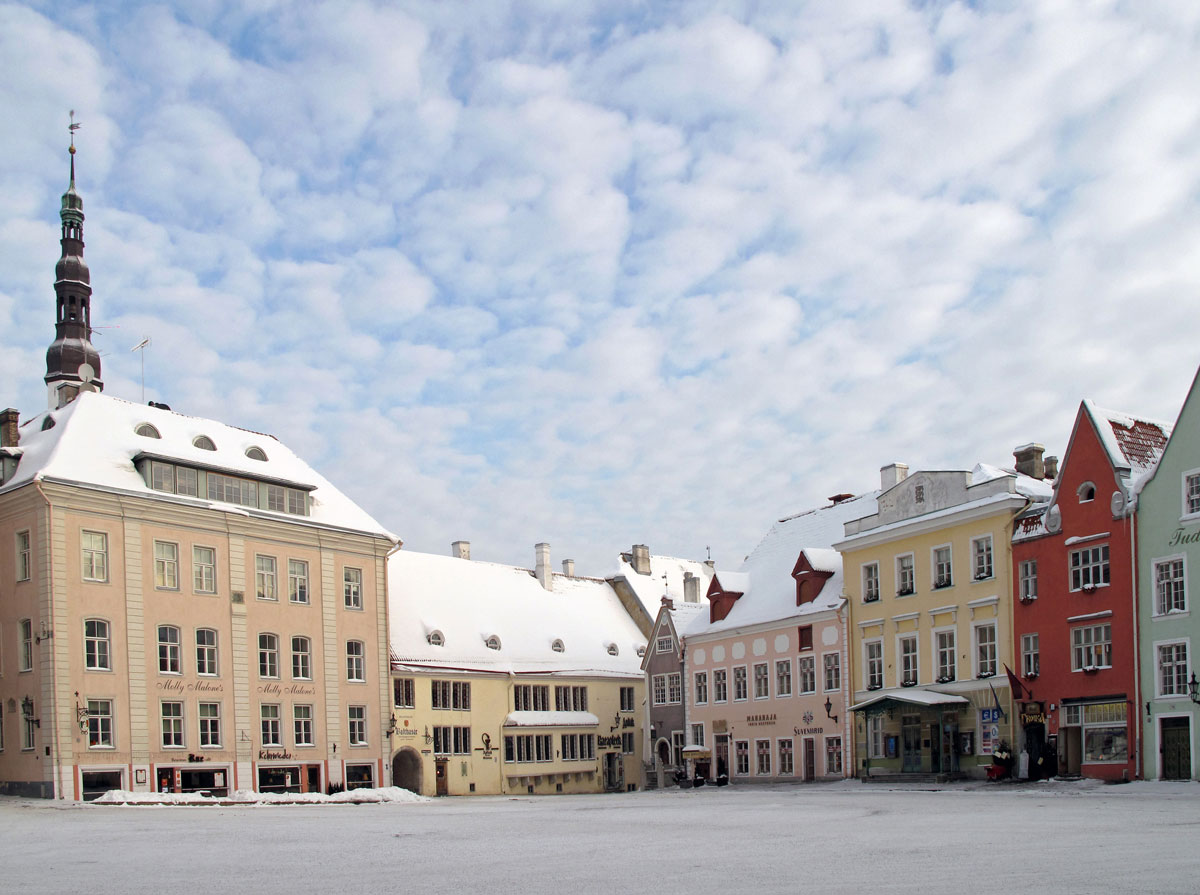
Before leaving the square, I thought I’d just check out where I could get some pain killers if I needed them because I’d been suffering with chronic back and leg pain for quite a while. It seems I’ve come to the right place because the Town Hall Pharmacy has been dispensing remedies such as burnt bees and powdered unicorn horn since the 15th century which apparently makes it the ‘oldest continuously running pharmacy in Europe’ which was all well and good, but of no use to me whatsoever today because they weren’t open yet.
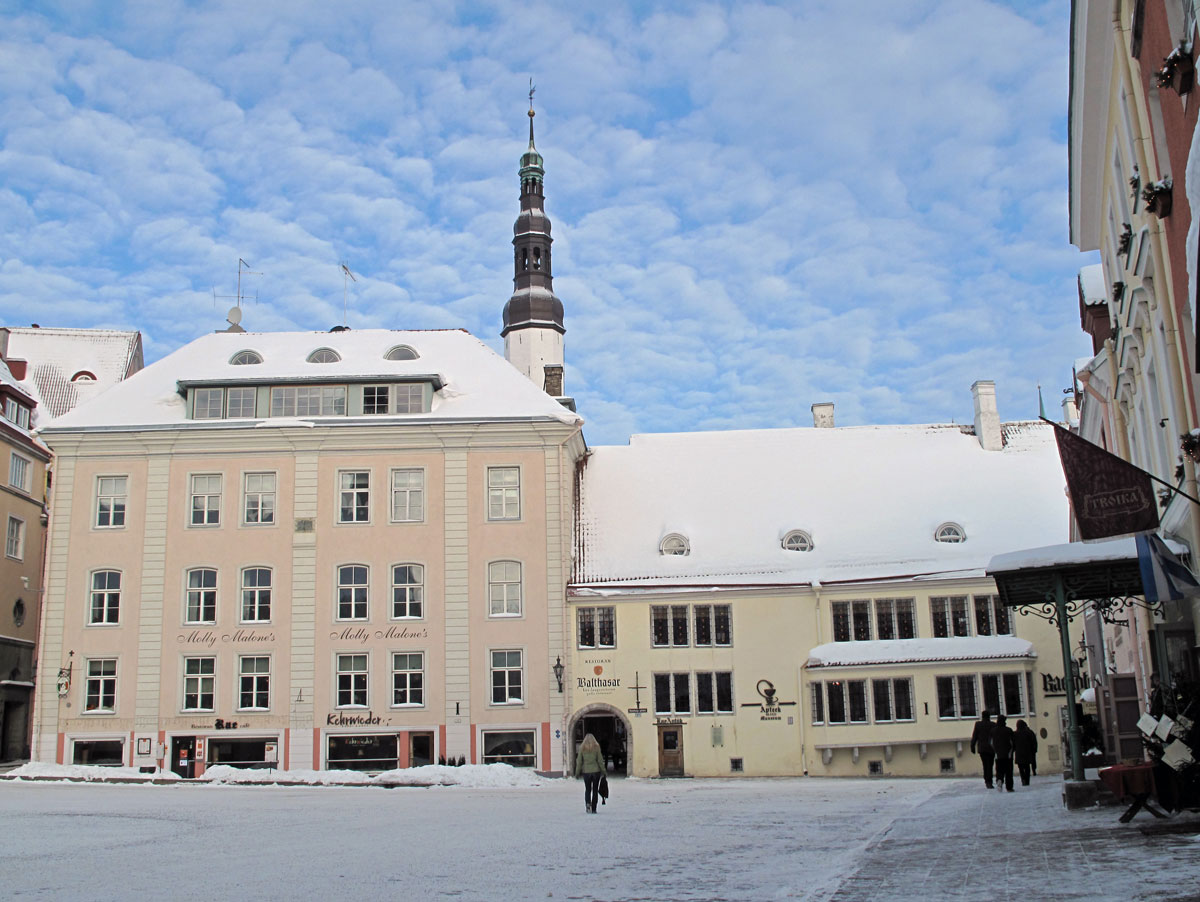
The good news though was that by the time I needed to move on there was hardly a cloud in the sky: I left by way of the alleyway next to the pharmacy called Saiakangi Tanav or White Bread Passage to you and me, and at the end of the lane was the lovely-looking Church of the Holy Spirit, but with the prospect of so many attractive churches on offer in the Old Town, I needed to be a bit choosy on which ones I took a closer look at, especially if this weather was to hold up.

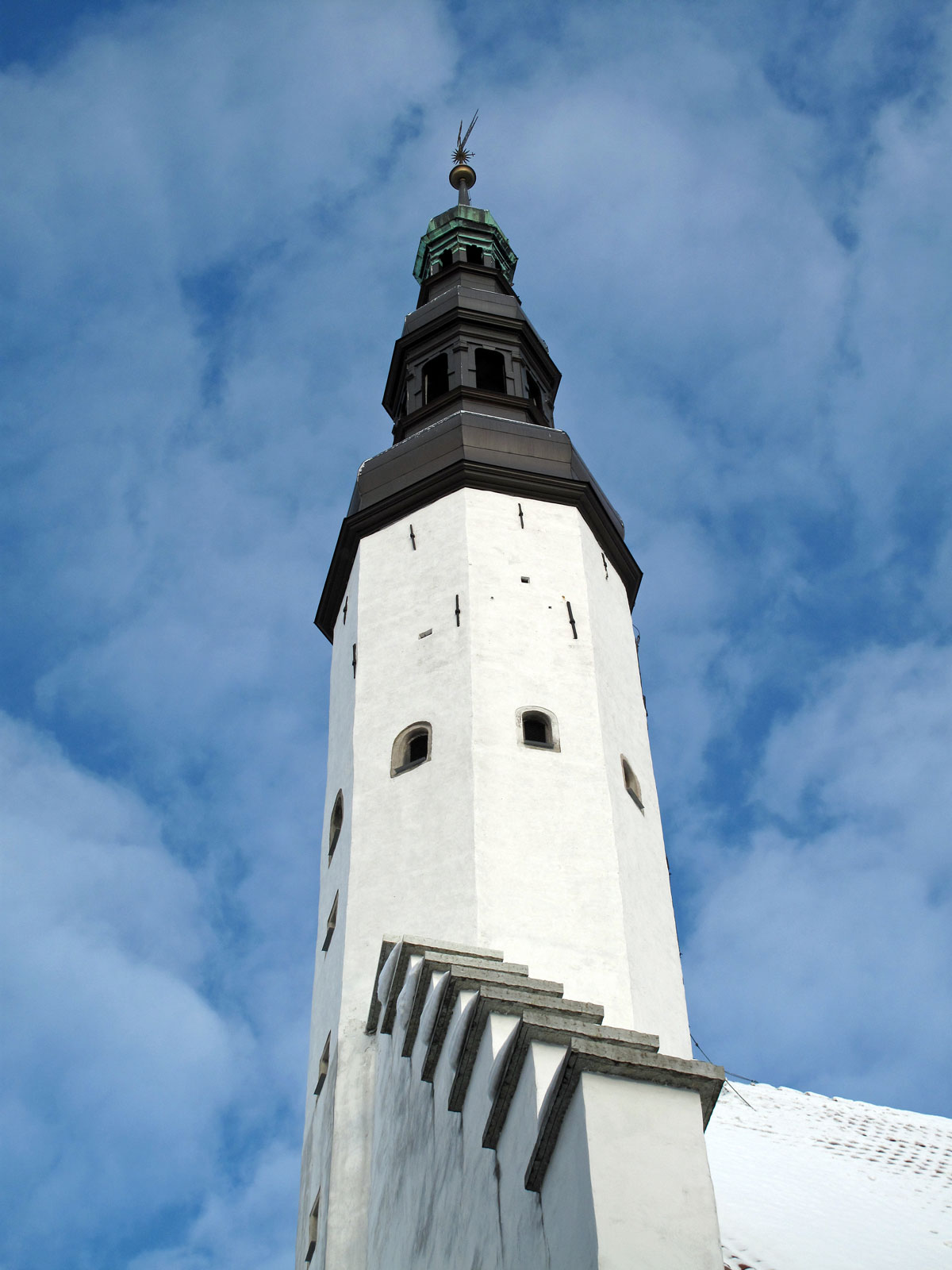
After turning left into Pikk Street, I wandered past the souvenir shops to Wheel Well Street where the Wheel Well was used to dispose of the city’s stray cats. It appears that to prevent the city from being flooded it was necessary to feed cats to a ‘spirit’, and it seems like the idea worked because the city was never flooded. How many people died from drinking the water though is anybody’s guess. It’s been filled in now.
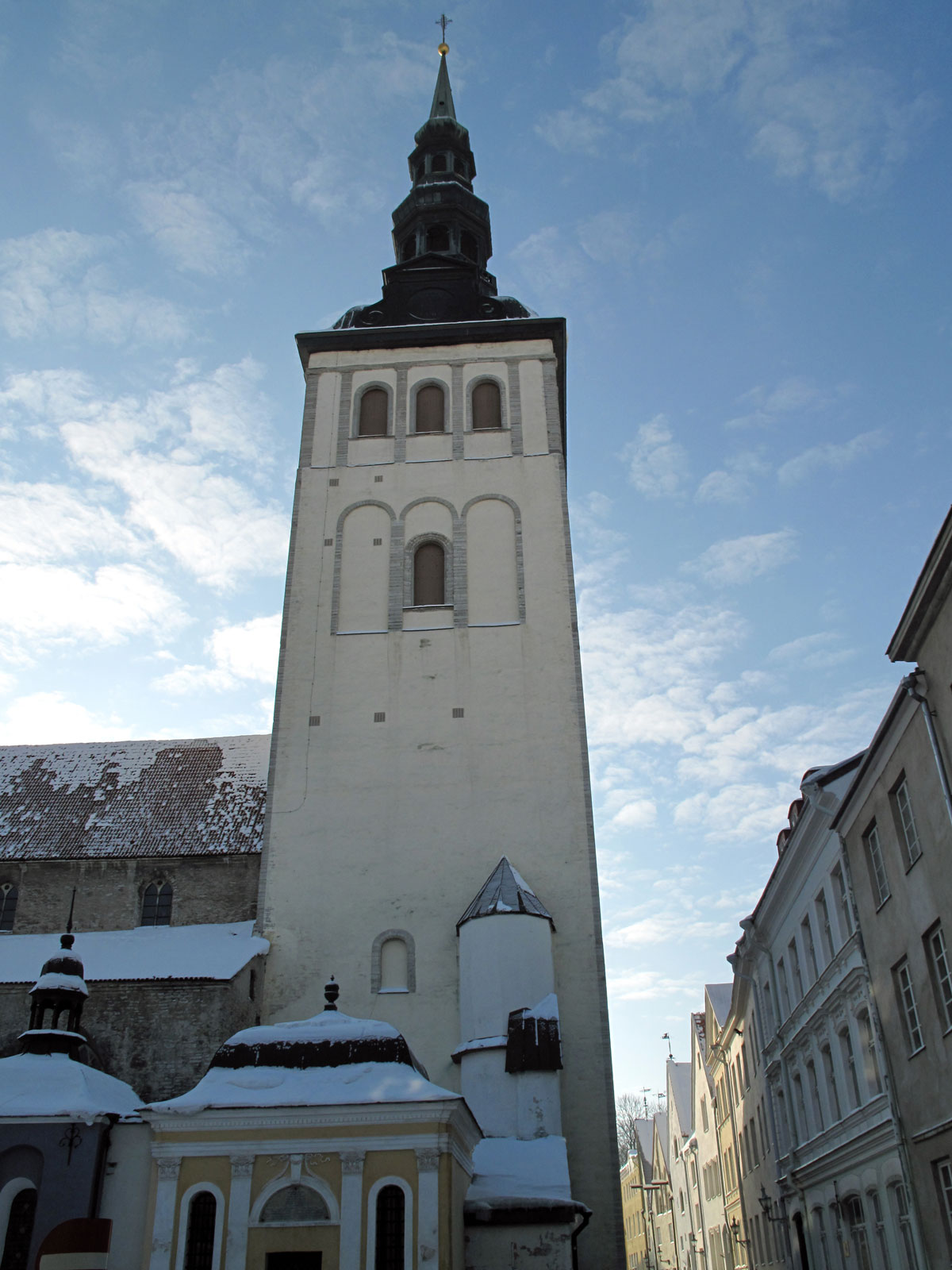
Dominating the skyline at the other end of the street is St Nicholas Church: Originally built in the 13th century, it was heavily bombed by the Russians in WWII and subsequently meticulously reconstructed – ironically during the Soviet occupation. It isn’t used for church services anymore and is currently an ecclesiastical art museum.
It’s not really possible to close this first post without mentioning the impact that the 20th century had on Tallinn, Estonia and the Baltic States in general. Until the Russian Revolution of 1917, all three Baltic States were part of the Russian Empire, but with the overthrow of Tsar Nicholas II, they all declared their independence. Estonia’s declaration came on February 24th 1918, but it wasn’t a smooth transition, and it took another two years before independence was fully realised.
In 1938, with the prospect of another world war looming, Estonia declared itself a neutral country, but secret talks between Germany and the Soviet Union were taking place behind the scenes in the form of a non-aggression pact between the two countries. The Molotov-Ribbentrop Pact was signed on 23rd August 1939, which effectively meant that Germany would take control of Western Poland and part of Lithuania while the Baltic States and Finland (as well as Bessarabia) would go to the Soviet Union. A week later Germany invaded Poland and on 3rd September France and Britain declared war on Germany.
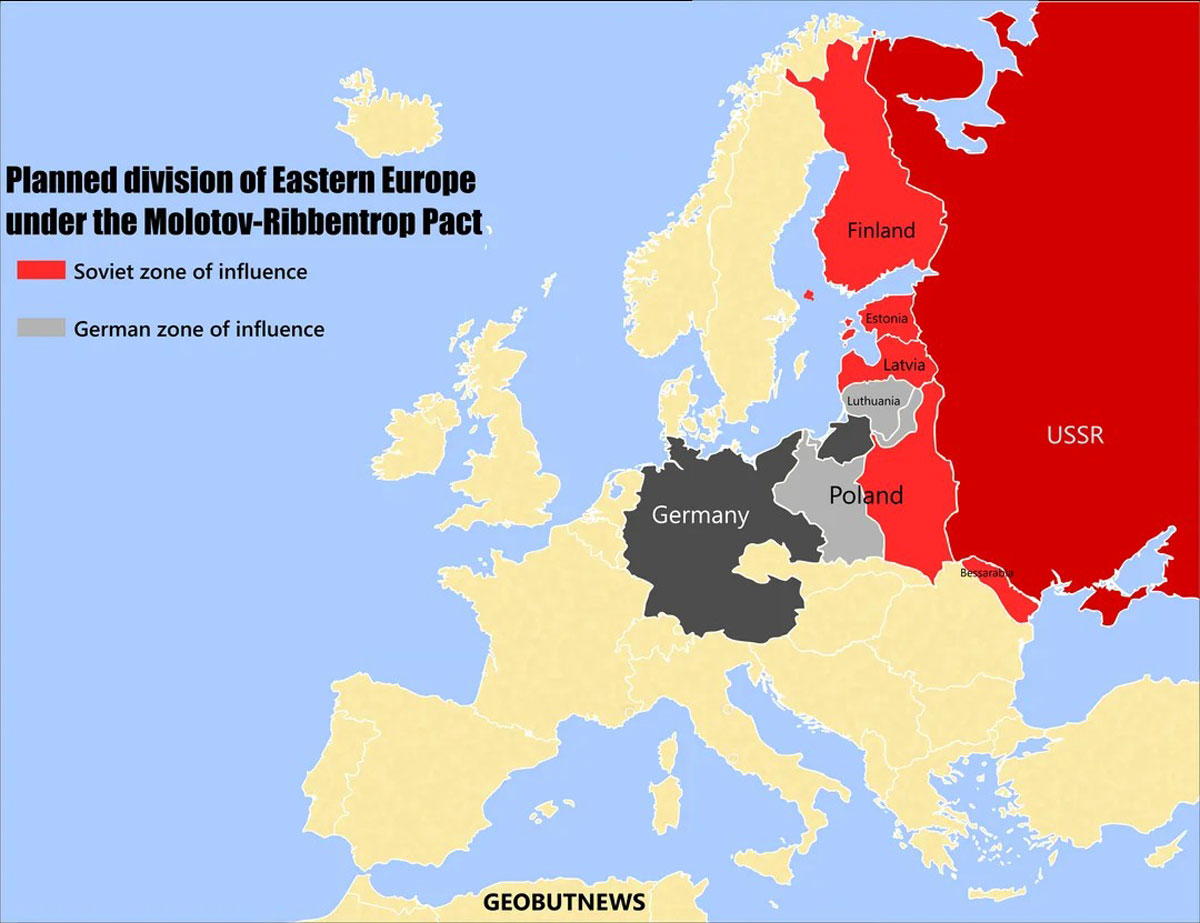
In June 1940, Estonia was invaded by the Soviet Union, with Latvia and Lithuania not far behind. It didn’t seem to matter that the annexation was illegal under international law as sticking to the rules appeared to be in short supply back then. Hitler had no intentions of honouring the pact with the Soviet Union, as it was just a stalling tactic to keep his so-called ally out of the way while he dealt with the countries in Western Europe first.
In June 1941 he launched an attack on the Soviet Union which included the ‘liberation’ of Estonia. At first, the Estonian people were glad to see the back of their Soviet masters, but they didn’t fare any better under the Nazis, and in September 1944 the Soviets were back. Tallinn came under heavy bombing while the Soviets regained control of the city, and the area around St Nicholas Church suffered considerable damage. During the subsequent re-occupation, the Soviets covered up the damage caused by the bombing raids, but after they left in 1991 the remains were uncovered. I wasn’t sure if there would be anything much left to see, but even if there was, the snow would have covered it all up anyway.
Just for the record, and according to the Estonian War Museum, the country lost roughly a fifth of its population during WWII.
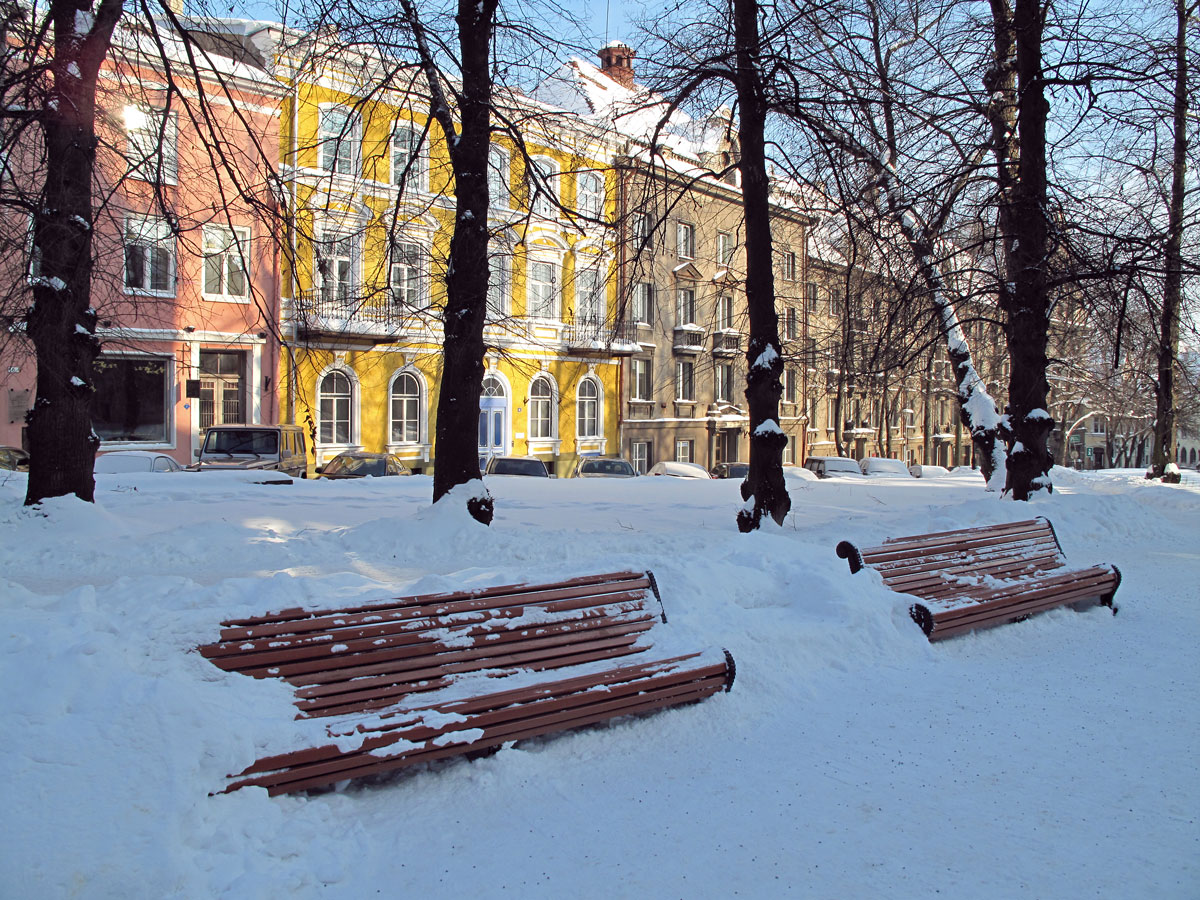
I’ve now come to the end of my first post on Tallinn, so what were my first impressions? As we approach January, the city reminds me of the Roman god Janus who looked both backwards and forwards. It has undoubtedly been shaped by its past, but it is also a forward-looking city and has quite a modern outlook in many ways. It also felt like a place that had been influenced by its proximity to both Russia and Scandinavia, and in the next post I’m going to delve further back into the history of this beguiling but paradoxical city.
POSTED – DECEMBER 2024
Originally posted 2024-12-09 16:52:49.
So many beautiful photos! I’ve been to Tallinn a good few times and always loved seeing the fairytale spires of Tallinn’s old town. It is a great destination for a city trip as it is full of surprises. Thanks for sharing, and have a good day 🙂 Aiva xx
Thank you Aiva for your lovely comment. I’ve just dashed over to your pages to see if you’ve written anything about your experiences in Tallinn. I haven’t found any, but I’ve noticed that you’ve got a page on Tartu which I intend to come back and take a longer look at. Thanks for visiting and I hope you have a good day too. 🙂
The majority of my long weekend and day trips to Tallinn and Estonia were made in my pre-blog era when I still lived in Riga. Sadly, not many photos have survived, certainly not the ones I could find useful. I am glad to see that you visited Tallinn as it is a beautiful city where the imposing fortress walls, cobblestone streets, and medieval architecture transport you back in time 🙂 Take care xx
I’ve still yet to write a blog on Riga, but that’s also a city I found fascinating. I think you’re living in Ireland now. I hope you’re enjoying it 😊
The snow appears to have wiped Tallinn empty, Malc, and with those temperatures I’m not surprised. The architecture looks beautiful but it would have to be a late spring or summer visit for me. Looking forward to a bit more history.
Yep! They were great conditions for falling over Jo. The days are longer in the spring and summer too 😊
Snow is such a novelty for me that I loved experiencing it. As Mel mentioned, the story could be different if you had to live, work, and play in it. Beautiful imagery and such descriptive words, Malc.
Thank you so much Suzanne. I hope Pt 2 doesn’t disappoint.
I’m sure it won’t.
The wonderful snow really sets off the views of the city. I may not think snow is so wonderful if I lived in it, but this Aussie thinks it looks fantastic. Thanks for the inspiration, Malc. Mel
If you ever manage to get here Mel you won’t need a sherpa or yak to help you get around either.
Great post, and a good read.
Thanks Stephen. Glad you enjoyed it.
One of my favourite European cities! I’ve been twice but never in the winter and I’m not sure I’d want to with those temperatures even though it does look very pretty 🙂
One of mine too Sarah!
Absolutely fascinating. And what a lovely place. I can’t wait for the next part now.
I had a feeling that this post would appeal to you Shey. You haven’t god shot of me just yet 😊
You have no idea how glad I was to see it!!!!! And yes it is my kind of a post about a place. The square reminded me a bit of Prague Old Town but wonderfully unpoilt.
I know what you mean Shey.
Yeah rhe first time we went to Prague it was early in the year and perishing and the square was lovely. Last time it was unbearable.
It’s a topic I often talk about. When a place comes out of obscurity it doesn’t take long for tourism to become a curse rather than the blessing it was hoped for.
Another excellent read, Malc. I’d not heard of Tallinn before, and I’m sorry you had to go there on your own, but certainly my first impressions are very favourable (apart from the cat thing – I had to cover my two rescue cats’ eyes for that bit!). It looks lovely in the snow, and even better when the sky cleared and the sun came out. It’s amazing quite what a difference a bit of sunshine does to a snowy scene, isn’t it? I’m impressed with the late medieval town hall, and love the story of Old Thomas and his winning archery skills. In fact, all the buildings you show us are most attractive, even the pharmacy (although I’m sorry it was closed when you needed it). And it all looks that little bit more magical in the snow, even if it was a bit treacherous. So apart from the initial Malc mishaps (love those, and they always make me laugh out loud!) it all seems quite promising in Tallinn, and I’m looking forward to reading more of your trip, and about your onward journey to Helsinki. 🙂
Thank you for your comments Alli which always show that you read my posts from beginning to end. I really appreciate it when people do that. The next post will continue to show why Tallinn appealed to me but the Helsinki trip will be a little bit different 😊
Looking forward to the next post then, which sounds fascinating, and as for Helsinki – I’m intriguted! 🙂
Phenomenal post! I tell you Malc, I am not really motivated to visit the Baltic states or Tallinn, but your pics are fab!
Thank you Francesc. You’re always so complimentary, but as somebody who enjoys the Mediterranean climate,, I can see why the Baltic wouldn’t appeal to you too much. Even the sun is cold up here 😊
Oh no! I need a nice warm sun! 🌞 All the best Malc!
You too F!
Cheers Malc.
Thank you, dear Malc, for this masterpiece of storytelling! As always, your attention to providing the unknown and interesting details, with humor thrown in, keeps me turning the pages. Your talent for teaching history is memorable because your observations are original and greatly helped by exceptionally good photography, all yours. Tallin is not a city that is a known tourist attraction but your story of Old Thomas and his hilarious image could tempt any couch potato to book a trip. I learned so much about two sides of Tallin, the Soviet part, and the Scandinavian one, the many beautiful churches, and the oldest continuously running Pharmacy in Europe with mind-boggling medicine on offer such as powdered unicorn horn that I am thankful for not using any medications. Your ending details about the proposed division of Eastern Europe brought the memory of World War II and its consequences. Thank you again, Malc for this fascinating Part 1, and I am already looking forward to reading Part 2!
Joanna
Thank you so much Joanna for your wonderful comment and it’s great to see you back on here. I do hope that you’re recovering well and pleased to hear that you’re not having to take any powdered unicorn horn to help you. It goes without saying that I’ve missed your WordPress contributions, but hopefully it won’t be too long before you bless us with one or more of your famous Christmas tales.
Thank you, Malc. You are very kind, as always! All being well, I will publish my traditional post at this time of year this week.
Joanna x
Great!
Thank you!
I like the story of Old Thomas but not happy about the stray cats in the well, I’m glad it was filled in, and if residents got sick from drinking the water then that’s karma😉 Tallinn sounds like an interesting place, I’m looking forward to reading more.
Thanks Eunice. I’m glad to hear that the cats thrown down the well haven’t put you off coming back for more 😉
Absolutely fascinating information, dear Malc!
Superbly laid out with lots of fabulous photos, which brought back fond memories of my trip to Tallinn 🤍💙🤍
You’re not only talented Luisa but well travelled as well, and as you know, it always gives me a lot of pleasure to know that my posts bring back some good memories for you 💙
You are so very welcome, dear Malc!
It’s always my pleasure!
You obviously fell for this city (literally and figuratively) in a big way. Fun tale, Malc.
That was quick Pat – but you’re right on both counts. Obviously there’s more to come and thanks, as always, for commenting.