
The History of Britain - Pt 4 The Iron Age
The Iron Age in Britain was a Protohistoric Period, which means that it was a period of time between prehistory and written history, but more specifically it covers the period from around 800 BC to when the Romans arrived in AD 43.
Being so tantalizingly close to the emergence of written historical records, you would think that reliable information about the Iron Age would be fairly easy to come by, but that isn’t necessarily the case due to the fact that scholars and archaeologists come up with an increasing amount of evidence to question traditional theories.
The transition from Bronze Age to Iron Age didn’t just suddenly happen, but was a gradual integration of Late Bronze Age people with migrating travellers from mainland Europe. These European traders were condescendingly referred to as Keltoi (Celts) by the Greeks, who saw them as a mixture of barbaric tribes that lived beyond the civilized world, but even though they may not have been as culturally advanced as the Ancient Greeks, they did have skills of their own – and that included ironmaking. So who were these Celts and where did they come from?
The established school of thought is that the cradle of Celtic culture originated in the Alpine region of Central Europe, and in particular, the area around Hallstatt in Austria. The village of Hallstatt is about an hour’s drive from Salzburg in an area known for its salt mines, a mineral that was an important commodity in their trade with other communities.
Archaeological discoveries in the local cemetery and salt mines around the area have unearthed various objects including iron swords and jewellery with a distinctive spiral design.
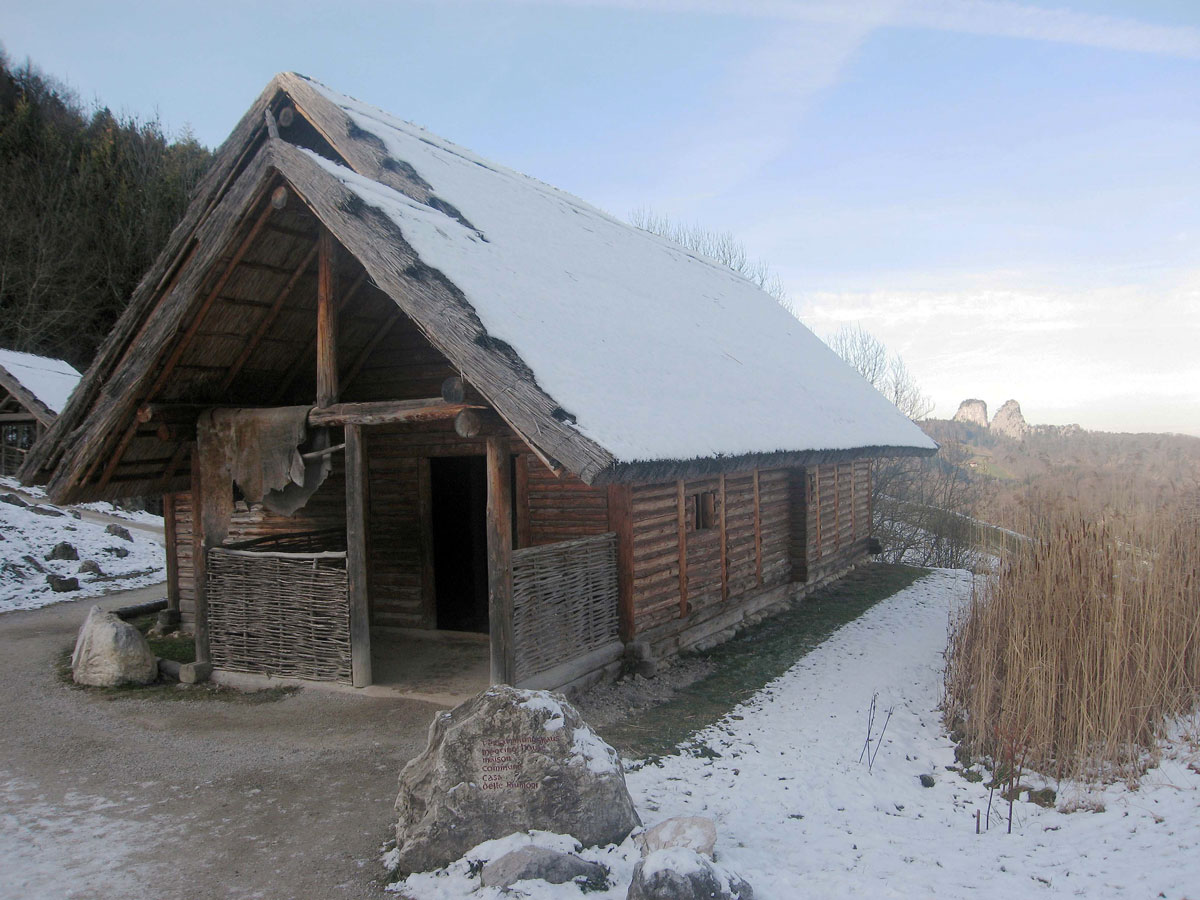
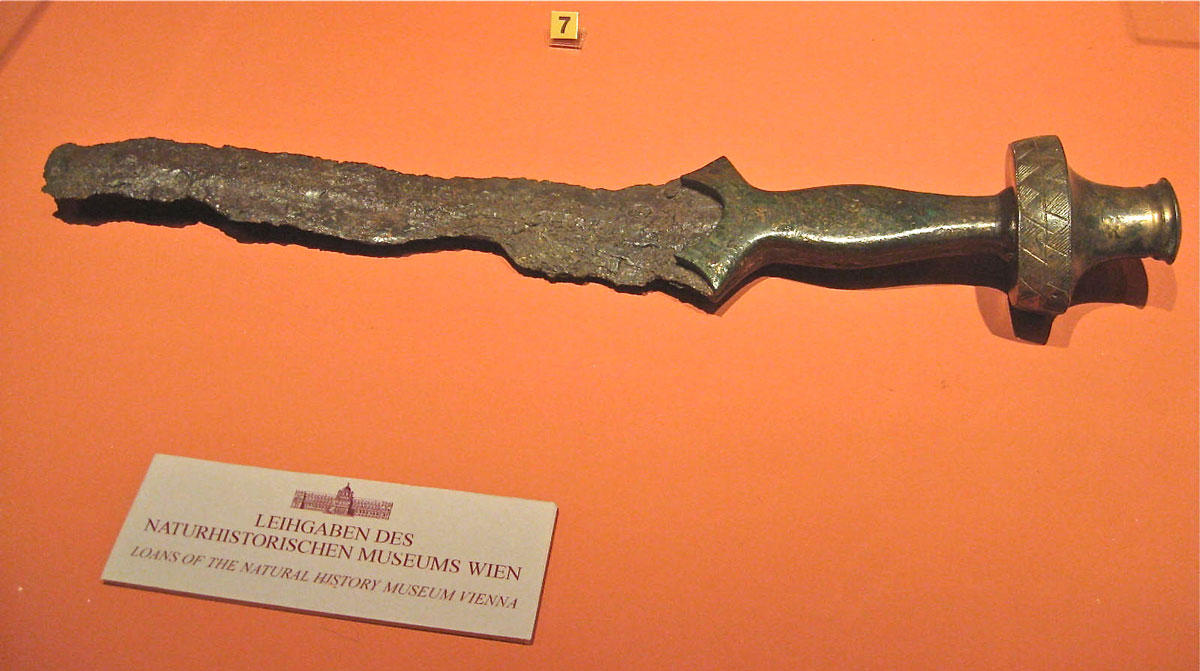
The Hallstatt Culture prevailed from around 800 to 450 BC, an era that is sometimes referred to as the Early Iron Age, but they were superseded by a more advanced group of Celts known as the La Tène Culture.
La Tène is a small community on the shores of Lake Neuchatel in Switzerland about a 45 minute drive from the capital Berne: It’s not necessarily where these people originated from, but the location where thousands of objects were found in the lake after hydrological work in the mid-19th century created a drop in the water level.
The objects that were discovered provided enough information to reveal that these people had similarities with their fellow Celts where language, religion and art were concerned – but there were also differences. Whereas the Hallstatt people lived mainly in small pastoral communities, their La Tène counterparts lived in fortified settlements that the Romans referred to as Oppida. Agriculture was still important of course, and by now more advanced farming implements such as iron ploughs were being used, but probably the biggest difference between the two cultures came in the way they were governed.
The Hallstatt and La Tène Cultures from Central Europe have been the accepted benchmark for how the Celts spread across Europe for some time, but as I mentioned earlier (and in my previous article about the Bronze Age), there’s also another more recent theory that suggests the maritime trade during the Atlantic Bronze Age brought the Celts in from the west who then spread eastwards. History is always going to be challenged, but until conclusive evidence can be brought to light, it’s probably best to just keep an open mind.
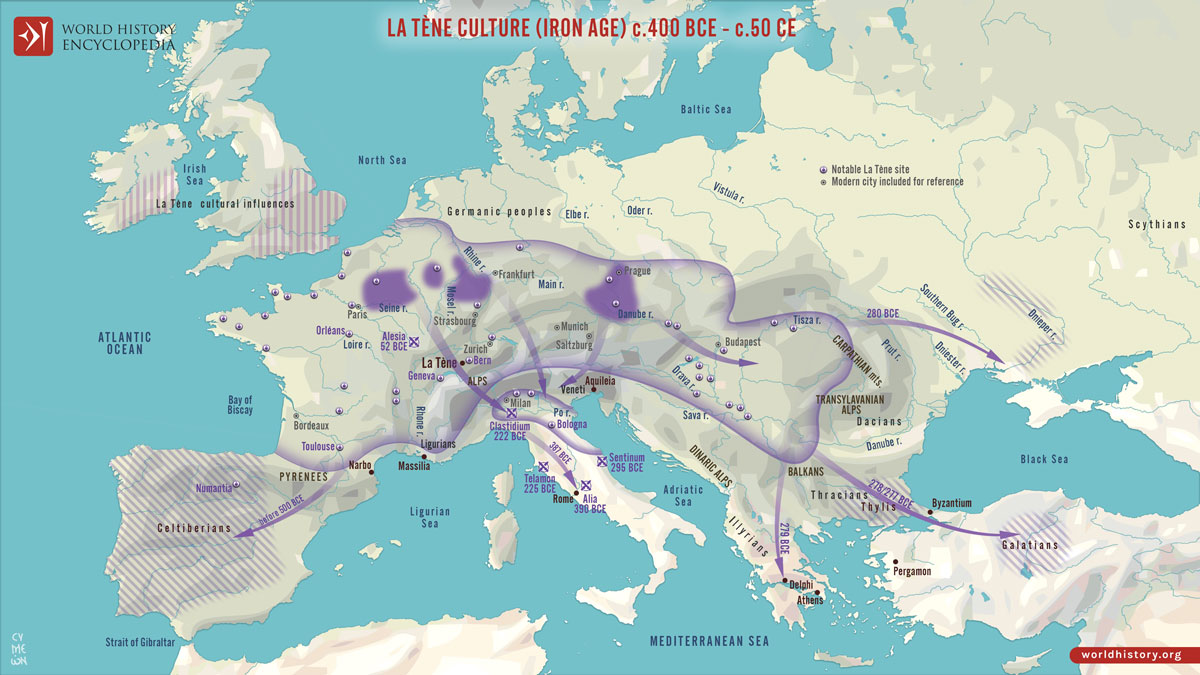
Whatever the truth about how the Celts expanded across Europe, I think it’s safe to say that their integration with the native people of Britain was a gradual process, and it’s almost certain that the first migrants to arrive came across the channel from Gaul.
Now we know that it was the Celts who were responsible for bringing the Iron Age to Britain, in the next chapter I’ll describe how the Hallstatt and La Tène Cultures laid the foundations for the Britons to have a culture of their own.

POSTED – JANUARY 2026
Good to see you blogging Malcolm, and I like the way you’re presenting these historical posts in manageable bite-size chunks.
Thanks Sarah. I didn’t want these short posts to be too heavy, just a brief introduction as to how Britain evolved.
Epic post Malc. Well done.
Thanks Shey. I’m not sure it’s epic but I’m glad you approve 😊
It’s very good. Nice and concise. Extrenely interesting.
🙏 Just what I was aiming at!
well that is all the things that make it epic. Also it is good to to see you back.
It’s a start at least. Thanks for all your support. You’re a star 🌟
SO are you. You are back out here.
🤗
I really love the music, too, and am also glad to see you here, Malc. It’s a good sign xx
Thank you so much Jo. Blogging is a form of therapy for me and I wouldn’t want to give it up completely unless I was forced to. 🩵
Nice to see a new post from you Malc, and an interesting one as usual – I’ll come back later and read through again. Love the music too 😊
Thank you Eunice – and I will be back to take a look at your latest offering too 😊