
Birmingham's Lunaticks and the Golden Boys
In my previous post we saw how Birmingham gradually evolved from a small Anglo-Saxon hamlet into a prosperous 18th century market town, but life in rural England was about to see a rapid change.
Up until the 18th century, England’s shires had steadily got on with everyday life by growing crops or perhaps keeping a few sheep to spin their fleeces into wool. Agriculture and cottage industries were the main source of income for most people outside of major urban areas, but it wouldn’t be long before Birmingham and the surrounding area would also become a major urban area – all thanks to its impact on the Industrial Revolution.
To explain why the Industrial Revolution began in Britain I would need to write a book, and to explain why the Midlands was at the forefront of this revolution, I would need to write another one, but I’m going to attempt to cover both in just a few paragraphs by introducing you to Birmingham’s Lunaticks and Golden Boys.
To put things into perspective, it’s generally agreed that the Industrial Revolution began around 1760 and actually came in two phases: The first, which focused on textiles, steam power and iron, lasted until around 1840, and the second, with advancements in steel making, electric power and chemicals, lasted roughly between 1870 and 1914.
It didn’t just happen overnight obviously, but was a result of a gradual change in the way people started to think about the world around them. The Scientific Revolution of the 16th and 17th centuries saw established religious thinking challenged by people such as Nicolaus Copernicus, Galileo Galilei and Isaac Newton, to name but a few, but the thirst for knowledge wasn’t just confined to astronomers.
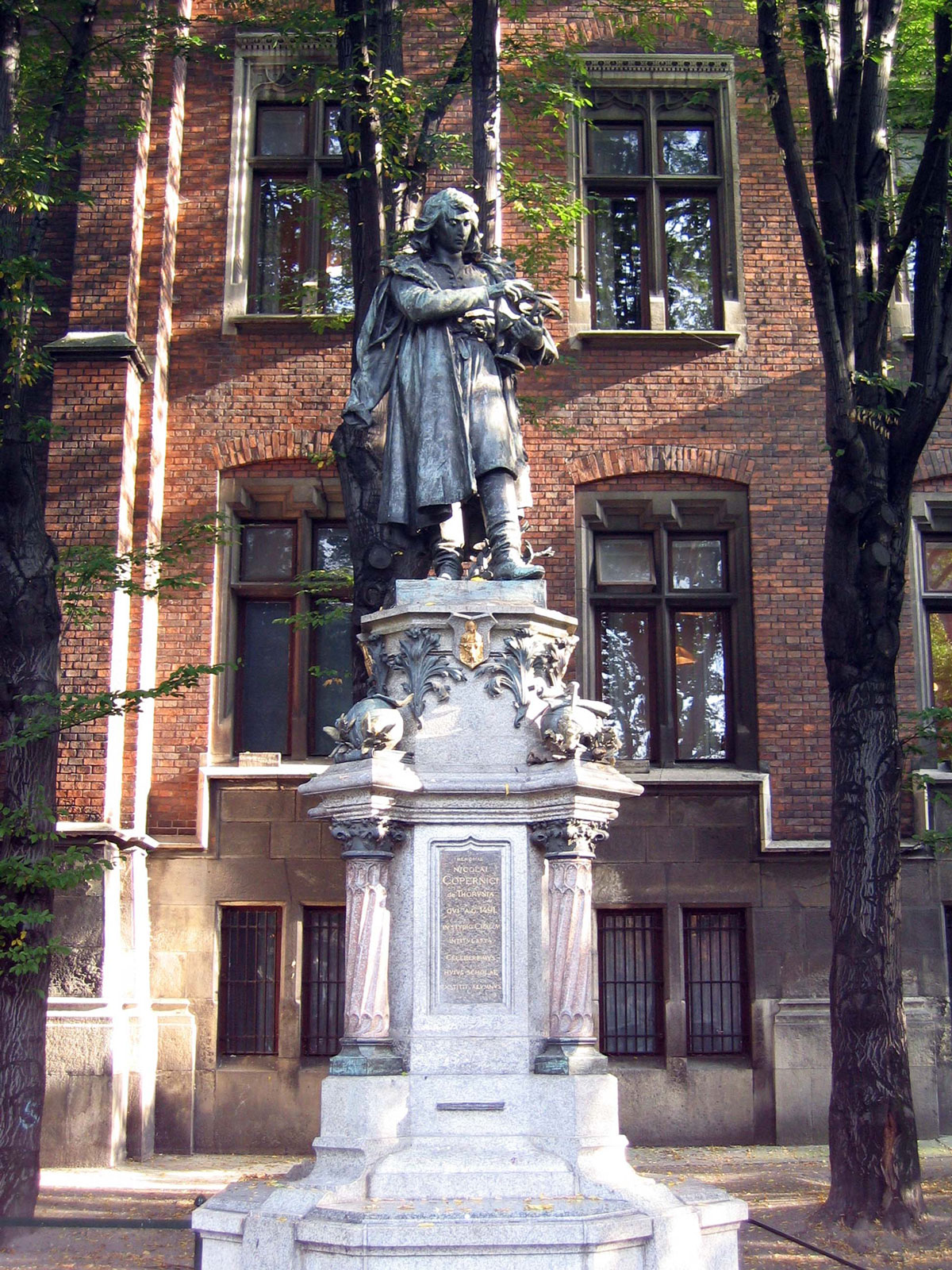
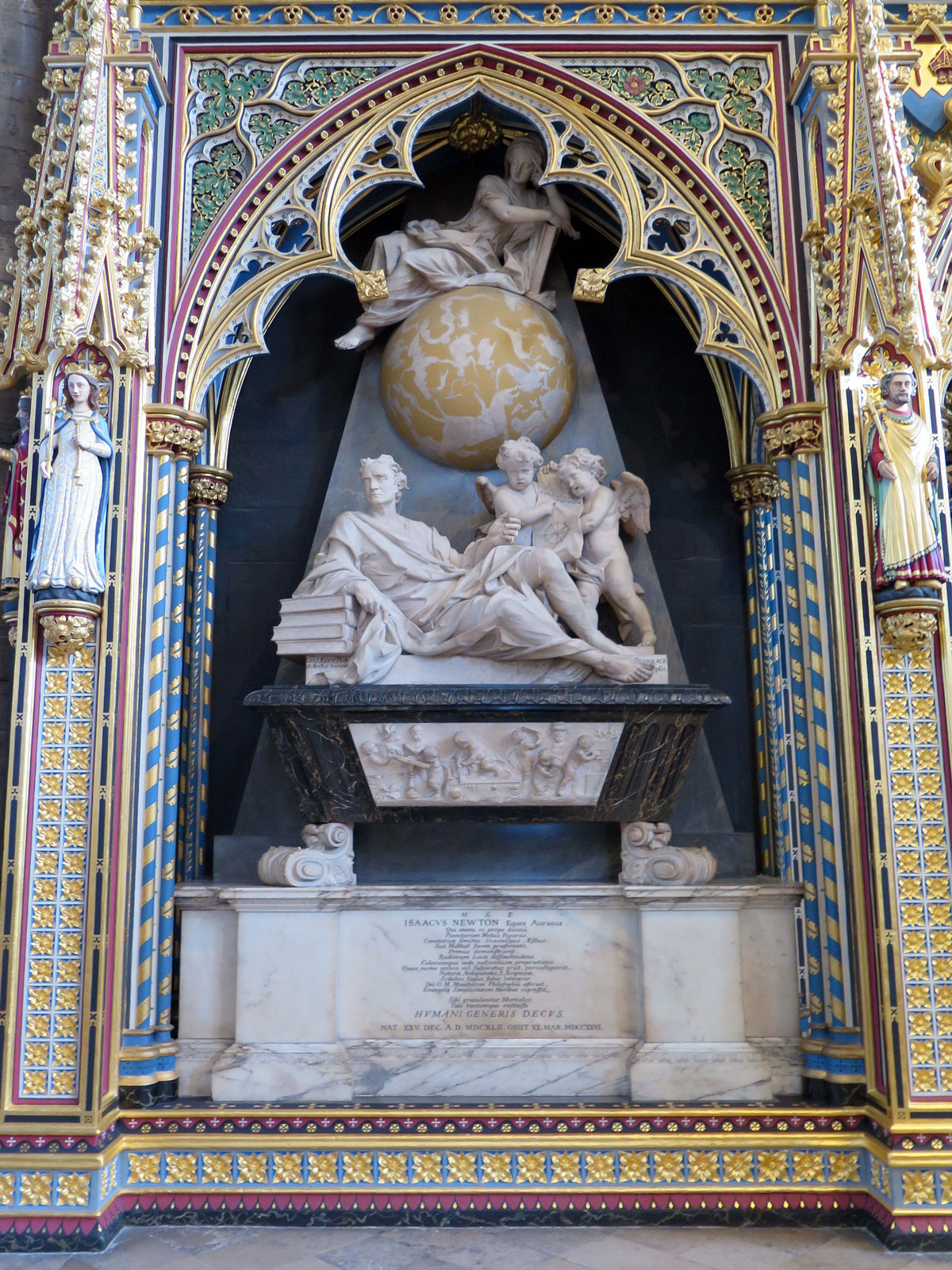
Scientists of all descriptions began to delve deeper into the realms of the unknown and they were joined by philosophers and cultural intellectuals who between them brought about what became known as the Age of Enlightenment, and the Midlands had its own Enlightenment Movement – the Lunar Society of Birmingham.
The Lunar Society consisted of a group of men who would meet at the time of a full moon in order to take advantage of the extra light which made the journey home easier and safer in the absence of street lighting. Many of the members were protestant non-conformist free-thinkers, and the purpose of their gatherings was to discuss the latest scientific, technological and cultural developments that were taking place in the new enlightened world. They often met at the Lichfield home of Erasmus Darwin, a renowned physician, scientist, inventor, and grandfather of Charles Darwin, but there were also regular meetings at Soho House in Handsworth, the home of inventor and businessman Matthew Boulton.
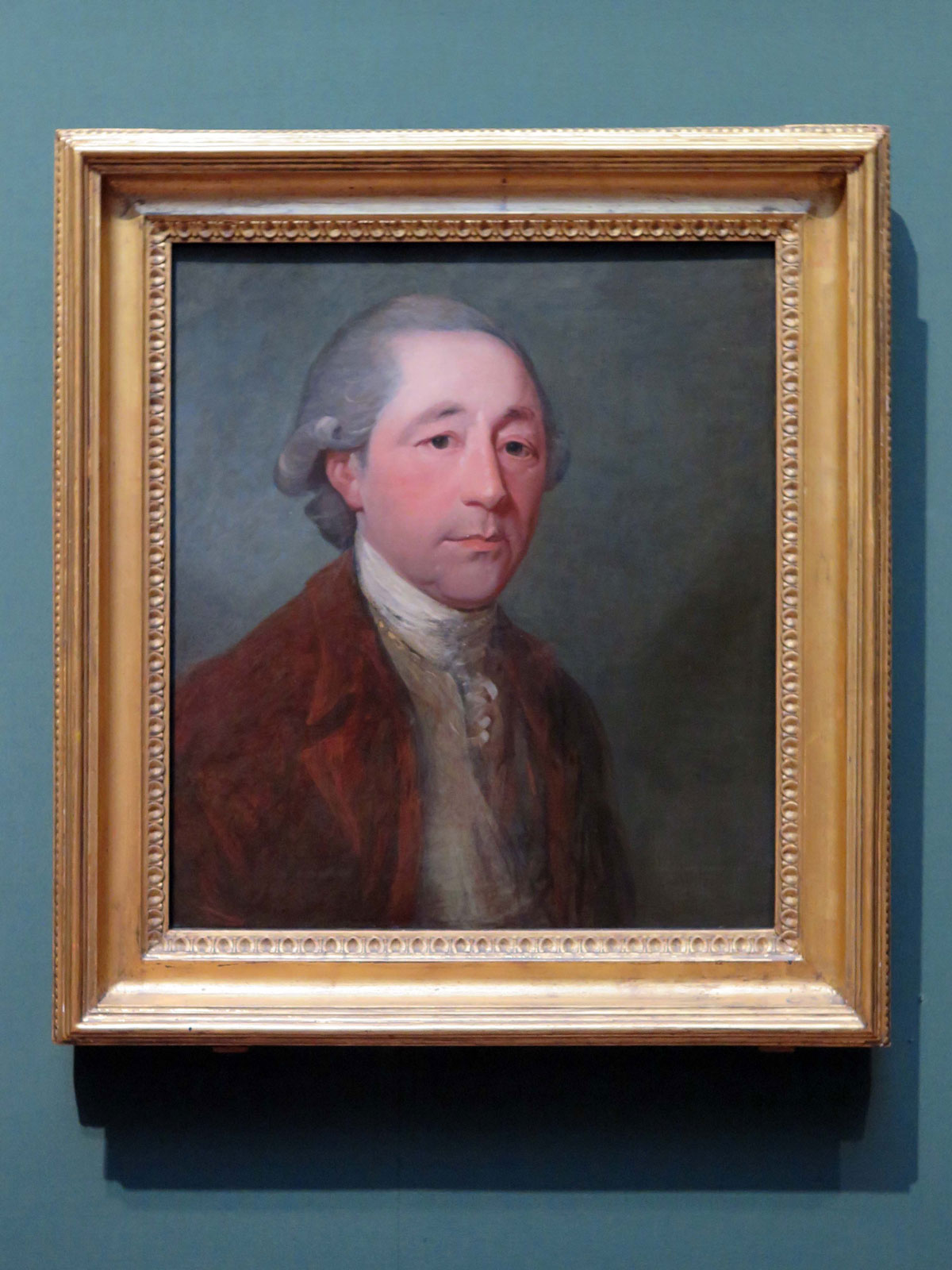
The Birmingham Lunaticks, as they called themselves, were pioneers in the scientific fields of chemistry, physics, and medicine, but they also involved themselves with engineering, manufacturing, and commerce. The mixture of scholars and skilled craftsmen with different political and social views that cut right across the class system can’t be overestimated, and was a major factor in Britain leading the world into the revolution that was about to arrive.
Prominent members of the society included people like the potter and abolitionist Josiah Wedgwood, scientist and philosopher Joseph Priestley, and the engineer James Watt amongst others, and it was the meeting of minds between Boulton and Watt that was to become one of the most important relationships to come out of the Industrial Revolution.
Before I go into how Boulton and Watt’s partnership became so important, it’s worth recounting how it came about: It wasn’t just the Lunar Society that had been making headway in scientific and engineering progress, but others too.
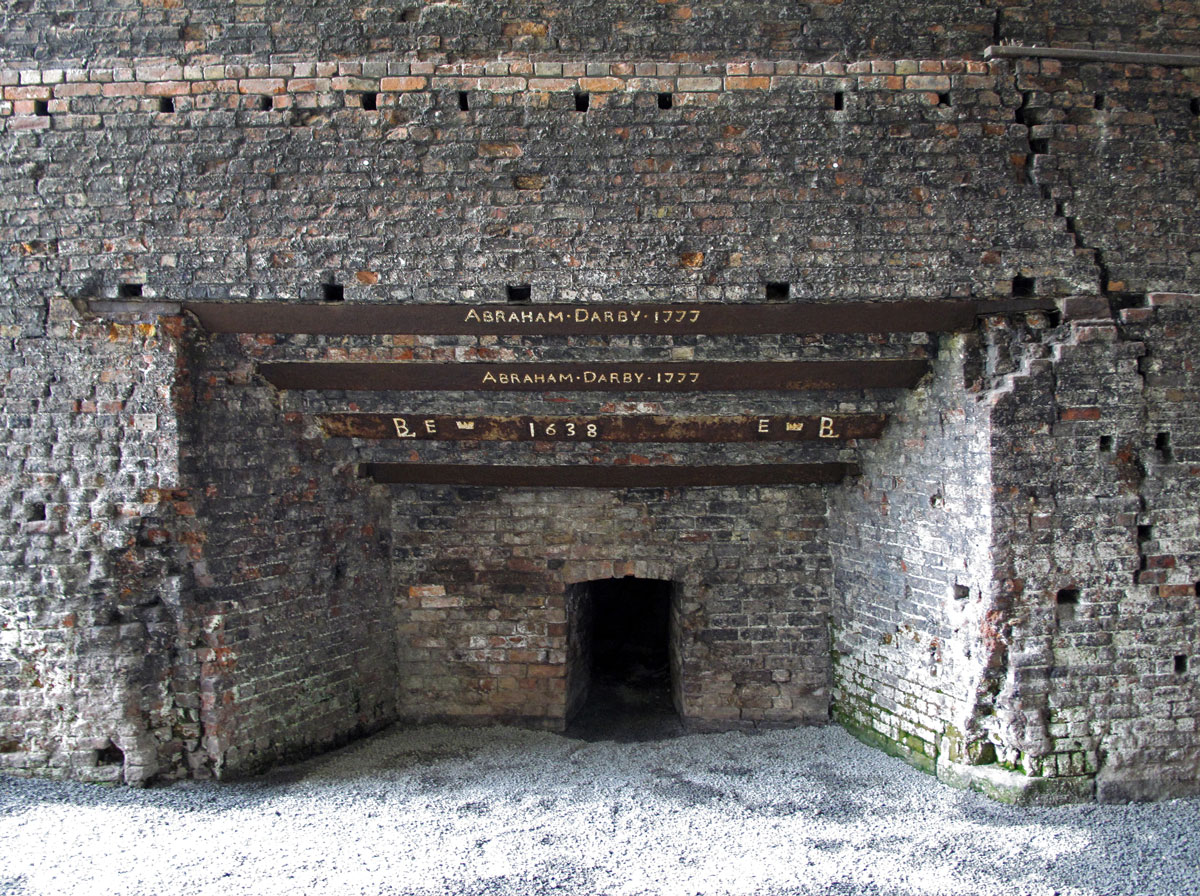
The ongoing Agricultural Revolution had not only fueled a demand for improved mechanization, but also resulted in a booming population with surplus labour. These conditions fired up the imagination of people like Abraham Darby who in 1709, found an easier and cheaper way of smelting iron by firing up a blast furnace at Coalbrookdale using coke instead of charcoal. Just as important was Thomas Newcomen’s invention in 1712 of a steam engine that was able to pump water out of increasingly deeper mines. Both these inventions were of considerable benefit to Birmingham’s metalworking industry as there were excellent coal and iron reserves in the adjacent Black Country, but it was Boulton and Watt who were able to take things to a whole new level – and not just for local metalworkers either.
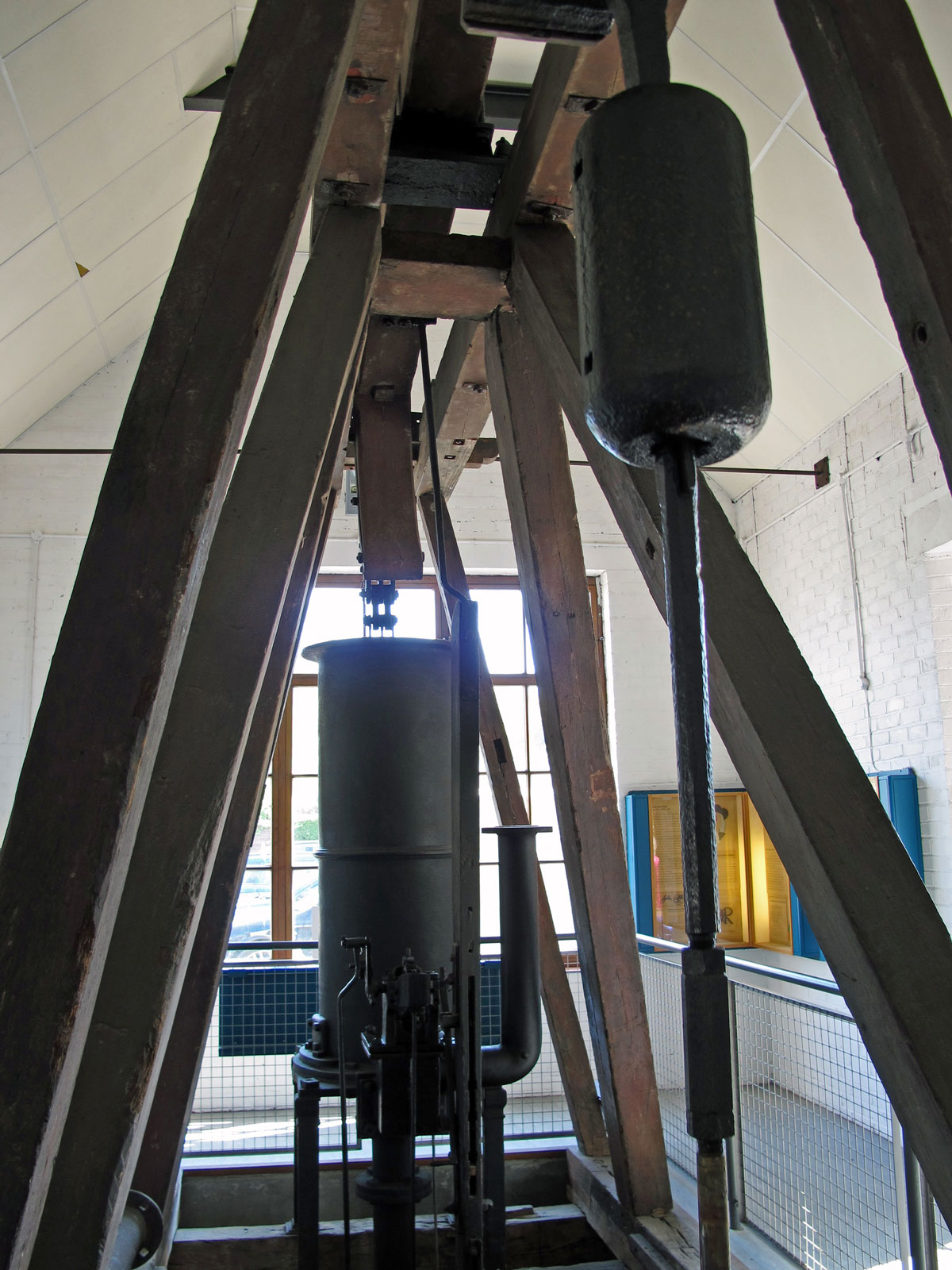
Being a long way from the sea or major river, and with canals and railways still yet to be developed, Birmingham built its reputation on producing small metal items called ‘toys.’ These weren’t toys as we think of them, but fashionable items like buttons, buckles, and watch chains, and it was a toymaker’s family that Matthew Boulton was born into in 1728. At the age of 21, he became a partner in the business, taking it over completely after his father died.
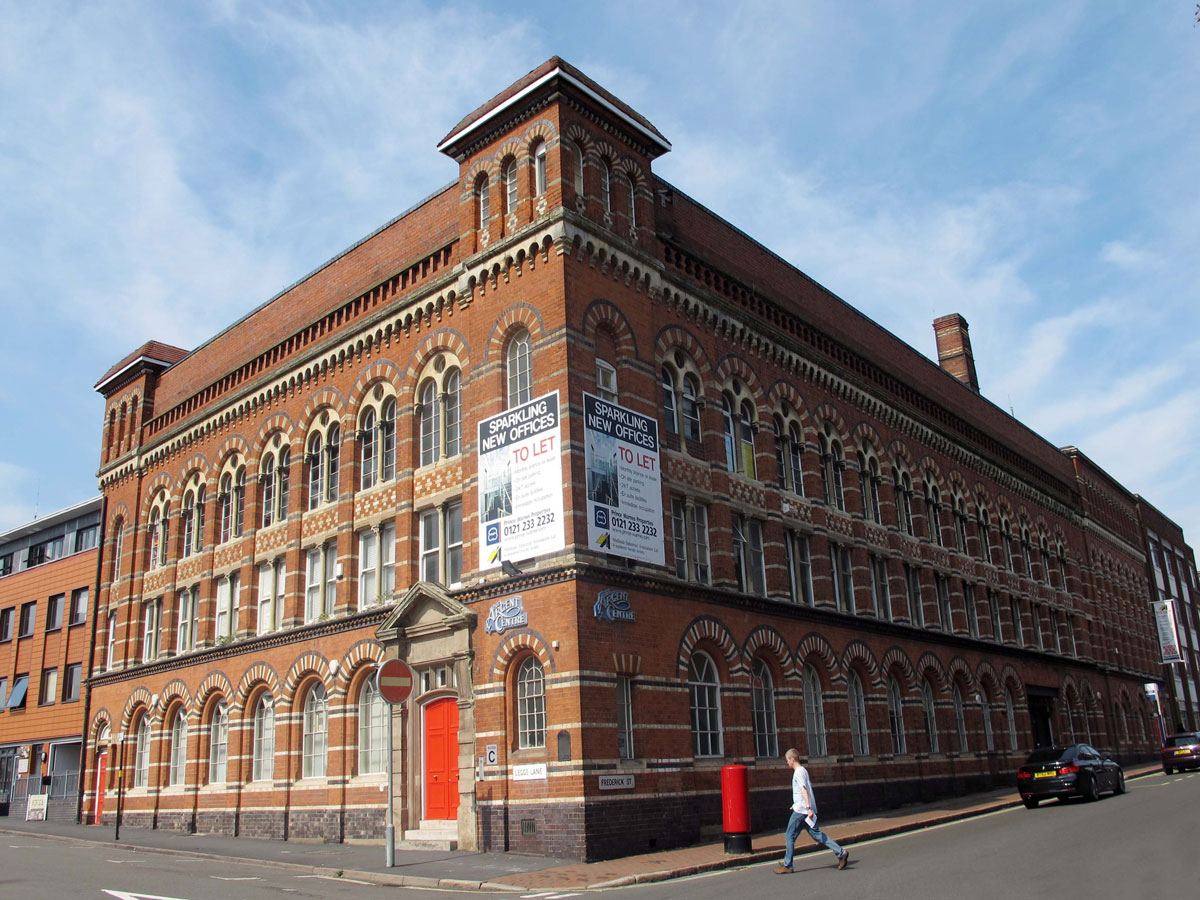
In 1761, with expansion in mind, Boulton leased 13 acres of land at Handsworth (now a part of Birmingham), and along with his first partner John Fothergill, built a factory next door to his home at Soho House. Concentrating on silverware, the company invested in the latest equipment allowing different manufacturing procedures to be combined under one roof, and by doing so created an early example of assembly line mass production. Unfortunately, the silver business became unprofitable – but Boulton’s business ventures were far from over.
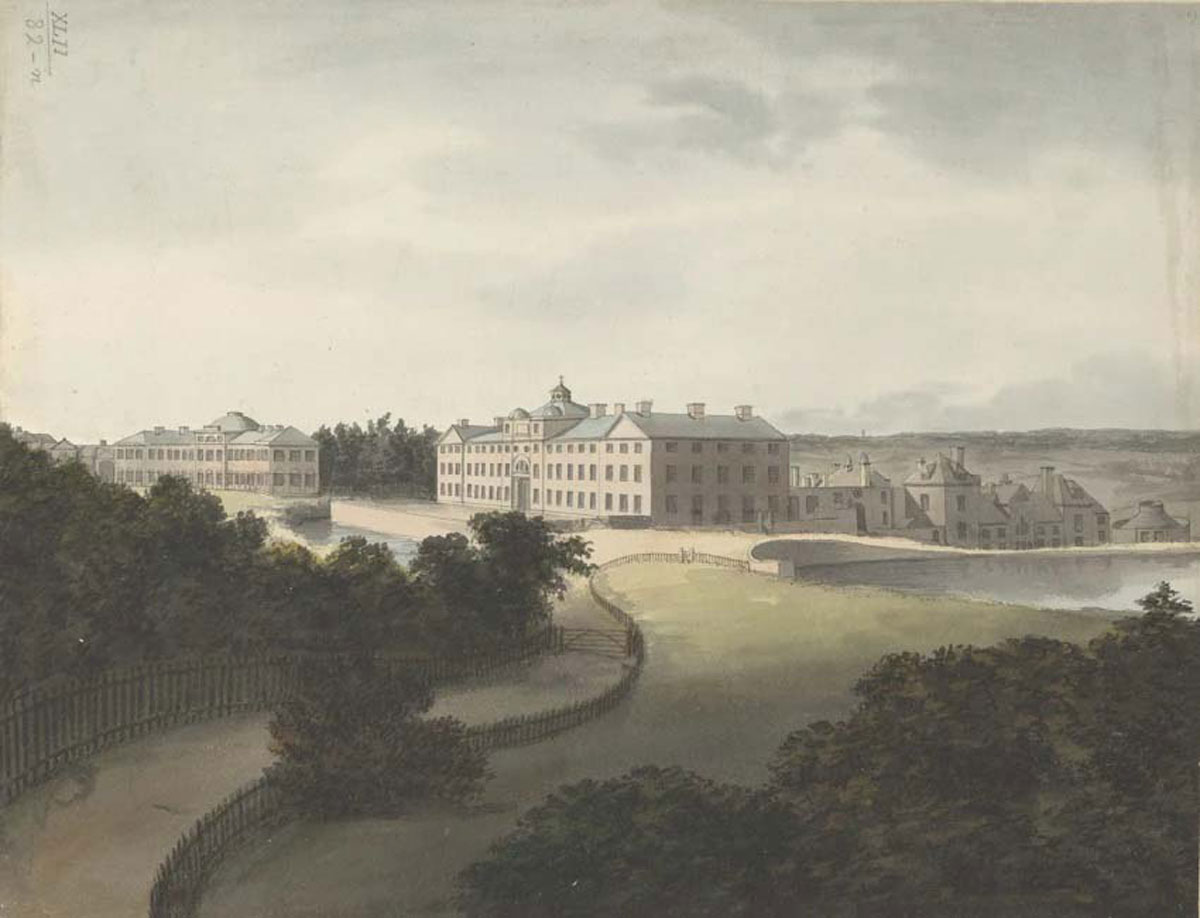
Matthew Boulton was 8 years old when James Watt was born in 1736. His upbringing in Greenock on the Firth of Clyde no doubt laid the foundations for his life ahead: His mother came from a well-educated family and his father was a shipwright, so perhaps it shouldn’t come as any great surprise to learn that he showed an interest in both mathematics and engineering. An unusual combination you may think, but it helped him decide to follow a career in making technical instruments.
Without any formal training as such, Watt had very few official contacts to help him climb the ladder, but the first opportunity to show off his talent came when he was asked to restore some astronomical instruments at Glasgow University. His skill must have made a favourable impression because he was offered a small workshop at the university to maintain and repair their scientific instruments.

Although he was keen to make his own way in the business world, Watt kept in close contact with his friends at the university, and in particular, the eminent physicist and chemist Joseph Black. In 1763 he was asked to repair a model Newcomen engine by Professor John Anderson, and it was then that he realised Newcomen’s engine was not as efficient as it should be.
There’s a popular story that Watt invented the steam engine by watching a kettle boil, but that’s just a myth because as we know Thomas Newcomen had already beaten him to it, but it is true that Watt was interested in how thermal energy was created, and did use a kettle in his experiments.
Without going into too many technical details, these experiments proved to Watt that Newcomen’s design wasted a lot of energy by repeatedly cooling and reheating the cylinder. His Eureka moment came one spring day in 1765 as he wandered across Glasgow Green. He realised that by introducing a separate condenser to avoid this waste of energy, he was able to greatly improve the power, efficiency and therefore cost-effectiveness of the whole operation, and by the end of the year he had a working model up and running.
Designing a model was one thing, but constructing and financing a commercial machine was quite another. After initial financial help from Joseph Black, he formed a partnership with John Roebuck of the Carron Iron Works near Falkirk, but pursuing a patent took its financial toll, and after Roebuck went bankrupt during the process, Watt was forced to take up employment elsewhere. His invention seemed doomed to failure – until Matthew Boulton stepped in.
In 1775 Boulton bought Roebuck’s shares, acquiring the patent rights, but also critically securing an extension of the patent to 1800. The arrangement meant that Watt still retained inventor’s ownership while Boulton provided the capital with sole rights to manufacture the engines at his Soho factory, and so began one of the most successful partnerships of the Industrial Revolution.
Two years later, the business acquired the services of William Murdoch, another inventor of exceptional talent who is often overshadowed by Boulton and Watt.
Murdoch was born on the estate of James Boswell (Samuel Johnson’s biographer) at Auchinleck in Ayrshire where his father worked as a millwright. At school he excelled at mathematics, but by assisting his father on the estate, he also gained valuable experience in the principles of mechanics by experimenting with wood and metal.
Murdoch was well aware of the Boulton and Watt set-up at Soho, but it’s more than possible that they were also aware of him, as Boswell is known to have visited the factory on several occasions. Either way, Murdoch took it upon himself to walk the 300 miles from his Ayrshire home down to Birmingham to ask for a job.
I would have given him one straight away for that reason alone, but he went a stage further by wearing a wooden hat that he made on a lathe he designed himself. Apparently, Boulton was so impressed that he hired him immediately, and Murdoch became an indispensable part of the company – and Birmingham’s third Golden Boy.

To begin with he was employed with making patterns for the casting of machine parts, but in September 1779 he was sent to Cornwall to oversee the erection of Boulton and Watt engines that were to be used in tin mines down there, a job which also included their maintenance and repair. Murdoch chose to live in Redruth where he stayed for 19 years, during which time he solved many mechanical problems by making a large number of improvements to the Watt engines. Unfortunately for him, the company retained the patents on all employees’ inventions, which meant that he never received the recognition his work deserved.
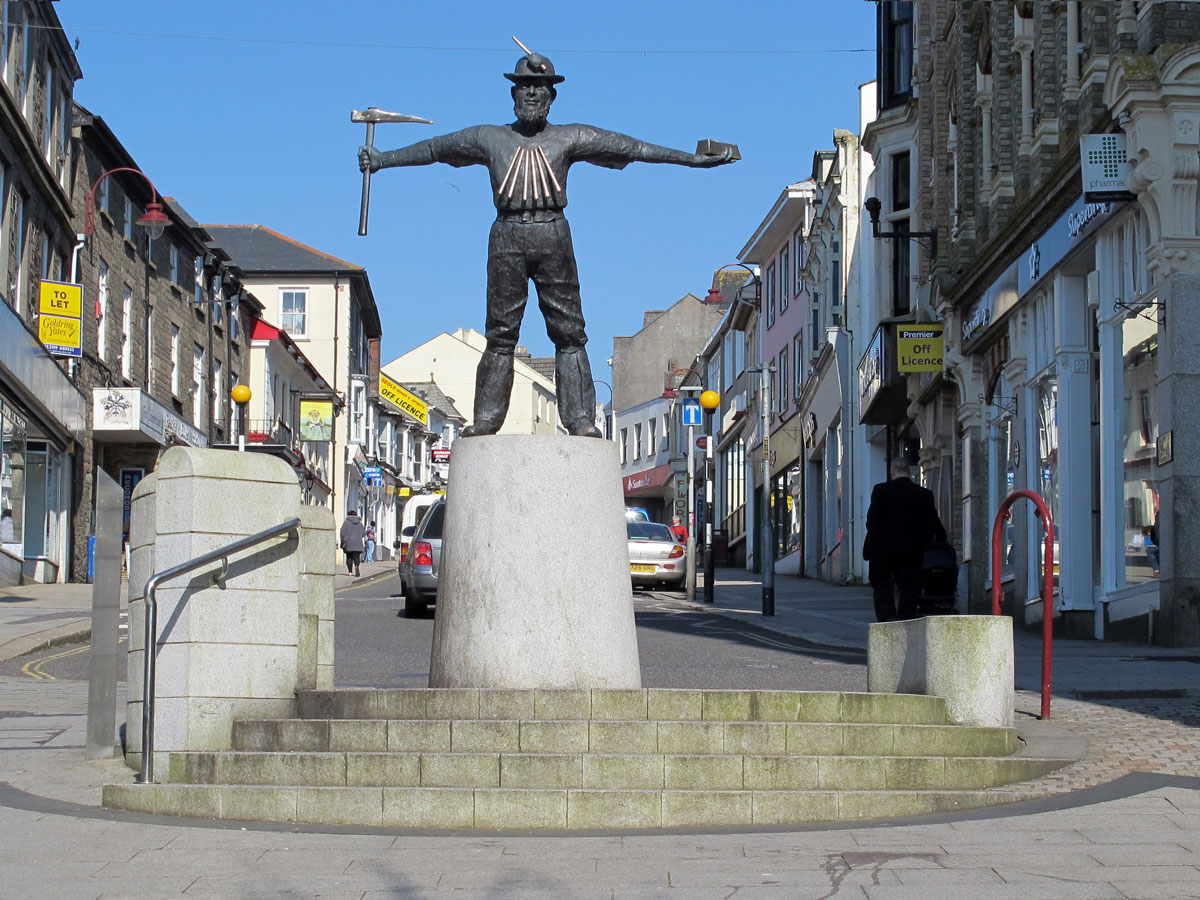
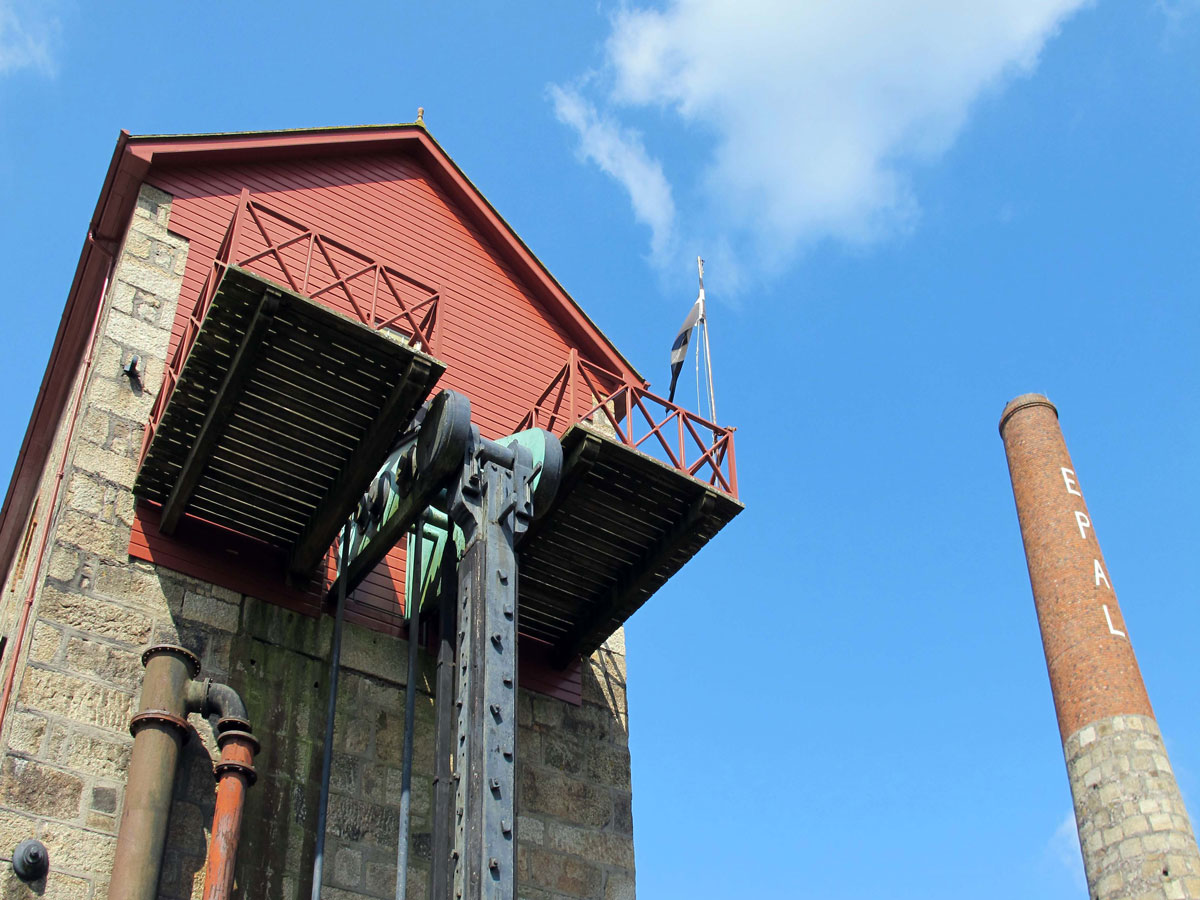
During what spare time he had, Murdoch came up with several other inventions, one of which was the Sun and Planet Gear that produced a circular motion which could be used to power water wheels, but perhaps the one that should have made him famous, not to say a lot of money, was his creation in 1784 of Britain’s first working model of a steam carriage or road locomotive. He wasn’t the first to do so as that accolade fell to a French engineer by the name of Nicolas-Joseph-Cugnot who kept it a closely guarded secret. Even so, Murdoch found his own way of making a man-made machine that moved around completely under its own steam, and what’s more was an improvement on the Frenchman’s model. Neither Boulton nor Watt supported his wish to patent the creation, partly because Watt was nervous about the use of high-pressure steam, but also probably because Boulton was nervous about him running off to do his own thing. Below is a clip of the Murdoch Flyer which is a full-scale replica of Murdoch’s steam carriage based in Tolgus near Redruth.
Undaunted, Murdoch showed off his steam locomotion in public for the first time with a demonstration at the King’s Head Hotel in Truro. Whether Richard Trevithick was there to see it or not I wouldn’t know, but it couldn’t have been any coincidence that he moved in next door to Murdoch in 1797. Trevithick, for those who aren’t aware, was responsible, in 1804, for operating the world’s first working railway steam locomotive when it hauled 10 tons of iron and 70 men along the tramway from the Pen-y-darren Ironworks in Merthyr Tydfil to Abercynon in South Wales. He’s another pioneer who is often overlooked but they still celebrate Camborne’s favourite son each April.
These weren’t the only inventions conjured up by the brilliant mind of William Murdoch, but to ensure that Boulton and Watt didn’t lose his services, they made him a partner of the firm in 1810.
The Soho manufactory reached its zenith around the turn of the 19th century, by which time it was employing an average of 600 to 700 employees, but that doesn’t include those employed at the Soho Foundry in Smethwick which was built in 1795 to produce Watt’s steam engines. The factory eventually ceased operation in 1848 and was demolished in 1853, but Soho House still stands. Today it is run by the Birmingham Museums Trust and open to the general public.
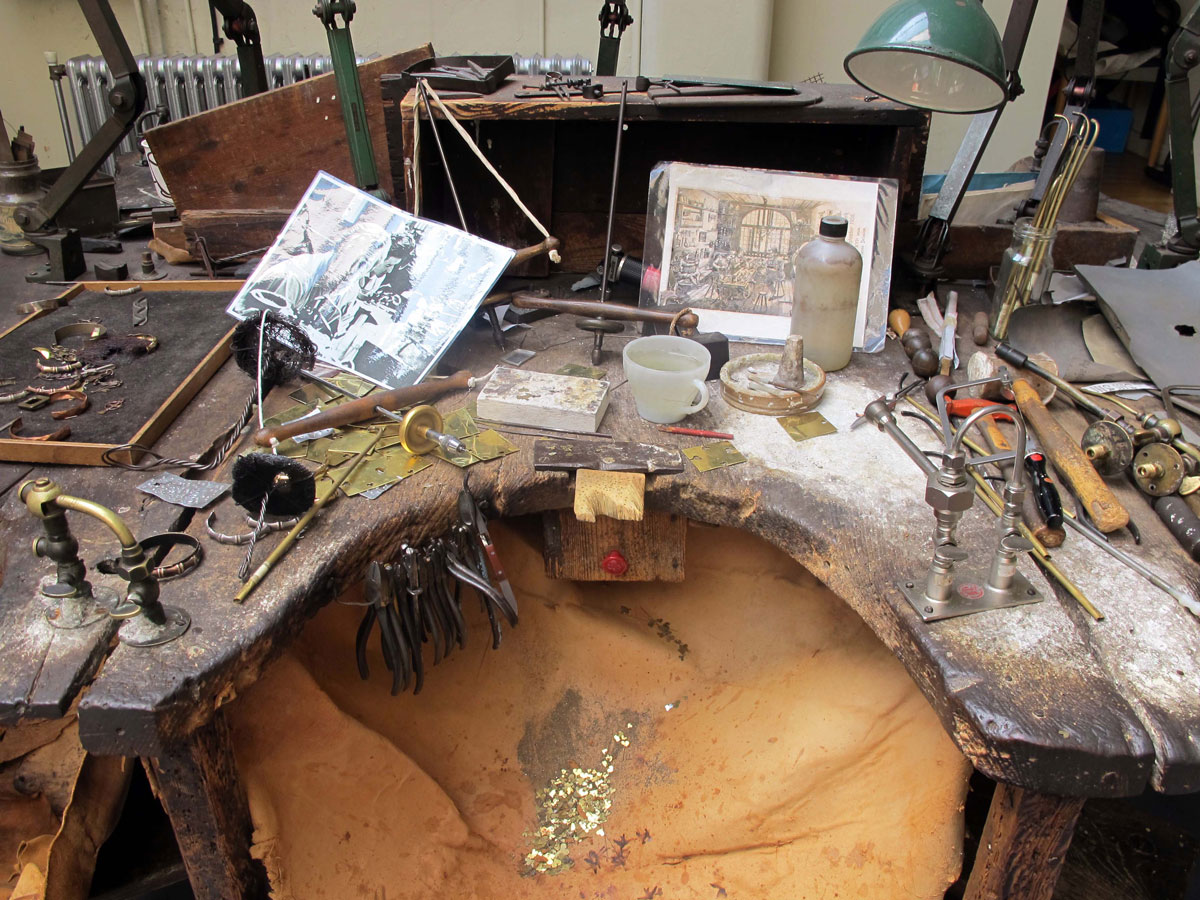
The innovations made by the enterprise of Boulton and Watt helped spawn a profusion of other businesses, although not on the same scale as Soho. Birmingham had long been a metalworking centre but, unlike other industrial towns that concentrated on one specific industry, Birmingham diversified into a large number of trades in smaller workshops rather than one employer operating in a large factory. Using a skilled independent workforce, these workshops were involved in producing items such as jewellery, weapons (for the military) and tools, and it’s for this reason that Birmingham became known as the “City of a thousand trades” – and the Workshop of the World.
So whatever happened to the Golden Boys?
Well, William Murdoch remained a partner of the firm until he retired at the age of 76, James Watt went on to adapt his engine to produce rotary motion, and Matthew Boulton who started the business, didn’t stop making money – literally.
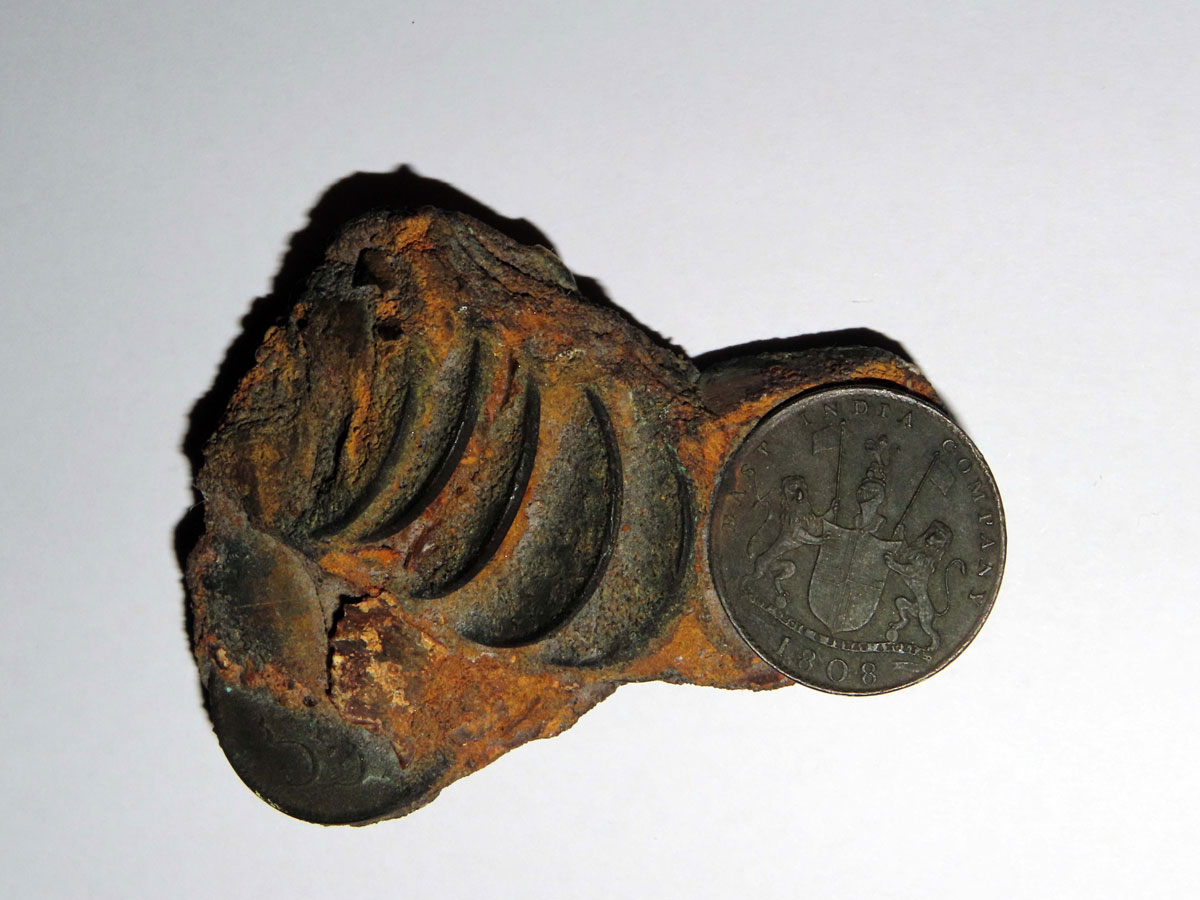
Due to a counterfeit epidemic, Boulton opened the Soho Mint where he set about making coins using steam power, that were not only forge proof, but also of better quality than the Royal Mint could produce. In the process, he not only saved the British government a lot of money, he also made a lot for himself, and today is regarded as the grandfather of modern coinage.
Below is a pic of some coins I have that he produced for the British East India Company. They were recovered from the wreck of the Admiral Gardner that sank on the Goodwin Sands in January 1809.
Matthew Boulton died in 1809, James Watt in 1819 and William Murdoch in 1839. All three are buried in St Mary’s Church, Handsworth.
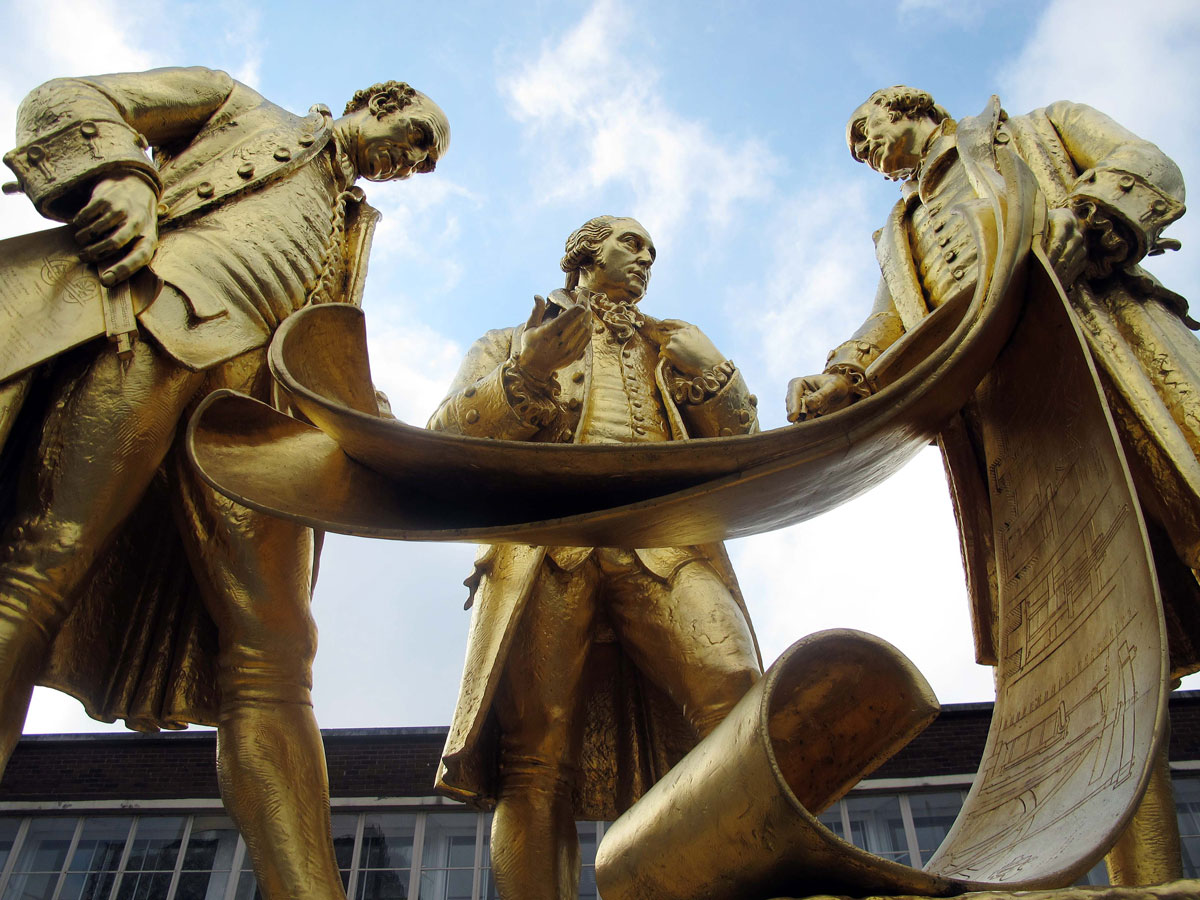
The company itself survived until 1895, and in 1956 a statue by William Bloye and Raymond Forbes-Kings was erected to commemorate the three men’s achievements. The statue now stands in Centenary Square where its bright gold finish tells you why Boulton, Watt and Murdoch became known as the Golden Boys.
All three were members of the Lunar Society and true pioneers of the Industrial Revolution, and if anyone should ever call me a “Lunatik”, I won’t be offended in the slightest: In fact, I’ll think of what these men achieved, and take it as a compliment instead.
POSTED – MARCH 2026
In the smoking room of a rain-lashed London club, Isaac Newton jabbed his cane toward the cricket grounds.
“Cricket is plainly the superior sport,” Newton declared. “The heavier ball seeks naturally toward the Earth with God’s own urgency. A gentleman who can loft it longest demonstrates mastery over gravity itself.”
Across from him, Charles Darwin adjusted his waistcoat with visible irritation. “Nonsense. Fox hunting is the pinnacle of sport because weaker horses are naturally eliminated through selective exhaustion. Over generations, gentlemen become biologically refined. Cricket merely breeds accountants with bruised shins.”
Newton scoffed. “Your theory ignores the invisible ether, which clearly cushions horse-thoughts.”
Darwin snapped back, “And your gravity neglects the humoral imbalance caused by excessive wicket-keeping.”
The club went silent.
Finally the steward sighed and wired for Donald Trump.
Three hours later he burst through the doors, pointed at both men, and declared:
“Terrific arguments. Truly confused. But golf is the most evolved sport because the ball already wants to live in the hole. Everybody knows this.”
I found your article fantastic, with so much detailed historical information!
I only knew something about James Watt and the significant role Birmingham played in the developments of that period.
Thank you Luisa. I’m always pleased to hear that you’ve enjoyed a post of mine. Birmingham often gets a bad press, but in many ways it was the beating heart of our nation and the story deserves to be told.
Thank you so much for your kind reply, dear Malc!
Have a lovely Monday
Welcome back, Malc! With your usual attention to detail, you’ve obviously been putting your time away to good use xx
Amongst other things, my computer hard drive died, but I’m still here 😊Thanks for sticking with me Jo 🙏😊
Count on me coming back tomorrow to properly read this great post.
Thanks Shey
Tremendous post Malc. You gave the background the history without ever ‘boring for it’ if you get me. You absolutely brought the past to life—all the reasons I bookmarked it to come back to read properly actually. Now Verdant Works Dundee where my Mr does some guiding, there’;s a Boulton and Watt Steam engine in the High Mill, one of the few remaining ones. It is massive–fortunately the floors of the High Mill kind of removed themselves during the time that bit of Verdant had not been ‘museumed’ or restored. There’s a demonstrations of it at certain times every day. They even let my Mr in on the act and he managed not to break it. –all right you just switch it on now. And our wee theatre group has done a lot of plays in its shadow.
Boulton and Watt produced almost 500 steam engines, and when I looked to see what ones were left, your Dundee one cropped up, but there aren’t many. Thanks for your lovely comment too by the way.
There’s not many and this one is operational. Verdant Works is a museum that has been created piecemeal in a former–originally flax–mill and they’ve got things, added areas etc, as they’ve gone along. The High Mill and that giant beast of an engine there are two of these things. I mean every word of the comment. This is a great post.
I know how interested you are in Dundee and Scottish history, as well as the cultural side of it all, so perhaps there could be a play – or even a book – centred around your fellow compatriots, James Watt and William Murdoch – or perhaps not 😊
You never know. I have just got the cast assembled for a play we are doing on McGonagall, we will be appearing in Verdant with, as one of quite a few venues.
That sounds a hoot!
Oh it will be. There’s also a chance that we will be taking it to a McG Festival. I mean they did the asking not us. SO. But yeah, it is gonna be like he Halflins and Hecklers play, everyone playing a ton of parts at the drop and change of a hat and there’s music being specially written for it too.
Great article! Now I am wondering why I haven’t been aware of that statue!!!! If I ever visit Birmingham again, I know what I need to do there!
It was moved to facilitate a new metro tram line but it’s in a more prominent position now – that’s if the move has been completed. Thanks for your lovely comment 🙂
Lots of history here that is completely new to me! I knew a bit about James Watt but not the other two Golden Boys, nor the significant part that Birmingham played in the developments of those times.
Glad you found it interesting Sarah. Most towns were associated with their own unique place in history back then whether it was making hats in Stockport, shoes in Northampton or gloves in Worcester, but Birmingham was different because it made so many different things
A wonderful post Malc, covering several points which weren’t touched on when I learned about the Industrial Revolution at school, and it’s so interesting I read it twice. Also reminds me of the daft joke from my school days – what do you call a crazy clock on the moon? A luna-tick😀
Thank you Eunice. There were some amazing people around back then, but I’m not so sure about the jokes 🙂
A great article that encompasses much. I recently reviewed the period of the dark ages into the period of enlightenment. It was a needed refresher for a clearer vision of today’s current events. Best, blessed regards
Thanks AOC. The further back you look, the further ahead you can see. (or words to that effect) Churchill’s words not mine.