
Birmingham's Jewellery Quarter
If you’ve been following my previous posts about how Birmingham became the Workshop of the World, you’ll know how the absence of restrictive guilds, the knowledge of enlightened nonconformists, and the demand for skilled labour in the small metal trades were all contributory factors in Birmingham’s population increase which soared from around 5,000 in 1700 to over 23,000 by 1731. To meet this extra demand, the Colmore family, one of Birmingham’s wealthiest, obtained a private act of parliament which allowed them to sell off part of their Newhall Estate as separate plots of land, and this area of Hockley is essentially the Jewellery Quarter today.

Being the location of New Hall Manor, the estate was converted into a wealthy residential area comprising mostly of upmarket Georgian houses, and when St Paul’s Church was completed in 1779, the square that was built around it became a particularly fashionable address for Birmingham’s prosperous middle classes: In fact, one of the earliest villas to be built in the area was Regent’s Place which was leased by Matthew Boulton to James Watt.

It was (and still is) a legal requirement for solid silver to be assayed in order to determine its quality, but as Matthew Boulton had found out to his cost, the silver business in Birmingham was hampered by the lack of a local assay office, and although it was too late to help his own silver business, Boulton was instrumental in getting one installed, and when it opened on 31st Aug 1773 he was their very first customer.
Now that there was a local assay office in town, the tradition of making small metal objects such as buttons and watch chains, began to give way to more lucrative items, and as workshops for goldsmiths and silversmiths began to move in, then the middle classes began to move out. By 1861 there were almost 700 businesses in the area employing around 7,500 of some of the best paid workers in Birmingham, and it’s believed that half of the gold and silverware being sold in London at the time was produced here.
The industry eventually peaked around 1914 with more than 20,000 employees, 50,000 if you included the associated trades, and even the outbreak of WWI didn’t affect the businesses too much due to the demand for military buttons, badges, and medals.
Demand plummeted after the war was over though, and because of the city’s involvement in the production of weapons, aircraft and other munitions during WWII, Birmingham, including the Jewellery Quarter, attracted the attention of the Luftwaffe and was heavily bombed.
Although the jewellery trade never fully recovered from its peak, today it’s still home to between 700 and 800 related businesses, accounting for around 40% of the country’s jewellery. A new assay office was built in 2015 and is the world’s largest, hallmarking some 12 million items a year.
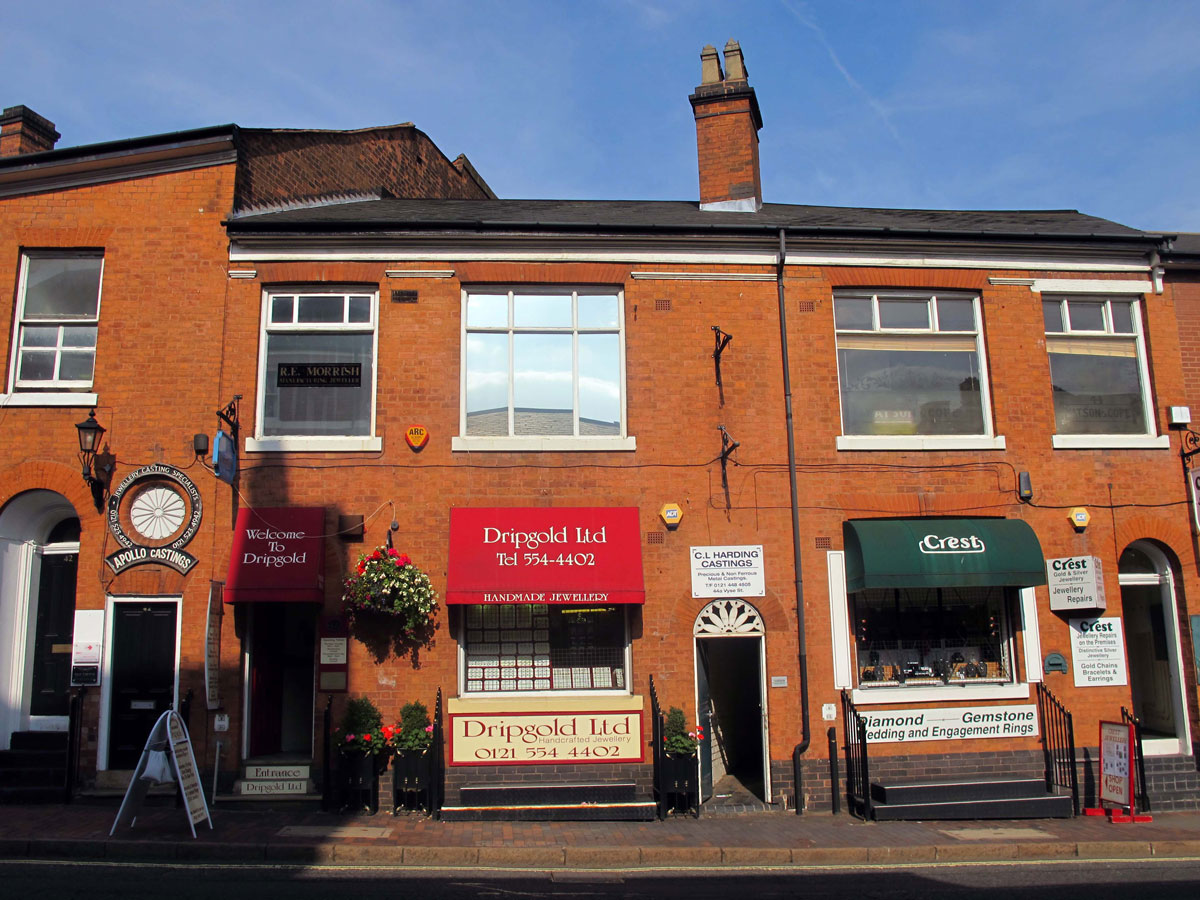
The second half of the 20th century saw Birmingham’s industrial landscape change dramatically, but fortunately, although there has been some redevelopment, most of the Quarter escaped the bulldozer thanks to a more sympathetic approach to conservation, with an emphasis on restoring historic buildings rather than replacing them. Some of the buildings have been converted into homes and offices, and newer ones have been built, but much of the area still retains its 19th century appearance, and if you want to get an idea of what the Jewellery Quarter looks like now, the Chamberlain Clock at the junction of Warstone Lane with Frederick Street and Vyse Street is as good a place as any to start because whichever way you go you’ll find buildings and businesses associated with the trade – both past and present.
For anybody wondering, the clock was erected in 1903 to mark Joseph Chamberlain’s tour of South Africa at the end of the Boer War. The man himself was a controversial politician who once described Benjamin Disraeli as “a man who never told the truth except by accident.” (I must remember that one), but his own son, Neville Chamberlain, hardly excelled himself as Prime Minister either.

If you’ve plenty of time available, you can wander around at will, but if time is at a premium, I recommend walking down Vyse Street which leads north from the clock. There are modern diamond outlets on the right-hand side of the road with smaller retail shops on the left. In fact the closer you look, the more you’ll see, and don’t ignore the side streets either. As you walk past the railway station, traditional workshops come into view around Hylton Street and Spencer Street, but the main reason I suggested coming this way is because, at the junction with Branston Street is the Jewellery Quarter Museum.

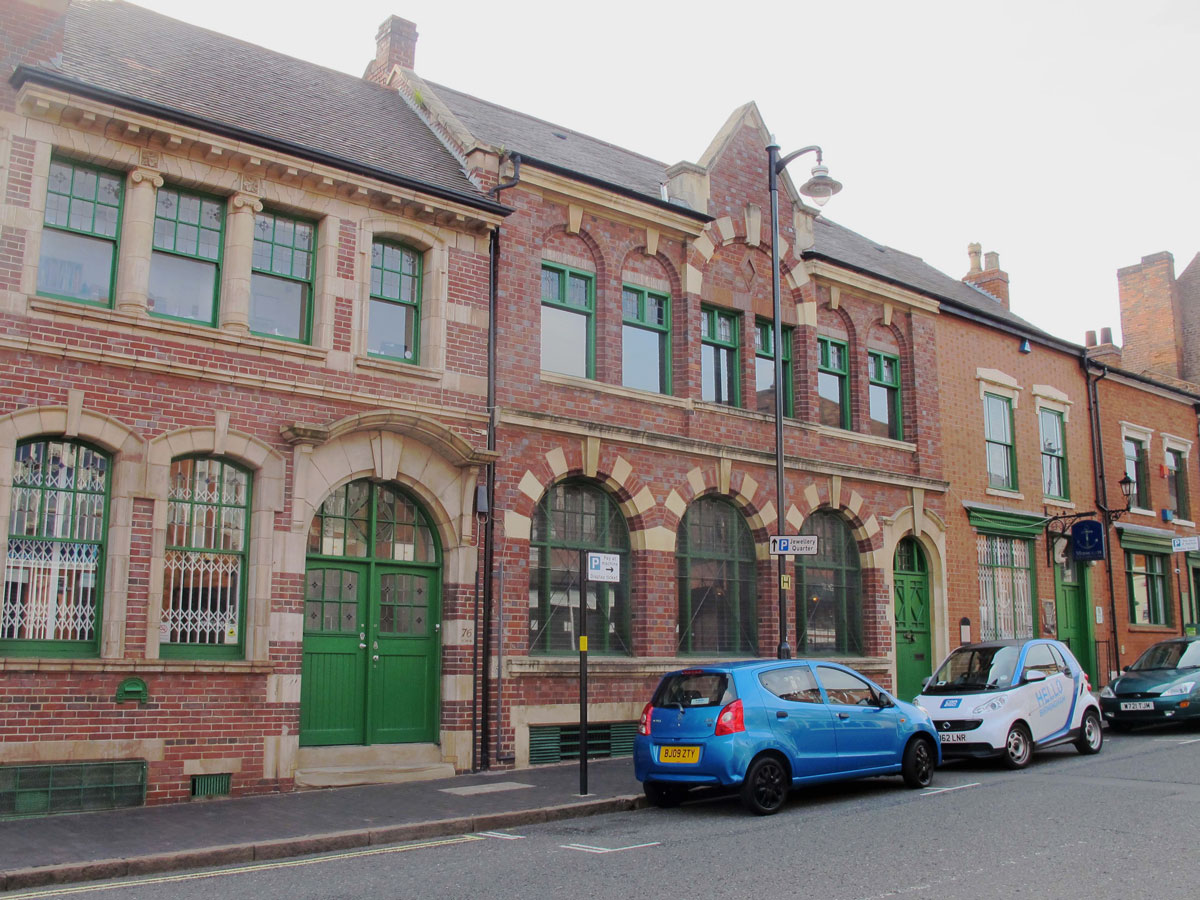
Located at 70-80 Vyse Street, the museum was, from 1899 until 1981, the business premises of Smith and Pepper, a small company who produced a wide range of gold jewellery with an emphasis on swallow and snake designs. When the owners retired in 1981, they literally locked the doors and left everything inside just as it was. Eventually they sold it to the city council but it was several years before council employees opened the doors again, and what they found inside was an absolute treasure trove..
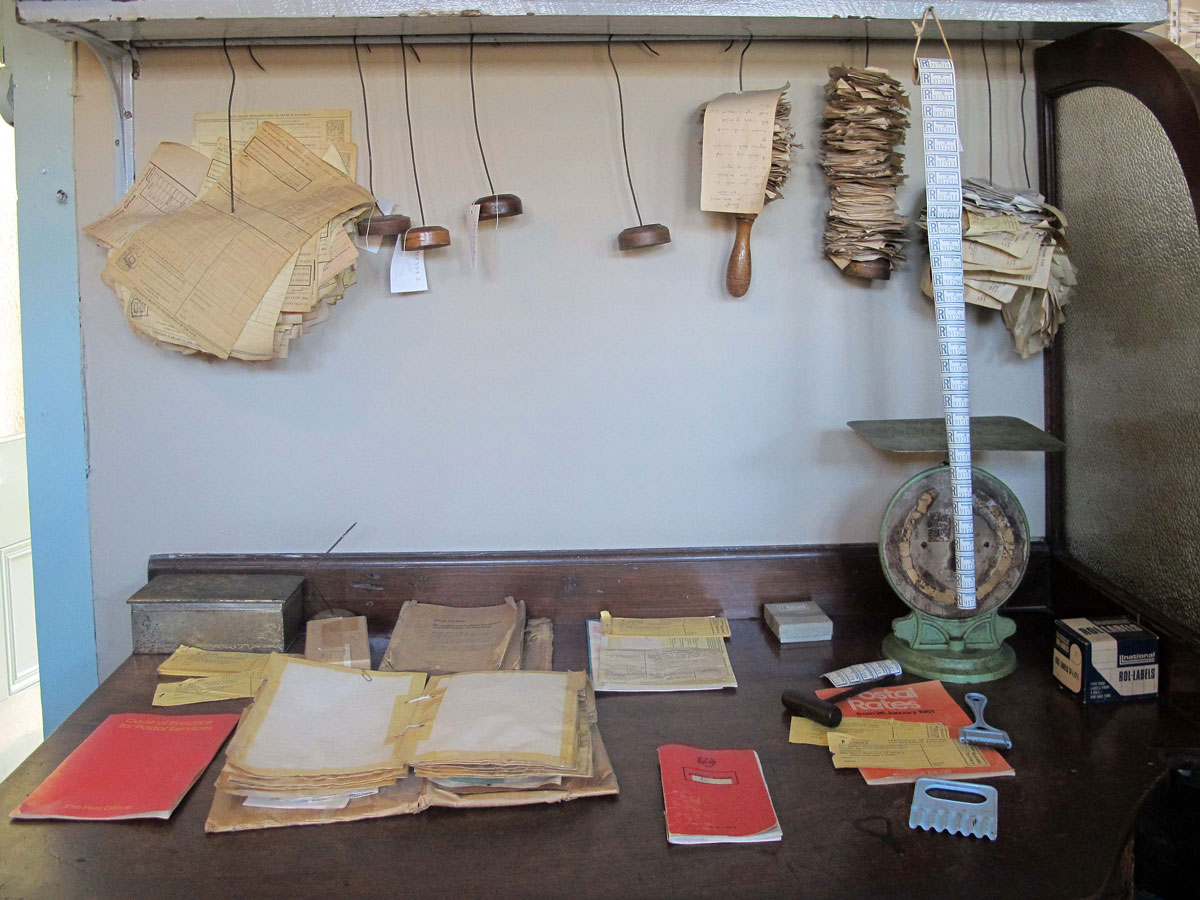
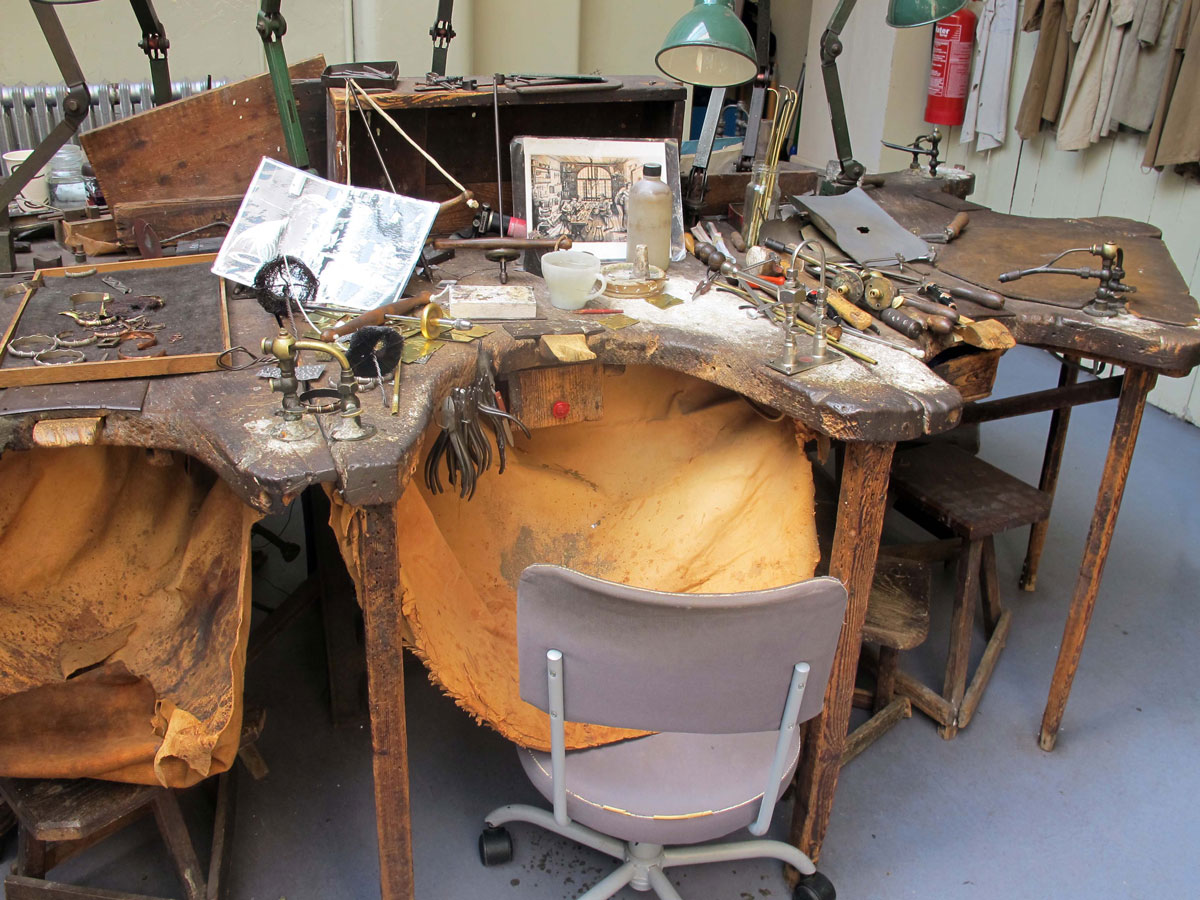
This veritable time capsule still had tools left on the benches, overalls hanging from their hooks and tea, jam, and marmite waiting for the next lunch break. Some business items even dated back to the time the firm started in 1899.
In 1992 the council opened the workshop as a museum and is operated mostly on a guided tour basis. Volunteers who take you around not only explain the history of the company but also show you how the items were made.
-

- The Smith and Pepper Office


-

- The Workshop


-

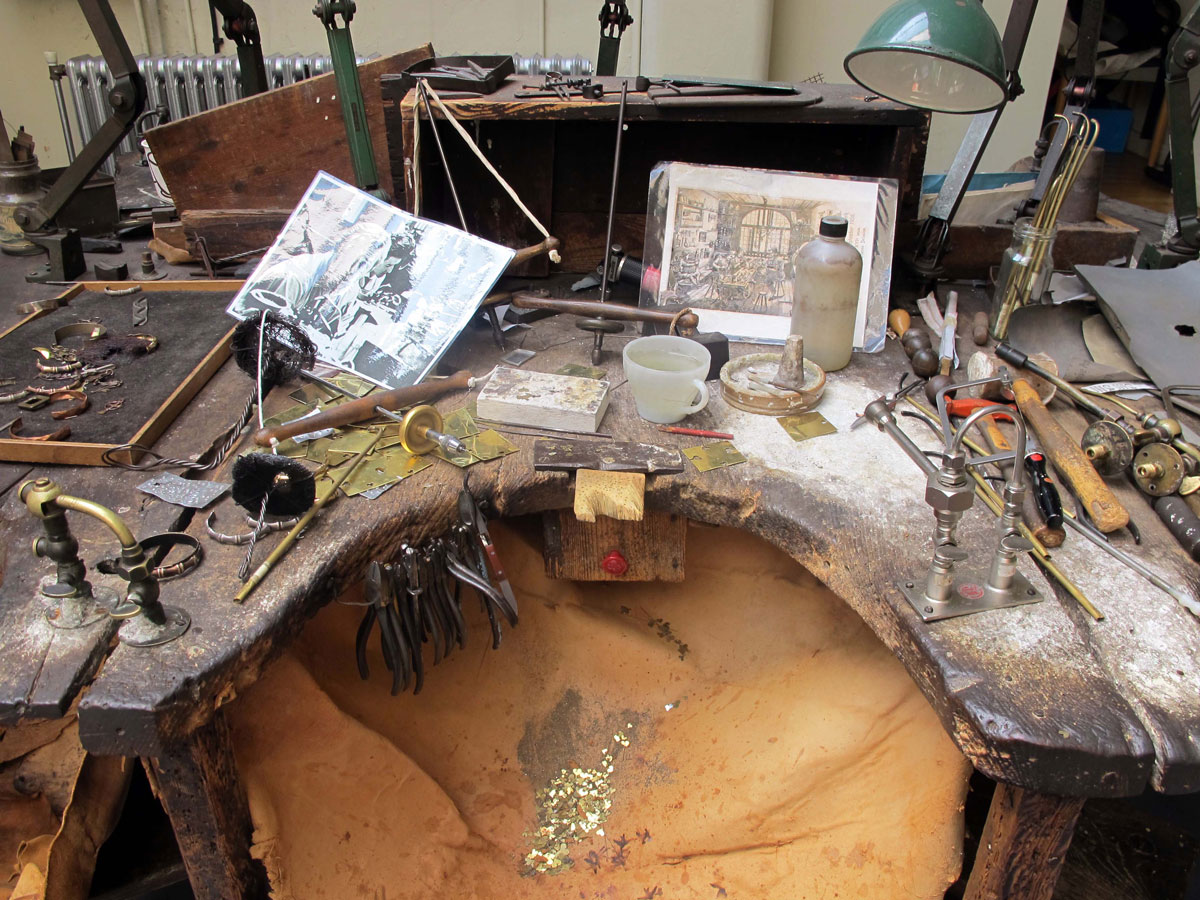
- A Peg Bench
-

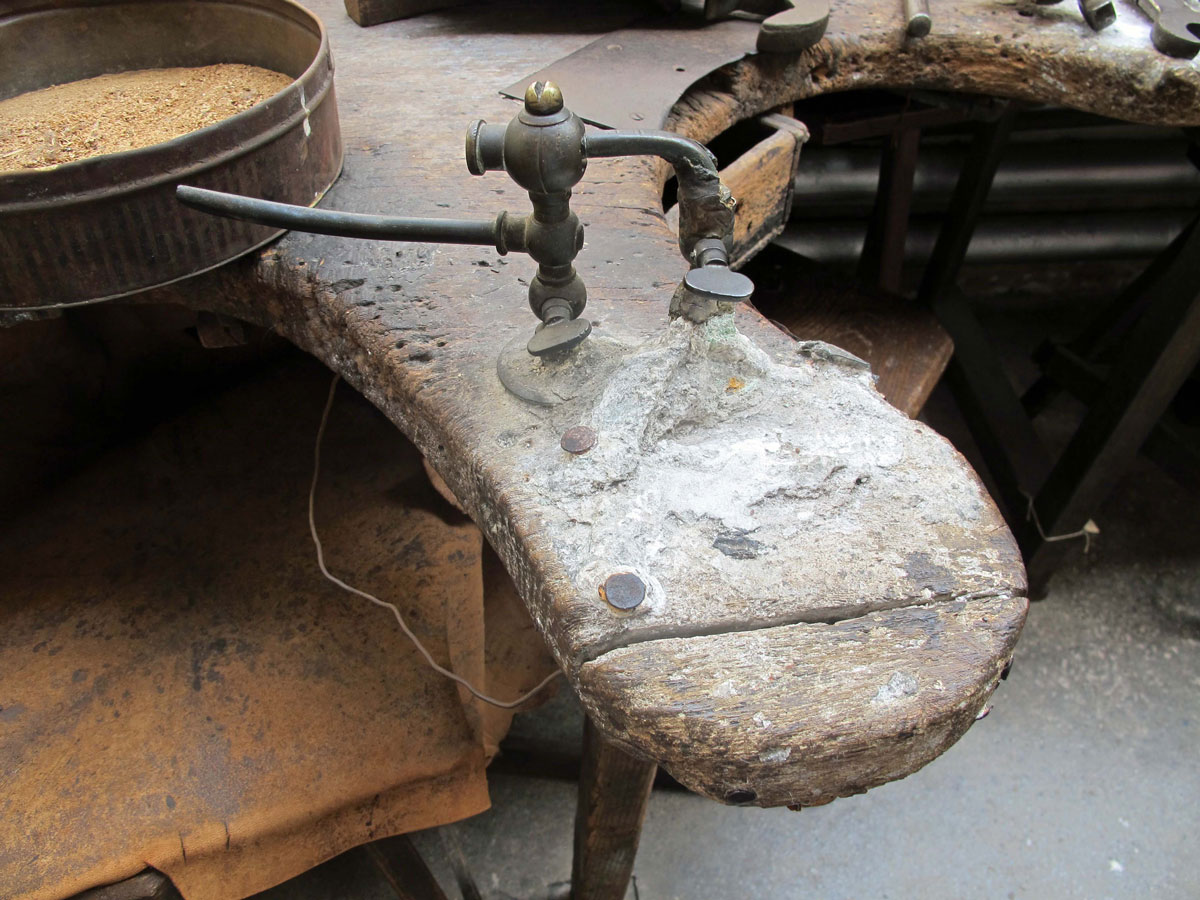
- A Birmingham Side Light (Bunsen Burner)
-
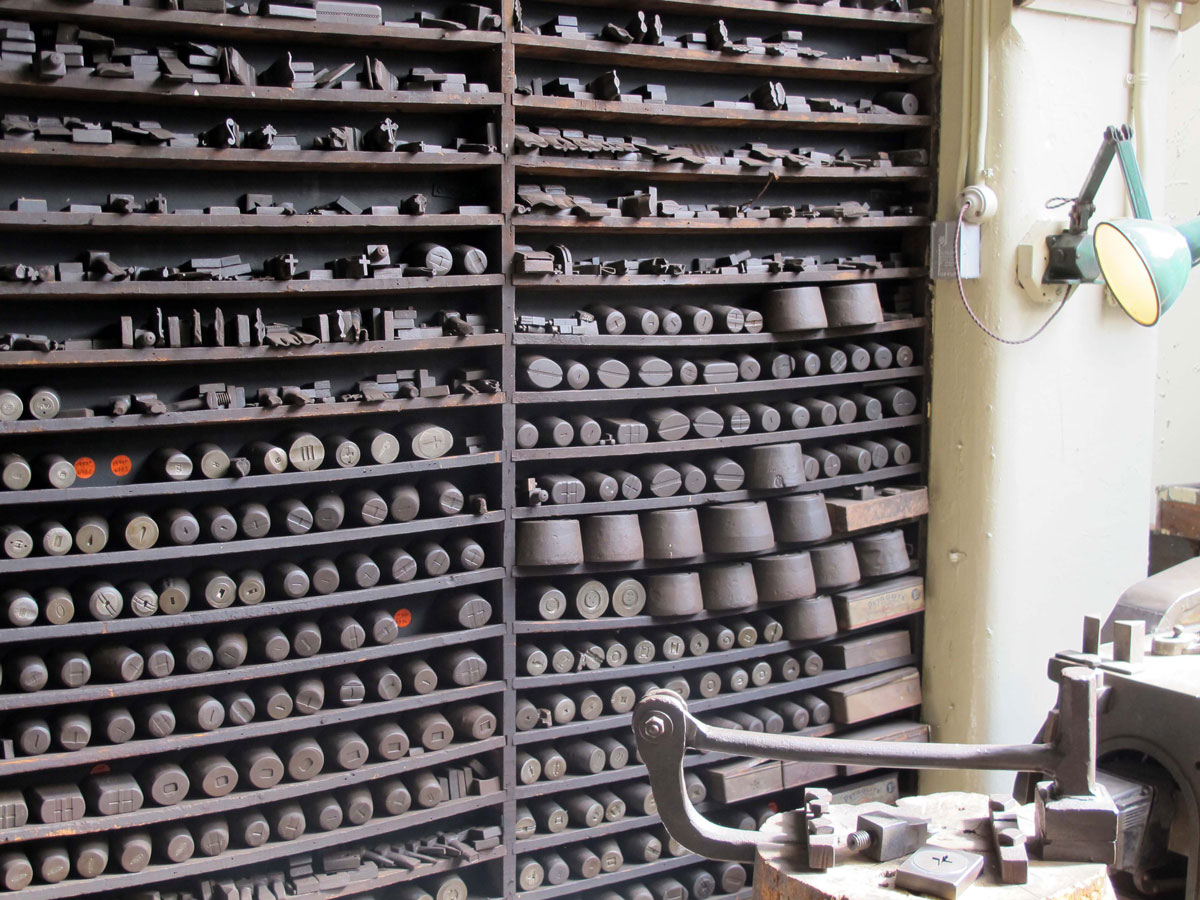
- Racks of Dies and Punches
-
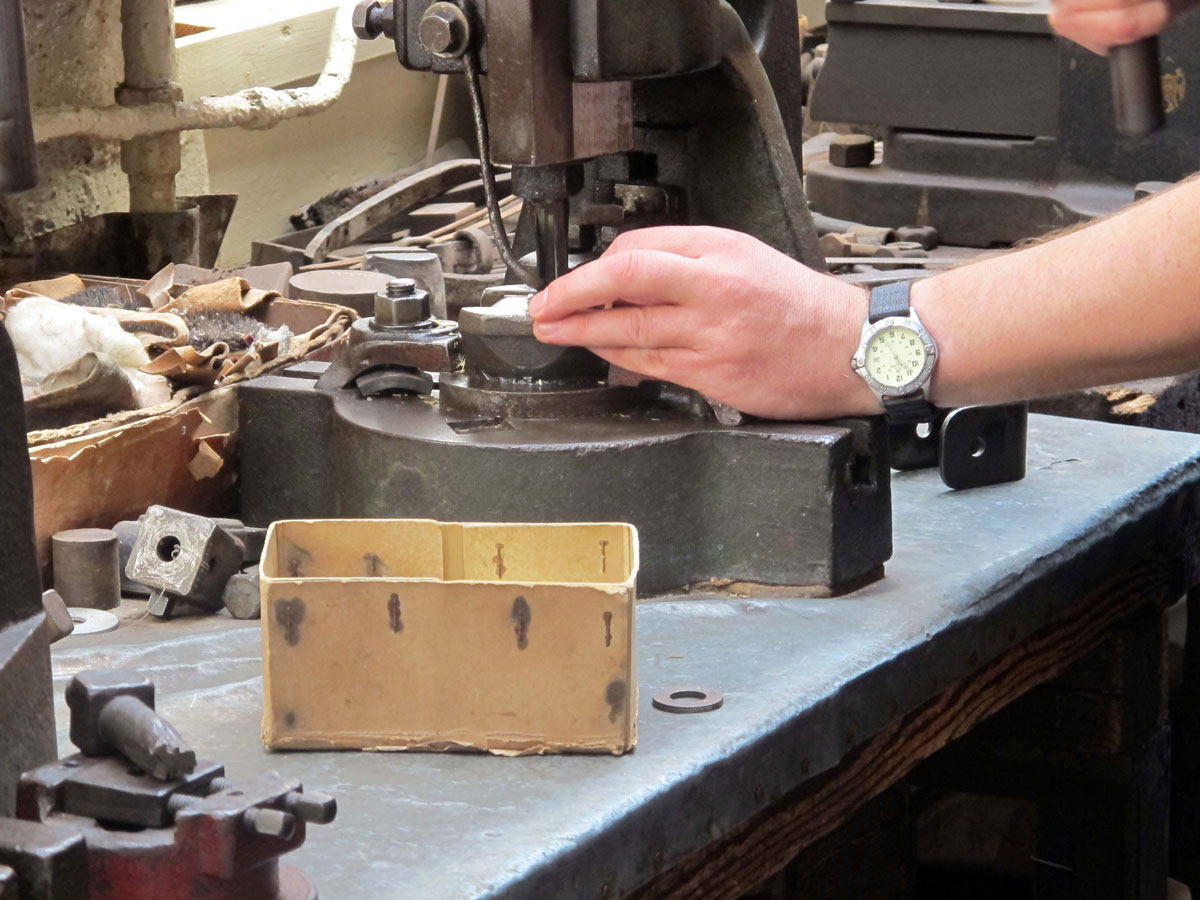
- A Fly Press

-

- Museum Guide using a Fly Press
-

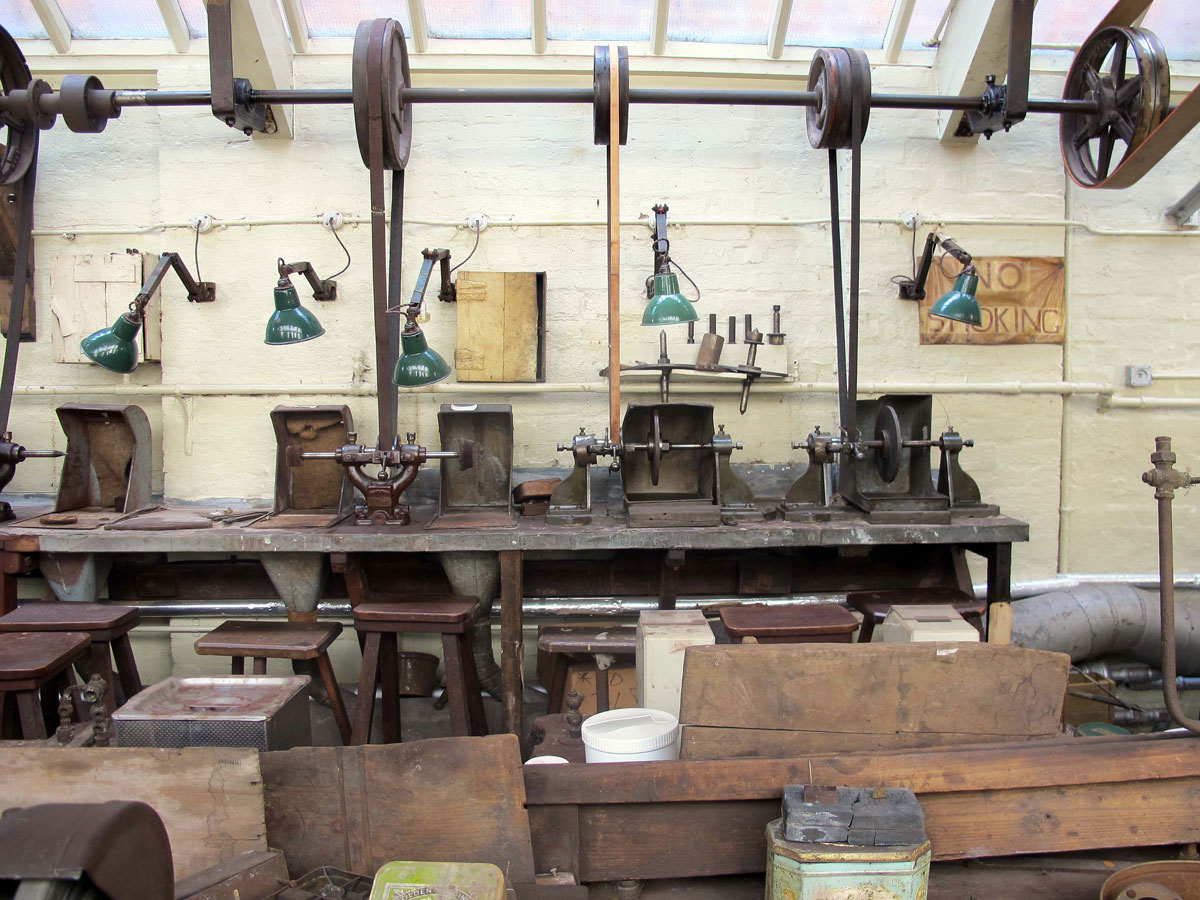
- A Polishing and Lapping Range
-
- Museum within a Museum

The museum is the starting point of a self-guided walking tour of the Jewellery Quarter, but for me, after finishing up in the delightful Hylton Café across the road, it provided the perfect end.

For the latest museum information including opening times and prices, check out the website at https://www.birminghammuseums.org.uk/museum-of-the-jewellery-quarter

POSTED – APRIL 2026
The museum looks amazing, Malc. Like stepping back in time xx
I believe our industrial heritage is something we should be proud of Jo even if it had its downsides.
Doesn’t everything, hon? xx
I’ve never been to Birmingham as it’s not a place I’ve ever been attracted to but the Jewellery Quarter sounds good for a wander round. I love places which have been left just as they were when they were last used and the Smith and Pepper workshop looks fascinating.
The next post on Birmingham will be about its canals so you might like that one as well Eunice
I’ll look forward to that one Malc, I can never have enough of canals 😊
Well, that is a pity. Seems to have a lot doing. I will confess I have been to Stratford. It was for the theatre.
Brum is definitely not a Stratford-on-Avon that’s for sure, but in the next post I’ll show how some of its industrial past has been turned into somewhere worthy of visiting.
You preach to the converted on how an industrial town can have places worth visiting, can offer lots. That’s why I feel it is a shame it is overlooked.
You’re not wrong Shey.
What I can tell you I mind my Nan, telling me way back that her big sister who worked in a jute mill here—-who didn’t? — the maisters always having their eye on the wider world…mainly the financial gains one… was sent down with a few other chosen workers prob about 1908/9 to get the gen on some new industrial techniques down in Brummie. So it sure was at the heart of things in its day.
Absolutely fascinating. Really enjoyed learning all of this. You fair bring history to life.
Thank you Shey. I’m glad you found it interesting. People travel to this part of the world to visit Stratford-on-Avon, Warwick and Kenilworth but avoid Birmingham like the plague.