
Bristol's College Green - A Place for Picnics, Politicians and Protests
College Green is where traditional and modern Bristol often collide. It can be an oasis of calm one minute, and anything but the next, and the reason for this paradox is that although it belongs to Bristol Cathedral, it is managed by Bristol City Council whose offices overlook the Green.
Originally, the area was the enclosed graveyard of St. Augustine’s Abbey, but after it became a casualty of Henry VIII’s Dissolution, the abbey became a collegiate church and the area occupied by the graveyard became the College Green. In 1542 the church became Bristol Cathedral, but the area has been known as College Green ever since.
On a lovely summer’s day, it’s an ideal place to escape the hustle and bustle of the city centre, and students often take full advantage of it to sprawl out during their never-ending lunch break while they plan their next protest march. To be fair though, we only have to look across the moat of the council offices to see where they get their inspiration from, but more about that in a moment because I want to put the area into context first.

The Green is triangular in shape, and the apex is where the original main road from the mouth of the Avon met the road that led up to Clifton: In today’s Bristol, it’s where Deanery Road meets Park Street. At the top of the Green, the arc of the triangle is occupied by the council offices which were opened in 1956 after relocating from the original Council House in Corn Street.

Deanery Road is occupied by the Cathedral, and buildings such as the Royal Hotel and Central Library add to the traditional feel of this side of the Green, especially as the road is now closed to traffic except for access to the hotel.

The architecture on the Park Street side of the Green is not as classical as Deanery Road, but there is one building that is only a hundred years younger than St. Augustine’s Abbey – St. Mark’s Church. Originally built by Maurice de Gaunt, a grandson of Robert Fitzharding (the Abbey’s founder), it came into the hands of the mayor and Corporation of Bristol in 1722. Today it is more commonly known as the Lord Mayor’s Chapel and one of only two churches in England that are owned and still used for worship by a city corporation. The other is St. Lawrence Jewry in the City of London.
Just like London, Bristol has two mayors: The Lord Mayor is regarded as the city’s first citizen and elected by fellow councillors to carry out civic and ceremonial duties. It’s an office that has been around since 1216, but after a referendum in 2012, the ordinary citizens of Bristol were also given the opportunity to vote for a directly elected mayor of their own.


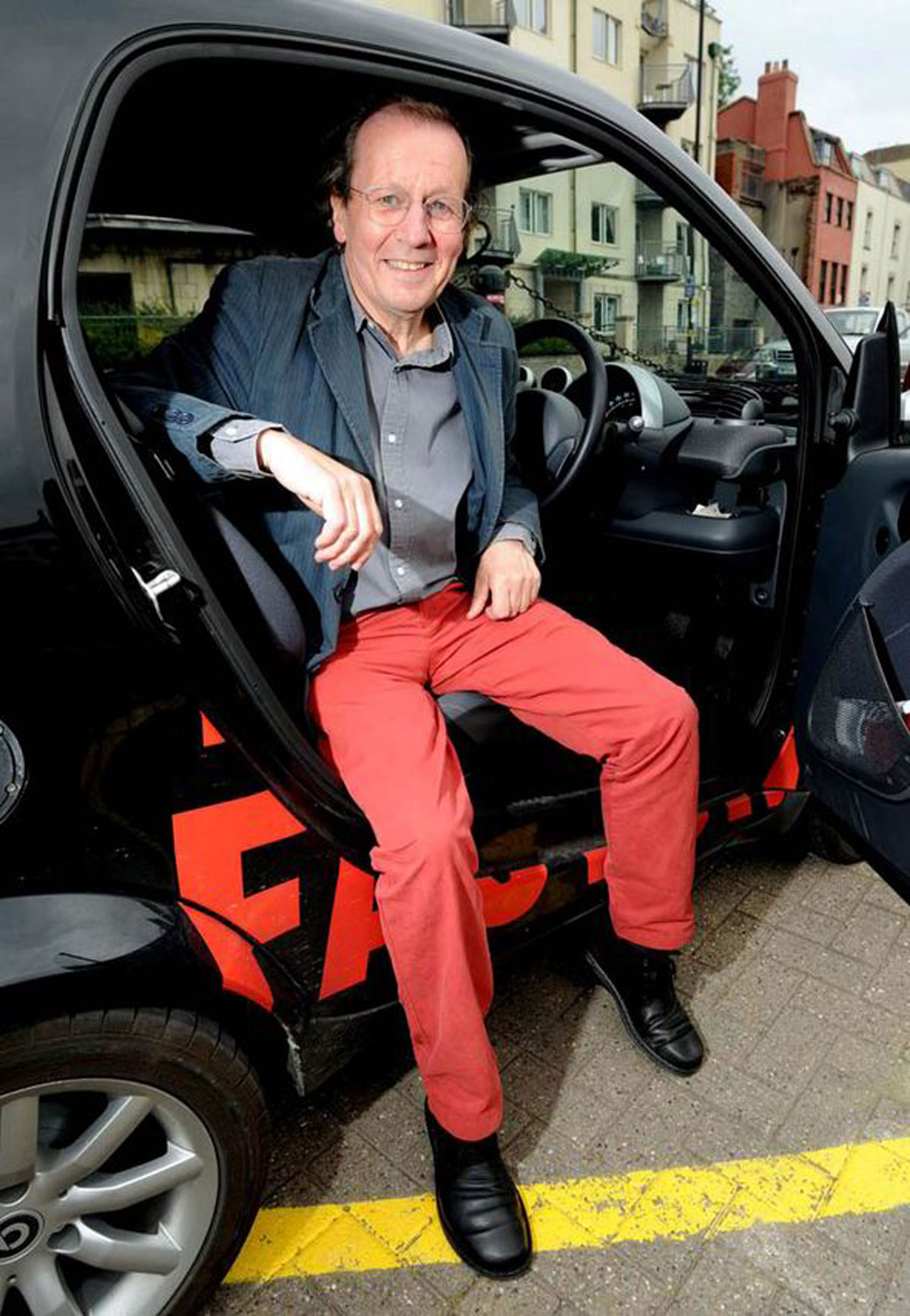
On 15th November 2012 the people of Bristol elected independent candidate George Ferguson as the first mayor to represent their views. Presumably, his self-proclaimed “establishment rebel” credentials attracted many of the voters, but they may have wondered if they’d made the right choice, when on his first day in office, he changed the name of the council offices from the ‘Council House’ to ‘City Hall’ – a name that Bristolians have never accepted: They still refer to it as the ‘Counts Louse’, whatever George wanted it called.
The mayor’s objectives seemed to curry favour with environmentalists and organizations like Extinction rebellion more than they did for workers trying to get across town during rush hour, and he was instrumental in helping the city win the bid for European Green Capital in 2015.
His influence in environmental affairs was still evident after he left office, when in 2020 he organised a demonstration on College Green where 30,000 people turned up in pouring rain to hear Greta Thunberg give a speech about how the planet was being burnt to a cinder. After the event was over the environmentalists marched through the city streets waving their ‘Save the Planet’ banners, leaving behind a quagmire that festival goers at Glastonbury would have been proud of, but at least it was peaceful.

Bristolians in general appeared to be quite happy to have a mayor who wanted to buck the system – but not, it seems, the way that George wanted to buck it, because at the first opportunity he was kicked out of office. His trademark red trousers said everything you needed to know about George Robin Paget Ferguson’s views, but although he’s no longer involved in local politics (as far as I know) his legacy lives on. The 2024 local elections saw the Green Party end up with by far the biggest number of seats on the local council, and the 2024 General Election also saw Carla Denyer elected as MP for Bristol Central, one of only four Green Members of Parliament in Westminster – and for the time being at least, the party’s joint leader.
One thing Ferguson could have done, but didn’t, was address the thorny question of what to do about the statue of slave trader Edward Colston. Until he became mayor, George was a member of the Merchant Venturers Association, the organisation responsible for erecting the statue in the first place. Many people, myself included, thought that the time for the statue to be removed was long overdue, and George Ferguson was in a good position to do it – but he never did.
Snapping at his heels in the first election was the winner of the second – a Labour candidate by the name of Marvin Rees, who was the antithesis of George Ferguson. Whereas George was a middle-class idealist, Marvin was born to mixed race parents and grew up in far more humble surroundings.
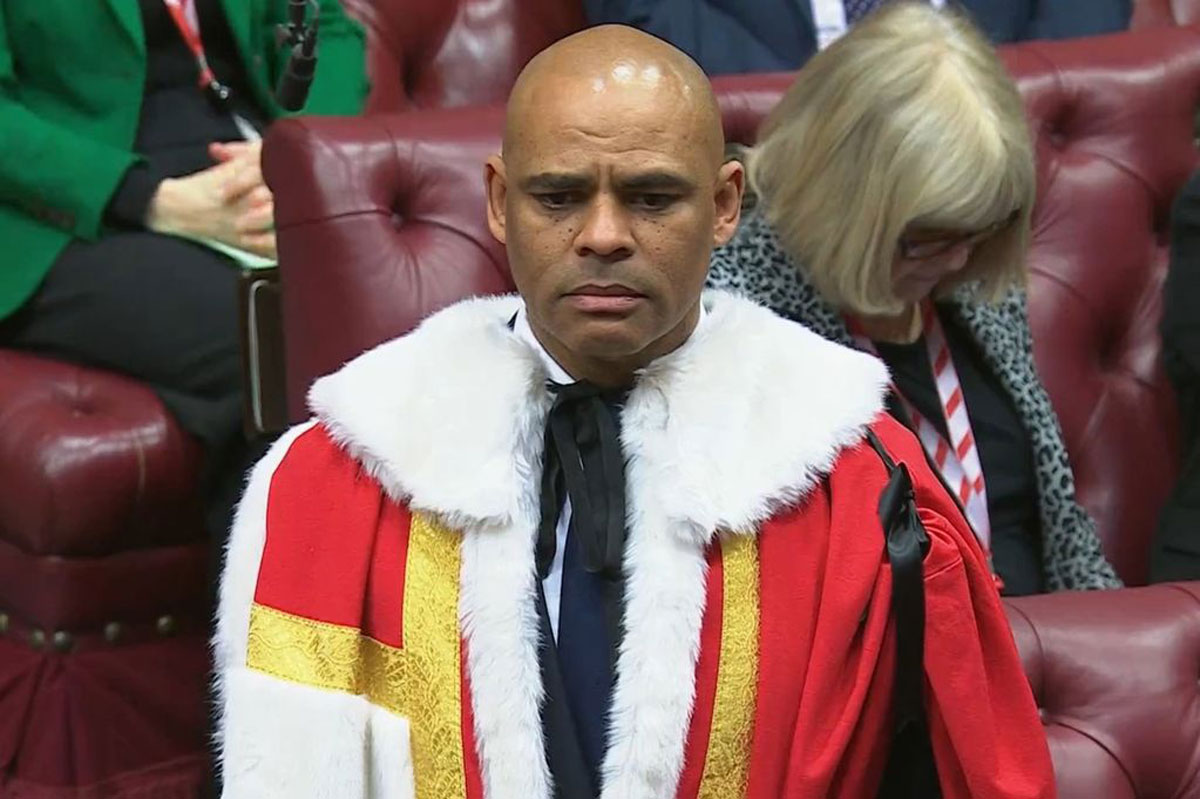
His tenure as mayor was no less controversial than Ferguson’s, particularly where the toppling of the Colston statue was concerned, but it didn’t stop him winning a second term. By now, the citizens of Bristol were losing faith in the idea of a mayor running the city’s affairs, and halfway through Rees’s second term another referendum voted in favour of abolishing the post. In May 2024 the twelve year experiment of having a directly elected mayor came to an end, but it wasn’t all bad news for Marvin because on 4th February 2025 he was sworn in as Lord Rees of Easton, a multi-cultural area of Bristol where he grew up.
Whatever the rights or wrongs of a mob unceremoniously dumping the statue of Edward Colston in the harbour are, it raises two fundamental questions. Firstly, has it improved race relations within the city? And secondly, what do you do when another mob does something similar that you don’t approve of, and before he finished his stint as mayor ‘Marvellous Marv’ was to find out. In March 2021, a ‘Kill the Bill’ demonstration on College Green started off peacefully enough, but as protestors marched down to the police headquarters at Bridewell the situation started to turn ugly. At the dumping of Colston into the harbour the police were ordered not to intervene, but for three days and nights at Bridewell they had no choice but to stand and fight.
On a lighter note, next to the Counts Louse in Deanery Road is a statue of Rajah Rammohun Roy that has thankfully been left to stand without attracting any unwanted attention. In 2004 this Bengal reformer was ranked at No.10 in a list of greatest Bengalis of all time, and the more I read about him, the more I can see why. I won’t go into his life story here (even if I could) but suffice it to say that he successfully campaigned against child marriage and Sati, which was the practice of burning widows.
The “Father of the Bengal Renaissance” as he is called by historians, was born in Radhangar (near Calcutta) in 1772, and it was at a time when the British ruled in India. His campaigns brought him to England, and in 1883 he was invited to the city by Lant Carpenter, the Unitarian minister of Lewin’s Mead Chapel, but on 27th September he suddenly died of meningitis. He was buried at the place where he passed away in Stapleton Grove, but ten years later was given a more fitting burial in a mausoleum at Arnos Vale Cemetery. Every year on the Sunday nearest to the day of his death, the Indian High Commission joins the Lord Mayor in a commemoration service at one of the cemetery’s most prestigious tombs.


While I’m on the subject of statues, there’s one of Queen Victoria at the apex of the green near the Royal Hotel, but she hasn’t been so lucky as the Rajah. She was erected here in 1888 to replace the replica Bristol Cross, but true to the spirit of anti-establishment Bristolian culture, in 2016, local feminist and street artist Vaj, thought that it was a good idea to give the Queen a pair of legs and pubic hair. The authorities for once didn’t quite see it the same way and removed the additional embellishment within 24 hours.

Vaj was an admirer of fellow Bristolian artist Banksy, and where College Green meets the bottom of Park Street is one of his famous creations. Well Hung Lover may be a bit past its sell-by date now, but when it was painted in 2006 it caused quite a stir. At a time when the council was trying to crack down on graffiti, Banksy stencilled the image onto the wall of a sexual health clinic, and the message is self-explanatory.
For once, the council, after wanting to get rid of it, reacted to public pressure and initiated a poll, in which 97% of the replies came out in favour of keeping it. The mural then became the first legal piece of street art in the UK. Of course, it had to be attacked by a paintball vandal to keep the anti-establishment culture of Bristol going. The establishment itself tried to clean it up a bit, but it was defaced again in 2018. It seems that Banksy, whether he likes it or not, has now become part of the Bristol Establishment – whatever that is.

ORIGINAL POST – AUGUST 2021
LATEST UPDATE – JUNE 2025
Originally posted 2021-08-08 16:19:27.
My I say, for a number of reasons this post is epic. hank you for ppointing the way to it. Glad I never missed it actually.
I’m glad you didn’t too Shey
Fabulous. Thank YOU, You’re a gent and a gem.
I’m not too sure about that🤩but as long as you think so that’ll do for me 😊
Interesting and thoughtful post Malcolm. I know College Green well (multiple visits to the library over the years!) but I didn’t know its ‘back story’. What’s the latest on the Colston statue? As an outside observer, it seems to me that it should be in a museum with other well-curated artefacts that together tell the story of Bristol’s involvement in the slave trade and the impact it had on the city. I do like the sound of Rajah Rammohun Roy – we learned quite a bit about Sati when in Jaisalmer (as I think I mentioned on my blog, our guide there told us quite matter-of-factly that his grandmother had committed it!)
They’ve put him in the M Shed where he should have been put a long time ago. The M Shed is an old dockside warehouse which has become a museum about Bristol and close to where the slave ships set sail. They’ve accompanied his statue with a lot more information about the slave trade than they used to have, but I wasn’t too keen to see that they’ve laid him out flat on his back. I was there a few weeks ago and there were questionnaires including asking people if they thought Colston Girls School should change its name. My junior school was the boys equivalent.
Sounds like an appropriate solution but I too can’t see why he shouldn’t be standing up!
A part of me would like to write a post about Colston, the Slave Trade in Bristol and the Merchant Venturers, but another part of me wants to keep my website a controversy-free zone. You had Robert Milligan. Is his statue inside the Docklands Museum now? I remember writing a post about it before the toppling of Edward Colston happened.
The more I read about Bristol the more fascinating it seems – both past and present. Another fascinating insight into the pirate capital of England, Malc.
A nice post that, unfortunately, I couldn’t read entirely because some paragraphs were replaced by
“#8_JTNDaWZyYW1lJTIwc3JjJTNEJTIyaHR0cHMlM0ElMkYlMkZ3d3cuZ29vZ2xlLmNvbSUyRm1hcHMlMkZlbWJlZCUzRnBiJTNEJTIxMW0xOCUyMTFtMTIlMjExbTMlMjExZDcwMzIuNTgxMjE5OTQw
or
][/vc_column_inner][/vc_row_inner][/vc_column][/vc_row][vc_row][vc_column][vc_s
I’ll come back later 😘
It sounds like you’re accessing it via a link that doesn’t work well. If you can, it’s much better to access the post direct from my website. Try this if you have time –
https://www.easymalc.co.uk/bristols-college-green-a-place-for-picnics-politicians-and-protests/
You can also access it from my Home Page
https://www.easymalc.co.uk/
Please let me know if that doesn’t work.
Thanks for Following by the way
Thank you very much, Malc
You’ve been really kind🙏🌺🙏
You’re more than welcome. I hope it works ok
Great! Now I can see the text and the photos🙏💖🙏
Great! Now I can see the text and the photos🙏💖🙏
Great! 🙂
As it should be Malc and you do a smashing job indeed. Have a great week and all the best!
Thanks Francesc, You have a good week too – and thanks for your support 🙂
Always!
Very interesting. All very close to home for me as my office is within yards of many of the places photographed.
I am a Bristol citizen who backed George Fergusson for bucking the trend of overbearing Westminster influence on our city and his endeavours to create a collaborative approach to managing aspects of the city. That the approach was unpopular with the mainstream parties tells you all you need to know about the dismal state of party politics in the UK. Fergusson, for all his faults was about citizens, not the party.
I work in the environmental sector for government, and in my view he took seriously environmental issues where others did/do not.
Whatever the Bristol Mayor’s colours, I am a big supporter of the appointment in representing the interests of the city. Better than those muppets in Westminster at least.
Thanks for your honest and thoughtful reply Stephen. I value it enormously. I happen to agree with everything you say as well. My comment about leaving the Green in a mess after Greta Thunberg’s rally was a bit tongue-in-cheek as you probably guessed. I’m a big supporter of her attempt to raise public awareness to climate change. I’m not too keen on some of the tactics used by XR though.
I’m also a supporter of an elected mayor, but I was a bit surprised to see Marvin get back in. Maybe it was the quality of the opposition or even perhaps apathy that made it happen. Either way, democracy is still the best way to deal with everybody’s views, and that’s something we really need to cling on to.
Yes to all of that.
A mayor should be elected by the people and one that was fighting all the things we do to harm the planet should have been better valued…in any event another smashing entry where you have interwoven history and current affairs brilliantly Malc. A very interesting and well narrated, informative piece of a beautiful city. And with fab photos! Cheers and all the best!
Thanks Francesc. You’re a gem. You know my thoughts but my posts try to let people make up their own mind 🙂
And the hits just keep on coming, Malc. Glad that it’s not just the West Bank of the Pond that attract it’s share of Loonies. Charlottesville City Council also elects our mayor. I’m underwhelmed at best and can sympathize with the citizens of Bristol.
Thanks Pat. The world’s gone mad everywhere I reckon 🙂
I think you’re correct.