
Cardiff Castle - Pt 2 The Marcher Lords
If you remember, in Pt 1 I described how the Romans used this site close to the River Taff to build a succession of fortresses, but when William of Normandy defeated Harold Godwinson at Hastings in 1066 he achieved his aim of taking the English crown, which he believed was rightfully his.
Wales was of secondary importance to the new King of England and so he left some of his most trusted followers to look after the border area that separated Celtic Wales from what was previously Anglo-Saxon England. This area, known as the Welsh Marches, was given to the Marcher Lords to run their individual estates in any way they saw fit. The first of Cardiff Castle’s Marcher Lords was Robert Fitzhamon, whose original wooden keep was replaced by Robert Fitzroy, the 1st Earl of Gloucester and illegitimate son of Henry I.
King Henry was the youngest of William the Conqueror’s three sons, but his eldest, Robert Curthose, who should have succeeded William, never got to wear the English crown at all and ended his days incarcerated in Cardiff Castle instead. It goes to show that a lack of brotherly love in the royal household is nothing new, and if you want to find out more about the civil war known as The Anarchy you can read about it in the first part of my blog about Bristol Castle.

Apart from the keep, there isn’t much left to see of the castle from the medieval period, but the history of Cardiff Castle would be incomplete without talking about the Marcher Lords.
When the 1st Earl of Gloucester died in 1147, his son, William Fitz Robert, became the 2nd Earl, and through a convoluted set of circumstances, his estates, including the Earldom of Gloucester and Lordship of Glamorgan landed in the lap of Richard de Clare, a descendant of Strongbow, one of the leaders of the Norman/English invasion of Ireland.
The de Clares preferred to carry on living in their castles at Clare (Suffolk) and Tonbridge (Kent), but the Lordship of Glamorgan remained an important part of their estate for a hundred years. From 1217 until the death of Gilbert de Clare, the 8th Earl of Gloucester, at Bannockburn in 1314, the castle was reinforced and used as a deterrent to anyone thinking of transferring the ownership of this part of South Wales into their own portfolio.
The 8th Earl died without issue (a legitimate heir) and so the estates went into royal possession while the outcome was being decided. During the 3 year vacuum, Llywelyn Bren, a local Welsh aristocrat, seized the opportunity to pay the de Clare’s back for their persecution of his family and launched an attack on Caerphilly Castle, but his revolt was short-lived. In 1317, a decision was made to award Gilbert de Clare’s three sisters the family’s estates, and the most important of all, the Lordship of Glamorgan, fell to Eleanor de Clare, who had previously married Hugh Despenser the Younger – and so Cardiff Castle was now in the hands of the notorious Despenser family.

Hugh Despenser the Younger followed in the footsteps of his father, neither of whom were afraid to further their own careers at someone else’s expense. The scandal of King Edward II’s relationship with Piers Gaveston must have aroused suspicion about Hugh the Younger straight away when he became the king’s new favourite. In 1318 he became royal chamberlain, one of the highest offices in the land and one which was closely connected to the king’s affairs – and his bedroom too if accusations are to be believed.
To say that Hugh wasn’t the most popular person in the country is an understatement to say the least. If the Nobel Peace Prize had been around then, I think he would have had as much chance of winning it as Vladimir Putin would today. He managed to upset virtually every person in the land except the king: Llywelyn Bren was Hugh’s first target when he had him executed at Cardiff Castle, but more importantly, he was detested by his fellow barons and the king’s wife, Isabella who wasn’t called the ‘She Wolf of France’ for nothing.
In 1321, the barons eventually forced the king to exile the despicable duo. Hugh the Elder hot-footed it down to Bordeaux, and Hugh the Younger occupied his time by raiding ships in the English Channel: I’m not quite sure what a scruple actually is, but it certainly seems that Hugh the Younger possessed very few – if any at all.
While they were away, the barons attacked the Despenser castles, including Cardiff, but life was never quite that simple back then, and somehow the despicable Despensers managed to worm their way back into the country – but it didn’t end well – not well at all. Queen Isabella launched a successful invasion from France and her husband was forced to abdicate. In 1326, Hugh Despenser the Elder, although not as unsavoury as his son, was hanged at Bristol Castle and then beheaded and fed to the dogs. As for Hugh the Younger, he faced a trial at Hereford where he ended up with an even more gruesome death.
If you want to find out more details about Edward II and the Despensers, and why Hugh Despenser the Younger was selected by BBC History Magazine as the 14th century’s worst Briton, then why not check out Pt 3 of my posts on Bristol Castle.
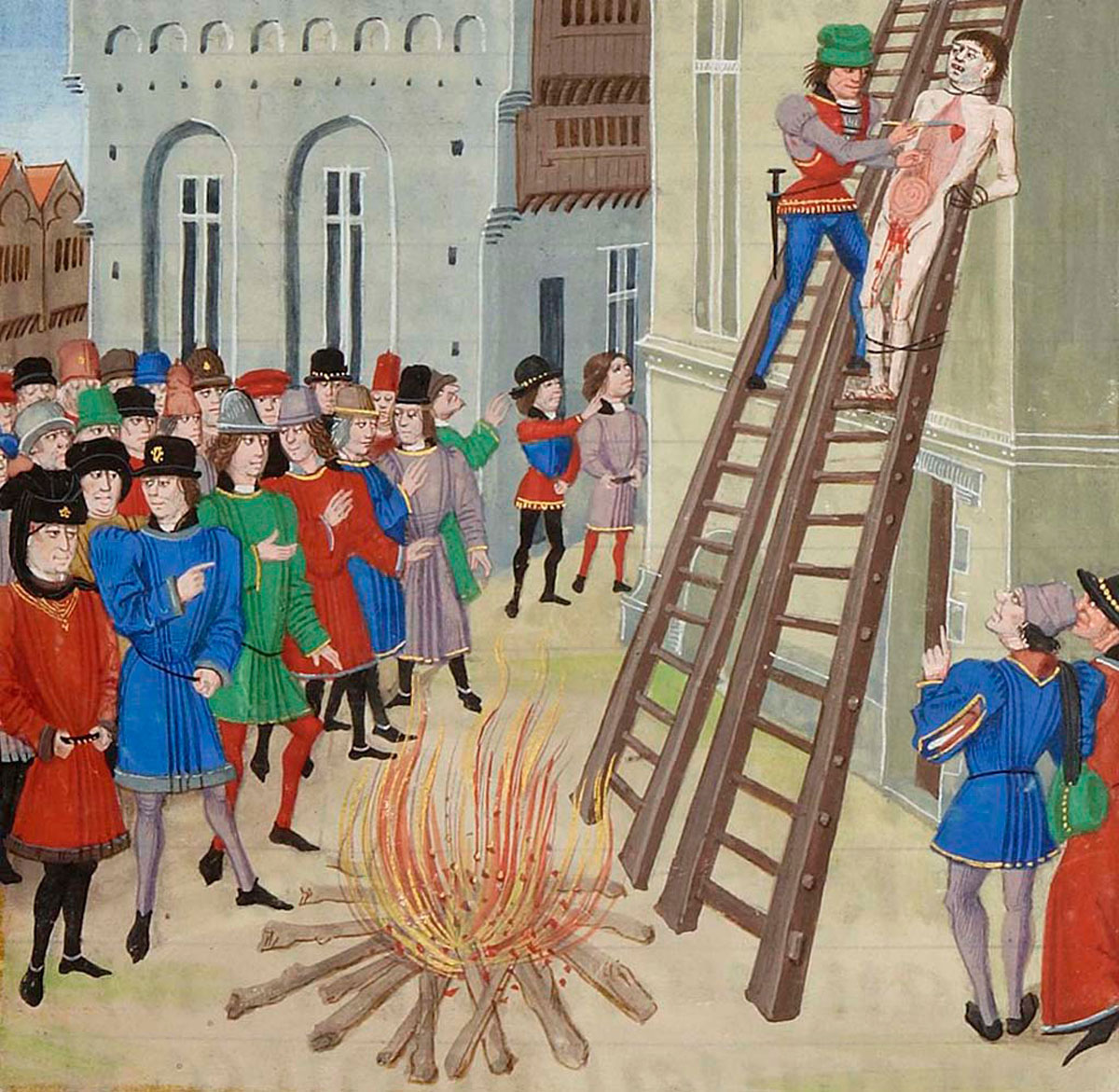
You might think, that as soon as Isabella had prised the nation away from the hands of her disreputable spouse, then the Despenser family’s assets would have been immediately confiscated, but there were other considerations to take into account, not least, the question of what to do with her unfaithful husband and the reaction to it.
With the Younger Despenser now dead, Eleanor de Clare was now officially in charge of her father’s estates, not that she could do much with them, as she was now being detained at her new Majesty’s Pleasure at the Tower of London, probably accompanied by her younger children. Her eldest son though (also named Hugh) was in an even more precarious position as he had held Caerphilly Castle for the king against his new landlady, and his life was only spared when he gave it up. Even so, he remained a prisoner, some of the time which was spent at Bristol Castle, where Hugh Despenser the Elder had met his demise. Fortunately, for Hugh the grandson he was released in 1331, and that could well have been due to his mother’s release three years earlier. The estates were restored to her in April 1328 as long as she agreed to pay homage to Isabella and agree to the new arrangements which included the Queen’s young son being crowned Edward III – and so, believe it or not, Cardiff Castle was to remain in the Despenser family right up until 1414.

Things remained relatively calm at Cardiff until Owain Glyndŵr launched a rebellion against the English king, Henry IV in 1400. The revolt started in North Wales and soon spread to the rest of the country, and by the time he was crowned Prince of Wales in front of Scottish, French, Spanish and Breton envoys in 1404, the ‘Barefoot Rascal’ was virtually in control of the whole country.
The same year, he took his anger out on Cardiff by burning the town and destroying most of the castle. The English wouldn’t take this lying down of course, and by 1415 the revolt was over. Owain Glyndŵr to this day is regarded as a Welsh hero, but what actually happened to him is still hazy even to those who know far more about this Welsh legend than I do.

Much of Henry IV’s reign (1399-1413) was taken up with fending off rebellions. Owain Glyndŵr’s was probably the most serious, but even before that, his life was in danger from those resenting his accession to the throne. In early January 1400, a rebellion, known as the Epiphany Rising, was orchestrated by the Earls of Salisbury, Huntingdon, Kent and the latest Earl of Gloucester, Thomas le Despenser. The attempted coup failed, and in time-honoured tradition, Thomas was captured by a mob at Bristol and decapitated.
The successor to his estates was his young son, Richard, but in 1414 he died without leaving an heir of his own, which meant that the Despenser’s assets were left in the hands of his younger sister, Isabel. Her marriage, firstly to Richard de Beauchamp, the 1st Earl of Worcester, and then, to his cousin Richard de Beauchamp, the 13th Earl of Warwick in 1423, meant that South Wales – and Cardiff Castle – was no longer in the clutches of the Despenser family.
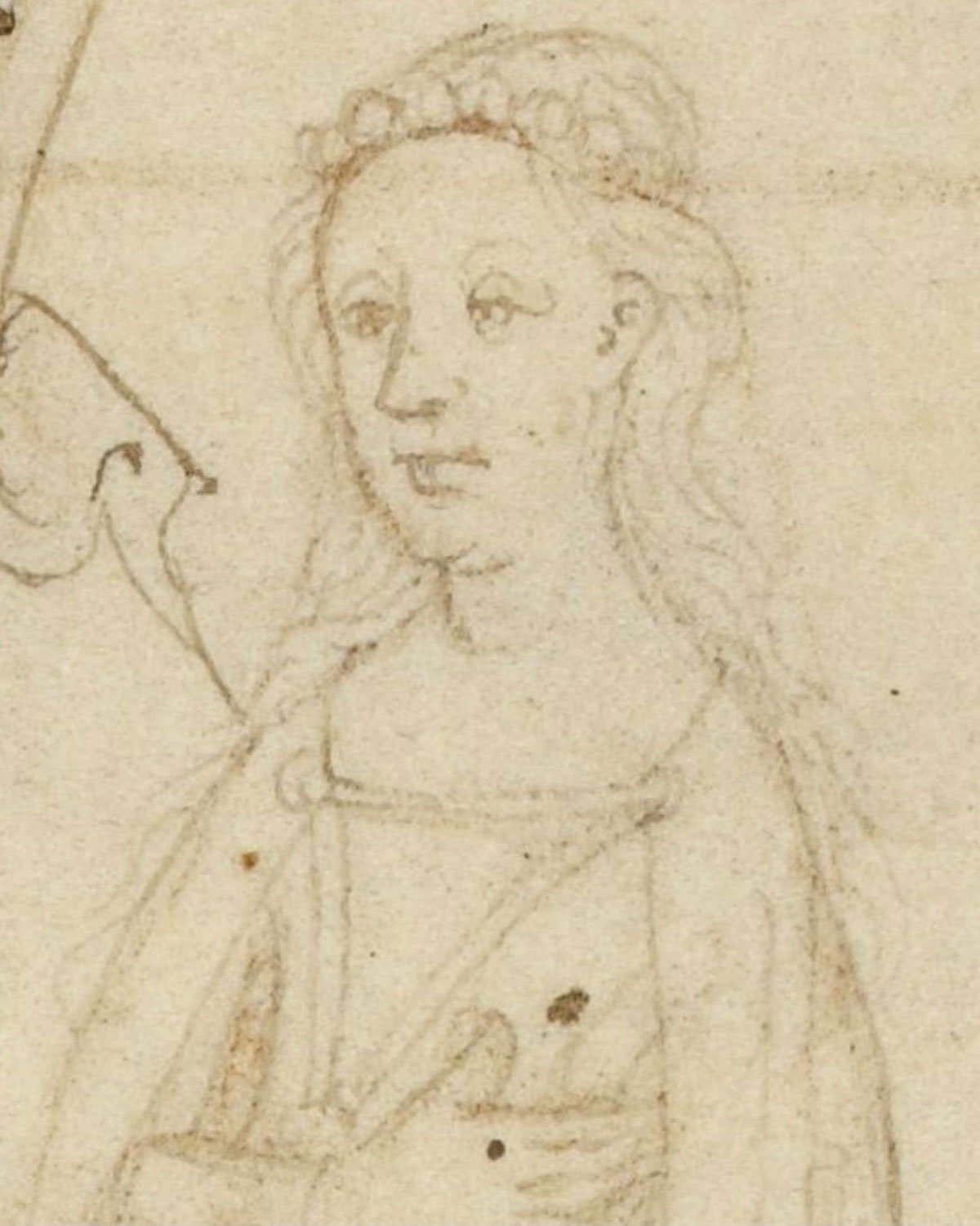
The Despensers had been using the castle at Caerphilly in preference to Cardiff for quite some time before the Beauchamp family took over, but as Caerphilly wasn’t included in the Earl of Warwick’s marriage arrangements, he set about redeveloping Cardiff.
Between 1425 and 1439 he built an extensive new domestic range dominated by a 75 ft (23m) high octagonal tower (now called the Beauchamp Tower). The image below shows how this side of the castle looks today with the Beauchamp Tower in the centre sporting a spire that was added in the 19th century.

In 1449 the castle passed down to Richard Neville, the 16th Earl of Warwick, who through switching his allegiances between the House of York and the House of Lancaster in the Wars of the Roses, became known as ‘Warwick the Kingmaker’. As a consequence, the castle changed hands umpteen times during this period, but as a result of Richard III’s defeat and death at the Battle of Bosworth Field in 1485, the English crown finally went to the victor, Henry Tudor – a Welshman.
The crowning of Henry Tudor as Henry VII brought about a better relationship between Wales and England, and defensive castles became less important as the two countries became closer together. In 1495 Henry VII formally revoked the Marcher territory status of Cardiff Castle and the surrounding territories and brought them under normal English law as the county of Glamorgan. His son, Henry VIII, through his Acts of Union in 1536 and 1543, officially joined the two countries together, but unlike the agreement made during the union with Scotland, Wales had no say in the arrangements.
POSTED – APRIL 2024
Originally posted 2024-04-05 15:42:30.
All wonderfully dreadful atually. Loved it.
Not much different to today really 😊
I thought that reading it. Nothing changes.
I wonder how many fans were arrested yesterday at the Old Firm derby for hate crimes.
Well, I gather the police are sinking under the weight here of the –I hestitate to call it backlash, cos this is yir average Scot voicing their opinion on the utter beyond belief stupidity of what is basically a clype’s charter. Do you know I think I walked past a certain person responsible for all this in our main street on Saturday afternoon, heading into the local Oxfam with two family members. I wonder if it was a reporting centre and more hurt and offence was about to be reported. . . .
Clype is a new word for me, but it’s a good phrase to use on this subject. It’s quite unbelievable that this, and other things, are happening to these once great nations of ours.
I think I also need to tell you Shey that I had a medical episode over the weekend which resulted in a visit from a team of paramedics yesterday. I don’t think it’s anything serious but only time will tell. So please bear with me for the time being if I don’t get around to replying to your comments straight away.
Oh Malc, I am so terribly sorry to hear that and I hope you get on the mend. Please don’t worry about responding at all to a single comment of mine. I mean that. Just get better and give yourself a wee pat on the back for that particular post okay. Don’t even worry about liking the comment.
I so enjoy your thorough but rather tongue-in-cheek approach to history: “To say that Hugh wasn’t the most popular person in the country is an understatement to say the least. If the Nobel Peace Prize had been around then, I think he would have had as much chance of winning it as Vladimir Putin would today.” 🤣
Thanks Sarah. I’m glad you enjoyed it 🙏😊
Heck of a lot of history here, Malc. Not a period for the squeamish.
It’s all part of the jigsaw that makes up the UK Pat. Wales was the first to join with England, and I’ll see if I can get some more posts out before it all breaks up. Thanks for commenting.
Would look forward to that.
What, the break-up of the UK? 😀
Great history and phenomenal photos! These nobles and their twisted ways! In all our countries. Excellent work Malc!
Thank you so much Francesc 🙏 Back in those they literally had to fight to get what they wanted as well as being devious and unscrupupous.
So true Malc!
A very interesting history lesson which has made a nice break from cleaning windows 🙂 I’m glad I didn’t live back then though, they certainly had some gruesome ways of getting rid of those they didn’t like. The castle in your last photo looks very impressive and I like the fancy spire in the middle.
You may like the final instalment about Cardiff Castle in that case then Eunice – at least I hope so 😊
I have to congratulate you, Malc, on your outstanding ability to be able make sense not only for yourself but also for your readers, who destroyed who and what, during the turbulent history of the creation of Wales. Your inclusion of drawings and gruesome images helps to follow the narrative always well written. The photos of impressive ruins and of the castle as it is now, give the ambience and understanding why there were so many eager people wanting to occupy the precarious position.
Looking forward, Malc, to your next history lesson, and to the king who could last for more than a few years of being in power.
Thank you!
Joanna
Your response Joanna, as always, is unbelievable. Thank you so much 🙏😊
You are more than welcome, Master Malc!
Joanna
🤓