Category Archives: Cardiff

From Tiger Bay to Cardiff Bay

From Tiger Bay to Cardiff Bay

At the beginning of the 19th century the population of Cardiff was less than 2,000, but the lush green valleys to the north were about to change – and so was this small town at the mouth of the River Severn.

The reason for this dramatic change was all down to the increase in demand for coal which was needed to power the Industrial Revolution – and which the valleys of South Wales had plenty of.

The Glamorgan Canal, and then the Taff Valley Railway, enabled the Black Diamonds to be transported down the valleys to the coast where places like Newport, Barry, Penarth and Cardiff all vied for the lucrative export trade.

While everyone else was working down the coal mines, there was one man that was sitting on a gold mine, – namely the 2nd Marquis of Bute. He realised early on that there was going to be money made in the iron and coal industries of South Wales, and in 1839 he built the first of Cardiff’s docks at West Bute to handle the trade.

As the docks expanded, so did the appeal to come and work here: Butetown, as the area became known, attracted immigrant workers and seafarers from all corners of the globe, and it wasn’t long before the area became known for all the wrong reasons. Although several theories have been bandied about, it’s not really known for sure why the docks and Butetown became known as Tiger Bay – but the name stuck, and just like its feline counterpart, began to earn itself a fearsome reputation. If you wanted somewhere to go and get drunk, have a fight, or meet a prostitute – or all three – Tiger Bay was the place to come.

Continue reading

Originally posted 2019-06-08 16:43:13.
Cardiff Castle – Pt 3 Coal and the Victorian Castle

Cardiff Castle - Pt 3 Coal and the Victorian Castle

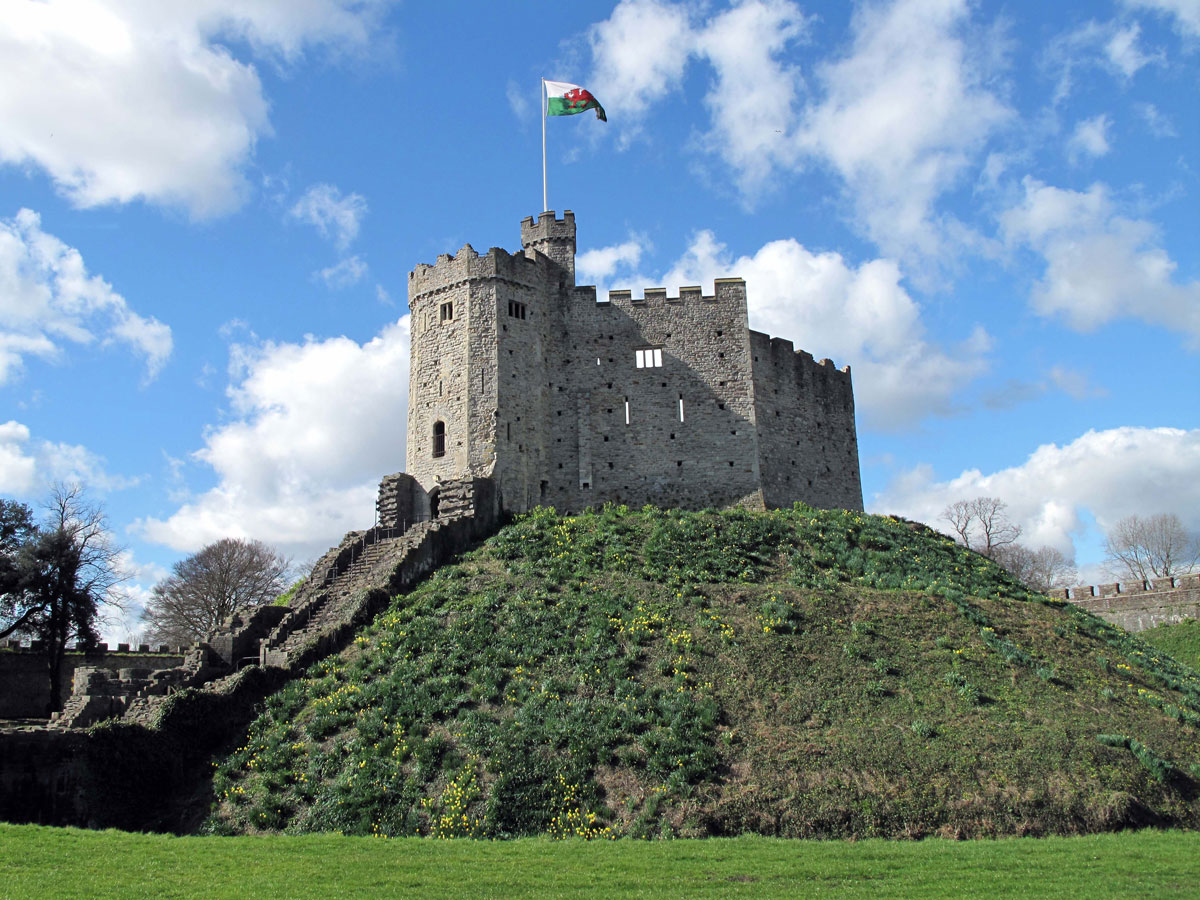
In the previous post, we saw how Cardiff Castle came under the jurisdiction of several Marcher Lords before the Welshman, Henry Tudor, became King Henry VII of England. His son, Henry VIII, officially joined the two countries together through his Acts of Union and, like his father, ruled without the need for any Marcher Lords. When he died in 1547, Henry’s son became Edward VI at the tender age of nine, which meant that England (and Wales) was effectively governed by regents.

During his short reign, the young king granted Cardiff Castle to William Herbert, the 1st Earl of Pembroke, whose successors converted the fortress into somewhere fit, if not for a king, certainly for a Lord. Their lavish home got seriously damaged however during the Civil War when the 4th earl sided with Parliament. The Keep in particular took a pounding and was never occupied as a residence again.

Continue reading

Originally posted 2024-05-26 02:59:21.

Cardiff Castle – Pt 2 The Marcher Lords

Cardiff Castle - Pt 2 The Marcher Lords

If you remember, in Pt 1 I described how the Romans used this site close to the River Taff to build a succession of fortresses, but when William of Normandy defeated Harold Godwinson at Hastings in 1066 he achieved his aim of taking the English crown, which he believed was rightfully his.

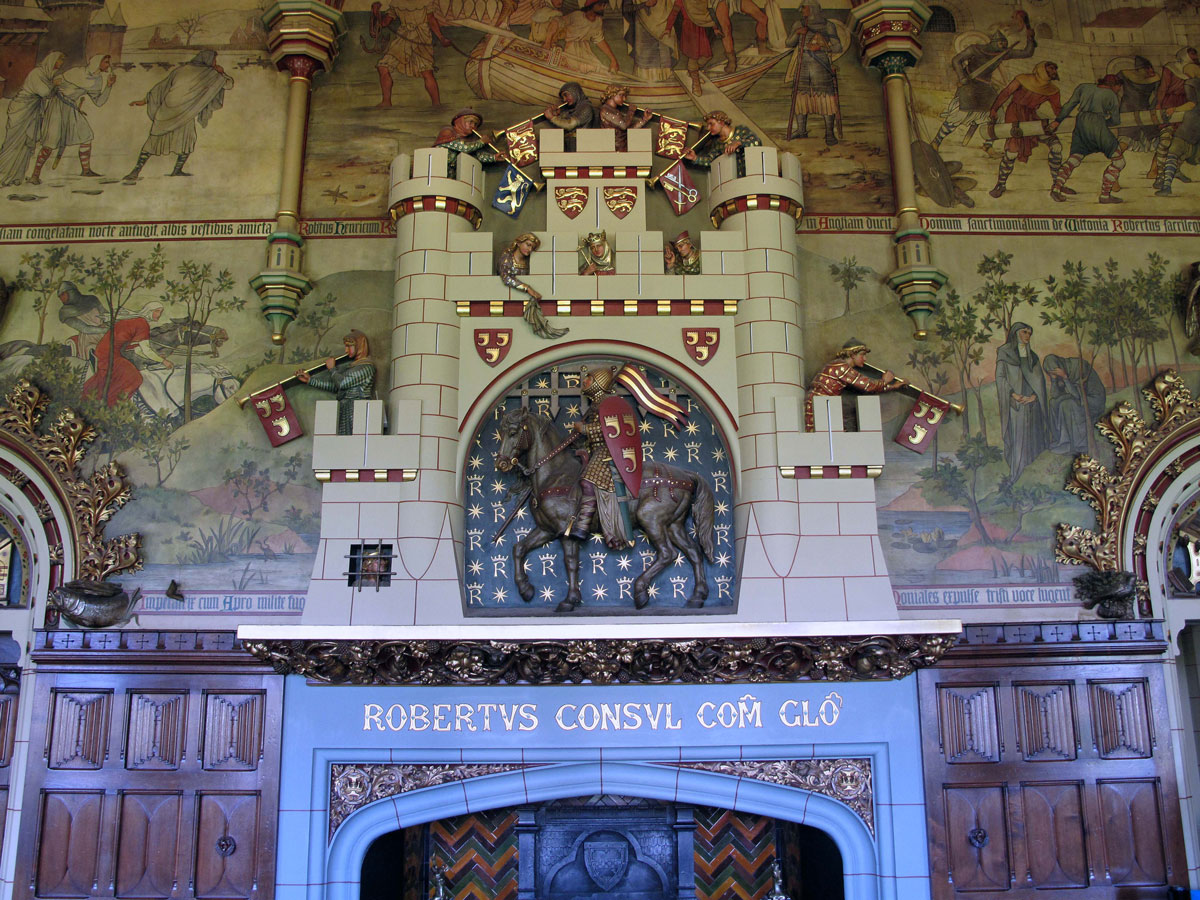
Wales was of secondary importance to the new King of England and so he left some of his most trusted followers to look after the border area that separated Celtic Wales from what was previously Anglo-Saxon England. This area, known as the Welsh Marches, was given to the Marcher Lords to run their individual estates in any way they saw fit. The first of Cardiff Castle’s Marcher Lords was Robert Fitzhamon, whose original wooden keep was replaced by Robert Fitzroy, the 1st Earl of Gloucester and illegitimate son of Henry I.

King Henry was the youngest of William the Conqueror’s three sons, but his eldest, Robert Curthose, who should have succeeded William, never got to wear the English crown at all and ended his days incarcerated in Cardiff Castle instead. It goes to show that a lack of brotherly love in the royal household is nothing new, and if you want to find out more about the civil war known as The Anarchy you can read about it in the first part of my blog about Bristol Castle.

Continue reading

Originally posted 2024-04-05 15:42:30.

Cardiff Castle – Pt 1 Britons, Romans and Normans

Cardiff Castle - Pt 1 Britons, Romans and Normans

Wales is blessed with so many wonderful castles that it’s easy to see why Cardiff Castle sometimes slips under the radar. Some sources tell us that Wales has had more than 600 castles, and even Cadw (the Welsh equivalent of English Heritage) say that the country had 427. Obviously it depends on what you think constitutes a castle, and Wikipedia puts it into a more realistic context by saying that there are over a hundred still standing, but whichever way you look at it, it’s still an awful lot of castles for such a small country.

You don’t need to be a budding Geoffrey of Monmouth to work out that the reason Wales had so many was because the land was always under attack for one reason or another, and the first outsiders to make their presence felt were the Romans. About five years after their invasion of Britain in 43 AD, they reached what we now consider as the Welsh border. Wales wasn’t a country as such back then, but a land made up of different independent Brythonic (Celtic) tribes, one of which was the Silures who occupied an area in the south.

If the Romans thought they could just walk in and tell the Silures what to do then they were sadly mistaken because this tribe weren’t in the habit of taking things lying down. The Romans were a formidable fighting force themselves, but they also had brains as well as brawn, and in an early example of the carrot and big stick, they allowed the Silures to retain some of their cultural customs providing they towed the Roman line.

The arrangement seemed to be amicable enough but the area still needed some form of control, and so a fort was built in the south-east corner of the territory at the lowest crossing point of the River Taff – at a point where Cardiff (and the current castle) now stands.

Continue reading

Originally posted 2024-03-14 14:00:30.