Cardiff Castle - Pt 3 Coal and the Victorian Castle
In the previous post, we saw how Cardiff Castle came under the jurisdiction of several Marcher Lords before the Welshman, Henry Tudor, became King Henry VII of England. His son, Henry VIII, officially joined the two countries together through his Acts of Union and, like his father, ruled without the need for any Marcher Lords. When he died in 1547, Henry’s son became Edward VI at the tender age of nine, which meant that England (and Wales) was effectively governed by regents.
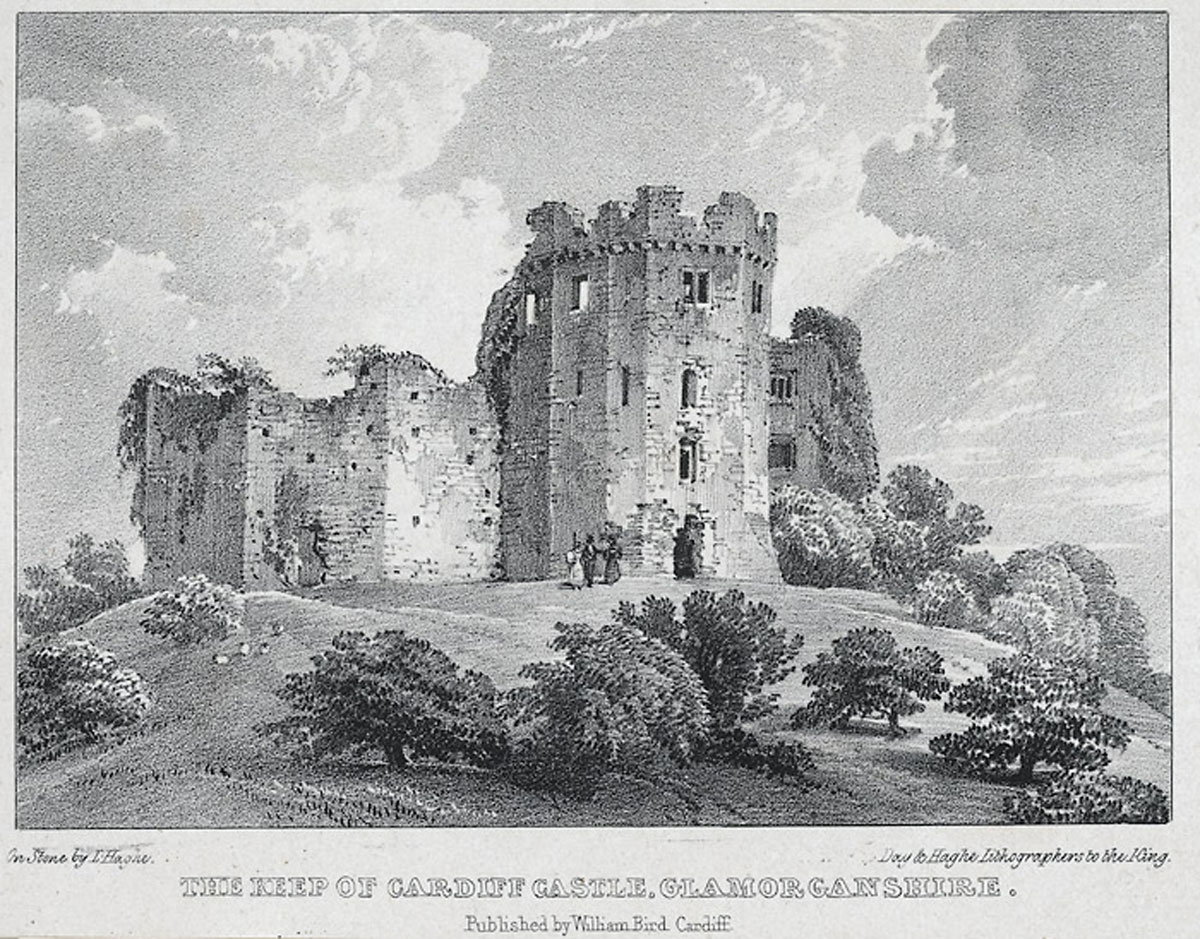
During his short reign, the young king granted Cardiff Castle to William Herbert, the 1st Earl of Pembroke, whose successors converted the fortress into somewhere fit, if not for a king, certainly for a Lord. Their lavish home got seriously damaged however during the Civil War when the 4th earl sided with Parliament. The Keep in particular took a pounding and was never occupied as a residence again.
If you’ve been reading these posts from the beginning, you could well be thinking that the history of Cardiff Castle is not much different to any other medieval castle in this part of the world, but as you’re about to find out, that all started to change with the arrival of a famous Scottish family.
In 1683, Charlotte Herbert inherited the castle and Glamorganshire estate from her father, the 7th Earl of Pembroke, but it was after her granddaughter, Charlotte Jane Hickman-Windsor married John Stuart of Bute in 1766 that South Wales started to see a transition from a rural landscape to an industrial one – and the Bute family was one of the main reasons why.
The Bute family can trace their roots back to the early Kings of Scotland, but family trees have never been my strong point, especially when they include various titles for the same person, and in John Stuart’s case, he was not only Lord Mount Stuart, but also Baron Cardiff of Cardiff Castle (from 1776), and then after the death of his father in 1792, the 4th Earl of Bute, a title he used until he was created the 1st Marquess of Bute in 1796. See what I mean?
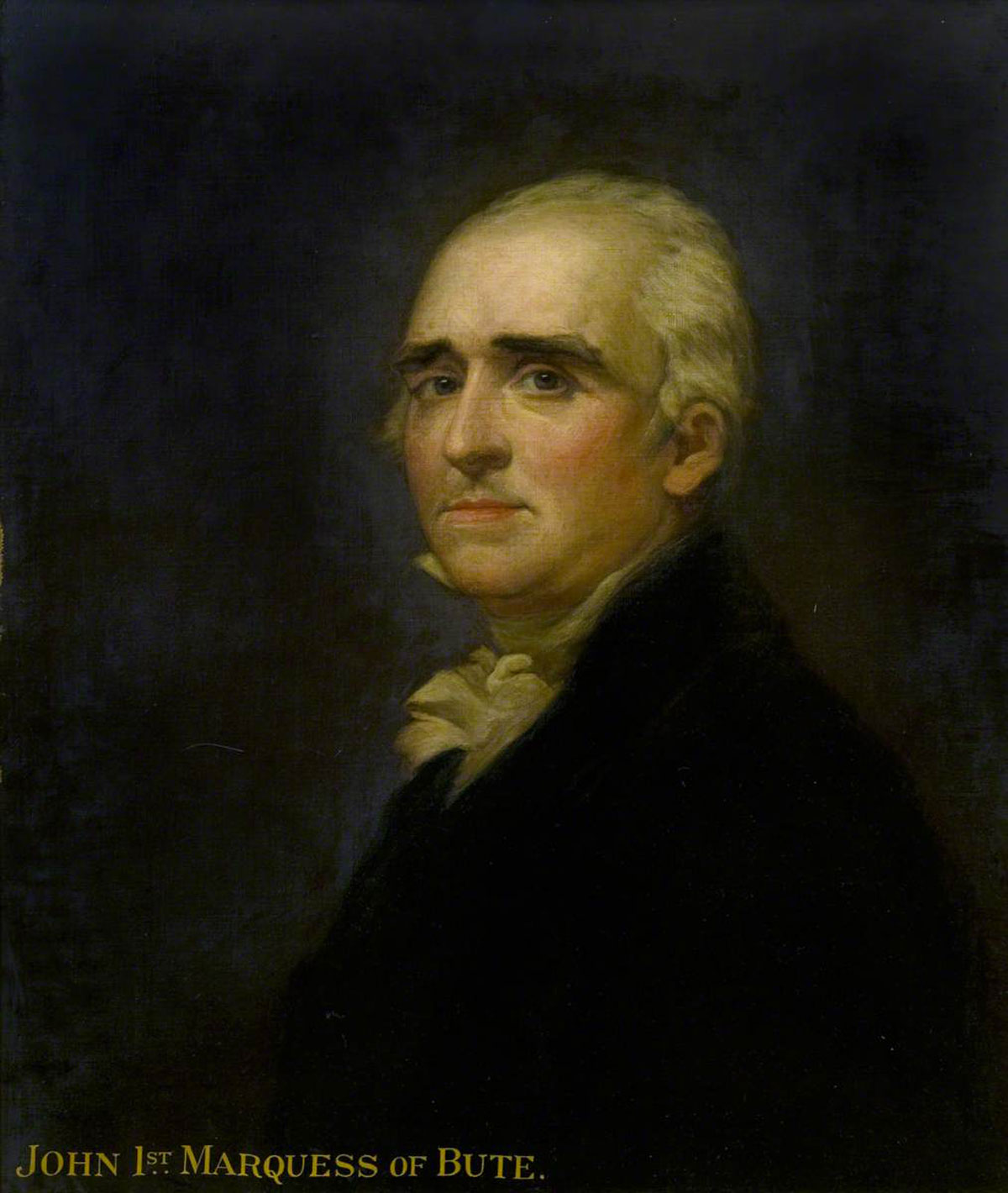
I could be here all day if I started to talk about the Bute family history, so I’ll keep things relevant by just telling you how their connection with Cardiff Castle and the Glamorgan estate helped change the South Wales landscape for many years to come.
Apart from upsetting the locals by demolishing medieval parts of the castle to make way for Capability Brown’s landscape garden, the 1st Marquess’s tenure at Cardiff had only a marginal impact on people’s lives in South Wales, but at least he and his wife provided seven sons and two daughters to make sure that the Bute family tree kept flourishing.
The first of these offspring was also called John, Lord Mount Stuart, and although he became MP for Cardiff in 1790, Lord Mount Stuart II seems a fairly unremarkable man where the Bute family is concerned. In 1792, he married Lady Elizabeth McDouall-Chrichton, daughter of the 6th Earl of Dumfries, and it was from this liaison that the double-barrelled name of Chrichton-Stuart emanated. You’re probably thinking so what? but it will help you to remember which Butes were which, and you’ll see what I mean when I start talking about their first son, John Chrichton-Stuart, the 2nd Marquess of Bute.
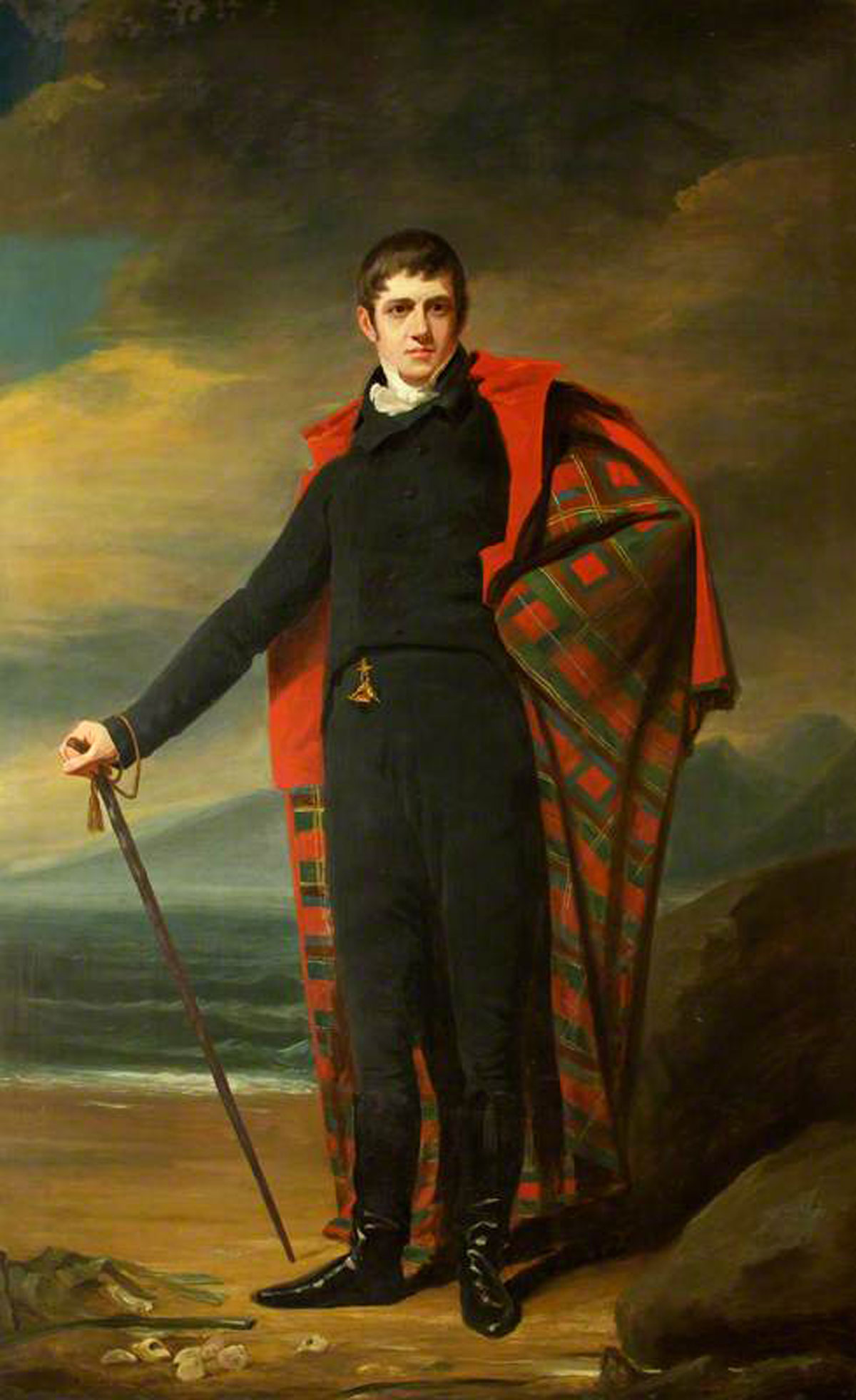
John Crichton-Stuart was born on 10th August 1793, just four months before his father died. When he was 10 years old he inherited the estates of his maternal grandfather, Lord Dumfries, and at the age of 21, succeeded his paternal grandfather as the 2nd Marquess of Bute.
The estates he inherited came with a list of titles as long as your arm. Not only did he become the 2nd Marquess of Bute, but also the Earl of Windsor, Viscount Mountjoy, Baron Mount Stuart, Baron Cardiff, Earl of Dumfries and Bute, Viscount of Ayr and Kingarth, Baron Chrichton, Lord Chrichton of Sanquhar and Cumnock, Lord Mount Stuart of Cumra and Inchmarnock and – wait for it – Baronet of Nova Scotia – oh, and I nearly forgot, he was also the Keeper of Rothesay Castle, Lord Lieutenant and Custos Rotulorum of Glamorgan (whatever that is), the Lord Lieutenant, Sheriff and Coroner of Buteshire – and finally, the High Steward of Banbury. It seems like he collected more hereditary titles than I did cider jugs.
With them also came a choice of places to live – Luton Hoo in Bedfordshire (which he later disposed of), Dumfries House in Ayrshire, Mount Stuart on the Island of Bute and Cardiff Castle in Glamorgan. He also had a London town house in Kensington, but he was a man who preferred the quiet life and chose to live in relative seclusion with his wife, Lady Maria North, in their pile at Mount Stuart on the Isle of Bute.

The Marquess of Bute’s estates covered more than 100,000 acres, mostly in Scotland, but also included a large part of Glamorgan that went with his Cardiff property, but unlike Bute and Dumfries, his Cardiff estate was situated on land rich in minerals and coal deposits.
Coal had been extracted along the South Wales coast since the 17th century, but as surface deposits became exhausted, open cast mining was replaced by shafts that gave access to underground seams. As the Industrial Revolution gathered pace coal became a vital commodity, not only in providing steam power to the mills and factories which produced goods made from raw materials such as textiles and iron, but also in providing the means to transport these goods – and the Marquess of Bute’s estate in Glamorgan was literally sat on a ‘coal mine’.
He may not have shown much interest in visiting his estates to enjoy the high life, but he was extremely interested in their economic development. He commissioned surveys that showed his land was sitting on top of large coal reserves, and I’m guessing that these surveys also showed where these reserves were, because he had the acumen to dispose of some of the less productive outlying parts of his estate in order to purchase more lucrative areas – and it didn’t end there because he also claimed rights to minerals under certain common lands through his feudal titles. He obviously wasn’t completely dozing off in the armchair up in Mount Stuart.

Rather than getting his hands dirty in the day to day workings of extracting coal and other minerals out of the ground, the 2nd Marquess opted to lease his land to iron masters and colliery owners instead. However, mining was only one part of making money from the enterprise: The deposits also needed to be transported to a wider world, and so Bute decided to invest the proceeds into constructing dock facilities on land that he owned around the mouth of the River Taff.
In 1839 he constructed West Bute Dock, the first of five to be built, and although he wasn’t able to personally capitalize on his investment, Bute had created the foundations for Cardiff to become the largest coal exporter in the world.
The Marquess died in 1848, leaving behind a thriving port and growing population. Most of those employed at the docks lived in the neighbouring streets around Tiger Bay in an area called Butetown. It had a tough reputation, but Cardiff as a whole was beginning to benefit from the wealth that was created from John Crichton-Stuart’s estate. By the end of the century, Cardiff had grown into the largest town in Wales, and in 1905 was granted city status by Edward VII.
On 20th December 1955 Cardiff was proclaimed the country’s capital city – and today the 2nd Marquess of Bute is regarded as “the creator of modern Cardiff”.


The 2nd Marquess never spent much of his time or money at Cardiff Castle, and when his only son, John Patrick Chrichton-Stuart, became the 3rd Marquess of Bute at just 6 months old, he was the ‘richest baby in Britain’ – some say the richest person in the world; but to begin with, he wasn’t able to do much with all that wealth because the estates he inherited were held in trust until he reached maturity at the age of 21.
He was born at Mount Stuart and brought up by his mother Sophia (his father’s second wife) who, although Scottish, had a keen interest in Welsh culture. He enjoyed a happy childhood, but after his mother died when he was still just twelve years old, he withdrew into a rather quiet and shy young man.
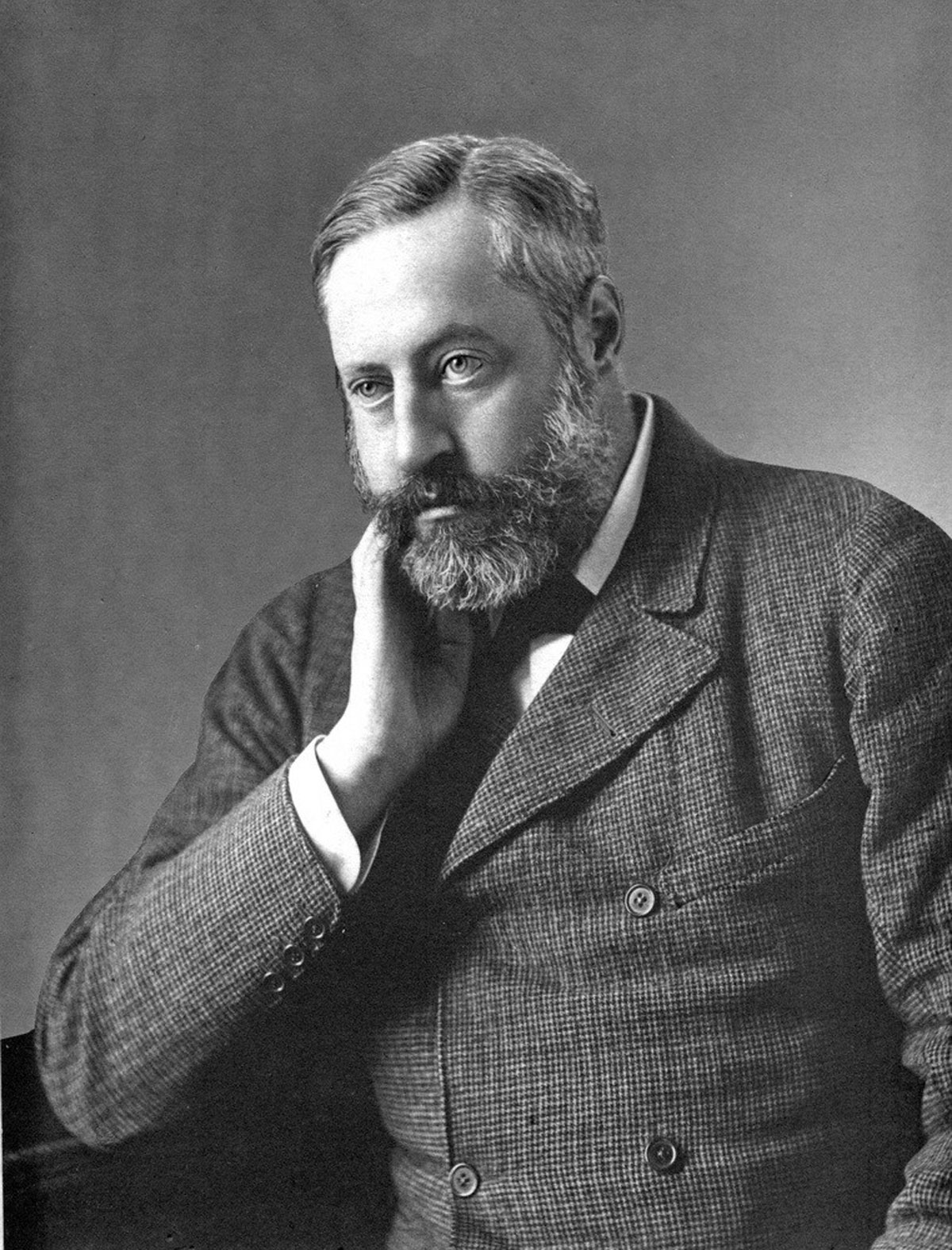
Looking back, I think it’s easy to see how his formative years made him the man he was. Because of his wealth, he grew up being wary of who he made friends with, and instead of following in his father’s footsteps where business was concerned, he became more interested in a long lost world rather than the industrial one that he was born into.
Instead of wanting to make money out of minerals, coal and ships, he preferred spending it on following his passion for history, architecture and travelling. He also had an interest in languages, archaeology, the occult – and above all – religion: His conversion to Catholicism didn’t go down well in the established ecclesiastical world, and whatever his father would have thought about it all I don’t know, but it seems to me that he was born in the wrong era.
When he reached 18 though, he met somebody who had the same outlook on life as he did – a man 20 years his senior called William Burges. William ‘Billy’ Burges was someone who was also obsessed with the medieval world and described himself as an Art-Architect, which reflected his style of work, whether it be designing rooms, furnishings and metalwork, or castles, cathedrals and houses. There’s no doubt that Burges and the Marquess were made for each other, especially as it didn’t matter to Bute that the designer was more interested in how his commissions looked rather than how much they cost – and for Burges, Cardiff Castle was the commission of a lifetime.

At first glance, Burges’s designs might seem a bit OTT – garish even, but the more you study them, the more you realise how much painstaking research has gone into reproducing this neo-gothic gem. It has to be said that it won’t be to everybody’s taste, but it also has to be remembered that medieval architecture was far more colourful than most of us would have previously realised.
Bute was still single when Burges started working for him, and he immediately caught the attention of the local population by building a 150 ft high clock tower in the south-west corner of the castle grounds. It was built as a bachelor pad for the Marquess and offered views to Cardiff Docks, the Bristol Channel and the Welsh hills and valleys. The top of the tower is adorned with oversize statues of the planets which was executed by one of Burges’s favourite assistants, the sculptor, Thomas Nicholls.
The interior rooms of the Clock Tower can be visited on a guided tour if you’re lucky enough to be here on a weekend. I wasn’t.

In 1872, at the age of 24, Bute married an 18 year old girl by the name of Gwendolen Fitzalan Howard. Although they chose to live at Mount Stuart, it must have seemed obvious to the young bride that she had some serious competition where Cardiff Castle was concerned because that’s where they spent their honeymoon – while Bute’s bachelor clock tower was still being decorated.
Rather than seeing Bute’s passion for the extravagant transformation of Cardiff Castle as competition though, she embraced his enthusiasm and even helped him with the decision making. Their marriage was a happy one raising four children in the process, all of whom seemed happy to spend some time at Cardiff. The family came here regularly and I wouldn’t be surprised if the children’s rooms were designed by Gwendolen herself as they seemed like every child’s dream.
Unfortunately, some of the more personal rooms are only included with a guided tour which comes at an extra cost (currently £4.50). It wasn’t that I wouldn’t pay it, it’s just that it wasn’t practical and so I restricted my visit to seeing the main rooms in the central part of the castle.
The rooms on display include the Chaucer Room, Library and Banqueting Hall where Burges employed a team of assistants in recreating his world of architectural fantasy. There is so much going on here that it’s difficult to describe the rooms in detail and it takes a while for it all to sink in.
If you allow your mind to be drawn into the world of Burges and Bute for a while, you’ll realise that there’s a story behind almost everything you see, and if you let your eyes wander around at the same time you’re bound to be captivated by the elaborate wall coverings, painted murals, gilding, stained glass and sculptures. It really is an assault on the senses. For example, the murals on the walls of the Banqueting Hall tell the story of the medieval castle in a style reminiscent of a medieval manuscript illustration. The more you look, the more you’ll see, and this is why it took 16 years to complete the castle’s restoration.
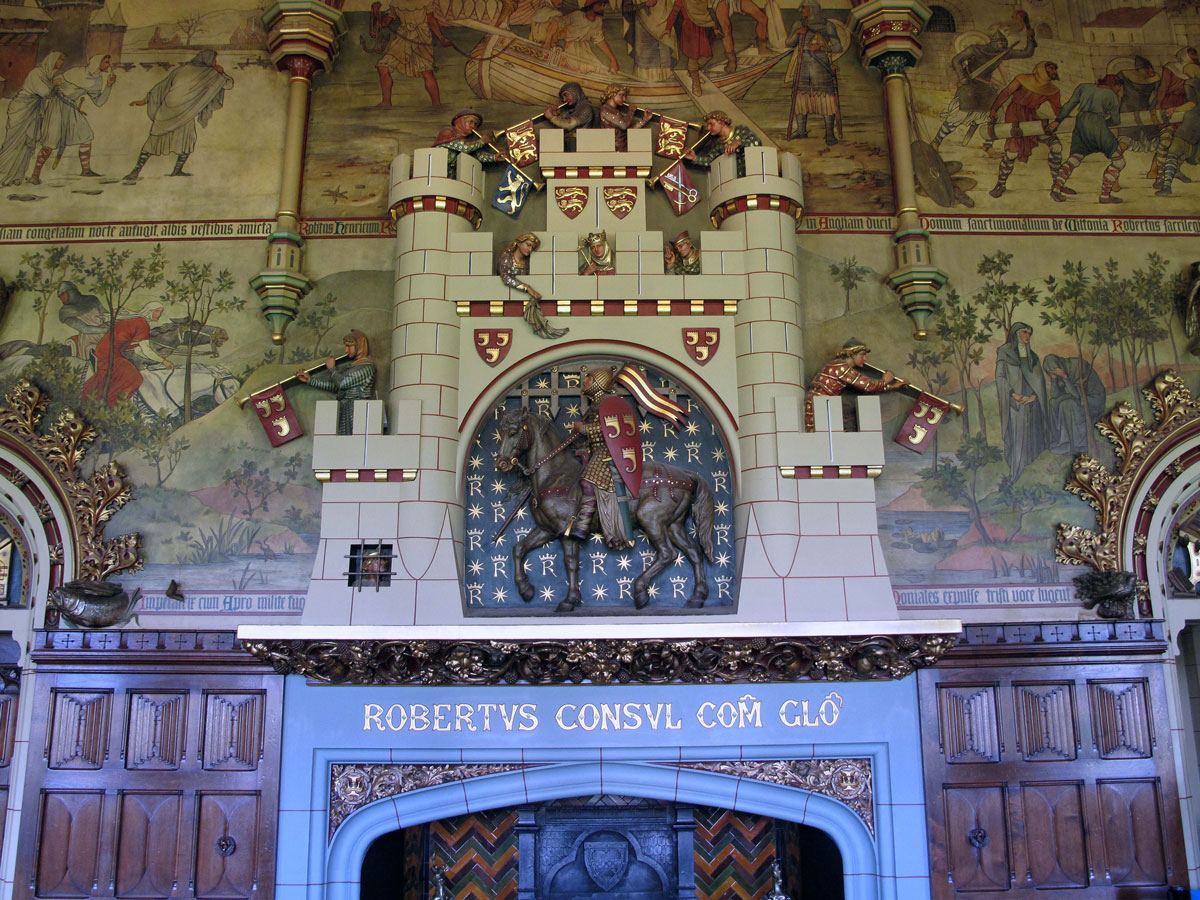
Below are a couple of images from the Banqueting Hall. The lower picture of the fireplace shows a scene from the time when Robert of Normandy, the eldest son of William the Conqueror, was held prisoner at the castle by his nephew Robert the Consul. Robert the Consul is on horseback and if you look closely you’ll see Robert behind bars in the bottom left hand corner of the castle.


It wasn’t just local medieval history that Bute and Burges were interested in. They had a meeting of minds on subjects like the occult, paranormal, spiritualism and astrology (I’ll never forget the Horoscope Room at Mount Stuart), and although religious and animal themes are ever-present throughout the castle, it was their passion for two my favourite pastimes – travel and history – that really captured my imagination.
Burges had a fascination for European and Near Eastern travel even before he met Bute, but his enthusiasm must have had an effect on the Marquess, because he too enjoyed taking his family around Europe and the Near East, and this all came together in the magnificent Arab Room. To my mind, this has to be the apogee of their creative collaboration. Based on Muqarnas, a form of Islamic architecture, the Arab Room, and the ceiling in particular, is a wonderful combination of wood carvings and gold leaf that is an absolute feast for the eyes.


Burges didn’t live to see all his projects completed: While he was working at Cardiff in 1883 he caught a chill and died three weeks later at the age of 53. Bute continued with the projects as best he could, but he too died at the age of 53 in 1900 which left his son to pick up the baton. The 4th Marquess had large shoes to fill, but with huge death duties and a declining coal industry, finances were stretched. He did his best to complete his father’s ambitions, but by the time he passed away in 1947 the castle was surplus to the family’s requirements and so they gave it, and much of the park, to the City of Cardiff – and that’s who owns it today.
My one and only visit to Cardiff Castle wasn’t really long enough, and I had it in mind to return on another day, but when the opportunity arose I was torn between going back to Cardiff or going to nearby Castell Coch instead. The restoration of Castell Coch was another project by Burges and the 3rd Marquess and is a fairytale castle located amongst the beech woods of Fforest Fawr, about a 20 minute drive away. Needless to say, Castell Coch (the Red Castle) won the day, and it’s on my never-ending list of places to write about.

Rather than include links within the post itself, on this occasion I’ve listed them below for anyone who wants to read any of my other articles that relate to this one.
POSTED – MAY 2024
Originally posted 2024-05-26 02:59:21.
I’m glad I came back this morning… well, almost afternoon, I guess, to read more. I love all the pictures, and the history is so rich and detailed. This is so well-done.
That’s really kind of you. Thank you so much. I hope you come back for more 😊
I sure will. 🙂
🙏😊
As always I enjoyed your post which was extremely interesting.
I confess that I did not know the history of the Bute family
PS: I found the photos of the ceiling of the Arab Room to be a real gem
Thank you Luisa and I’m really pleased that you enjoyed reading it. The Arab Room ceiling is quite something isn’t it? Hope you had a lovely break away in the Balearics 😎
Many thanks to you for your kind reply, dear Malc 💖🙏
My short stay in Menorca was truly relaxing and enjoyable
Well, you’re right Malc, this end to the Cardiff Castle series is a good story, and the Bute family are fascinating. I can completely sympathise with the locals when the 1st Marquess demolished medieval parts of the castle – utter sacrilege! This is exactly why I usually don’t like castles that have been messed around with in later ages, but then when you read about the passion of people like William Burges, and the painstaking work he carried out recreating the gaudy colours and architecture so favoured by the medieval nobility and royalty, the sting goes out of the ‘modernisation’ a bit. I have to admit, the banqueting hall does look pretty cool! I found Bute and Burges’s other common interests intriguing to read about as well, particulary the occult, which I know was quite a big thing in the second half of the 19th century (look at Sir Arthur Conan Doyle, for example). The two men were clearly soul mates. Some friendships are meant to be; it’s almost as though destiny brought them together, and the result is there for thousands of visitors to enjoy today. I find it quite poignant that they died so closely together, and eerily indicative of their close bond. A great end to another great series, thank you Malc. 🙂
Thank you for seeing this series through Alli and I’m pleased that you were able to put it all into context with the history of South Wales. One thing I should point out, but I’m sure you’re already aware anyway, is that I don’t just write about places that I personally admire, but about different locations that make up the geographical jigsaw of our country and beyond. Some I like more than others of course, but by joining up the pieces I hope that it puts things into perspective. In this series for example, it shows how the castle changed from a Celtic background to a Roman takeover and then with a Norman influence ultimately became a part of Great Britain. The part that Scottish ancestry played was also important as to how the coalfields of South Wales made such an impact in the Industrial Revolution, and therefore the British Empire.
On a personal note, it has to be remembered that there has always been a fierce rivalry between Bristol and Cardiff for all sorts of reasons and in my younger days we used to sing songs about the ‘Slag Heaps of the Rhondda’ (to the tune of Black Hills of Dakota). I see things totally different nowadays and have the greatest respect for those people – admiration even.
Talking of respect and admiration, I want to wish you all the best for tomorrow. I’ll be thinking of you. 😔
The variety of subject matter you cover on your blog however you feel about them is precisely why I enjoy your posts so much. I gain insights and knowledge about places and parts of history that would pass me by otherwise. It’s good to have a balanced view. 🙂 As for changing how we feel towards people and places over time, that is both healthy and to be expected. I’ve changed my opinion on many issues and figures through experience, new knowledge or study. It’s just part of life and how we evolve as people.
Lastly, many thanks for your good wishes for tomorrow, but believe it or not, the op has had to be postponed! Will elaborate in the next few days in my reply to your latest email.
I’m sorry to hear that Alli. Life’s a pain in more ways than one. 💙
Great job, Malc. When I first began reading about the two men, I wondered if the relationship was going to become personal, but that does not seem to be the case.
Thanks Pat. I thought somebody might think that, and funnily enough I thought that somebody might be you 😊
I am wholly overwhelmed, Malc, by your out-of-this-world history lesson! You are quite right that we should pay attention to the names and the titles as they mount up, almost from here to the moon and back! You ease the task with your inclusion of humor, thank you, and your stunning photography. It is impossible to imagine anyone not being impressed with the richness of color and the fascinating details of all the featured rooms in the castle and other properties. The Arab Room and others are, as you put it, Malc, a veritable feast for the senses! The focus for me is on the heritage of the unique culture of this country that goes back centuries, and your masterpiece of writing, Malc, depicted it well! Thank you!
Joanna
Thank you once again Joanna for your wonderful comments. History is an ongoing thing and I think Cardiff Castle shows it. History didn’t stop with the Civil War as the Bute family proved, and sometimes I look at life as history happening in front of our very eyes which is why I’m so engrossed in current affairs, whether I like what I see in front of me or not. Thanks again for your continued support. It really is appreciated 😊
Another interesting post from my favourite history teacher – I really enjoyed this one although ‘interesting’ isn’t enough to describe it, it’s more than that. I wonder if the 2nd Marquess of Bute ever got confused with all the titles he had?
It sounds like Burges and the 3rd Marquess had a great partnership, such a shame Burges didn’t live to see his projects completed. I love the Banqueting Room fireplace but the Arab Room is just something else – it’s truly stunning, I could spend hours lying on the floor gazing upwards.
Thanks for a great post to start my Sunday Malc, I hope you enjoy the rest of the long weekend 🙂
What a lovely response Eunice. You’ve certainly brightened up my Sunday morning with these comments. You have a great Bank Holiday weekend too 😊
Those pics of the Arab room are fabulous! Loved the history and the information Malc. Another gem of an article. Have a great Sunday and all the best!
Thanks Francesc and glad you enjoyed it. I believe you also like Islamic architecture. Have a great weekend yourself too.
What alot of Butes. talking such things these rooms ae beauts. I knew nothing about the castle history before so thank you for this.
Beaut reply Shey. Thanks, as always, for your comment and support 😊
You are well worth supporting. Your posts are funny, fascinating and full of facts.
Wow! There’s no answer to that, except thank you so much Shey 🙏
Just you pon on the medal cos it is the truth.
I never know what to say when people like like you are so kind, especially when you have so much talent yourself. I’ll wear that medal with pride though. Thank you! 🤩
Me? Dinnae be silly. I just call things like I see them, honest. We all have abilities and talents. We just don’t always rate them.
You’re right about everyone having a talent of some description Shey, and they’re not all academically minded either.
Exactly. It is not the preserve of one particular set. Sat morning the Mra nd i wer ein rehearsing for the latest rerun of his play, this time in pretty deserted and run down city centre shopping mall, where this Dundee guy who runs a worldwide biz in performance venues has made a former shop unit into a small theatre. Anyway despite the desertion there’s still a wee community built round the few existing shops and a few units are artist’s studios. One of these looks abso fabulous, as if it belongs to some top designer and every week it has been simply remodelled witha few chairs and some paintings. This week I wanted a quick skeck in passing it is just so wonderful and also my kind of painted chairs etc. I wanted to see what this week was like. And this very old, very ordinary Dundee guy came over and this was his studio. The eye for design was amazing, everything about that unit is amazing and so was he, so yes talent is everywhere
You’ve summed my thoughts up perfectly Shey.
Gosh, thank you, truly.