Following in The Beatles Early Footsteps - Pt 4 The Casbah
In Part 3 of this series, I explained how John, Paul and George came together as members of The Quarrymen, and in this post I’m going to discuss the events that led up to them becoming The Beatles, and why The Casbah was the place where their road to fame really started.
Most people think of the Cavern Club in Matthew Street as being the place where The Beatles started out, and although they became famous there, the place where it really all began was the Casbah Coffee Club in West Derby, and a place where I was lucky enough to be given a personal tour by family member Rory Best, who saw it all happen.
The Cavern opened its doors as a jazz club in January 1957, and The Quarrymen, as a skiffle group, were allowed to play there a couple of times; but as their style changed to ‘Beat’ music they were forced to look elsewhere – and one of the venues where they were welcome was The Casbah.
The club was (is) located in the cellar of a large Victorian House in Hayman’s Green, and was not just where The Beatles started to make their mark, but also others like Gerry and the Pacemakers, Cilla Black and The Searchers, and it was all thanks to one woman – Mona Best. To fully understand how she had such an impact on the 1960s music scene, we really need to delve briefly into her past.
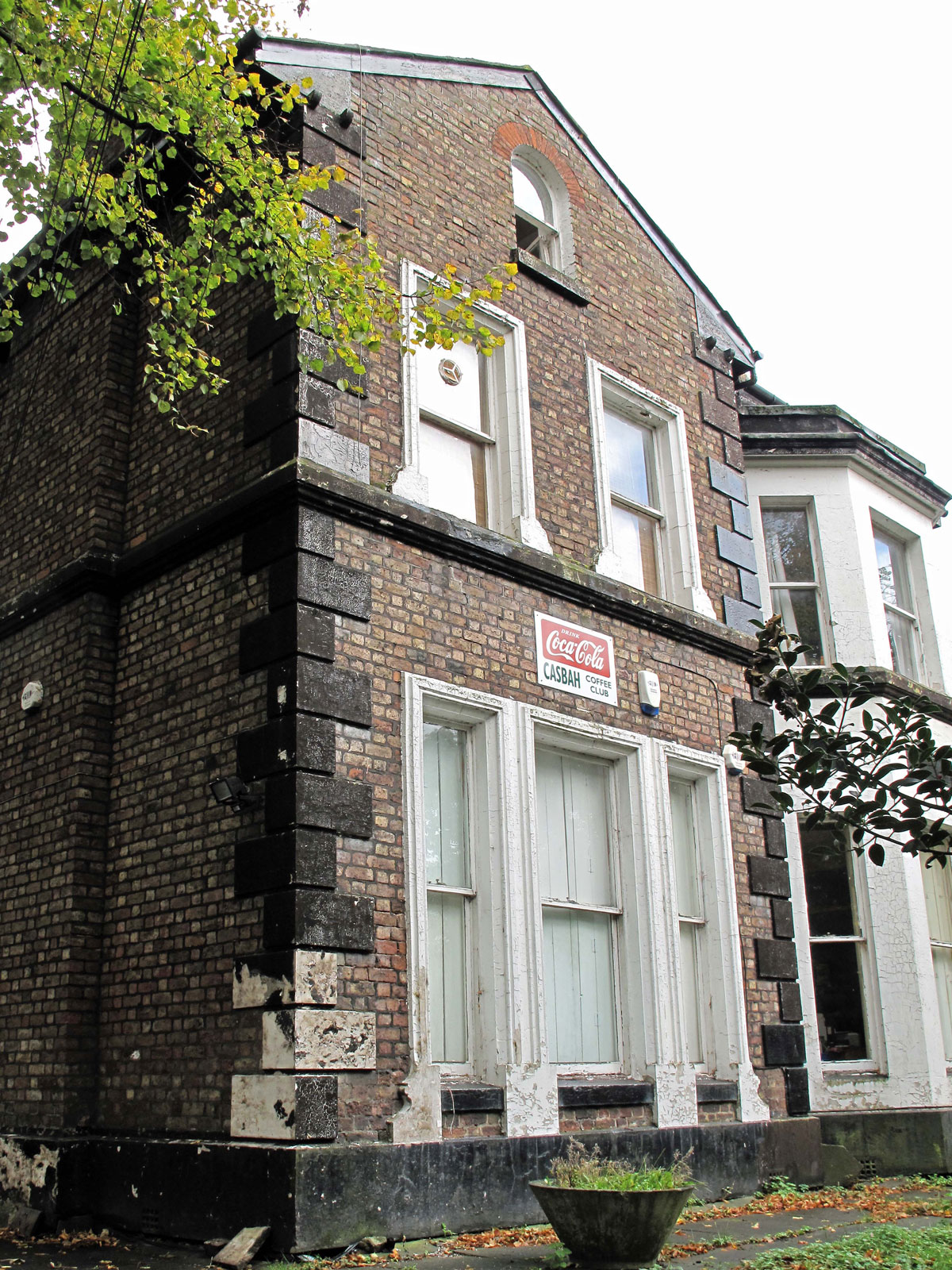
Mona was born in Delhi on 3rd January 1924 to Irish parents, Thomas and Mary Shaw. Seventeen years later, on 24th November 1941, she gave birth to a child of her own in Madras. Randolf Peter Scanland was to be the first of three sons (all by different fathers) and was the product of Mona’s liaison with Donald Peter Scanland. Donald unfortunately, was killed on active service during World War II and there was no record of them ever getting married, but Mona did marry before the end of the war – to a Liverpudlian called Johnny Best.

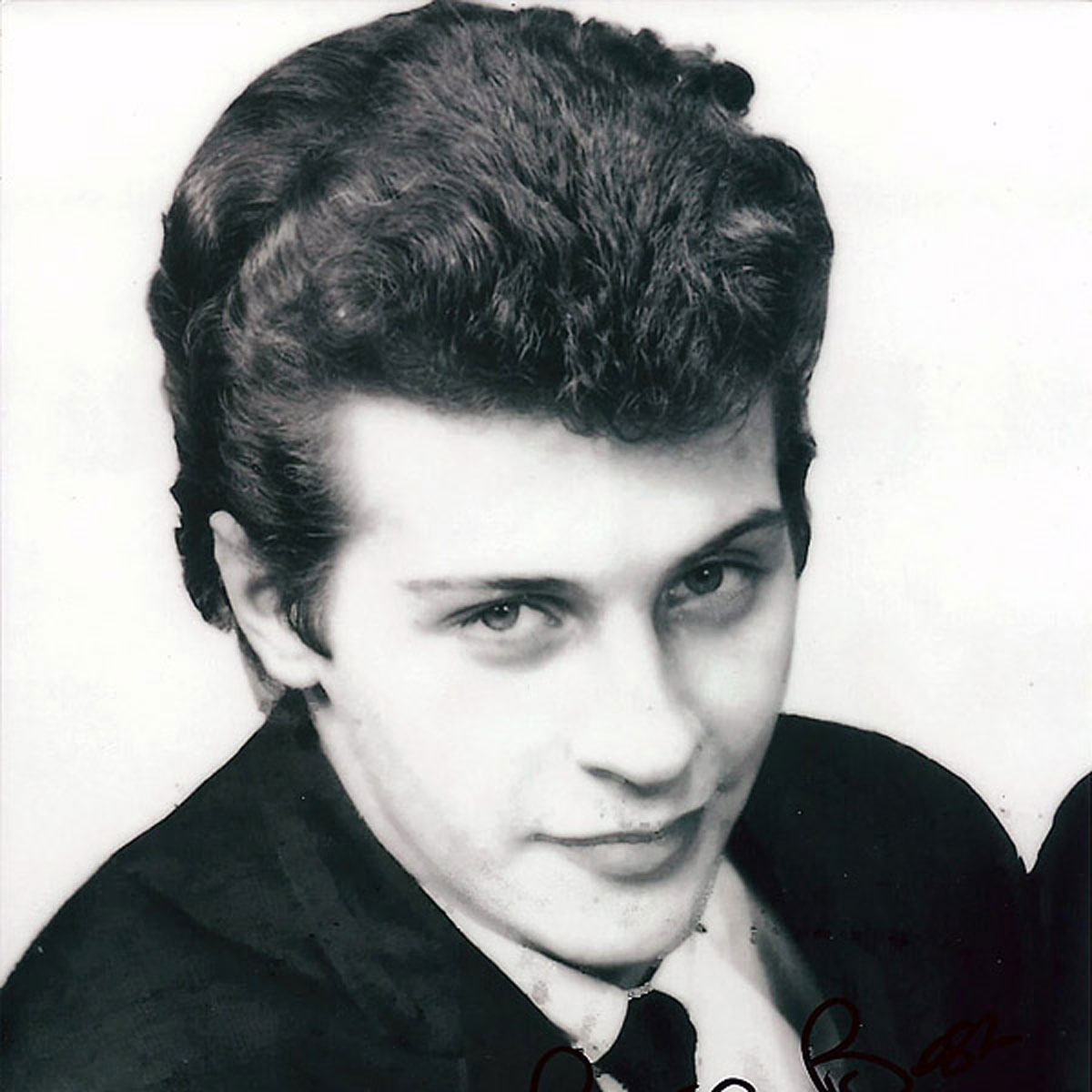
Johnny was commissioned as a physical training officer in India, and after they got married in Bombay on 7th March 1944, both Mona and Randolf adopted her new husband’s surname. Randolph also opted to use his middle name of Peter, and if you’re ahead of the game, you’ll already realise that Mona’s son is Pete Best, The Beatles drummer before Ringo Starr.
Johnny Best was an army boxing champion and came from a family of sports promotors in Liverpool, and when the war was over they sailed back to his home city, not just with Randolph, but also with a son of their own – John Rory – and it was Rory (as he’s known) who was the family member who gave me and Mrs Easymalc our personal tour of The Casbah.
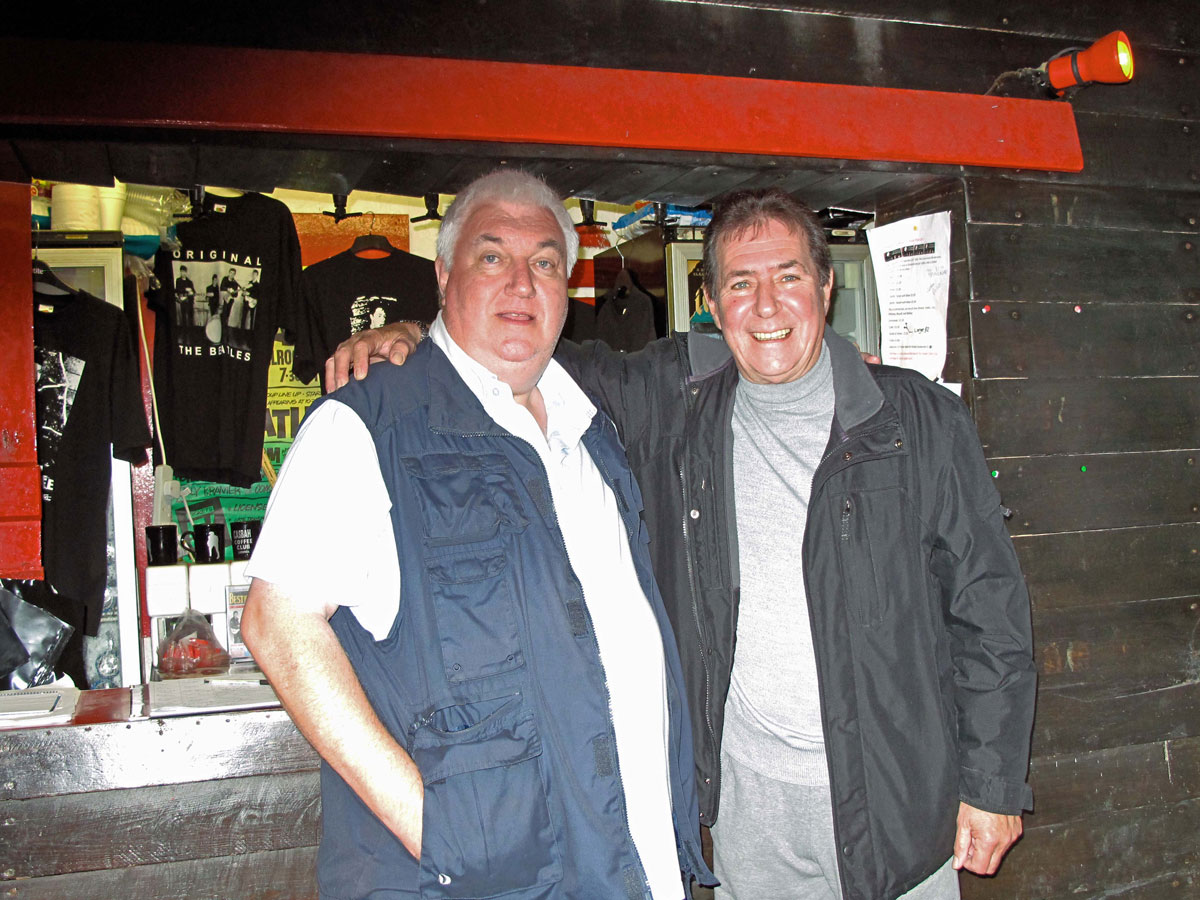
Below is a picture of me and Rory Best in The Casbah. I’m the good-looking one on the left in case you were wondering.
Johnny Best’s family were highly regarded in Liverpool, and for a while Mona lived with her husband and two boys in the family’s large house called Ellerslie in West Derby. After Mona fell out with Johnny’s sister they started to look for a place of their own, and after several moves, ended up in Queenscourt Road where they lived for nine years. Mona had only ever been used to living in large premises, and she was never completely happy about residing in a small semi-detached house.
She wasn’t completely happy with her spouse either, and in 1954 decided to take on a more assertive role by raising some funds of her own; so she gathered up all her jewellery and took it along to the pawn shop. Instead of squirreling the cash away, she placed the whole lot on Never Say Die, a 33-1 outsider in the Epsom Derby. She bet the horse to win, even though the jockey was an unknown 18 year old called Lester Pigott; and much to Mona’s delight, the horse became the first of his record nine Derby winners.
After several failed attempts by Mona to lure Johnny away from Queenscourt Road (to a lighthouse, a windmill and other quirky places), she ended up, much to her husband’s disapproval, spending her winnings on buying the large derelict headquarters of the former Conservative Club at 8 Hayman’s Green – and there was more bad news to come for Johnny.
Her two boys by now were teenagers. Peter was quite reserved for a seventeen year old and Rory was still only fourteen, but with such a large house at her disposal, Mona thought it might be a good idea to turn the cellar into a den for them and their schoolfriends. No doubt she saw it as a good way of looking after her boys as they were growing up – but it didn’t stop there.
Mona was not just a good looking woman, but a dynamic one as well: After watching a TV programme about a London rock n’ roll cafe, she thought about turning the den into a coffee bar where they could also have some music for teenagers to enjoy. Juke boxes were all the rage at the time, but on weekends, Mona also had the idea of using some of the Beat groups that were starting to spring up around Liverpool. The boys were obviously up for it, but something tells me that it was as much for her, as it was for Pete and Rory.
One of the groups recommended for the new venture was The Quarrymen. It wasn’t a friend of John, Paul or George who suggested them, but a girl who knew Ken Brown, one of the members that kept flitting in and out of the group. Mona was happy to give them a chance, and The Quarrymen, who were only too happy to oblige, were booked to open the club on the 29th August 1959.
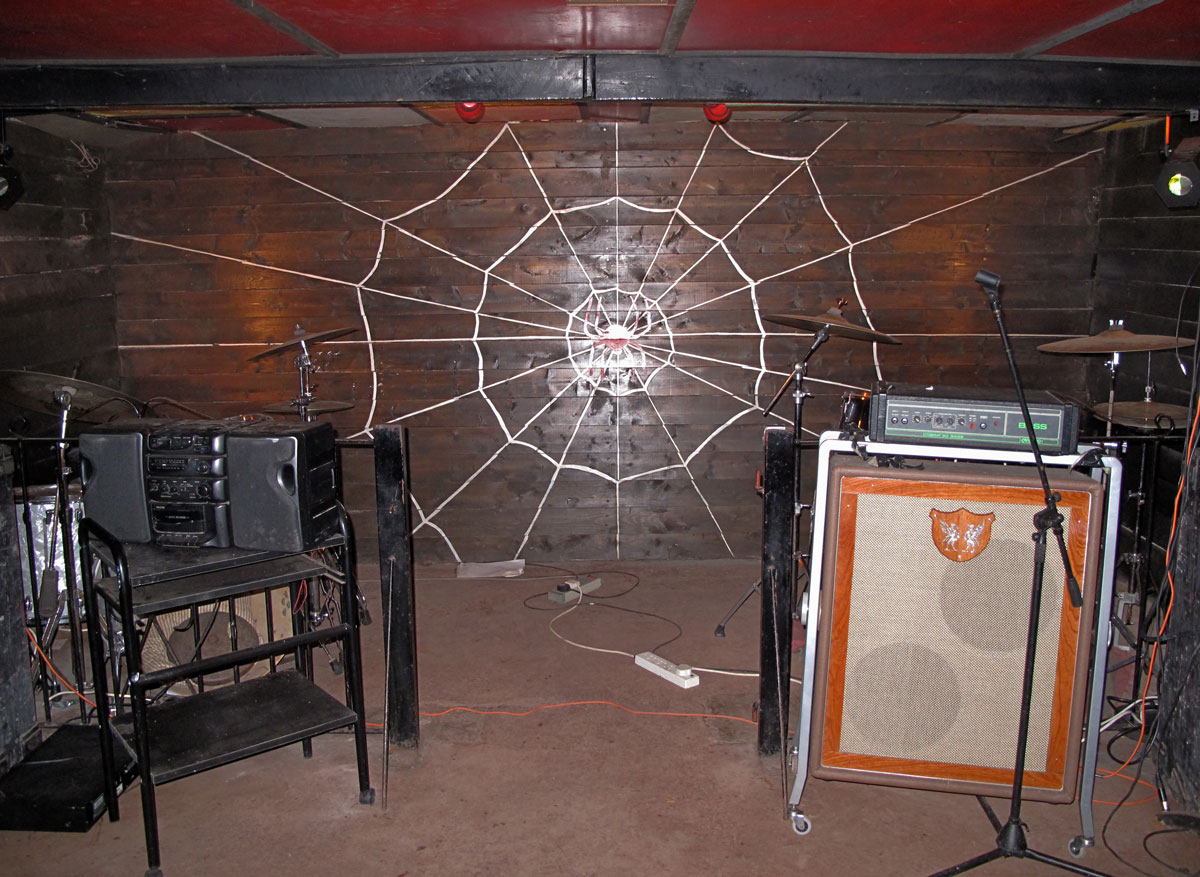
There was still plenty of sprucing up to be done first though, and the group members were all given paint brushes to lend a hand. Whoever decided on the décor I’m not sure, but the rooms were painted in all sorts of different designs with rainbows, stars, and even a spider’s web (see featured image at the top of the page). Maybe it was John’s artisitc background that had some influence, and we know that his girlfriend from art college, Cynthia Powell, lent a hand because she painted a silhouette of John on the stage wall. Cynthia, of course, later became John’s wife.

John may have been an art student, but it seems that he wasn’t so hot with a decorating brush: When Mona asked him to undercoat one of the walls he used gloss instead, and the paint was still wet on the day the club opened. Being short-sighted may have had something to with it, and those tinted glasses he wore weren’t just for show. The good news though is that all the original decorations have survived intact.
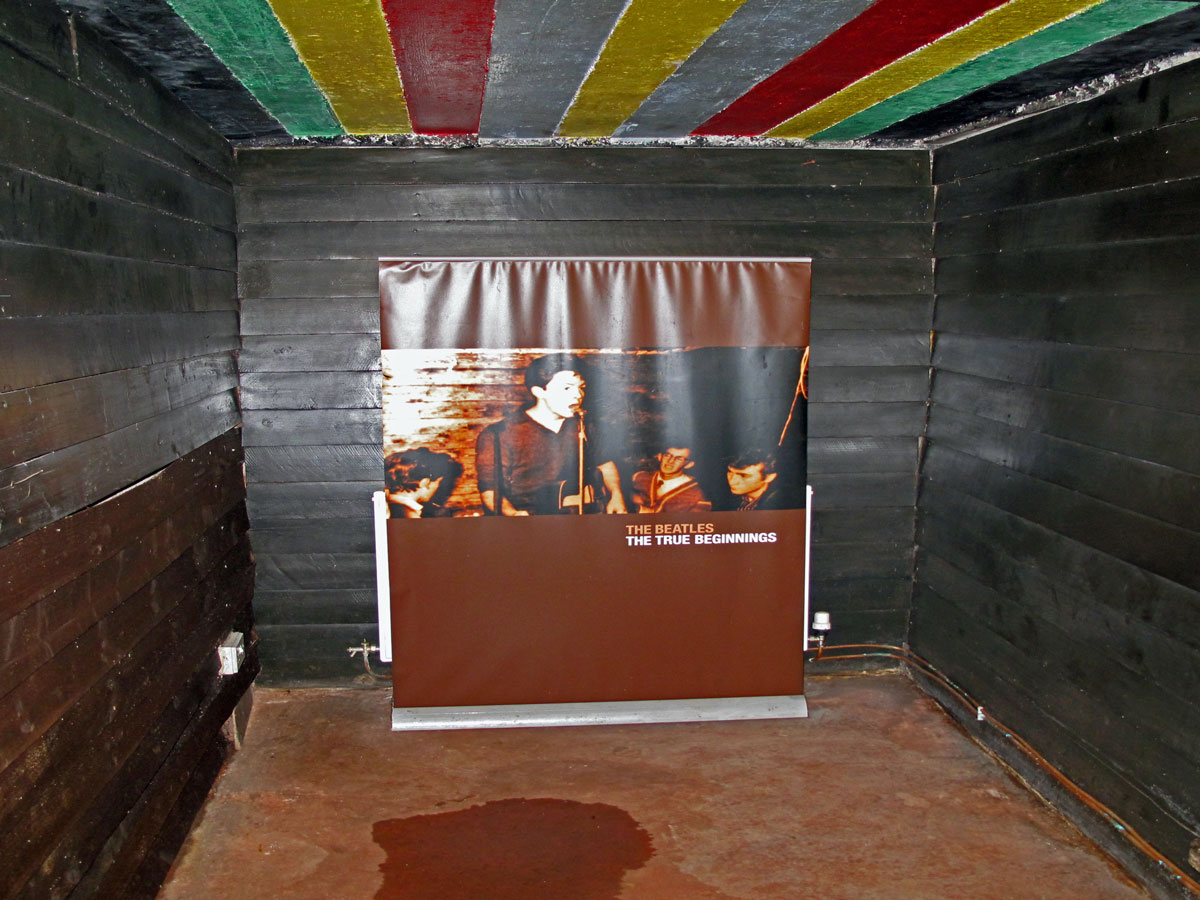
To keep the riff-raff out, Mona made it a members-only club, with annual membership costing half a crown (12½p), and there was to be no alcohol, just soft drinks, snacks and coffee.
Despite the wet walls, the opening night was a roaring success with almost 300 people paying a shilling (5p) to get in. The Quarrymen got a great reception, and Mona, Pete and Rory were well pleased. As for Johnny, I’m not so sure.
Membership increased to 3,000, and for the next couple of months things went well for both Mo (as her sons called her) and The Quarrymen, but it wasn’t to last. On 10th October, Ken Brown turned up with a heavy cold and Mo told him to sit the evening out, and he watched from the side-lines as John, Paul and George performed without him. At the end of the evening, Mo shared the £3 fee out between all four of them as normal, but John, Paul and George thought it should have just been shared between those who played – and the evening didn’t end well: Ken left the group once and for all, and the other three ended their arrangement with The Casbah.
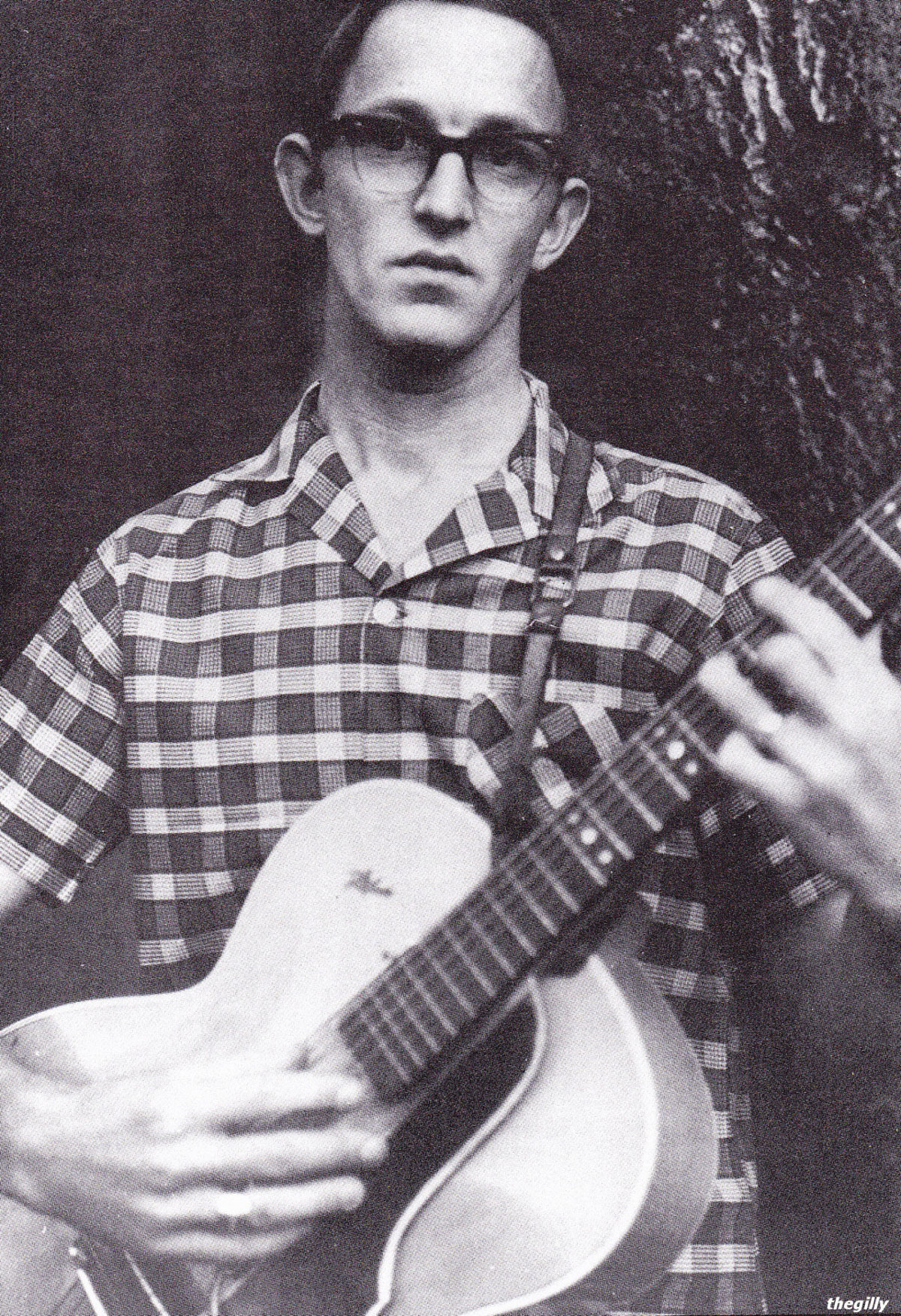
For Mo’s son, Pete, the split wasn’t such a bad thing. He’d been learning to bang away on an old snare drum for a while, and when Ken asked him if he wanted to help him form a new group, he wasn’t going to say no. Mo bought him a new drum kit, and along with Chas Newby (a former member of The Quarrymen) and Bill Barlow, they formed the Black Jacks and became the Casbah’s new resident group.
As far as John, Paul and George’s association with The Casbah was concerned, it wasn’t the end, just the beginning, and deep down, they had bigger plans than just playing at small venues, but that was still some way off.
Before I take you along the next part of the journey, I thought it might be a good time to introduce some music. Yes it is doesn’t have any relevance to this part of The Beatle Story, but it’s a song we don’t hear too often. Written and sung by John, it was released as the ‘B’ side of Ticket to Ride and released in April 1965.
One person who may have been useful in helping to spruce up The Casbah was Stuart Sutcliffe, John’s new best friend at art college. He was acknowledged as one of the school’s most gifted students, and John admired his skill at being able to create works of art much better than his own. At the same time, Stuart (who loved music but couldn’t play an instrument) recognised John’s musical ability and started to follow The Quarrymen around.
Stuart may not have been a musician, but in January 1960, an opportunity arose for him to become one. One of the paintings he entered for the prestigious John Moores Exhibition (Summer Painting) was bought by John Moores himself for £65. Even though John, Paul and George may have given up performing at The Casbah, they still went along there, and Rory showed me the corner table where the three of them tried to get Stuart to spend the money on either a drum kit or bass guitar (there are no prizes for guessing why). After the three guitarists offered their support, he ended up buying a Hofner bass guitar.
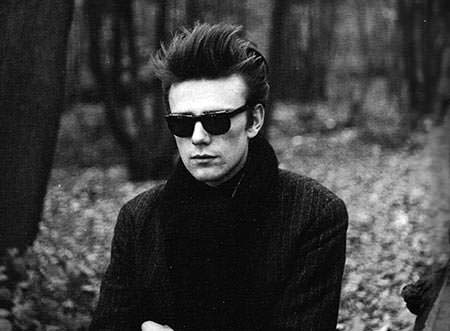
Around the same time, and very much against Mimi’s advice, John moved into Stuart’s flat in Gambier Terrace, and it seems as though it was just an artists’ squat and a bit of a dump to live in. Mimi must have wondered where she had gone wrong, but Stuart had his uses. Although he didn’t officially join the group until May, he was getting them bookings and helping them to find a new name.
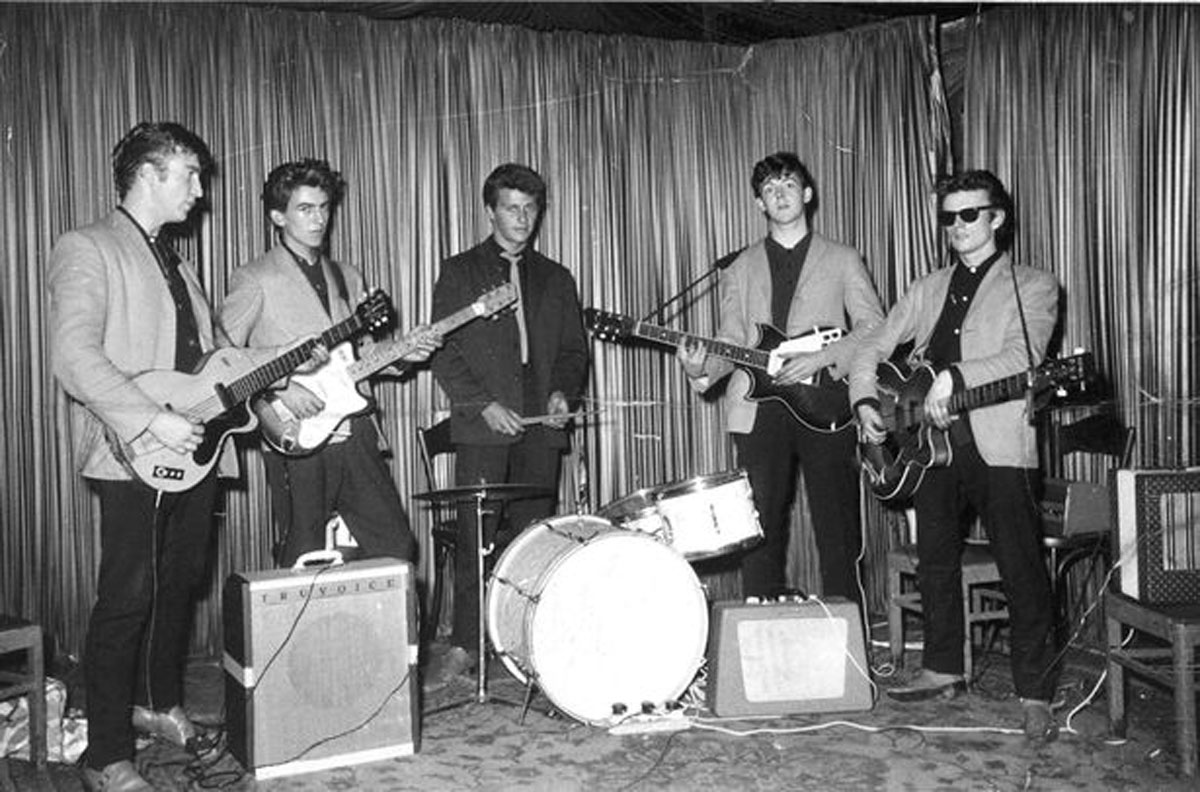
The name Quarrymen had lost its relevance: John was no longer at Quarry Bank and neither Paul nor George had ever been there – and so it was time for a change. One artist who they all liked was Buddy Holly who had a backing group called The Crickets, and so they started to play around with a similar name. After a while, Stuart suggested the name ‘Beetles’ or ‘Beatals, depending on which spelling you want to believe. Whichever it was, it took on different forms such as the ‘Silver Beats’ and ‘Silver Beetles’ before they finally became The Beatles.
They were calling themselves the Silver Beetles when their first real break came. On 10th May Larry Parnes came to the city to audition for a backing group to support fellow Liverpudlian Billy Fury. Larry Parnes was the country’s undisputed king of pop where finding and managing successful acts was concerned, and apart from Billy Fury, his stable included people like Tommy Steele, Marty Wilde and Joe Brown – all big names at the time.

Stuart was still not a proficient guitarist, but the group included him in the line-up for the event, along with a stand-in drummer. The audition didn’t provide Larry Parnes with the backing group he was looking for, but he thought that the Silver Beetles were good enough to back Johnny Gentle (another Liverpudlian) on a two week tour of Scotland. It was their first professional engagement – and a tour at that.
The tour may have seemed like a dream at the time, and although it wasn’t a nightmare, it wasn’t the success they had been hoping for either. Larry Parnes never booked them again and they returned to their roots playing the clubs of Liverpool. Some of them were real dives: If the ‘Teds’ weren’t fighting, artists like ‘Janice the Stripper’ were telling them what to play. George says “We were lucky to get more than two dates a week. All we were making was about 15 bob a night, plus as much eggs on toast and cokes as we could take” – but things were about to change.
One of the clubs the group played in was the Jacaranda, run by Allan Williams, and it was he who organised the audition with Larry Parnes. He also had contacts in Hamburg who were looking for a five-piece group to play the clubs over there – but there were only four Beatles, and they still needed a drummer.
Back at The Casbah, the Black Jacks had started to break up, but by now Pete Best had become a well-respected drummer, and after a phone call from Paul McCartney, he became the fifth member of the group. Four days later on 16th August, they were all off to Hamburg, a city about which John Lennon is supposed to have said “I might have been born in Liverpool, but I grew up in Hamburg” – and in my next Beatles post I’ll explain why.
POSTED – FEBRUARY 2022
Originally posted 2022-02-25 16:17:54.
Amazing. I knew nothing about this and what a story. What a woman too. Having a wee giggle too in that we took our ‘musician band leader, from the play last year in to our proposed venue for another run on Sat where he proceeded to have this strop in front of the guy who runs worldwide venue’s partner, who was there to show us round and let us in simply cos he was away in Brighton for 3 weeks of events. She was some big wig in her own job at the V and A and had popped over. Hell…looking at what the Beatles played well, he starts any more and he will well be told.
And I don’t think he would want to mess with you 😠
Well… lol.. I am gneerally very easy going re this kind of thing but yeah, in this isntance we got him the gig not the other way round and we got another gig for them too so…. yeah. The Mr has been on the case of suggesting an accoustic set but so it it is not our idea. Persoanlly we like the challenge of playing a show anywhere
Just catching up on a back-log of blog posts I set aside to read and I’m really glad I included this one among them. Excellent detailed stuff from you as always Malcolm, and what an opportunity to get a private tour guided by Rory Best! I didn’t even realise the Casbah was open for visits 😀
I don’t know how you fit it all in Sarah, but thanks for taking a look and and of course, your lovely comment 🙂
Cannot believe I missed this one, but it is certainly interesting and the pictures are fab. The history is amazing and for me it never gets old, I can never tire of Beatles information. And “Yes it Is” is a great tune! Another smashing entry into the saga and I loved it! Smashing good work my friend! Greetings from the Mediterranean!
At least you’ve caught up with the latest instalment, and I’m so glad that you have. Thanks F. Have a lovely evening and a great weekend 🙂
Thank you so much Malc! Raising a glass to you my friend!
And I’ll raise one to you today Mi Amigo
¡Salud!
Another interesting post Malc, it’s great to learn how the Beatles started on their road to fame and you must have been thrilled to be given a tour by a family member 🙂
Thanks Eunice. Meeting Rory and having a personal tour of The Casbah will be etched in my memory forever 😊
Got in earlier this time! 😀 Well, Malc, it just goes to show that no matter what historical period is being covered, a good story is a good story, and this is truly one of them! I thoroughly enjoyed reading about Mona and her sons, the birth of the Casbah and how the fab four evolved and got their name. Truly fascinating stuff, and I’m not even a fan!
What an amazing experience it must have been to be given a tour by a family member who was actually there through it all. I’m extremely impressed!
One thing though – I bet Ken Brown must have spent many decades kicking himself… Thanks for enlightening me – it really was a great read. 🙂
Your comments always make me realise how worthwhile blogging can be. Thank you so much Alli.
Having a personal tour around The Casbah with Rory was fantastic. As you can imagine he had plenty of memories from those days, and even though I wasn’t there then, I’ll always remember my visit to The Casbah.
As you say, I bet Ken Brown wished he’d never had a cold that day 😊
People often forget about Hamburg in The Beatles history, so try not to miss the next instalment.
What a wonderful post!
I have learned a lot of things I did not know and I am grateful to you for that ❣️❣️❣️
Luisa, as you know I don’t have too many followers, but as long as I have people like your good self taking time out to comment on my mundane posts, you make me a happy man. Thank you!
As ever, you are most welcome, Malc!
have a nice weekend
You too Luisa 🙂
Great story with lots of good pictures and local color. Keep up the good work.
Thanks Pat. You’re so supportive!