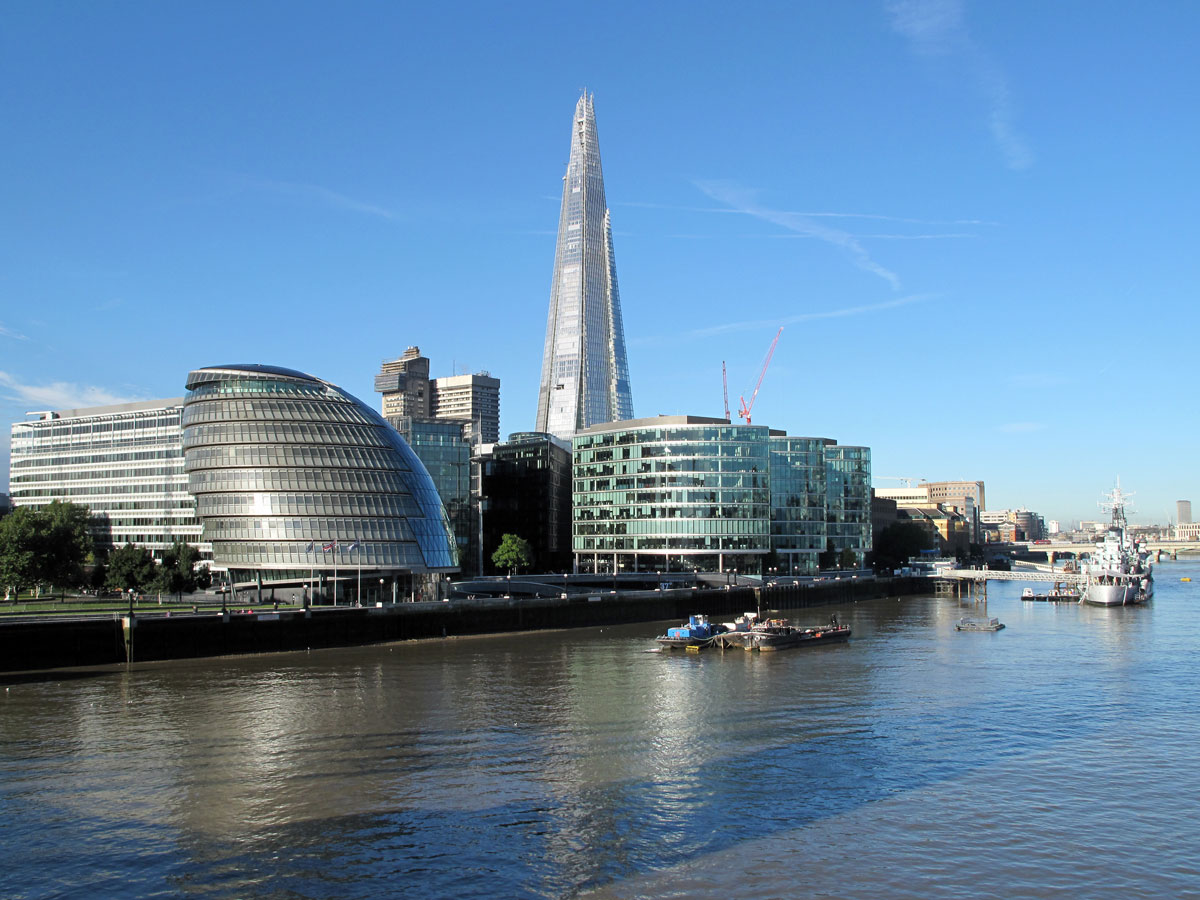
Southwark
London’s metropolitan boroughs as we know them today weren’t formed until 1965, but historically speaking, Southwark was a borough on the south bank of the Thames back in Roman times.
Londinium was built where the river was narrow enough to be bridged yet still tidal, allowing trading vessels to sail right into the heart of what was to become the most important city in Roman Britannia.
On the opposite bank the terrain was marshy, but interspersed with islands which made it convenient for building the first London Bridge.
After the Romans left, the settlement that grew up around the southern end of the bridge eventually came under the ownership of the church which is why Southwark has its own Cathedral.
It may have been church territory but it didn’t stop the area becoming a medieval red light district – a sort of Tudor and Stuart Soho – with pubs, brothels and bear-baiting pits luring clientele from across the river.
The theatre was also a popular form of entertainment with the likes of Christopher Marlowe and William Shakespeare writing material for The Rose and of course, The Globe, which has been re-incarnated in recent times on Bankside not far from the original theatre.


London’s riverside during Britain’s industrial and imperial heyday – and its subsequent decline – left Southwark anything but an entertainment district, but that’s been changing over the last decade or so with the regeneration of Bankside.
The Queen’s Walk is a riverside footpath that stretches between Bermondsey and Blackfriars Bridge (and beyond into the Borough of Lambeth), and is now lined with swanky new buildings where wharves and factories used to be.
Places like Borough Market are still here though, as is the former Bankside Power Station that now houses the popular Tate Modern.
‘The Borough’, as Southwark is often called, is not just the area alongside the river. The metropolitan district now covers a much wider area with an ethnically diverse population of almost 300,000.
Over 120 languages are spoken with 11% of households having no members who speak English as a first language.
Peckham for example, is an area of Southwark which was portrayed in the sitcom ‘Only Fools and Horses’ as the home of that loveable cockney ‘market trader’ Derek ‘Del Boy’ Trotter.
These days you’re more likely to bump into somebody whose roots are in Latin America or Africa rather than London.
Other people from Southwark you could have bumped into include the authors Robert Browning and Enid Blyton who were both born here, as were the inventors Michael Faraday and Charles Babbage, not to mention actors such as Charlie Chaplin, Boris Karloff and Michael Caine who insists that he never said – “Not a lot of people know that”.


Originally posted 2017-12-10 11:39:09.
I will actually be staying in this area ooon my upcoming trip. Very useful background information.
I’m glad to be a bit of use to somebody at last 🙂 – Looking forward to meeting you