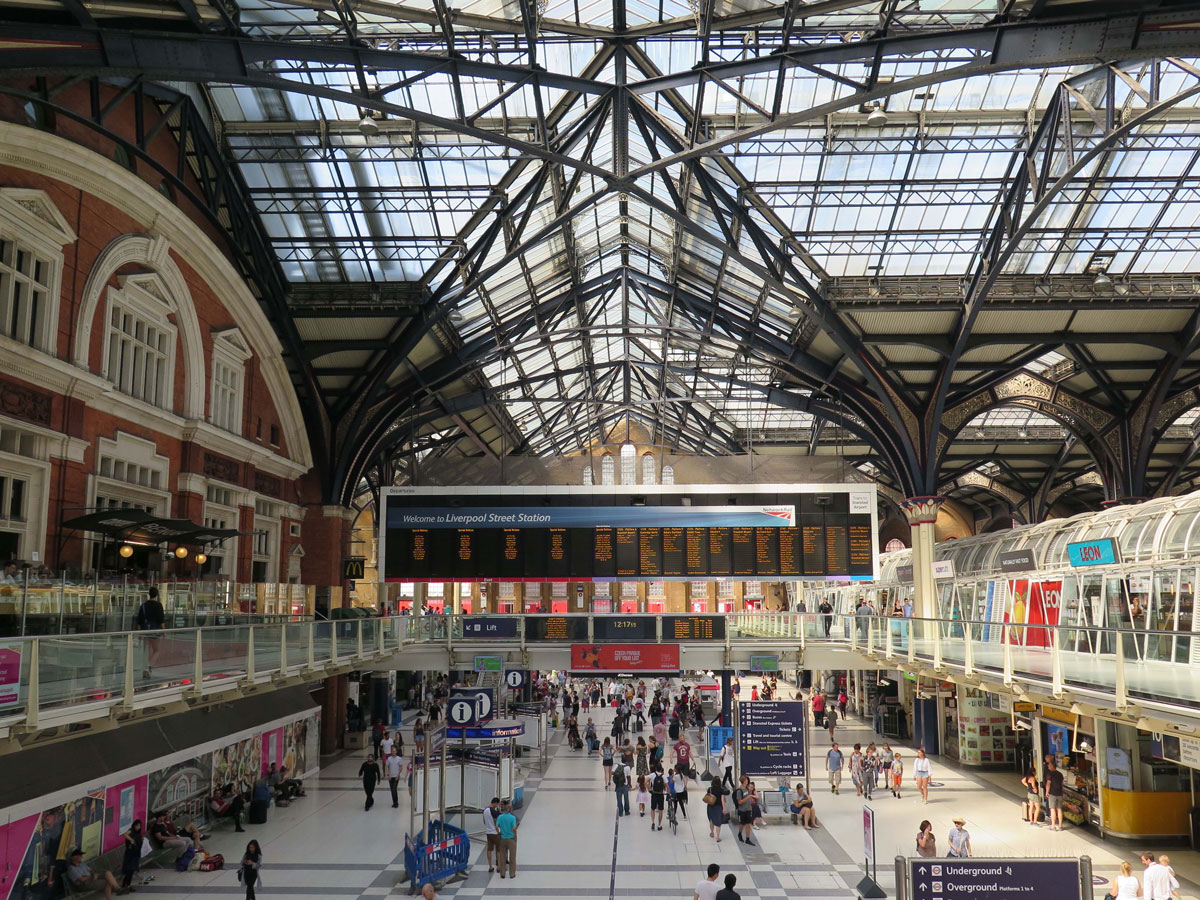
Paddington Station
Travelling by train from Devon to London invariably means arriving at Paddington, and so I thought it was about time I put on my anorak and take a closer look at the history and working operations of this iconic station.
It was originally designed by the great engineer Isambard Kingdom Brunel as the London terminus for his Great Western Railway (GWR) from Bristol, and although the line was opened in 1838 it wasn’t until 1854 that Brunel’s station actually came into use.
Inspired by the design of the Crystal Palace in Hyde Park, and with the help of Matthew Digby Wyatt, he created a station that had four platforms protected by a glass roof. This roof had three spans and was supported by wrought iron arches and cast-iron pillars.
Although the original station has been enlarged since, principally by the adding of a fourth span, Brunel would still recognise his creation if he was to come back tomorrow.
In 1863 the station’s status as a major transport hub was given an extra boost when the Metropolitan Railway started running the world’s first underground railway between Paddington and Farringdon using a cut and cover system, and if you want to see how it was done there are some old pictures near to the Hammersmith & City (H&C) underground station.
Originally posted 2018-04-29 16:20:05.