Dartmoor Prison - Pt 2 The Prison Is Built But Not For Criminals
If you read Part 1, you may recall how Thomas Tyrwhitt hoped to change Dartmoor’s inhospitable landscape into profitable farmland, but in the end, was left with just a small uninspiring settlement he called Prince’s Town.
At the end of the post I also mentioned that Tyrwhitt was given an economic boost when an unexpected opportunity arose which he couldn’t have foreseen, and you wouldn’t have to be Albert Einstein to guess what that opportunity was, but what might not be quite so obvious is why a prison was needed here in the first place, especially as it wasn’t even going to be built for English miscreants – but for French prisoners of war.
In 1803 the war with Napoleonic France resumed after a brief respite, and although Napoleon’s army were a force to be reckoned with on land, his fleet was no match for the British Navy at sea, and ever since the war began, the Royal Navy had captured many ships and their crews, so much so, that the old war prisons had become full to the point of bursting.
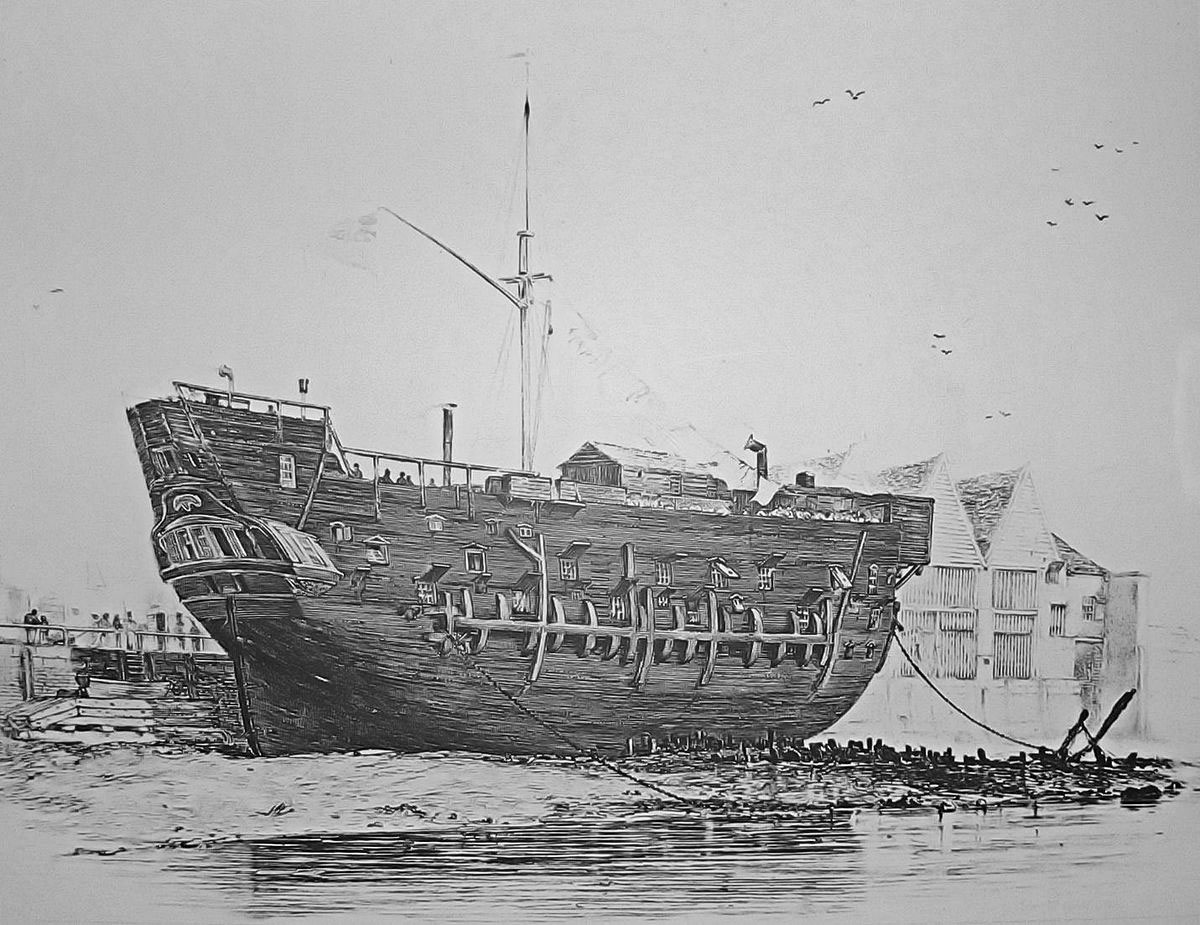
The sticking plaster solution was to bring back some of the old derelict hulks that had been left rotting in creeks around the coast – and Plymouth Dock (now Devonport Dockyard) had plenty of them. Needless to say, even in those days, it was hardly the ideal solution, not just from a security point of view, but also from a humane one. Conditions on board were appalling, with meagre rations, unhygienic sanitary conditions and hardly enough space for a family of mice: something had to be done about it, and a shore-based ‘Depot’ was the answer.
Tyrwhitt obtained permission to build the depot in 1805, and he laid the foundation stone himself on 29th March the following year. Building a prison capable of holding 5,000 prisoners was going to need more labour than the village could supply, and it meant workers travelling from places as far afield as Falmouth – and when I say travelling, I mean walking.
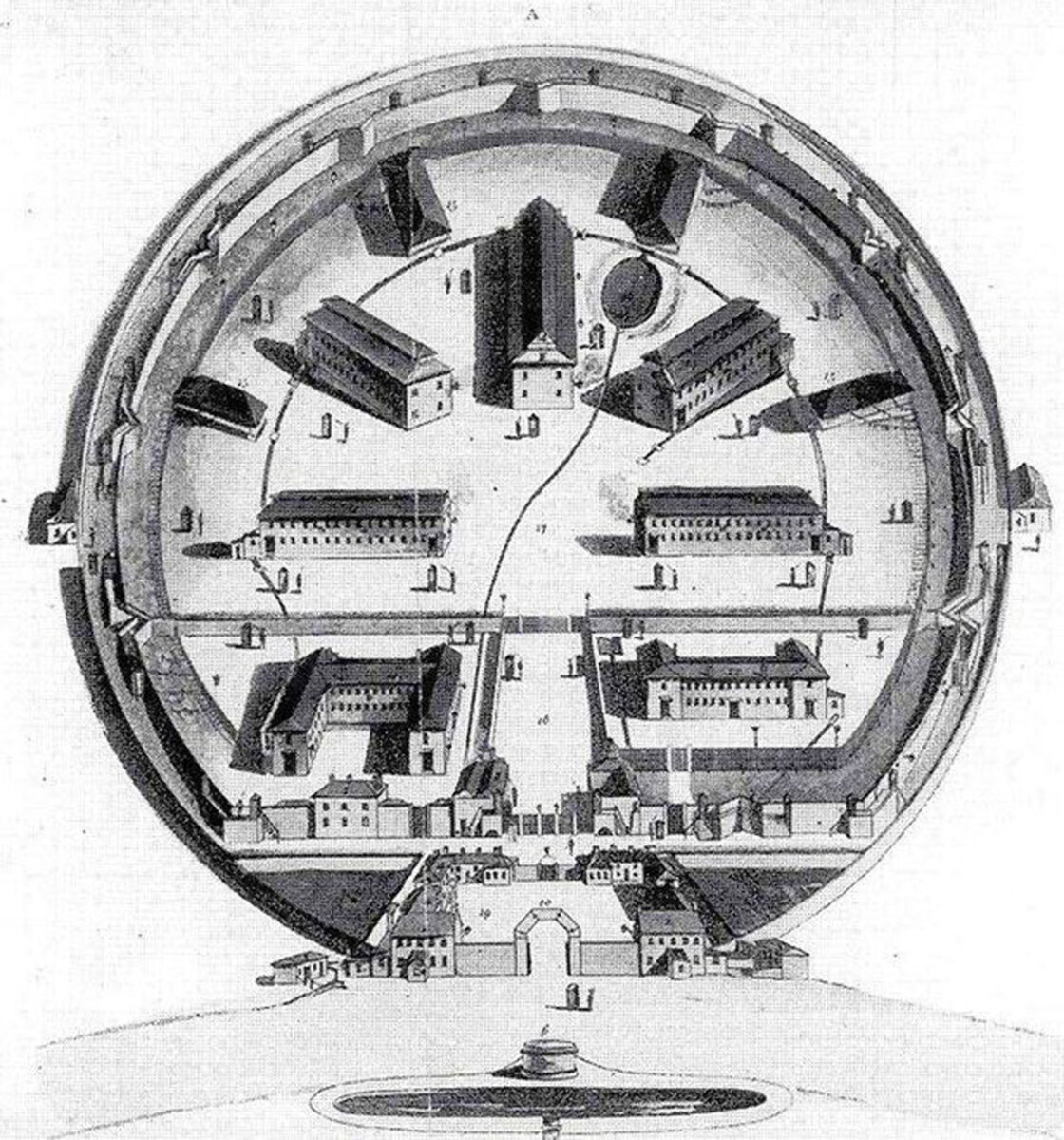
Not only was the work hard graft, the wages were poor too, and it’s hardly surprising to find out that men weren’t actually rushing to this inhospitable place just to build a better place for foreign prisoners to live: After all, living conditions weren’t that great for local people either. It’s no wonder then that that the prison took longer to build than expected – and at twice the cost. The featured image at the top of the page shows the layout of the prison around 1809-11, just after it was finished.
The prison was enclosed by two high circular walls nearly a mile in circumference, and entry was through an archway (and still is) that led to the administration blocks, with the hospital and Petty Officers Prison behind.
In the lower half behind a stone wall were five prison blocks, all of which were three storeys high comprising of an indoor exercise area on the top floor and 500 prisoners in each of the two dormitories below. The final piece of the prison jigsaw was a punishment cell called the ‘cachot’ by the French and the ‘Black Hole’ by the British.

The first batch of French prisoners left the hulks in the Hamoaze on 22nd May 1809 and were marched up to Princetown where their accommodation was waiting for them – or at least some of it, because the building work still wasn’t quite finished. To begin with, the conditions were an improvement from those on the prison ships, but there was no heating and the two foot square windows were unglazed. By the end of the year, all 5,000 hammocks were occupied, but by the end of the winter 400 Frenchmen had died from an outbreak of measles.
By 1812, the tide was starting to turn against Napoleon, which was just as well for the British, who were now facing another war – this time with the United States. War was declared by the Americans on 18th June, and by the following spring American seamen had started to join their French counterparts in Princetown.
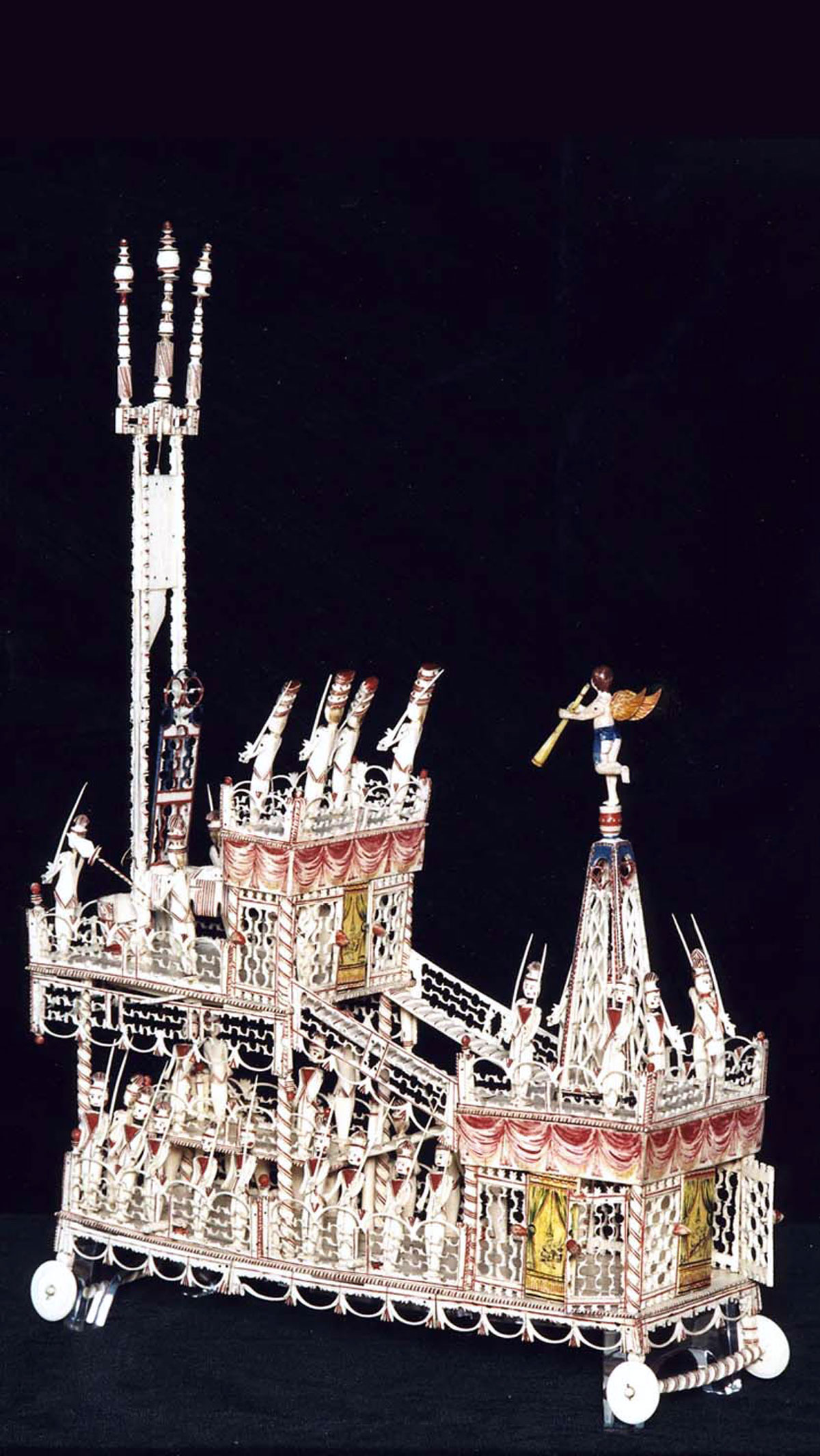
Although overcrowding was starting to become a major issue, everyday life in general carried on with a degree of normality. There was a daily market where farmers and traders came to sell or barter their goods with the prisoners, and the prisoners did the same in return with ornaments and models that they made. These models have become valuable and are found in museums up and down the country, but most are in private hands. For entertainment there was a theatre and also a gambling room, which seeing how many problems it caused, didn’t seem such a great idea to me.
When problems did arise, it was usually dealt with by the prisoners themselves who organised committees to exercise the rule of law as they saw fit – mostly by flogging. Serious cases though were dealt with by the British Agent who still had overall control of the prison, and presumably in the majority of those cases they ended up in the Cachot where they had no bedding, no light and just a small grill for ventilation.
Rations were adequate, although not particularly generous, and the prisoners were also given a regular wage which could be supplemented by doing jobs around the place – and there was no bigger job than building the local church of St Michael and All Angels.
Work started on the church in 1812 by French prisoners who were paid 6d a day, but they didn’t get to finish the job because in April 1814 Napoleon abdicated, and although his final defeat didn’t come until the Battle of Waterloo in 1815, French prisoners were already being repatriated. Their places were taken by the Americans, whose number had now swollen to 6,500. The church was completed in 1815 and is the only church in England to have been built by prisoners of war.
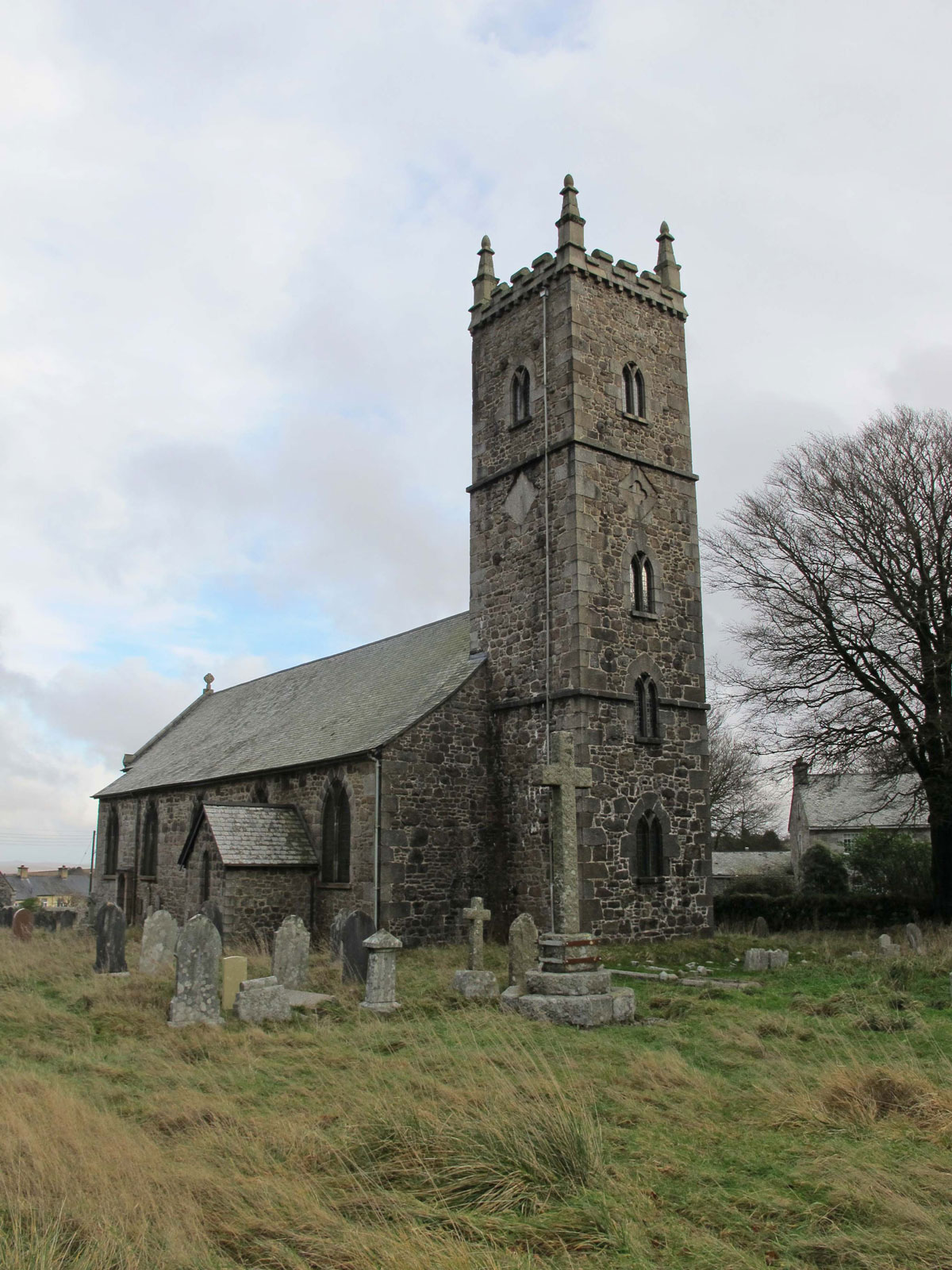
The graveyard is worth looking around, but there are no prisoner of war graves here, even though there were plenty of contenders. Severe overcrowding meant that contagious diseases were responsible for many of the deaths: The prison medical officer at the time described it as “a great tomb for the living”, and most of the 271 American deaths here were caused by an outbreak of smallpox.
The majority of the 1500 or so who died were French though, and as you might expect, lives were cut short by escape attempts, suicide, murder, and even some who died of malnutrition and exposure after losing their rations and clothes after gambling. All these statistics sound grim, but to put things into perspective, the mortality rate was less, in proportion, to any town in England with an equal population.
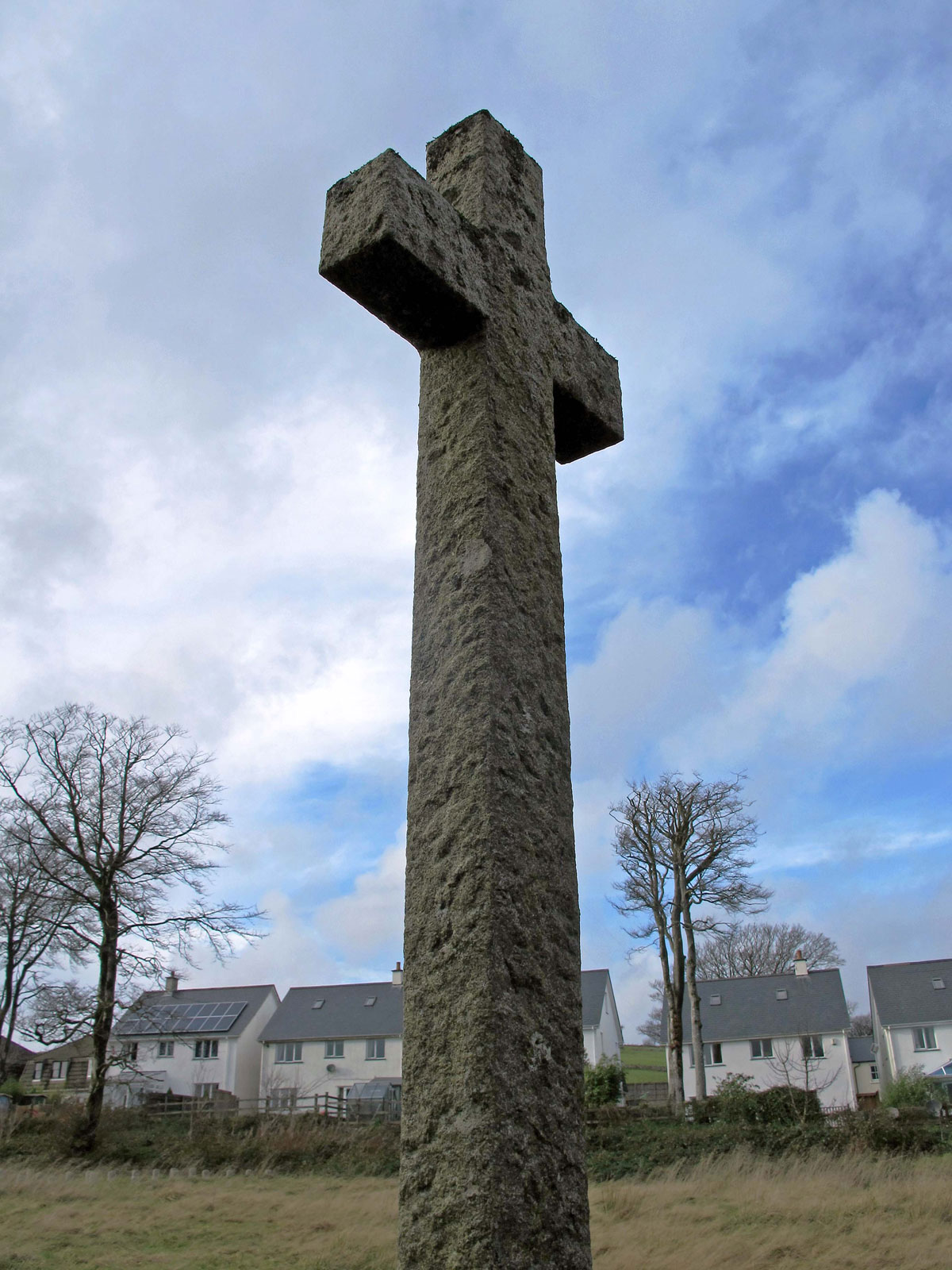
Those who died were unceremoniously buried outside the prison walls, and over the next fifty years or so, the Dartmoor weather and wild animals began to expose their remains. In 1866 the governor of the convict prison ordered them to be collected and re-buried in mass graves in two separate cemeteries. Today they are maintained by current prison inmates, and for obvious reasons are not normally open to the general public, but there is a dedicated memorial cross in St Michael’s churchyard.
With the end of the Napoleonic wars in sight, Britain could now turn its attention to sorting out the American problem, and by the end of 1814 both sides agreed to end hostilities. The Treaty of Ghent was duly signed on Christmas Eve but it didn’t get ratified until February. There were further delays in the repatriation of the prisoners which caused tension between the prisoners and guards, and the final days of Dartmoor as a prisoner of war jail didn’t end well.
The frustration that had been building up by the prisoners came to a head on April 6th, and an incident that was perceived as a breakout attempt by the governor meant that the military guards were mustered. A riot ensued and the outcome came to be known as the Princetown Massacre. Six prisoners were shot dead, three died later from their wounds and more than thirty seriously injured. Six days later, the American prisoners began their repatriation.
Enquiries were held, but there was no conclusive evidence as to who was to blame for the event. The Prince Regent offered to provide for the families who were killed – but the offer was declined, and the ‘Depot’ remained empty for the next 30 years. If you want to know what happened next, you can find out in Part 3.
POSTED – JANUARY 2023
Originally posted 2023-01-21 14:42:26.
Another fascinating piece. A lot of work well told.
Thanks Shey, and I really don’t know how you keep pace with these posts. I can’t thank you enough.
I enjoy them and that is the truth. SO I don’t mind at all taking five mins to read one.
You’re an absolute star.
Now yah made mah day.
You truly are 🙂
Fascinating as always! I wonder that they didn’t employ the prisoners themselves in building the prison, if willing locals were hard to come by?
Some people believe that they did get involved, but my research shows that they only helped build the extra prison blocks that were required when the American POWs arrived.
Well, you’ve done it again, Malc. I’ve never read about the history of a prison, but there’s so much to Dartmoor’s past it would be enough to keep anyone coming back for more. Despite the bleak conditions when it first opened its doors to the French prisoners, I should imagine it was still a relief from their dire lives on the hulk. Some of the models the prisoners made are amazing, as are examples I’ve seen from other such POW ‘depots’, but I suppose they had enough time on their hands to create mini masterpieces. As for other entertainments though, I agree that gambling was a strange choice of pastime provision. Surely that’s just asking for problems? And I love the story of the church being wholly built by prisoners of war. That gives it a special historical significance. All this wonderful history woven into our rich British landscape. Looking forward to part 3 now… 🙂
It’m glad that you’re keeping up with these posts on Dartmoor Alli because it’s always been a favourite place of mine (not the prison I hasten to add). It made me smile this week that they turned up from far and wide to protest about the curb on wild camping, but they probably haven’t been stuck in a tent up here on a foggy night with the rain lashing down while there’s an escaped prisoner on the loose trying to get in to keep them company 🙂
Oooh yes, that would freak me out a bit. :-0
You should have been a history teacher Malc, that’s if you weren’t already – I’m learning so much from your interesting posts 🙂
Thank you Eunice. I can assure you that I have never been a history teacher, but it’s good to hear that you enjoy history as much as I do 🙂
Malc I am truly engaged in learning more about the history of uour wonderful country and truly delighted by your photography. Cheers my friend and all the best.
Thanks Francesc.. There’s still plenty more to come. Enjoy your Sunday.
Cheers Malc. You too!
You all could have done a lot more damage and if hadn’t been for Napoleon, that might have happened. George Washington’s Mount Vernon is about 12 miles from Washington, DC and it was never bothered. And the Capitol was not burned. So no hard feelings. 😇😉😎
I wonder if you can clear something up for me Pat. I was under the impression that Britain defended some of the indigenous people against American expansion, but the Americans had support from some of the indigenous tribes. Was it just that different tribes were on different sides of the fence, so to speak – or have I got that wrong?
I have only vague recollections. There were many tribes in the affected area and I think it depended upon the tribe and what was being offered. This was the case in the French and Indian (7 Years War in Europe), the American Revolution and the War of 1812. The native Americans sided with the British because of promises of assistance to stop westward expansion. They were helpful when we invaded Canada (and failed).
And I suppose there were tribes that didn’t get on with each other as well which may have been another factor. Thanks Pat, and another quick question if I may. What do the indigenous/Native Americans prefer to be called. Do you know?
Fantastic! I love learning new things like this and your post is full of interesting historical information😘
I do believe you mean that Luisa. Thank you so much 😘
As ever, you are most welcome, Malc!
Have a nice weekend 🙂
You too Luisa 🙂
Thank you, Malc, for the continuation of your excellent lesson in history. I wrote in my comment after part1, that the name Tyrwhitt, is connected with a funny event in my life. As you read about my father, you know about the disabled children he helped, now in 70 – 80 years old, and wanting to immortalise my father’s methods and his name. One wrote a book about him, and the other had a large plague created with my father’s torso sculpted professionally.
They asked me for a photo of my father looking into camera. The only one I had was with my father in military uniform. I requested a booklet from an upmarket menswear chain called Charles Tyrwhitt, and when it arrived, I cut out a suit, with a shirt and a tie. I “dressed” my father, and the plague and a portrait was made from this. The owner of the chain, Nicholas Wheeler was amused by the story, and I since learned that his middle names are Charles
Tyrwhitt as his forebear was Sir Hercules Tyrwhitt, who was slain in 1067 on a bridge in Northumbria, and he named his company after him. The company is very successful, he is OBE, and everyone was happy.
Joanna
PS, Apologies, Malc, for taking over so much spece! .
Not at all Joanna, this is what I like about the social interaction on WordPress Reader. It’s certainly an unusual and amusing story I must confess, and now that you come to mention it, I’ve heard of the men’s outfitters called Charles Tyrwhitt too.
You sound proud of your father, and it seems that you have every right to be. Have you not written anything about him yourself? If you haven’t, I think you should, because not only does he sound a remarkable man, your style of writing would certainly do him justice 🙂
Thank you, Malc, for being so understanding! I wrote once about him in my post “In Praise of Men” when there was a lot of bad press about men, sometime ago. I might write something again.
Joanna
Not all men are bad are they Joanna? Your father proves that. I’d love to know more about your dad, but that’s up to you of course. I love people like you following my posts. You’re an angel.
Well, the British did sack our capital and burned the White House in retaliation. 😉 It is because the being burnt and rebuilt with a coating of white paint, that the Executive Mansion became known as the White House (so you Brits can indirectly take credit for that name.)
Us Brits are responsible for quite a lot over your side of the pond Pat – and not all of it was for the good. It’s a wonder that we’re still friends 🙂