Tag Archives: Dartmoor

Dartmoor – The Final Chapter

Dartmoor - The Final Chapter

I’ve never made any secret of the fact that Dartmoor has always been a special place for me: If you’ve been following my posts, you would have learnt how the iconic tors were formed, delved into some of the moor’s spooky myths and legends and even got an insight into its notorious prison: You would have also explored some of the quaint villages, fascinating pubs and the upper reaches of the River Dart, and in this final look at ‘Southern England’s last great wilderness’ I’m going to leave you with a few more reasons why I regard Dartmoor as somewhere special.

The Dart isn’t the only Devon river to begin life on Dartmoor and that’s because the high rainfall leaves behind a boggy morass on the high plateau. Depending on who’s counting them, figures vary as to how many rivers there are, but about a dozen or so begin their journey seeping out of the peat bogs, with the majority travelling south and ending up in the English Channel.

Continue reading

Originally posted 2023-09-01 11:31:30.

The Upper River Dart

The Upper River Dart

I know I’ve mentioned this before, but of all Devon’s rivers, the Dart is my favourite. It flows for 47 miles from High Dartmoor to the sea at Dartmouth, and some of you may have read my post Along the Lower Dart, which covered the stretch of river between Totnes and Dartmouth. In contrast, this short post is going to show how the river seeps out of the peat bogs of the Northern Moor and makes its way down towards Buckfastleigh.

The river in actual fact has two tributaries – the West and East Dart,  which merge together at Dartmeet. The source of the West Dart is just over a mile north of Rough Tor (50.612628, -3.967122), from where it travels down through the valley towards Wistman’s Wood. After it flows under the B3212 at Two Bridges, it then  meanders towards Huccaby Bridge at Hexworthy before arriving at Dartmeet.

Continue reading

Originally posted 2022-11-20 16:47:13.

Kitty Jay’s Grave

Kitty Jay's Grave

Dartmoor abounds with tales and legends, and none more so than Sir Arthur Conan Doyle’s book, The Hound of the Baskervilles. It is said that the inspiration for the book was his spooky experience of the area around Hound Tor, and anybody who has been on Dartmoor on a dark foggy night will understand exactly how he felt.

Less than a mile away from the tor is Kitty Jay’s Grave which has a tale of its own, and although it has been embellished by some over the years, this is not a fictional story, but one that still evokes the spirit of Dartmoor in a way that is every bit as mysterious as Arthur Conan Doyle’s famous book.

Continue reading

Originally posted 2021-04-25 10:05:39.

Dartmoor Tors and Tales

Dartmoor Tors and Tales

If you were to ask anyone who’s been to Dartmoor “What is the thing you remember the most about it?”, there’s more than a fair chance that the answer would be “the tors” – but what exactly are tors? According to the Oxford English Dictionary, a tor is a topographical name to describe a ‘high rock or pile of rocks, generally on the top of a hill’.

The word has been in use since Anglo-Saxon times, and although they aren’t confined to Dartmoor, there are some 890 of them here according to a website called Tors of Dartmoor. The website is a ‘Bible’ for aficionados of these granite rocks, but even they would probably have to admit that it’s not easy to decide what constitutes a Tor and what doesn’t. Some are unmistakeable, but others are not, and just to confuse the issue, not every one of them is called a Tor, such as Blackingstone Rock pictured below. There are plenty of people who like to ‘bag’ as many tors as possible, but if you’re not one of them, I’m going to mention just a few that are worth seeking out should you ever find yourself in ‘Hairy Hands’ country.

Continue reading

Originally posted 2022-08-03 16:11:48.

A Selection of Pubs around Dartmoor

A Selection of Pubs around Dartmoor

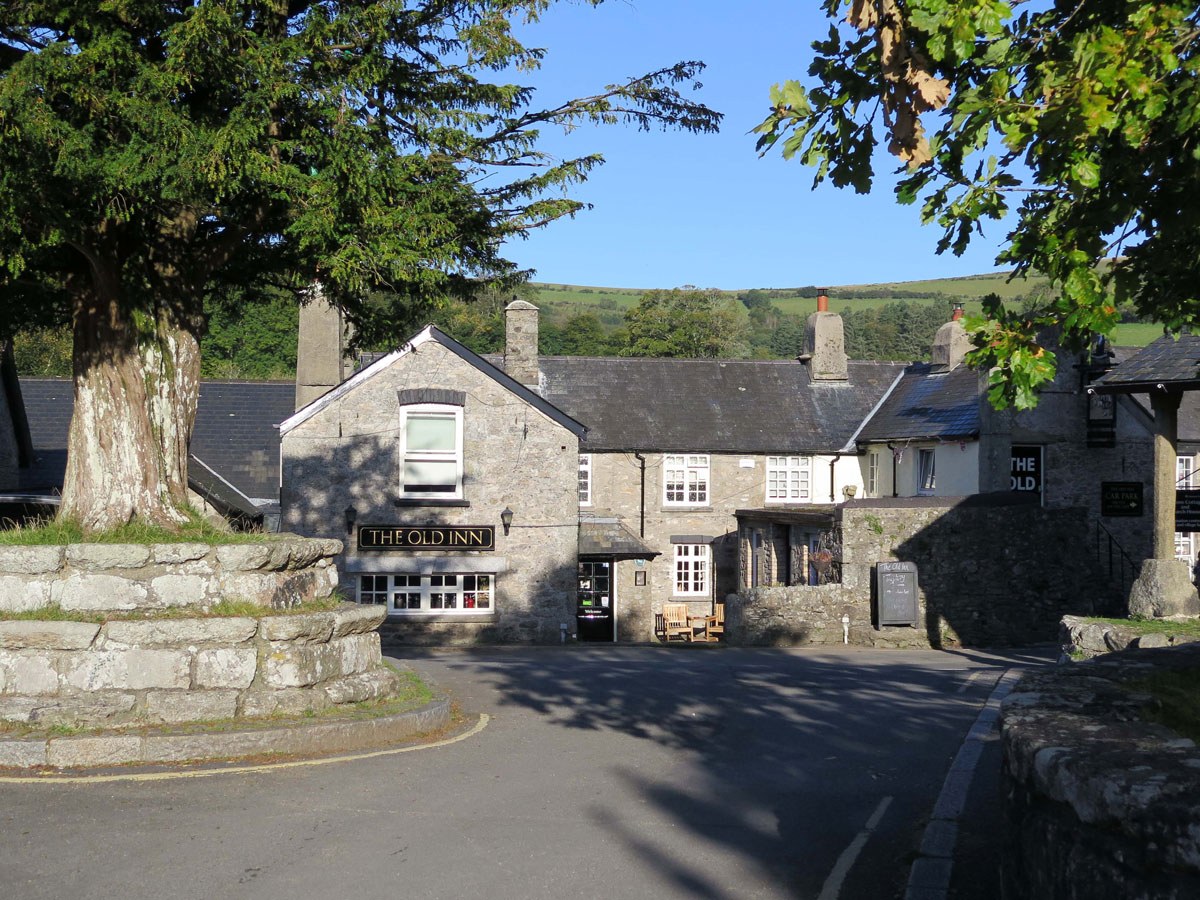
I wouldn’t mind guessing that after reading the last few Dartmoor posts about the infamous prison you could do with a bit of light refreshment, and so I’m going to introduce you to some of the Dartmoor pubs I’ve enjoyed visiting over the years. They aren’t recommendations like a Trip Advisor review might be, but are included for all sorts of reasons – so sit back, pour yourself a drink and join me on a pub crawl around Dartmoor.

I’m going to ease you in gently with a convivial pub in the south-west corner of the moor at the Royal Oak, Meavy, which lies about 10 miles north-east of Plymouth close to Burrator Reservoir.

Continue reading

Originally posted 2023-06-11 08:10:45.

Dartmoor Prison – Pt 3 The Jail Becomes a Prison for Criminals

Dartmoor Prison - Pt 3 The Jail Becomes a Prison for Criminals

After all the French and American prisoners of war had been repatriated or paroled (see Pt 2), the prison was left empty. For the next 30 years, the Duchy of Cornwall kept up its maintenance in the hope that a use could be found for it, and after a brief unsuccessful attempt at producing gas and oils from Dartmoor peat, the complex was brought back into use as a prison again, but not for prisoners of war this time, but for convicted criminals.

England’s exploration had, for many years, led to colonisation of other parts of the world, and these colonies became a convenient dumping ground for criminals. Felons who committed crimes that were deemed to be serious, but not serious enough for capital punishment, were transported on ships to places like America and Australia where they would be used as a source of labour.

The American War of Independence started to put a stop to the practice of Transportation, and by the mid-19th century it was falling out of favour with other colonies – and even Britain too, which meant that penal establishments closer to home had to be found. Dartmoor might not have been as far away as New South Wales, but it was still well out of sight for most people, and in 1850 Dartmoor Prison was once again back open for business.

Continue reading

Originally posted 2023-05-12 14:27:43.

Dartmoor Prison – Pt 2 The Prison Is Built But Not For Criminals

Dartmoor Prison - Pt 2 The Prison Is Built But Not For Criminals

If you read Part 1, you may recall how Thomas Tyrwhitt hoped to change Dartmoor’s inhospitable landscape into profitable farmland, but in the end, was left with just a small uninspiring settlement he called Prince’s Town.

At the end of the post I also mentioned that Tyrwhitt was given an economic boost when an unexpected opportunity arose which he couldn’t have foreseen, and you wouldn’t have to be Albert Einstein to guess what that opportunity was, but what might not be quite so obvious is why a prison was needed here in the first place, especially as it wasn’t even going to be built for English miscreants – but for French prisoners of war.

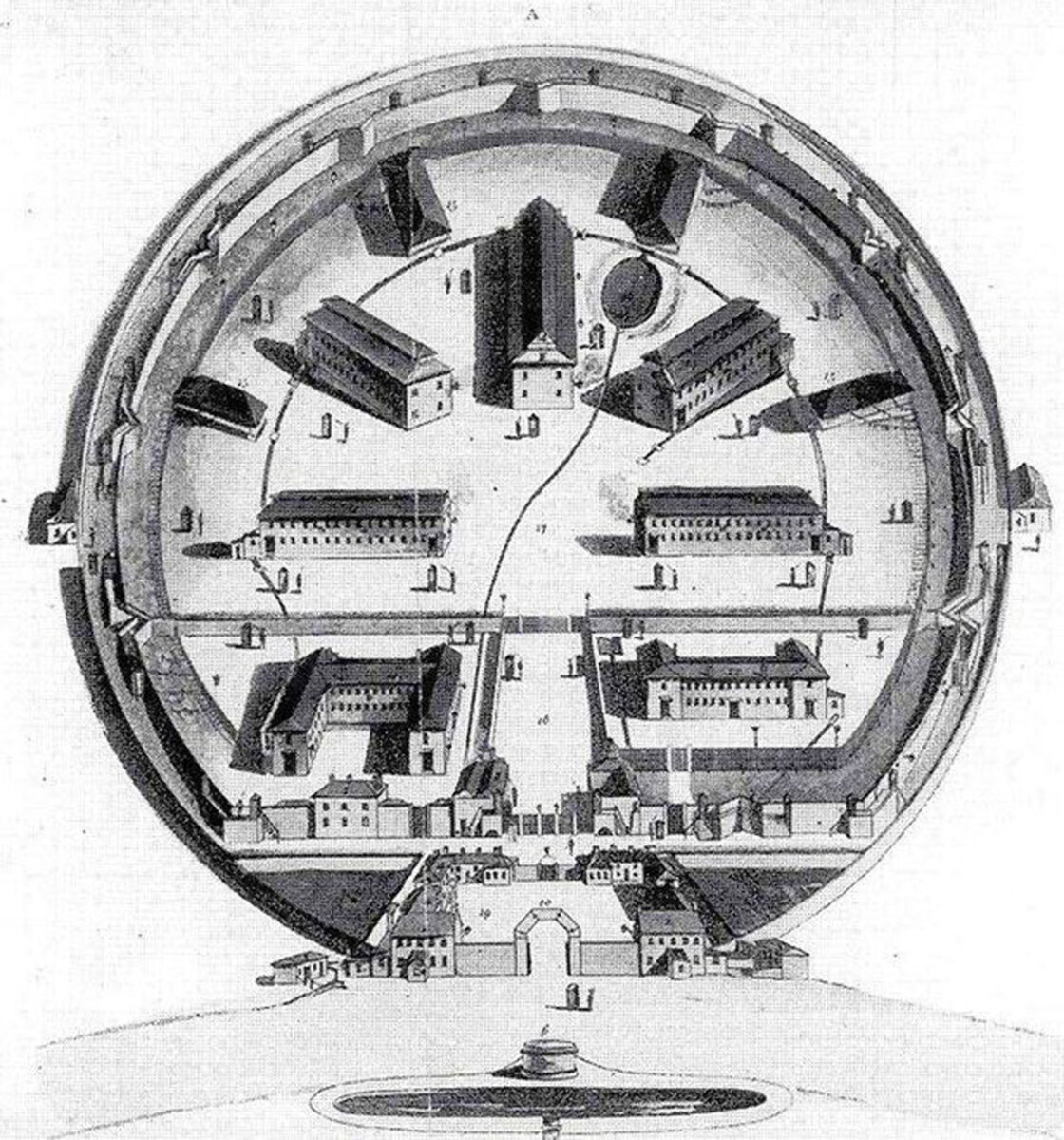
In 1803 the war with Napoleonic France resumed after a brief respite, and although Napoleon’s army were a force to be reckoned with on land, his fleet was no match for the British Navy at sea, and ever since the war began, the Royal Navy had captured many ships and their crews, so much so, that the old war prisons had become full to the point of bursting.

The sticking plaster solution was to bring back some of the old derelict hulks that had been left rotting in creeks around the coast – and Plymouth Dock (now Devonport Dockyard) had plenty of them. Needless to say, even in those days, it was hardly the ideal solution, not just from a security point of view, but also from a humane one. Conditions on board were appalling, with meagre rations, unhygienic sanitary conditions and hardly enough space for a family of mice:  something had to be done about it, and a shore-based ‘Depot’ was the answer.

Continue reading

Originally posted 2023-01-21 14:42:26.
Dartmoor Prison – Pt 1 Princetown

Dartmoor Prison - Pt 1 Princetown

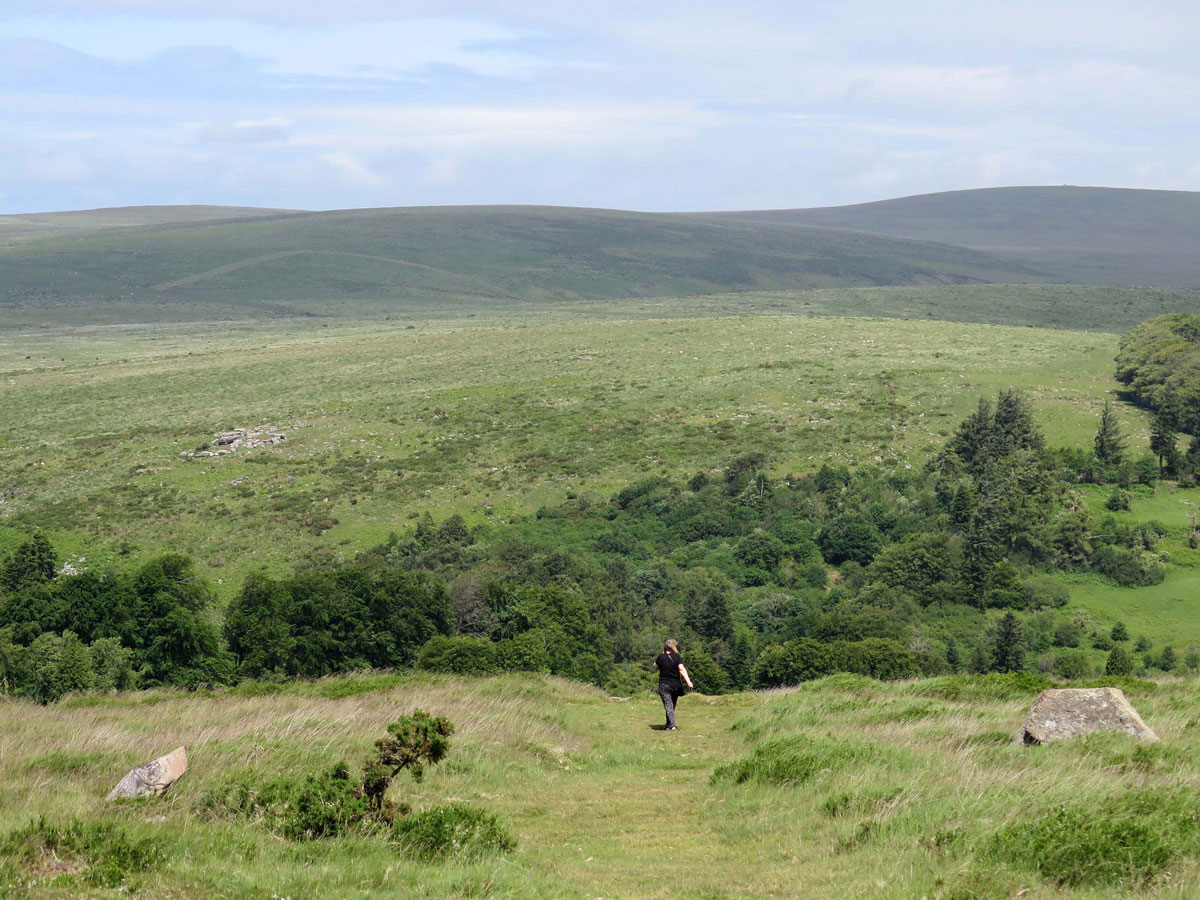
On a beautiful summer’s day, Dartmoor can be the perfect place to come: Big skies look down upon open moorland where streams and rivers trickle down through valleys that are crossed by old clapper bridges: It’s a place where ponies roam free, and skylarks flutter between the granite tors and prehistoric remains. You could say, that at times like this, Dartmoor is the perfect antidote to modern life. The problem is that it’s not always a beautiful summer’s day.

Dartmoor can also be a desolate and unforgiving place too. When south-westerly winds bring stormy weather across the Atlantic, the moisture-laden clouds unleash their contents onto the wilderness below turning everything into a quagmire – and that’s not all. The renowned Dartmoor fog can descend in minutes, and when you take into account that this is ‘hairy hands’ country with tales about wild dogs and ghostly paranormal activity, the moor becomes an altogether different place, and can seem more like hell on earth than paradise. It’s understandable therefore that this inhospitable place was deemed a good location to build a prison – and there’s nowhere more inhospitable than Princetown.

Continue reading

Originally posted 2023-01-08 11:27:03.