Category Archives: The Moor

Dartmoor – The Final Chapter

Dartmoor - The Final Chapter

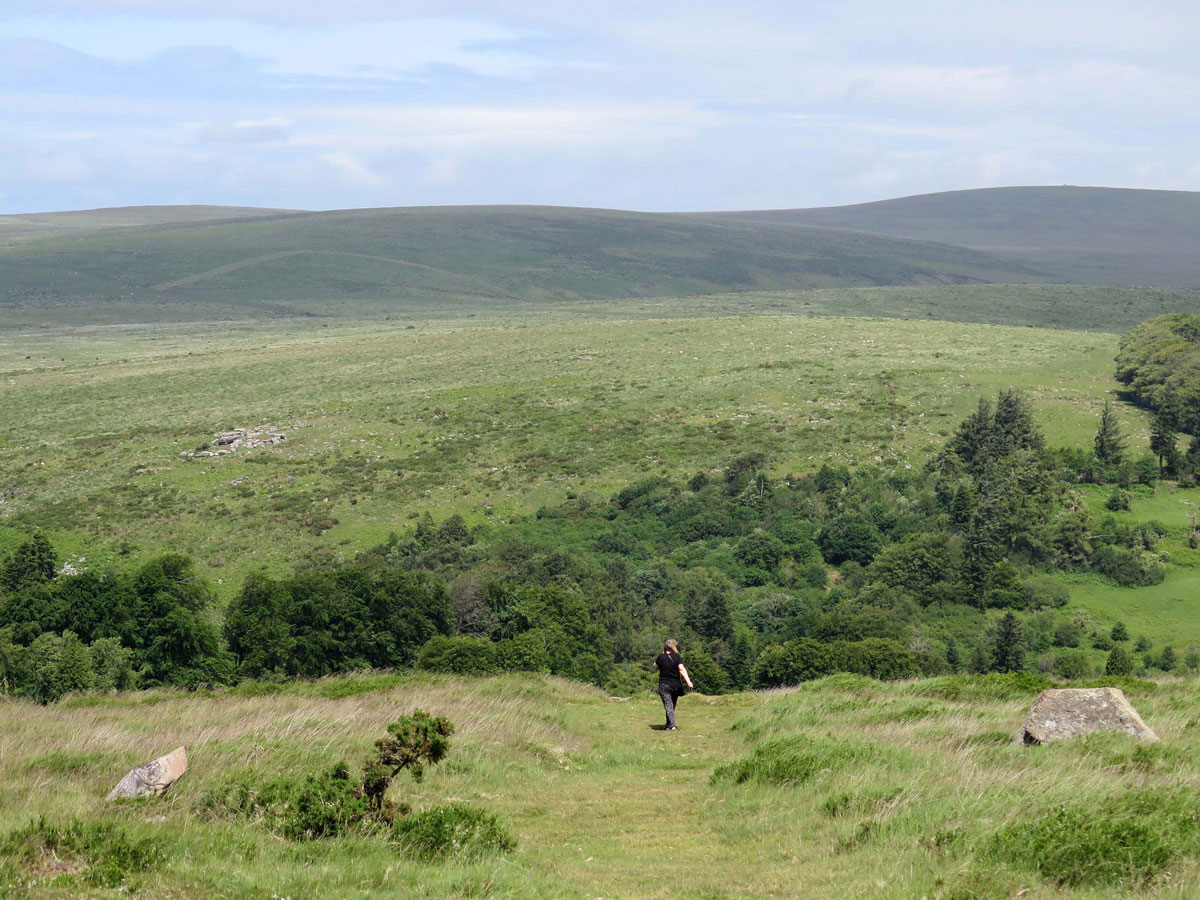
I’ve never made any secret of the fact that Dartmoor has always been a special place for me: If you’ve been following my posts, you would have learnt how the iconic tors were formed, delved into some of the moor’s spooky myths and legends and even got an insight into its notorious prison: You would have also explored some of the quaint villages, fascinating pubs and the upper reaches of the River Dart, and in this final look at ‘Southern England’s last great wilderness’ I’m going to leave you with a few more reasons why I regard Dartmoor as somewhere special.

The Dart isn’t the only Devon river to begin life on Dartmoor and that’s because the high rainfall leaves behind a boggy morass on the high plateau. Depending on who’s counting them, figures vary as to how many rivers there are, but about a dozen or so begin their journey seeping out of the peat bogs, with the majority travelling south and ending up in the English Channel.

Continue reading

Originally posted 2023-09-01 11:31:30.

The Upper River Dart

The Upper River Dart

I know I’ve mentioned this before, but of all Devon’s rivers, the Dart is my favourite. It flows for 47 miles from High Dartmoor to the sea at Dartmouth, and some of you may have read my post Along the Lower Dart, which covered the stretch of river between Totnes and Dartmouth. In contrast, this short post is going to show how the river seeps out of the peat bogs of the Northern Moor and makes its way down towards Buckfastleigh.

The river in actual fact has two tributaries – the West and East Dart,  which merge together at Dartmeet. The source of the West Dart is just over a mile north of Rough Tor (50.612628, -3.967122), from where it travels down through the valley towards Wistman’s Wood. After it flows under the B3212 at Two Bridges, it then  meanders towards Huccaby Bridge at Hexworthy before arriving at Dartmeet.

Continue reading

Originally posted 2022-11-20 16:47:13.

Wistman’s Wood

Wistman's Wood

Nowhere conjures up the spooky mood of Dartmoor more than Wistman’s Wood.

Legends abound about how this small remote wood of dwarf, stunted oak trees hanging with beards of lichen and moss have attracted ‘Wisht Hounds’ – a “pack of huge black dogs with blood red eyes, huge yellow fangs and an insatiable hunger for human flesh and souls” according to Legendary Dartmoor.

On a more down to earth level Wistman’s Wood is one of the highest oakwoods in Britain and is pretty difficult to walk through due to the clitter (granite boulders) that is scattered amongst the trees.

Although the wood is in a remote location it can be easily reached from Two Bridges via a well designated footpath which shouldn’t take any longer than half an hour.

On a summer’s day it’s a pleasant walk alongside the West Dart River, but even at this time of the year you need to keep your eyes open for adders (Britain’s only poisonous snake).

Continue reading

Originally posted 2019-10-17 15:54:01.
Kitty Jay’s Grave

Kitty Jay's Grave

Dartmoor abounds with tales and legends, and none more so than Sir Arthur Conan Doyle’s book, The Hound of the Baskervilles. It is said that the inspiration for the book was his spooky experience of the area around Hound Tor, and anybody who has been on Dartmoor on a dark foggy night will understand exactly how he felt.

Less than a mile away from the tor is Kitty Jay’s Grave which has a tale of its own, and although it has been embellished by some over the years, this is not a fictional story, but one that still evokes the spirit of Dartmoor in a way that is every bit as mysterious as Arthur Conan Doyle’s famous book.

Continue reading

Originally posted 2021-04-25 10:05:39.

Dartmoor Tors and Tales

Dartmoor Tors and Tales

If you were to ask anyone who’s been to Dartmoor “What is the thing you remember the most about it?”, there’s more than a fair chance that the answer would be “the tors” – but what exactly are tors? According to the Oxford English Dictionary, a tor is a topographical name to describe a ‘high rock or pile of rocks, generally on the top of a hill’.

The word has been in use since Anglo-Saxon times, and although they aren’t confined to Dartmoor, there are some 890 of them here according to a website called Tors of Dartmoor. The website is a ‘Bible’ for aficionados of these granite rocks, but even they would probably have to admit that it’s not easy to decide what constitutes a Tor and what doesn’t. Some are unmistakeable, but others are not, and just to confuse the issue, not every one of them is called a Tor, such as Blackingstone Rock pictured below. There are plenty of people who like to ‘bag’ as many tors as possible, but if you’re not one of them, I’m going to mention just a few that are worth seeking out should you ever find yourself in ‘Hairy Hands’ country.

Continue reading

Originally posted 2022-08-03 16:11:48.