A Selection of Pubs around Dartmoor
I wouldn’t mind guessing that after reading the last few Dartmoor posts about the infamous prison you could do with a bit of light refreshment, and so I’m going to introduce you to some of the Dartmoor pubs I’ve enjoyed visiting over the years. They aren’t recommendations like a Trip Advisor review might be, but are included for all sorts of reasons – so sit back, pour yourself a drink and join me on a pub crawl around Dartmoor.
I’m going to ease you in gently with a convivial pub in the south-west corner of the moor at the Royal Oak, Meavy, which lies about 10 miles north-east of Plymouth close to Burrator Reservoir.


The small village of Meavy is tucked away down a quiet country lane just a short distance away, and you can find the Royal Oak opposite the village green where there is an 800 year old oak tree from which the pub gets its name.
This 15th century Free House is a traditional pub with flagstone floors, old beams and an open fireplace. Some of the seats are pews from the adjacent St Peter’s Church, which is not surprising really, as the pub was originally known as the Church House Inn. Church House Inns are ubiquitous in Devon and I’ve yet to find one that isn’t a gem. If you ever come across one take a look for yourself.
The Royal Oak may not be quite as off the beaten path as it once was, but, as with so many Dartmoor pubs, come here if you can on a winter’s evening when the ambience is at it its most convivial.

The next pub I’m taking you to is very different from the Royal Oak, it’s so different in fact that it doesn’t even sell any beer, and here’s why.
The Valiant Soldier was a pub in the small market town of Buckfastleigh which lies just inside the Dartmoor National Park boundary near Buckfast Abbey, and although technically it can no longer be called a pub, it’s definitely worth a mention.
The story begins in 1965 when Whitbread Brewery thought that there were too many hostelries in the area and decided to withdraw the Valiant Soldier’s licence. When the landlord, Mark Roberts, closed the doors for the last time on September 27th he didn’t even call ‘Last Orders’. Instead he downed tools and left half-empty glasses on the bar, ashtrays full of cigarette butts on the tables and a till with money still left in it.
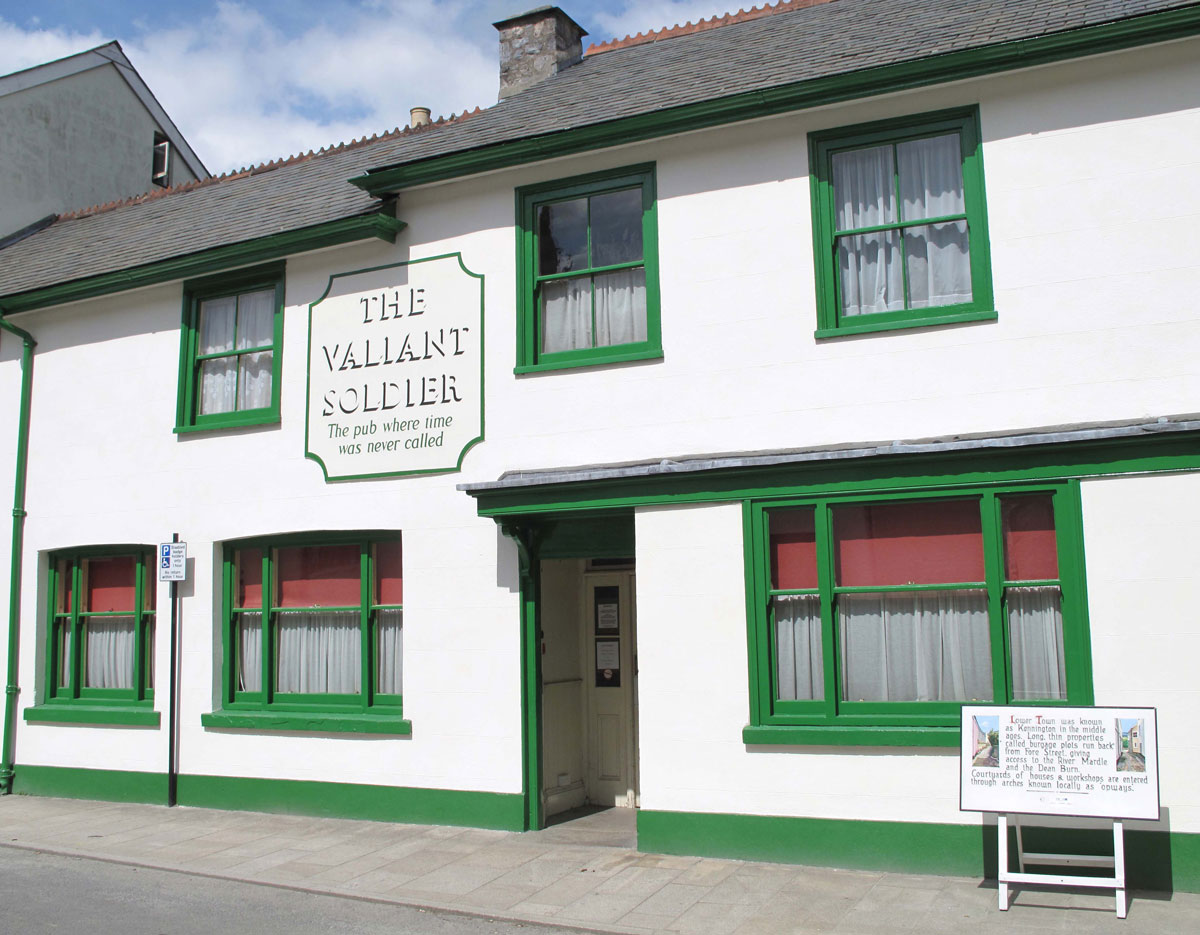
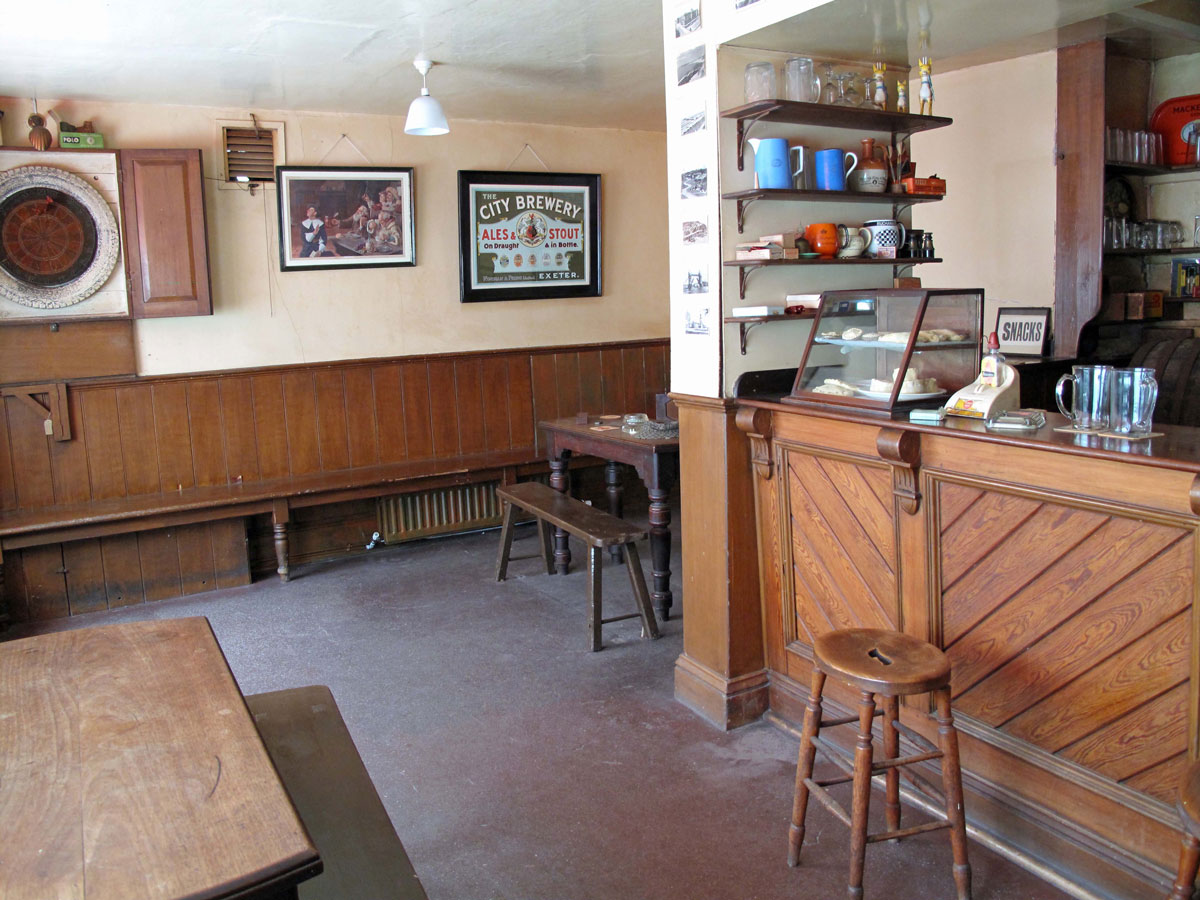
Although the landlord and landlady purchased the property from the brewery, the Valiant Soldier never re-opened its doors as a pub again. Everything in the bar was left as it was, and the couple moved everything, lock stock and barrel upstairs. Even after Mark Roberts died, his wife Alice carried on living upstairs until the mid-90s, when it was finally put up for sale.
Fortunately, the local community realised that the Valiant Soldier had become a time capsule, and with the help of Teignbridge Council, a Trust was formed in order to save it as it was for posterity and opened its doors again, but this time as a museum.
Not only has the bar been left untouched, upstairs is an Aladdin’s Cave of how life was lived by the Roberts Family. Unfortunately, Whitbread left behind a covenant which prevents the Valiant Soldier from selling beer again, and although you may not be able to get a pint of Watney’s Red Barrel here anymore, it’s worth paying the price of a pint to see what a small town pub was like in the post-war years.
This pub crawl is not just about pubs, but also about showing you different parts of Dartmoor, and the next one is situated on the gentler eastern side of the moor in the village of Lustleigh.
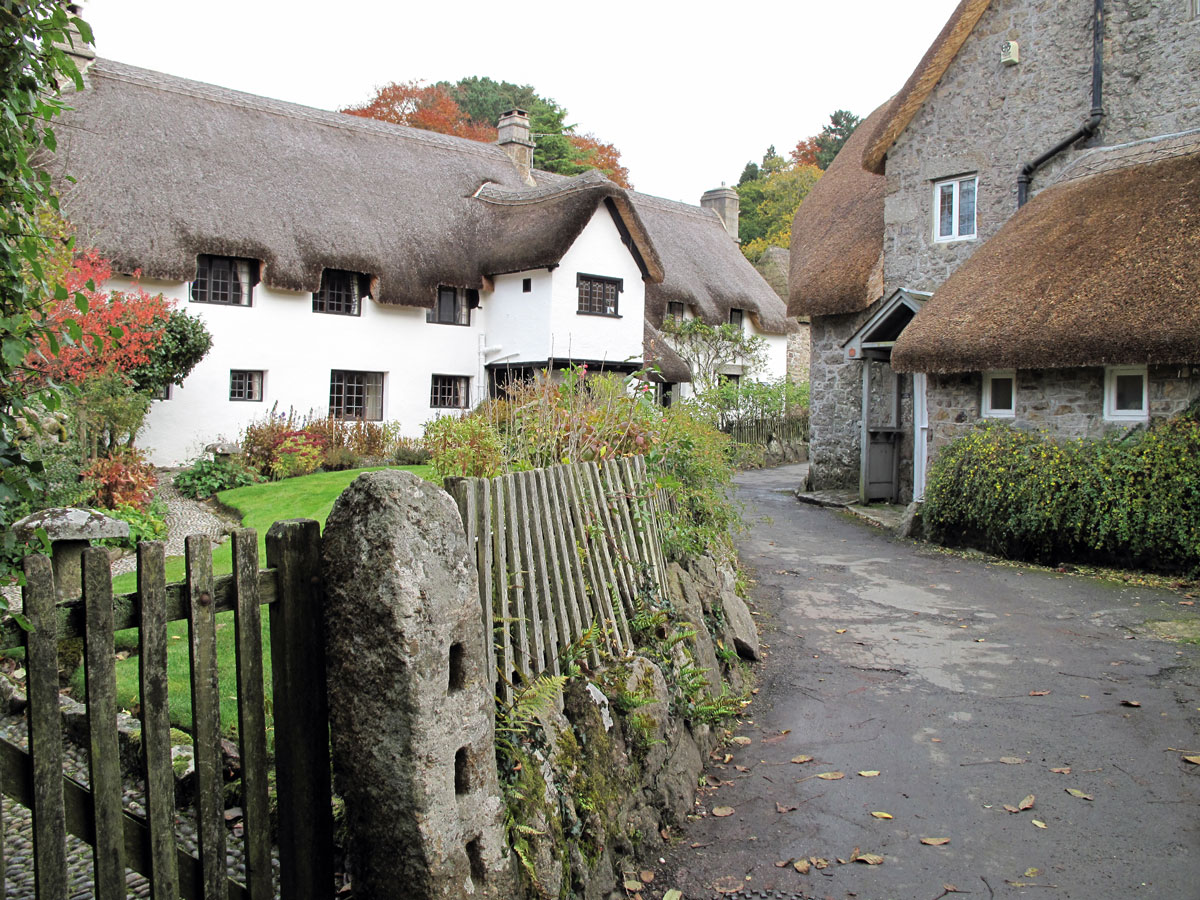
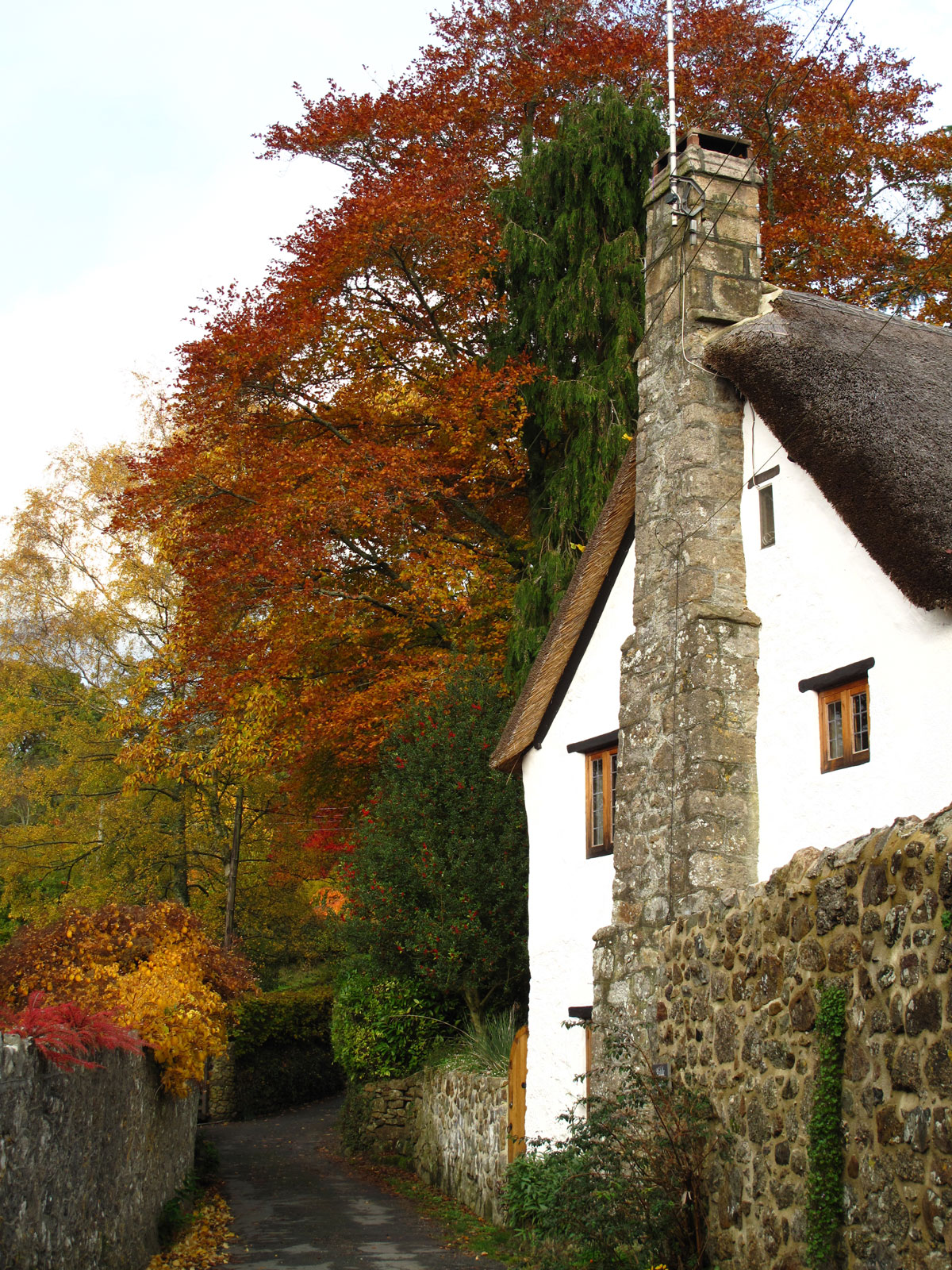
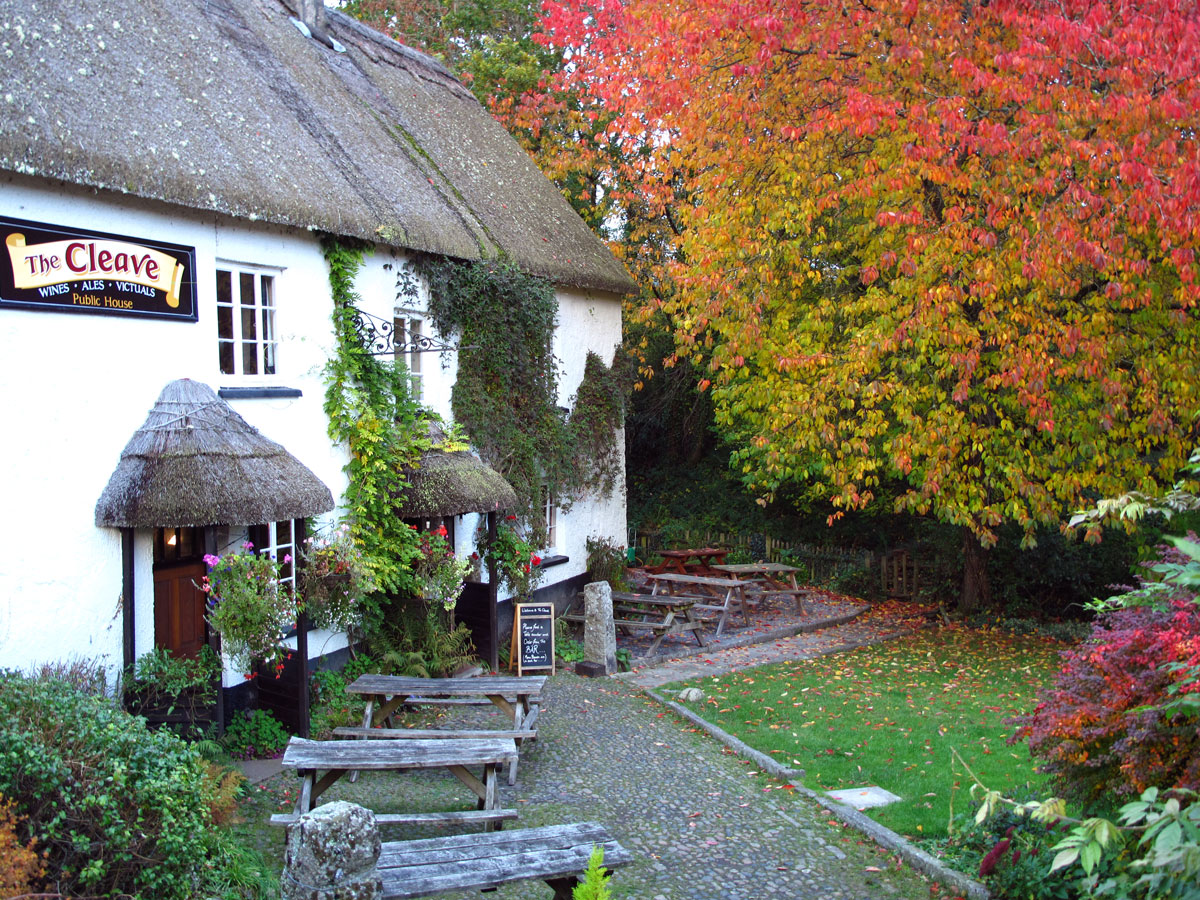
The Cleave is a cosy 15th century thatched pub named after the nearby valley (cleave) that takes the River Bovey down to Bovey Tracey and the River Teign. There’s nothing historically interesting or quirky about The Cleave: I’ve included it because it’s just a lovely old pub in a picturesque village in a beautiful area. What other reason do you need to come here?
Continuing in an anti-clockwise direction, the next pub is an absolute gem – or at least it was, as what happens to it next is anybody’s guess.
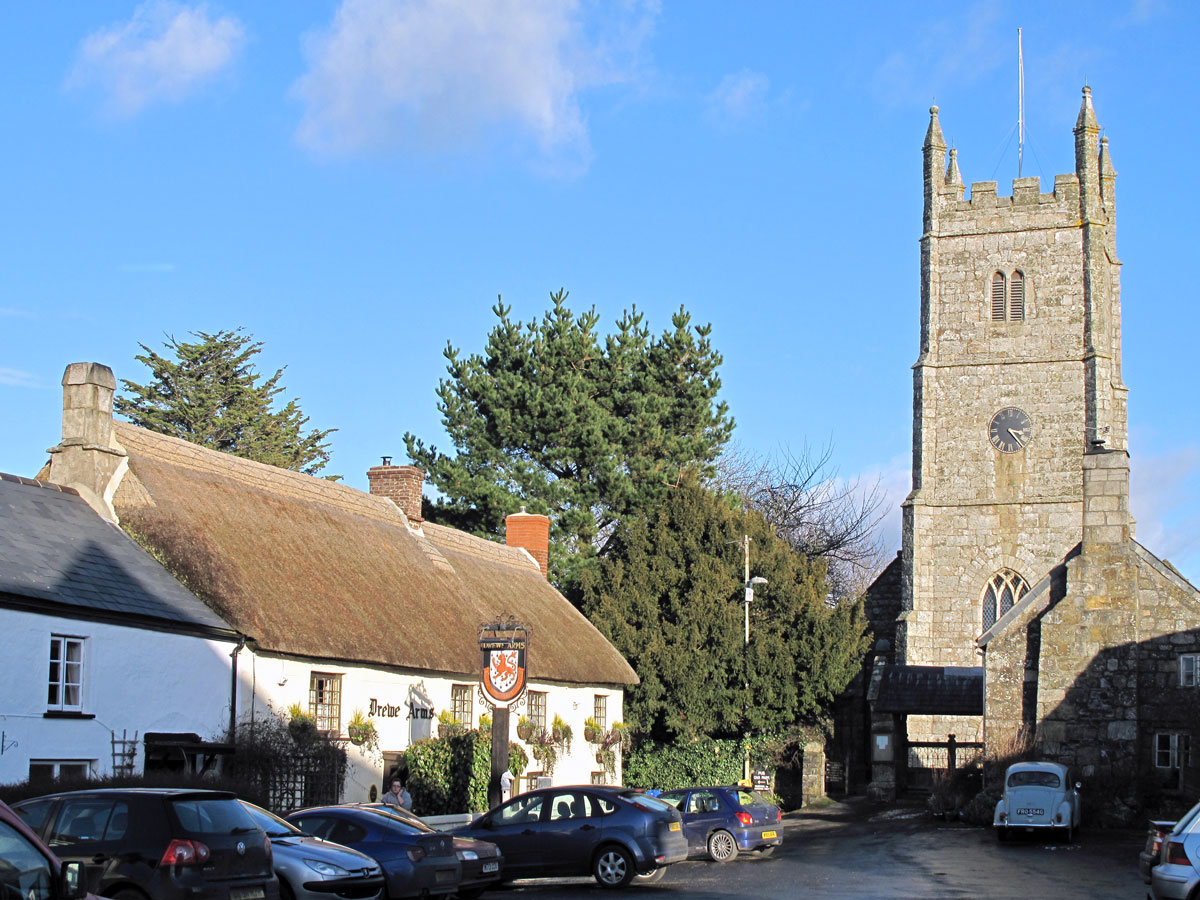
The Drewe Arms in Drewsteignton lies above the Teign Valley close to Castle Drogo, and is worth a visit just for the location alone. I have to confess that I haven’t been here for a while, mainly because the pub could never be the same after ‘Aunt Mabel’ Mudge died in 1996.
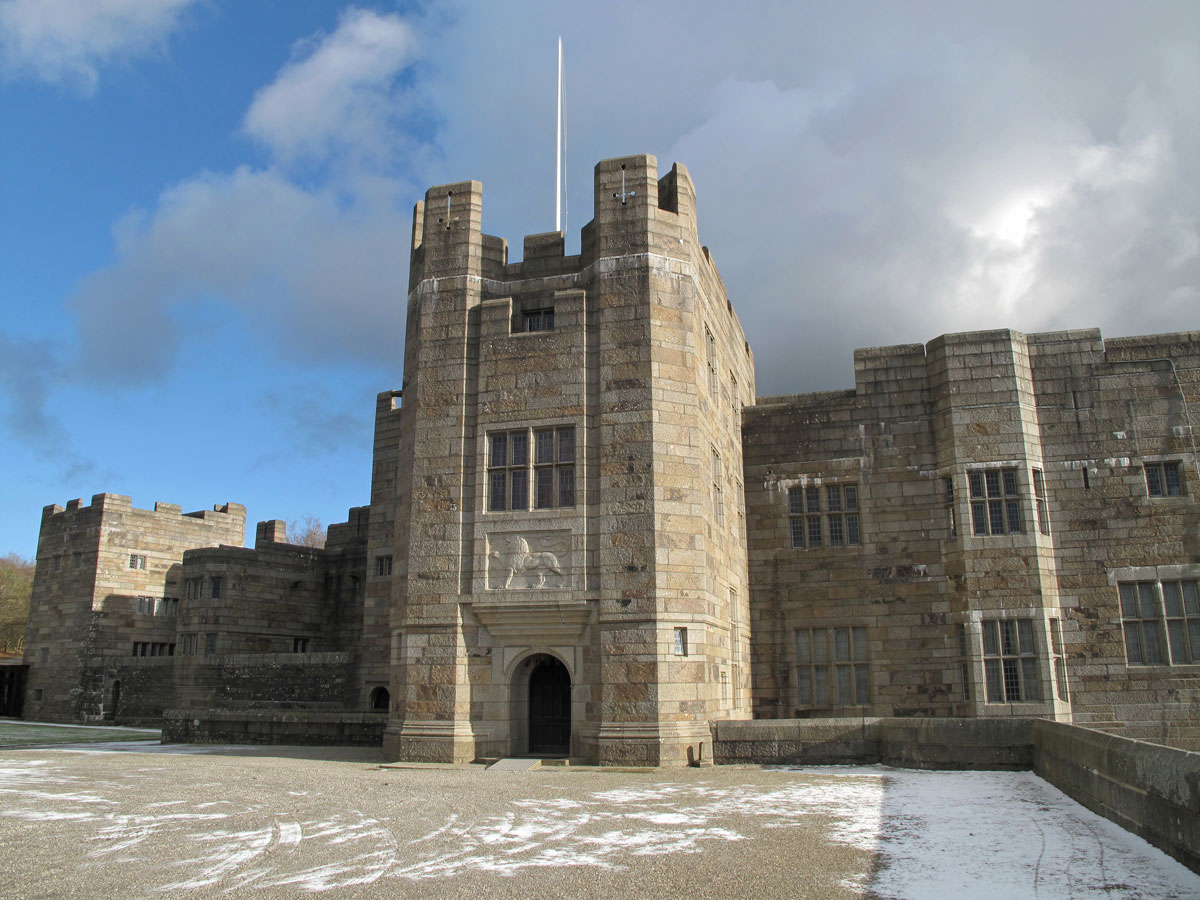
The Drewe Arms and Aunt Mabel have been inextricably linked ever since the time her husband, Ernest, took over his brother’s pub in 1919. It remained a typical Dartmoor pub even after Ernest passed away in 1951, and stayed that way until Aunt Mabel retired in 1994 at the age of 99.
Apart from the introduction of electricity and running water, nothing changed while it was in Aunt Mabel’s hands. There was no bar as such, as the beer was kept in a separate room and poured straight from the barrel. We used to sit on benches that surrounded the nicotine-stained walls, but if it all sounds a bit basic, the atmosphere was anything but. Those who were there were bound to indulge in convivial conservation around the log fire, and if you were peckish, you could knock back a hunk of bread with cheese or home-cured ham – the perfect accompaniment to a pint of ale brought to you straight from the barrel by Aunt Mabel.
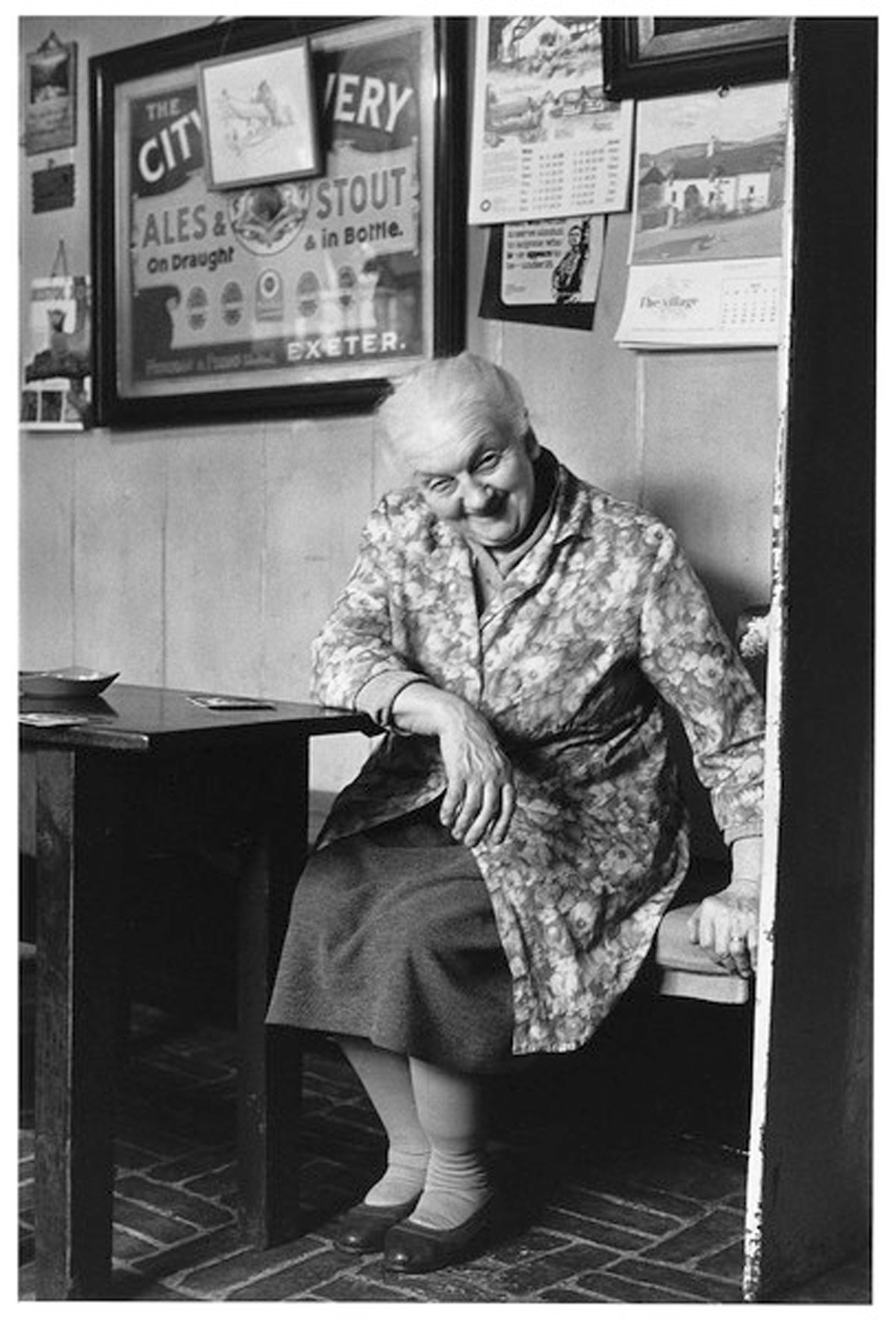
After Aunt Mabel’s retirement, the locals rallied round to allow her to stay at the pub while they tried to keep it going in the same manner as she was accustomed – without losing too much money. Of course, it couldn’t continue like that indefinitely, and as it stands now, the pub is ‘temporarily closed’. Time doesn’t stand still in today’s world, but as we seen in the Valliant Soldier, there are ways to help keep the memories alive. It would be fantastic if something similar could be done here – but I’m not holding my breath.
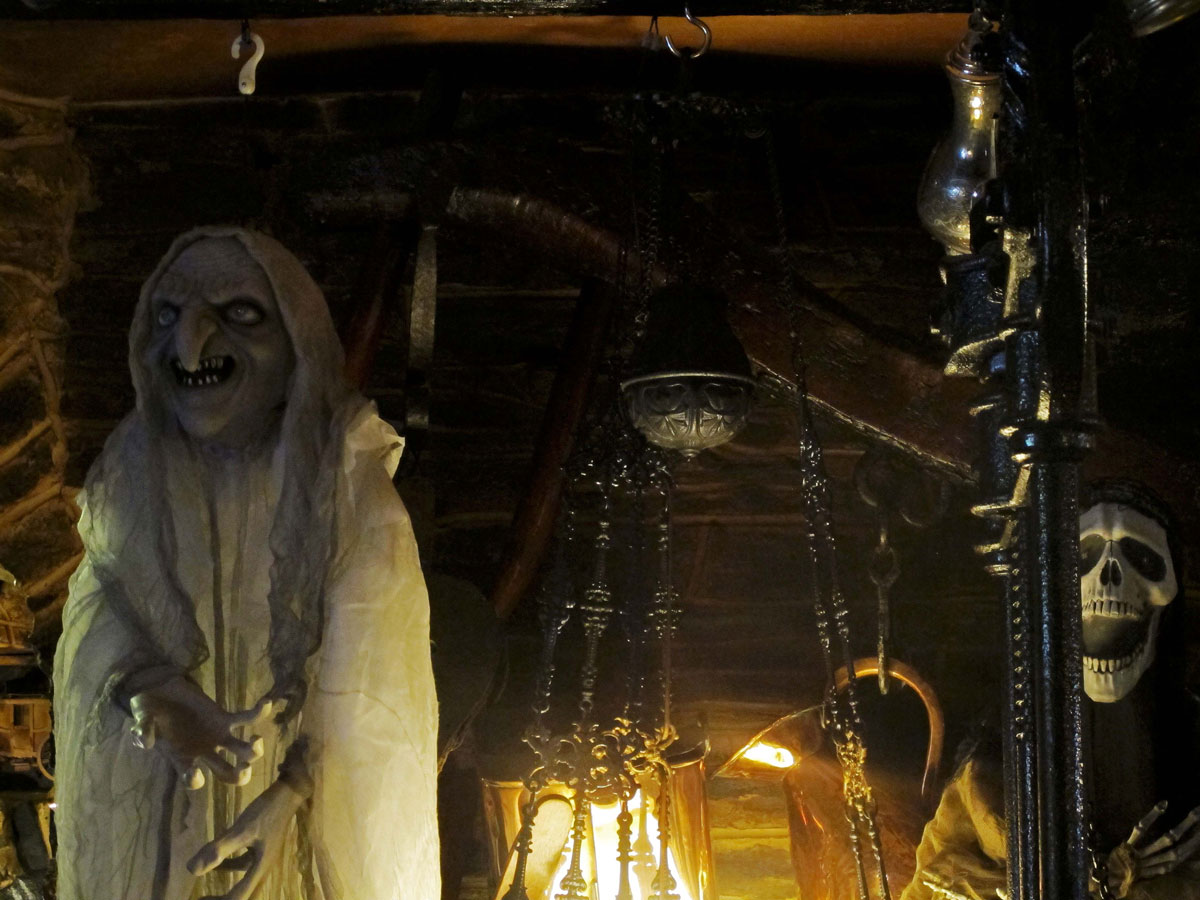
I’ve written about the next pub before in my post about Lydford, but I couldn’t possibly leave it out on our tour of Dartmoor pubs as it’s been named as “Britain’s Most Unusual Pub”. So, rather than force you to go looking for it, I’ve re-created the section about the Highwayman Inn at Sourton below.
“You know as soon as you pull up into the car park that this pub is like no other you’ve been into. When I first set foot inside The Highwayman back in the 1970s, I’d never come across anywhere like it before – and I still haven’t.
As soon as you walk through the old ‘Tavistock to Launceston Stagecoach’, which doubles up as the front door, you’ll be amazed at what there is in here.
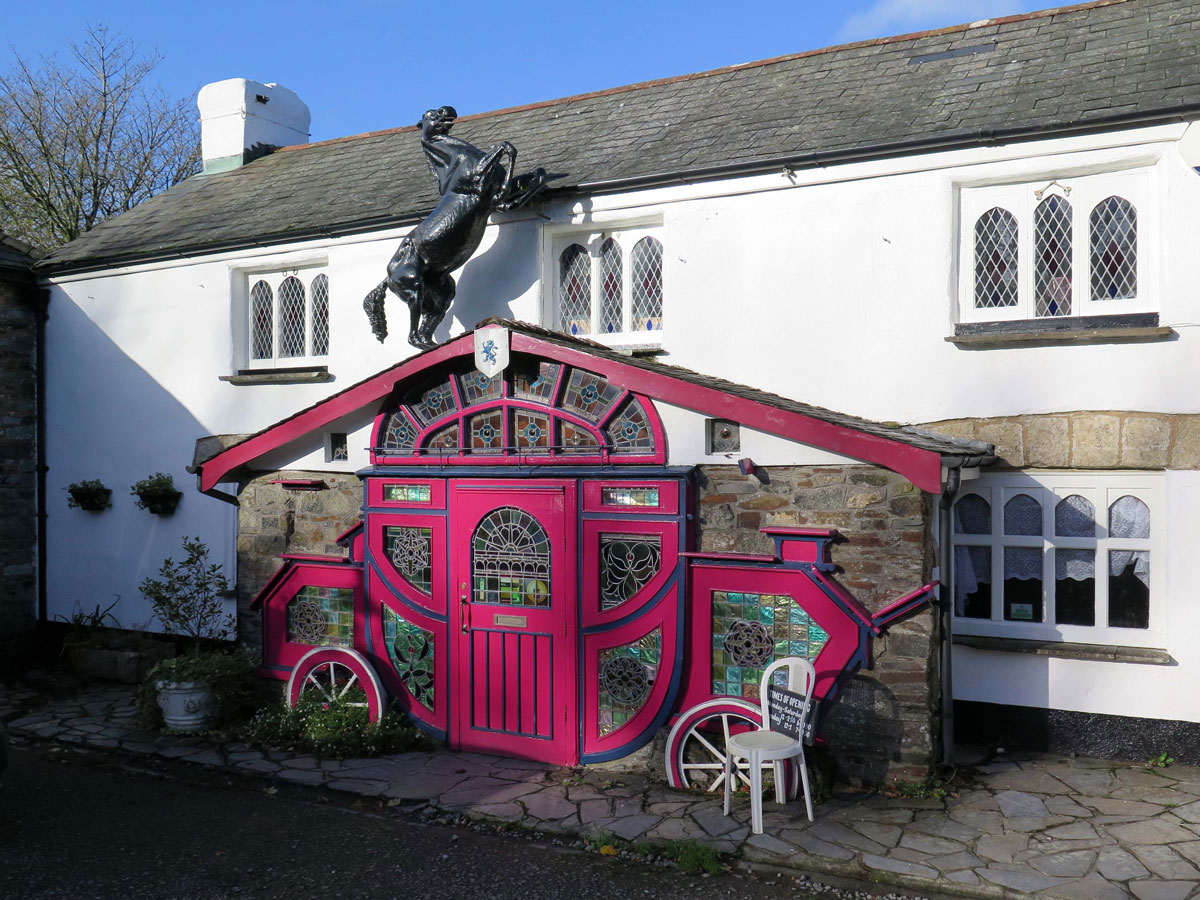
It was 1959 when Buster Jones and his wife Rita took over the pub and transformed it into an Aladdin’s cave of artefacts that would put the Antiques Roadshow to shame, but it doesn’t end there. If you think that the bar and the ‘Hideaway’ are unusual, make your way along the narrow passageway to Rita Jones’s Locker, where it resembles an old ship’s galley with all the nautical paraphernalia you could imagine. The bar top is a piece of timber dragged out of a nearby Dartmoor bog by Buster, with a ‘serpent’ on the end of it – and so it goes on.
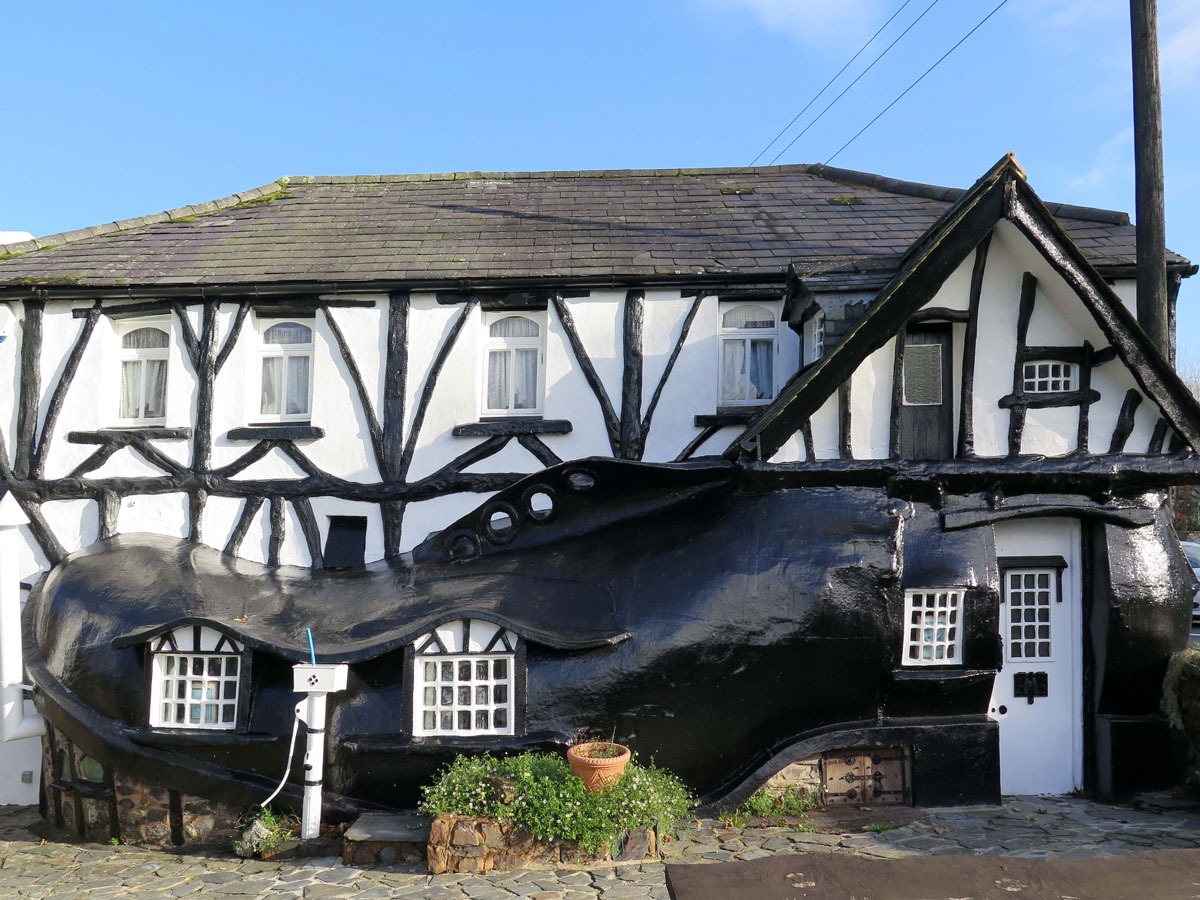
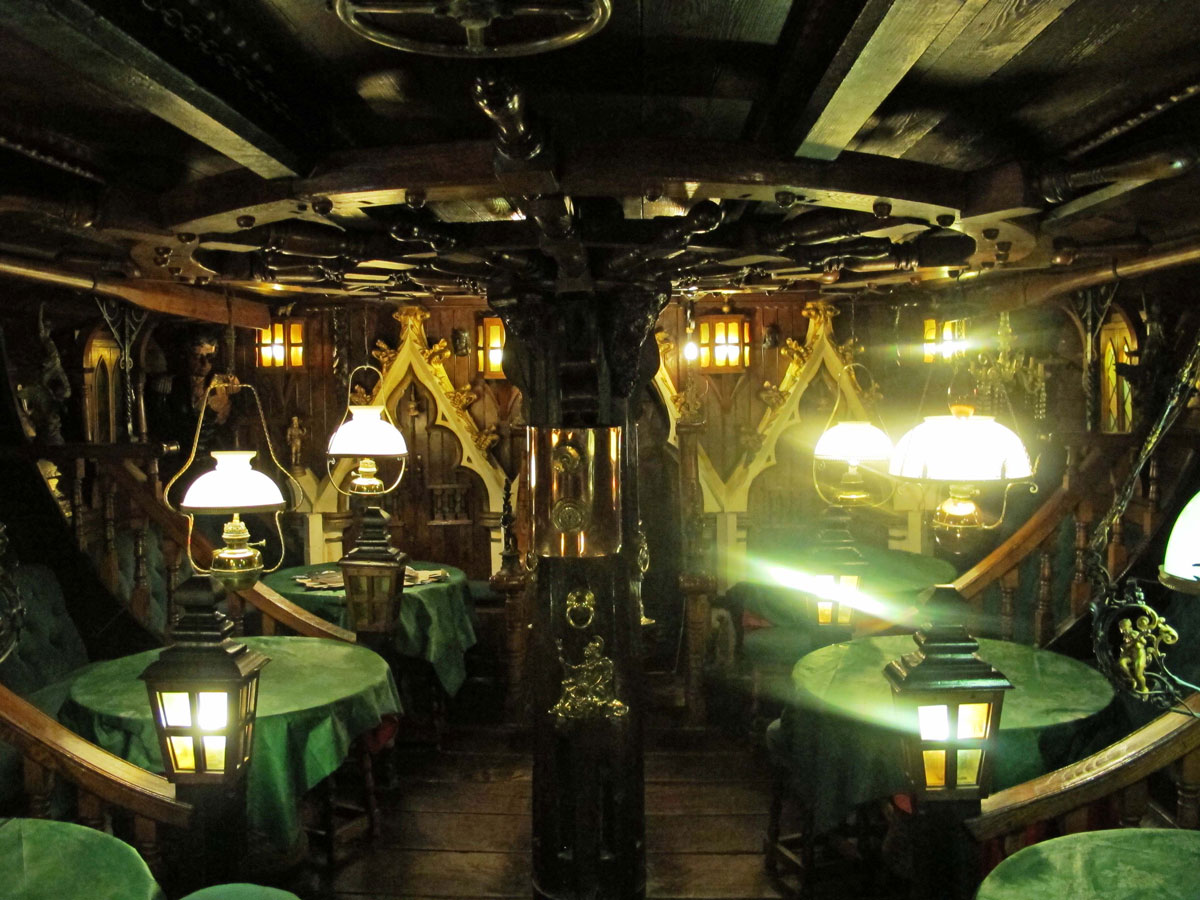
Buster and Rita have now passed on, but the pub is run by their daughter Sally with her husband Bruce. A nicer person you couldn’t wish to meet and she follows in her parents’ footsteps with a quirky friendliness that won’t fail to win you over.
Over 50 years have passed since this unbelievable place was transformed, and as Sally and Bruce get nearer to the age of retirement themselves, I can’t help but think that the place won’t stay the same forever”.
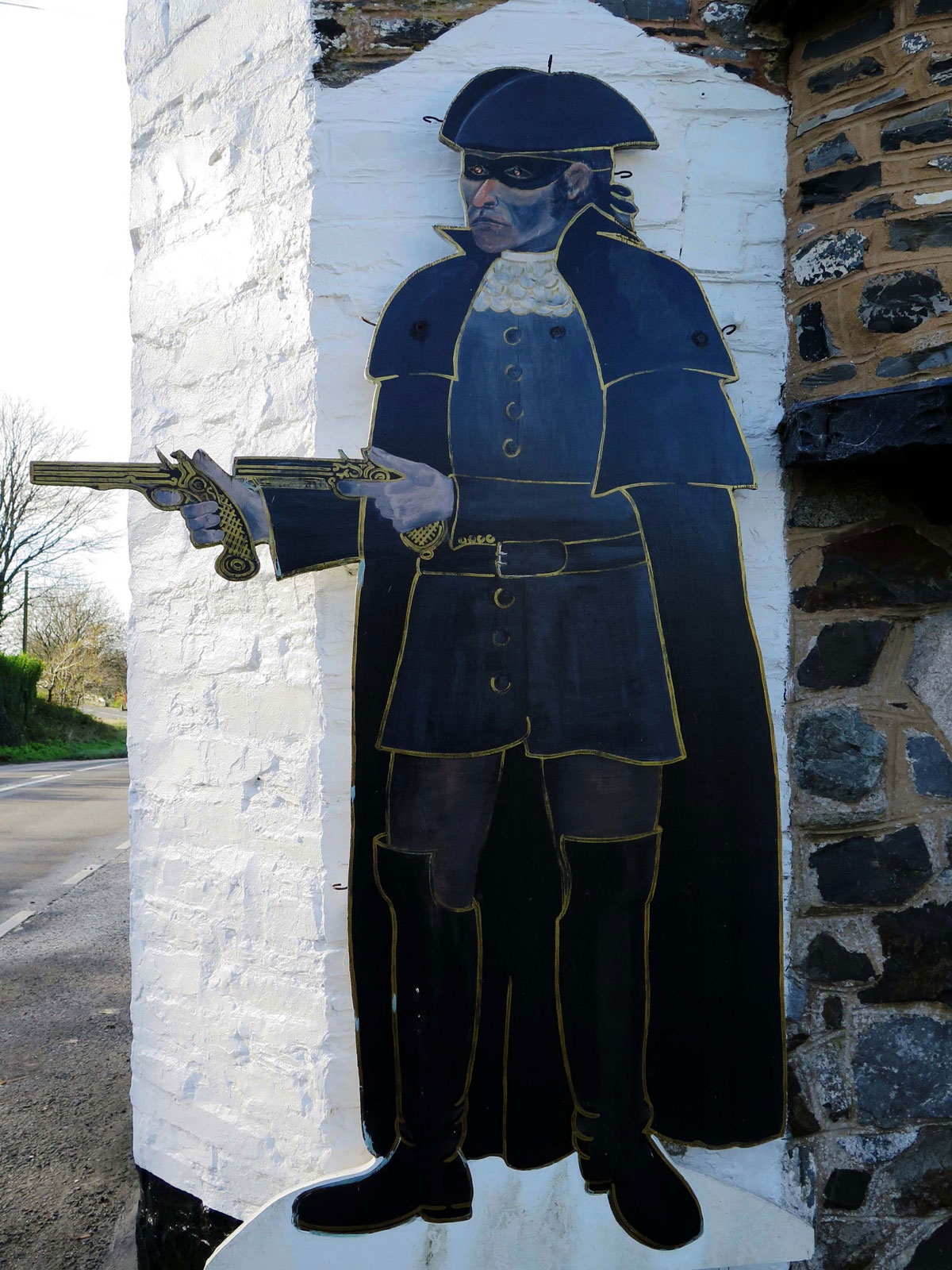
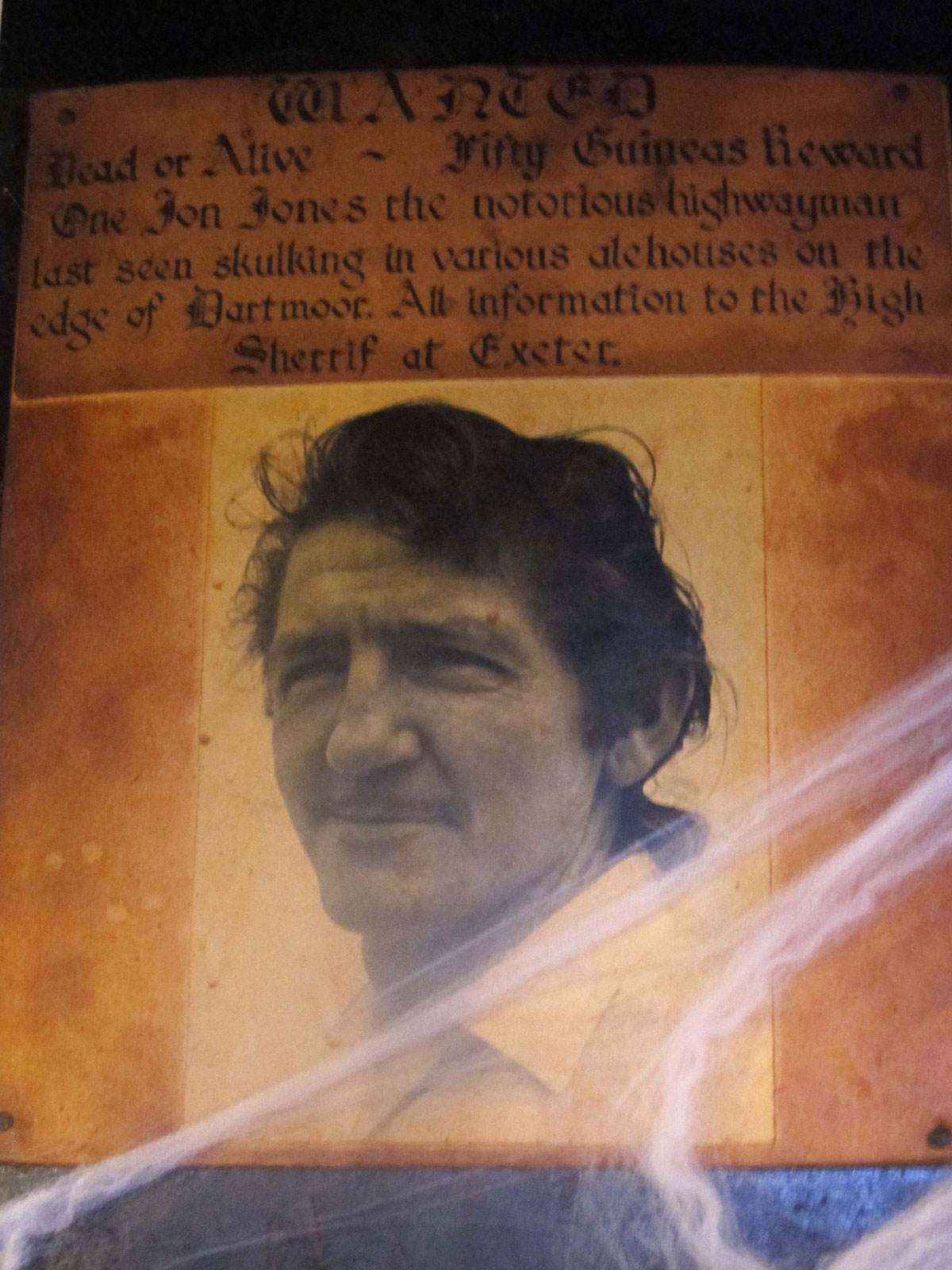
As it stands at the moment, I’m pleased to say that nothing has changed.
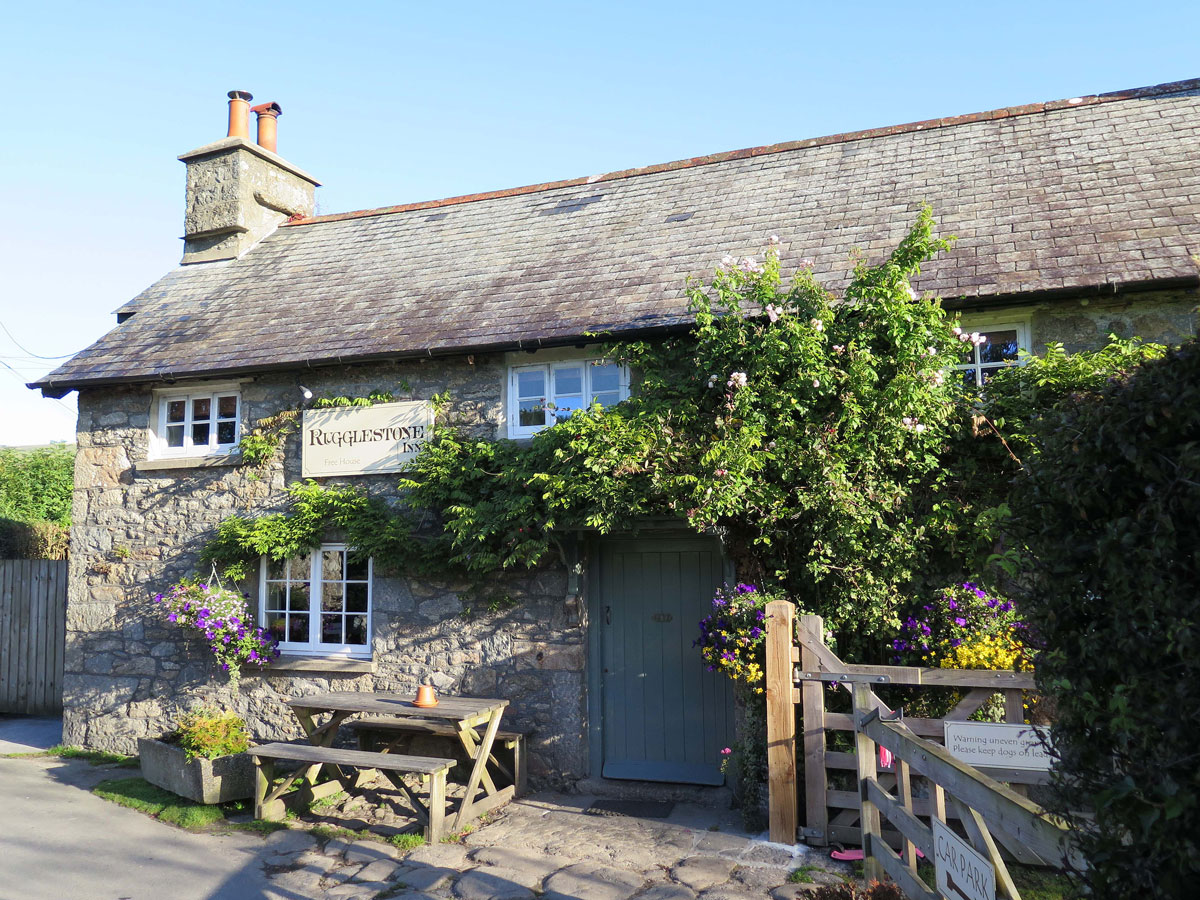
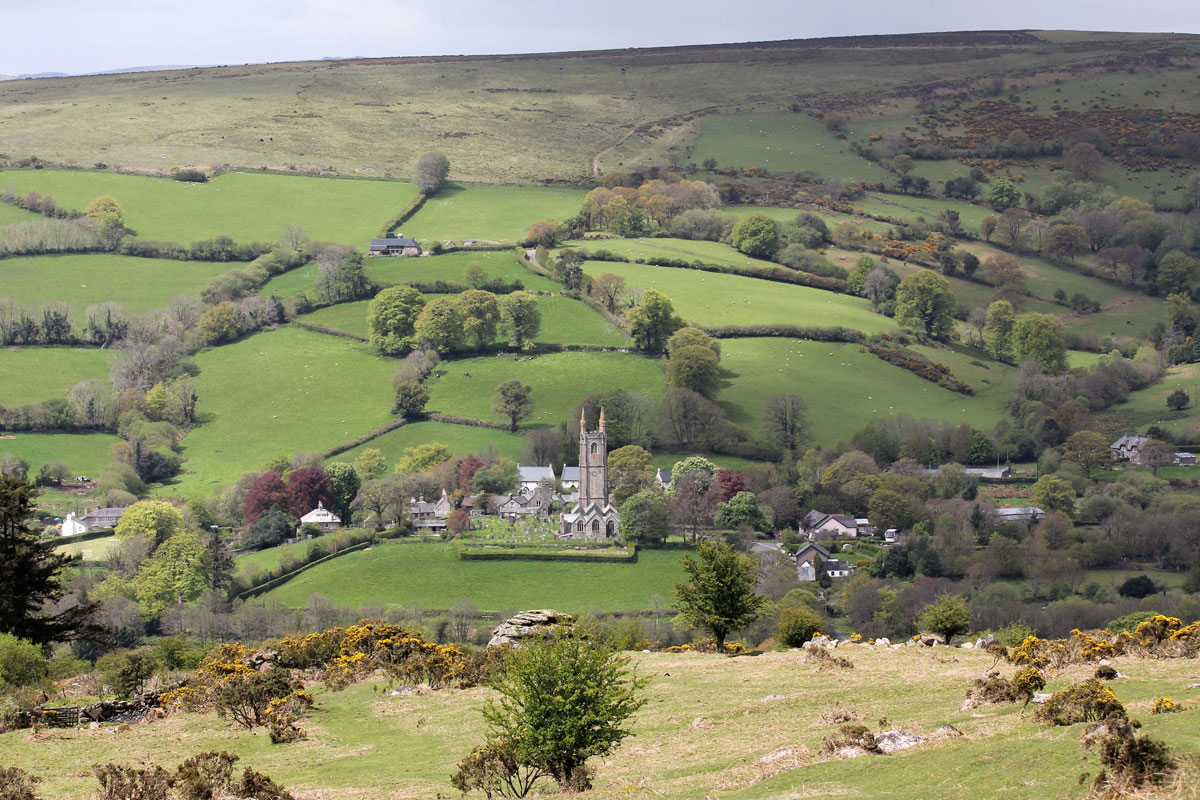
Some things have changed at the Rugglestone Inn though, but that’s only to be expected really. The Rugglestone (which is named after a local logan stone) is located just outside Widecombe-in-the-Moor, probably the most visited village on Dartmoor. Its fame comes from the old folk song called Widecombe Fair, and each year the fair attracts tourists from far and wide.
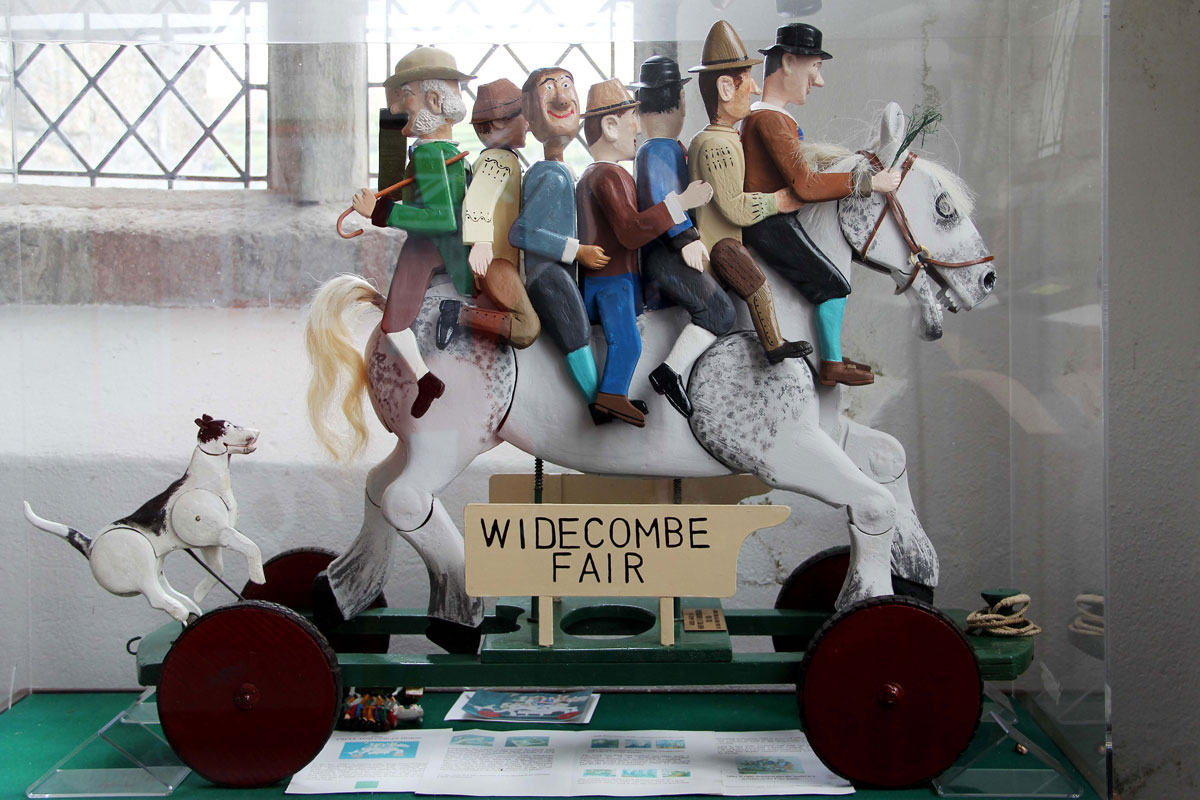
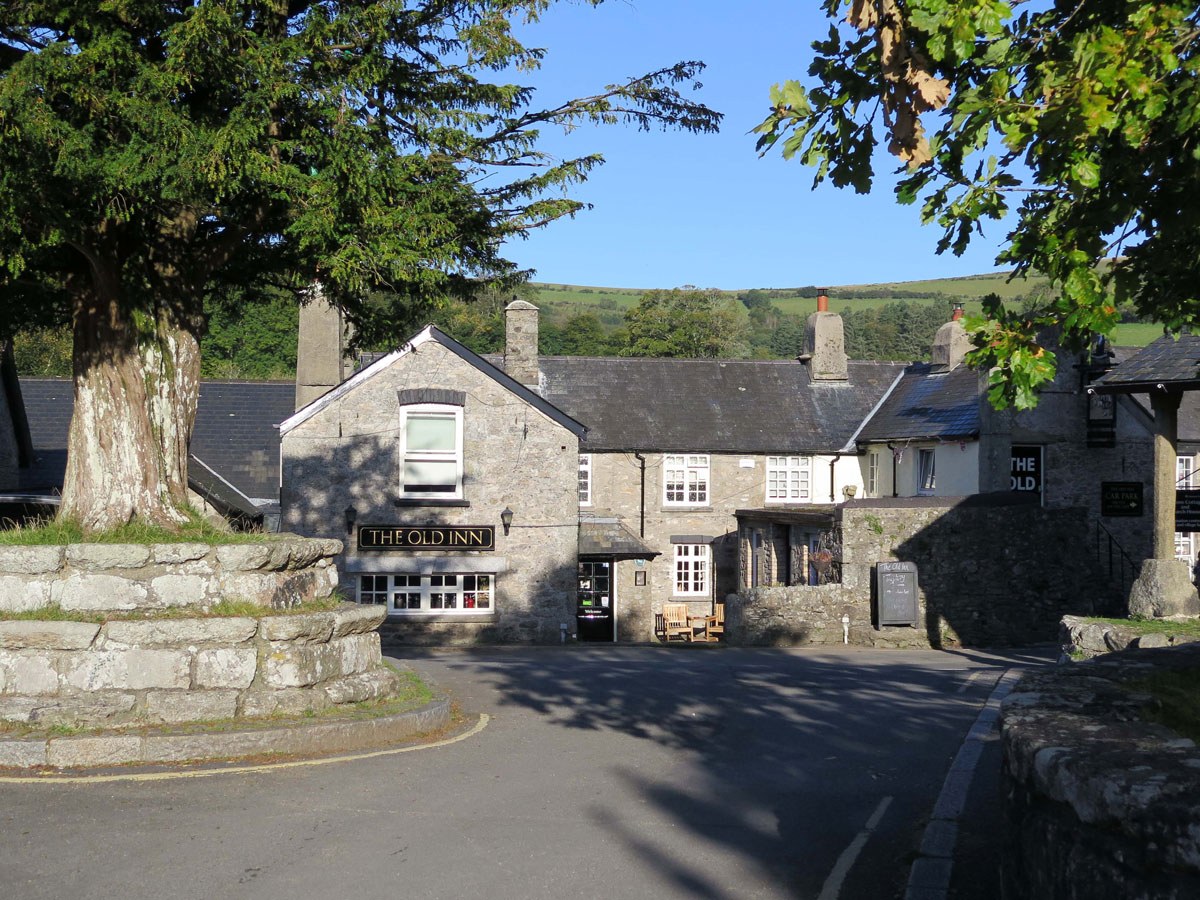
I’ve never been to Widecombe Fair, but I’ve often been to the Rugglestone. Most visitors to Widecombe opt for the Old Inn (see featured pic at the top of the page), and to be fair (sorry!) it’s a half-decent pub, but the Rugglestone is different. Just to give you an idea, the first time I came in here, a local farmer came in for a pint with a dead sheep hanging over his shoulder, and they were both still here about three hours later. There’s another story I could tell you about what happened at the time, but discretion is the better part of valour as they say.
Needless to say, this is another one of those rustic pubs that have all but disappeared, and not that much different to the Drewe Arms really. The pub has had to move along with the times to keep afloat, but the last time I was here, it seemed to have done it pretty successfully without destroying the pub’s inherent character.
For my final pub I’ve chosen the Warren House Inn. It’s a well-known pub, simply because people pass by (or drop in) the Warren House all the time, so why include it here? Mainly because it’s inevitable that if you’re travelling across the moor, you’ll do exactly the same, and so you may as well know something about its background.
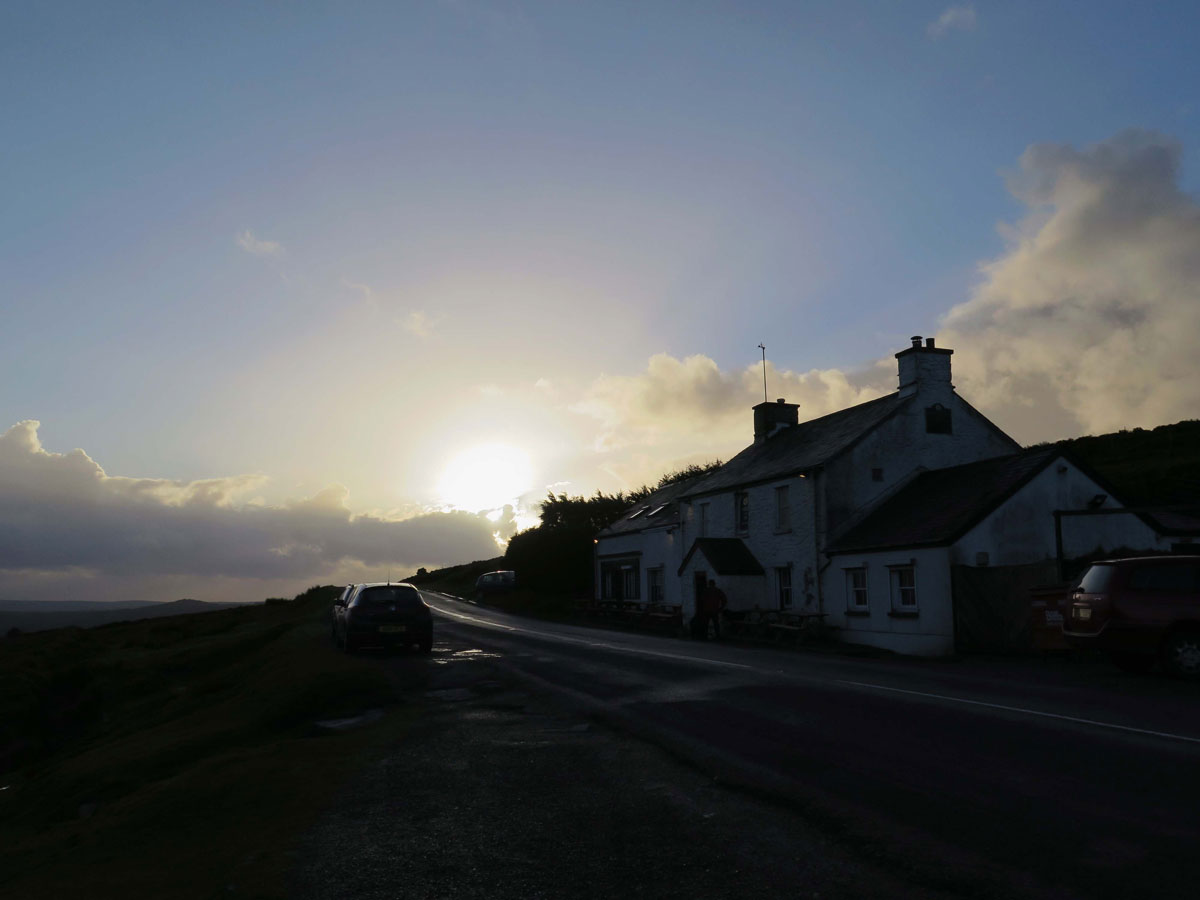
The pub lies at 1424 ft (434m) above sea level, which makes it the highest inn in Southern England. The original building though was located just across the road and called New House. It was built when there was a resurgence in tin mining in the area and also had a huge rabbit warren (a common enterprise in these parts at the time), so you don’t need to be Einstein to work out where the Warren House Inn gets its name from. The pub eventually fell into disrepair, and in 1845 was re-built across the road and re-named.
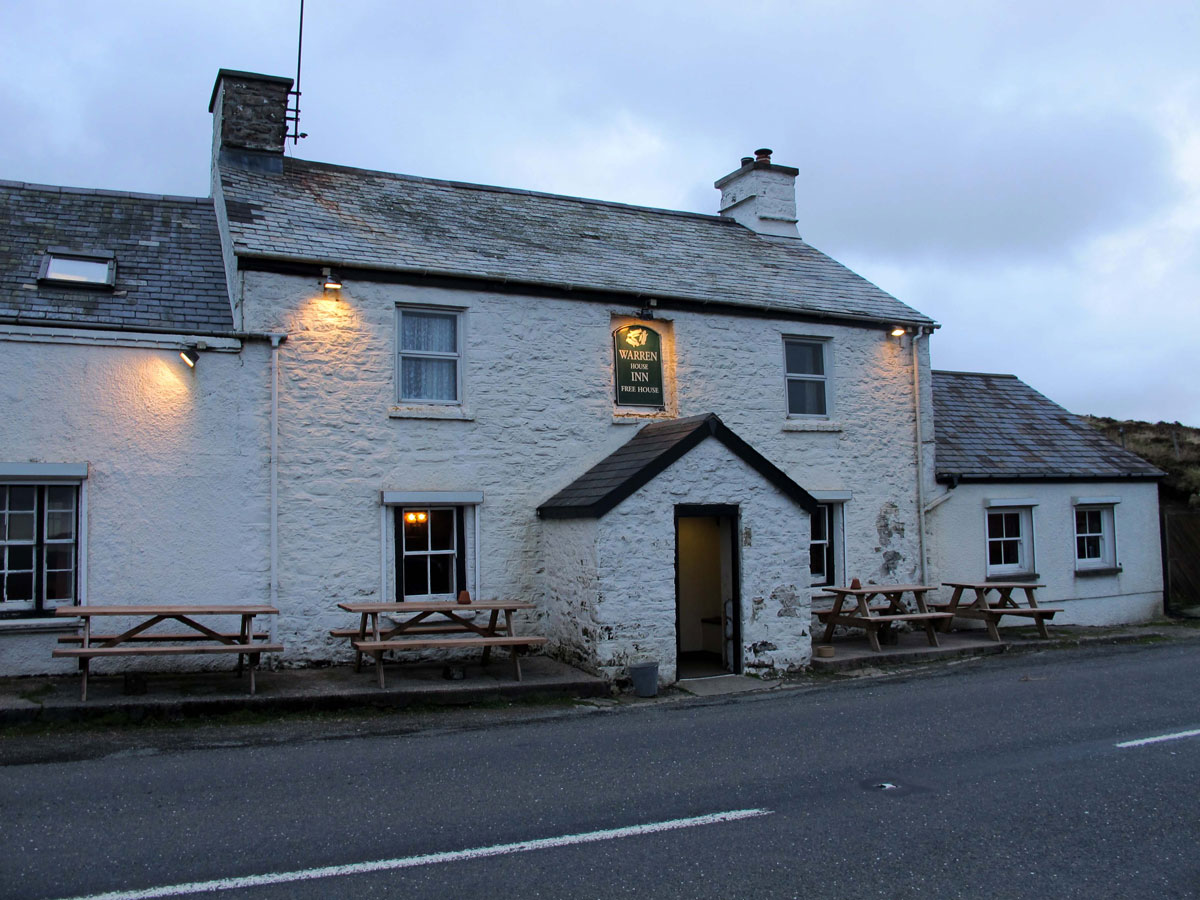
One of the legends associated with the inn originates from this time. Apparently the open fire has never gone out since. I’m not sure that can be true somehow, but I can vouch for the fact that the fire’s always burning when I’ve been in here – and I’ve been in here a fair few times over the years. It can be a heatwave outside, but there is still a log or two crackling away.
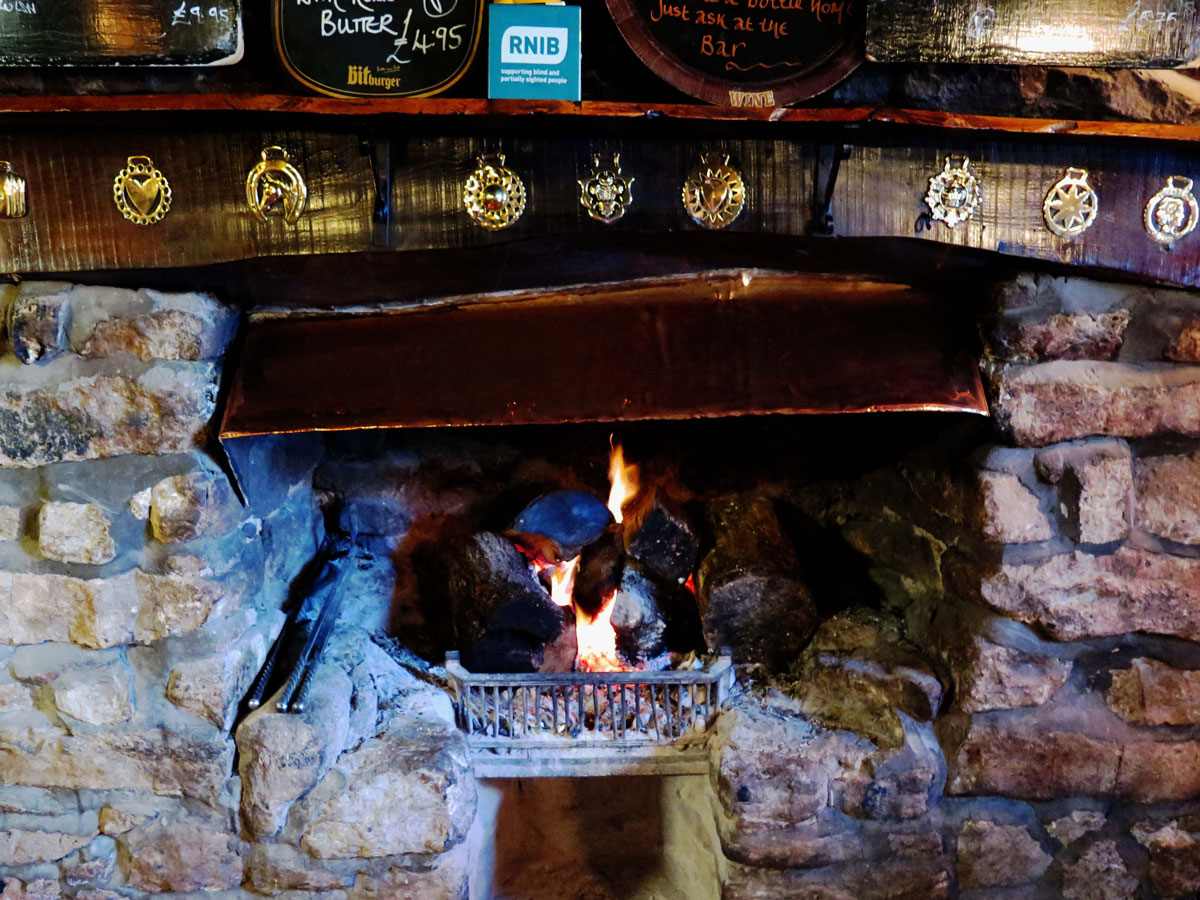
No doubt this would have been a necessity in years gone by when winters up here were generally harsher than they are now, but this pub is still in the middle of nowhere and even today it has to rely on electricity from a couple of generators, gas in the form of LPG, water from a spring and sewerage discharged into a septic tank. In other words, don’t come here wondering why lobster thermidor isn’t on the menu. That said, you’ll be well catered for if you like pasties.
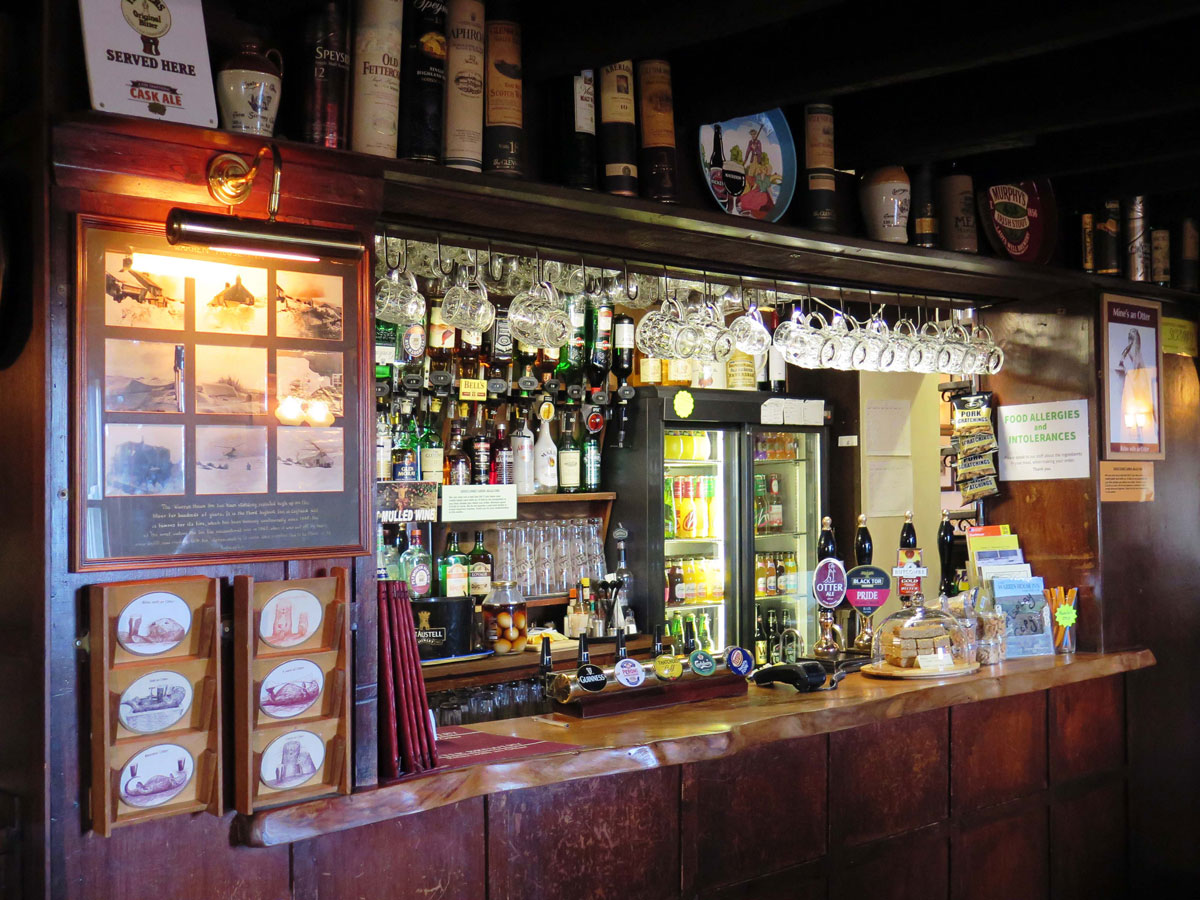
The picture above shows the bar, and if you look carefully, you’ll be able to make out some photographs on the left showing the pub when it was cut off by snow for 3 months in the winter of 1963 and supplies were sent in by helicopter. It doesn’t get any bleaker than that, not in England anyway.
Most sensible people will come here when the weather’s a bit kinder, and if you’re one of them, you might want to wander over to the pub garden across the road and take in the view.
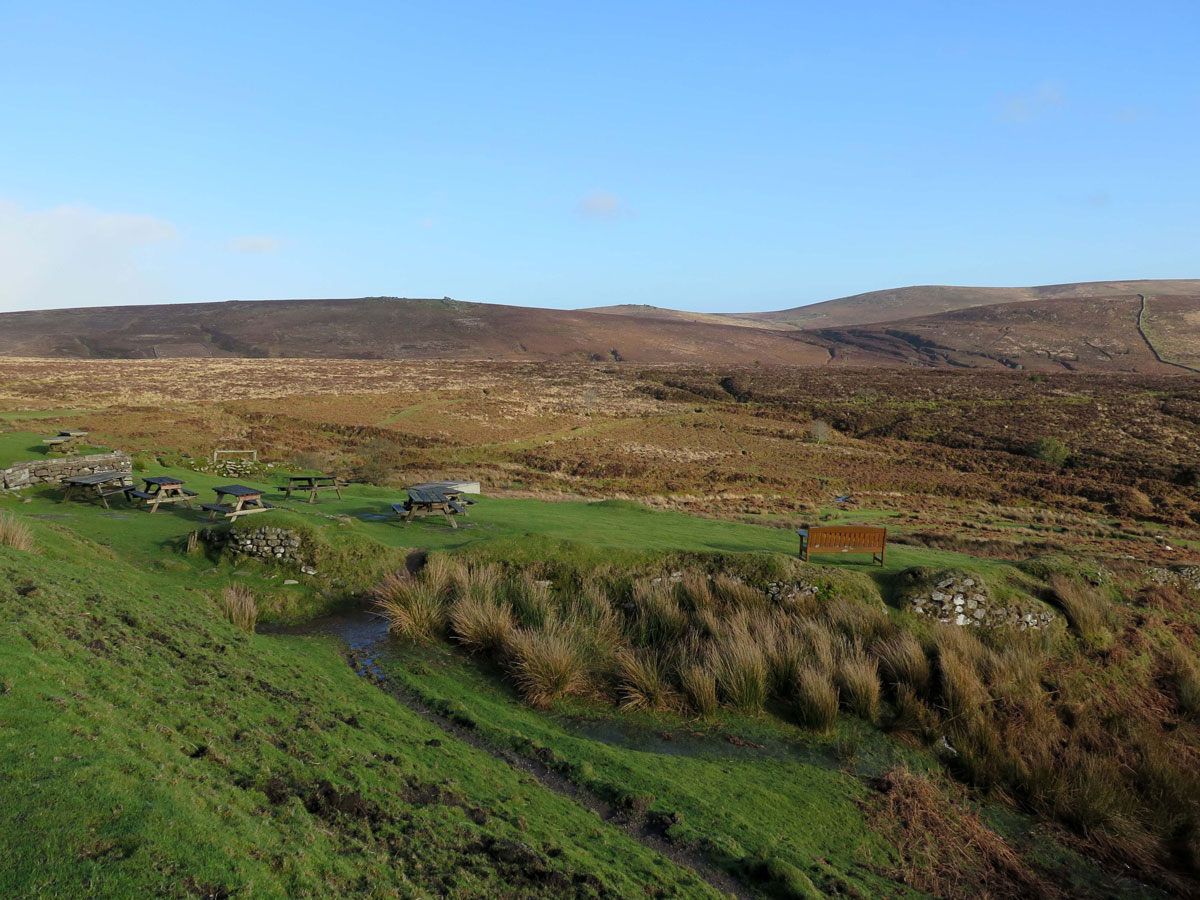
This pub garden was where the New House used to be, and I couldn’t possibly leave here without recounting another typical Dartmoor tale. It involves a traveller who, on a snowy winter’s night, stayed at the New House. His room included an old chest which aroused his curiosity so much that he just had to take a quick peek, but I bet he wished that he’d kept his chunk out, because when he lifted the lid, it wasn’t a chest full of treasure that he was staring down at, but a corpse instead.
Needless to say he didn’t get much sleep that night, but when he went down for breakfast in the morning he bucked up enough courage to mention it to the innkeeper. The woman’s son put his mind at rest by telling him that “Tis nothing at all, tis only fayther… the snow being so thick, and making the roads so cledgy like, when old fayther died two weeks ago we couldn’t carry un to Tavistock to bury un, so mother put un in the old box, and salted un in”.
The moral of the story is not to poke your nose in where it isn’t required, but if only I would listen to my own advice sometimes. One day, I was in the Devonshire Arms in Sticklepath when something similar occurred. There was a massive chest in the bar (I’m talking about a wooden one now) and I asked an old boy if he knew what was in it. He told me that while the landlord was alive it was kept locked and nobody knew what was in there, but when the landlord died he and a few other locals decided to take a look. So what’s in there? I asked. “You don’t want to know” he replied, with a look on his face that suggested I really didn’t. What bothered me the most though was that they locked it back up and still left it in the bar.
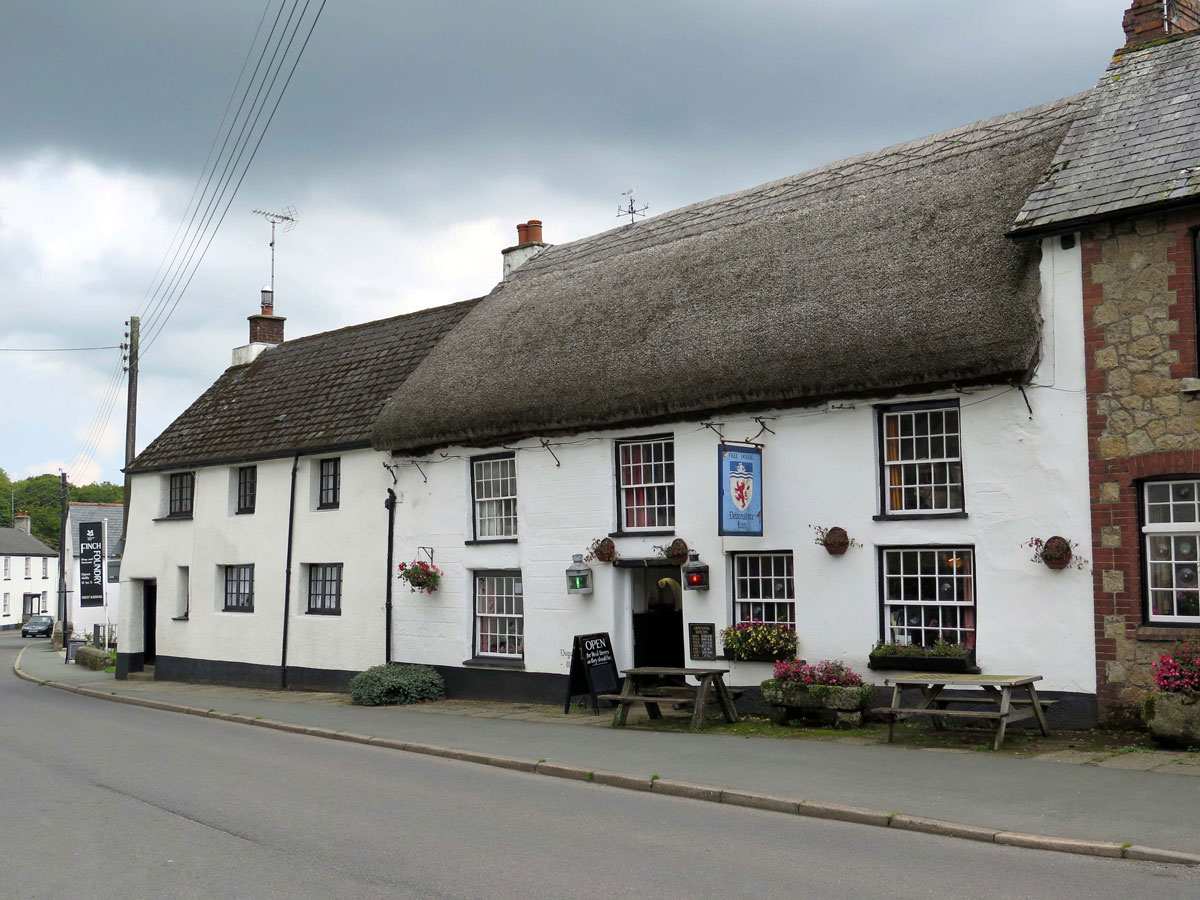
We’ve now reached the end of our tour, but it has to be said, that this is just a selection of pubs that I think may be of interest. I don’t visit these places as much as I used to, and inevitably many of them would have changed from the time when I did. With pubs closing down at an ever increasing rate, we’re in danger of losing an asset that is vital to the local community, not just on Dartmoor, but everywhere, and it’s incumbent on anyone who comes up here, to visit at least one of them before they change – or disappear for ever.
Originally posted 2023-06-11 08:10:45.
Malc, this was a fun picturesque pub crawl around Dartmoor. I loved that you included some of the scenery along the way. The traditional architecture (some with exotic enhancements), including thatched roofs, was an integral part of the charm. I didn’t miss your description of the “ploughman’s lunch” available at the Drewe Arms if one was a bit “peckish”, but what about the pickled onions?
The Horse Brass above the fireplace at the Warren House Inn was a nice authentic touch from the days of horses in traces pulling carriages. It is sad to witness the disappearance of these historic drinking parlors. In the late 1960’s I had the opportunity to stay in Eastbourne for a week and lifted a pint at a pub in town. Speaking of which, why are there no candid photos of a few patrons to complete my journey down memory lane? Is this frowned upon for professional photographers in the UK? Stewart
Thanks Stewart. I’m glad you enjoyed this post, and I can tell that you read it all the way through. I’ll answer some of your observations as best I can.
• I wouldn’t describe thatched roofs as an exotic enhancement if that’s what you meant, because this was the normal way of roofing a building in these parts originally, and many buildings have always been thatched.
• You’re right about pickled onions. A ploughman’s lunch without them is unthinkable, and you can rest assured they would have been on the plate in the Drewe Arms.
• As regards taking candid photos of people in public, it’s something I’ll do occasionally if it feels right, but it’s not a good idea if it might upset somebody. If I’m with my wife it’s less of a problem than when I’m on my own. Men on their own taking candid pictures is something I wouldn’t recommend – whether you’re professional or not, and I’m not by the way.
Thanks again for your smashing contribution.
I loved this post! The old pubs have such fascinating names, histories, and characters!
Thanks. I’ve enjoyed drinking in them too 🙂
This is my kind of post, Malc! What a great lot of pubs you have down there! They all sound great, from the Royal Oak’s late medieval roots and character to the wondrous experience that is the Highwayman (do I recognise this one from a previous post some years ago?). The Valliant Solider is interesting, not only because of its story but also it’s name: there was a ‘Valliant Trooper’ pub in a village called Aldbury near Tring that I used to go to when I was living not far from there in Wendover, Bucks. I’d thought it was an unusual name then, but it seems it wasn’t alone in being valliant! And I love the story of the Warren Inn’s continuous fire – even if it’s not true, it’s a great yarn to spin your friends sitting around it with a glass of cheer while the flames crackle away on a chilly night! Wonderful stuff! 🙂
I thought that this one might appeal to you Alli, and you’re right about a lot of good pubs, but the old ones are disappearing fast, which is why I thought it was worth remembering them before it’s too late. I never realised there was another ‘Valliant’ pub somewhere else, but at least I do now. Incidentally, I made of my rare excursions out last week – and it was to Buckinghamshire of all places 😊
Buckinghamshire? Eh? What did you want to go there for? 😉 Will we be seeing a post from my old county?
Still, how sad to hear the pubs are disappearing fast. Gems like the ones you’ve shown us belong at the heart of our society and culture. Long may they live, and be valliant! 🙂
Where we went was very nice indeed and maybe I’ll write about it at some point. Who knows? 🙂
Wow, what a post. I don’t go to the pub much these days, but a tour of these pubs would be a real treat. Some are beautiful and one or two simply weird. Thanks for a thirst quenching post.
Thanks Stephen. I think we’re seeing the demise of traditional pubs as we used to know them which is why we should ry and find a way of keeping some of these gems alive for posterity.
What a gorgeous article!
It made me feel deeply nostalgic for pubs with that real air that can only be breathed there💝🍻
Thank you so much Luisa, and you’re absoultely right about the quality of the air on Dartmoor. Lichens and mosses thrive here which is a sure sign of the good air quality – and the quality of the beer isn’t too bad either 🙂
How careless I was!
I used the term air as we use it in Italian, that is to indicate the atmosphere and I caused quite a misunderstanding😇😇😇😇😇
So sorry
LOL. You’re right again though. The atmosphere in some of these places is quite indescribable 🙂
We have pubs in Italy too, but I think the atmosphere isn’t as genuine as yours 😉
🍻 🙂
We occasionally use air the same way in English, Luisa….
👍
Thanks a lot 🫶💙
I loved, Malc, your tour of historic pubs around Dartmoor! Some are so picturesque that it would be a dream to be able to walk in the villages they are in. You have rightly pointed out the main attraction being someone special connected with the place, such as Aunt Mabel. I will never forget, Malc, your kindness to me and making me smile in times of sorrow, and although with your knowledge, I might not be able to make you smile as you know this story already, I will write it on chance that you don’t:
“It was according to the history books, the fastest coronation since Bubric the Saxon crowned himself with a very pointed crown on a hill during a thunderstorm and reigned for one and a hal seconds.”
Terry Pratchett, Nation
Thank you again, Malc for the tour!
Joanna
Your kind words have already made me smile Joanna, but I hadn’t heard that story by Terry Pratchett before, so you’ve made me smile twice now. I know you’re not a drinker as such, but I’m sure you would love a tour of these pubs, if only for the scenery alone. As you quite rightly say though, it’s all about the characters you meet along the way – and if only those walls could talk, what would they be able to tell us I wonder.
You made me happy by smiling, Malc! I don’t drink but I am sure that one can get a fresh apple drink somewhere. I wrote long time ago about historic pubs in London, and to see a chair where some of the greats sat while working and drinking, was a treat!
Joanna
I’m really chuffed that I’ve put a smile on your face Joanna, and how right you are about those chairs 🙂
You are more than welcome, Malc!
Joanna
As much as the old pubs I loved the old stories associated with them 🙂 The Valliant Soldier looks fascinating to visit, as does the Highwayman for rather different reasons!
A VT meet in a roving van perhaps?
Sounds fun!
Hope there’s room for four in that car. Malc, I dearly loved your Westminster Abbey series, and somehow I feel this post is closer to your heart. 🍻
We’ll squeeze you in somehow Pat. You’re very astute because if it’s a toss up between a church or pub crawl around Dartmoor, I thnk you know which one would win 🙂
Both could include taking communion….
LOL – and the church wine is free!
An interesting and light hearted post to read over breakfast Malc – some very attractive looking pubs here with some great stories attached. The Valiant Soldier looks and sounds amazing though the exterior reminds me very much of a small-town Irish pub. the Highwayman looks definitely quirky and I love the story of the dead sheep at the Rugglestone. I don’t drink but if we were ever to meet in the future then mine’s a Coke with a slice of lemon, no ice 🙂
I’m glad it gave you a good start to a Sunday morning Eunice – and the coke is on me if ever we meet up 🙂
Thanks Malc. Maybe I could get a job as your driver if you and Francesc ever go on a pub crawl 🙂 🙂
Incidentally I’ve got a feast of colour coming up on my blog tomorrow so get your sunglasses out 🙂
What a great idea – and we’ll buy you a coke in each pub – with ice and a slice as well.
My sunglasses are at the ready 😎
Cannot pick a favourite, well maybe Warren House, but a tour after my own heart. Lovely country scenery and historic pubs, what more can a man ask for… wonderful photos as well. Cheers Malc for such good info for the next trip! Cannot wait. All the best my friend.
Thanks Francesc. I think if we did the tour together we’d need a driver 🙂
For sure! One day Malc… 🌞
You might want to take a look at Eunice’s comment above.
Splendid Malc! We’ve already a driver!
Yep!