Devonport - Pt 4 The Keyham Extension
I began this mini-series by explaining why a dockyard was built at Devonport, and then followed it up by including two chapters that went on to illustrate how it expanded in order to meet the requirements of the Royal Navy during the 18th and 19th centuries. Now, in this penultimate post, I’m going to show you why the dockyard needed to adapt to a changing world, and how it became the largest naval base in Western Europe.
As warships increased in size, so did the need for Devonport Dockyard to do the same, and by the end of the 19th century, plans were in place to build an extension to the north of Keyham Steam Yard with a capacity to accommodate, not just the largest ships of the day, but also those that might be built in the future.
Work began in 1896, and when completed a decade later, the dockyard was twice as big as it was before the project started. The massive undertaking involved creating a new residential district at Weston Mill to house the 3,400 men needed to construct it, and materials were brought in, not just from around Britain, but as far away as Norway and the United States. Closer to home, 25,000 tons of sand and shingle were dredged up from Start Bay which later resulted in the village of Hallsands collapsing into the sea.

When the extension was completed it consisted of two basins, one tidal (No 4) and one closed (No 5), and in between were three graving docks (initially numbered 4,5 and 6 but later changed to 8,9 and 10). The combined Keyham Steam yard and new extension was then renamed North Yard to distinguish it from the original South Yard.

The new complex was officially opened by the Prince and Princess of Wales (the future King George V and Queen Mary) in February 1907, but what should have been a grand occasion for the people of Devonport was anything but. It was apparently deemed ‘impractical’ for their Royal Highnesses to drive through the streets of Devonport, and instead they left Admiralty House at Mount Wise and sailed up the Hamoaze on board the yacht ‘Vivid’. Consequently, the Lord Mayor and civic authorities boycotted the ceremony with hardly a Union Jack in sight.

The threat of war breaking out in 1914 led to the Three Towns of Devonport, East Stonehouse and Plymouth joining together in order to speed up decision making, and in 1928 the combined urban area finally became officially recognised as the City of Plymouth.
The Great War had seen big changes in how warfare was conducted, and technical advancements now enabled a conflict to be fought in the air as well as on land and at sea. Unsurprisingly, with the outbreak of WWII in 1939, Devonport drew the attention of the Luftwaffe, and although the dockyard was the main target, it was the centre of Plymouth that bore the brunt. The city’s historic core was razed to the ground during 59 bombing attacks that, according to statistics, killed 1,172 civilians and injuring 4,448 others.
The second half of the 20th century saw a new type of war emerge – the Cold War. Once again, Devonport was called upon to adapt to the new threat, this one from the Soviet Bloc.
In 1981 a new nuclear submarine refit complex was created at the Keyham extension in Basin 5. The North Lock was divided to form two docks (11&12) and on the opposite side of the basin two new docks (14&15) were added. Since 2002, Devonport has been the sole base for refitting all Royal Navy nuclear submarines.
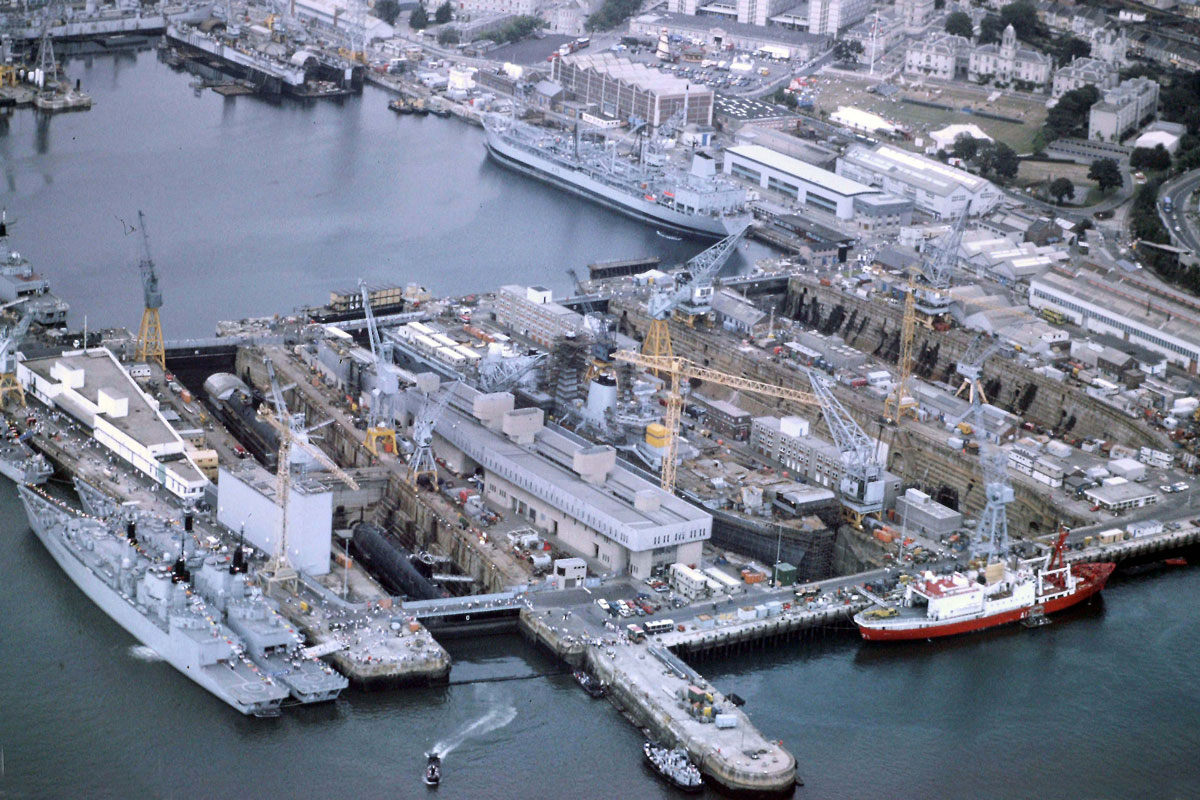

The final piece of the Devonport Dockyard jigsaw was the transformation of Weston Mill Lake which lies just to the north of Basin 5. By the early 1950s steam-powered ships had largely been replaced by diesel engines, and during the 1970s the lake was reclaimed to provide berths for the new (as it was then) Type 22 frigates. Today, it’s the home of amphibious warfare ships and the Royal Marines RM Tamar base.


Needless to say, I haven’t covered everything about the evolution of Devonport Dockyard because a) that would be a massive task, and b) keeping things simple makes it so much easier to understand.
Since the dockyard came into existence in 1691, the world has become a very different place, and in my next and final part, I will attempt to explain how the dockyard operates today, and hopefully you’ll join me for one last time to find out what the future holds for this remarkable area hidden behind those dockyard walls.
POSTED – MARCH 2024
Originally posted 2024-03-24 11:41:06.
Oh you mustn’t worry about that. 😁 I can take it, and I have a pretty sound sense of humour. Besides, yours was the third time I’d been got with April Fools this morning! I’ll get you all back next year! 😉
🙏
With long histories like this, bite-size chunks is the way to go. And the chapters are always a pleasure to read. 😊
I should know more about Portsmouth’s past than I do because both my nans lived just across the harbour in Gosport. I spent most of my childhood summer holidays down there. Saw the Mary Rose soon after it was raised and it was still being sprayed continually with water though, and that was pretty special. Maybe you’d think about doing a few chapters on Portsmouth at some point? Then I might learn something more about the place than just about the historic ships that live there! 😊
After years of having a system that was haphazard to say the least I’ve now managed to get one that makes sense (to me at least). Portsmouth will be on the new system’s list somewhere, but now that you’ve asked the question I’ll move it up the list – just for you. Bang goes my new system already 😊
Ah, don’t worry about that – systems are there to be broken! 🙂 I was planning on putting a post out last week, but I ran out of time so it’s had to be bumped until next week now. So I’ll look forward to your Portsmouth series, and learning more about the bigger picture of the city.
Happy Easter. 🙂
Happy Easter to you too Alli. By the way is there any truth in the rumour that Ynys Llanddwyn on Anglesey is to become a retreat and religious centre for Muslim philosophy and education?
I bloomin’ hope it’s not! Not heard that at all but I very much doubt it, it’s probably someone’s idea of a joke. 😉
Yeh, mine! Happy April Fool’s Day 🤣
Oh, brilliant, well done Malc! You had me going there for a minute, and you’d have smiled if you’d been in our house and heard the hue and cry I raised when I read your message! 🙂 Phew! 😀
I was a bit concerned after I posted my comment that you wouldn’t see the funny side of it. Phew!
There’s a book in all this history, Malc, and if there isn’t one already you’d do a cracking job writing it. For blogging purposes though I think you’ve got the pitch just right – keep it simple. It certainly helps me understand! 😀 This really is hidden history, isn’t it? Not surprised that Devonport was such a target of the Luftwaffe, so much of the south coast did. Portsmouth got a pasting during the Blitz as well. Fascinating history though, and it’s continued expansion shows how valuable it was for our defence and security. Still, that was a bit rough on the residents of Hallsands though – losing their village into the sea! :-0 Looking forward to the last part, and finding out what the future has in store for Devonport. 🙂
I think sometimes writing shorter posts and linking them together makes it more readable, especially if it makes more sense to break the topic up into separate chapters. As for the war damage inflicted on Plymouth, what the German air force failed to achieve, the city planners managed to finish off. To be fair though, the post war re-development of the shopping area was good at the time. As always Alli, thanks for commenting 🙂
I’ve been saving this until I got the time to read it through properly. More informative and fascinating stuff about the dockyard, Charles Church looks lovely and I agree with Joanna about that part of the map looking like a camel’s head 🙂 I’ve also read your post about Start Bay, more interesting stuff and lovely photos to go with it, especially the header pic. Such a shame the pub and cottages burnt down, they look so pretty. Do you know if they have been rebuilt?
Thanks for taking your time to read the post properly Eunice. That always means a lot to me. I’m also pleased that you found the time to read the link about Start Bay, As for the pub, I think it’s fairly close to re-opening. I do hope so, but I haven’t been along there for a while to see it for myself.
Some fascinating snippets here, the roayl visit, Hallsands…what a pic of that btw. Great psot.
Thanks as always Shey. One more post to come to complete the picture.
Looking forward.
I think, Malc, that today’s post is admirably comprehensive, and including many less known facts about not only the extension of Devonport, but also of the creation of the city of Plymouth. The fact of the whole village falling into the sea after vast dredging of sand and shingles from the sea bed, means that such a big projects can have catastrophic effects in places, while being generally necessary and positive. As always, Malc, your maps are important to readers understanding of the progress. One name on the map attracted my attention, and it was obvious why; Camels Head Gate as from above it looked exactly that!
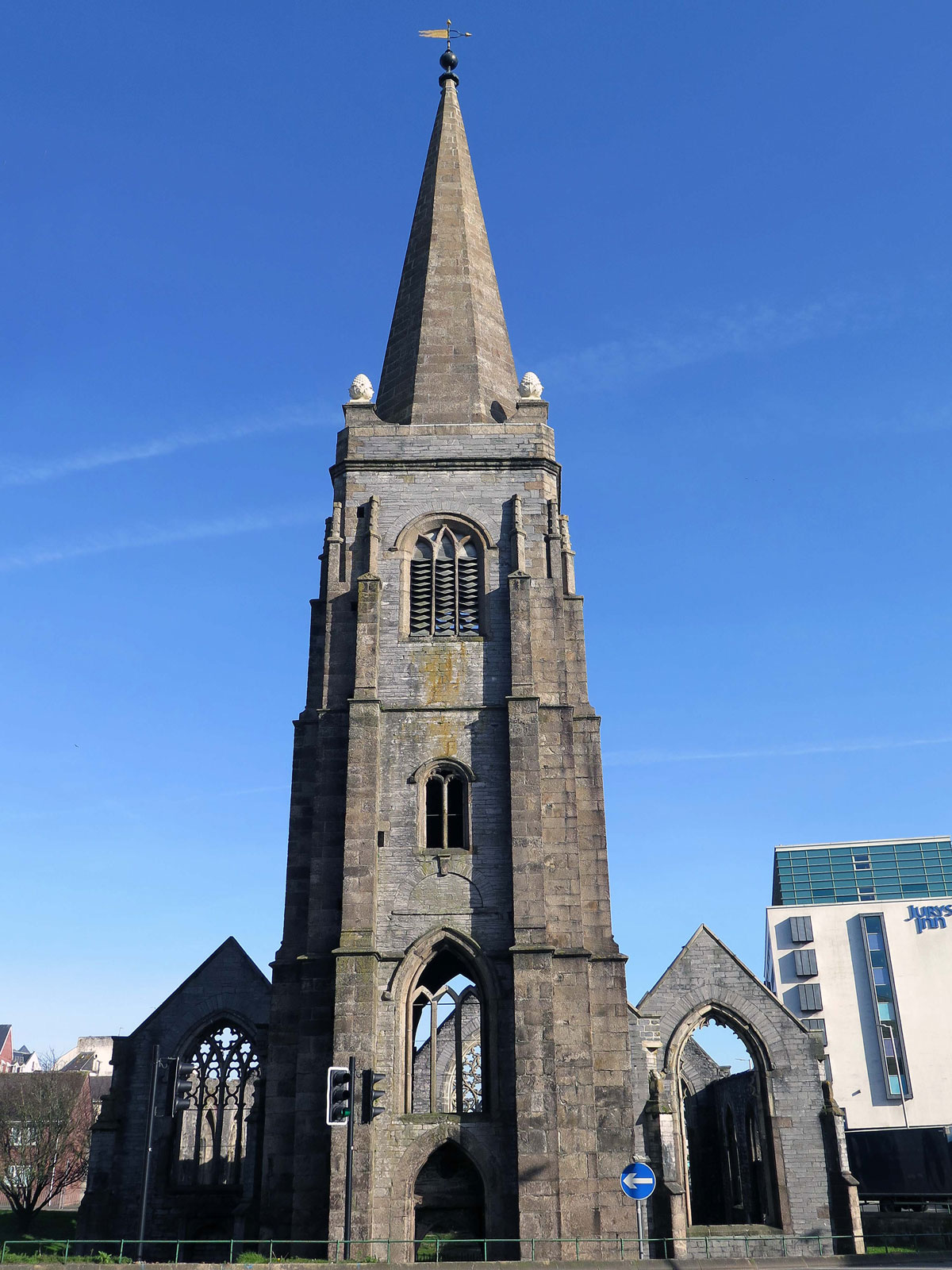
The sad reminder of the destruction ANY war leaves behind could be seen in your photograph of the ruins of the Charles Church!
Thank you, Malc, for the continuation of the extension of Devonport, and the reasons of its importance.
Joanna
Well Joanna, you’ve got me scratching my own head after reading your comment about Camel’s Head. I’d never even considered that there was any feature resembling a camel’s head here. For what it’s worth, I’ve always imagined that the tiny river that runs into Weston Mill Lake was called the Camel, after all it’s not unusual in these parts as the larger River Camel in Cornwall indicates. I’ve followed it up, but I can’t find anything to give me a clue. If nothing else, it goes to show how deep you look into these posts – and as you know, I followed up your desert information on camels too 😊
Thank you, Malc, but if you look closely at the piece of land on the map, it looks to me just like a camel’s head with his mouth open, and to my mind, it has no connection with the name of the river in Cornwall! And I am not seeing camels everywhere, after writing about them!
Joanna
From now on then it represents a real camel’s head in my mind 😊
Thank you so much for this article, which as always is interesting and so well documented. Charles Church is wonderful!
Thank you for your kind words as always Luisa. I’m sure Charles Church was nice enough before the Germans bombed it, but in some ways it has more of a meaning to it now, standing sentinal as it does, right in the city centre.
Thank you again for your kind reply, dearest Malc 🙏🌹🙏
A US Navy ship, an interesting narrative and a fascinating story… all leads to a grand article again Malc, cheers.
Glad you enjoyed it Francesc. If I’m totally honest, I wouldn’t blame the US for cutting its military ties with Europe, but I sincerely hope that it doesn’t include the UK.
I can’t predict what the Navy or any branch of government will do, especially if the Cheeto wins. But from decades of personal DoD observation as a civilian with no special access, the bond we share with the Brits and Australia seem stronger than most other countries even within NATO. And I do realize that Australia is not a NATO country. The UK is one of few allied countries that has nuclear submarines and carriers, from someone who may not know what they’re talking about. 🥴😉🤔
Thanks for your observation Pat. From where I’m standing, Trump loves the UK and Biden hates us, but if push comes to shove, I think the US, UK and Australia has closer ties than the European Union ever did.
They might but not to the UK. You guys are their forever partners…
All nations that believe in a free world should stick together F
Without a doubt. We all must defend our democracy. All the best my friend. Happy Palm Sunday.
Democracy is under threat like never before. I know that you’re a religious man and realise how much Lent and Easter must mean to you, so I hope that the week ahead goes exactly how you want it to.
Ooohhh. clever response.
😉
Fascinating, Malc. Since at least US frigates have a single propeller, did you know that frigate sailors can do it with one good screw?
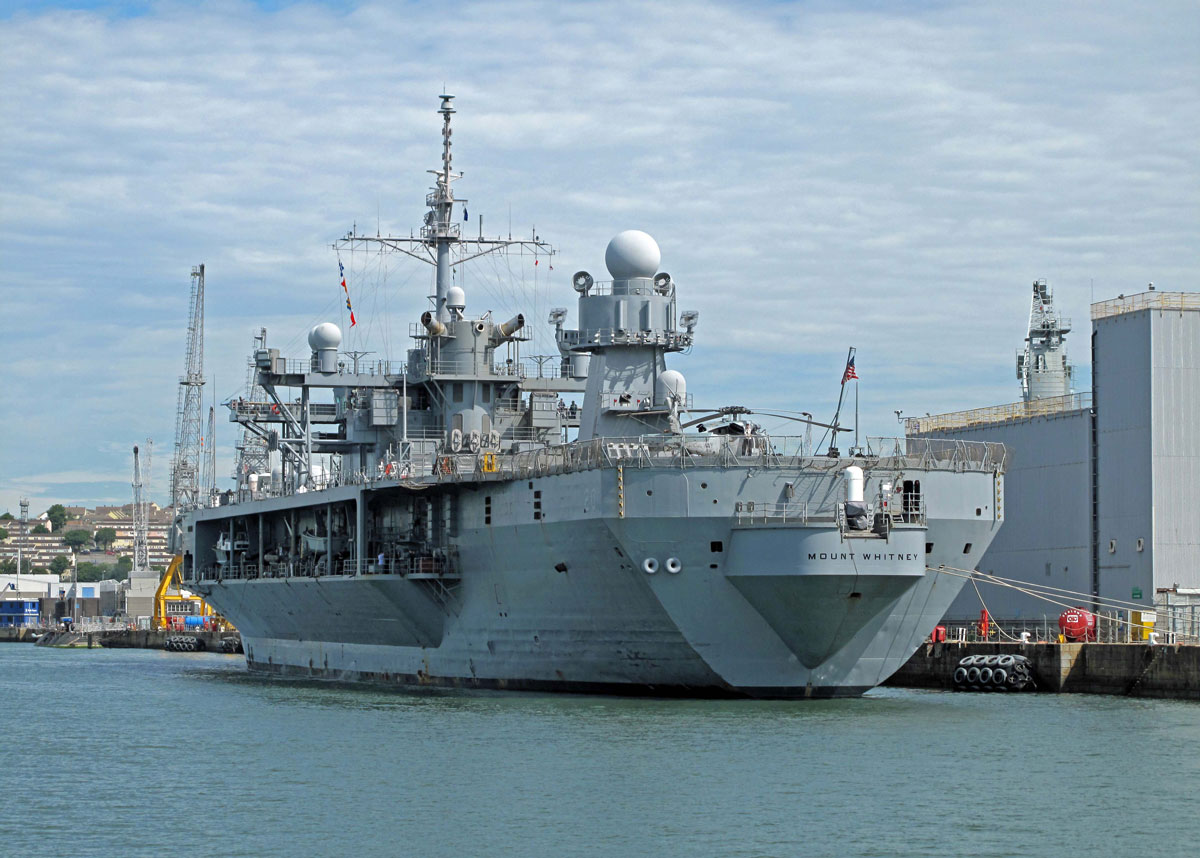
Well, you may have noticed that the featured image was of an American ship, and there were often plenty of American seaman mingling around Union Street – and I saw enough to know that they probably could 😀
Didn’t observe the ship that closely. I think most sailors behave in a similar manner. 😉😂🥴
The locals weren’t no better I can assure you – and the men could be just as bad 😂