
John McCrae's Flanders Fields
When war broke out between Europe’s imperial powers on 28th July 1914 it was to lead to one of the deadliest conflicts in human history: By the time the armistice was signed on 11th November 1918 it had affected most of the world with an estimated loss of 15-22 million military and civilian lives, plus somewhere in the order of 23 million military casualties. The exact figures will never be known, but after the war was over, instead of the Versailles Treaty ensuring that it would be the ‘War to end all Wars’, it contributed to an even more catastrophic one 25 years later.
Those who serve in and survive wars are often, quite rightly, regarded as heroes, but those survivors invariably say that the real heroes are those who didn’t come home. I count my lucky stars that I’ve never been put in that position, but when Remembrance Day comes around I’ll always buy a poppy, regardless of what some people think, because it’s not just about remembering the fallen, but also helping families who have had to endure the consequences of fighting for the freedoms that we still enjoy – but where did the idea of wearing a poppy come from?
There may well be plenty of you who already know the answer, but it wasn’t until I went to Ypres in 2002 that I came to understand the full story. Ypres, for those who aren’t familiar, is located in Flanders, the Dutch-speaking northern part of Belgium; but to be more precise it’s situated in West Flanders, an area which borders The Netherlands, France and the North-Sea coast, and it’s for this reason that the area became such a fierce battleground during the First World War.
Just for the record all my images in this post were taken in 2002 and scanned from prints, so they aren’t of the highest quality.

One day I hope to write in more detail about my visits to the First World War battlefields in France and Belgium, but for this post I just want to describe how the poppy came to be regarded as the symbol of remembrance, but to make sense of it all I want to give a brief description of why the story starts at Ypres.
Like most wars, WWI had a complex beginning and there’s no real point in explaining what they were here, but suffice it to say that tensions had been brewing throughout Europe for a number of years. During this period, alliances had been formed between the Central Powers on one side (Germany, Austria-Hungary and the Ottoman Empire) and the Allied Powers on the other (France, the UK and Russian Empire): As war progressed, other countries also became involved, but that’s another story. All it needed was a spark to light the fuse, and that spark came when the heir to the Austro-Hungarian empire, Archduke Franz Ferdinand, was assassinated in Sarajevo.
At the time of the assassination, Germany was already planning for war with the Schlieffen Plan (named after its architect, Field Marshall Alfred von Schlieffen). This involved attacking Russia and France at the same time, and as it was anticipated that Paris (which didn’t appear to be very well prepared for the conflict) would be easily overcome, the troops could then head towards the eastern front – but you know what they say about the “best-laid plans”.
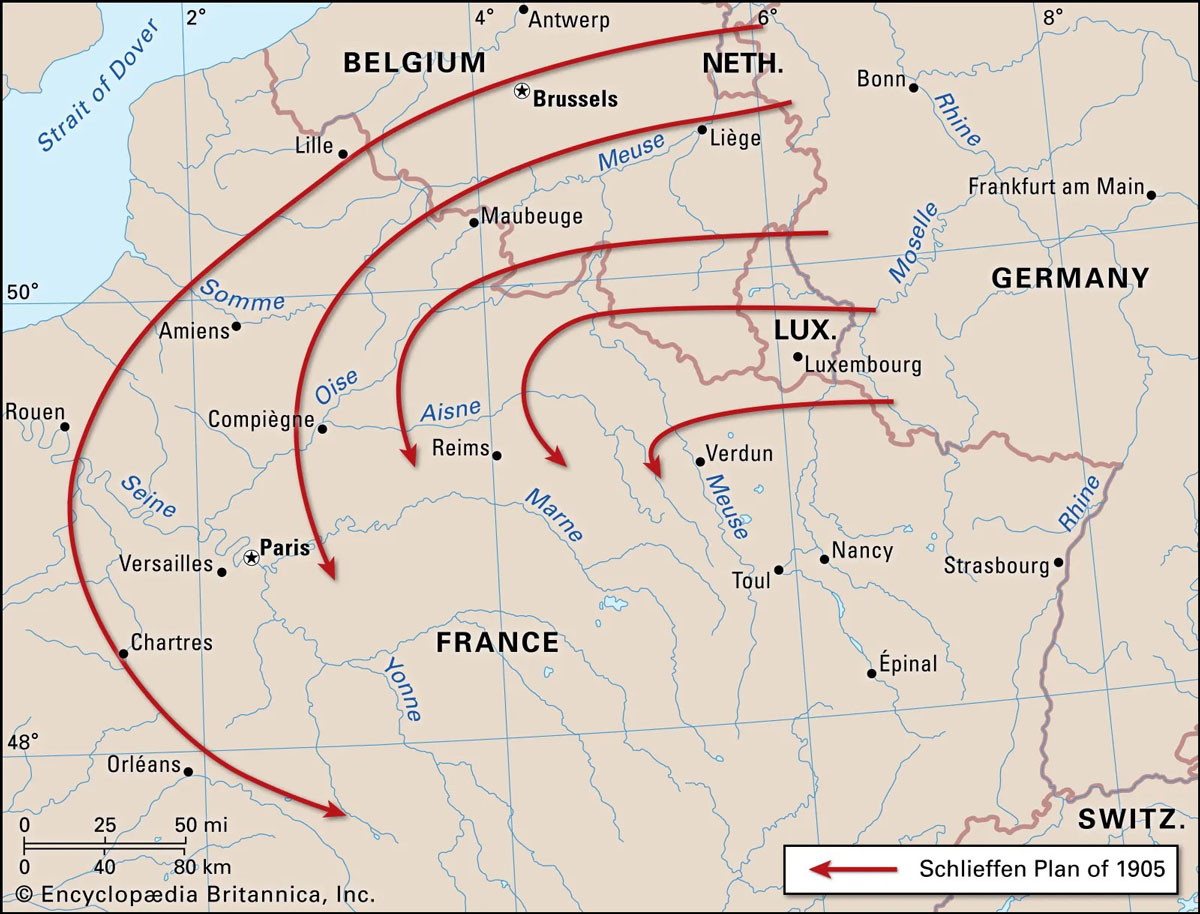
The plan involved German troops passing through neutral Belgium first, and they didn’t do it with kid gloves either, which brought Britain into the conflict by honouring its obligation to support Belgium’s neutrality as well as its alliance with France.
Several engagements between Germany, France and Britain then took place until the German advance was stopped at the River Marne before they could reach Paris. For a while, hostilities were paused, but then started up again when both sides tried to outflank each other in what became known as the Race to the Sea. Neither side won the race because it ended in stalemate at the ancient woollen town of Ypres.
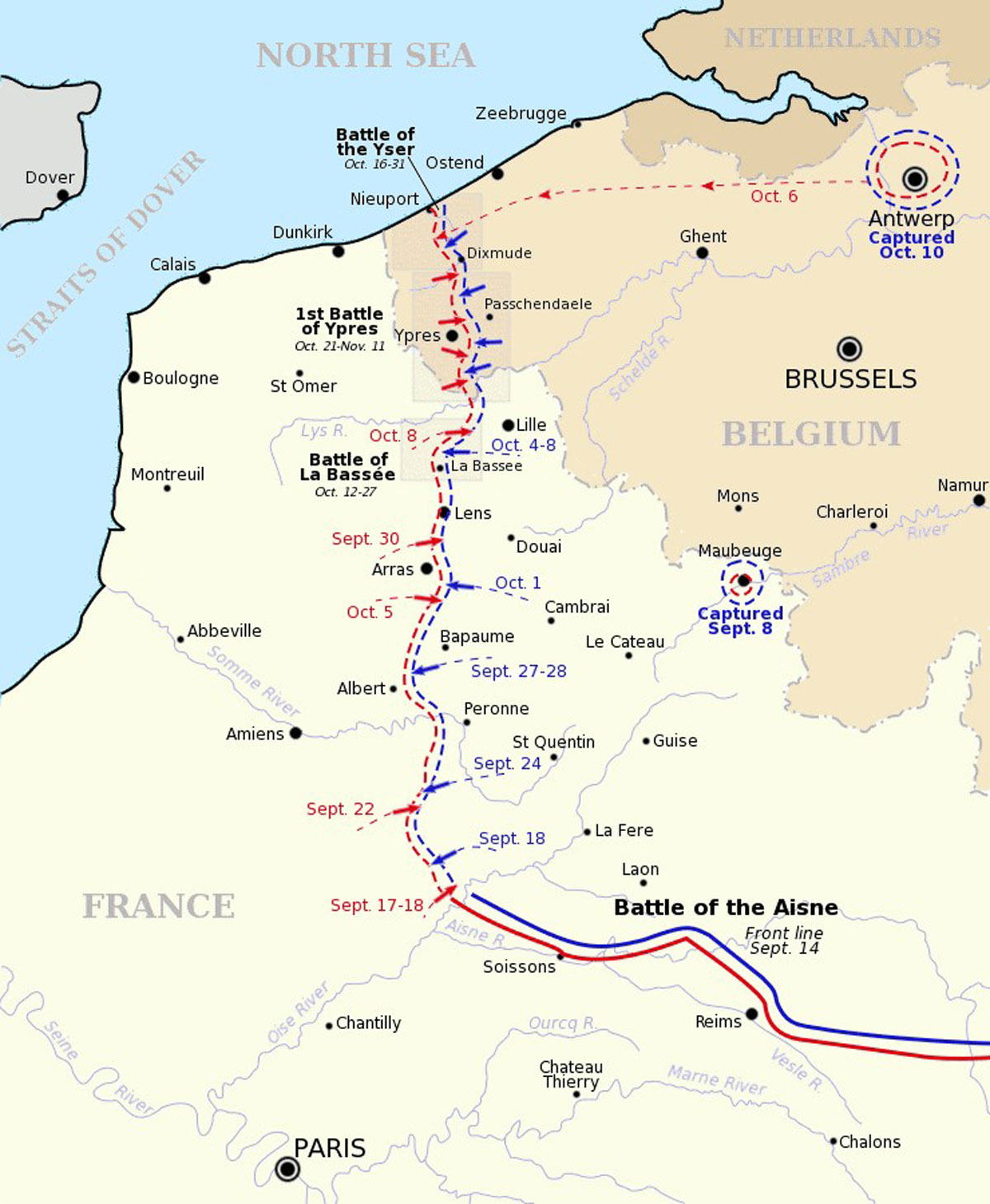
Between 19th October and 22nd November, the battle claimed more than 220,000 casualties, and it was becoming increasingly obvious that the war which was supposed to be over by Christmas had only just begun – and it was only the first of four major battles at Ypres.
The second Battle of Ypres was fought between 15th April and 25th May 1915 and is where the story of the poppies starts to unfold. When I came to Flanders I could immediately see why the landscape played such an important part in the war. The Netherlands and Belgium aren’t called the Low Countries for nothing, and as you can imagine, most of the area around Ypres is low lying, flat and wet – most, but not all. Known as the Ypres Salient, there is a series of small hill ridges that form an arc around the town, and this was where hostilities broke out again.
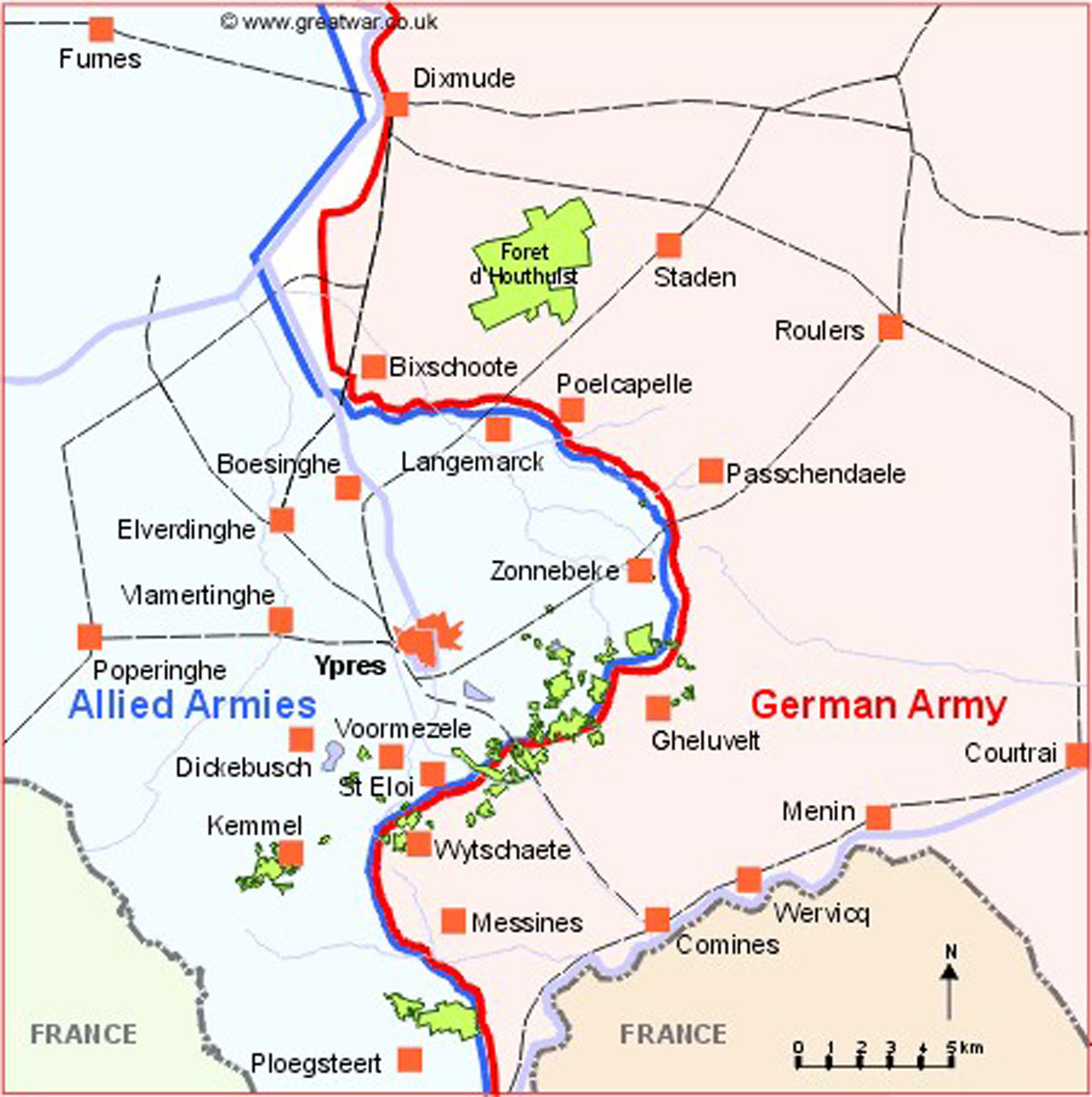
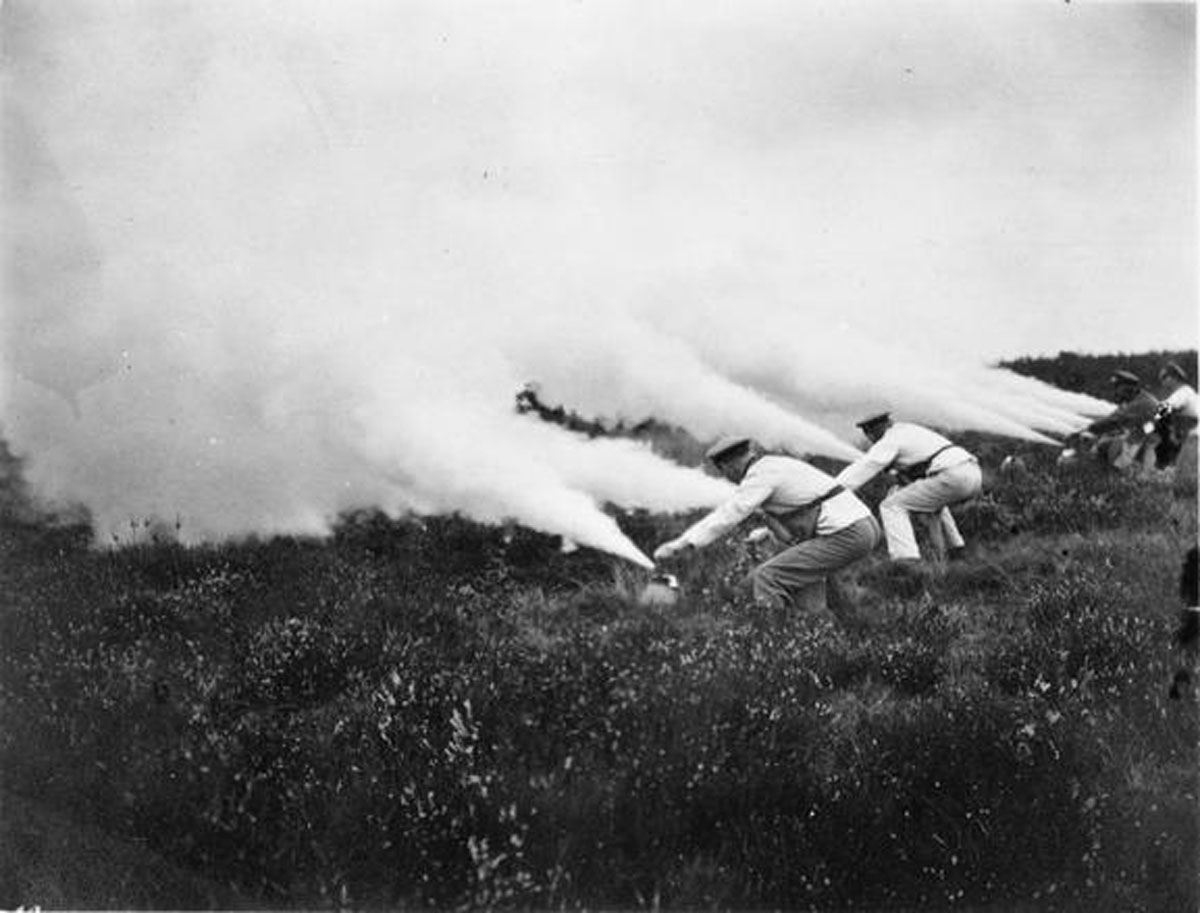
The Germans held the higher ground and planned to use it to their advantage by attempting to breach the Allied defences entrenched below. The French and British forces included men from their respective empires; the French had Moroccan and Algerian troops and the British had help from a Canadian division, but they hadn’t reckoned on being attacked by unconventional means. For the first time on the Western Front, the German 4th Army used a new and terrible weapon – chlorine gas. The first assault using the gas was on the African troops, but when the wind blew some of the gas back into the attackers’ faces they suffered from the effects too.
Lance Sergeant Elmer Cotton witnessed the effects of this first gas attack and described what happens – “a splitting headache and terrific thirst (to drink water is instant death) a knife edge of pain in the lungs and the coughing up of a greenish froth off the stomach and the lungs, ending finally in insensibility and death. The colour of the skin from white turns a greenish black and yellow, the colour protrudes and the eyes assume a glassy stare. It is a fiendish death to die.” Understandably, a gap opened up in the Allied defences, which the Germans were slow to take advantage as they were in fear of their own gas, but temporarily at least, the Canadians filled the breach by urinating onto cloths and tying them around their faces.
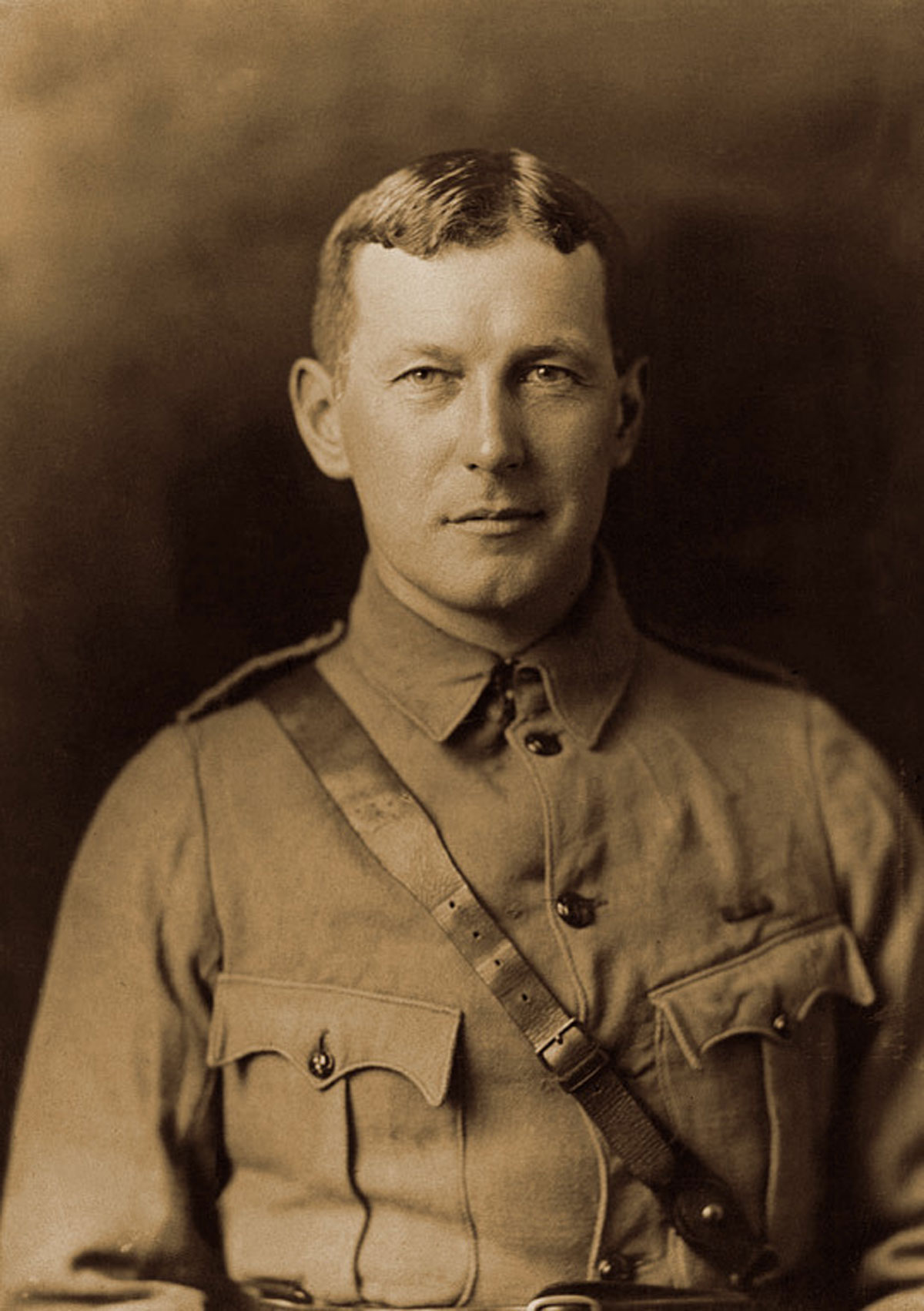
The men who suffered terrible injuries and death in the trenches are probably those we remember the most, but I’ve always wondered what it must have been like for the medics who had to tend to their injuries; it’s not a job I would have wanted to do that’s for sure, but one such person was Lieutenant-Colonel John McCrae.
John McCrae was born in Guelph, Ontario, and was 41 when Britain declared war on Germany. Along with many other Canadians, he volunteered to play his part in defending the mother country and was appointed Medical Officer and Major of the 1st Brigade, Canadian Field Artillery. He set sail for Plymouth with his much loved horse Bonfire before arriving at Ypres where he began looking after battlefield casualties at Essex Farm Dressing Station.
The dressing station was just a simple dug-out in the embankment of the Ypres canal with a corrugated roof, and next to it was a makeshift graveyard for those who McCrae couldn’t save – one of them being his friend Alexis Helmer who was blown up by a large artillery shell during an engagement at nearby St Julien on May 2nd. His remains were put into sandbags in a way that resembled some sort of human being, and after sunset, a small burial ceremony took place in which John McCrae said a few words.
Being a religious and deep-thinking man he often wrote poetry in his spare time, and the following day he scribbled down some words on a scrap of paper which helped him try to understand what was going on around him, but those words didn’t only give comfort to himself, but others too, because in December Punch Magazine got hold of the poem and published it. It became a great source of inspiration to the troops who could resonate with the way that skylarks would keep singing and poppies would keep growing while carnage was taking place all around them.

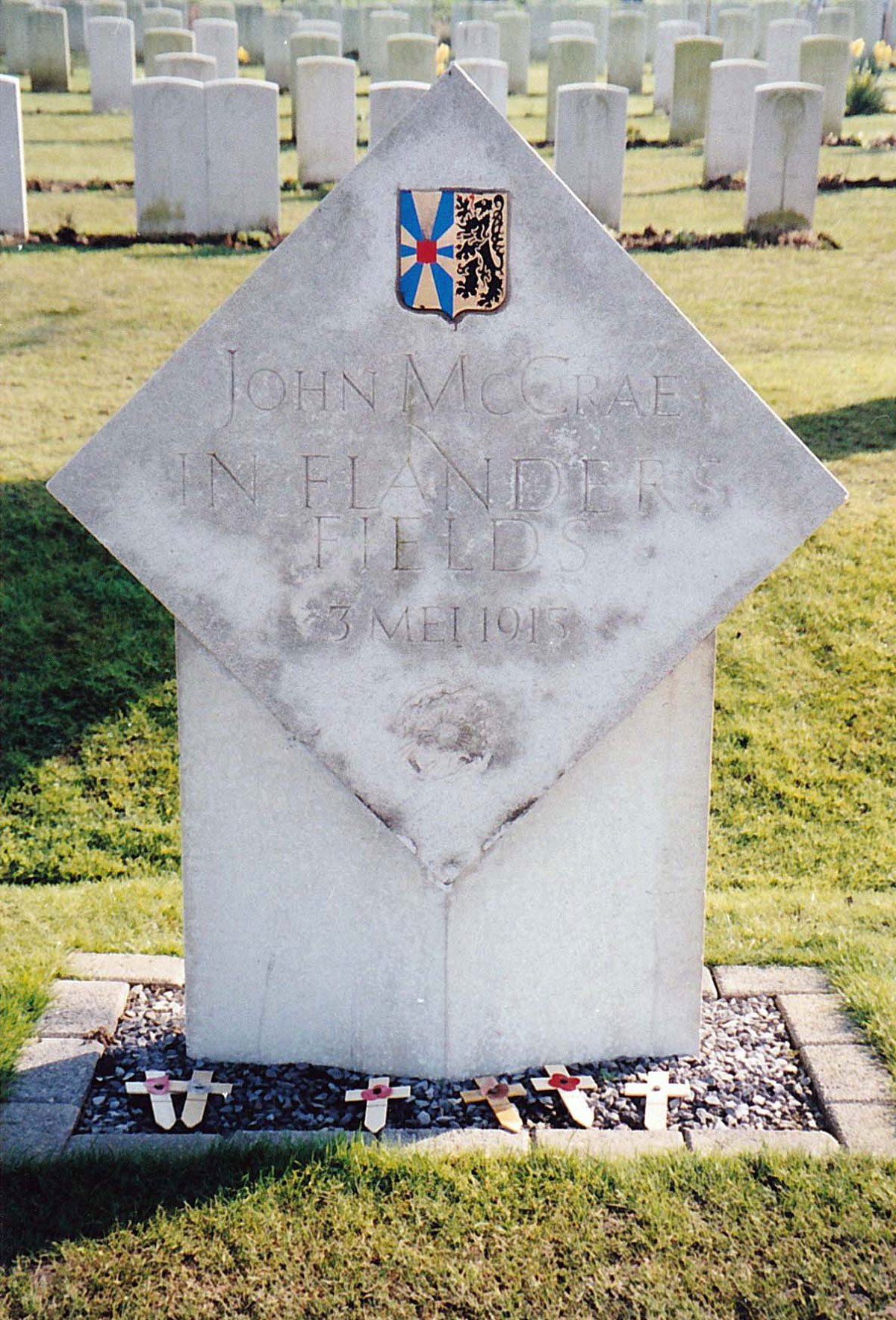
John McCrae was later transferred to Boulogne where his health deteriorated, and his last words as he was wheeled to the balcony of his room where he could see the White Cliffs of Dover were the ones in his poem “If ye break faith with us who die we shall not sleep”. He died on 28th January 1918 aged 45. His funeral cortege was followed by his ever faithful ‘Bonfire’ with his boots in the stirrups placed back to front. He was buried in Wimereux Cemetery.
In 1917 Essex Farm Dressing Station was reinforced with concrete and that’s how it looked when I came here. The cemetery is now looked after by the Commonwealth War Graves Commission and is the final resting place for 1,204 men of which 104 are unidentified – and there was even one for Valentine Strudwick, a 15 year old rifleman who lied about his age and died in one of the gas attacks.


It was an American woman, Moina Michael, who kept faith with John McCrae’s wish of remembering those who gave their lives in Flanders. She vowed to wear a poppy to remember those who served in the war, and after teaching a class of disabled servicemen in the University of Georgia she pursued the idea of selling poppies as a means of raising funds to assist disabled veterans. In 1921 the Royal British Legion ordered a million poppies from Anna Guerin in France and commissioned another 8 million to be manufactured in Britain which were sold on 11th November in the first ever poppy appeal.
POSTED – NOVEMBER 2024
Originally posted 2024-11-05 10:18:02.
Reading your post and during a visit there, left me stunned on both occasions. Human kind still has not learnt. As you mentioned, a very sobering experience.
It certainly left a mark on me Suzanne and I thought it was worth reminding people why the poppy is a significant symbol.
Hard to find words, Malc.
Visiting places like this Jo is always very sobering. I’m not religious as you probably know and you can probably guess the reason why – but I do have a strong sense of spirituality.
Interesting read Malc. I too have an interest in WWI and WWII and have visited many of the sites. The Somme in particular with those rolling farm fields always seems so calm and peaceful it’s difficult to imagine the mechanised slaughter.
It doesn’t matter how many things you’ve read, nothing quite prepares you for visiting these places does it Jim?
A perfect, a moving post.
Thank you Shey. I never forget the price these people paid for our freedom.
I thought your summation of it all was excellent. and yes because of it another war was fought.
You’re so kind!
Not at all. Calling it like it is. These young men bled away because of human greed. Those who returned home, didn’t really come home. How you could you ever come from what you’d seen? One of my grandfathers–a boy soldier–was one of the latter. Germany was then hammered by those who were also to blame. Then twenty years later there’s the utter carnage of a war that had to be fought. You have paid a moving tribue to those young men and not done the flag waving that has littered too many hsitory books.
Thank you Shey. It’s much better to try and prevent war from starting than to try and stop it after it has.
The politicians who start them never figh them do they?
Nope!
Gosh, Malc, what a moving and fascinating post. John McCrae intrigues me as a character, and it always amazes me how such beautiful poetry can come out of such sheer devastation and gore. Honestly, the more I learn about WWI the more horror seems to be unleashed. Now I know even more about why we wear my poppies with pride. Lest we forget – although I doubt we ever will.
John McCrae and other war poets such as Wilfred Owen, Siegfried Sassoon and Ivor Gurney have left an everlasting memory on my mind of what the horrors of war must have been like. Visiting the battlefields of France and Belgium have also left me with very deep and profound emotions of such events which we should avoid repeating again at all costs.
I can quite imagine how the battlefields made you feel, Malc. If only the powers that be could be affected in the same way, the world might be a better, more peaceful place today.
Very true Alli, but those who send people to war don’t have to do the fighting. The world has become so polarised we need people with strength, brains and compassion to make sure we don’t make the same mistakes again.
Indeed we do, Malc. If only we could find some!
There are such people out there I believe Alli, but unfortunately it’s not often that the cream in politics reaches the top.
No, it’s another type of substance entirely that does that. 😠
Ha Ha!. That’s the best laugh I’ve had today. Now the summer’s over I’m glad I’ve put the fan away 🪭🙂
😀 😉
I’ve always liked the poem but never knew where the idea of the poppies came from so thank you for enlightening me and for the story of John McCrae 🙂
Hopefully, buying a poppy will mean more now then Eunice 🙂
Excellent and well documented historical post, dear Malc.
It is always a real pleasure to read your articles, appreciate the information and the images. The poem you shares is always so touching to read ❣️
Thank you Luisa, and it’s always a real pleasure to read your lovely comments 💙
You are more than welcome, dear Malc!
I meant every word!🙏💖🙏
I knew the poem of course – for me it’s one of the most moving of the WW1 poems. But I wasn’t aware of those early days of the poppy appeal, especially that it actually started with just one woman in America.
Visiting the First World War battlefields was a sobering experience to say the least.
Beautiful, Malc. Happy, thanks for sharing it.
Thanks Pat. I thought if anybody would appreciate this one, you would.
Bingo on that, Malc. 👍😀👍