Tag Archives: World War I

John McCrae’s Flanders Fields

John McCrae's Flanders Fields

When war broke out between Europe’s imperial powers on 28th July 1914 it was to lead to one of the deadliest conflicts in human history: By the time the armistice was signed on 11th November 1918 it had affected most of the world with an estimated loss of 15-22 million military and civilian lives, plus somewhere in the order of 23 million military casualties. The exact figures will never be known, but after the war was over, instead of the Versailles Treaty ensuring that it would be the ‘War to end all Wars’, it contributed to an even more catastrophic one 25 years later.

Those who serve in and survive wars are often, quite rightly, regarded as heroes, but those survivors invariably say that the real heroes are those who didn’t come home. I count my lucky stars that I’ve never been put in that position, but when Remembrance Day comes around I’ll always buy a poppy, regardless of what some people think, because it’s not just about remembering the fallen, but also helping families who have had to endure the consequences of fighting for the freedoms that we still enjoy – but where did the idea of wearing a poppy come from?

There may well be plenty of you who already know the answer, but it wasn’t until I went to Ypres in 2002 that I came to understand the full story. Ypres, for those who aren’t familiar, is located in Flanders, the Dutch-speaking northern part of Belgium; but to be more precise it’s situated in West Flanders, an area which borders The Netherlands, France and the North-Sea coast, and it’s for this reason that the area became such a fierce battleground during the First World War.

Just for the record all my images in this post were taken in 2002 and scanned from prints, so they aren’t of the highest quality.

Continue reading

Originally posted 2024-11-05 10:18:02.

The First World War Battlefields of France and Belgium – A Short Slideshow of Remembrance

The First World War Battlefields of France and Belgium - A short Slideshow of Remembrance

Here’s a short slideshow I cobbled together several years ago of some pictures I took around the Somme Battlefields (France) and Ypres (Belgium). As You can see they were taken with a cheap pocket camera, but I deliberately blurred the second picture as I didn’t want the gravestone to represent any particular person.


Continue reading

Originally posted 2019-11-02 14:30:18.

The Tower of London Pt 5 – Blood Swept Land and Seas of Red

The Tower of London Pt 5 - Blood Swept Land and Seas of Red

To commemorate the centenary of the outbreak of World War I the Tower of London created an art installation called ‘Blood Swept Land and Seas of Red’.

From July to November 2014, the moat around the tower was covered with 888,246 ceramic poppies, one for each of the British and Commonwealth personnel who were killed in the ‘War to end all Wars’.

The creator was Paul Cummins, with assistance from designer Tom Piper, and the idea was to sell all the poppies for £25 each with the proceeds going to service charities.

The poppies were hand made in Cummins’ factory in Derbyshire, where the unknown man who coined the words of the installation came from. In his will he wrote the words “The blood swept land and seas of red, where angels fear to tread”.

Continue reading

Originally posted 2019-01-22 16:14:01.

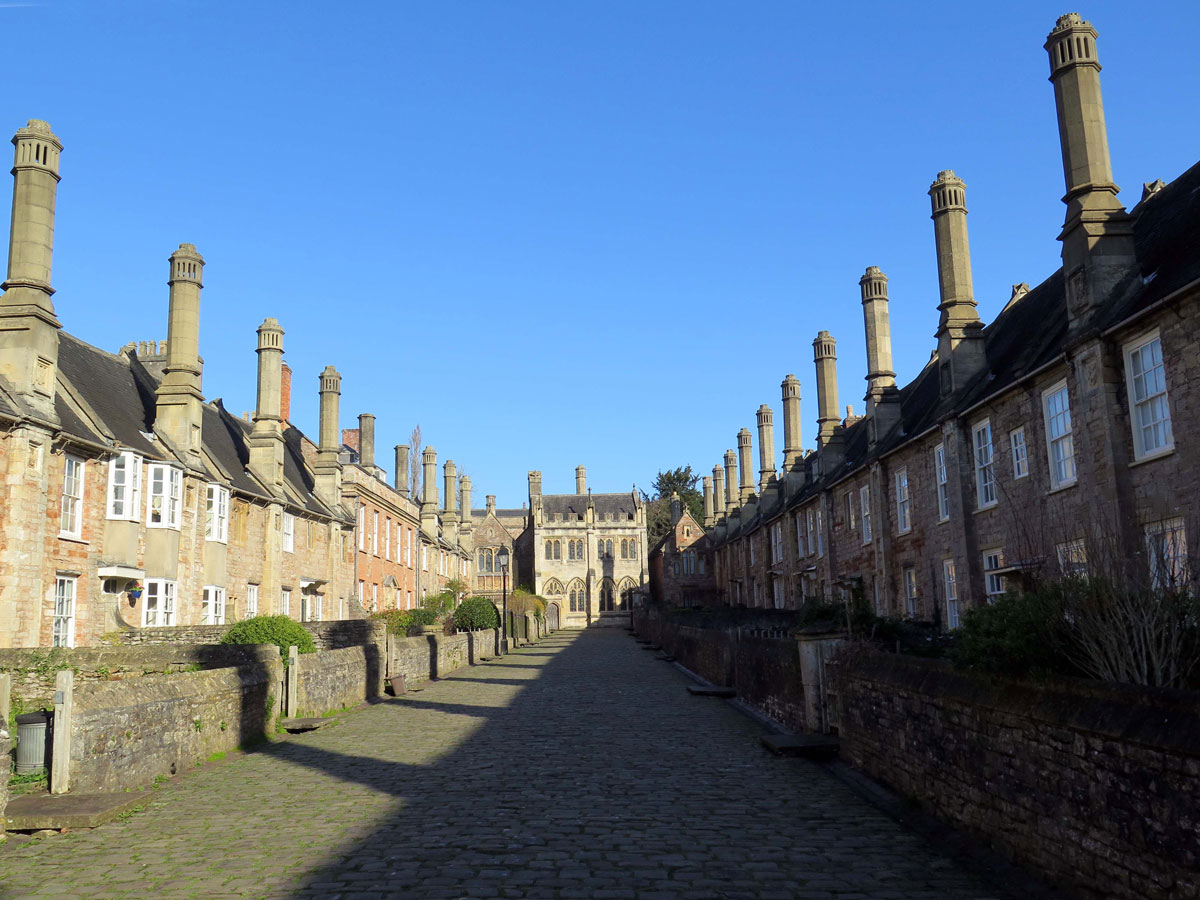
Wells – Vicars’ Close and the Last Fighting Tommy

Wells - Vicars' Close and the Last Fighting Tommy

My final post on the city of Wells ends at Cathedral Green, and in particular, the famous Vicars’ Close. This isn’t going to be a lengthy post, but I’m not the sort of person who’ll condense something into a few words when a thousand will do, so what is a vicar exactly?

I think those of us who have been brought up in a country where Christianity is the main religion will regard a vicar much the same way as we do a priest, but the word in actual fact comes from the Latin Vicarius meaning substitute, and in medieval Wells a vicar was someone who deputized for the canons in providing music for the church while the cleric leaders were occupied with their other business.

Continue reading

Originally posted 2025-11-02 15:45:05.

Plymouth Hoe

Plymouth Hoe

The Hoe is one of the first places people head for on their first visit to Plymouth – and for good reason. This large open public space has one of the most fantastic views of any city in the country.

The views stretch out across The Breakwater and Plymouth Sound into the English Channel, and from Devon’s South Hams coastline in the east to Cornwall’s Rame Head in the west.

‘Hoe’ is an old Anglo-Saxon word meaning ‘High Ground’, and although it isn’t that high above sea level it still affords commanding views, such as those that can be had from the colonnaded Belvedere near West Hoe.

Built on the site of a previous camera obscura, it was completed in 1891 at the end of a decade that saw the Hoe change from farmland to a city park.

Below it is a former bull ring that is now a memorial garden for various veterans’ associations from WW2 onwards.

Continue reading

Originally posted 2019-02-13 15:43:00.