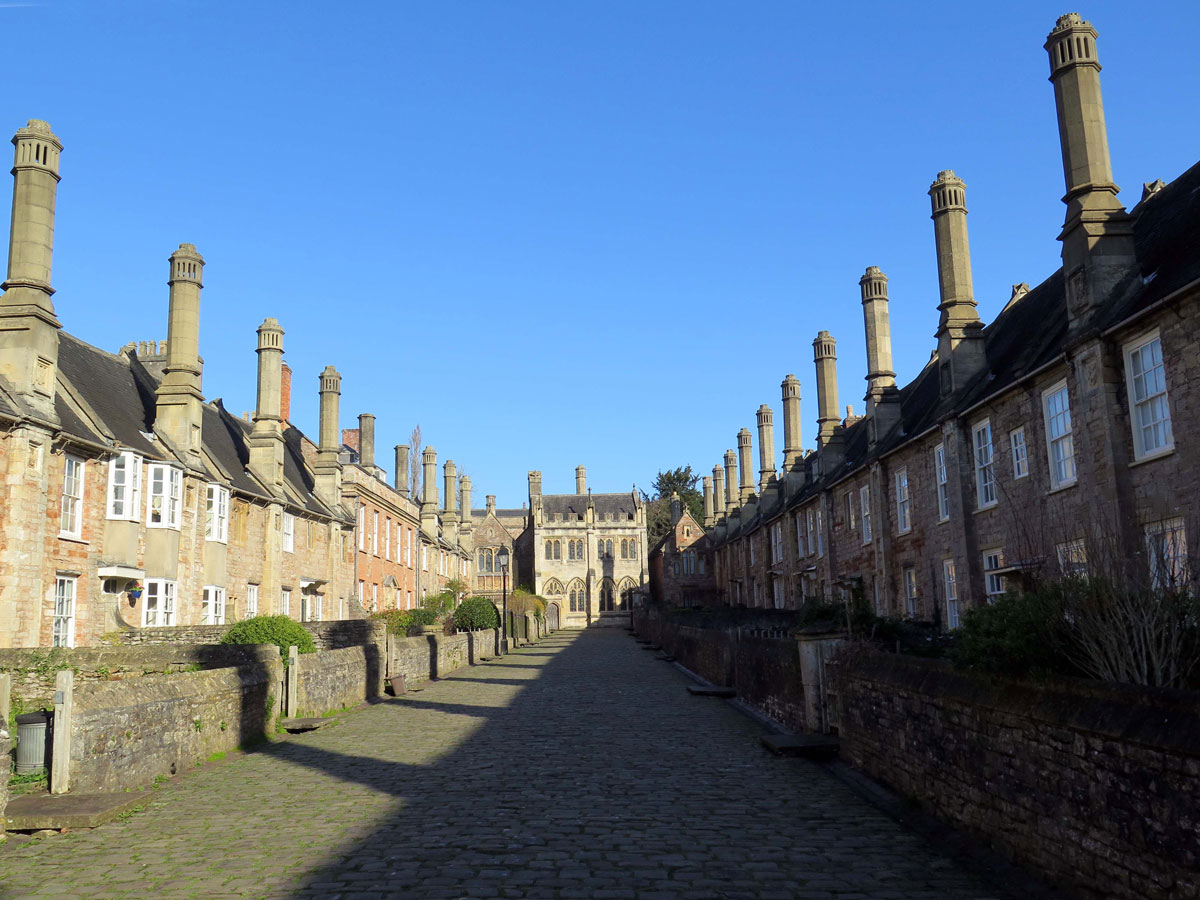
Wells - Vicars' Close and the Last Fighting Tommy
My final post on the city of Wells ends at Cathedral Green, and in particular, the famous Vicars’ Close. This isn’t going to be a lengthy post, but I’m not the sort of person who’ll condense something into a few words when a thousand will do, so what is a vicar exactly?
I think those of us who have been brought up in a country where Christianity is the main religion will regard a vicar much the same way as we do a priest, but the word in actual fact comes from the Latin Vicarius meaning substitute, and in medieval Wells a vicar was someone who deputized for the canons in providing music for the church while the cleric leaders were occupied with their other business.
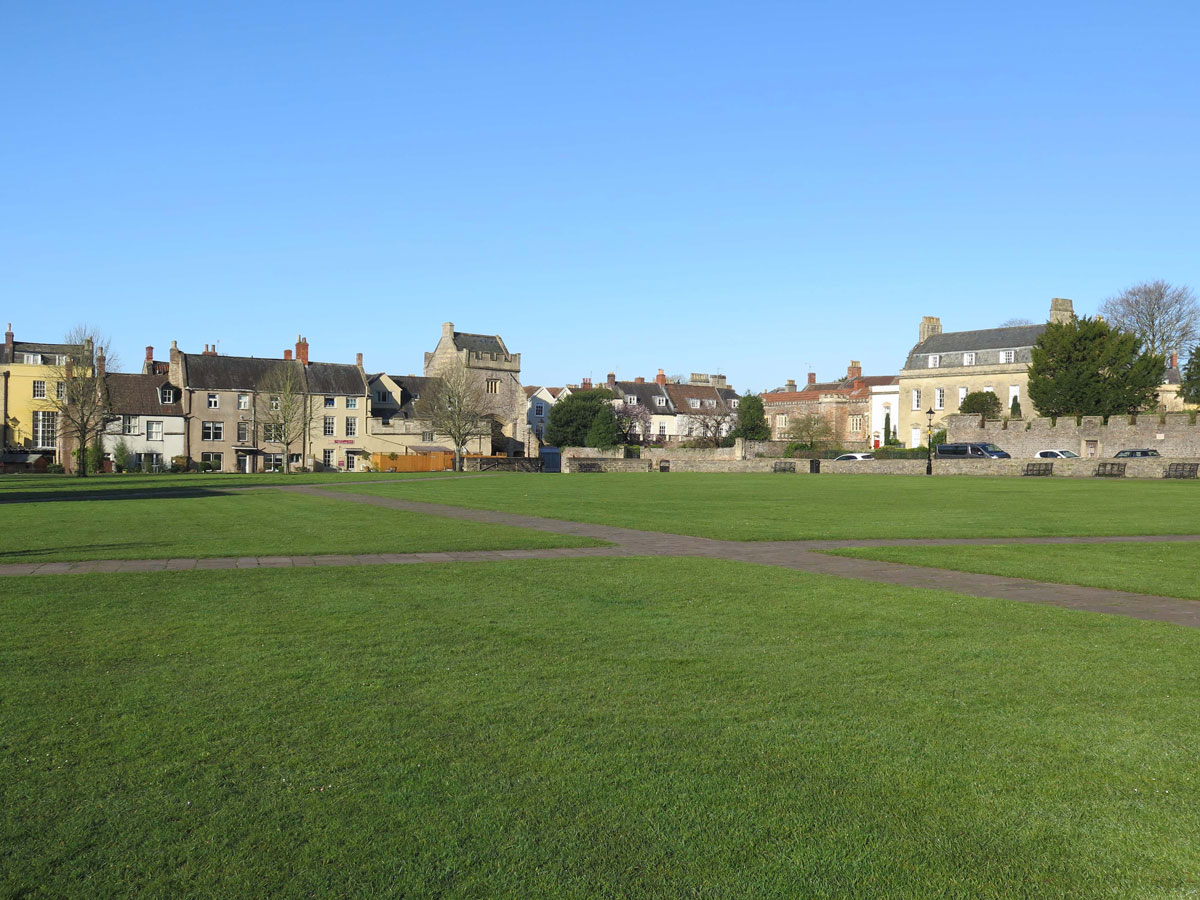
Music has always been an important part of church life, and since the 12th century, the men who sang in the choir at Wells were known as the Vicars’ Choral – and this is how Vicars’ Close came about. It was in 1348 when Bishop Ralph of Shrewsbury formed a vicars’ college and built a hall where they could conduct their business and gather together in a communal dining area, but that wasn’t all, he also provided each of them with a house.

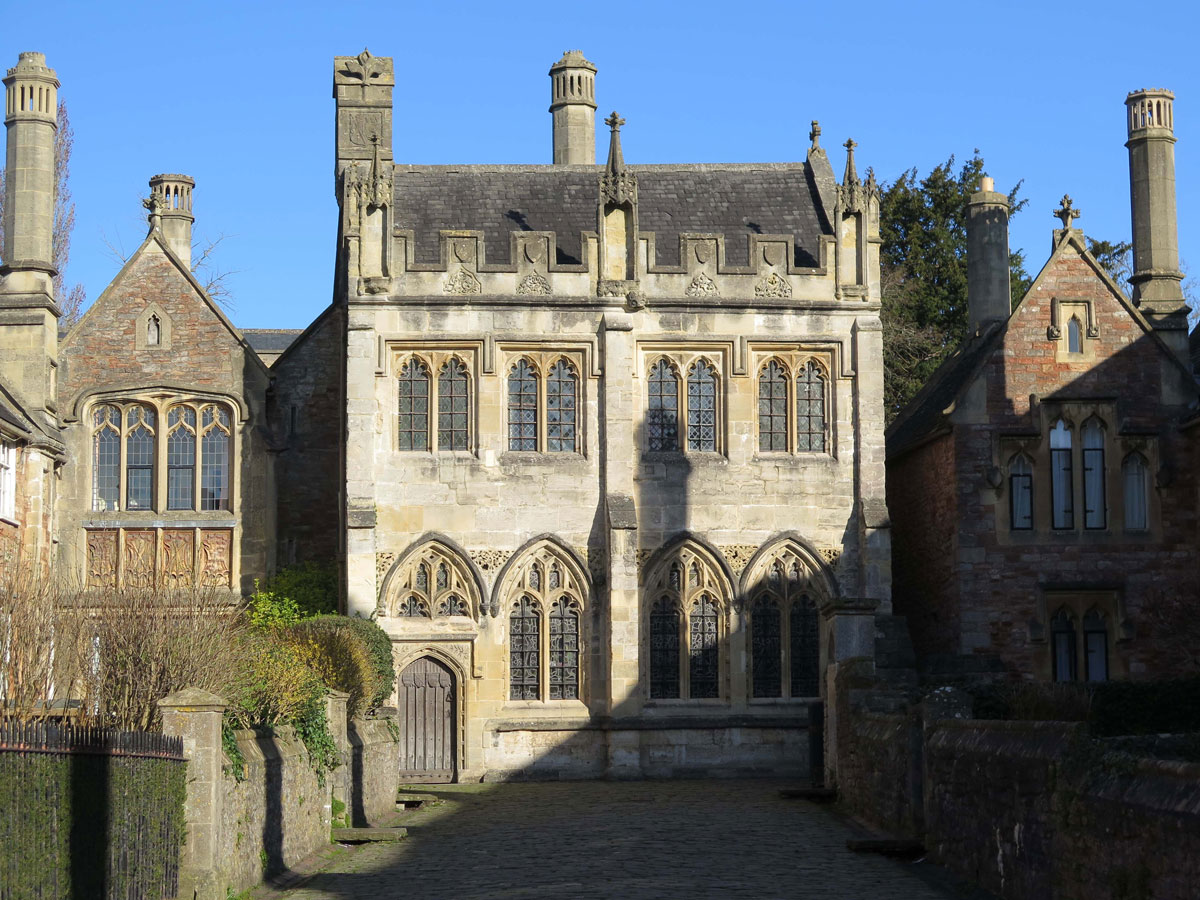
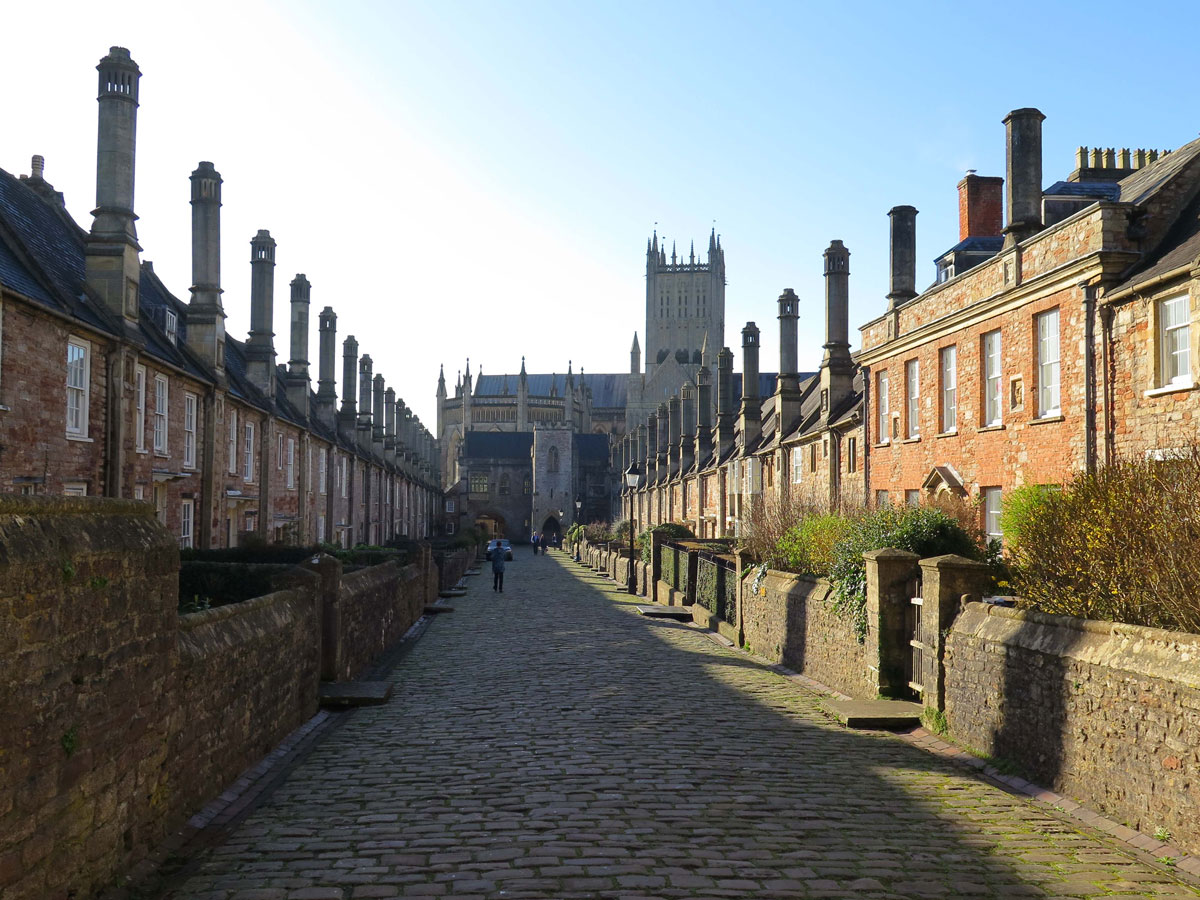
Originally there were 42 small houses forming an enclosed quadrangle, with the Vicars’ Hall near the Cathedral and a chapel and library at the opposite end. Building began in 1363 and the last house was finished in 1412, with the chapel and library completing the cul de sac in the 1420s. Vicars’ Close is often quoted as the oldest residential street in Europe with its original buildings still intact.
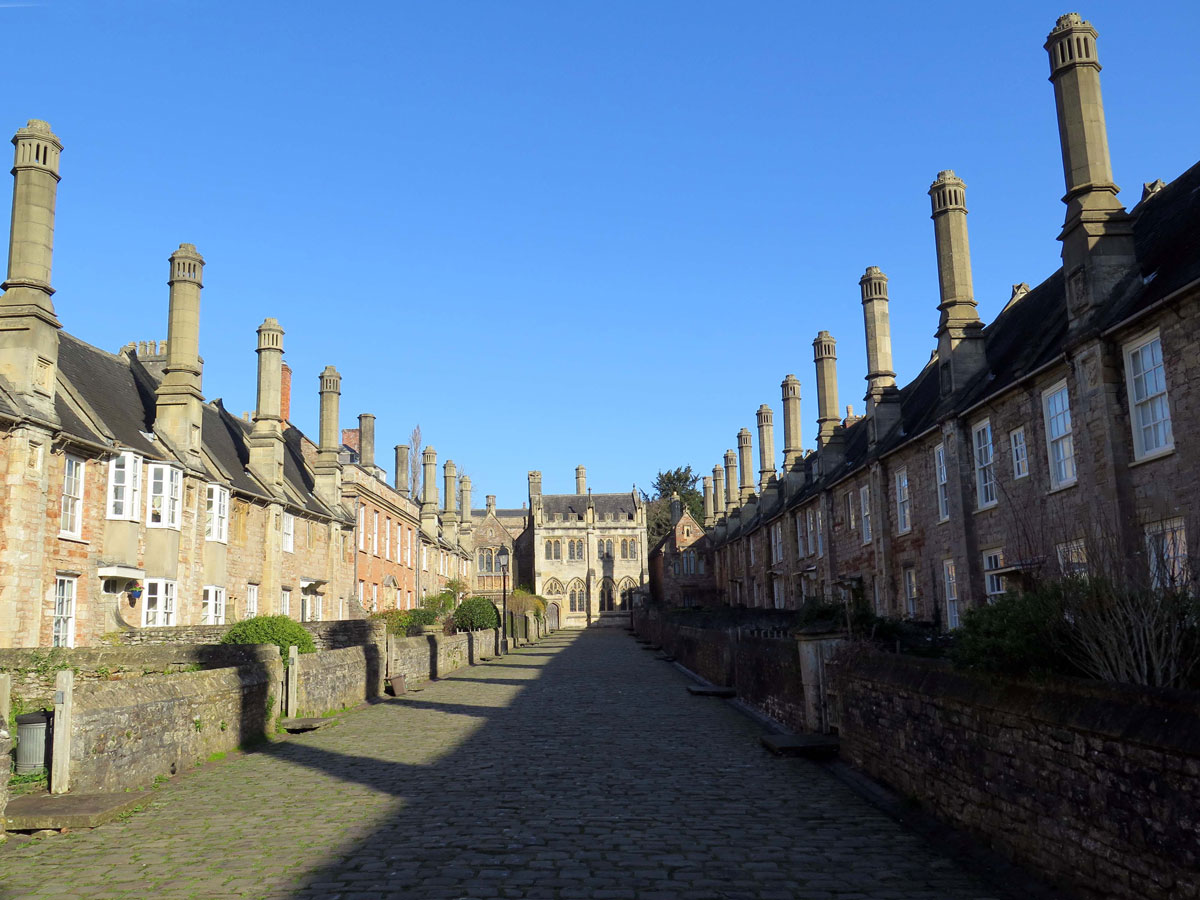
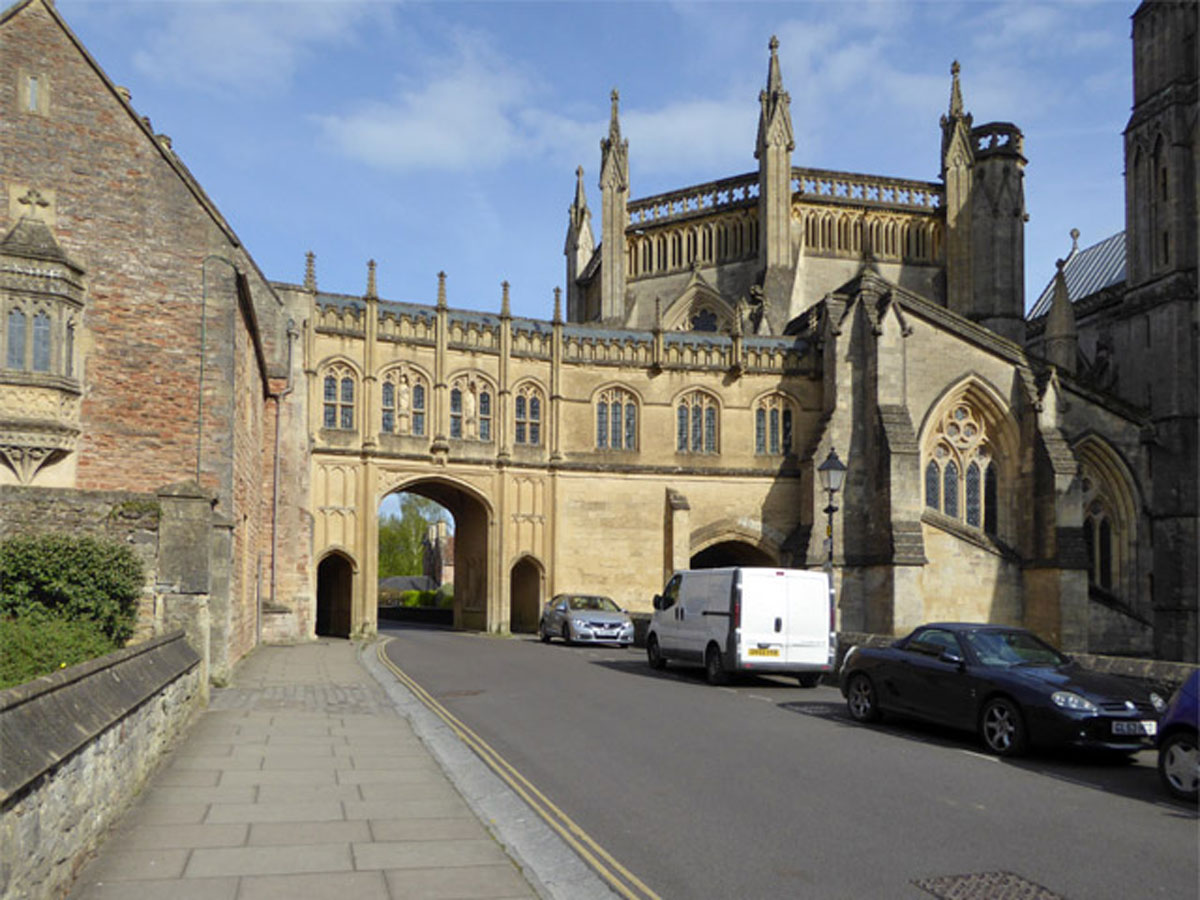
In 1459, Bishop Beckynton built a bridge across the road to link the Vicars’ Hall with the cathedral, but when I was last here it wasn’t possible to photograph Chain Gate (not Chain Bridge as some people mistakenly call it) because filming for the White Princess was taking place, so I’ve borrowed an image from the internet to show you what I’m talking about.
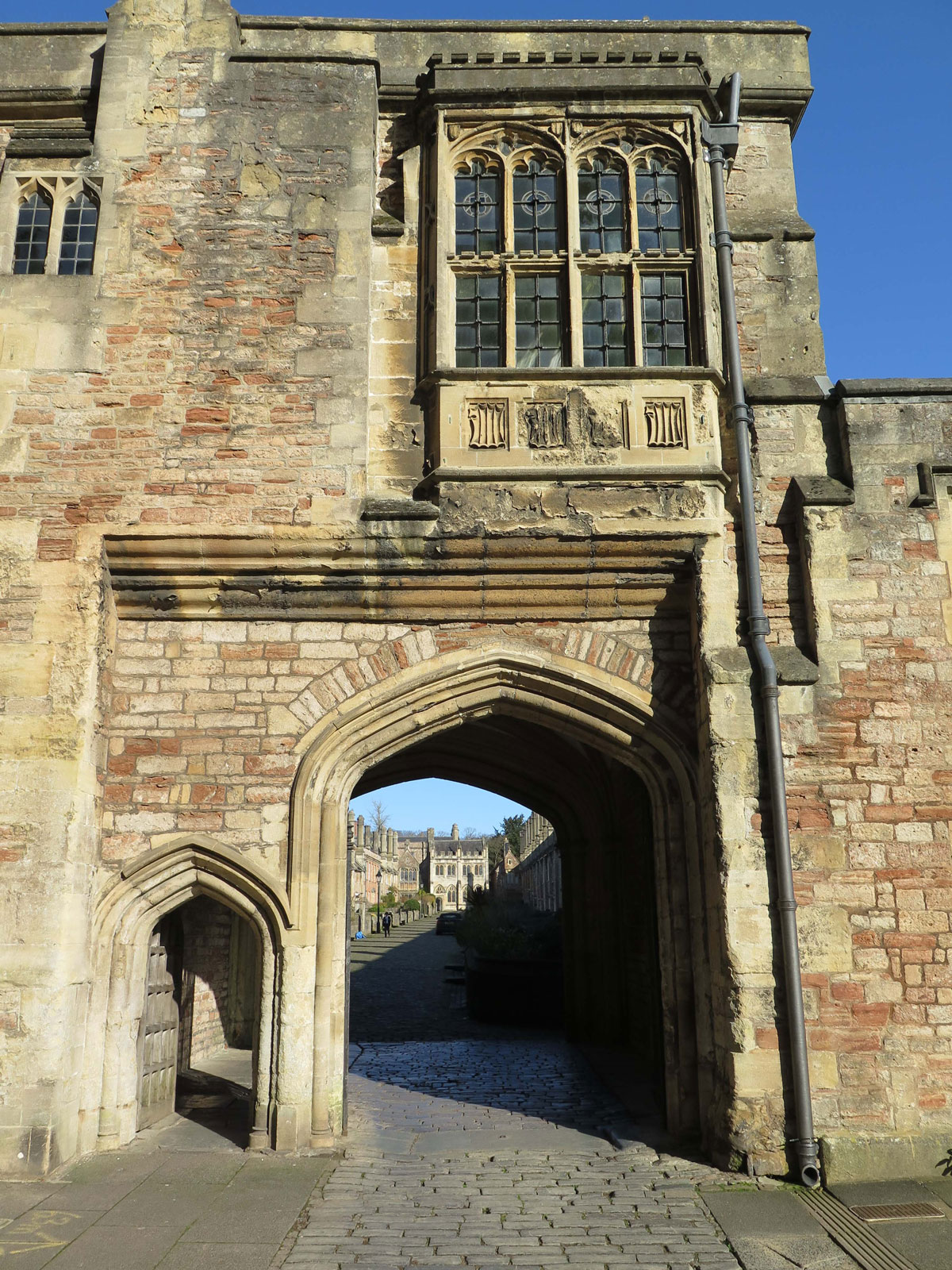
Those of you who read the previous post may remember that I said that access isn’t normally available to the general public between the cathedral and Vicars’ Hall, so to visit the Close, you’ll need to walk from Cathedral Green around the outside of the West Front into St Andrew Street, and then walk through the archway under the Vicars’ Hall.

Although the street looks much the same as it did when it was built, there have been a few modifications since. The gardens were added when Bishop Beckynton left much of his estate to the Vicars’ Choral, and the religious turmoil of the 16th century saw Elizabeth I reduce the number of vicars to 20, but at the same time, allowing them to marry. As a consequence, the inside of the houses were enlarged to meet the new set of circumstances and today the number of houses has been reduced to 27. The only other notable change is Shrewsbury House at No 16 which replaced the original buildings that were damaged in a fire in the 19th century
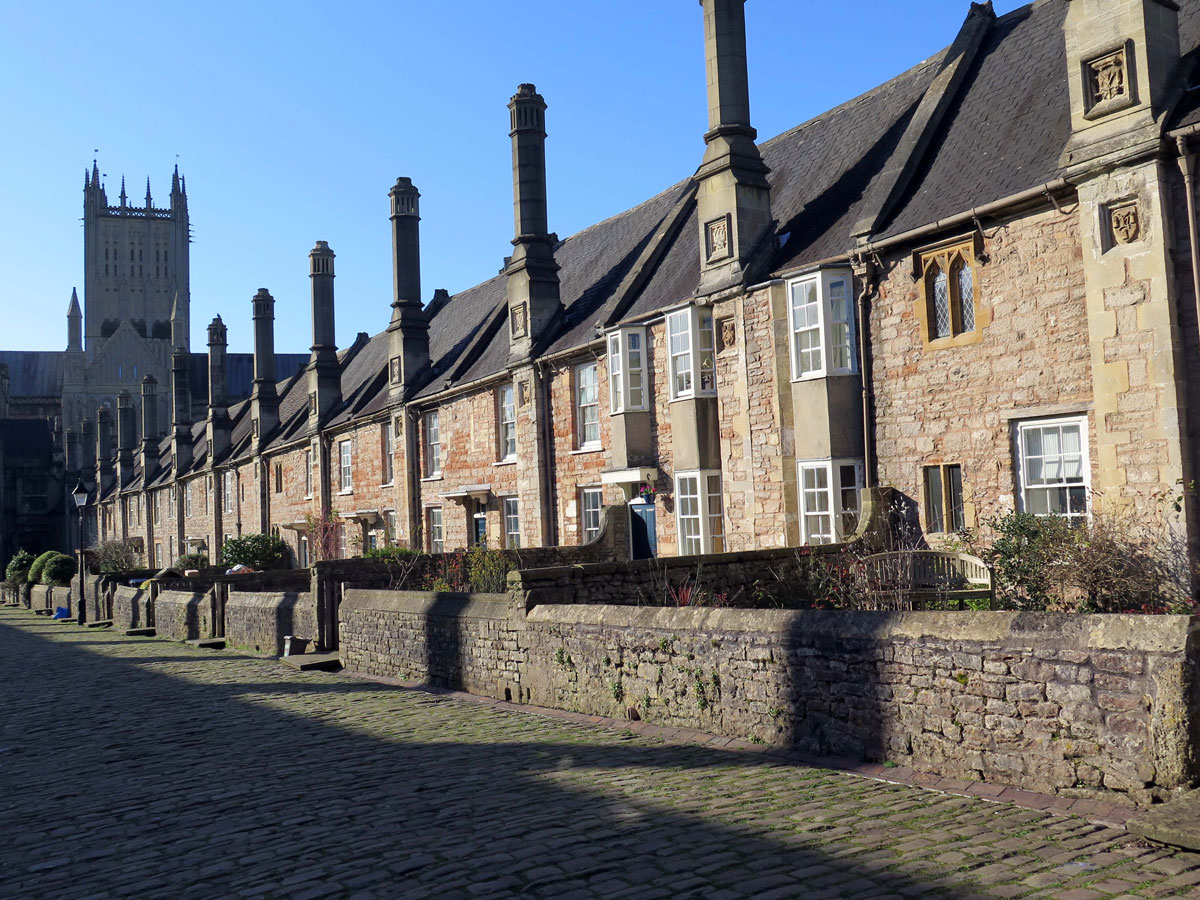
Members of the Vicars’ Choral still live in the Close and still sing every day during term time with the choristers from Wells Cathedral School. The Cathedral School has links going back to 909 AD and is supposedly the fifth oldest school in the country: It’s also supposed to be one of the nation’s top five specialist music schools and whether these claims can be substantiated I’m not sure, but whichever way you look at it, it’s got quite a pedigree. One snippet of useless information that did surprise me though was that one of its previous scholars was Michael Eavis of Worthy Farm and Glastonbury Festival fame. The school occupies several old buildings on the northern side of Cathedral Green, with the Music School centred around the former 15th century house of the Archdeacon next to the Wells and Mendip Museum.
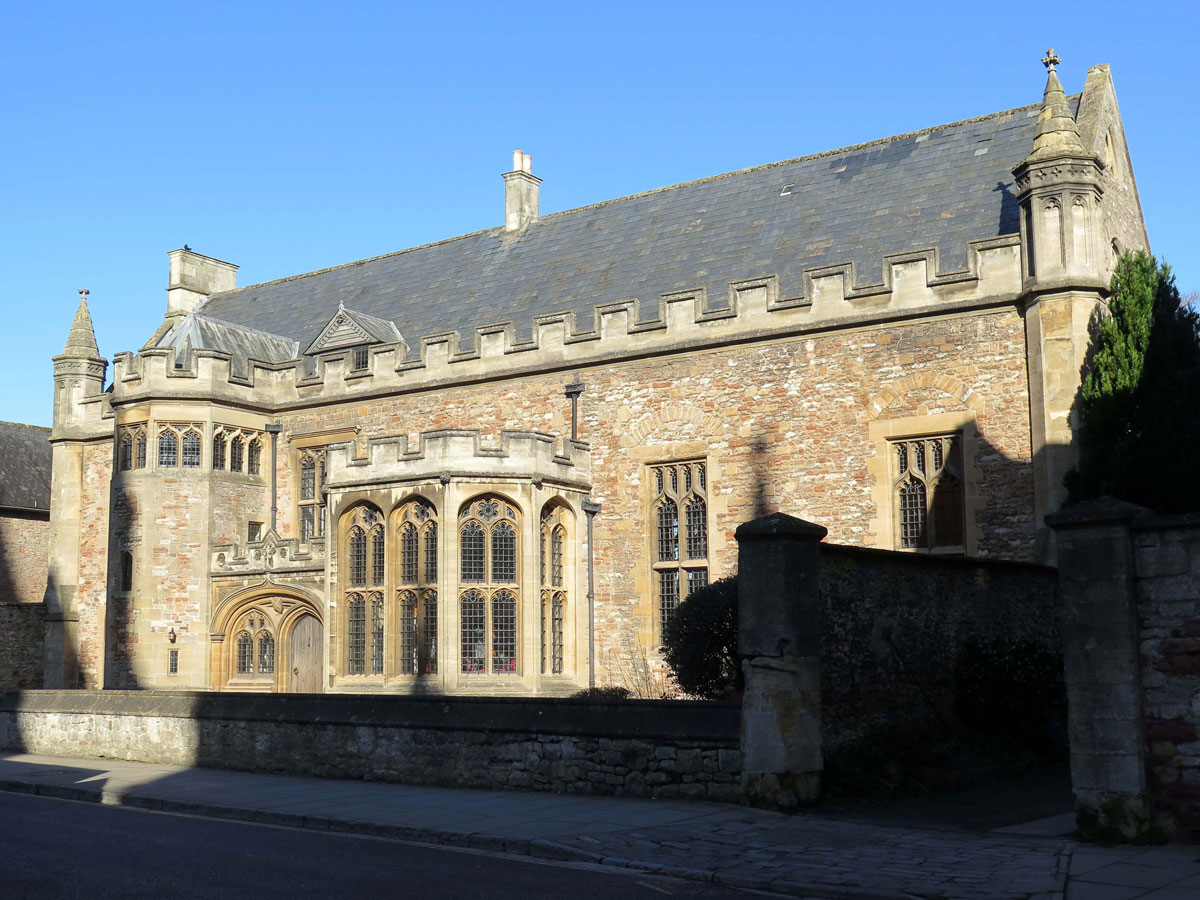
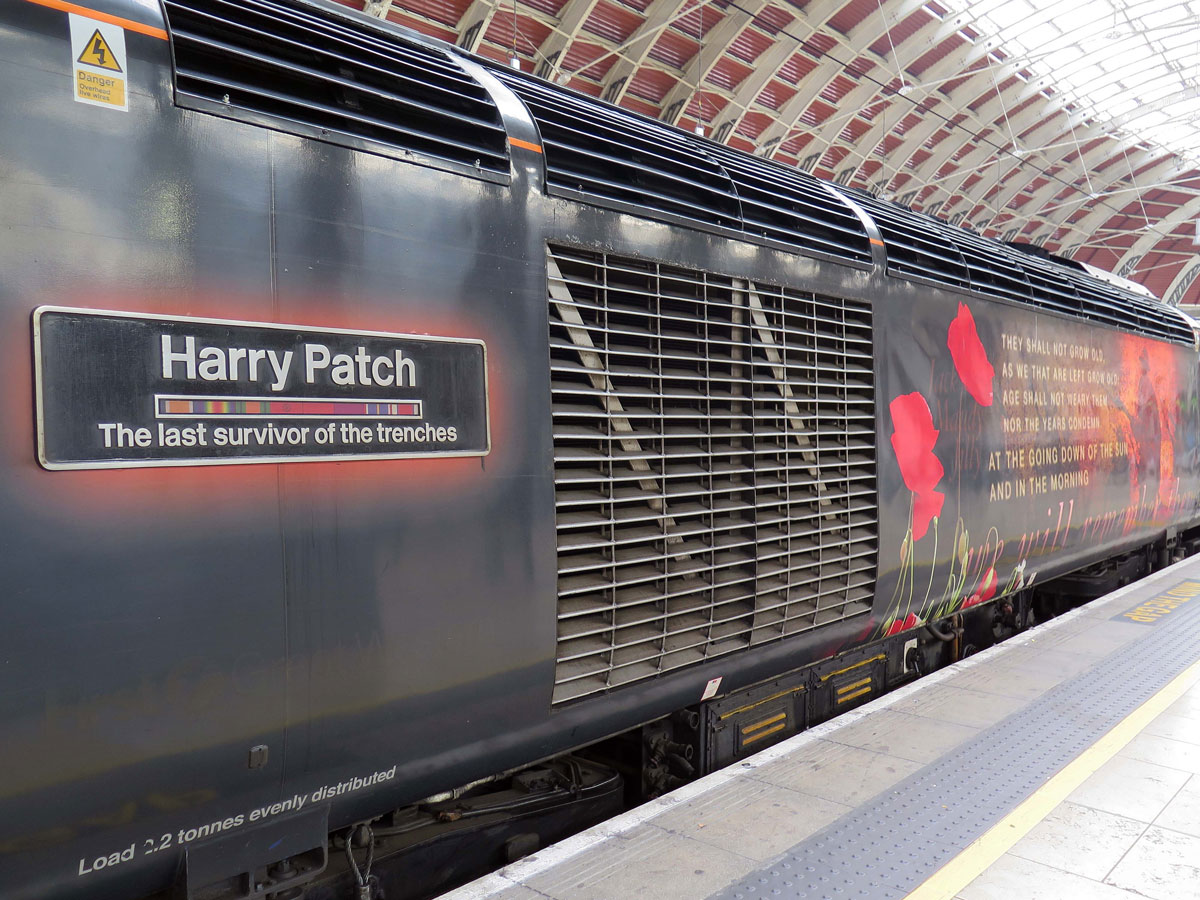
It’s no accident that I’m finishing my posts on Wells at Cathedral Green, because, as we rapidly approach Armistice Day, it seems an appropriate time to talk about Harry Patch – The Last Fighting Tommy, whose memorial stands on the lawn in front of the museum.
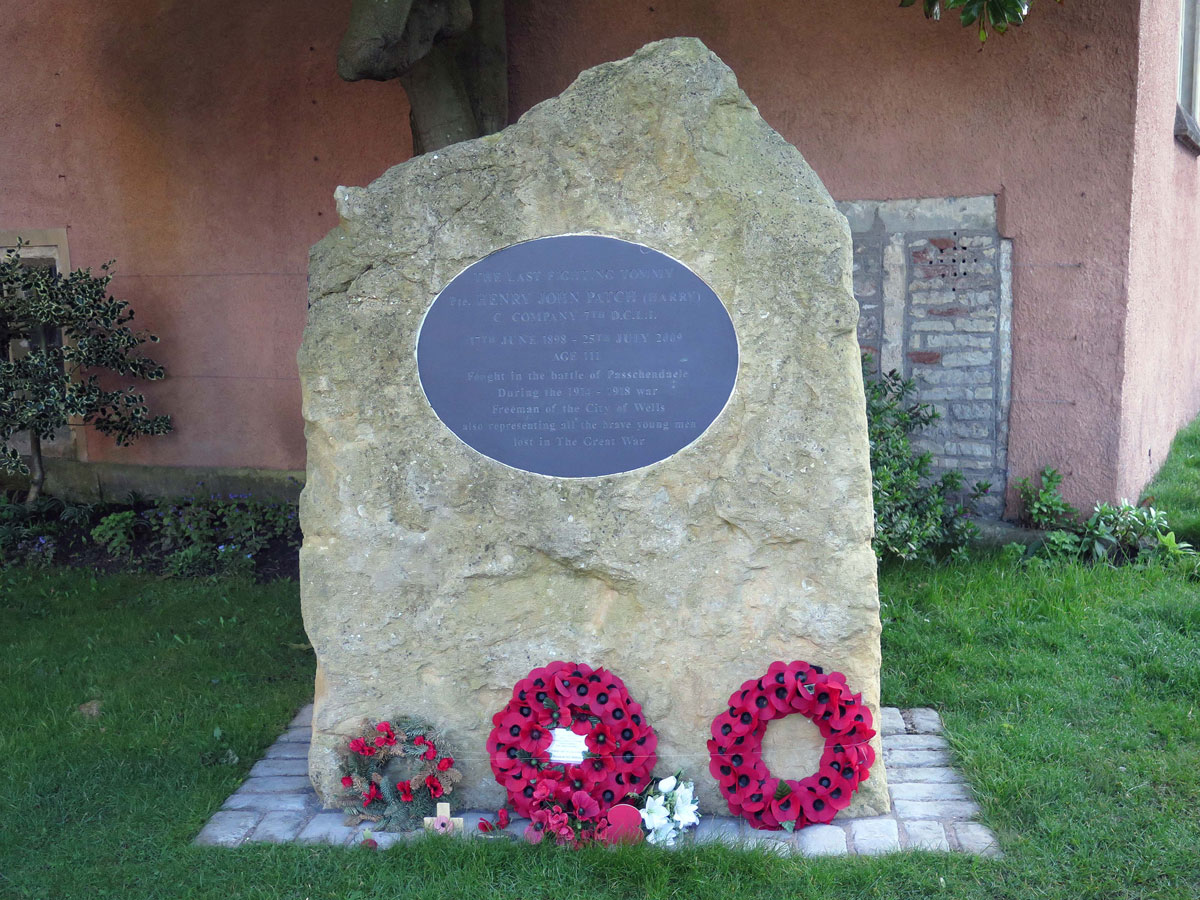
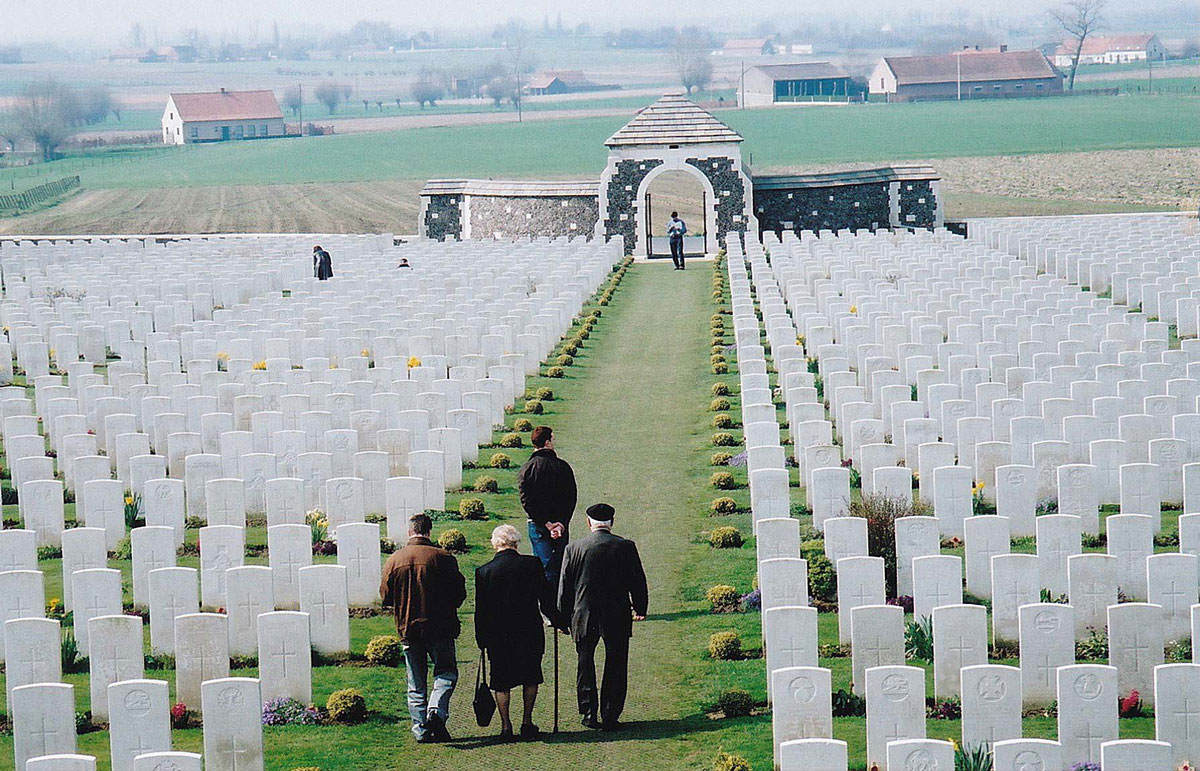
Harry was born in Combe Down near Bath, and like many of his generation, was conscripted into the British army and sent to fight at the Western Front. During the Battle of Passchendaele he was badly injured by an enemy shell, but he was one of the lucky ones as three of his group alongside him were killed. The date, 22nd September 1917, became his own personal Remembrance Day.
Like so many others who have experienced similar circumstances, it must have made him feel guilty about why he survived and they didn’t, because for many years he refused point blank to talk about it. In 1998 though, his opinion changed when the BBC approached him about appearing in a documentary called ‘Veterans’. The programme was about a dwindling number of servicemen who fought in the War to end all Wars, and Harry suddenly realised that it was an opportunity to make his feelings known about why people like him were sent to war by politicians for what he believed was no justifiable reason.
I remember being captivated by the programme and felt just the same when he appeared in the 2003 television series ‘World War I in Colour’ where he said “if any man tells you he went over the top and wasn’t scared, he’s a damned liar”. He also went on to recount the time he came face to face with a German soldier who he couldn’t bring himself to kill. Instead he shot him in the shoulder, above the knee and then the ankle, allowing both of them to survive.
In 2004, at the age of 106, Harry went back to Ypres to shake the hand of Charles Kuentz, Germany’s last surviving veteran from the war, and like Harry said, “Why should the British government call me up and take me out to a battlefield to shoot a man I never knew, whose language I couldn’t speak?” The meeting was featured in ‘The Last Tommy’ a 3 part BBC series about the last surviving veterans, where Charles exchanged a tin of Alsatian biscuits for a bottle of Somerset Cider from Harry. The TV series can still be viewed on YouTube, should you wish to see it.
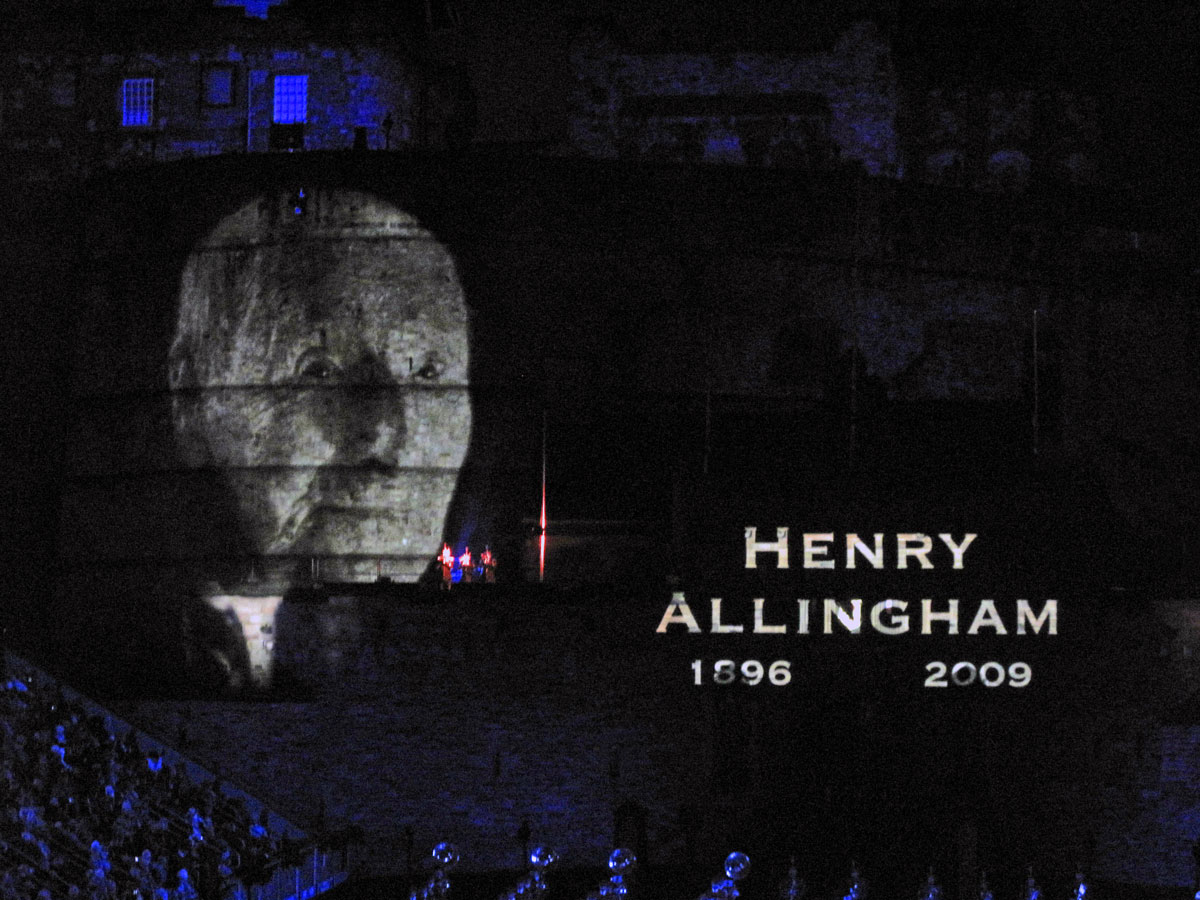
Harry Patch officially became The Last Fighting Tommy after the death of Henry Allingham on July 18th 2009. Henry was in fact two years older than Harry and a founder member of the RAF, but it meant that his death left Harry, not only the Last fighting Tommy, but also the oldest man in Europe and the third oldest in the world – but it wasn’t to be for long, because just one week later on July 25th, Harry finally fought his last battle at Fletcher House Nursing Home in Wells after 111 years and 38 days.
The funeral of Henry John Patch was held in Wells Cathedral on 6th August where the bells were rung 111 times in his honour. His coffin was carried by members of the Rifles (successors to his regiment, the Cornwall Light Infantry) and was accompanied by two private soldiers from each of the armies of Belgium, France and Germany, but on Harry’s instructions, no guns were allowed at the funeral, not even ceremonial ones. He was buried at St Michael’s Church, Monkton Combe near his parents and brother.
Private Harry Patch never regarded himself as anything special, but many people did, because being the last British soldier to survive the trenches of the Western Front, he also became a reminder of those who didn’t.
POSTED – NOVEMBER 2025
Originally posted 2025-11-02 15:45:05.
That’s a beautiful tribute to Harry Patch. He was a very brave man. His words need to be heard loud and clear by so many in power today.
As a serviceman’s wife Helen you would know how important it is to remember the sacrifice our armed forces make to protect our country. Thank you for your lovely comment and thank you for your contribution to the safety of our nation.
Lovely photos of the Vicars Close and good explanations of its history, but its your tribute to Harry Patch that makes this post stand out. You’ve done him proud with your account of his life and his reflections on the war.
Thank you Sarah. I’m glad Harry found the courage to reveal his thoughts.I would have loved my Dad to tell me about his experiences in WWII but unfortunately he never did.
What a post Malc. Bravo. Truly. You did Harry Patch proud.
Thank you Shey. Writing about his story is much easier than fighting it. I’m glad he decided to recount his tales because so many many men went to their graves without anyone knowing what they went through.
I know. None of the men who left for that war came home actually. There is a name on the Newport On Tay War memorial and I did a blog about it way back, Peer Black, His is the only name in the country to be on a WW1 war memorial despite being at dawn, because the people of his home ‘town’ refused to let it be left off.
I’ve looked him up. Shell shock was seen as an act of cowardice by army officers back then but the foot soldiers saw it differently, and so did the good people of Newport-on-Tay thankfully. Do you still have access to that blog?
I do indeed… No matter the posts I remove in order to keep space I would never remove this one. Down some cold field in a world outspoken. Peter Black and the Newport War Memorial https://shehannemoore.wordpress.com/2014/11/11/down-some-cold-field-in-a-world-outspoken-peter-black-and-the-newport-war-memorial/
I used to edit a local magazine and I came across the story first of all in a book about the names on the memorial by a journalist, Gordon Small, who worked for DC Thomsons and who lived just along the road from us in Newport, so I’d taken it to get the woman Mill to review it.
I was wondering who she was. I’ve just checked out Google Maps and Peter Black’s name can still be seen on it.
I’d no idea that there was a personal connection when I asked her would she mind. The journalist did a lot of local things like that, requiring quite a bit of research. He’s another excellent one about the Lengs who were actually the publishing dynasty in Dundee. We all know it is Thomsons but . . . . . And yes the name is there cos I photographed to accompany that review at the time. .
What a story, Malc. I’m not knowledgeable about that war, other than to know that it was a horror I could not imagine subjecting my son to. It’s unbelievable the sacrifices that were made. Harry sounds like a remarkable man xx
He was Jo, as were so many others.
A post both interesting and poignant Malc. I’ve just read up about Harry Patch – a man well deserving of that memorial.
Thank you Eunice. To me he represented that generation and I followed his story both on TV and in his autobiography.