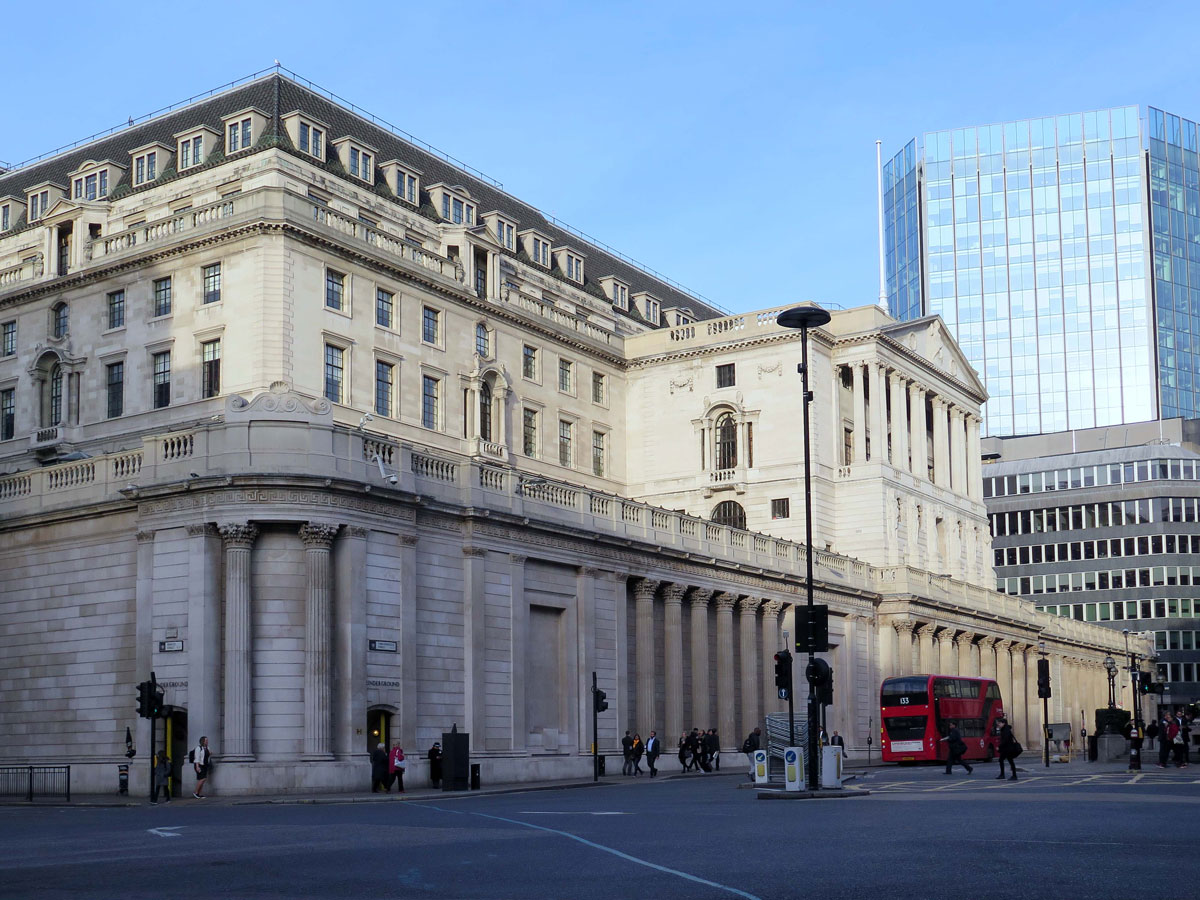
The Bank of England Museum
There are many powerful institutions in the City of London’s Financial District, but none more so than the Bank of England. Now before you skip this article thinking that it’s going to be another one of those boring Easymalc ramblings, I promise I won’t go on about Fiscal Policies or Quantitative Easing. For a start if I understood any of it I would be sipping a Pina Colada in the Cayman Islands or somewhere instead of struggling to see which lasts the longest – my meagre savings, or me. Anyway, back to the Bank of England.
I don’t imagine too many people know, or even care, about what the Bank of England actually does, but the museum, which is free to go in by the way, will explain its beginnings, the role it plays, and even how Quantitative Easing works (sorry, I couldn’t resist it). To be honest it’s not only educational, but interesting as well – or at least I thought so.

The entrance is on the east side of the bank in Bartholomew Lane, and as you would expect, you have to go through the usual security checks. As I emptied my pockets I threw what little money I had on me all over the floor – as though the bank hasn’t got enough money of its own! At least the security staff were honest and they helped me pick it up.
There’s a replica of the Bank’s Stock Office and some interactive exhibits that might interest the kids as well as adults, but for someone like me I was interested to know how and why the bank started out.
It seems that when the British navy lost to the French in 1690, the British government under King William III didn’t have enough money to build another fleet, and so the Governor and Company of the Bank of England was formed to raise the cash.
Its first premises were rented space in the Mercer’s Hall in 1694 before moving to the Grocer’s Hall the following year. The bank was privately owned by stockholders right from the outset (until it was nationalised in 1946), and its role as the English government’s banker meant that it required premises it could call its own, and so in 1734 it moved to a site on Threadneedle St that belonged to its first governor, Sir John Houblon.
As the bank grew in importance, so did the building, and in 1788 Sir John Soane was appointed ‘Architect and Surveyor’ to the bank, a post he held until he saw its completion in 1828. It must have been some building, because by the 1920’s when it needed to be enlarged, the original buildings were knocked down one by one, an act described by the architectural expert, Sir Nicholaus Pevsner, as the “greatest architectural crime, in the city of London, of the twentieth century”. Only the curtain wall remains intact.

As you walk through the museum you’ll see the original cartoon by James Gillray of the Old Lady of Threadneedle St. This cartoon, published in 1797 shows the Prime Minister of the day, William Pitt the Younger, wooing an old lady who represents the Bank of England. She’s dressed in a gown made of new £1 and £2 notes that were introduced to replace the gold coins that were in current circulation, and sat on a chest which represents the Bank’s reserves. Pitt was keen to get his hands on the Old Lady’s assets, but the she was having none of it.

The focal point of the museum is the Rotunda, where other interesting snippets of the bank’s history can be followed. For example, one of its employees was Kenneth Grahame, the author of Wind in the Willows, who worked here for thirty years, but the thing that no doubt most people want to do is have a go at touching and lifting up a real gold bar. The first time I came in here to try it several years ago it seemed much easier than it did this time: Whether that’s because the bank has made it harder, or I’m getting weaker, I’m not sure.


Following the suggested route means that the next gallery after the rotunda brings you to some of the earliest English banknotes still in existence. The earliest paper money was really just a receipt for deposits left with goldsmiths for safekeeping, and over time it was easier to exchange the receipts rather than the gold itself, and is one of the reasons that one of the features on a banknote is “The Bank of England promises to pay the bearer on demand the sum of….”.
You can see an original hand-written banknote from 1660, a 1 million pound note and even look at the current polymer notes under a microscope to see all the security features up close.
The Bank of England has a monopoly on the issue of banknotes in England and Wales (but not Scotland and N. Ireland), and since 1998 is responsible for setting interest rates independently of any government involvement.
You may be wondering whether there’s any gold around here other than in the museum. Well you may like to know that the Gold Vault, which is accessed by 3 ft long keys, holds gold reserves, not just for the UK, but around thirty other countries as well. In total, it amounts to some 400,000 gold bars weighing something like 5,134 tons and worth approximately £142 Billion. Now where’s that Pina Colada?


Originally posted 2018-07-02 18:41:41.
Of course I knew it would NEVER be a boring old thing about banking. You just had so many other leaping out posts. I knew this would be a wodnerfully historically detailed but in the way you always write and it is.
Thank you for those kind words Shey. They mean a lot – and I’m glad that you found the post worth reading.
It is an excellent post. Truly. If you’ve written it I will read it. There you go.
Thanks Shey. Best keep writing then 😊
Nae slackin’ noo.
LOL