
The Road to Skye
There are two main roads that lead to Skye – the A830 to Mallaig (which involves catching the ferry to Armadale), and the A87 to the Skye Bridge, which is the route I’ll be covering here.
The A87 begins at Invergarry near to Loch Oich in the Great Glen and continues for another 99 miles to Uig on Skye, where you can catch the ferry out to Harris on the Outer Hebrides. The section between Invergarry and the Skye Bridge is about half that distance and takes around an hour without stops – but I’ll eat my Tam O’Shanter if you manage to do it without stopping. Better still, why not let me face the elements, and carry you away towards the Misty Isle, while you sit back with a wee dram and enjoy the scenery from the comfort of your armchair.
Prayer for St. Symin by Jennifer Parsignault
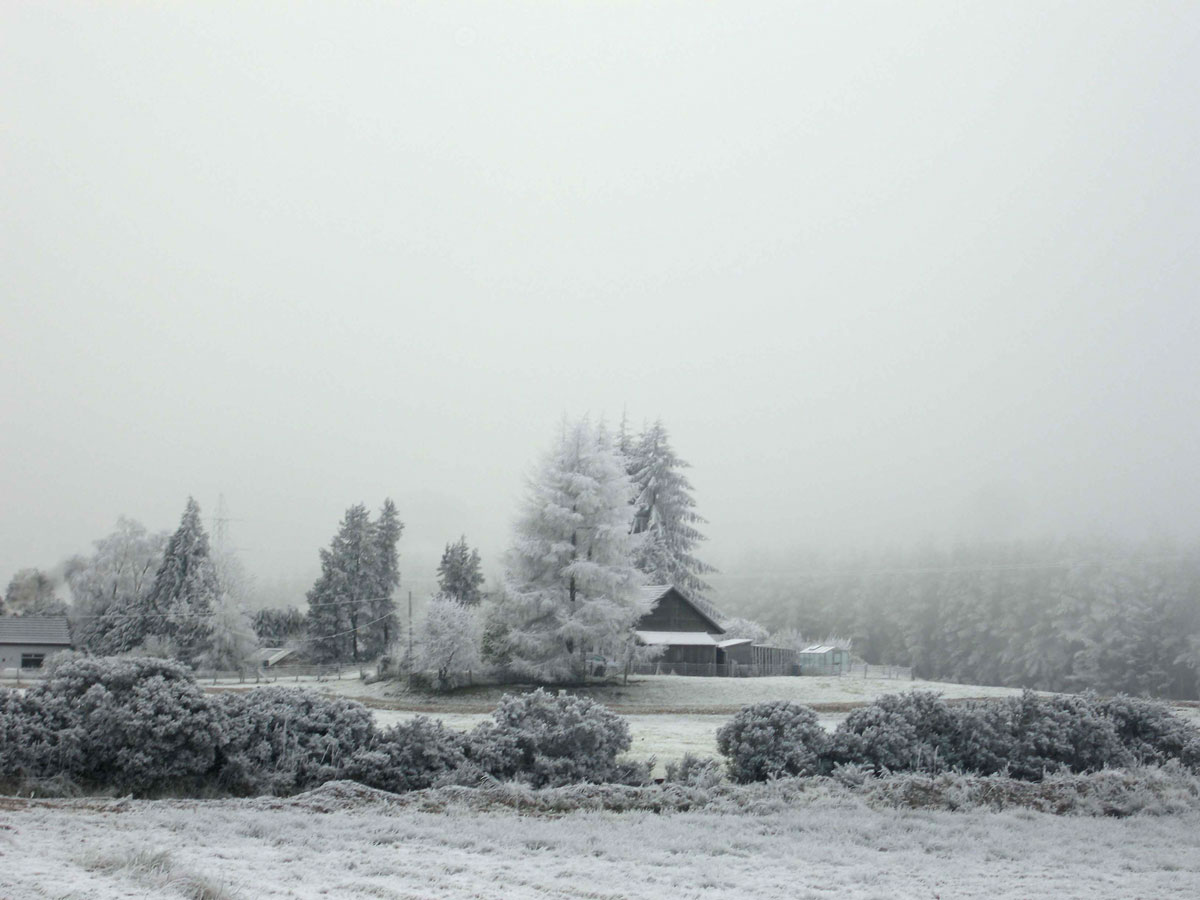
Leaving the main A82 Glasgow to Inverness road at Invergarry, the A87 quickly passes through the village and then takes a few twists and turns before reaching a viewpoint above Loch Garry. By moving around a bit and having a vivid imagination, the vista from the viewpoint offers a rough outline of a map of Scotland: Whether or not the view suggests the same to you is another matter, but either way, it’s a pretty good scene nonetheless.
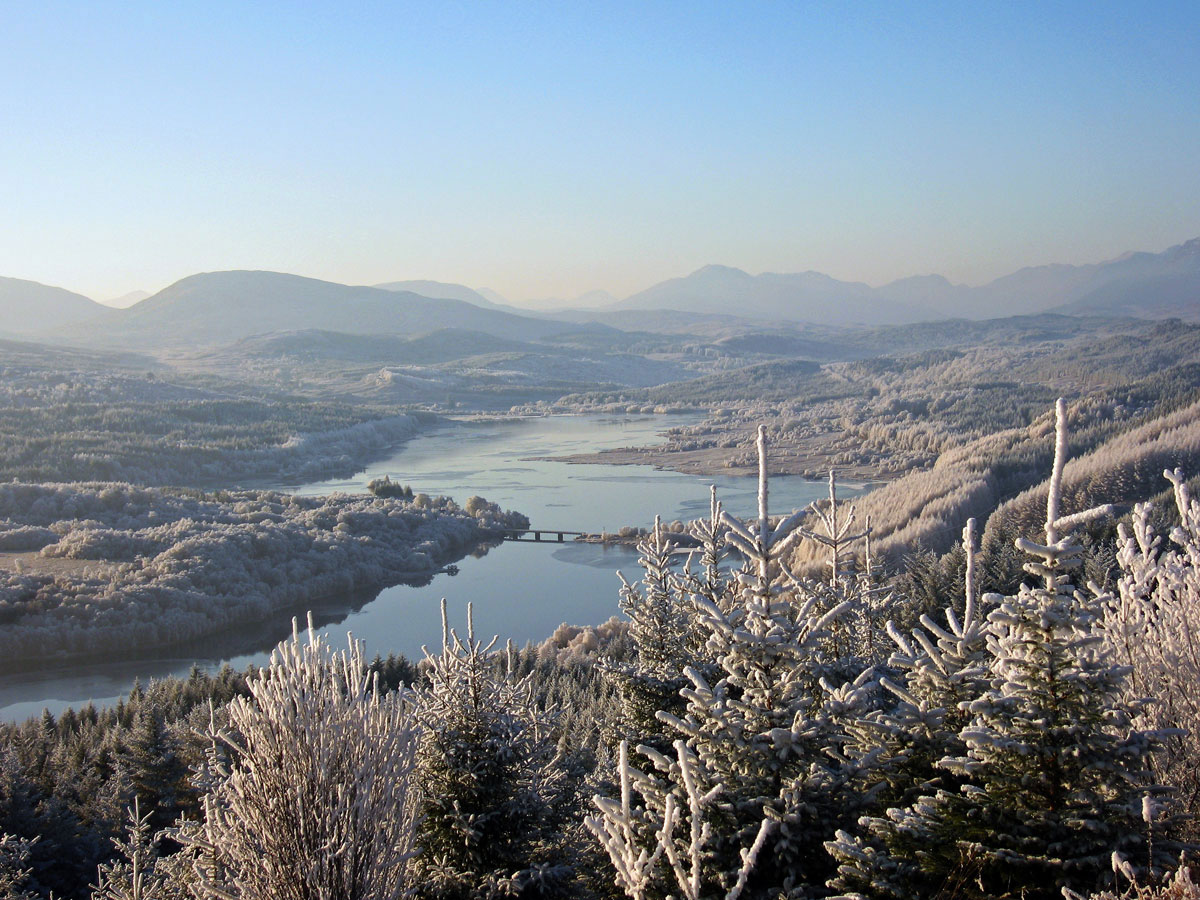
From the viewpoint, the road skirts the eastern edge of Loch Loyne, and is then joined by the A887, a road that runs through Glenmoriston between Loch Cluanie (where the River Moriston emerges) and Loch Ness. At Loch Cluanie, the wooded valleys of Glengarry and Glen Moriston then give way to a more barren landscape.
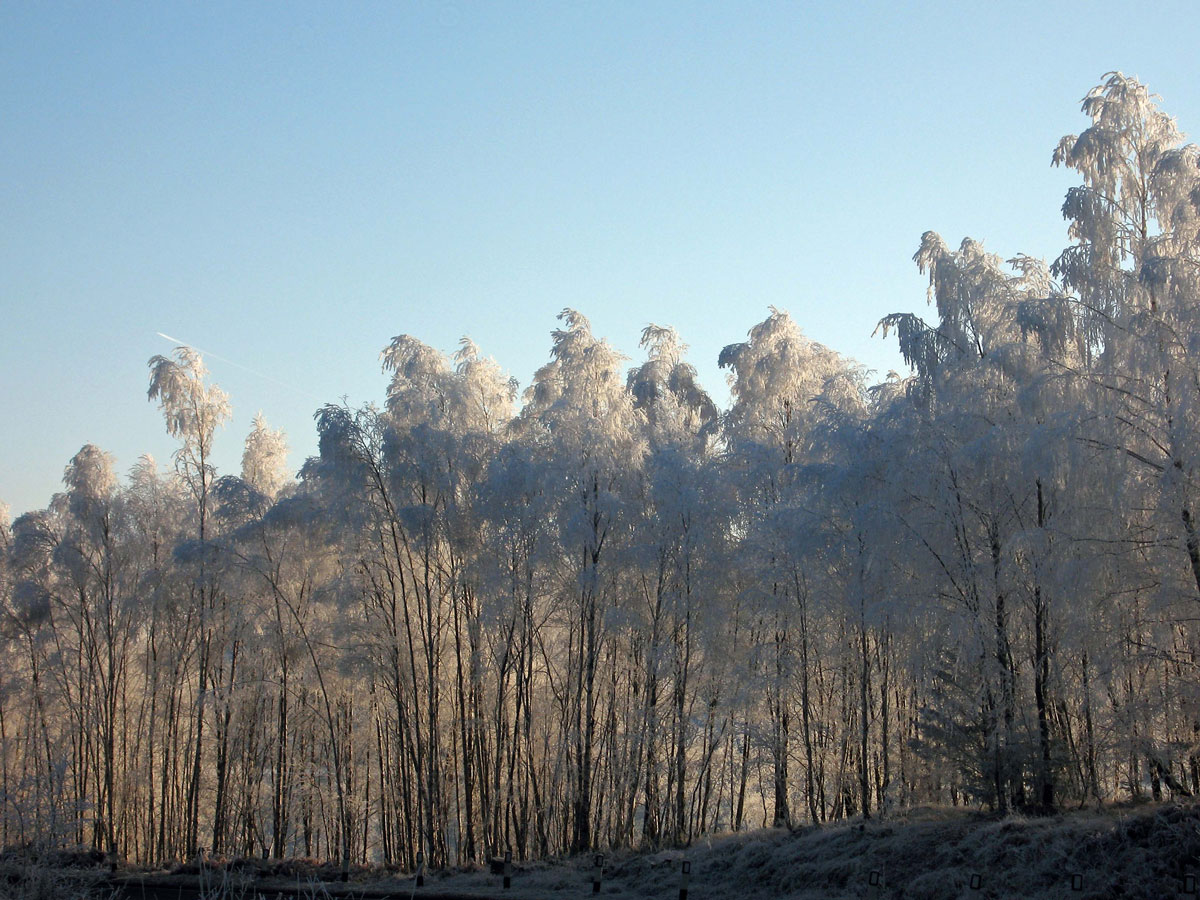

Loch Cluanie is fed by the River Cluanie at the far end of the loch, and technically speaking, should really be called a reservoir. In the 1950s a dam was constructed here at Glenmoriston, and the valley flooded. It provided a head of water for the Garry-Moriston Hydro-Electric scheme and is currently operated by Scottish and Southern Energy.
Changes to the natural environment are not always welcome, but not only does the loch/reservoir utilise the abundant supply of water that the skies above frequently provide, it also seems to have seamlessly blended into the natural landscape as well.
The road follows the loch’s northern shore and there are plenty of pulling-in places from where you can enjoy the views. Below are some images that I took looking up the valley towards Glen Shiel, and looking back down onto the loch shrouded in mist. How’s your glass of Scotch whisky going down by the way?
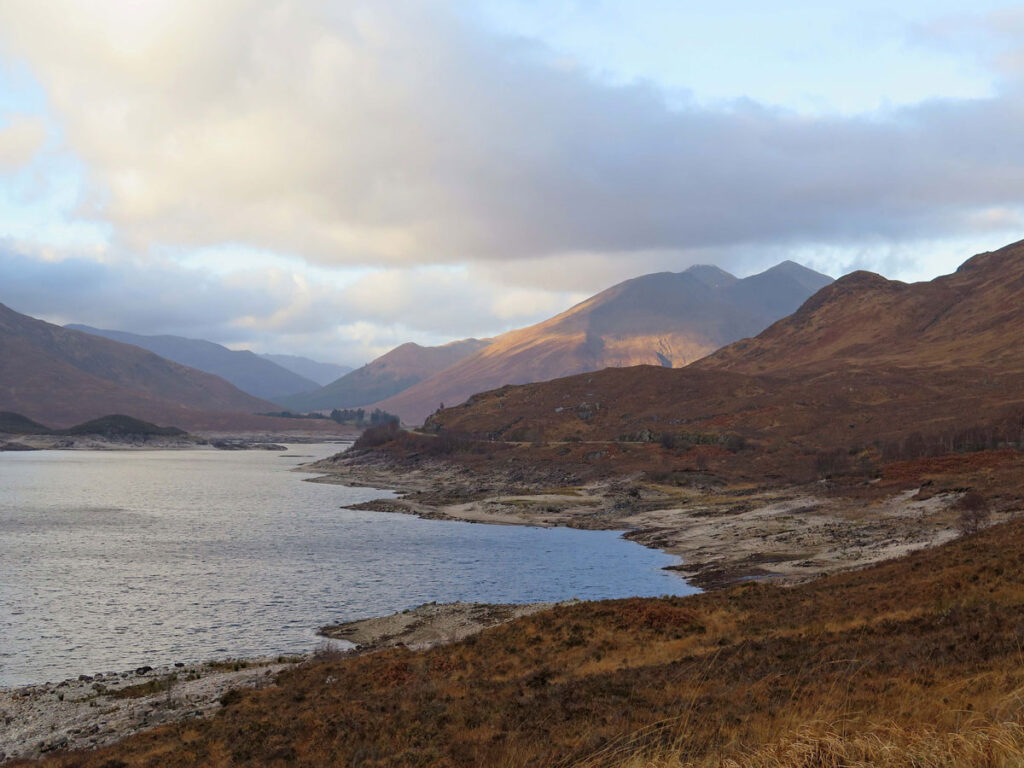
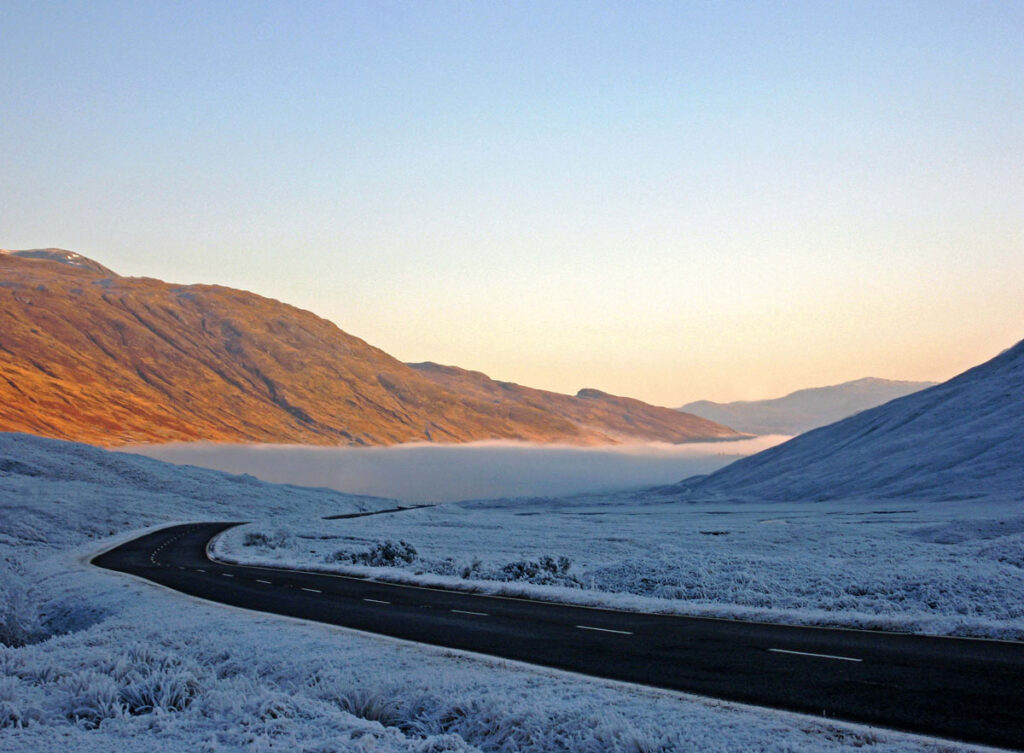


The loch is about 4 ½ miles long, and if the disappearance of water doesn’t give a clue that we’ve come to the end of it, then the appearance of the Cluanie Inn will. The pub used to be a typical Highlands wayside inn, but on my last visit I was surprised to see that it had been brought into the 21st century with all mod-cons. I’m not always in favour of modernising historic pubs, but I couldn’t see anything to complain about here.
One thing that hasn’t changed is the magnificent scenery. To me, this is the point at which Glen Shiel begins, and the picture below shows what the scenery is like outside the front door of the Cluanie Inn.

Glen Shiel runs for about nine miles between the Cluanie Inn and Shiel Bridge, and it’s difficult to keep your eyes on the road with all this wonderful scenery around, but I don’t suppose supporters of the Jacobite cause were admiring the scenery when they were fighting British troops here back in 1719.
The Battle of Glen Shiel took place on 10th June in the hills above the glen about half way along the valley. It ended with defeat for the Jacobites and was the final blow for the Rising of 1719 which aimed to overturn the Glorious Revolution of 1688, and restore a Catholic King to the throne after King James II (VII) was deposed.
Those of you who are interested in this part of Scottish history might like to know that the main battle took place on Sgurr na Ciste Duibhe, and alongside it is Sgurr nan Spainteach (Peak of the Spaniards), named after the Spanish troops who fought alongside the Jacobites.
I’ll resist the temptation to go into any more detail about the battle or the Jacobite cause here because this is about a scenic drive through the Scottish Highlands, and I’ve still got a little way to go before I can warm up with my own glass of malt.

Sgurr na Ciste Duibhe (3370ft) and Sgurr nan Spainteach (3248ft) are two of the Five Sisters of Kintail. The other three are Sgurr na Carnach (3287ft), Sgurr Fhuaran (3505ft) and Sgurr nan Saighead (3047ft). Some people argue that there is a sixth – Sgurr na Moracih, but at 2874ft, it’s the only peak along the Kintail ridge that isn’t a Munro.
For anyone unfamiliar with the term, Munro is named after Sir Hugh Munro who compiled a list of Scottish mountains over 3000 ft in 1891. The list has been added to and amended since, but today there are 282 on the list. People who climb to the top are known as Munro Baggers, and I’ve even read about one who calls himself the Munro Bagpiper; and it got me wondering as to what it must feel like, having struggled to climb 3000ft up a Sottish mountainside, only to find a bloke at the top in a kilt playing the bagpipes when you get there.
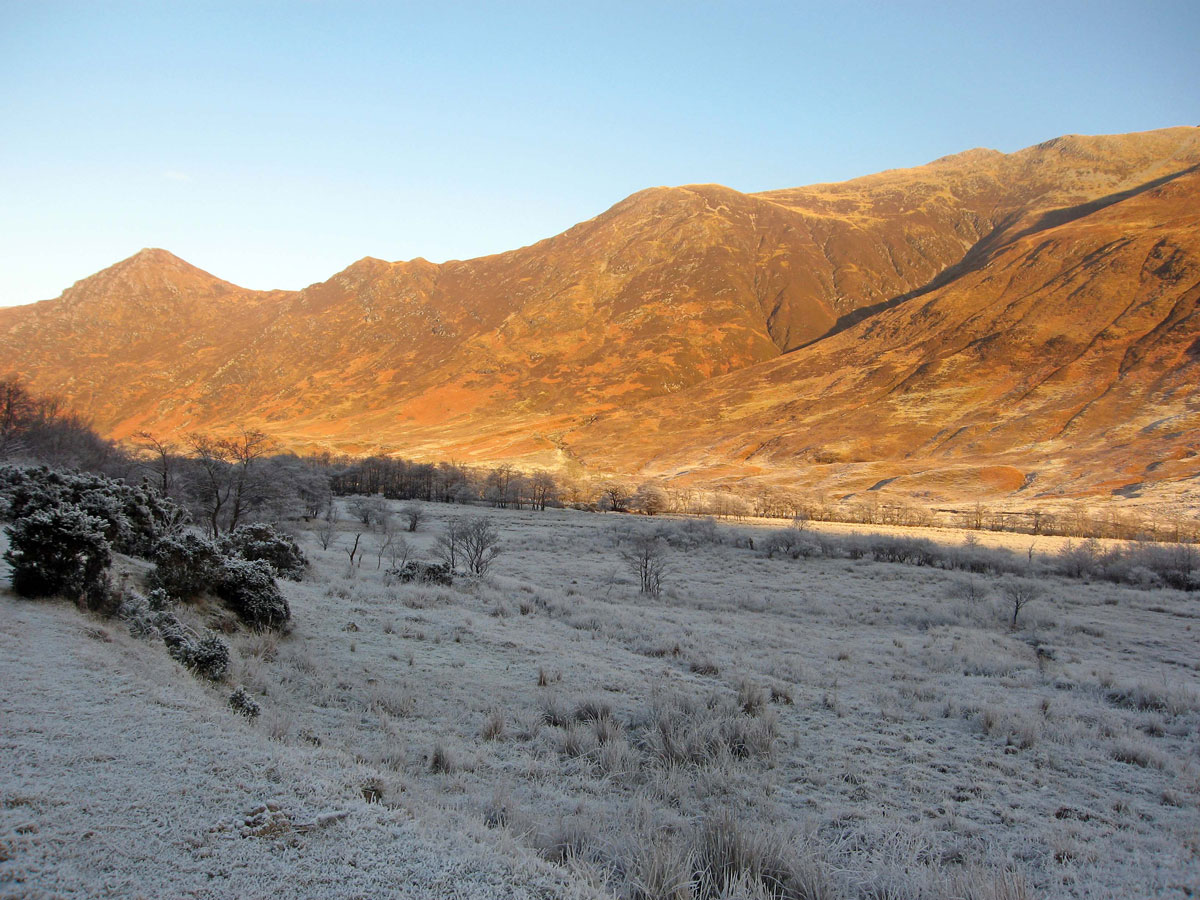

At the end of the glen, the River Shiel flows into Loch Duich near the village of Shiel Bridge, and the road crosses over Strath Croe before skirting the north side of the loch.
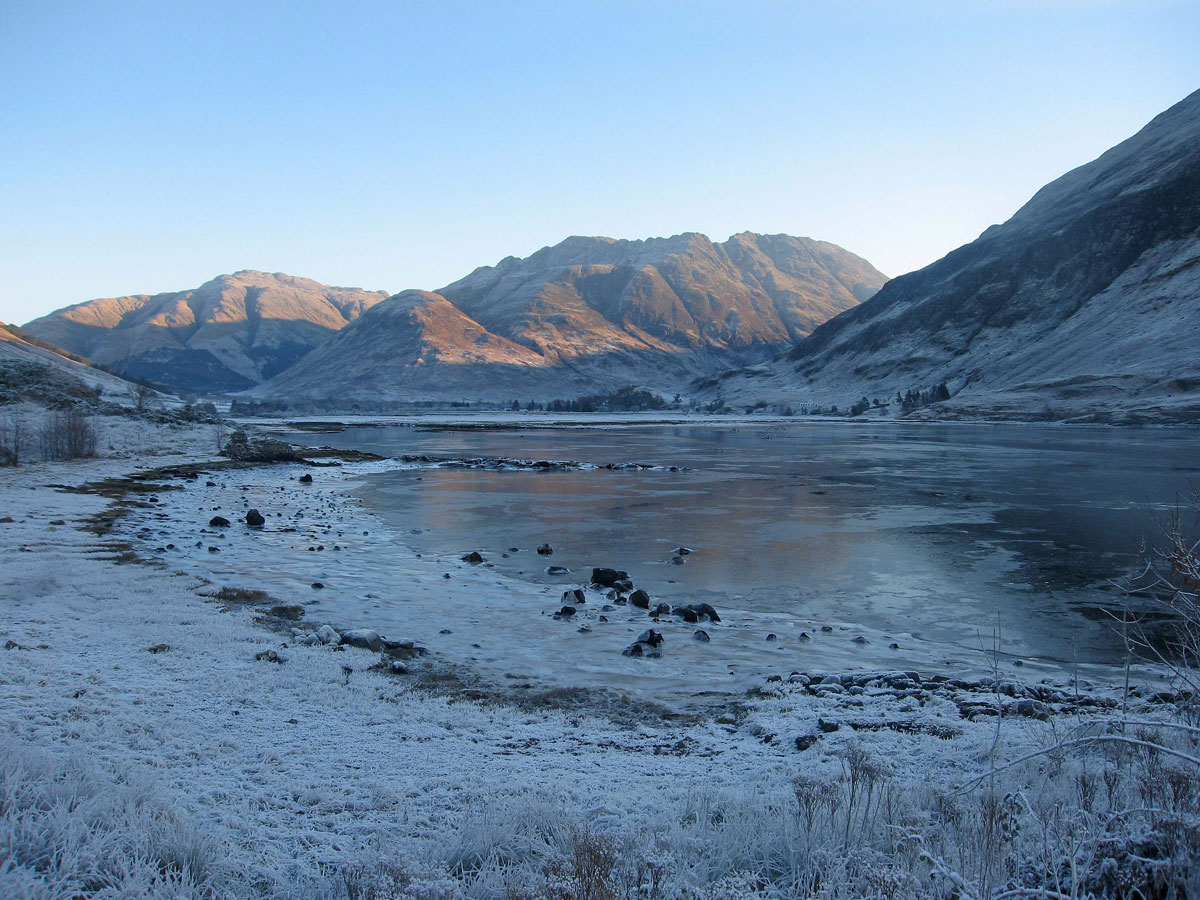
Loch Duich runs in a north-westerly direction for around five miles, where it is joined by Loch Long at Dornie to flow into Loch Alsh. Where the three lochs meet is a small island dedicated to St. Donan, a 6th century Irish missionary, and one of Scotland’s most photographed landmarks – Eilean Donan Castle.

The first fortification on the island was built in the early 13th century to help protect Kintail from the Vikings. Scottish history around this time is less than straightforward as various factions were fighting for control. Not only were the Scots at loggerheads with the Vikings, there was also the problem of the Lords of the Isles to contend with. These rulers of Western Scotland and the Hebridean Islands were descendants of Somerled who had a Gaelic-Norse background, but by 1266, thanks to the Treaty of Perth, the situation had settled down, and the castle came into Scottish hands.
The MacRae Clan are the family most closely connected with the castle, and the first association came about when Charrich MacRae was appointed Constable in 1509, but it was the castle’s involvement in the Jacobite Risings that had the most devastating effect.
The first of the three Jacobite Risings occurred in 1715, and as soon as the British Government got wind of what was happening, they installed a garrison at Eilean Donan: The men of Kintail, being supporters of the Jacobite cause, wasted no time in kicking the Government troops out, and then rallied their own men here before marching off to the Battle of Sheriffmuir. Both sides claimed victory in the battle, but in truth there was no decisive outcome.
As I’ve already mentioned, the second Rising of 1719 ended at the Battle of Glen Shiel. The Spanish troops involved were briefly garrisoned at Eilean Donan, which they also used as a gunpowder store. The British Government sent three warships to bombard the castle, but in the end needed to send troops ashore, who then used the gunpowder to blow up what was left – and for the next 200 years, the castle was left in ruins. The third and final Rising incidentally, ended with defeat for Bonnie Prince Charlie and his Jacobite followers at the Battle of Culloden Moor in 1746.
As for the castle, it was not until 1911, when John MacRae-Gilstrap acquired it, that restoration plans were put in place. The original idea was to maintain the castle as a picturesque ruin, but his accomplice, local stonemason Farquhar MacRae, had a dream in which he visualised how the castle would have looked before it was destroyed, and so a year later, using rubble from the ruins, they embarked on a project that would take twenty years to complete.
The final piece of the jigsaw was the stone bridge that transports people over to the island, and an official opening ceremony took place in July 1932. Unfortunately for Farquhar MacRae, he died before the bridge was finished, but it wasn’t all bad news for the stonemason. According to Marigold MacRae, the mother of the current Baroness and President of the Clan MacRae, she says that “The extraordinary thing is that after the restoration was completed, the plans for the castle were discovered in the archives of Edinburgh Castle, and lo-and-behold, they were exactly as Farquhar had dreamed them to be! That is why Eilean Donan Castle is known as the Castle of Dreams.”

Understandably, the castle is a magnet for tourists, but when we visited in December 2019 we were the only ones here. How lucky was that? To be honest the castle isn’t overly big, and apart from The Keep, there’s not a great deal more to see.

First up is the Billeting Room which was surprisingly homely, but with a reminder of the castle’s history in a collection of cannonballs used in the 1719 Government assault. The main feature of the castle though is without doubt, the Banqueting Hall, where we were met by a jovial Scotsman in a kilt and a female volunteer getting the Christmas Tree ready. There was a lovely log fire burning away, but I don’t think it was that which was giving the guide his rosy red cheeks somehow. I’ve seen what Scotsmen keep in their sporrans and it often comes in the form of an amber liquid. Christmas seemed to have started early from what I could see of it because when I mentioned to him that it was a shame that photography wasn’t allowed, he replied “Och Aye! Take as many as ye like” – or something like that. He even told me where to get the best shots.
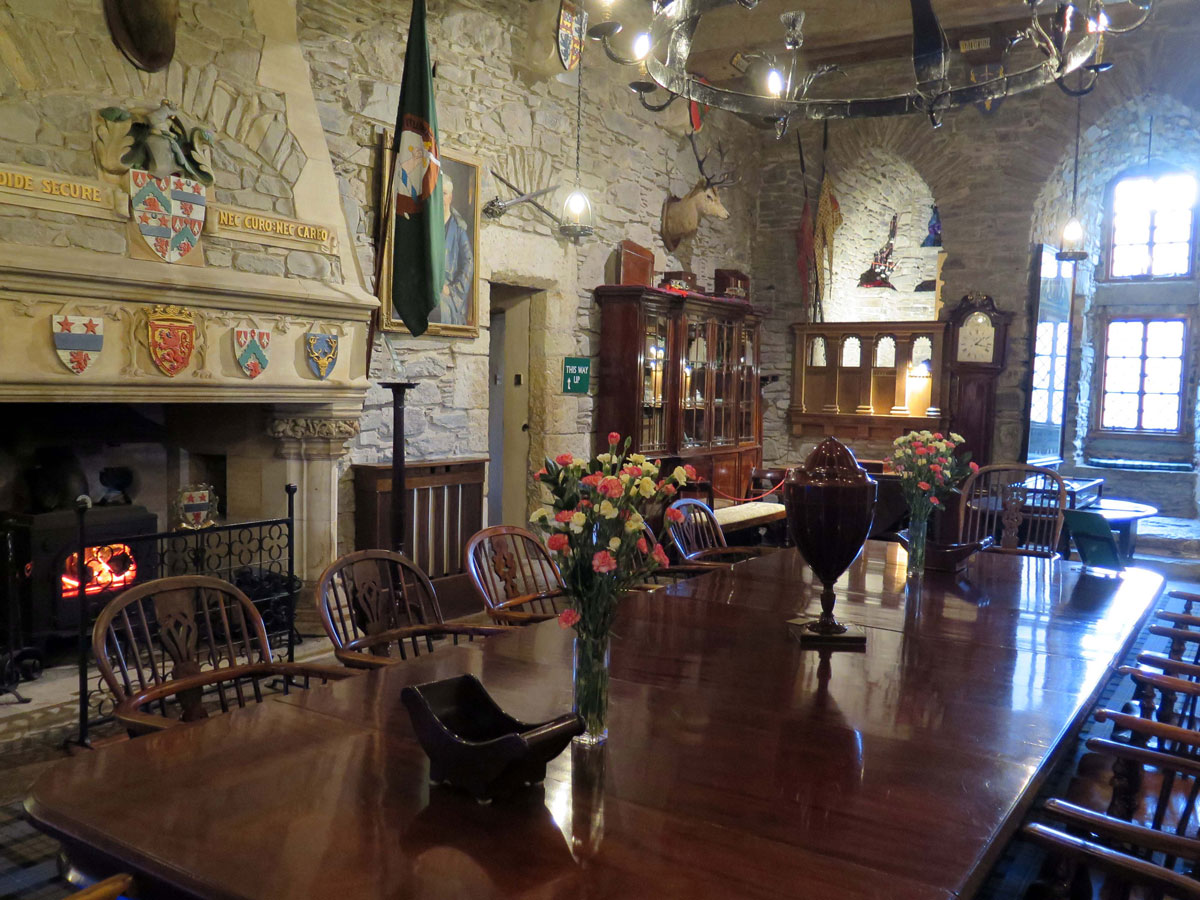

There’s not a lot more that I need to tell you about Eilean Donan really: There are some bits and pieces from the Jacobite Risings and one or two other things on display, but one thing you should know about is the Clan MacRae WWI Roll of Honour on an outer wall of the castle.
One of those on the list is John MacRae, a Canadian member of the clan who was a medic at Essex Farm Medical Station near Ypres in Flanders. Having been there, his name is etched in my memory because he was the man who wrote the poem, In Flanders Fields. It’s a story that I need to talk about in another post really, but I wouldn’t want you to miss the connection.


We’re nearing the end of our journey now because just a 15 minute drive away is the Kyle of Lochalsh, which until the Skye Bridge was built, was the end of the road.
For 400 years, people had been transported across the Sound between the Kyle of Lochalsh and Kyleakin by boat, but after the new bridge was officially opened in October 1995, the ferry was immediately decommissioned.
Built by a private consortium, the crossing used Eilean Ban as a stepping stone, so in actual fact it is really two bridges. (Eilean Ban, incidentally, was the last home of Gavin Maxwell, author of Ring of Bright Water). When it opened, the majority of people (but not all) thought it was a great addition to the community, but that euphoria soon died down when people realised how much it was going to cost to use it. After a lot of protesting by locals and wrangling by politicians of all colours, the tolls were finally dropped altogether in December 2004.
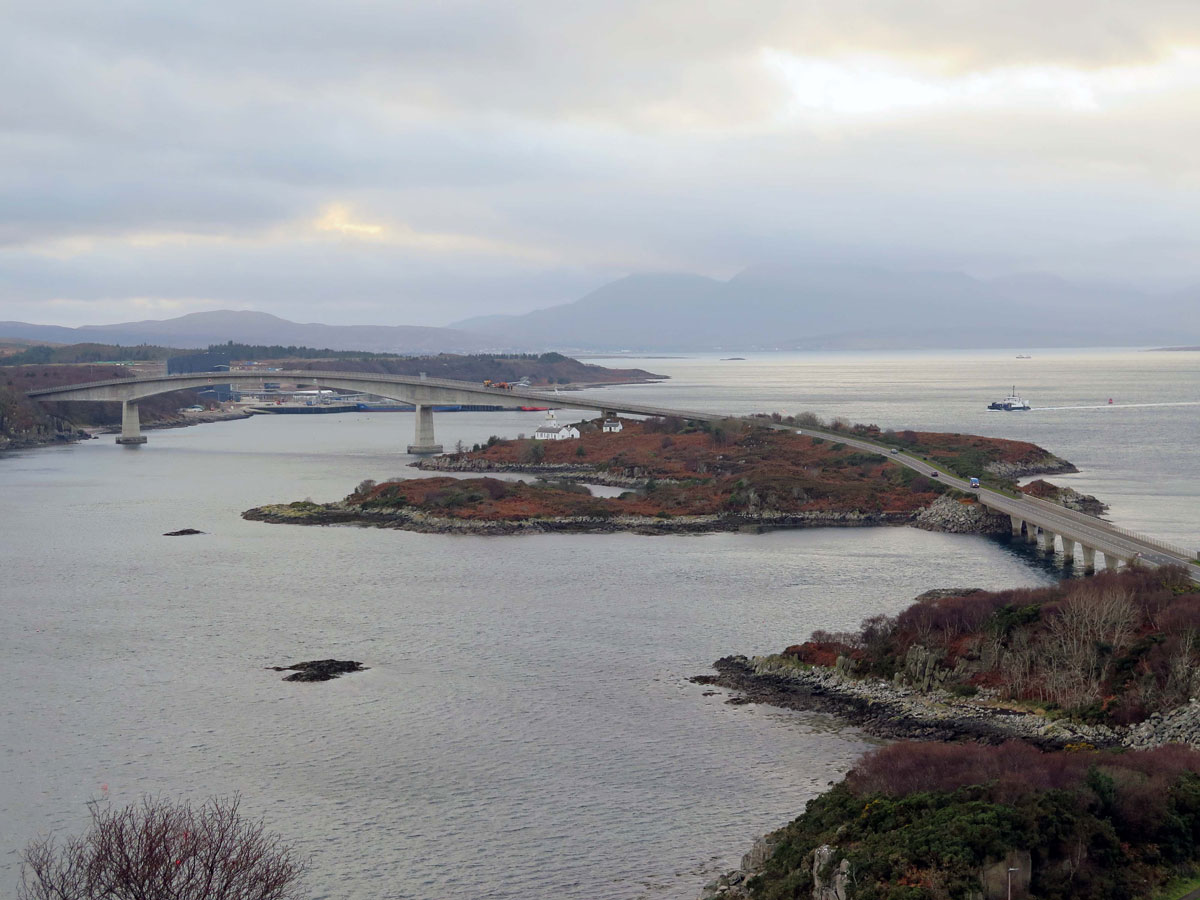
We’ve made it across the sea to Skye at last. It’s a fabulous destination to come to, but I hope you think that the journey getting here wasn’t too bad either.
Now where’s that whisky glass? I think it’s time for a wee dram of Talisker now, don’t you?

POSTED – JANUARY 2022
Originally posted 2022-01-10 16:41:27.
Wow, your photos are so beautiful and so in the landscape and mountains around and on the beautiful Isle of Skye. I have to say that no words can recreate the impact of seeing and exploring the magical island for the first time. We were there in July and had the best time ever thanks to five days of never-ending sunshine. Thanks for sharing, and have a good day 🙂 Aiva xx
Thank you so much for your kind words Aiva. As you quite rightly say, no words (or photos) can really do the Isle of Skye justice – and if you had five days of never-ending sunshine then you were well and truly blessed 😊
Absolutely Beautiful Pictures and Great Post
Thanks again. Do you have a website?
Wonderful, Malc. And really fabulous photos. Photos inside Eilean Donan too, which weren’t allowed when we visited. My malt is going down very nicely, thanks – I’m more of a Speyside lover these days.
These pictures are so stunning. I keep going back for another look. Thank you for this exceptional post.
And thank you for such a smashing comment Shey.
You are more than welcome.
You really are so kind 🙂
Scotland is such a magical place. Ita very unique. All those pictures looks so amazing and exciting. Interestingly, I do know about Eilean Donan Castle.
If I’m not mistaken, it was featured in the movie Oliver’s Travels episode.
It’s been used in several films but I don’t recall it being in that one. I’ll need to check it out. Thanks for taking a look and commenting Ritish
Yes, it may featured in so many movies. My pleasure
Fantastic photos of that stunning scenery Malcolm! I can’t decide whether I like the frosty views best or the warmer colours on the hillsides, e.g. in the shot of the view opposite the Cluanie Inn. Maybe the latter just edge it for me! I enjoyed the history lessons too, especially the connection to John McRae
A big thank you as always Sarah for taking a look and commenting. I’m especially pleased that you enjoyed the photos as your photography is always exceptional. 🙂
Great photographs Malc! Although I have never seen that part of the world, it looks amazing! The landscape is extremely poetic, almost as if it was beautifully painted. The castle is fantastic and for me, who has always loved the idea of living in a castle, a great feast for the eyes and for the imagination. A wonderful post, as usual with the incredible photography of my friend Malc! All the best to you!
Thanks Francesc. As always your comments are too kind, but I agree with you as regards the scenery. People are often too much in a rush to get somewhere that they miss so much along the way. Have a great rest of the week
That is so true, many times we miss the beauty that is either right above our heads or beneath our feet. You’re very welcome my friend!
Absolutely!
Some stunning photographs. I’ve not visited Scotland as often as I would like, and have never been to this area. The castle looks a lot like the one in the film Highlander.
Thanks Stephen. You’re correct. The castle did feature in Highlander
My but she’s a cold beauty! Stunningly beautiful, nevertheless. One of my favourite shots is the fog on the water, Malc. Not a whisky drinker, though it was always the traditional New Year tipple.
It sounds like you enjoyed it from the comfort of your armchair in the sun then Jo 🙂
🤣💕
Lovely write-up and fabulous pictures. I had a wee dram of honey rye whisky in my hot chocolate.
Quite right too Pat – and thanks 🙂
I don’t drink so my ‘wee dram’ was a mug of tea accompanied by a bacon sandwich but I really enjoyed the journey. A lovely story of Farquhar MacRae and the Castle of Dreams, such a shame that he never got to see that his dream had come true according to the plans. There’s nothing worse than going into a place with a lot of history and not being allowed to take photos so it as great that the guide encouraged you to do so. The banqueting hall looks amazing and I love that fireplace 🙂
I enjoy a cup of tea and a bacon sandwich too Eunice, I’m glad that you enjoyed the journey because people are often too keen on getting somewhere and not seeing what there is along the way. Don’t you just love the name Farquhar? 🙂
Oh wow, what a journey! It’d be worth going there for the journey alone, let alone the destination! A fabulous post with another beautiful song to accompany the stunning images – I felt as though I was there with you all the way. I think I’d find it hard to concentrate on driving with all that natural beauty around me too – and, of course, that wonderful castle. It really would be a castle of dreams for me – imagine holding a medieval feast in that amazing banqueting hall. 🙂 And the wee dram slipped down very nicely as I read – time for another now to join you, I think! Cheers!
I hope there’s more to come of your trip up there, so assuming there is, I’m look forward to the next instalment. 🙂
Your comments are always uplifting Alli as you know, and I’m sure that this road to Skye would do the same for you. I’m glad you enjoyed the song to go with it as I played it when we travelled along there. In fact I compiled a collection of songs for driving in Scotland, and it’s a disc that I never tire of. I’m also pleased that you were able to have a glass of scotch to accompany me along the way 😊 – it’s my turn now. Hic!
Lovely idea, songs for Scotland. How lovely to compile a disc that will bring back such wonderful scenery and memories in such an evocative way. Then, when you’re there, just add scotch… 🙂
Photographs, music and a drink in hand. That’s Malc’s world in a nutshell at the moment 🙂
…well here’s to more of your amazing photos of your adventures to come. 🙂
Thanks Alli 🙂 Have a lovely day tomorrow 🙂
Great photos, Malc. I’ve never been to any of the places you mentioned, but we once made it as far as Achnacarry (Spean Bridge), when we visited the Clan Cameron Museum.
Thanks Don. Did you see the Commando Memorial at Spean Bridge?
No, just went to the Clan Cameron Museum.
It’s very poignant.