Wandering Around Brest - Pt 2 The Rade de Brest
Now that I’ve told you where Brest is, I should start telling you what’s here, but my arrival on a late Friday afternoon meant that any serious sightseeing was going to have to wait until the following morning, so I did what any sensible person would do and have a wander around the local neighbourhood and look for a convivial bar to unwind in – not that I’d done anything to be wound up about yet mind you.
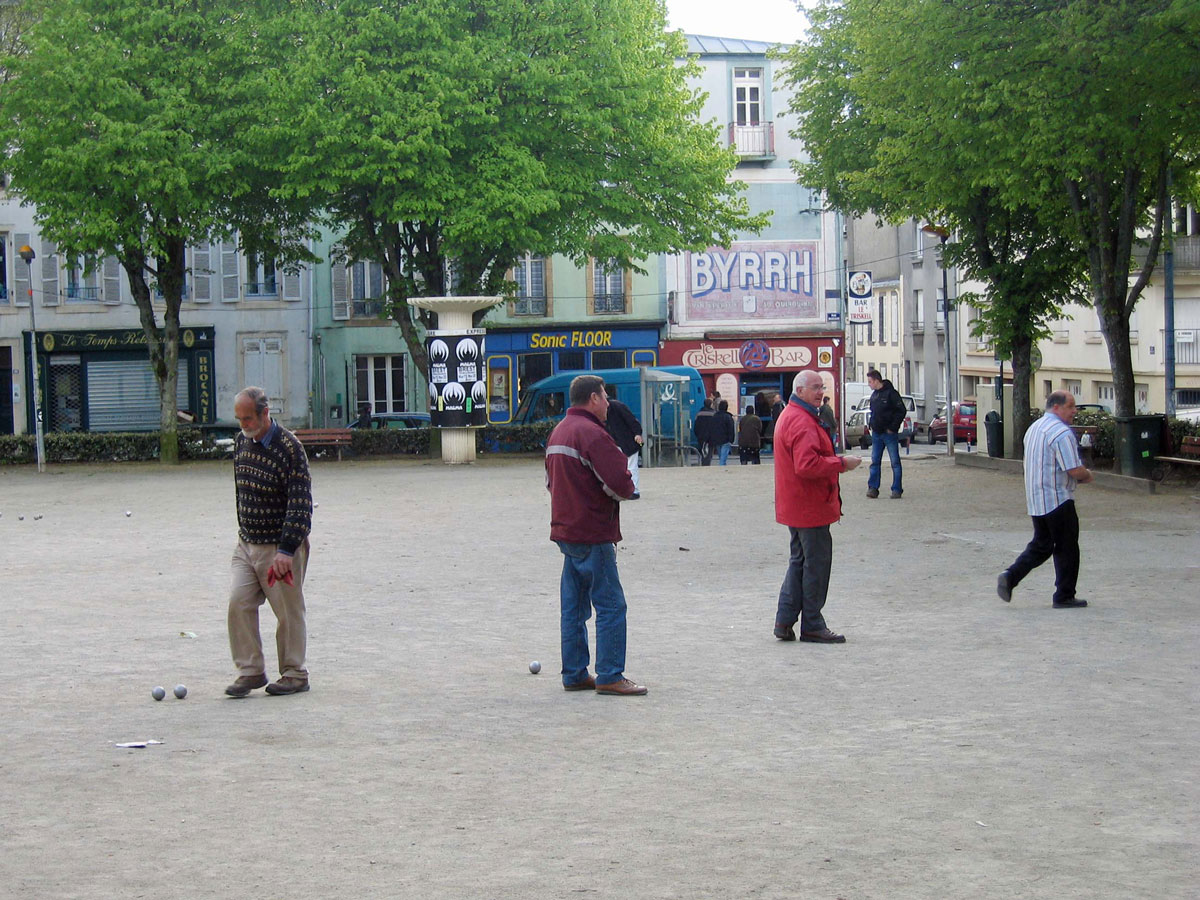
On the other side of Rue Jean Jaures from where I was staying was the district of St Martin, so I headed in the direction of Église St Martin, which from the outside at least, looked as though it might have been worth a quick shufti – if only it had been open. In fact it looked as though it had been closed for quite some time, so I carried on around the block to Place Guerin instead where I watched some of the locals playing Pétanque before noticing a café on the other side of the square which I thought might be worth closer inspection.
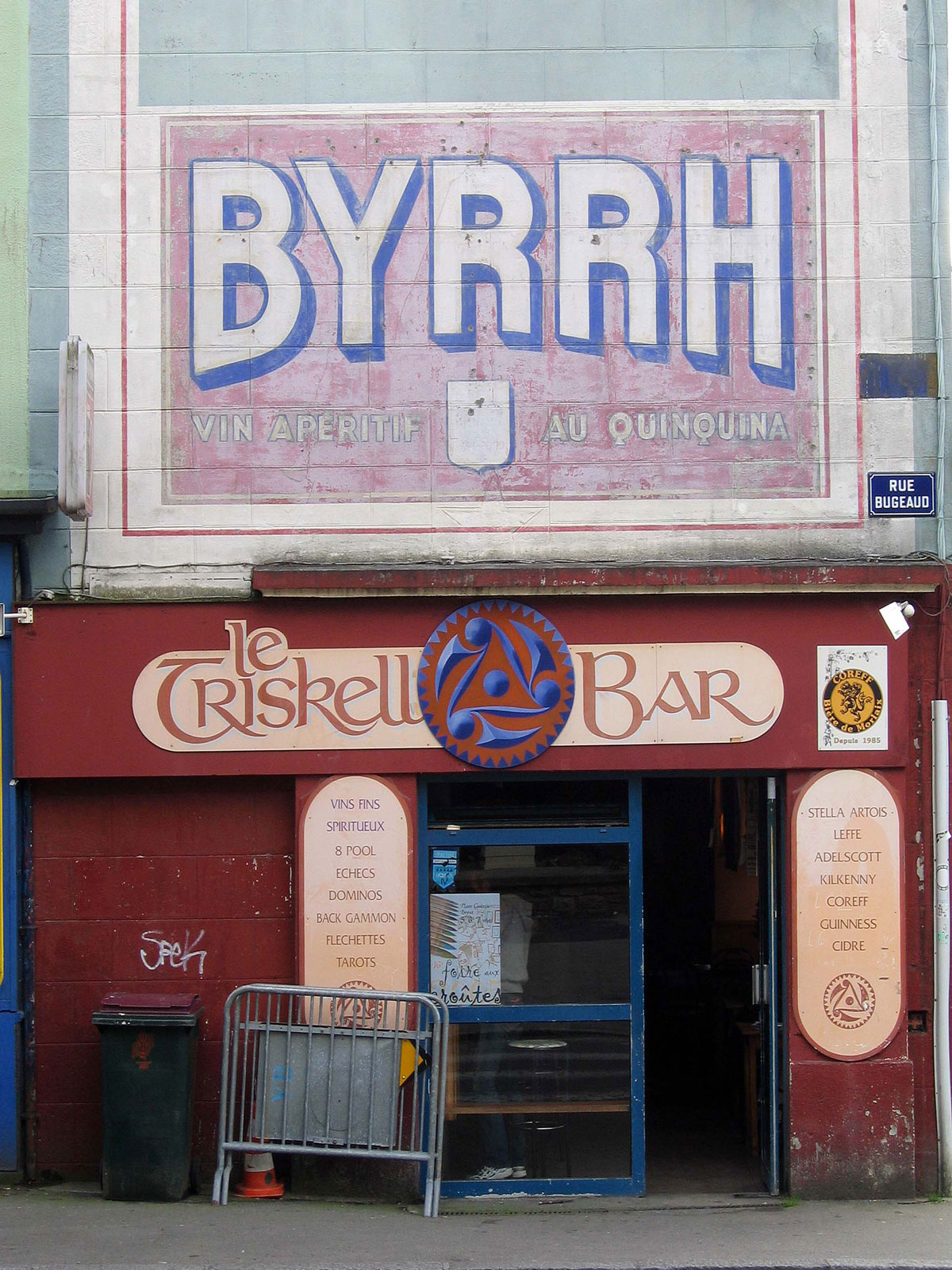
Café le Triskell was a bohemian-type looking bar with a rustic interior and ambience to match – just my type of place. Having walked into many a bar as a stranger, I never know whether I’m going to be greeted as the ‘Invisible Man’, or looked at as though I’ve got two heads – but not here. As I’ve found elsewhere in Brittany, I was greeted with a smile and handshake from the barman before ordering a local beer. I could have stayed here a lot longer than I did, but I needed to get something to eat, and after chatting to the barman in Franglais for a while, I took his recommendation and made tracks for a nearby Chinese take away.
Unfortunately, they were only conversant in French and Cantonese and couldn’t understand a word I was saying, so I took the easy option and made my way back towards a patisserie I had passed earlier and pointed to something that looked appetizing and hoped for the best as I headed back to the hotel in preparation for what would, hopefully, be a good day tomorrow.
How the day was going to pan out I couldn’t be sure, but at least the weather was looking decent when I woke up the following morning, and so I didn’t hang about too long and caught a bus to Oceanopolis, an aquarium overlooking the Rade de Brest.
Those of you who know me may be wondering why I’ve chosen to visit an aquarium before anything else, but the simple answer is that the fish were awake before most of the good people of Brest – and so were the staff who opened the doors to the aquarium, but there’s a bit more to it than that.
Normally, I would be quite happy to just wander the streets for a while, but due to extensive damage during WWII, Brest isn’t a place full of atmospheric cobbled streets and old buildings. Consequently historic attractions are a bit thin on the ground, and those that are still here, didn’t open until later.
As much as I’m passionate about all types of marine life, that passion doesn’t usually extend to aquariums: Even so, I bit the bullet and paid the entrance fee to see if Oceanopolis lived up to its hype of being ‘Europe’s premier Ocean Discovery Park’.
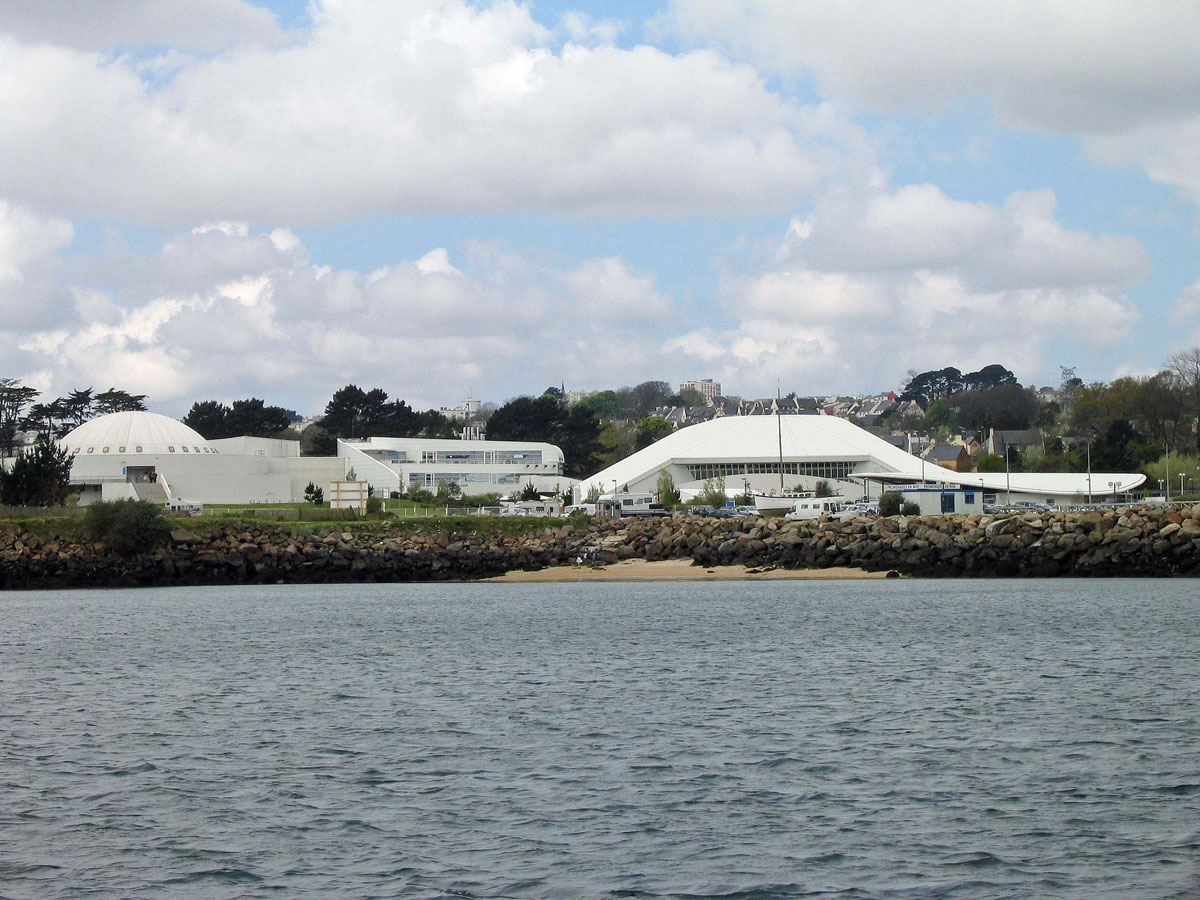
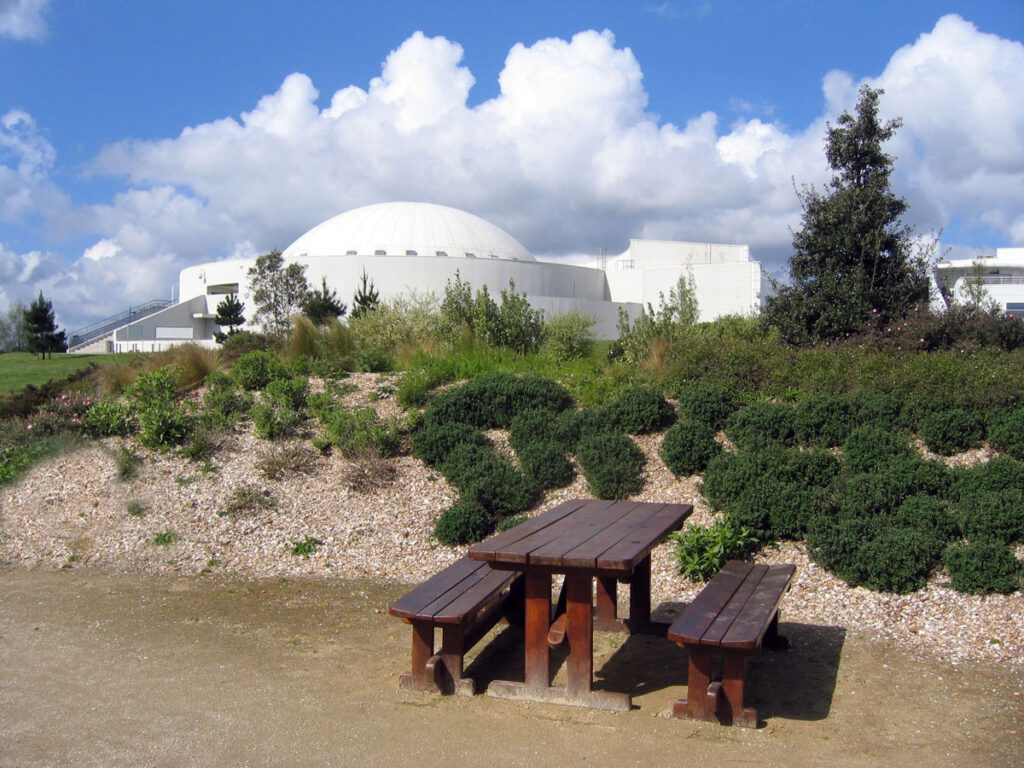
Oceanopolis is a modern complex with a design (like a crab) that blends in nicely with the natural setting, and when it opened in 1990 it consisted of just a Temperate Pavilion, with a Tropical Pavilion and Polar Pavilion being added in 2000. Those who are responsible for running the aquarium tell us that each pavilion provides a habitat as near as possible to the natural environment, but it’s raison d’être is for scientific and educational reasons rather than conservation purposes.
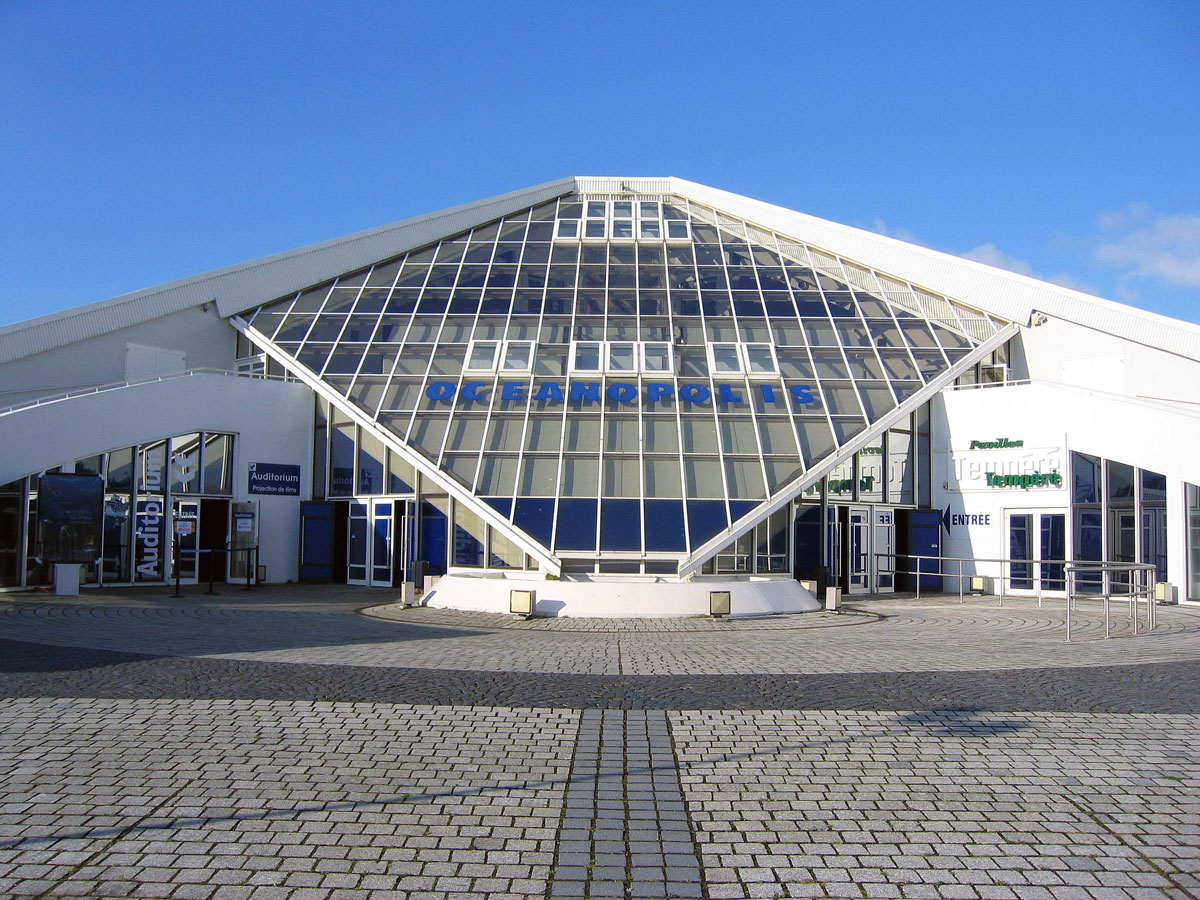
I was one of the first to arrive and virtually had the place to myself as I entered the temperate zone, which was the one that interested me the most as it featured the marine life around the western coast of Finistère. This area, known as the Iroise Sea, lies roughly between the islands of Ushant and the Ile de Sein, and is regarded as one of the most dangerous seas for marine traffic in Europe, and I can well understand why. The Brittany coastline is littered with small islands, many of which have lighthouses that are often battered by huge waves, and it’s no wonder that this rocky coastline is teeming with marine life, so much so, that in 2007 it was designated France’s first Marine Park.
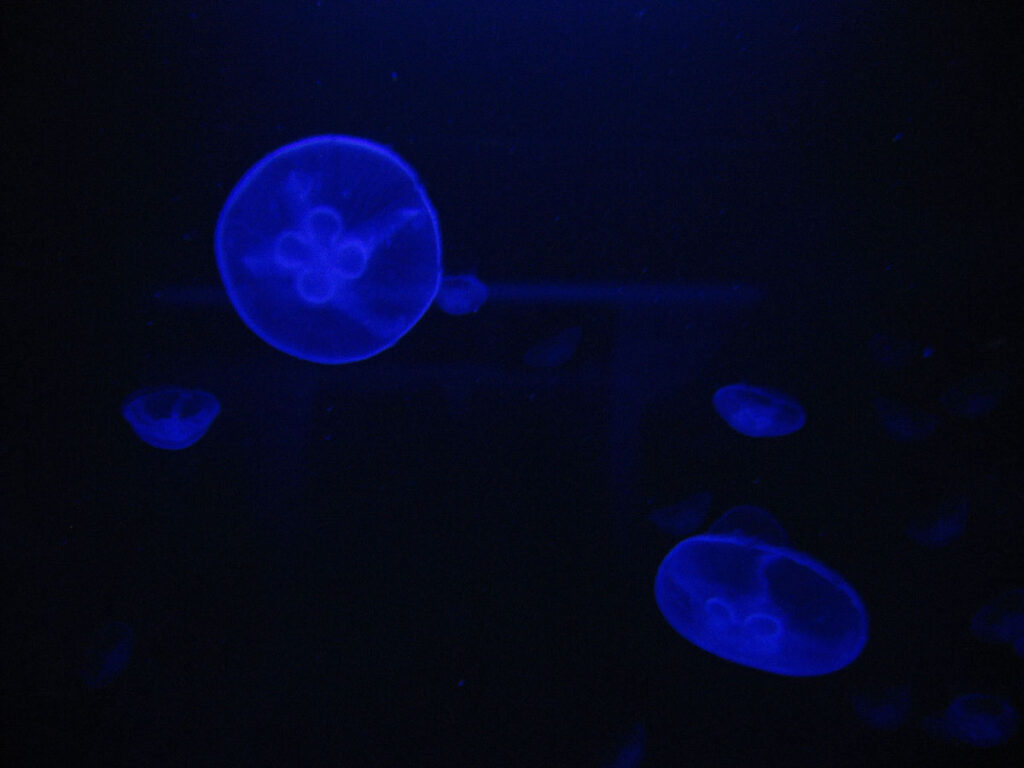
I’m not going to describe the aquarium in detail but one thing that caught my attention was a jellyfish that came right up to the glass as soon as I arrived at the tank, and wherever I went, it seemed to follow me. Does anybody know if jellyfish have the brains and sight to do that, or was I just imagining it?
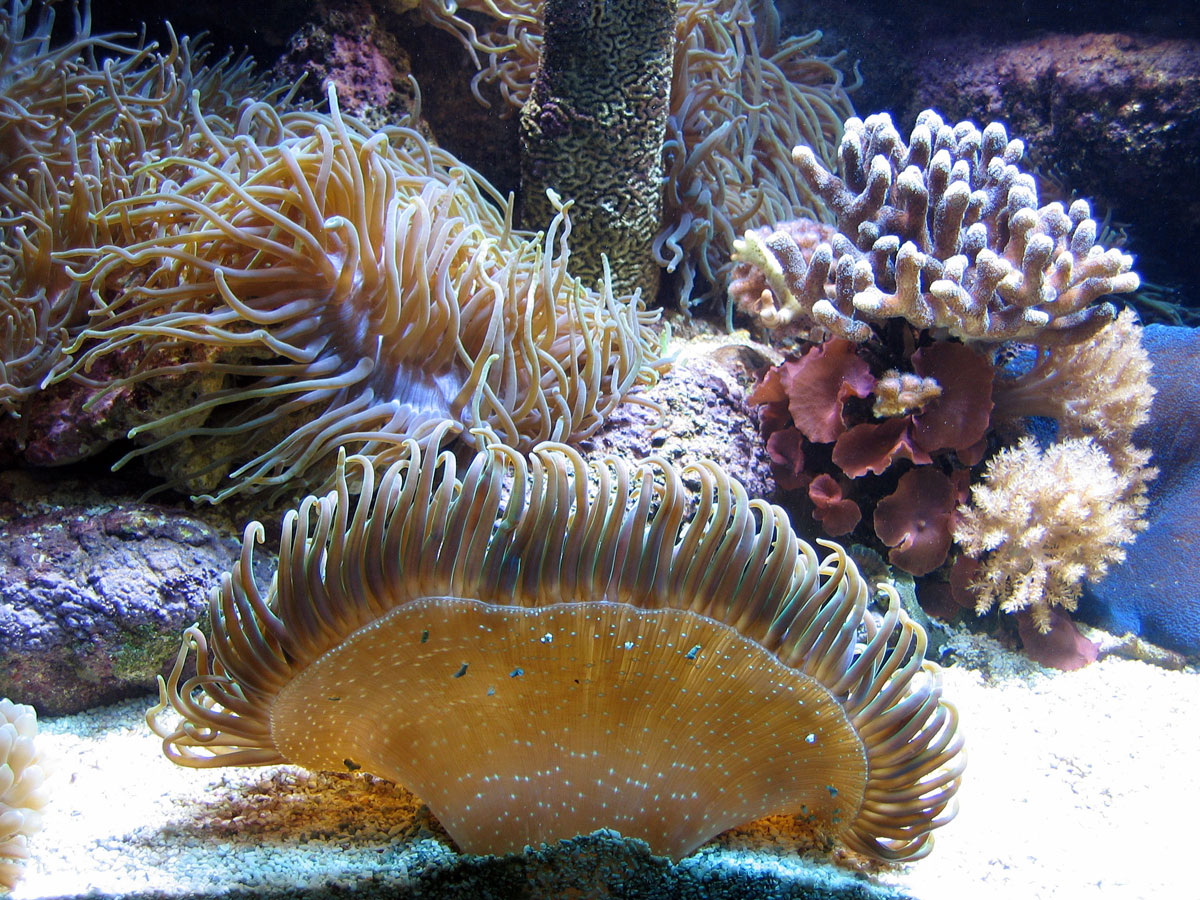
Below are a selection of images from Oceanopolis, but as much as I enjoyed it in one way, I still can’t get past the thought that an aquarium is just a zoo for fish.
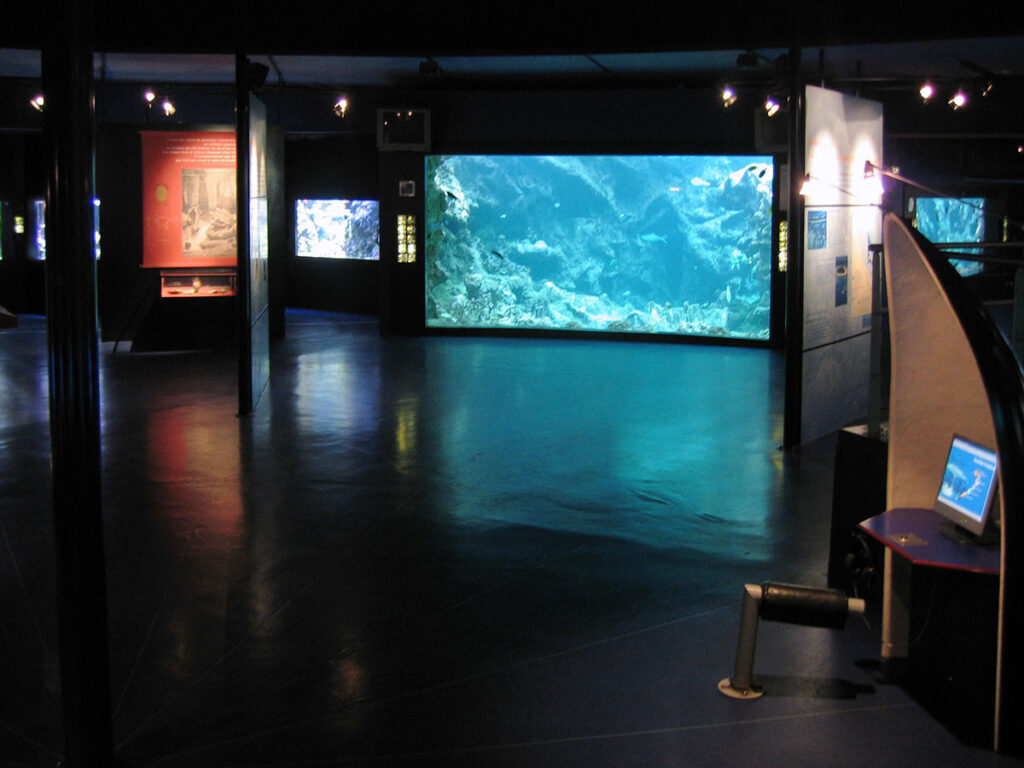
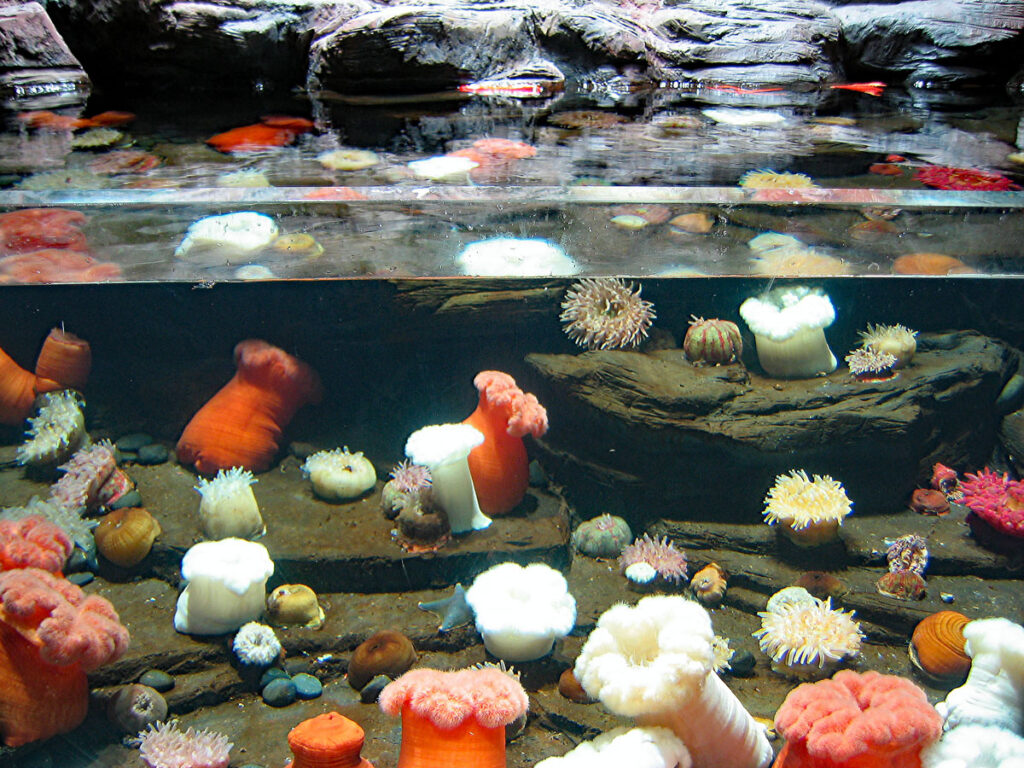
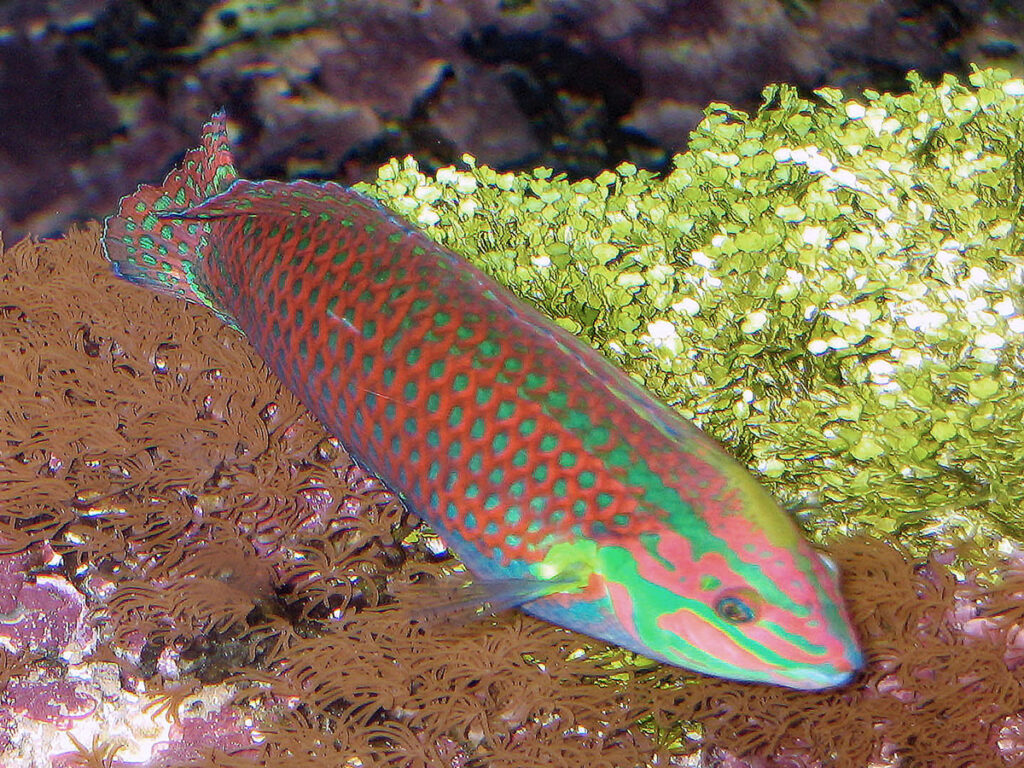
In Pt 1 I ended up by saying that I expected Brest to be the French equivalent of Plymouth, and in many ways it is: Both have strong connections with the sea and I was keen to see how the Rade de Brest compared with Plymouth Sound. Catching the bus from Oceanopolis back into the city centre, I jumped off at the railway station and headed towards the Cours Dajot via the John Kennedy Gardens.
The gardens were probably very nice, but as I started to walk down a slippery footpath I soon found myself gazing up at the sky instead of the local flora. I’ve lost count how many times I’ve ended up on my back over the years, but at least this time, neither a drop of alcohol had passed my lips, nor had I upset anyone. My knee, elbow and camera had taken a bruising but the thing that was hurt the most was my pride.
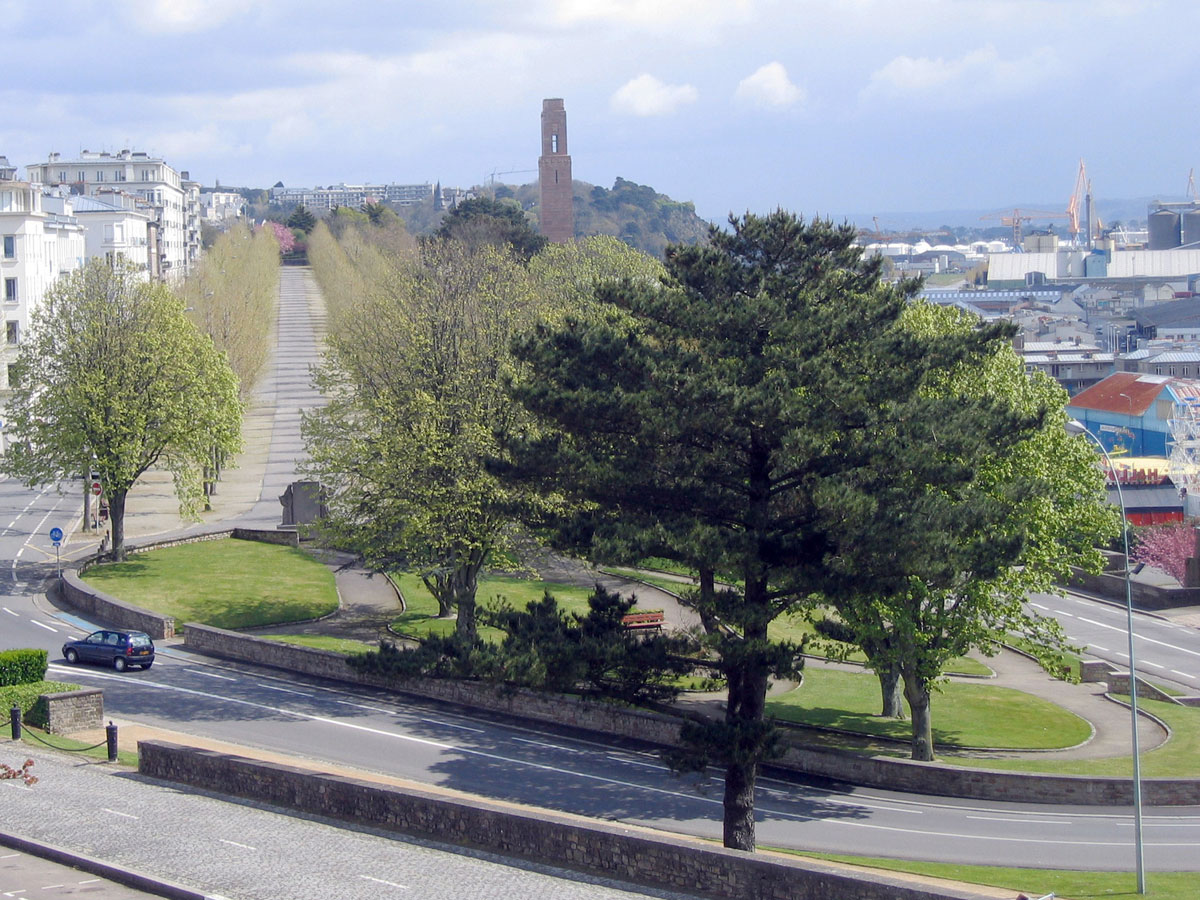
Anyway, after pretending to make it look as though nothing had happened, I wandered off down towards the Cours Dajot. This promenade, along the top of the castle ramparts, was the brainchild of Louis-Lazare Dajot, a director of Brittany fortifications, and was designed to give the citizens of Brest somewhere to stretch their legs and breathe in some sea air.
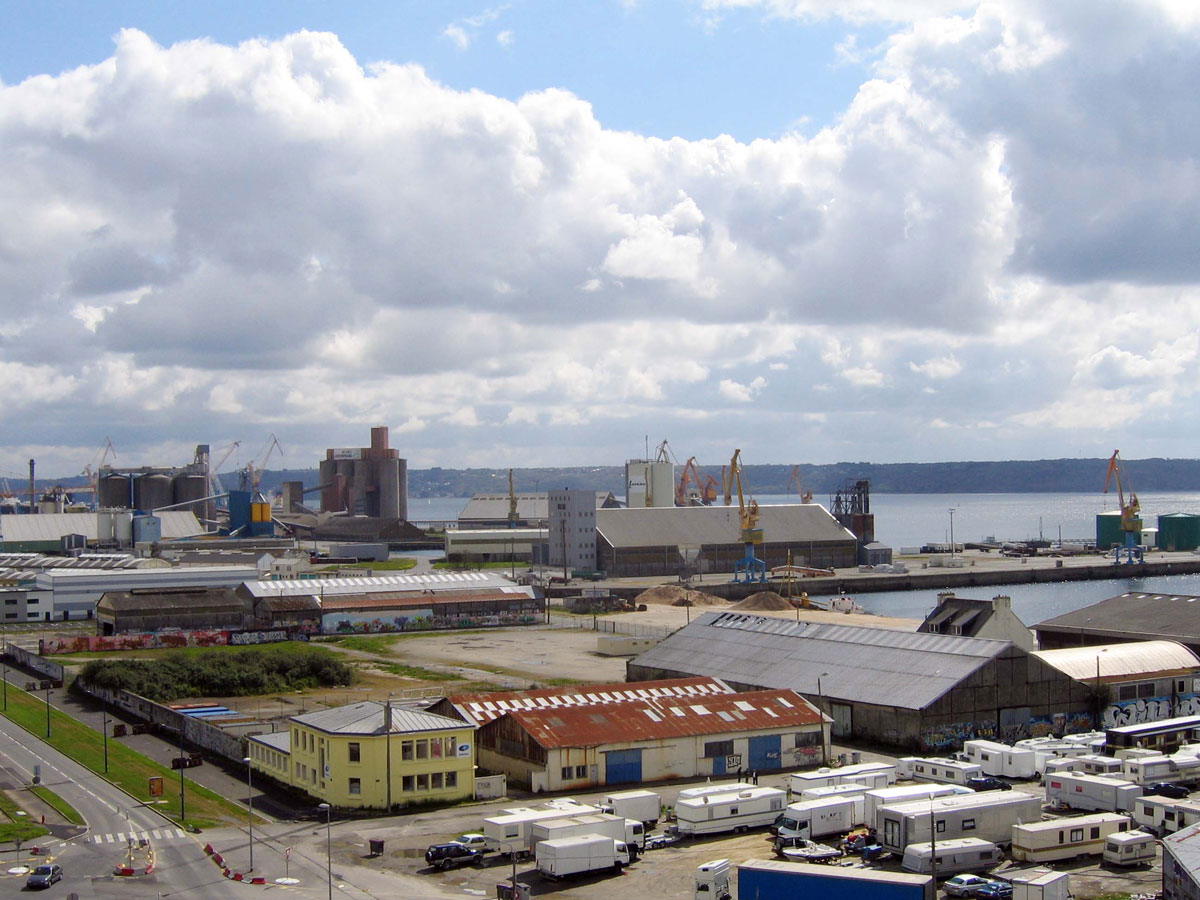
Completed in 1800, this 500 metre long avenue is lined with Plane trees (which weren’t in leaf at the time) with views down to the commercial port, which, it has to be said, was hardly picturesque. Apart from the views, the main point of interest along here is the so-called Pink Tower, originally built in 1927 by the Americans in memory of US naval forces who sacrificed their lives during WWI. Ironically, the obelisk-type tower was destroyed in WWII by allied air raids, but was rebuilt in 1958.
At the end of the Cours Dajot I wandered down to the Quai du Commandant Malbert, which separates the commercial port from the Marina du Chateau. Unsurprisingly, sailing is a popular pastime in the Rade de Brest and this is one of two marinas that cater for the sailing enthusiast: The other (bigger) one is the Moulin Blanc Marina outside of Oceanopolis, and every four years, the city hosts an International Maritime Festival similar to our Tall Ships event.
I didn’t come down here to get on a sailing boat though, but a vedette (motor boat) called the Azenor, which would give us a taste of what the Rade de Brest was all about. There were only a handful of us on board as we left, which meant that there was plenty of room on top for me to wander around.
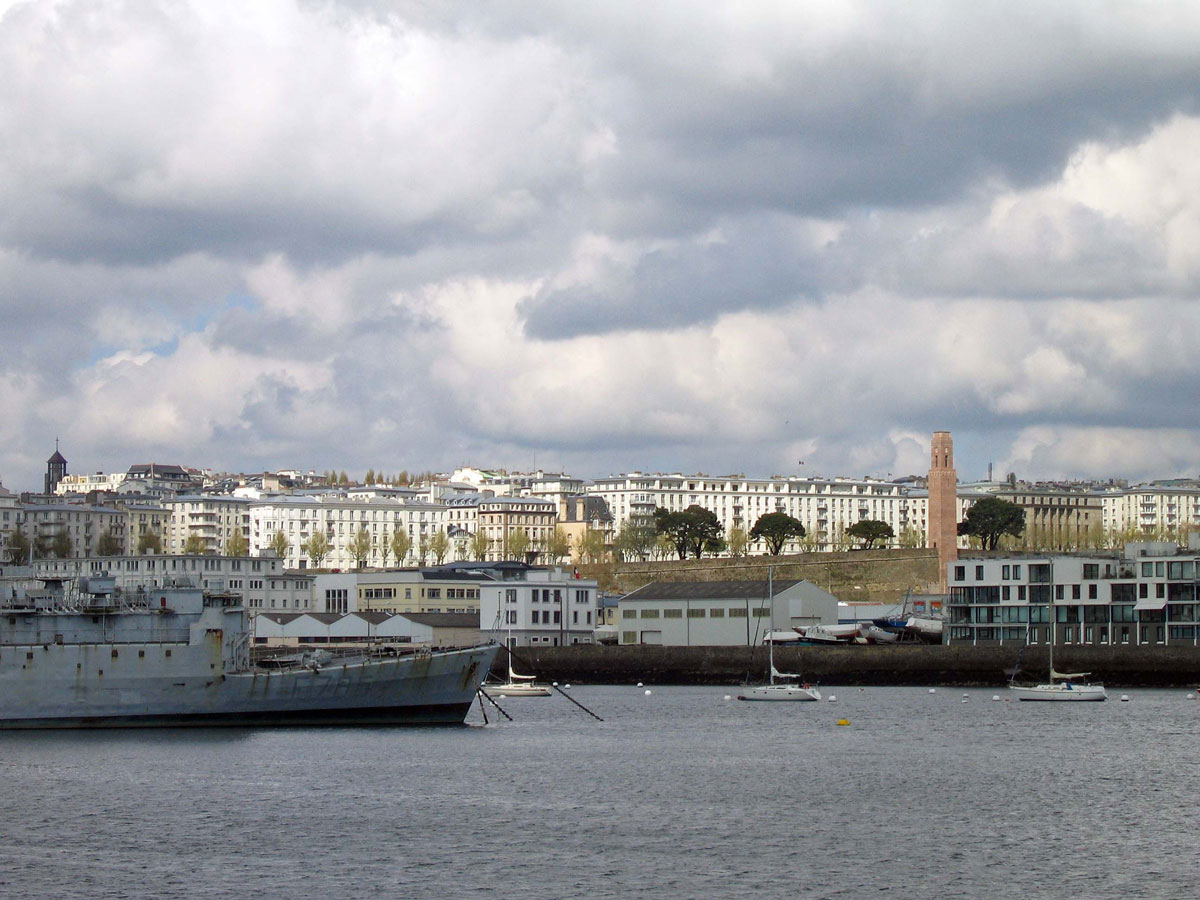
The commentary on board was in French only but I was given a leaflet with a rough translation of what we were looking at. So what exactly is the Rade de Brest? Well, ‘Rade’ is the French word for ‘Roadstead’ similar to Carrick Roads at Falmouth. Wikipedia describes a Roadstead as a “body of water sheltered from rip currents, spring tides, or ocean swell where ships can lie reasonably safely at anchor without dragging or snatching”. In other words, it’s a safe haven for the largest of ships, of which Brest attracts quite a few. As regards statistics, the estuary (for that’s how most people would regard it) covers an area of a hundred and fifty square kilometres (57.9 Sq miles) and reaches a depth of 20 metres (65.6 ft).
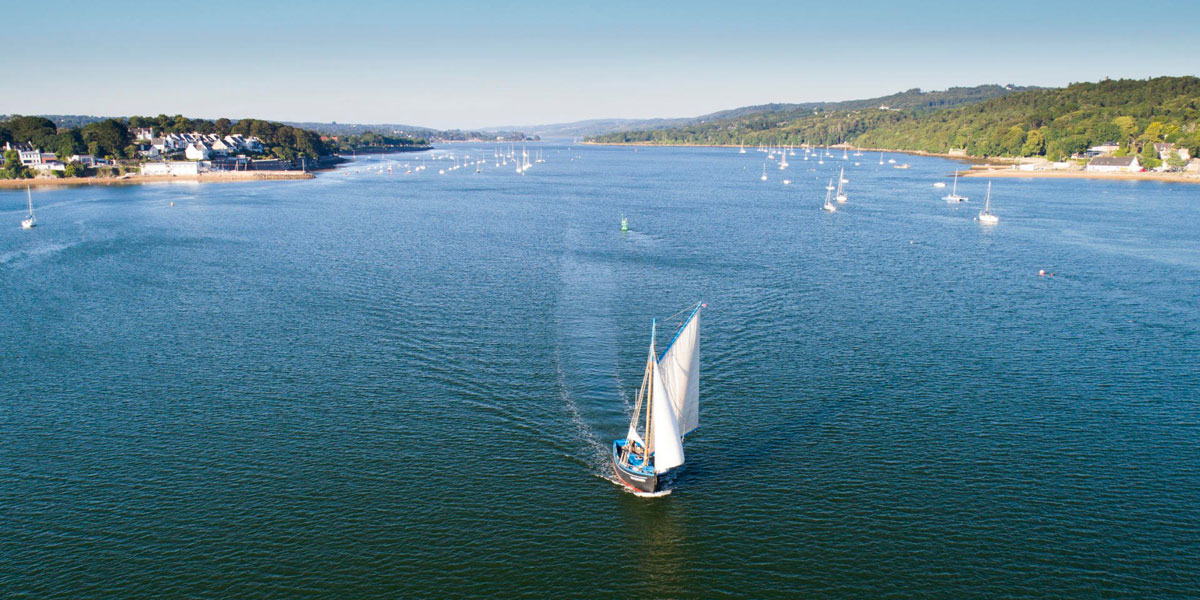
The trip began with the Azenor sailing along the city side of the estuary, starting with the Commercial Port, which I imagine wouldn’t interest most people in the slightest – but I’m not most people, as I actually like seeing what goes on at industrial ports. Brest isn’t the biggest I’ve ever seen, that’s for sure, and it’s only reckoned to be the 15th busiest in France, but even so, it apparently still handles 3 million tons of goods a year, including cement, animal feed – and according to the leaflet I was given, the export of 200,00 tons of frozen chickens!
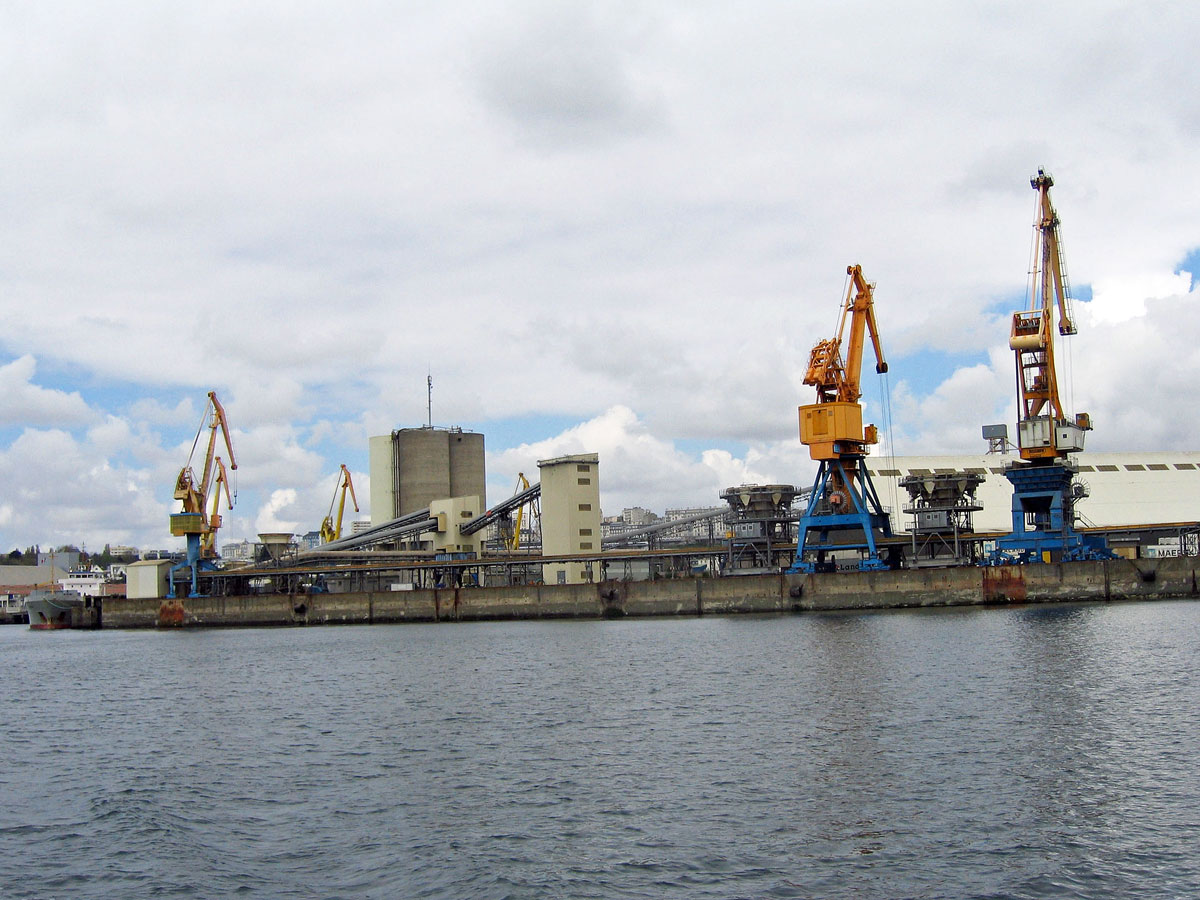
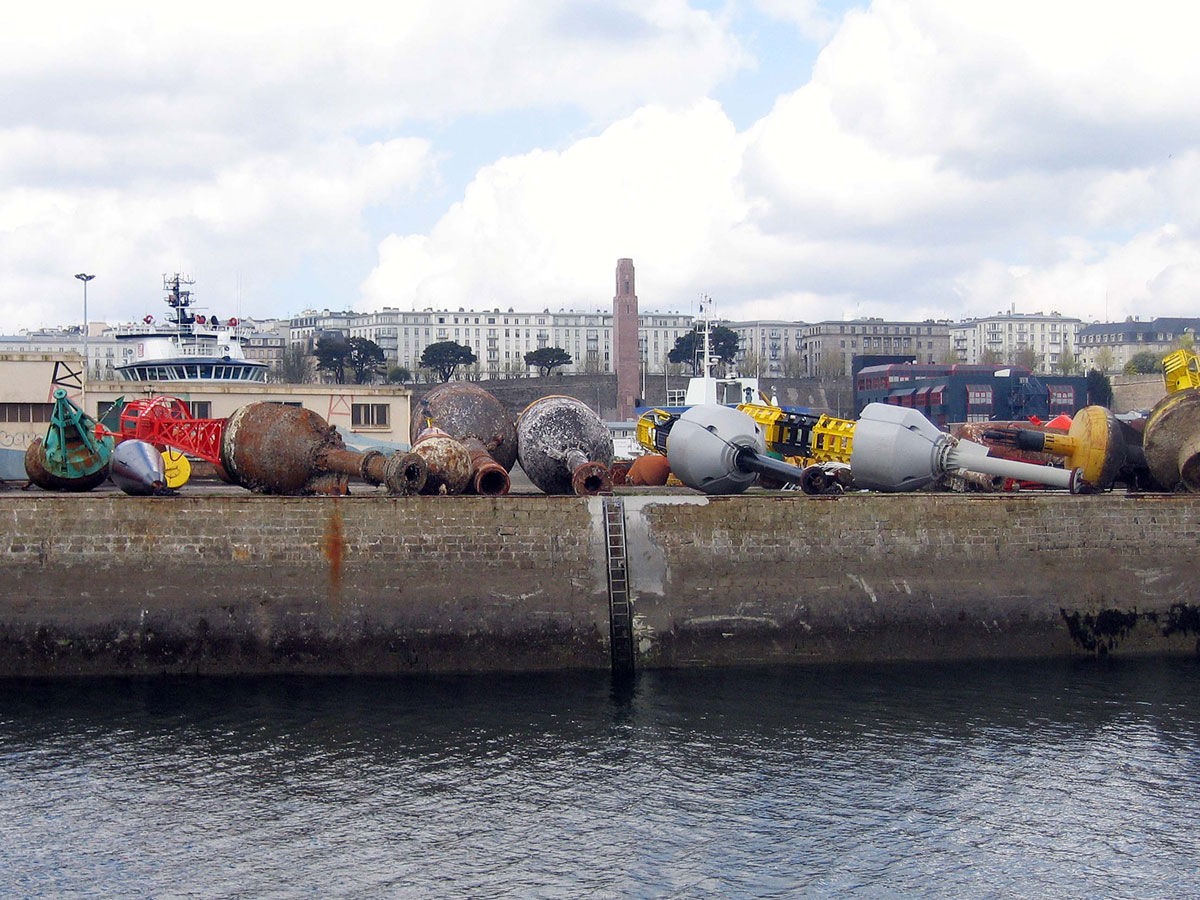
Next door to the commercial port is the Ship Repair Dock, which includes five quays and three dry docks, the largest of which is capable of handling tankers up to 500,000 tons. It wasn’t easy to see these facilities up close from our boat, but I was almost as fascinated by the number of buoys and small lighthouses waiting to be repaired on one of the quaysides.
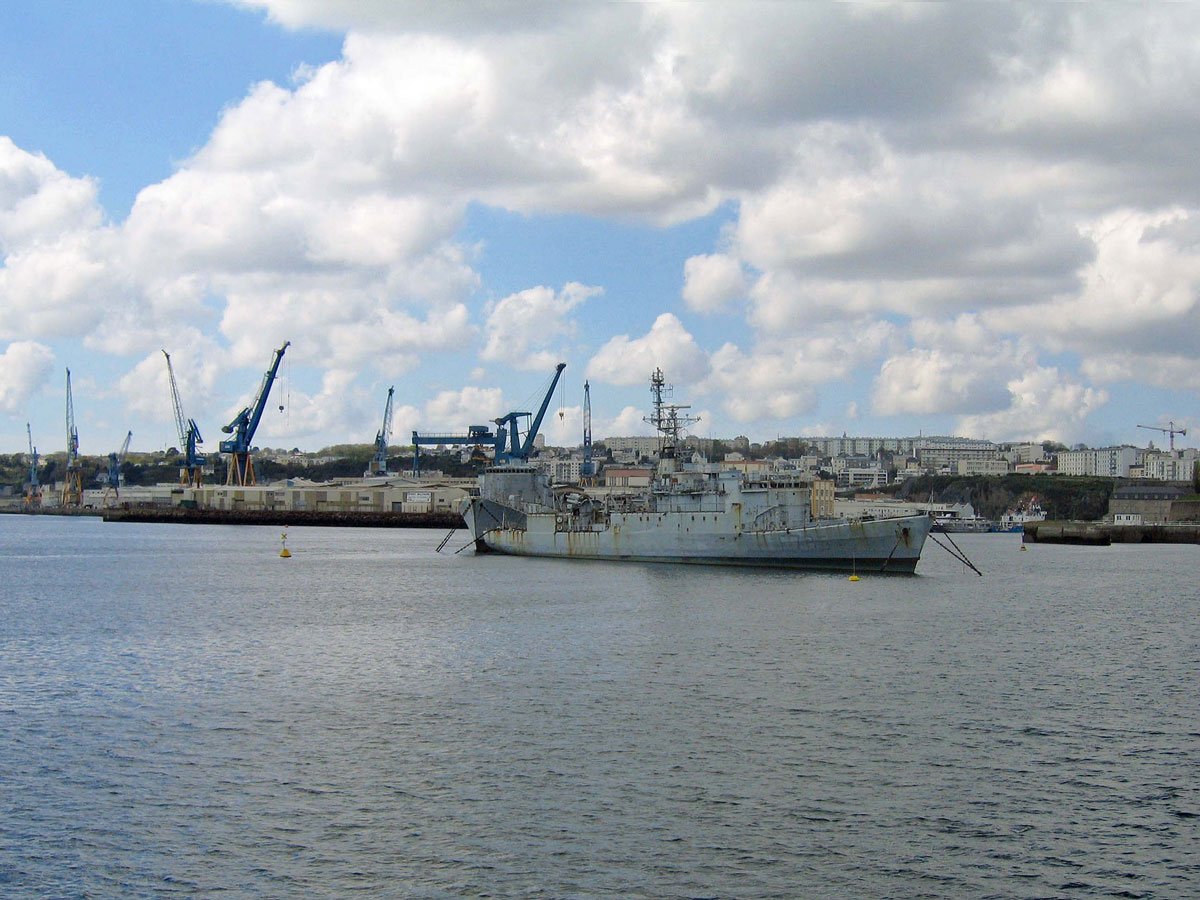
The journey so far was quite relaxing, but as soon as we left the Repair Dock the captain opened up the throttle and shot off at some rate of knots towards Oceanopolis where we picked up a few more passengers. We had a good view of the Albert Louppe and Iroise Bridges (but not a good photographic one) and then crossed over to the Plougastel-Daoulas Peninsula, famous for its cultivation of strawberries – and somewhat more pleasing on the eye than the port opposite.
From the tip of the Plougastel-Daoulas Peninsula we then cut across the estuary to Long Island, home to a submarine base, and then up to La Pointe des Espagnola. Situated in a strategic position at the extreme north-east tip of the Crozon Peninsula, La Pointe des Espagnola is named after a Spanish fort that put up strong resistance against a siege by French and English troops in 1594.
It was built earlier in the year during the Brittany Campaign which had two purposes: The first was to support the Catholic League’s aim to eradicate Protestantism from France and the second was to use it as a base to attack England in retaliation for the defeat of the Armada in 1588.
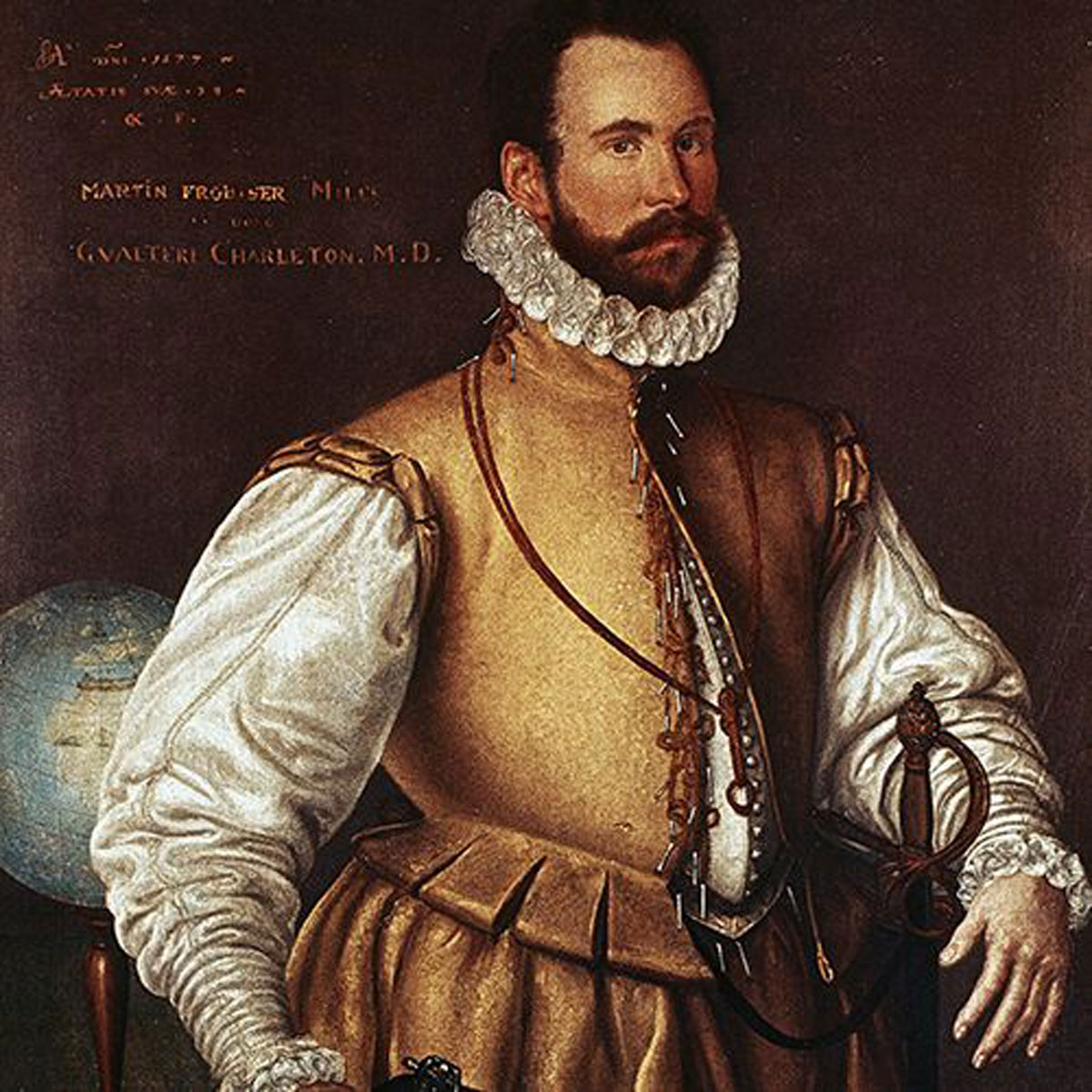
On hearing about the Spanish intentions, Queen Elizabeth sent a task force to remind them who was still in charge, and on 1st October 1594 the Siege of Crozon began. The siege ended on 19th November with heavy casualties on both sides, including one of the queen’s favourite sea-dogs, Martin Frobisher.
Frobisher was a renowned sailor and privateer with a chequered career. As a sailor, he is remembered by the name of the bay where he landed on Baffin Island in Canada while attempting to find a North-West Passage to Asia, but he also played a part in defeating the Spanish Armada, so who better to send to Crozon? He survived the siege but received a gunshot wound in the thigh during the battle. On his return to Plymouth he was left with an infection after surgery and died a few days later. His body was laid to rest at St Giles-without-Cripplegate in London, and his heart was buried at St Andrew’s Church in Plymouth.
The Spanish fort is no longer here but the remains of several successors are, and are best viewed from the clifftop.
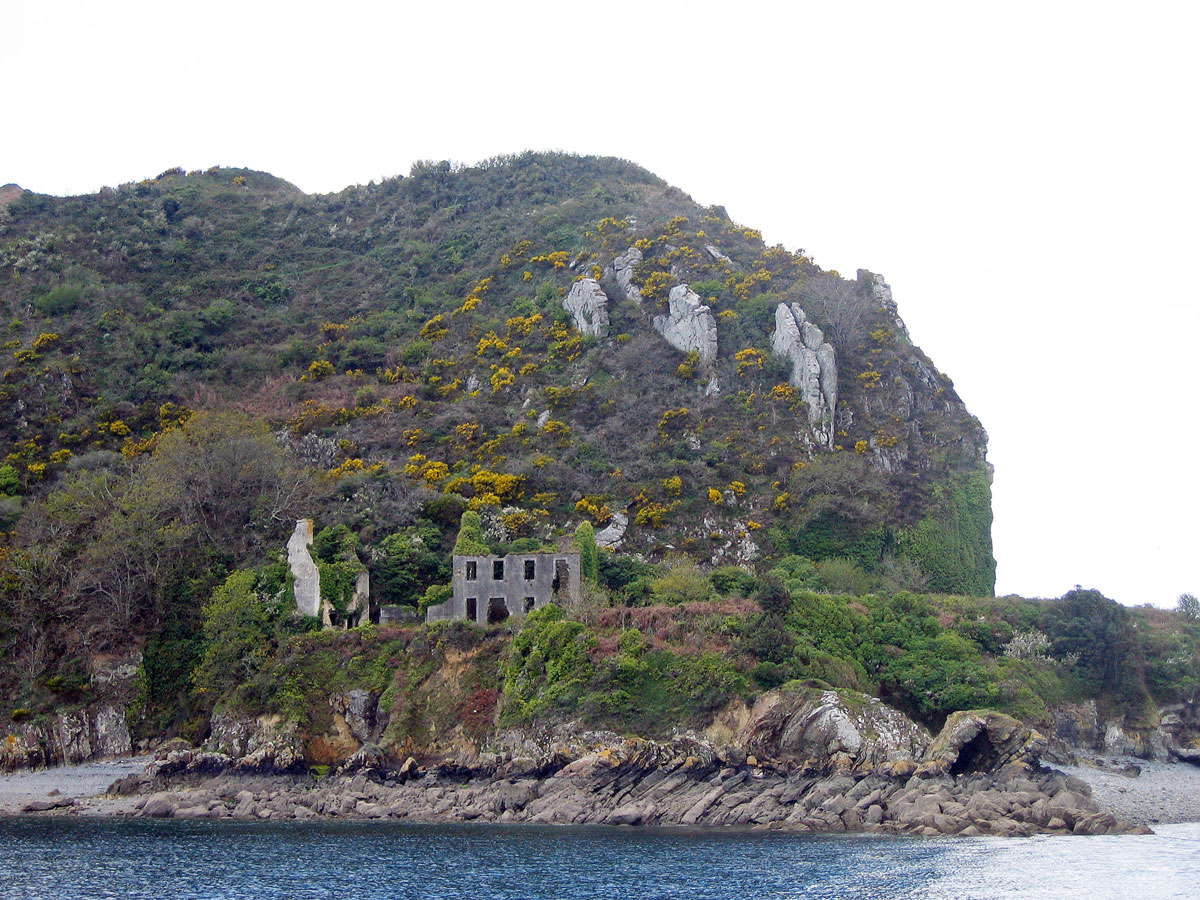
On the other side of the Goulet de Brest from La Pointe des Espagnola is the Pointe du Portzic and its lighthouse, which was where we were aiming for next. The Goulet de Brest is a 3km long strait that leads to the Iroise Sea and Atlantic Ocean. It marks the entrance to Brest Harbour, and understandably, both sides of the channel have been lined with military installations. On 2nd January 1793, it was the scene of the Childers Incident, where the first shots were fired between French and British forces during the French Revolutionary Wars.

We were now back on the city side of the estuary and approaching the naval port and Penfeld River. Two jetties act as a protective barrier to the submarine base which made it difficult to see anything much from our boat, but we were about to return to the quay at Castle Marina anyway. So how did the Rade de Brest compare to Plymouth Sound? Well, it’s larger for a start, and the 1½ hour trip only covered a part of the estuary. Consequently, there was a lot of it that we didn’t see and we only really covered the area around Brest, which by its very nature wouldn’t be the most picturesque part of the landscape. Even so, I found it interesting in other ways, and the visit to Oceanopolis at least gave me an insight into the marine life around the coastline away from the port.
This post, hopefully, will give readers an insight into why the sea has always been important to Brest, and in the posts to come I want to show how the city developed into the second most important naval port in France, so why not join me in Pt 3 to find out why.
POSTED – APRIL 2024
Originally posted 2024-04-23 07:15:42.
Looking up at the sky seems to be something we have in common, Malc, and it’s not really recommended unless you’re somewhere comfortable and cushioned. Not related to the recent spell of dizziness? Glad you were able to limp away and hop on a boat instead. It looks a fine estuary.
LOL. It wasn’t related Jo, and I’d like to think that there are many more tumbles to come 😀
Good to have you back blogging again after your enforced break! I enjoyed my virtual tour of Brest – the boat ride looks especially worth doing. I can’t say that I’ve ever been followed by a jellyfish but that doesn’t mean it isn’t possible. However I have had plenty of slips and falls in my time so I know exactly what you mean about trying to pretend nothing happened!
Thanks Sarah, and I’m glad that I’m not the only one who acts all ‘nonchalant’ when this happens 😀
You must be fully recovered to write such a fab post that is just you all over and why I love your posts. (All right, maybe you are not fully recovered but no-one would know.) You’re funny, you’re down to earth, you’re informative in the best way, you have photographs that have something for every one too. Love the Byrrh one specially–been so cold here I had a wee laugh thinking maybe it means brrrrrr, in which case I’m no going in there. Also… we aye look for the pub first wherever we go. On holiday after all.
Thank you for your lovely comments again Shey. I’m not sure that I really deserve them but I’m happy to read them all the same. I’m ok if I’m sat down and can focus pretty well now, but it all still goes a bit pear-shaped when I stand up, but I’m getting there.
As for the pub, you’ll probable enjoy the final post when I get to it 😉
You more than deserve them. I’m so glad to hear that you are getting there. AS for the pub?? I can’t wait. And I also hope you can get down to yours some time soon x
That’s an incentive if ever there was one🍻
An interesting and informative post Malc, I enjoyed the read and I didn’t know about Martin Frobisher and the Siege of Crozon either until now. Favourite bit has to be the aquarium though, I love those colourful sea anemones – I find watching fish to be very calming and therapeutic. Twenty years ago (I can’t believe it’s so long since) I did a PADI diving course specially so I could dive with the ragged tooth sharks in Cape Town aquarium – it was a brilliant experience.
Glad you enjoyed it Eunice, and although I’m not sure I would be brave enough to dive into a shiver of sharks, aquarium or not, it must have still been a fantastic experience. Even though I’m not over fond of aquariums in general, I do love looking at all these wonderful creatures like anyone else.
Welcome back, Malc. Sounds like memorable trip, with lots of experiences.
Thanks Pat – and yes! there are some more to come 😀
Let me start, Malc, by saying that this post is wonderful because it contains everything you are known and loved for in triplicate, and more! If you are wondering what are they, I will list them: the sense of humour, the erudite history lesson, the fascinating details we could not do without, the stunning photography, the interesting topics covering the places many of your readers will not see in their lifetime, and the writing that leaves us uplifted and inspired in equal measures. All this is here today, and I am so happy to have you back. As to the intelligence of animals, we must see beyond the obvious, as I was when watching the documentary about the legendary intelligence of octopus. The research scientist installed a TV in the room with a large tank where the octopus was staying, and she watched it avidly, even extending one of her arms to move TV the way she liked it. And so the jelly fish might be your follower…
Thank you, Malc, for today’s entertainment, and I am waiting for more as with your talent, Malc, even industrial places are interesting!
Joanna
You’re something else Joanna, you really do make me blush at times 🤭but as long as these posts make you happy, then it makes me happy too.
As for creatures like your octopus and my jellyfish, then they help to make up our fantastic natural world. If you read Scooj’s comments below, then you’ll see what he thinks about it, and I certainly bow to his expert knowledge about such matters.
Anyway, thank you so much again for your lovely comments Joanna, and I hope that my future posts about Brest will continue to entertain you.
You are more than welcome, Malc!
And you certainly entertain me and many others!
I wrote but not publish as yet, about the intelligence of animals, and you will be astonished when you read it! Brain isn’t everything, ours is smaller than elephant’s but we do things they can’t!
I’m looking forward to it already Joanna. Your nature posts are absolutely amazing !
Thank you, Malc, for your kindness!
Joanna
So good to see you back, Malc. 🙂 And you’re clearly on form as this was another cracking read. Well, what Brest lacks in historic town attractions it clearly makes up for with maritime interest and history. Maddie would love it. You don’t usually hear about these other events surrounding, or arising from, Elizabeth I’s defeat of the Armada, and I hadn’t known about the Siege of Crozon. It’s a great reminder that pivotal events from our past, such as the Armada, didn’t happen in isolation. In fact, there were many related dramas that played out, both near and far, long after the key dates we know so well staked their claim on the pages of history. I’ll show this to Maddie, as she studied the Armada as part of her history A Level and I don’t know whether she knows about the Crozon siege.
I’m glad you found a) a good bar, b) something to eat and c) some interesting things to do in Brest – slippery path and tumble notwithstanding (it happens to the best of us!) – and I look forward to learning more about the place and it’s importance as a French naval port. Welcome back, my friend! 🙂
I’m so glad that you enjoyed this post Alli as I wasn’t sure what I was writing half the time 😊and it’ll be interesting to know what Maddie thinks about Martin Frobisher and the Siege of Crozon. If nothing else, at least I’ve done my bit for St George’s Day by keeping our history alive, regardless of what some people may think about it.
Like Helen said, places that don’t immediately demand a second glance often repay you with something else, and as my future posts will reveal, that was definitely the case with Brest.
Thank you so much for your thoughtful comments. I really do appreciate them as you well know Alli. 💙
You’re very good at discovering the best bits of a place that would pass most of us by, and your adventures are always a pleasure to read about. 🙂
Maddie has now also read and enjoyed the post, and like me, she hadn’t heard of the Siege of Crozon. Neither had Martin Frobisher featured in her school lessons. She found it very interesting though, so it seems you’ve taught us both something, for which we thank you. 🙂
Thanks also for your lovely email, which I’ve just read, and I’ll get back to you very soon. 🙂 x
Thanks Alli, and I’m pleased to add a bit more information to Maddie’s already extensive knowledge about Brtish naval history – and yours too for that matter.
I look forward to your email reply, but you don’t need to put a first class stamp on it 😊x
As ever, this article is interesting and well documented. I liked it a lot.⭐⭐⭐⭐⭐
You know I am always grateful for your great posts that help me broaden my knowledge, as well as for your kindness and valuable support
PS: I hope you are better, dear Malc
Thanks for your lovely comments Luisa. I’m especially pleased that you found this post interesting because as you know I was struggling to focus on anything at all, but I am improving bit by bit. You will always have my support and as the song says, ‘Always look on the bright side of life’😉
Thank you so much for your lovely reply, Malc ❣️
Take great care of yourself, also because you are very dear to me
Ah! That’s such a lovely thing to say Luisa. I like to think of us as one big happy family on here, and where we can all help each other when we need a shoulder to lean on. ❣️
I fully agree with your reflection, dear Malc. There are some friends here who, like you, are very supportive .
I feel really connected to these 💞
That’s good to know Luisa 🤗
😚🙏😚
As a trained marine biologist, Oceanopolis would be a big draw for me. Jellyfish do not have brains as such, but a network of nerves. They do have simple eyes that might detect light, though. A fascinating boat trip, and like you, I love looking at dockyards. As a child, I used to look across at Falmouth Dockyard from my grandparent’s house in Flushing opposite, always finding new things to look at. Another great post from Brest.
Just the man I need to explain it. Thanks for that Stephen, and I’m pleased to know that I’m not the only one who likes dockyards 🙂