
Derry/Londonderry's West Bank - Pt 2 The Bogside (1) Dirt Beneath the Carpet
WARNING – Some readers may find this article upsetting
During my series of posts about Derry/Londonderry, I’ve attempted to show how the city eventually became the spark that lit the fuse for the so-called ‘Troubles’ of Northern Ireland, and although hostilities officially came to an end with the signing of the Good Friday Agreement in 1998, it didn’t necessarily mean that the Protestant and Catholic communities were immediately one big happy family again, and as my previous post about the Creggan and Fountain Estates showed, it was going to take a quite a bit more time for the wounds to heal, and these posts about the Bogside will attempt to show you why.
Those of you who did manage to read that previous post may also remember that Paul, my taxi driver, dropped me off at a café just outside the city walls, which meant that I had to walk up Waterloo Street into The Bogside which, as the name suggests, was once a boggy area lying underneath the ‘Hill of Doire’ where St Columba set up his first monastery, and where St Columba’s Cathedral now stands. As I walked along the pathway under the city walls it was difficult to find a spot which wasn’t covered in broken glass. I’ve been to numerous places where broken glass has been a problem, but this was the worst I’d ever come across, and then it dawned on me why that might have been. On the city walls above is a large wire fence to protect buildings from being petrol bombed, and all this glass could well have been a return compliment. I don’t know for sure of course, but it would have made sense.

As I was still too early for the walking tour I took a wander around The Bogside alone. I’m not normally one for using tour guides anyway and so I was quite happy to soak up the location and take a few photos. Rightly or wrongly, I thought that the area around Rossville Street and Lecky Road would be perfectly safe as it wasn’t uncommon for visitors to wander around here, even if only to take a look at the murals painted by the Bogside Artists. Even so, there was no mistaking the fact that members of the Royal Ulster Constabulary (RUC) still weren’t welcome anywhere near the place.
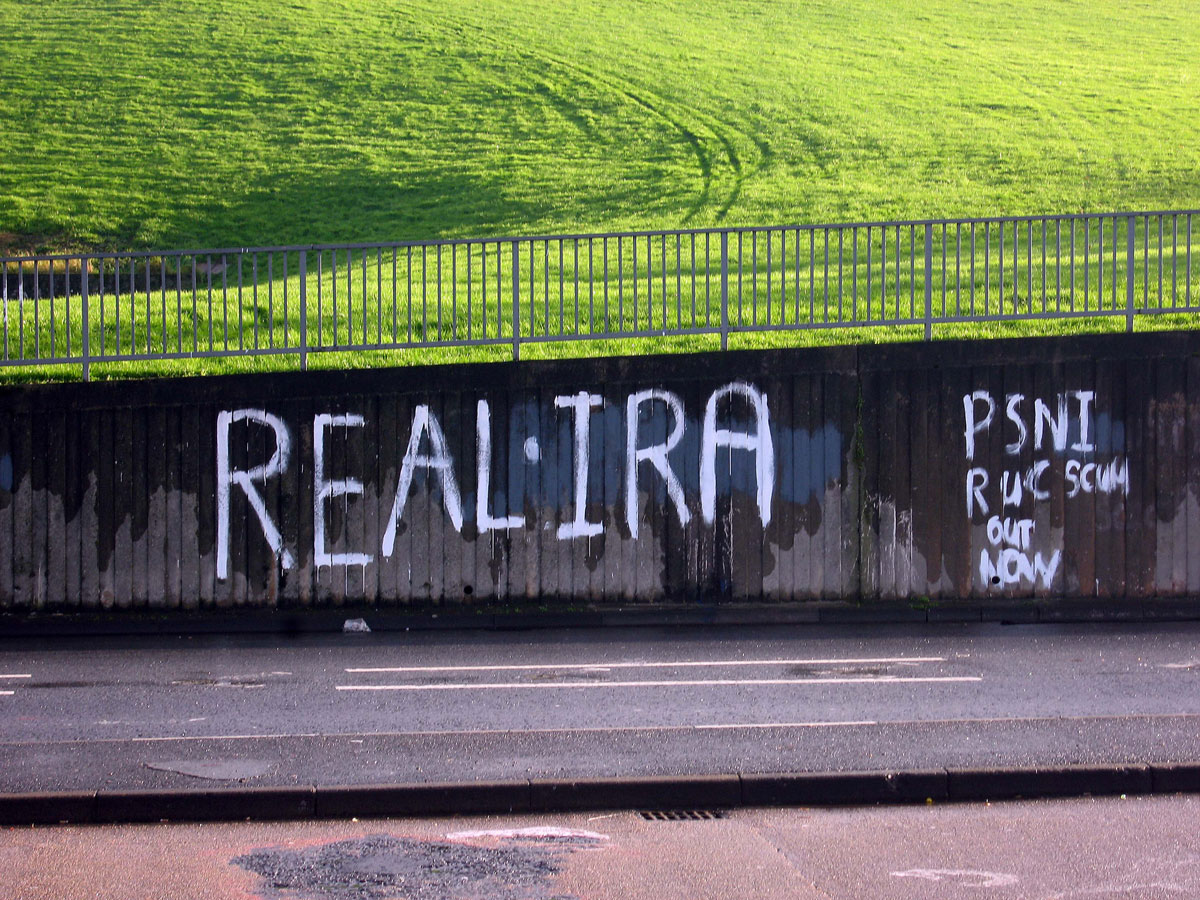

It was obvious that the appearance of the immediate area had changed from the days of The Troubles because the infamous Rossville Flats were no longer here and some of the terraced homes had been replaced by a new housing development and shopping precinct, but other than that, the Bogside doesn’t appear to have changed all that much, not that I ventured very far mind you.
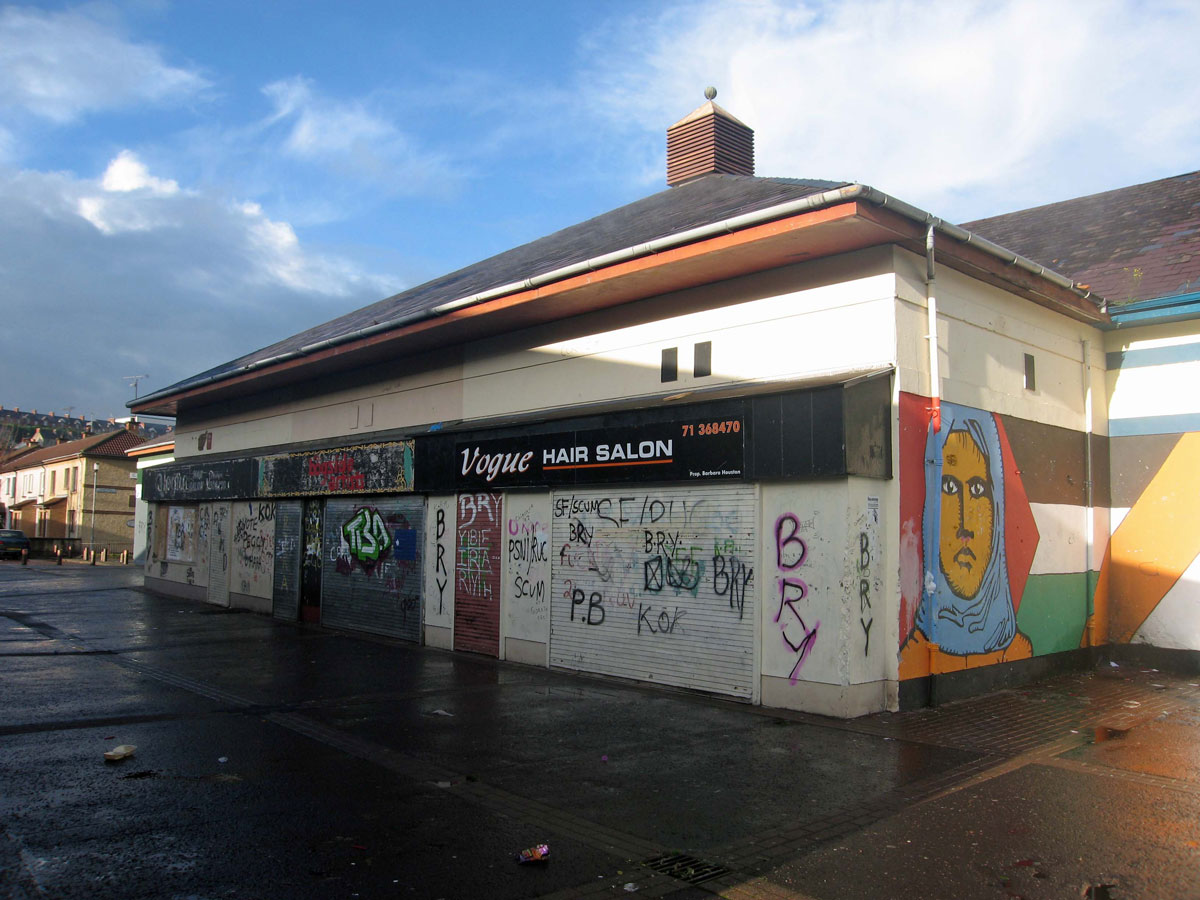
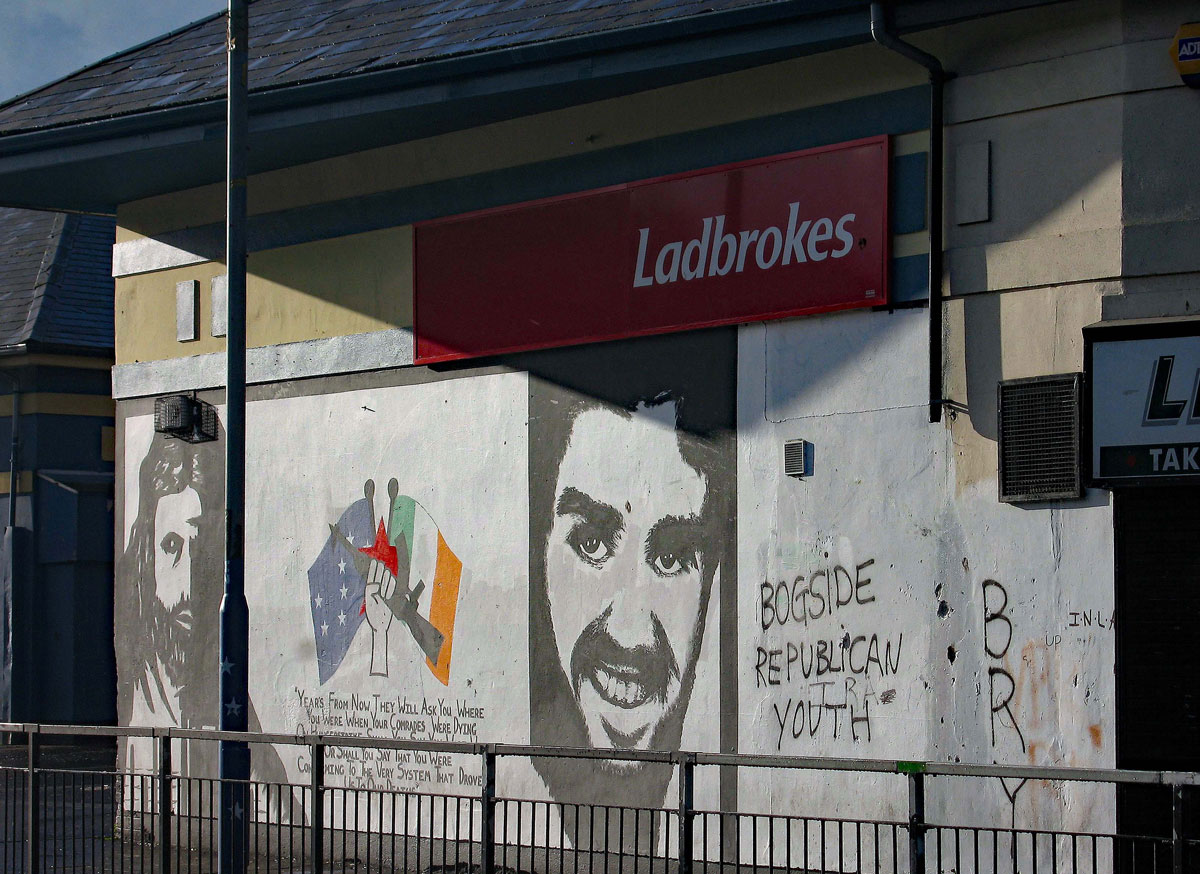
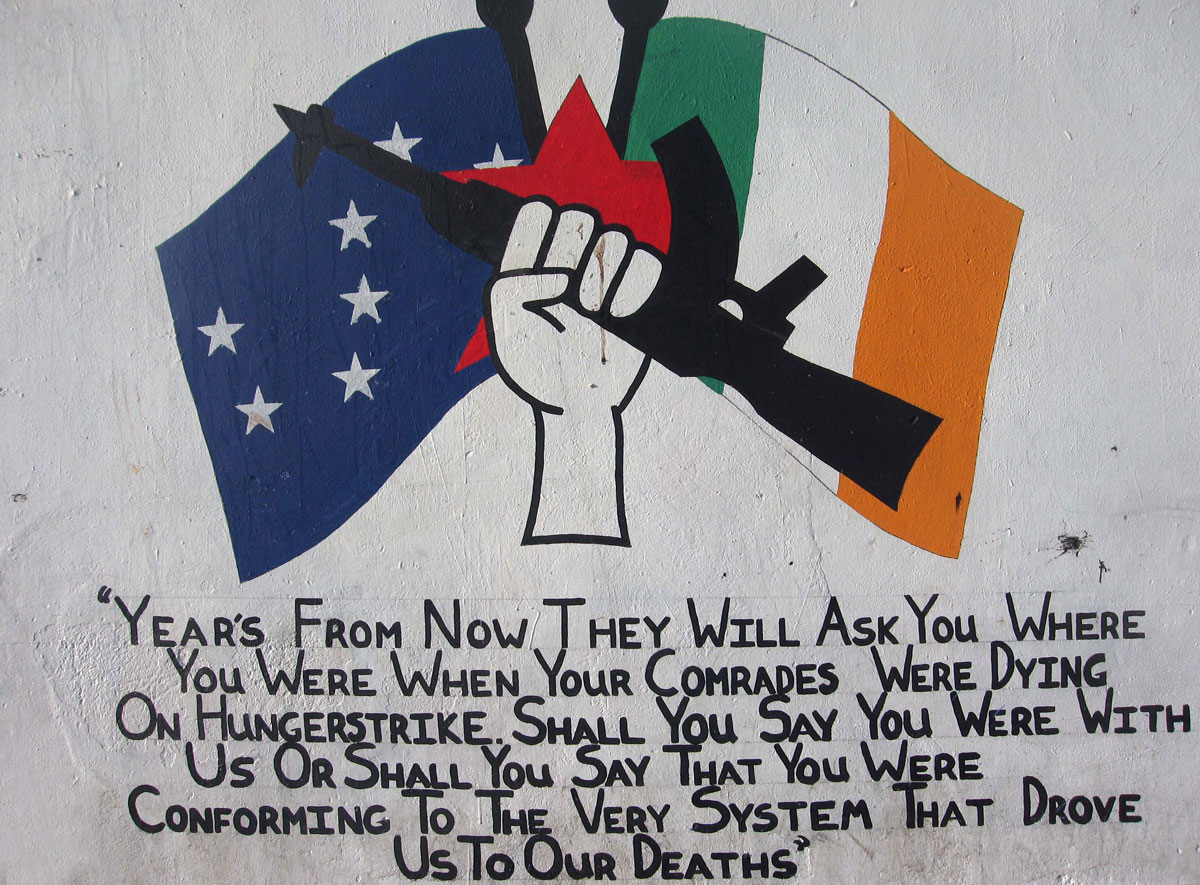
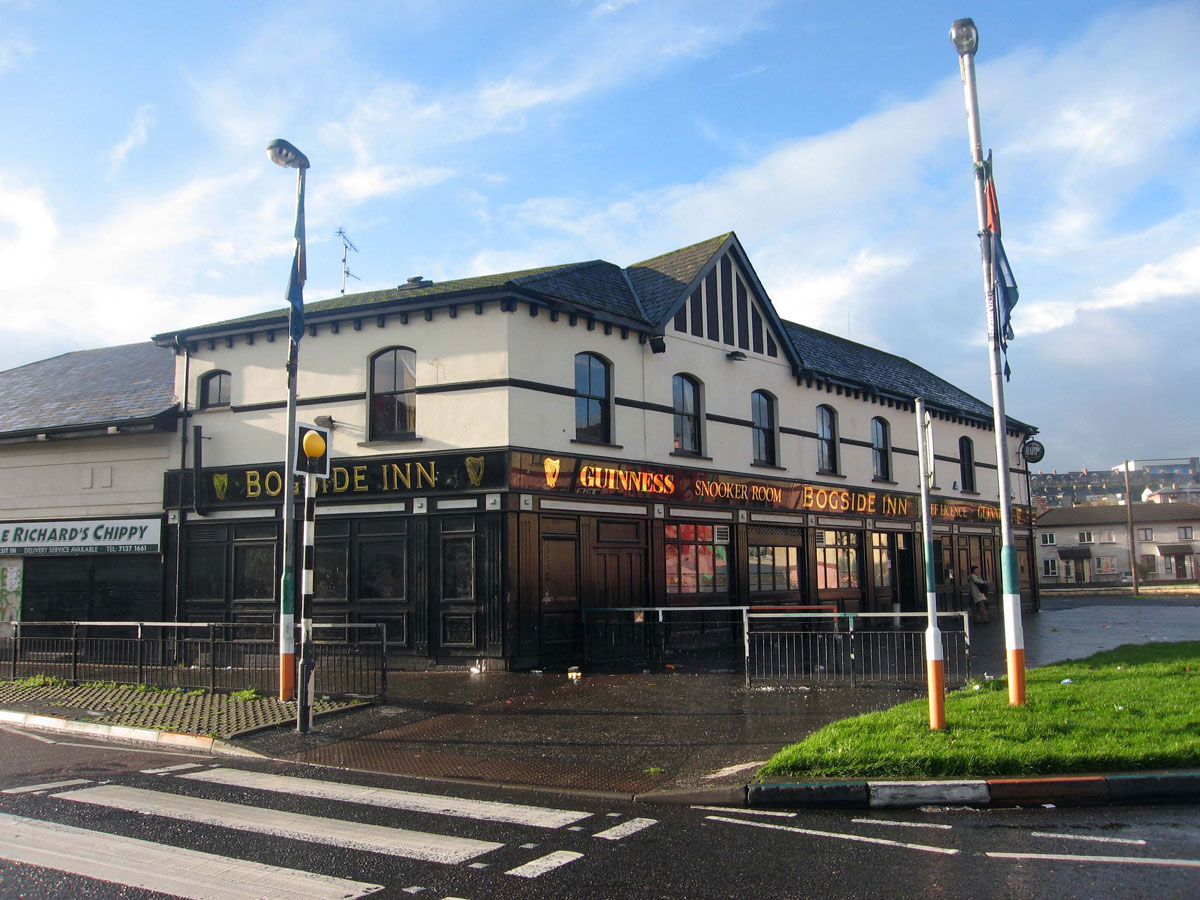
Next to the precinct was the Bogside Inn: I’ve lost count of the number of dodgy pubs I’ve frequented over the years, but from the outside at least, the Bogside didn’t look too bad, so I ventured in. It wouldn’t have been a wise move in the past that’s for sure, but it looks as though it may well have had a makeover since, but even so, although it wasn’t unfriendly as such, I wasn’t actually welcomed in with open arms either.
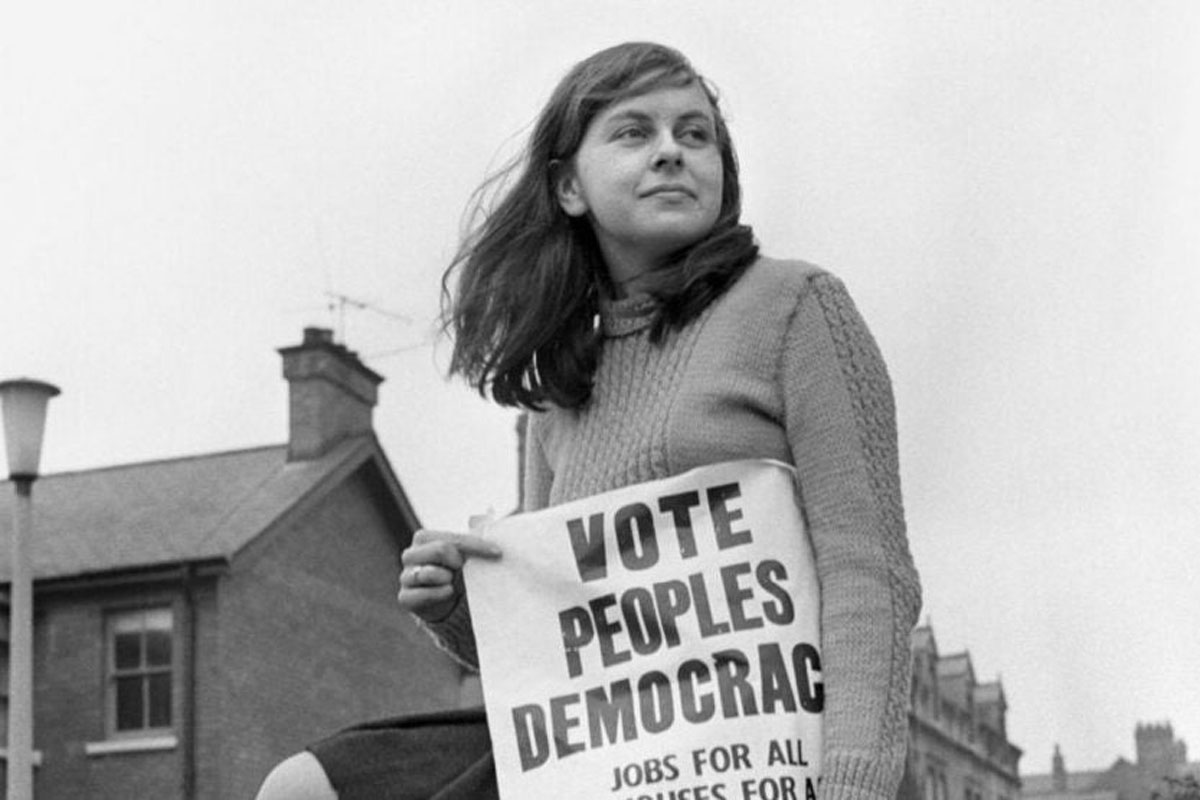
After ordering a pint of Guinness I found a seat and started to read up about what happened after the 1968 Duke Street civil rights march, which if you remember, ended up with chaotic scenes in the Bogside. Four days after the event, students at Queen’s University in Belfast organised a march of their own in protest against the brutality meted out by the RUC at Duke Street: Leader of the group was the influential activist Bernadette Devlin, who soon after the march, formed the radical People’s Democracy (PD).
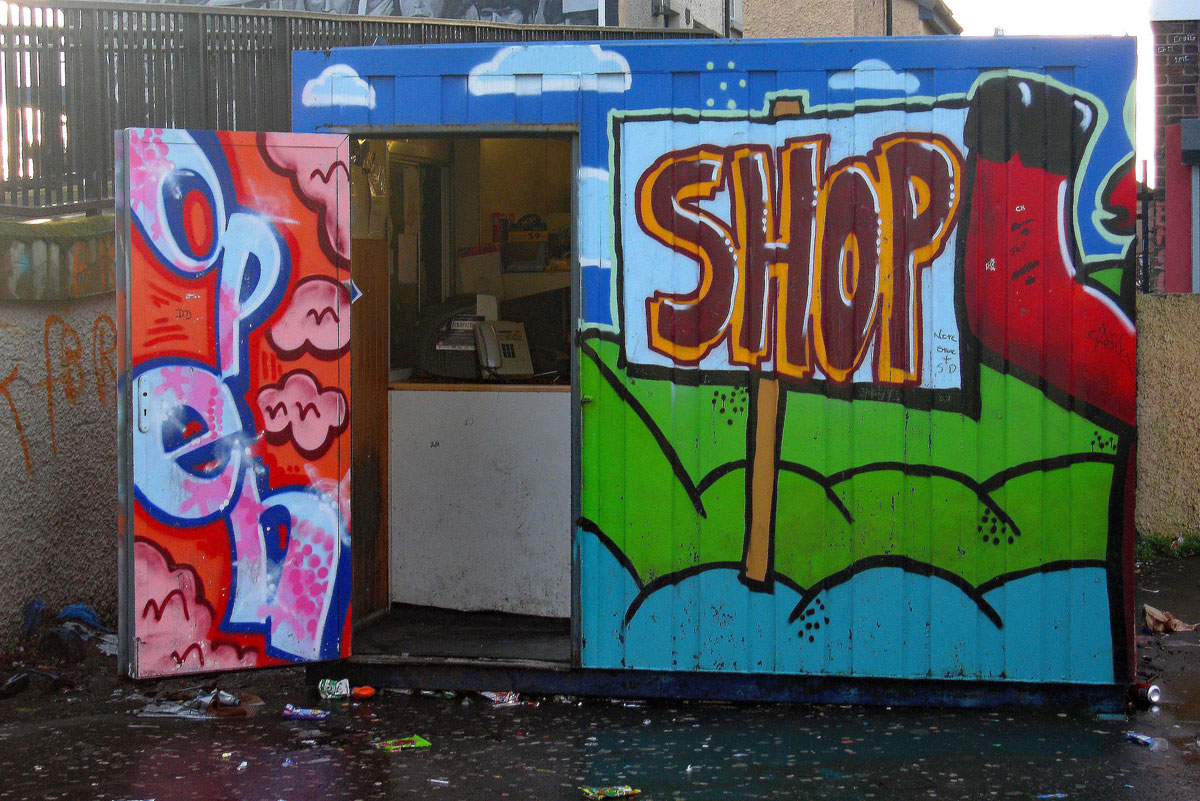
Before leaving the pub, I had a quick look at the photographs adorning the walls which showed what life was like here during the Troubles, but whatever happened to them I don’t know because both the shopping precinct and the Bogside Inn were demolished in 2021 and the area is still awaiting redevelopment. I then made my way along to the Free Derry Museum where the walking Tour was going to start from and bought a bottle of water in the museum ‘shop’.

I arrived five minutes early and was still the only one here, but when the guide arrived, another three people appeared out of the woodwork. I can’t remember our guide’s name, but he was a Bogside man and a student at Queen’s University the same time as Bernadette Devlin, and he started off by giving us a first-hand account of the next serious altercation after the Duke Street march.
Before I continue though, I think it’s important to take a brief step back in order to put things in perspective. When Northern Ireland was created in 1921 it was to ensure that the Protestant population in Ireland was able to remain British and not have to live under Irish rule, but there was an underlying fear from Unionists that Catholic numbers would increase and take over control of the province if measures weren’t taken to prevent it. Their concern was a real one because in 2021 the Catholic population did indeed become the majority in Northern Ireland – but that wasn’t the case back in 1969, and the Catholic minority were subject to what they saw as unfair discrimination.
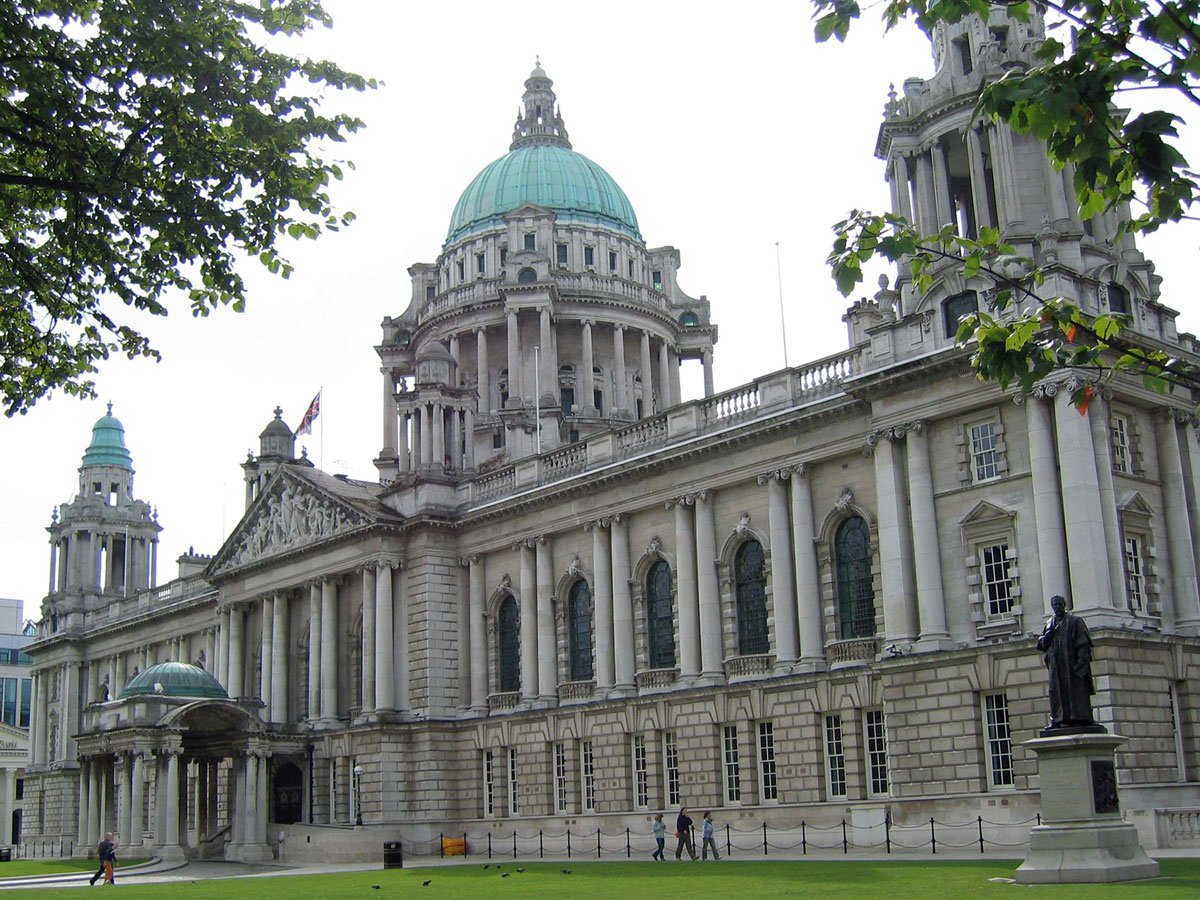
This was how supporters of both sides would have seen the situation when Bernadette Devlin’s People’s Democracy organised a ‘Long March’ from Belfast to Derry for New Year’s Day 1969, but it should also be remembered that moderate Civil Rights activists weren’t too keen on the idea, because since Duke Street, concessions had been made which had calmed the situation down. Devlin’s response though was to say that the march was an attempt to “pull the carpet off the floor to show the dirt that was underneath”, and so the 4-day march started off from Belfast City Hall with around 40 supporters, and as expected, plenty of protesters.
Prominent Loyalists were among the protesters to see the marchers off, promising to harass them all the way to Derry – and they were true to their word. The ‘impartial’ RUC accompanied the marchers to make sure that they didn’t come to any harm, but by all accounts, they didn’t seem over-enthusiastic about doing so, and at several places along the way the marchers came under attack.
As the 4 day march progressed, the numbers supporting the march increased, but at Burntollet Bridge, 5 miles from Derry, they were ambushed by a 300 strong party of Loyalists, including off-duty members of the ‘B Specials’ (a Loyalist reserve militia). The number of casualties vary as they always do, but figures up to a hundred civil rights marchers doesn’t sound far off the mark, and one of those was our very own guide who showed us the scars on his head to prove it.
Those that were left standing continued towards Derry but were attacked twice more in the Waterside area of the city before reaching Guildhall Square where they were welcomed by a crowd that was, on the one hand, happy to see the marchers return, but also angry at the lack of protection for those that took part. That anger spread over into the Bogside where clashes erupted between locals and the RUC. To make matters worse, later that night, homes were broken into by members of the constabulary who felt it necessary to dish out their own form of punishment. A later enquiry concluded that “a number of policemen were guilty of misconduct which involved assault and battery, malicious damage to property… and the use of provocative sectarian and political slogans.” Whatever the rights or wrongs of holding that march were, it looked as though Bernadette Devlin had uncovered the dirt beneath that carpet.
POSTED – APRIL 2025
Originally posted 2025-04-02 14:59:31.
You’d think that, yes, but it appears that despite all our technological triumphs the scope for human idiocy knows no bounds, in time or space.
Your efforts to understand what happened and why during the troubles in Northern Ireland are commendable, Malc. Your visit to the less salubrious locations that were right in the thick of the action demonstrates your broad interest in history, and not just the pretty bits (not that there are that many pretty bits in truth!). You’ve clearly learned a lot about the fallout from the Troubles and the disturbing progress of the ‘Long March’, and again I have, in turn, learned from you. Glad to see that, despite the cool welcome in the pub, you were still in one piece when the walking tour started!
Some people may think I just have a morbid curiosity Alli, but I just want to understand why wars break out and people behave they do. That way, perhaps the same mistakes won’t keep happening. They say that the first casualty of war is the truth, and there’s definitely some truth in that. So many conflicts could have been avoided if only those in power listened to those who had a grievance. I believe that was the case in Northern Ireland back then, and I believe it could well happen in the rest of the UK (and Europe) now if those in power don’t start listening to what the majority of native people want.
I can certainly see the potential for some kind of civil war erupting here before long. In some ways I’m surprised it hasn’t already kicked off.
I can also see why you feel the need to delve deeper into the causes and effects of wars to avoid the same things happening again. However, the sad truth is that we humans don’t seem capable of learning from our past mistakes, which is why history keeps repeating itself in one form or another over and over again, and it probably always will.
I’d like to say you were wrong, but you’re not. You would think wouldn’t you, that if we can send humans into outer space, then we would have the ability to keep peace here on earth.
I remember Bernadette Devlin being in the news a lot around that time and some of the coverage of the Troubles but I was too young, I think, to understand what was going on and what was at the root of it. Thank you for the (as always) interesting history lesson 🙂
I should add that I really don’t think you should shy away from topics such as this (having now read other people’s comments). I wouldn’t come to a post about a visit to Northern Ireland and not expect to read about the Troubles and therefore to find some ‘challenging’ content. We can’t pretend that the terrible events of the past didn’t happen, here or anywhere else. But you would expect me to say that if you’ve read my own posts about the Khmer Rouge in Cambodia, for instance.
I do remember, and you are right. It didn’t take me long to decide to continue with these posts, but I’ve added a warning for anyone who doesn’t like reading about this sort of thing.
A big thank you for your support on this particular issue Sarah. As you know I blog for my own reasons and am just grateful if other people get something from them too.
I remember Bernadette Devlin’s name and seeing her face on the tv news at the time, and although I wasn’t a child in the sense of the word I wasn’t really old enough to understand what the Troubles were all about, so these posts of yours are going a long way to explaining things. Not everyone’s cup of tea and uncomfortable reading for some maybe but it’s all history and whatever the actual subject history shapes our present and our future. As I’ve said before, I wish you had been my teacher when I was at school 😊
What a lovely reply Eunice. Thank you! I didn’t fully understand the situation at the time either which is why I was determined to find out. You’re also so right about how history shapes our future. I’m going to continue writing posts about N. Ireland, and some of them won’t make pleasant reading, but if I get to the end, there should be some brighter moments to look forward to.
When I read posts like yours, it makes me truly appreciate that I live in a peaceful country. I keep reminding myself not to take that peace for granted. Thanks for the historical stroll. Mel
Thanks for your support Mel. It means a great deal.
May I say once again that I think this is another excellent post on a very difficult subject. Please don’t delete it, or ever stop writing like this either. You have written as you found. . You are a world wanderer in many ways and the world is not always a rose scented garden. The graffitted shops reminded me of our local ones when I was growing up actually. Okay the graffiti was different as was the country, the people, the history etc. But just the same. Anyway, thank you for this.
Your words are music to my ears Shey. I don’t need to say any more do I? ⭐
Just that you will keep on writing.
You bet I will!
Yes!!!
🙏😊
Have you read Sean Dillon series by Jack Higgins? He’s interesting character was involved in both sides of the Trouble.s
I haven’t Pat, but they do sound interesting. In fact I haven’t read many novels in recent years. I have read plenty of true life books about the Troubles though as you can imagine, some of which are so violent I wouldn’t recommend them, but Peter Taylor’s trilogy is as good as any to get to grips with the different points of view (Provos, Loyalists and Brits) – should you ever feel the need to find out more.
Mam always used to say that 2 wrongs don’t make a right, and this whole thing seems to have been a succession of wrongs, Malc. They must certainly have been hard times to live through and I know they left many scars, physical and mental. It’s still happening today- people with a grievance being stirred to action, sometimes with dire consequences.
Thanks for commenting Jo, especially as I realise that subjects like these are not really your idea of a comfortable read. Two wrongs certainly don’t make a right, but I also realise that there can be two different points of view which can both still be right. I know that sounds like a Malcism, but it’s true if you think about it. Mind you, I don’t think that’s the case where NI is concerned.
Apologies, Malc, but my comments won’t be to your liking. As much as I loved your excellent posts on painters, your writing about the dreadful place and the people who should not exist, makes me sad and disappointed at the waste of your writing and photographic talents. If I wanted to read or watch horror, I would only need to see daily BBC news. That is why reading about the piles of broken glass, and people of one country violently hating each other is as far as the moon from my interest. I do hope that our friendship will survive my comments as you are a wonderful and kind person, but I am too old to lie.
Joanna
We all have to be true to our own beliefs Joanna, and I won’t deviate from mine. These posts about Northern Ireland are an attempt to understand what happened and why. People can live in a utopian world as much as they like, but unfortunately the real world is not what we would all like it to be. I won’t write articles about current political affairs because they would just be opinions, but my posts about Northern Ireland are historical, and therefore facts – or at least as far as I believe them to be. I’m too old to lie as well, but as far as I’m concerned, our friendship will survive – as long as you want it to.
Thank you, Malc, for your gracious reply. I can never understand the horrors that happened in Northern Ireland, and never will. Please remember that I read memories of people who had to kill their best friend (who had a wife and children) to prove to be worthy of belonging to some party or other. Do I want to understand their actions?! No, and wouldn’t waste time when there are so many good and normal people worldwide. Of course, dear Malc, I do want our friendship to thrive because you are the personification of kindness!
Joanna
I don’t write posts like these deliberately to upset people Joanna as you must realise. My articles are all travel related, and I could hardly write about Northern Ireland without mentioning The Troubles. Having lived through that period (in England not NI) I remember only too well the carnage that occurred on a daily basis, and as we all know, the first casualty of war is the truth, and I know from first hand experience how msm can be economical with it, which is why I delve deeper than most to find it.
Your interests lie in the natural world, and as someone who is also interested in that I fully understand how you feel, but my interests also lie elsewhere and includes history, world affairs, the arts and all manner of stuff. Another thing to remember is that I do these blogs for personal reasons, and it’s a bonus if someone else gets something from them, for which I’m truly grateful.
For these reasons, I’m not going to stop writing posts that some people may find upsetting (even if the content is about somebody else’s actions), but what I will do is give a trigger warning so that people don’t have to read them if they don’t want to. It’s definitely not my intention to upset anyone, and if anything I try to make sure that I don’t, but at the same time, I can’t be responsible for other people’s feelings to the extent that I won’t write about subjects that I want to in case it offends somebody either.
Thanks a lot for sharing this interesting post and its beautiful photos… and for this great page of Irish history, which I only knew in broad outline.
Thank you Luisa for your kind words. I always value them as you well know.
It’s always a pleasure for me to read your posts, dear Malc!
Thank you Luisa. It means a lot. 🙏
You are truly welcome ❣️❣️❣️ It was a pleasure
Thanks again Luisa but I’m thinking of deleting this post. It doesn’t seem to have gone down too well in some quarters.
Really? Who’s afraid of confronting history? If they have another version they can kindly propose it,
Everything varies according to the point of view, but this always happens in our lives
Thank you so much Luisa. You have no idea how much your words mean. You’re one hell of a blogging friend!
I always appreciate your words, dear Malc, and I appreciate you so much.
Likewise Luisa, likewise 🙏