Tag Archives: The Troubles

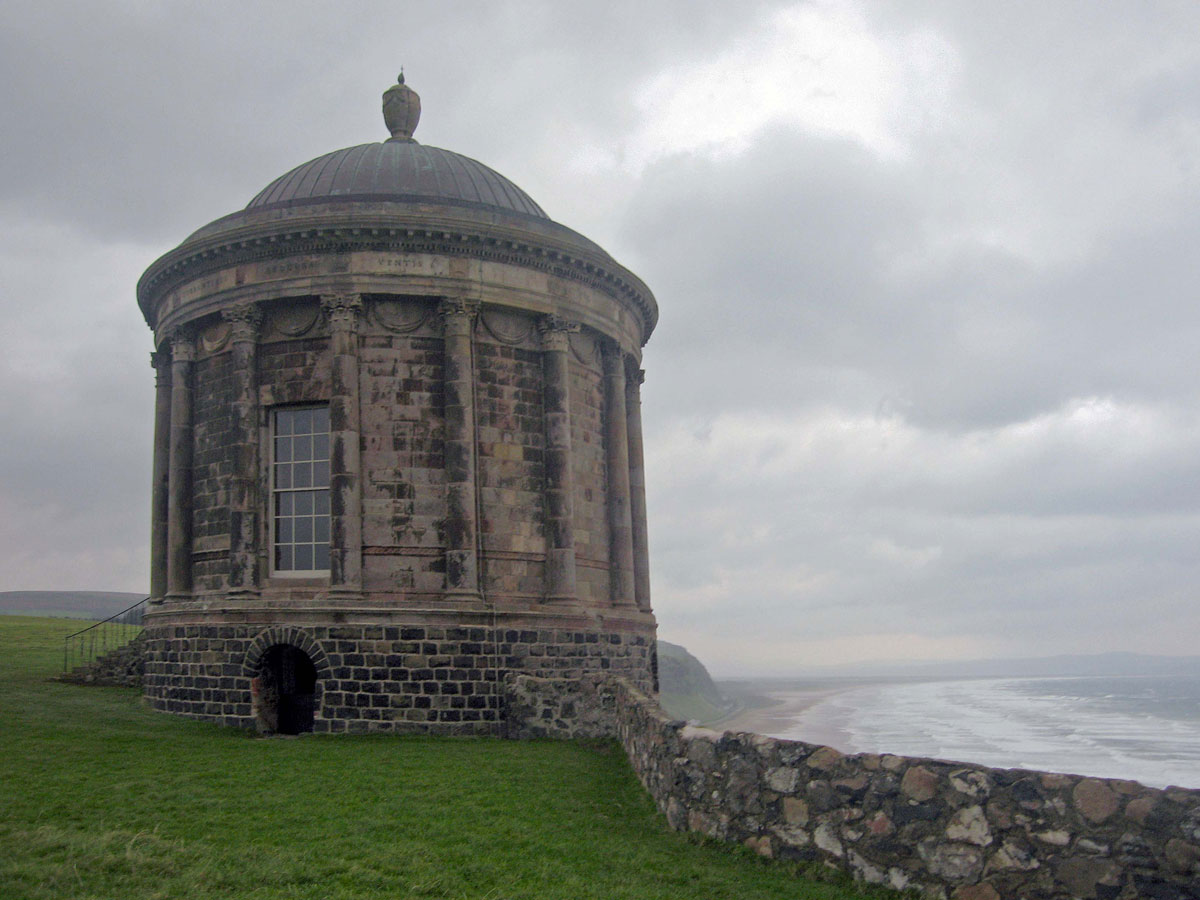
Looking for a Glimmer of Sunshine in County Derry

Looking for a Glimmer of Sunshine in County Derry

County Derry/Londonderry is one of the original six counties of Northern Ireland, and although the administrative boundaries have changed since then, County Londonderry still remains. As I’ve mentioned before, Londonderry is still the official name used by the UK government, but as the county now has a majority Catholic population (61.3% in 2021), I’m ging to refer to it as County Derry – at least for the purposes of this post.

I have to admit that my main reason for coming to Derry was to find out why the city played such an important part in The Troubles, but I couldn’t possibly leave without exploring some of the countryside and coastline as well, and so I set aside a full day to drive around the county, with the hope of finding another side to this part of Ulster.

If you’ve been following my previous posts, you couldn’t have failed to notice that the weather’s been pretty grim the whole time I’ve been here, but I was hoping for at least a few rays of sunshine for my drive around the county today, but when I woke up, I didn’t need to draw back the curtains to see what the weather was doing – I could hear it. The rain was beating down so hard that anybody who had half a brain would have called the whole thing off, but a), after breakfast it started to ease off a bit, and b) I haven’t even got half a brain, so with no better option to consider, I drove off into the gloom.

I left the city via the A6 and made my first stop at Burntollet Bridge (see Dirt Beneath the Carpet). At Killaloo I then took the B74 to Claudy where there was a memorial dedicated to 9 innocent victims of an IRA bomb attack in July 1972. I was well aware that I would be passing through places today that would have witnessed atrocities during those turbulent times, but although I wouldn’t go out of my way to avoid them, my mission today was to try and find another side of life here where possible, and so after a brief stop I continued on my way towards Feeny where I took a lonely road across the Sperrin Mountains. I’m sure on a nice day the scenery here would look lovely, but today was not a nice day and it all looked very bleak. Not only was it lonely, it was so dark that it was as if I was experiencing a total eclipse of the sun.

Continue reading

Originally posted 2025-04-28 15:26:35.
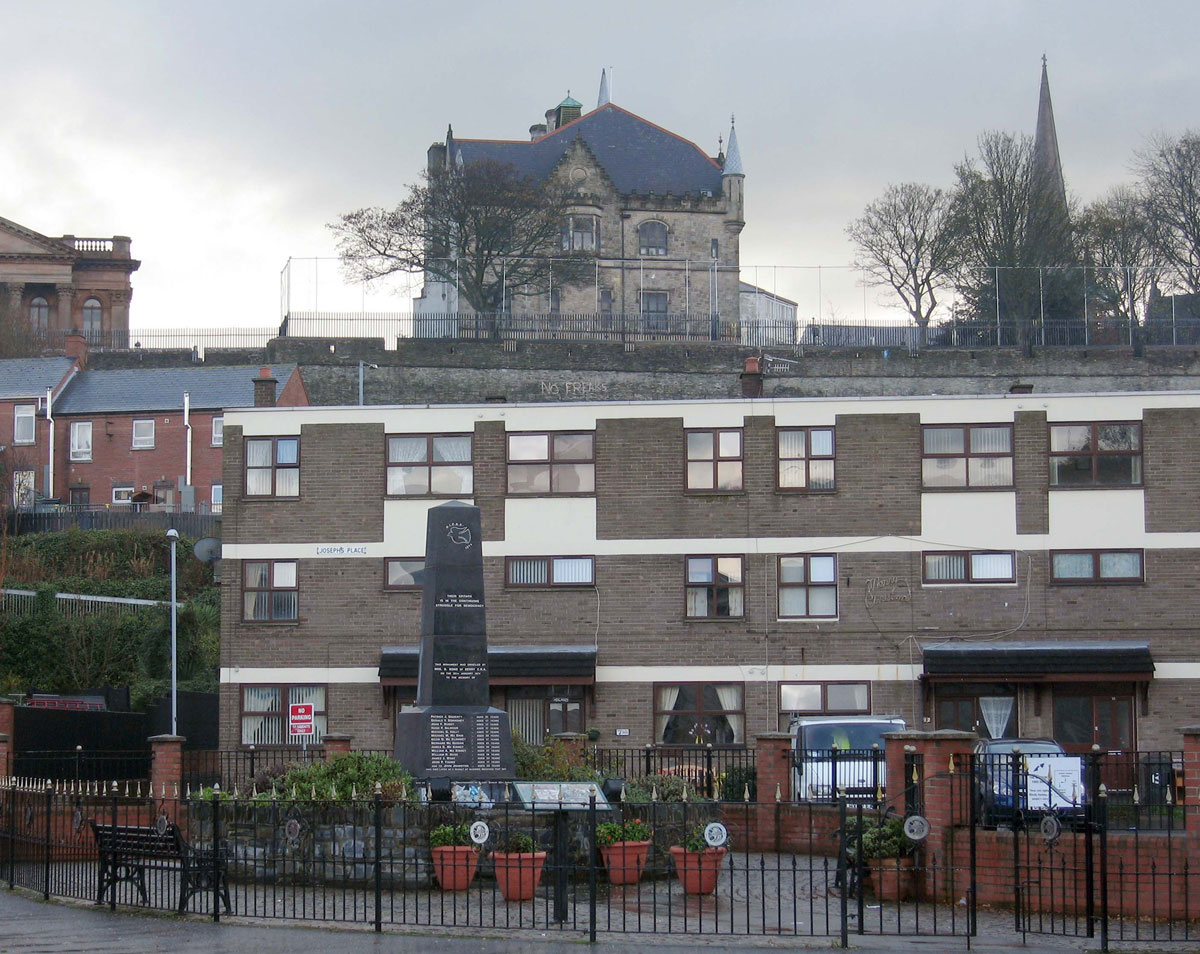
Derry/Londonderry’s West Bank – Pt 2 The Bogside (3) Bloody Sunday

Derry/Londonderry's West Bank - Pt 2 The Bogside (3) Bloody Sunday

WARNING – Some readers may find this article upsetting

In this, my final post about the city of Derry/Londonderry, I’m going to try and explain what led to the terrible events of 30th January 1972 – Bloody Sunday. Of all the articles I’ve written about the Bogside, this one is the most harrowing, but it would be unforgiveable of me not to include it.

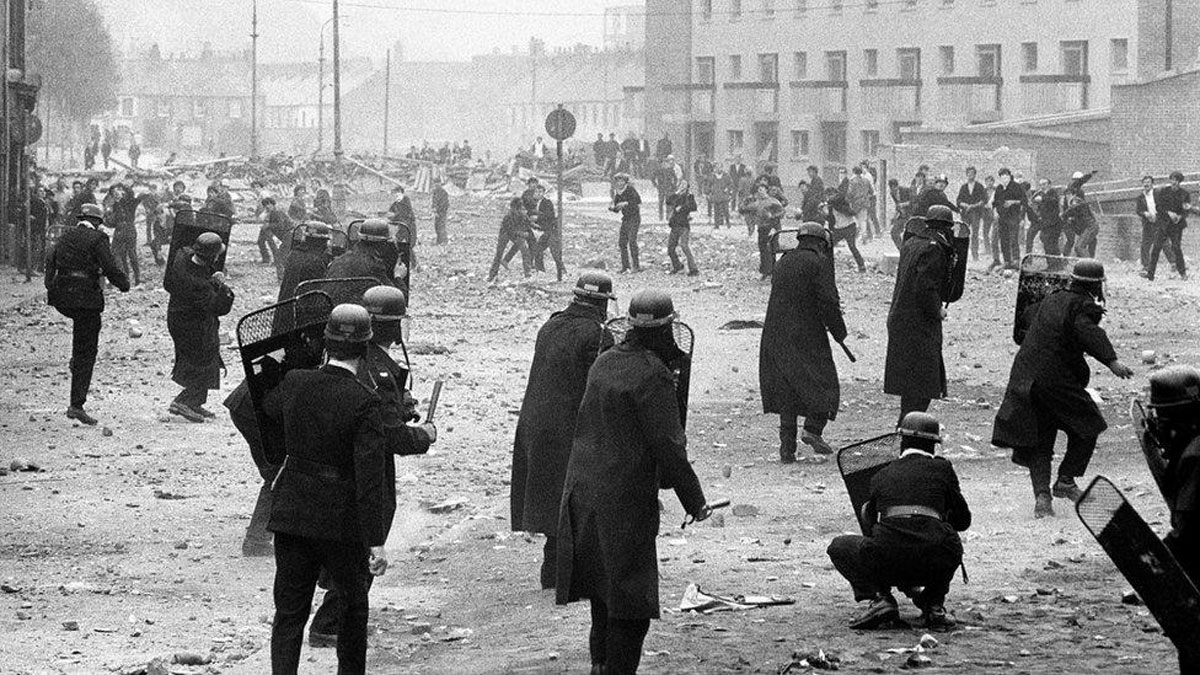
If you cast your mind back to the previous post, the Battle of the Bogside led to the British Army being brought into Derry to help keep the peace. No deaths resulted from the battle but there were more than a thousand injuries, many of them serious. The arrival of the army ended the violence in Derry (at least for a while) but the Bogside events had led to trouble in Armagh, Newry, Omagh, and particularly Belfast where six people were killed. One was a Protestant, Four were Catholics shot by the RUC, including a 20 year old British soldier home on leave from Germany, and a 9 year-old boy in his bedroom in the Divis flats.

The other fatality was a man shot by a Loyalist sniper helping people flee their homes in Bombay Street which had been set ablaze. Virtually the whole of the street was destroyed, and in total some 150 homes were burnt out: The army was now drafted in to West Belfast as well. In September, to prevent similar sectarian altercations, a ‘temporary peace line’ was drawn up behind Bombay Street separating the Protestant Shankhill Road and Catholic Falls Road areas – a peace line that is still here today but far more substantial.

Continue reading

Originally posted 2025-04-23 14:23:34.

Derry/Londonderry’s West Bank – Pt 2 The Bogside (2) Battle Of The Bogside

Derry/Londonderry's West Bank - Pt 2 The Bogside (2) Battle Of The Bogside

WARNING – Some readers may find this article upsetting

My travels have taken me to all sorts of places: Some have been exciting, some a haven of peace and tranquility, and others just fascinating, but then there have been places like Derry – where The Troubles in Northern Ireland began. For those of us who want to try and understand how and why the conflict happened, I’ve embarked on writing several articles to try and make some sense of it all, but please bear in mind that I didn’t write the original script, I’m just recording what happened. I realise that not everyone wants to read topics like this, and so I’ve included a Trigger Warning at the top of the page to warn people about the content before they start reading it.

The Civil Rights marches that I previously discussed, were intended to be peaceful protests by Catholics, not to campaign for a United Ireland, but for equal rights with Protestants, and although Northern Ireland had more protestants than Catholics, in Derry it was the other way round. Both the Duke Street March and the Long March from Belfast ended with violence in the Catholic Bogside, and locals put much of the blame for that onto the Royal Ulster Constabulary (RUC).

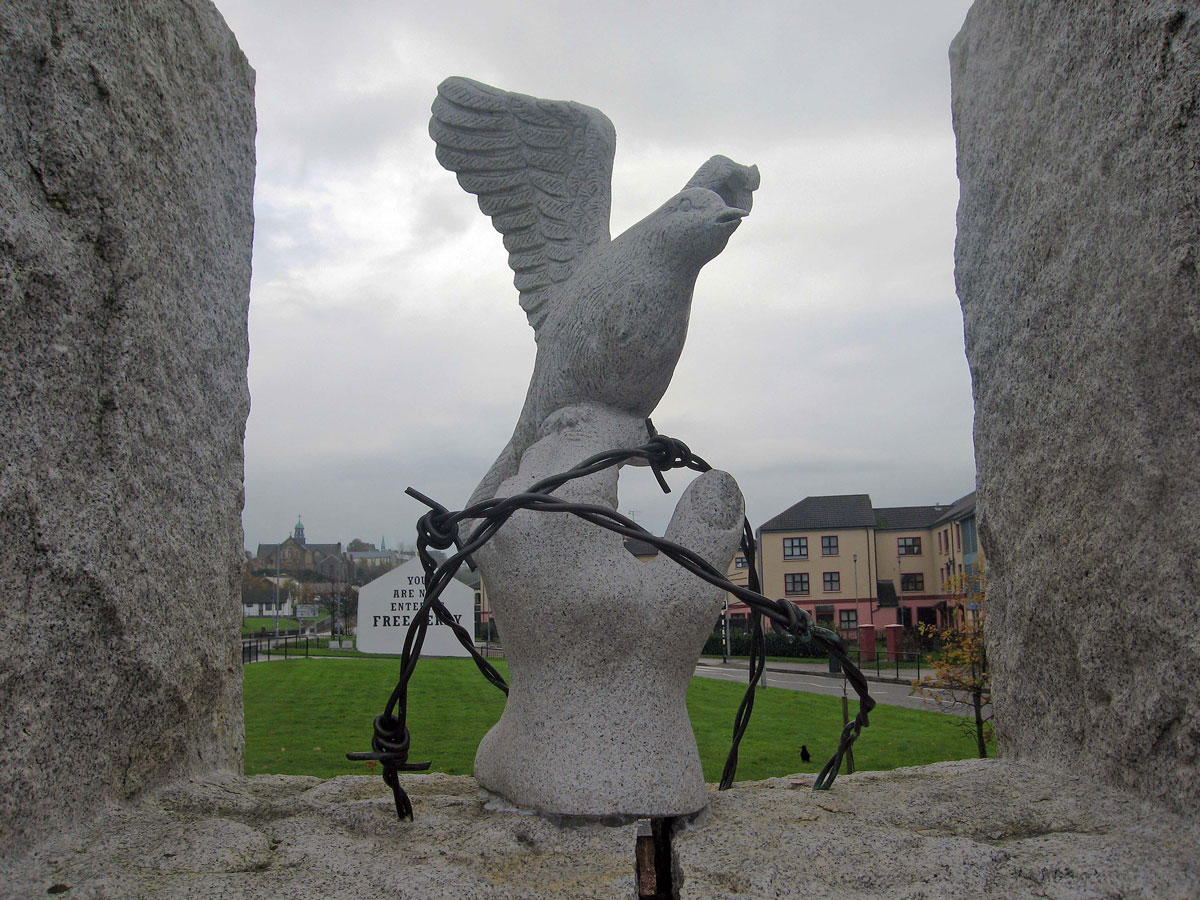
After the way those marches ended up, if Catholics in Derry had any doubts before, they now knew for definite where the allegiances of Northern Ireland’s police force lie – and they weren’t going to put up with being the victims any longer; and so to prevent the RUC from entering the Bogside, barricades started to be erected. On a building at the corner of St Columb’s Street (as it was then, Free Derry Corner now), the words “You are now entering Free Derry” were painted to let the RUC know that if they couldn’t respect peaceful protests, then any future attacks on Bogside Catholics would be met with a similar response.

Continue reading

Originally posted 2025-04-12 10:59:32.

Derry/Londonderry’s West Bank – Pt 2 The Bogside (1) Dirt Beneath the Carpet

Derry/Londonderry's West Bank - Pt 2 The Bogside (1) Dirt Beneath the Carpet

 WARNING – Some readers may find this article upsetting

During my series of posts about Derry/Londonderry, I’ve attempted to show how the city eventually became the spark that lit the fuse for the so-called ‘Troubles’ of Northern Ireland, and although hostilities officially came to an end with the signing of the Good Friday Agreement in 1998, it didn’t necessarily mean that the Protestant and Catholic communities were immediately one big happy family again, and as my previous post about the Creggan and Fountain Estates showed, it was going to take a quite a bit more time for the wounds to heal, and these posts about the Bogside will attempt to show you why.

Those of you who did manage to read that previous post may also remember that Paul, my taxi driver, dropped me off at a café just outside the city walls, which meant that I had to walk up Waterloo Street into The Bogside which, as the name suggests, was once a boggy area lying underneath the ‘Hill of Doire’ where St Columba set up his first monastery, and where St Columba’s Cathedral now stands. As I walked along the pathway under the city walls it was difficult to find a spot which wasn’t covered in broken glass. I’ve been to numerous places where broken glass has been a problem, but this was the worst I’d ever come across, and then it dawned on me why that might have been. On the city walls above is a large wire fence to protect buildings from being petrol bombed, and all this glass could well have been a return compliment. I don’t know for sure of course, but it would have made sense.

Continue reading

Originally posted 2025-04-02 14:59:31.

Derry/Londonderry’s West Bank – Pt 1 The Creggan and Fountain Estates

Derry/Londonderry's West Bank - Pt 1 The Creggan and Fountain Estates

My previous eight posts about Derry/Londonderry largely concentrated on how the city grew to become an integral part of the Anglo-Irish conflict. Trouble started when the Norman/English were invited over to Ireland to help the King of Leinster regain his throne, but all it achieved was a simmering resentment that periodically boiled over into further hostility. Becoming ever more complex, these hostilities involved not just Ireland and England, but Scotland as well, and to complicate matters even further, not all the Irish involved were Catholic and not all the English/Scottish were Protestant.

The Partition of Ireland in 1921 was supposed to resolve the problem once and for all, but it didn’t, and during the second half of the 20th century ‘The Troubles’ began when a civil rights march in Derry descended into chaos. For the next thirty years Northern Ireland became embroiled in a bitter sectarian war that only officially ended with the Good Friday Agreement of 1998.

Continue reading

Originally posted 2025-03-26 15:29:29.

Derry and The Troubles – Pt 2 How ‘The Troubles’ Began

Derry and The Troubles - Pt 2 How 'The Troubles' Began

In 1964 Bob Dylan released an album entitled ‘The Times They Are a – Changin’ and they certainly were: During the first half of the 20th century, ordinary working men were expected to die for their country, women were expected to play second fiddle to men, and those who didn’t have white skin could expect nothing except discrimination – but by the end of the Second World War attitudes had started to change.

In the United States, Bob Dylan was just one of many folk singers who were increasingly turning their attention towards writing and singing songs protesting against the Vietnam War and social injustices. These ‘Protest’ songs were closely connected to the Civil Rights Movement, and as Georgia congressman and activist John Lewis said “If it hadn’t been for music, the civil rights movement would have been like a bird without wings”.

Continue reading

Originally posted 2024-10-12 09:19:52.

Derry and The Troubles – Pt 1 Consequences of the Partition

Derry and The Troubles - Pt 1 Consequences of the Partition

In previous articles, we started out by recounting how Derry was founded, through to why the English were invited into the country and then how eventually they took control. The argument about whether Ireland was Catholic or Protestant appeared to have been settled when the Protestant English king William III defeated the Catholic king, James II at the Battle of the Boyne, but the history of Ireland has never been that simple.

After that historic Battle Ireland continued to be ruled by a succession of Protestant monarchs as part of the United Kingdom and Ireland, but the Irish population as a whole remained mostly Catholic. A succession of failures by the British government to appease Catholic concerns (not least the Great Famine of the mid-19th century) led to calls for the country to break from the union, and by the first part of the 20th century the clamour for change was gathering pace.

As we’ve already seen, things were different in the north of the country where, since the Plantations, most of the Protestants lived – but not everyone who lived in the north were Protestant. To try and keep the majority of both sections of the Irish community happy, the government put forward a plan where six of the nine Ulster counties would be partitioned from the rest of Ireland. The three predominantly Catholic counties that were excluded were Cavan, Monaghan and Donegal. The aim of this plan was to provide independent Home Rule for both Catholics and Protestants, but which at the same time would remain part of the union under British jurisdiction.

Continue reading

Originally posted 2024-09-28 11:22:26.

Two Black Belfast Taxis – One Orange and One Green – Pt 2

Two Black Belfast Taxis - One Orange and One Green - Pt 2

If I thought that yesterday was a bit of an eye-opener, then today was going to be even more so; and if you haven’t already read Part 1, this post will make more sense if you do.

If you have read it, you will already be aware that last night I managed to get a Catholic taxi firm to agree to send me a driver this morning who was prepared to show me a different perspective of sectarian Belfast than I had yesterday.

I met my taxi driver in the reception area of the hotel and he briefly introduced himself as a Republican, which said volumes already. Just as I could tell the difference yesterday between a protestant and a Loyalist, I sussed straight away that there was a difference between a Catholic and a Republican – in other words he was a member of the IRA. He asked me if I was ok with that, and even though I wasn’t really, I said yes. To be honest, I think he knew how I felt, and when we got into his taxi, he tried to reassure me that I was in safe hands and wanted to make sure I felt comfortable before we started off. I was and I wasn’t, because even though he came across as a very open and approachable chap, the front taxi seat must have been the most uncomfortable seat I’ve ever sat in.

As we drove off, he explained that I was staying in one of the very few places that he would be prepared to make a pick-up outside of a catholic area – the city centre and university area was about it really.

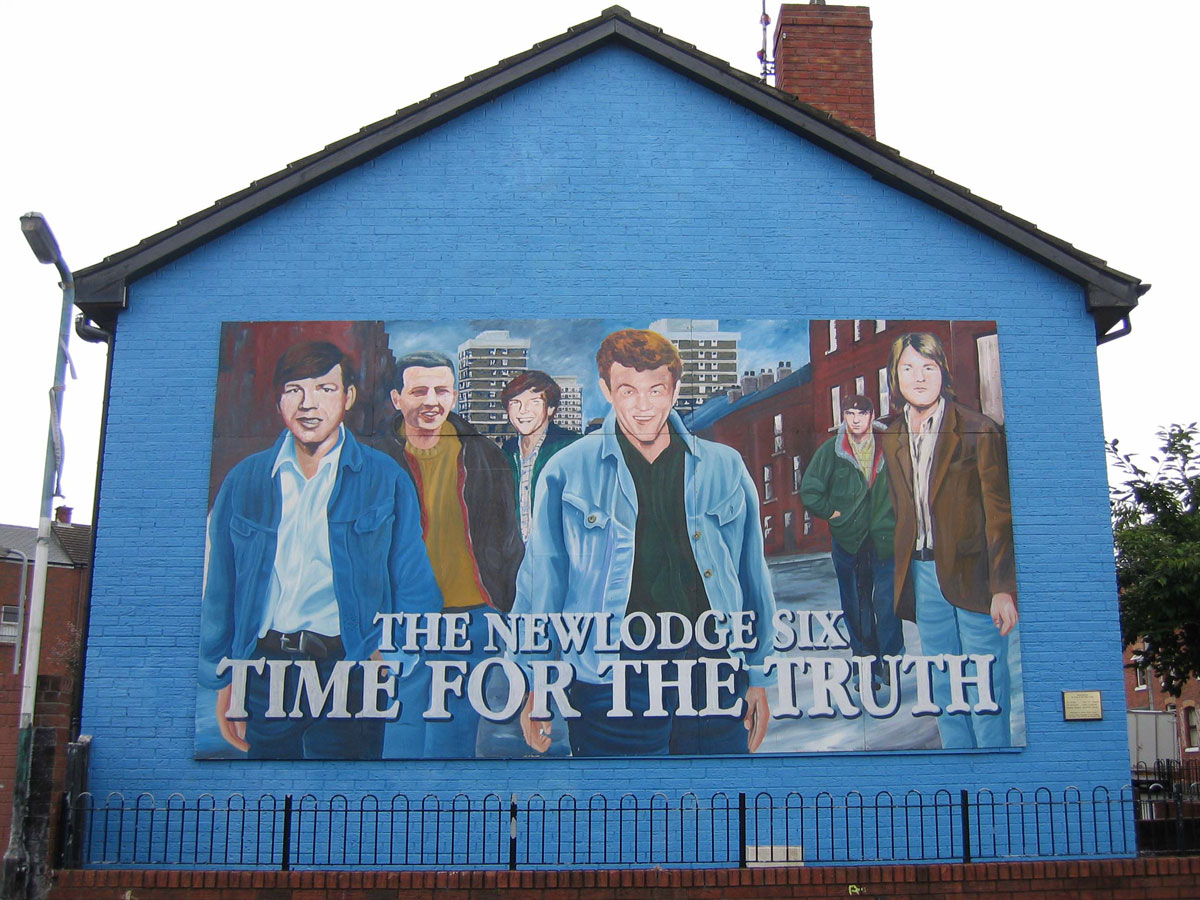
At the bottom of the street he turned right onto the Lower Ormeau Road, which just happens to be Catholic, and Brennan immediately pulled in near a betting office. He encouraged me to go and have a look, and outside was a memorial to the victims of a ruthless UDA gun attack in 1992. There were fifteen civilian customers inside at the time, five of whom were killed and nine injured. Five months later an Orange Order march passed the scene of the carnage with members shouting pro UDA slogans and holding up 5 fingers as they marched past. I was already beginning to see things from a different angle today.

Continue reading

Originally posted 2020-11-15 07:30:40.

Two Black Belfast Taxis – One Orange and One Green – Pt 1

Two Black Belfast Taxis - One Orange and One Green - Pt 1

The topic under discussion here is a sensitive one, but I hope not controversial. If any offence is caused, I can assure you that it’s completely unintentional, therefore please accept my apologies in advance if I have.

In 2004, six years after the signing of the Good Friday Agreement, I paid my first visit to Belfast. To have gone there as an English tourist before ‘The Troubles’ were officially ended would have been unthinkable for most people, and even after those peace documents were signed, not everybody approved of the outcome, and sporadic violence still wasn’t uncommon.

In my introduction to Northern Ireland I gave a brief explanation as to how the North got separated from the South after the 1921 Irish War of Independence; but the Government of Ireland Act may have solved one problem but it created another – and Belfast, being the North’s capital, found itself in the thick of it.

Different people have different opinions as to when The Troubles actually started because catholic discontent and protestant suspicion had been simmering for quite some time. On the one hand, the minority catholic population felt that they were being treated as second class citizens on issues such as jobs and housing (and there was little they could do about it under the prevailing voting system): Protestants, on the other hand, felt that there was a deliberate attempt by Irish Catholics to change the demographics of the province, and the Northern Ireland government was either inept or complicit in handling it. I think most people accept though, that it was during the late 1960s when things took a distinct turn for the worse, particularly around the time of the Civil Rights marches.

I’ve read numerous books, watched countless news reports and even witnessed first-hand how the conflict affected the UK mainland, but as far as Northern Ireland was concerned, only the people who were directly involved there during this tragic period of Irish history can come anywhere near close to describing what it was like to live in the province during those times. For these reasons, I don’t intend to delve too deeply into the background of Northern Ireland’s Troubles, but I will need to touch on some of the history for anything to make sense.

For anyone who would like to know more, I can highly recommend this excellent 2019 TV documentary series entitled Spotlight on the Troubles: A Secret History.

Continue reading

Originally posted 2020-11-10 14:17:47.