Looking for a Glimmer of Sunshine in County Derry
County Derry/Londonderry is one of the original six counties of Northern Ireland, and although the administrative boundaries have changed since then, County Londonderry still remains. As I’ve mentioned before, Londonderry is still the official name used by the UK government, but as the county now has a majority Catholic population (61.3% in 2021), I’m ging to refer to it as County Derry – at least for the purposes of this post.
I have to admit that my main reason for coming to Derry was to find out why the city played such an important part in The Troubles, but I couldn’t possibly leave without exploring some of the countryside and coastline as well, and so I set aside a full day to drive around the county, with the hope of finding another side to this part of Ulster.
If you’ve been following my previous posts, you couldn’t have failed to notice that the weather’s been pretty grim the whole time I’ve been here, but I was hoping for at least a few rays of sunshine for my drive around the county today, but when I woke up, I didn’t need to draw back the curtains to see what the weather was doing – I could hear it. The rain was beating down so hard that anybody who had half a brain would have called the whole thing off, but a), after breakfast it started to ease off a bit, and b) I haven’t even got half a brain, so with no better option to consider, I drove off into the gloom.
I left the city via the A6 and made my first stop at Burntollet Bridge (see Dirt Beneath the Carpet). At Killaloo I then took the B74 to Claudy where there was a memorial dedicated to 9 innocent victims of an IRA bomb attack in July 1972. I was well aware that I would be passing through places today that would have witnessed atrocities during those turbulent times, but although I wouldn’t go out of my way to avoid them, my mission today was to try and find another side of life here where possible, and so after a brief stop I continued on my way towards Feeny where I took a lonely road across the Sperrin Mountains. I’m sure on a nice day the scenery here would look lovely, but today was not a nice day and it all looked very bleak. Not only was it lonely, it was so dark that it was as if I was experiencing a total eclipse of the sun.
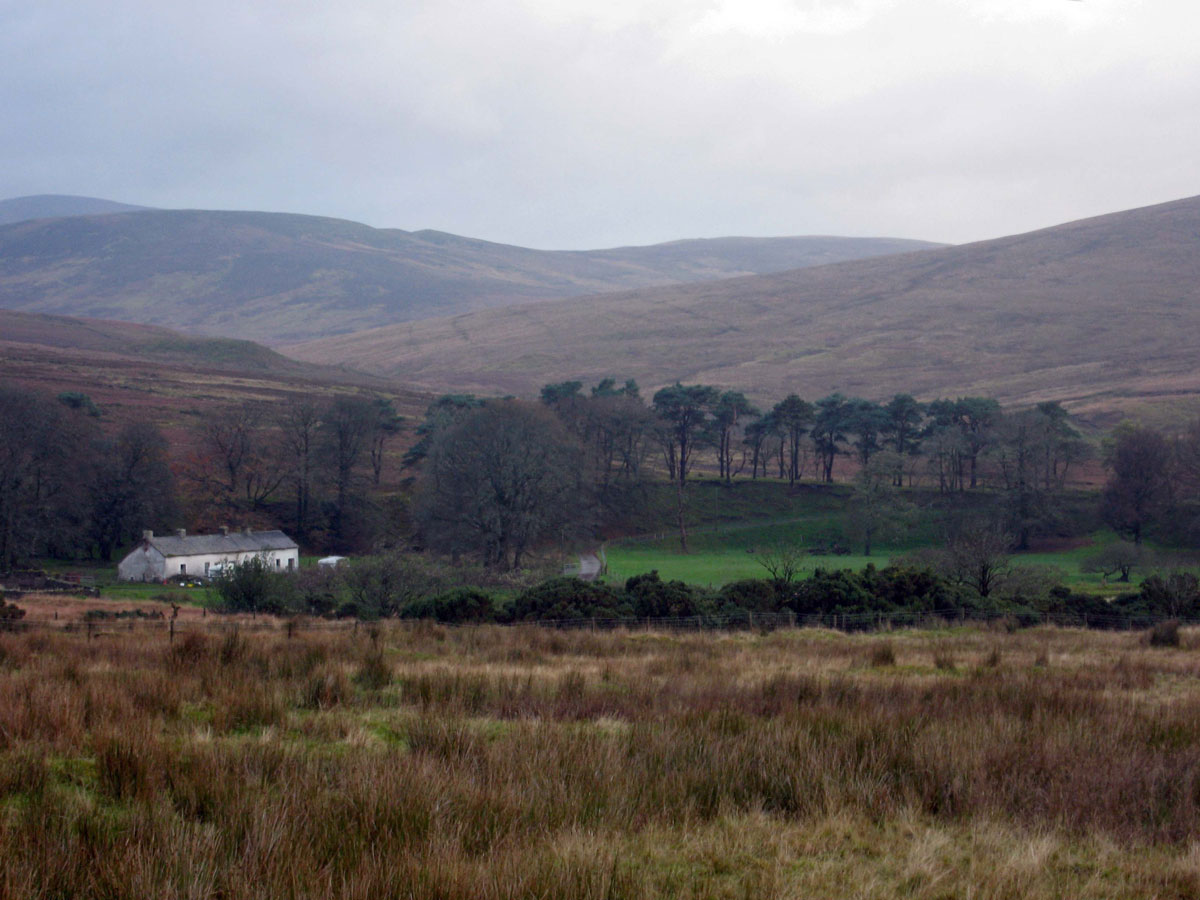
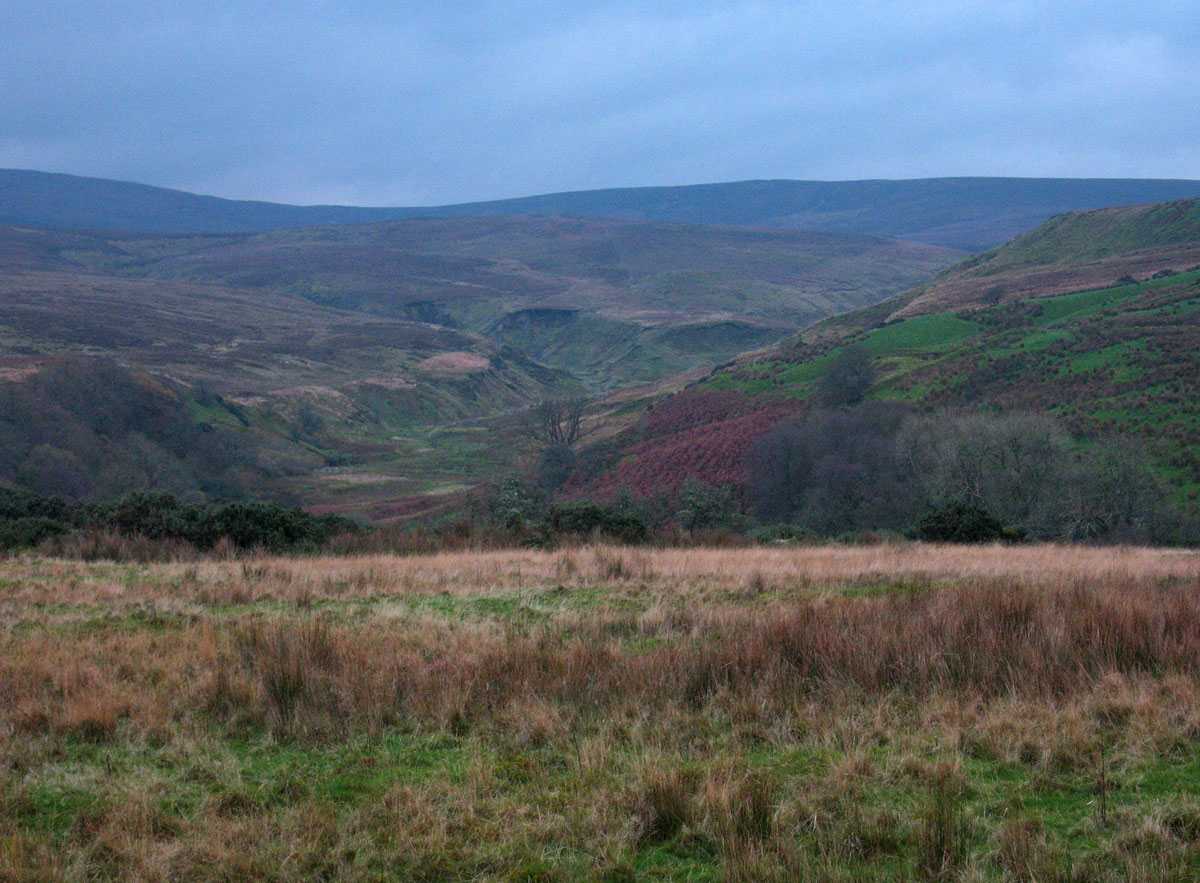
On the other side of the Sperrin Mountains I crossed over the B47 past Loch Fea, and on to Cookstown, which is actually in County Tyrone. A small town, split by a long, wide High Street, it seemed worthy of a stop after the quiet, remote roads I’d been travelling along so far – and what’s more there was even a tourist information centre which caught my attention. It was like the Marie Celeste when I wandered in, but eventually a young girl spotted me and couldn’t believe her luck: A visitor! She was so excited that there was somebody to extoll the virtues of Cookstown to, that before I knew it I had an armful of brochures that Geoff Capes would have struggled to hold on to.
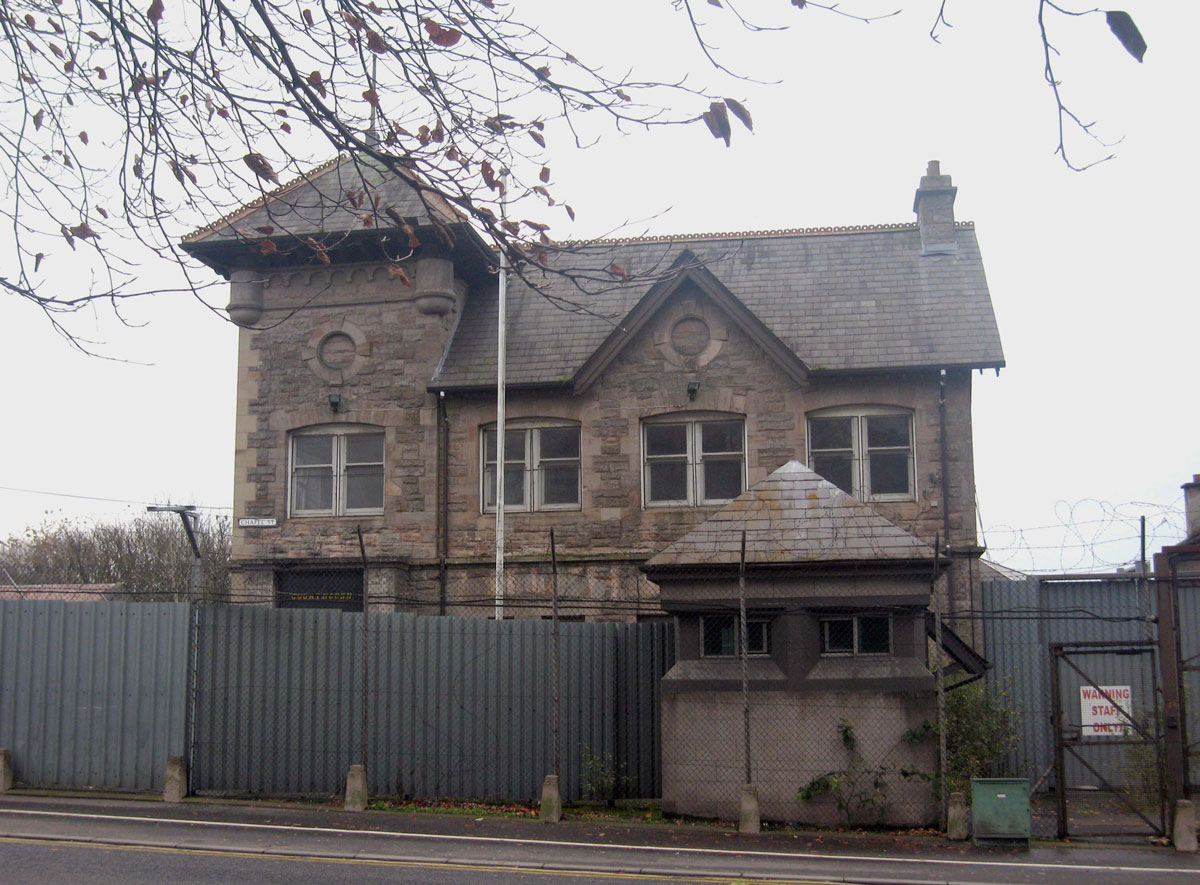
She told me about how the town was populated during the Plantation after the Flight of the Earls, and then about the linen industry which provided employment for so many people in this part of Ireland for years, and even mentioned the fact that the well-known comedian, Jimmy Cricket was born here. She was so enthusiastic, she almost convinced me that my next stop should be at the local estate agents. I hadn’t expected to spend so long in here, but I still felt guilty when I left her to talk to the walls again. Back out in the dismal Irish weather, I only had to take one look at the local police station to realise that I wouldn’t be moving here anytime soon.
One thing I was surprised to find (and I’m not sure why I should have been) was that all the towns and villages followed the same practice as the different areas of the city, in as much as they all displayed their respective symbols of allegiance. On the west side of the county, the towns and villages showed their support, generally speaking, for the green, white and orange colours of Ireland, while the further east I went, the red, white and blue of the Union began to take over.
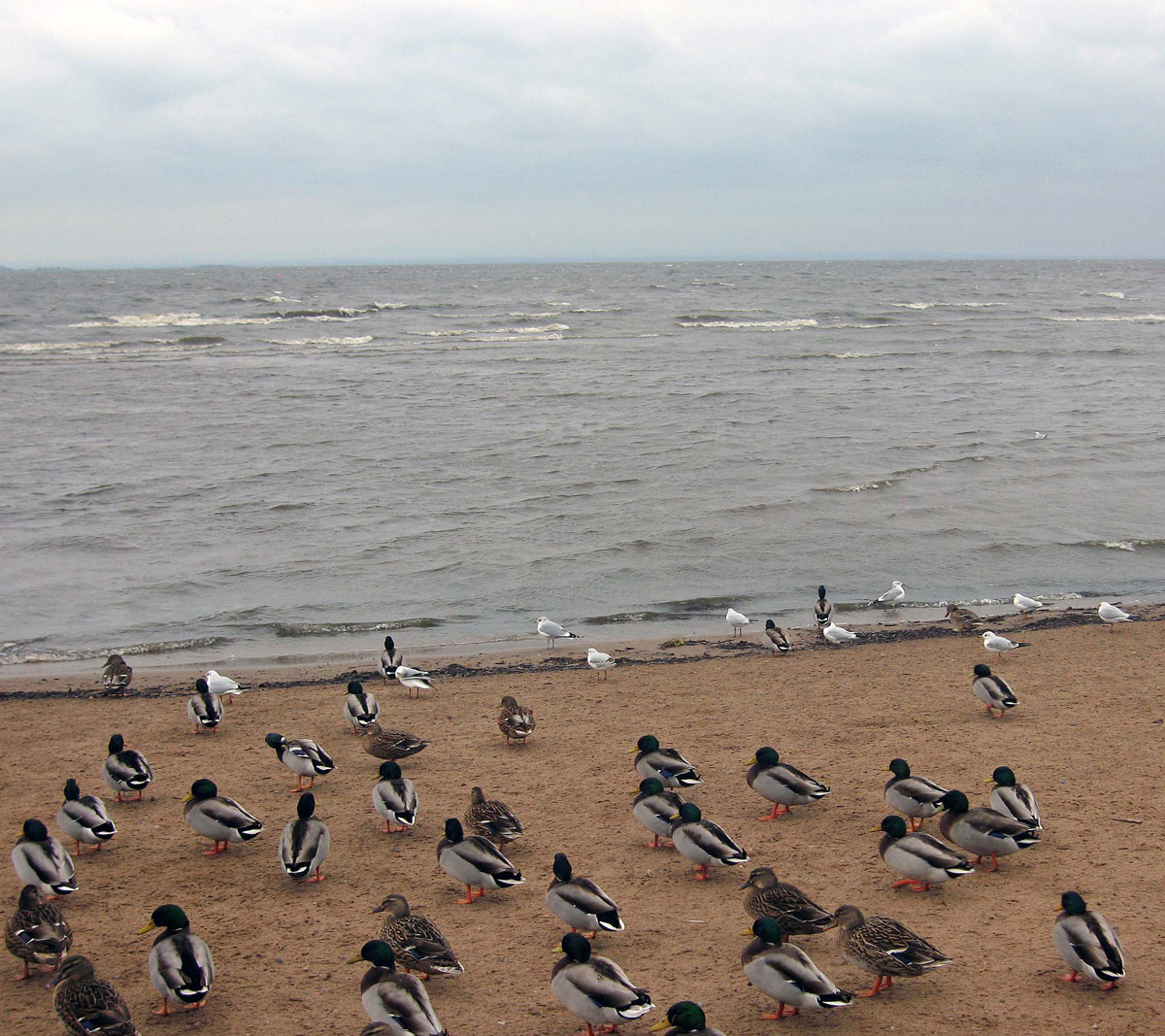
Cookstown was Catholic, but a 10 minute drive away was Protestant Moneymore where I had a brief stop before driving out of town towards Ireland’s largest freshwater lake, Lough Neagh. I can’t remember the spot exactly, but as I sat here on the shore of the lake I couldn’t help but think of Van Morrison’s song Coney Island, but in a different sort of way. It was eerily quiet with a small empty children’s playground – and just me and some birds. It was one of those moments where I was struggling to find words to help me comprehend how somewhere as peaceful as this could have harnessed so much violence.
Moving on from Lough Neagh, I drove through Magherafelt and Castledawson before arriving at Bellaghy, the birthplace, home and resting place of Seamus Heaney, winner of the Nobel Prize for Literature in 1995. An arts centre in his honour has opened since I was here, but Bellaghy Bawn would have been worth a visit if only they hadn’t just closed for lunch when I arrived.
For anyone who’s interested, a bawn was basically a fortified property defended by a wall to protect plantation owners from the ‘wild Irish’. The one at Bellaghy was built by Sir Baptist Jones around 1619 for John Rowley of the Vintners Company, but it didn’t quite manage to achieve what it was supposed to do, because it was razed to the ground during the 1641 Rebellion. Rebuilt in 1643, its appearance has changed somewhat over the years but it’s still probably the best example of a bawn in Northern Ireland.
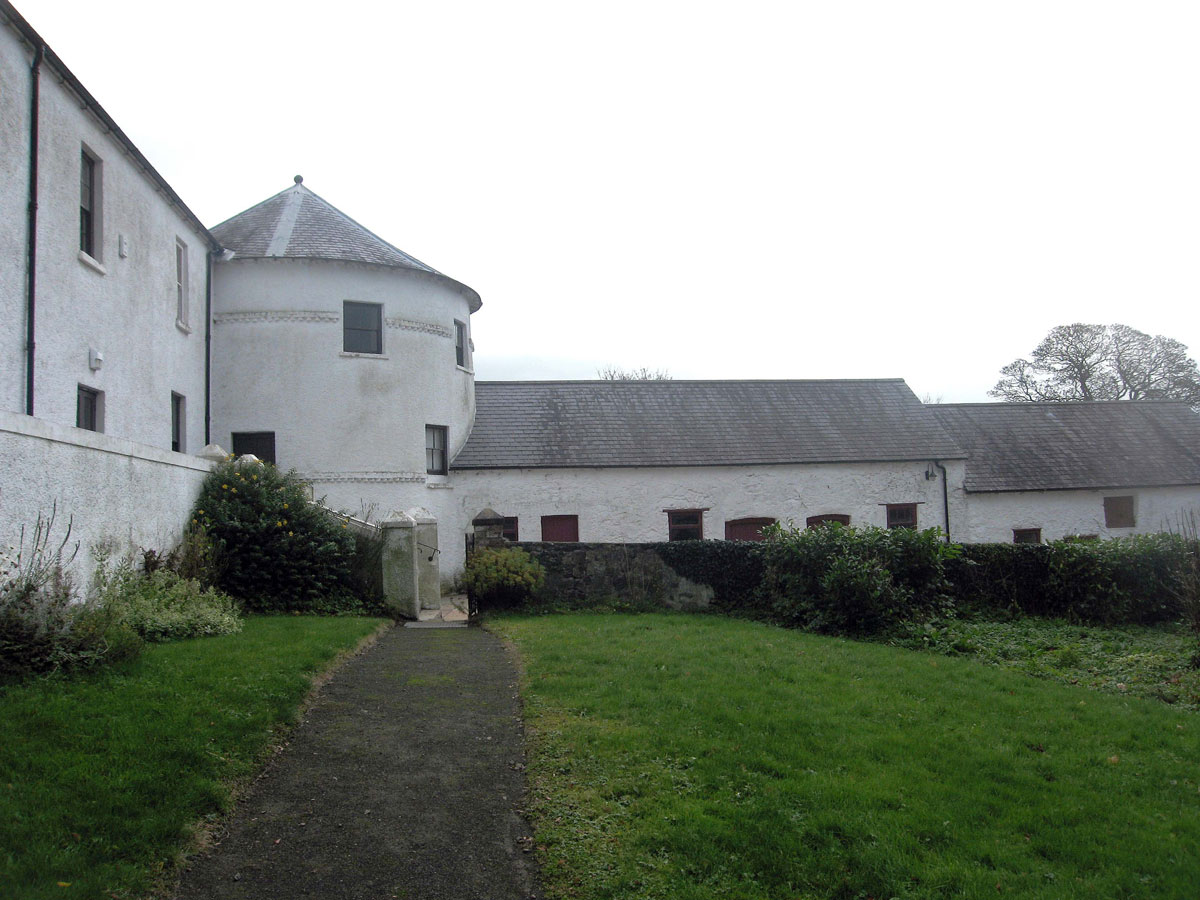
From Bellaghy, the A54 was almost, but not quite, a straight and quiet road all the way to Coleraine, and for the most part it follows the course of the River Bann, the longest river in Northern Ireland. The river is recognised as the dividing line between the more prosperous Protestant eastern half of the province to the more rural western Catholic half, and is sometimes referred to as the Bann Divide. It also (mainly) marks the boundary between County Derry and County Antrim.
Until the administrative boundaries were changed in 1973, Coleraine was the county town, but strangely enough, the town centre is on the right bank of the Bann, and I wanted to get to the coast more than I wanted to read about a town that suffered more paramilitary attacks, and so I stayed on the west bank and drove on towards Castlerock and in particular, Downhill Demesne.
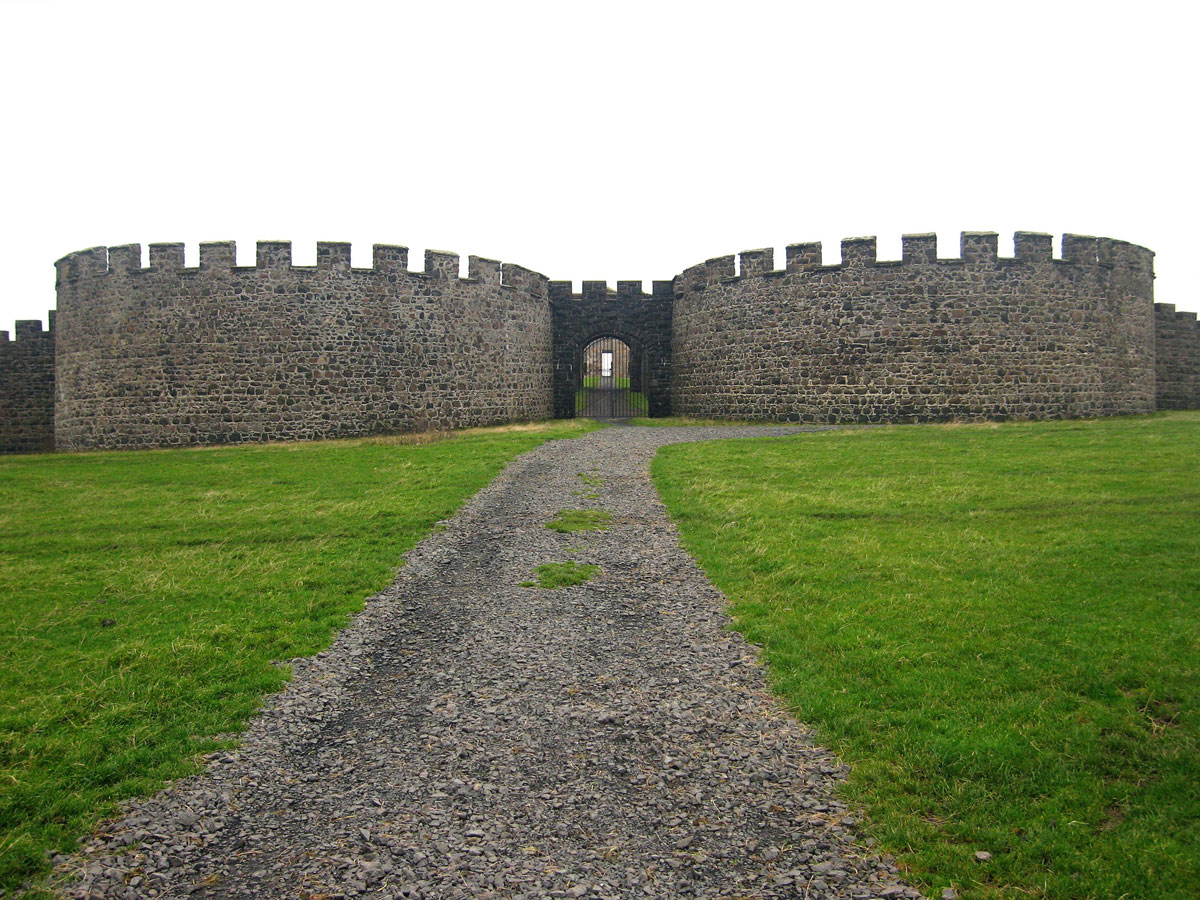
I wasn’t familiar with the word ‘demesne’ but it has apparently been used throughout Ireland “to indicate the part of the estate enclosed by a demesne wall that was for the use of the landowner only”, and at Downhill it includes a ruined palace and Mussenden Temple.
The palace was built around 1780 for the Bishop of Derry, Frederick Augustus Hervey, 4th Earl of Bristol. He wasn’t just an impartial religious man, he was also a wealthy one, which enabled him to travel extensively and collect valuable works of art along the way. He was renowned for staying at the plushest hotels he could find, and if you’ve ever wondered why there are so many Hotel Bristols around Europe he’s the reason why.
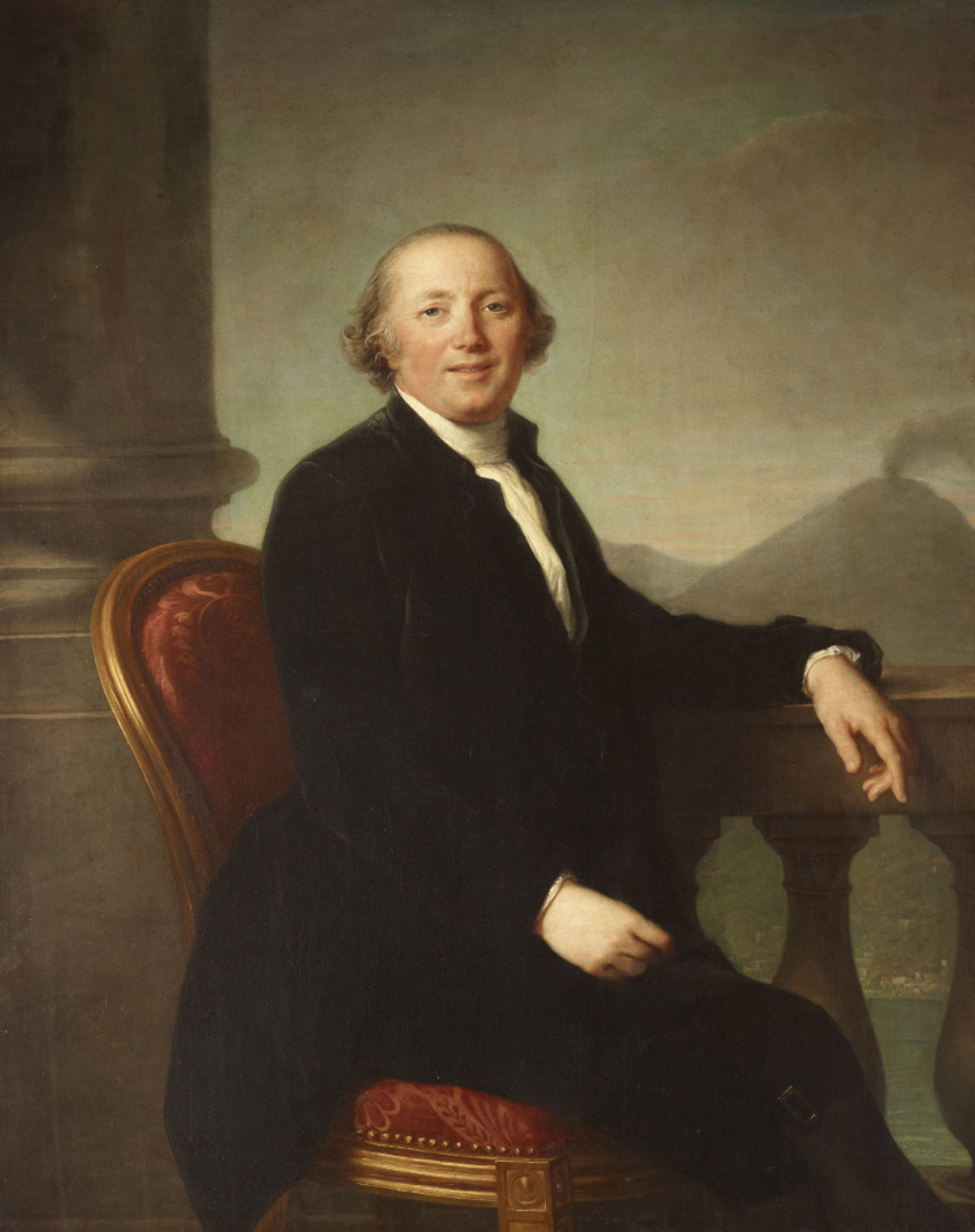
Being born and bred in the city of the same name I couldn’t really understand why everywhere I went there seemed to be a Hotel Bristol: I mean it doesn’t have the same ring to it as say, the Hotel Monte Carlo does it? The reason seems to be that hotels were named after the Earl in the hope that other travellers would equate it with the finest accommodation in the area, and that could have been true when the first known Hotel Bristol was in Place Vendome, Paris. It closed in 1816 and the name was transferred to the 5* Hotel Le Bristol in the nearby fashionable Rue du Faubourg Saint-Honoré. Curiosity got the better of me and I’ve just looked up the prices to stay there. £1,683 would have given me the Executive Room for a night – but that was the cheapest. The Imperial Suite would set me back from £34,576 a night! Apparently there are more than 200 Hotel Bristols, but I can assure you that they’re not all glamorous because I’ve stayed in one myself (St Malo). The odd thing is though, that until the Jury’s Hotel changed its name in 2007, Bristol didn’t have one.
To be fair, the bishop didn’t spend all his money on hotels and works of art because he was a philanthropist as well: Mind you he was also an eccentric, and when in 1803 his number was called to that great hotel lobby in the sky he asked for his body to be shipped back to England first – in a basket of sherry.
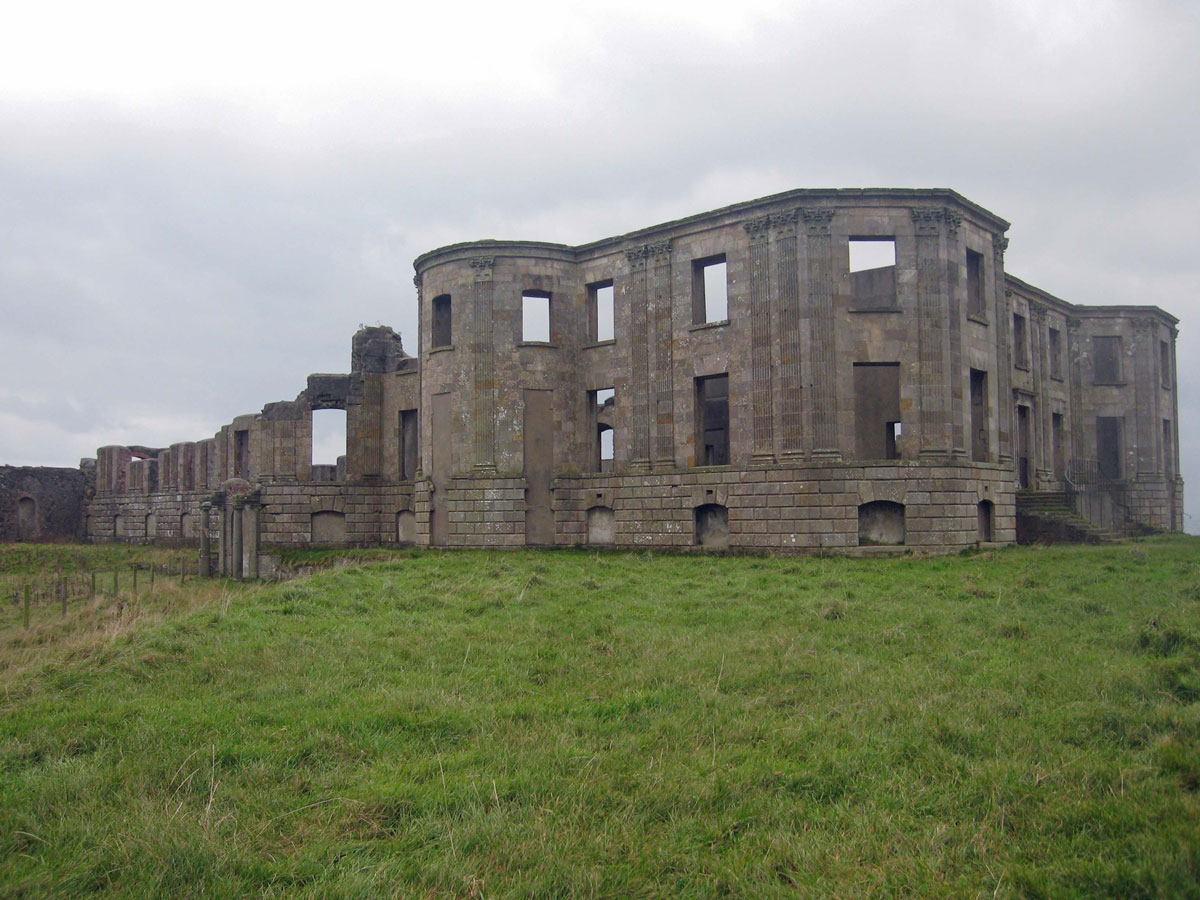
As for the bishop’s Downhill Palace, it’s now owned by the National Trust, who also open some of their places for people to stay, but not this one, because in 1851 it got burnt to the ground, and although the house remained in the family until around 1948, they rarely lived there after 1920. During the Second World War the house was requisitioned by the RAF, after which, the former palace was dismantled and its roof removed.
At the back of the atmospheric ruin, a path beckoned me down to the Mussenden Temple. There are conflicting stories surrounding it, but what isn’t disputed is that it was modelled on the Roman Forum’s Temple of Vesta and built by Bishop Hervey in 1783.
What I can’t quite be sure of is whether it was built as a summer library for himself or as a wedding present for his favourite niece, Frideswide Mussenden. Whatever the truth, if rumours are to be believed, it became a sanctuary for Frideswide when she regularly visited the Bishop and his wife. There’s no doubt that this library, precariously perched on the clifftop, would have been an idea place to chill out for the young lady, but it also seems as though the bishop took an extra interest in his library whenever she was there. Tongues naturally wagged, and if the relationship was purely platonic, as was what Frideswide and the bishop insisted, then it would have been a sad ending for the young wife who died at the tender age of 22, which some say was largely due to the gossip surrounding her and the bishop. My mind is probably working overtime here, but I did wonder if the story about Frideswide and Uncle Frederick has anything to do with the fact that the temple today is mainly used for weddings.
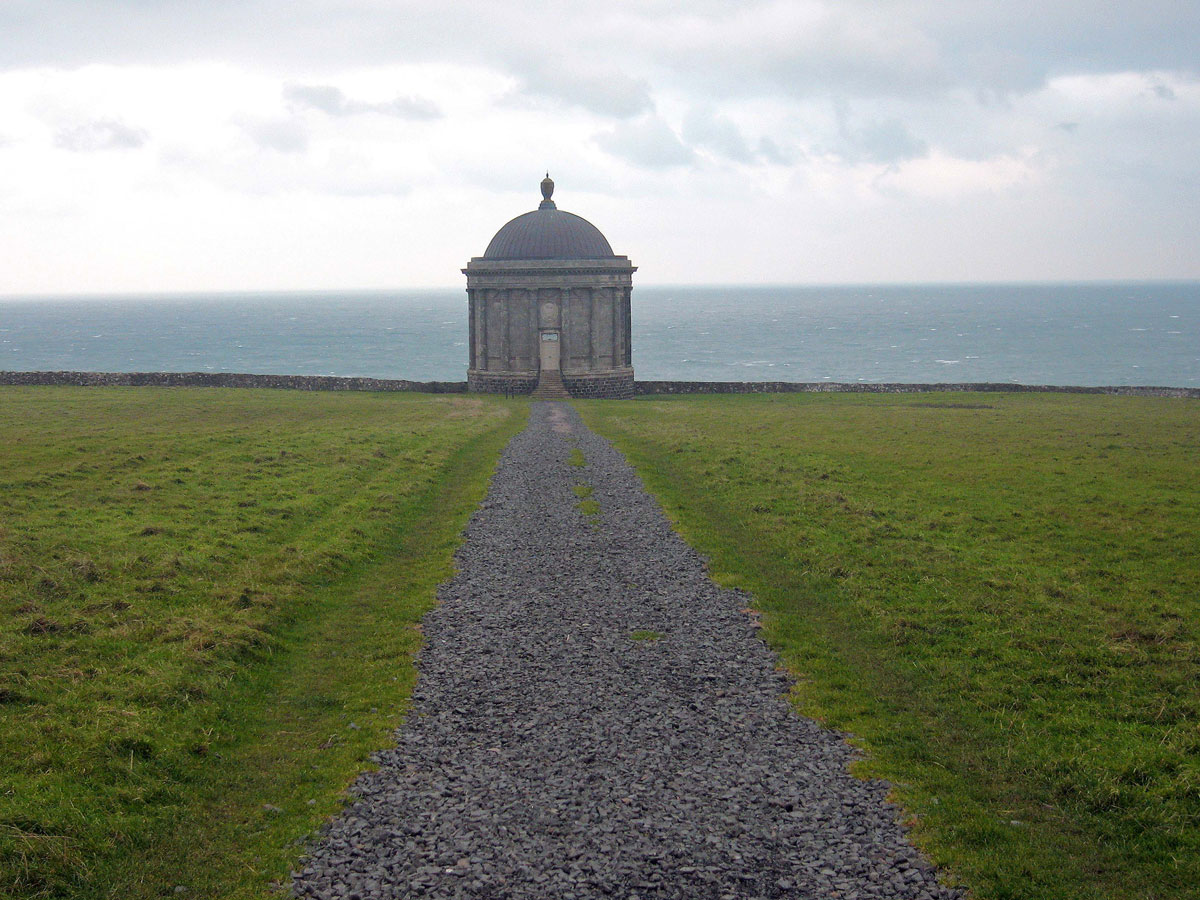
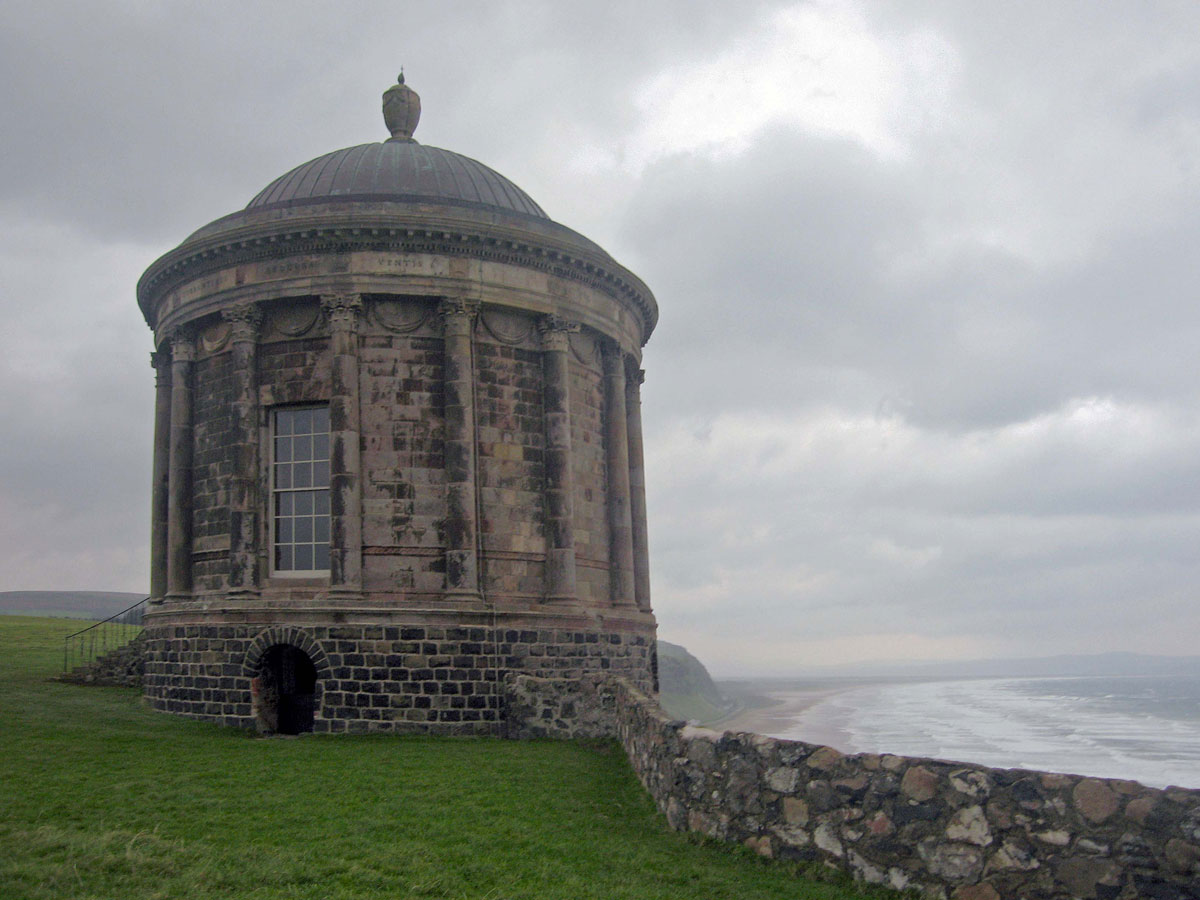
I could understand why I wasn’t thinking straight, because even though the rain had eased off, the intense, bitterly cold wind has given me a blinding headache, but I wasn’t going to let that put me off checking out this this part of the coastline. The views were less than perfect, but the beach below stretched along to Magilligan Point and I could make out County Donegal on the other side of Loch Foyle. I know it’s November, but it’s so peaceful here and there’s not a soul around. It’s difficult to describe how I feel if I’m honest.
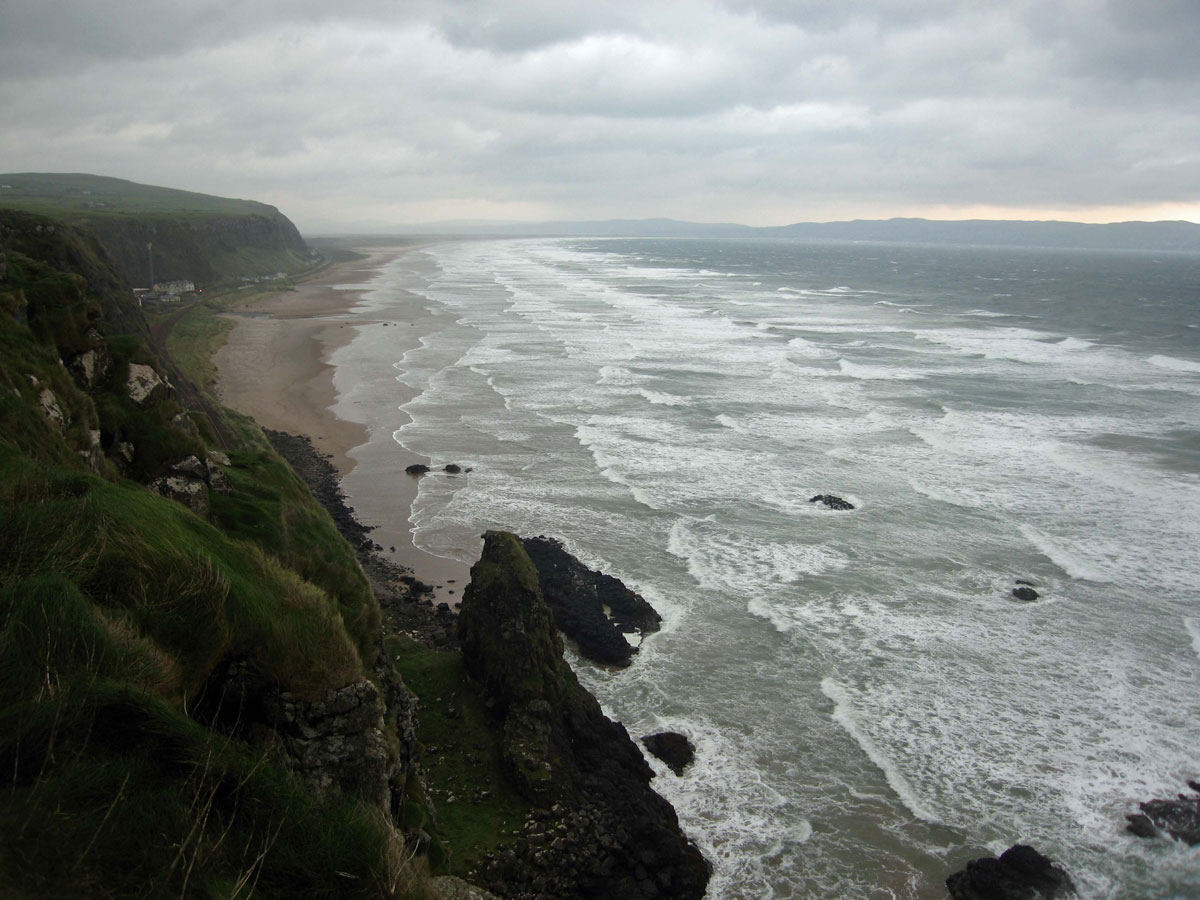
From Downhill I followed the Bishop’s Road and A2 before turning off down the B202 towards Magilligan Point. The road across the sand dunes past Magilligan Prison was really quite eerie. This was the former internment camp where the Paras and Green Jackets stopped the first civil rights march against internment going past the camp (which I spoke about in the previous post). I didn’t stop to take any pictures because I thought those running the place might be taking pictures of me. There were cameras about every 20 yards (or that’s what it seemed like), and I wasn’t sorry when I got past the area and reached the Point.
Magilligan Point is where you can catch the ferry over to Greencastle on the opposite side of Loch Foyle to County Donegal in the Republic. I’ve had plenty of people say to me that I should visit Donegal but it wouldn’t be today, not least because the ferry wasn’t running – and my hire car and me were the only ones here.

After running the gauntlet past the prison security cameras I joined the A2 towards Limavady which had been enjoying a resurgence in employment prospects with some well-needed investment – except that from what I’ve read, the money changing hands seems to have been going into the wrong pockets.
At Ballykelly, I knew I was approaching Derry again because the name reminds me of the Droppin Well bombing in 1982 which killed 17 people including 6 civilians and 11 soldiers enjoying an evening out. By now it was dark, and rush-hour traffic was heading into Derry, so I pulled in to let some of it pass and contemplate whether I should pop into the fish & chip shop, but when I saw a gap in the traffic I decided to pull out instead, but I see that the very same chippy has recently been voted the best Fish & Chip shop in NI.
If Ballykelly brought back bad memories, then so did Greysteel, the next village I passed through. The Rising Sun was the scene of a Halloween party where UFF paramilitaries burst in yelling ‘Trick or Treat’ and shot dead 8 people indiscriminately – including Protestants. The pub is still here, but I wasn’t far from Derry now and it was chucking it down with rain again as I headed back to the hotel.
I have to confess that my visit to Derry/Londonderry was thoroughly miserable – but at the same time I wouldn’t have missed it for the world. I don’t normally voice political opinions in my blogs but it’s difficult to ignore how I felt about this trip. Rightly or wrongly, I came to the conclusion that this conflict wasn’t really about religious differences, but more about inequalities – and there were poor Protestants as well as poor Catholics, which makes it even more difficult to understand. The other conclusion I came to was that the seeds were sown with the Plantation of English and Scots migrants into Ulster, and it’s been interesting to note that recent protests on the streets of Belfast against mass immigration have drawn Catholics and Protestants together.
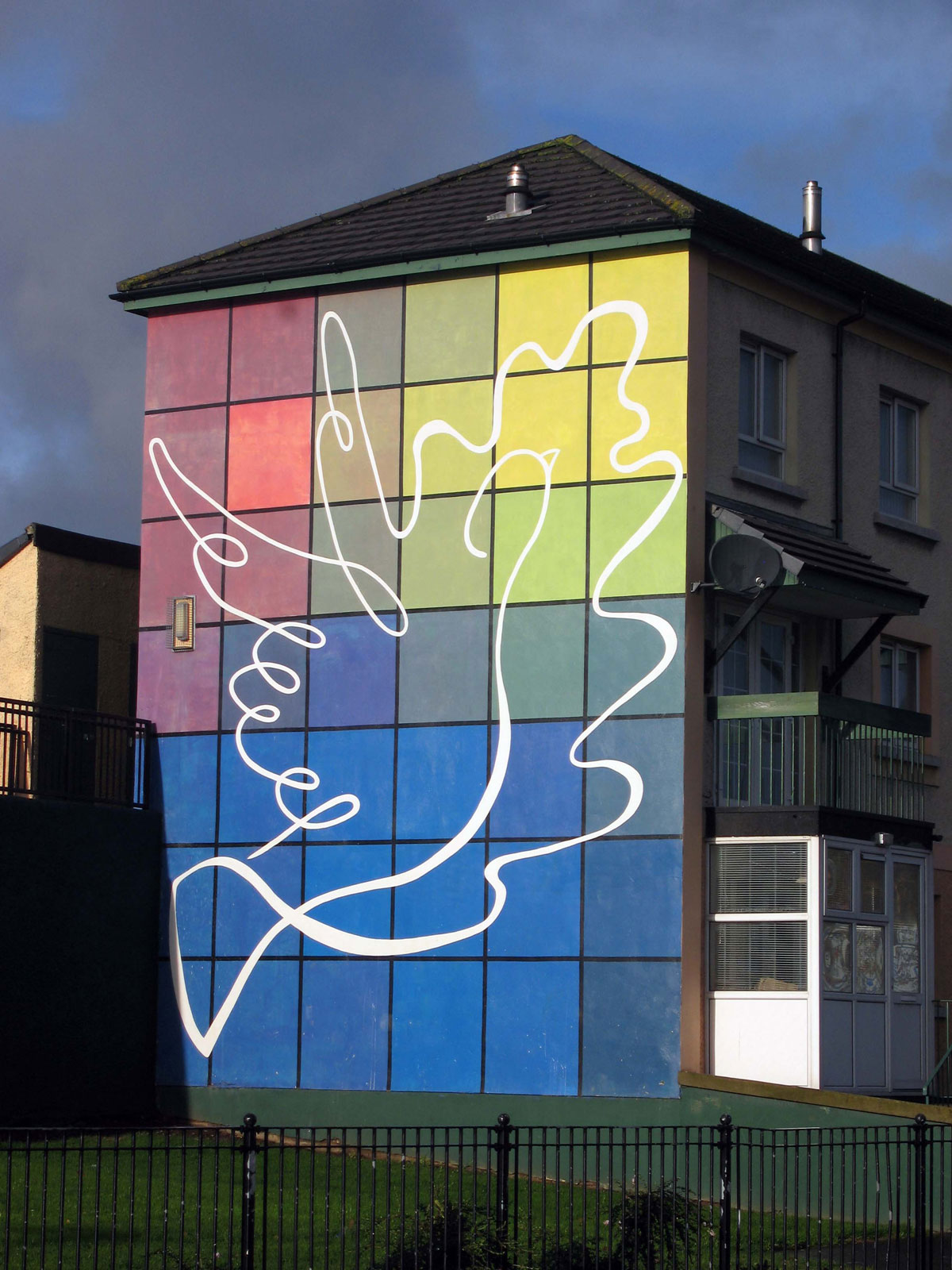
I want to end up on a more positive note though, especially as the wounds in Northern Ireland have been gradually, but steadily healing, In my previous post I included a song by Phil Coulter, a well-known Catholic music composer from Derry, and below is a video clip of the same song by the man himself singing The Town I Loved So Well. The song was written in 1973 and was performed at a small outdoor venue next to the Peace Bridge in 2022: He was accompanied by a choir and a mixed Catholic and Protestant crowd, and although I may not have seen many glimmers of sunshine on my visit to Derry, I genuinely believe there are some glimmers of hope for a brighter Irish future – if only politicians would listen to what people are saying instead of their own voices for once.
POSTED – APRIL 2025
Originally posted 2025-04-28 15:26:35.
Great photos and history, Malc. The gloom of the Troubles seems to have attached itself to the weather during your stay.
Thanks Pat. It did, but seemed quite appropriate in a way
Ah…you are chasing an itineray today I gather as I write this. Grey skies, GREAT post. You should get a job for the tourist board there. This was absoluely fascinating And I do love how you tied this one with your previous posts on Derry.
Yep! Made it by the skin of our teeth 😀Thanks again for your fabulous comments and unwavering support (and the plug on X). The next post will be somewhere quite different.
But sure to be as brilliant. You are indeed intrepid travellers! (I expected no less than you to make it back )
Even had time for a pint 😀
Tha’s the style… All intrepid travellers deserve one.
😊
We are away travelling today To Arisaig. here’s hoping no potential boot losing episodes with bogs this time. .
Love it up around there. I Hope the weather’s kind for you and have a great weekend.
Oh it were freezing… Biting wind the whole time! We had such a nice few days here.. It was prob our summer and where we were we? Across on the other side of Scotland. Oh well.
LOL. Typical! At least it was dry.
Yeah… what is it they say? Small mercies???
A much more positive post to finish the series Malc and I like the mural at the end. I found the facts about the hotels particularly interesting as I’ve stayed in a Hotel Bristol myself. In 2002, 03, 04 (twice) and 05 we stayed at the Hotel Bristol in Minori on the Amalfi Coast and I often wondered why an Italian hotel had such a British name. It was only rated 3-star but it was a nice place and the interior, especially the lounge areas, looked like the place had been quite upmarket in previous years. I don’t know when it changed but it’s now the 4-star Hotel Minori Palace and very nice it looks too.
I’m glad you stuck with it to the end Eunice because I think it would be a mistake to just remember Northern Ireland for The Troubles, and at least you now know where your hotel really got its name from.
Well I’m glad you managed to end your visit on a more positive note, Malc. Despite the awful weather, you’ve managed to catch the landscape in a great light. The Sperrin mountains look absolutely beautiful and invitingly wild, as does the coastline.
You found some interesting buildings, and indeed their owners, in your various stops as well. What a character Bishop Hervey was! He really must have left an impression if those top European hotels are named after him. But how on Earth can the Paris one justify charging such a ludicrous amount for the Imperial Suite? That’s insane! I really can’t imagine what is so different about that than any other posh hotel. Are the guests served by members of the royal family? Is your luggage transported by unicorns? The mind boggles…
Oh yes, and ‘demesne’ is a medieval word, similarly meaning the piece of manorial land that the lord kept for his own use, rather than granting it to tenants. Mind you, ‘bawn’ was a new one on me. It seems rather like a later version of a medieval fortified manor house.
Did you ever get to Donegal? I’d like to go there one day, not least because it’s where Clannad come from, and apparently when people ask why their music is so spiritual and magical, they tell them to go to Donegal, then they’ll see. 🙂
I never intended to end this series of posts in a negative way Alli because we all know the outcome has been relatively positive. There are some who won’t rest until the island becomes united though and I can understand that.
I would have liked to have seen the Sperrins and coastline in better weather, and I didn’t make it to Donegal either. Like you, I was a big fan of Clannad and there’s no doubt in my mind that they got their inspiration from where they came from.
The mad bishop was quite a character I believe, but not as mad as somebody who pays those extortionate prices in that Paris hotel. 😊Thanks for commenting by the way.
No worries Malc. 🙂 Sorry for the delay in getting back to you via email, which is down to a few factors I’ll tell you about when I respond this week. 🙂
👍
I like how you finish this series with that dove of peace 🕊️ I have to say that despite the gloom that coastline and even the Sperrin Mountains look rather spectacular – but easy to say sitting in my warm room at home rather than out in that rain!
We always have to look for something positive don’t we Sarah? and every cloud has a silver lining – or so they say 😊
Wonderful post as ever and some interesting Bristol Hotel factoids too.
Thanks Stephen, and I was pleased to find out more about all those Hotel Bristols too while researching the Mad Bishop.
I can really relate to the feeling of being somewhere in Northern Ireland and thinking… the things that have happened here. Some places in particular just give you a strange, something slightly off kilter feeling. Glad you made it up into the Sperrins, that’s a firm favourite destination of mine!
Thanks for your feedback Helen. I would like to see the Sperrins in better weather and also visit Donegal and other places when the sun’s shining.
Fascinating post as always, dear Malc and well researched! I read it with real pleasure and because it is helping me to broaden my understanding of that troubled nation.
By the way, the metaphorical reference to the Marie Celeste alludes to the ghost ship???
Thank you so much Luisa. Irish history is a real minefield – and I haven’t even discussed my thoughts about the Republic yet, but you’re right about the connection with the Marie Celeste 💙
Heartfelt thanks to you, dear Malc, for your kind reply🙏🌹🙏
🙏