Derry/Londonderry's West Bank - Pt 2 The Bogside (3) Bloody Sunday
WARNING – Some readers may find this article upsetting
In this, my final post about the city of Derry/Londonderry, I’m going to try and explain what led to the terrible events of 30th January 1972 – Bloody Sunday. Of all the articles I’ve written about the Bogside, this one is the most harrowing, but it would be unforgiveable of me not to include it.
If you cast your mind back to the previous post, the Battle of the Bogside led to the British Army being brought into Derry to help keep the peace. No deaths resulted from the battle but there were more than a thousand injuries, many of them serious. The arrival of the army ended the violence in Derry (at least for a while) but the Bogside events had led to trouble in Armagh, Newry, Omagh, and particularly Belfast where six people were killed. One was a Protestant, Four were Catholics shot by the RUC, including a 20 year old British soldier home on leave from Germany, and a 9 year-old boy in his bedroom in the Divis flats.
The other fatality was a man shot by a Loyalist sniper helping people flee their homes in Bombay Street which had been set ablaze. Virtually the whole of the street was destroyed, and in total some 150 homes were burnt out: The army was now drafted in to West Belfast as well. In September, to prevent similar sectarian altercations, a ‘temporary peace line’ was drawn up behind Bombay Street separating the Protestant Shankhill Road and Catholic Falls Road areas – a peace line that is still here today but far more substantial.
It was now Belfast who was suffering the worst of the violence, but it had spread to all corners of the province. There were atrocities occurring everywhere on a daily basis, but for a short time at least, Derry had some respite in comparison. The barricades remained in place for several weeks while the army and residents negotiated their removal, but the good will didn’t last – so what went wrong?
It’s not an easy question to answer, but the deteriorating situation meant that the participants involved were changing the way they operated. While the politicians were searching for solutions, the paramilitaries and state security forces were starting to reorganize.
The Ulster Special Constabulary (the dreaded ‘B’ Specials) were disbanded and a new locally-recruited British Army regiment, the Ulster Defence Regiment (UDR), was formed to offer British government support to the RUC. After the Battle of the Bogside, the Irish Republican Army (IRA) split, which led to the more militant element of the organization forming the Provisional IRA ( PIRA or Provos) while those that remained were rebranded as the Official IRA (OIRA). On the Loyalist side, the Ulster Volunteer Force (UVF) was joined by another group called the Ulster Defence Association (UDA).
This cocktail of ingredients was to lead to a breakdown of any chance of co-operation between those involved, with the Provisional IRA becoming a law unto itself. In a complex set of circumstances it meant that the Provisional IRA was at war with the RUC, British Army, Loyalist paramilitary groups and even their own people if they didn’t conform to the rules they laid down. Tarring and feathering was a common punishment, and that was one of the softer options. The Loyalist paramilitary groups could be just as brutal, but it was the provos that had the most impact as they carried out a series of bombings, sectarian killings and attacks on the Security forces.
The British Army’s official role was “ to support the regular forces in Northern Ireland in protecting the border and the state against armed attack and sabotage. It will fulfil this task by undertaking guard duties at key points and installations, by carrying out patrols and by establishing checkpoints and roadblocks when required to do so. In practice, such tasks are most likely to prove necessary in rural areas. It is not the intention to employ the new forces on crowd control or riot duties in cities”.
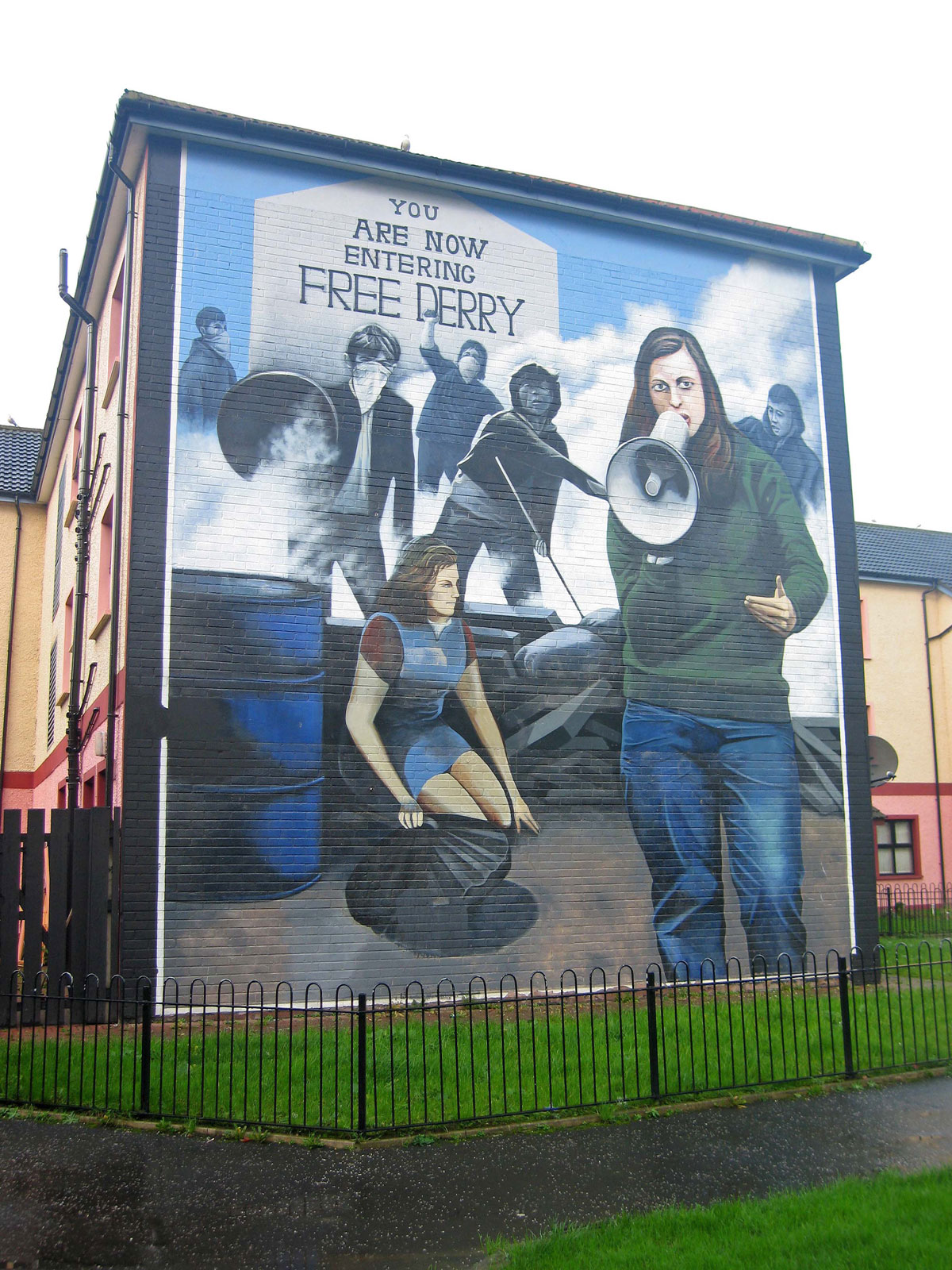
It may not have been intended for the UDR to be used in riot control, but in June 1970 they found themselves under a barrage of missiles in the Bogside when trouble broke out again after Bernadette Devlin (who by now had become the youngest female to become an MP in the British Parliament) was jailed for 6 months for ‘riotous behaviour’ during the Battle of the Bogside.
As time progressed, so did the number of incidents, and the following month, the Falls Curfew in Belfast increased the strain on relations between the British Army and Catholic communities even more.
In the Bogside, the Royal Anglian Regiment was positioned at ‘Aggro Corner’ (the junction of Rossville Street and William Street) where their presence became a target for missile throwers, including our Free Derry Tour guide. He told us how the altercations stopped every evening at 6pm because that was when his tea was ready and he was “more scared of his mam than the British Army”.
Light-hearted moments were few and far between though. The first British soldier to die in the conflict was killed when his vehicle was petrol bombed in the Bogside, and in July two Bogside rioters were shot dead by British soldiers in separate incidents on the same day, but there was a serious escalation of tension between Catholics and the British Army when internment without trial was introduced on August 9th 1971. Operation Demetrius, as it was called, was carried out to curtail the increase in violence, mainly from the Provisional IRA, but Catholics pointed out that Loyalist paramilitaries were also involved in violence too. The operation did nothing to curtail the violence though whoever was responsible, and in the following 48 hours, another 24 people were dead – 2 members of the British Army, 2 members of the IRA and 20 civilians (14 Catholics and 6 Protestants). In total, 1,981 people were arrested and interned, of whom 1,874 were Nationalists and 107 Loyalists).
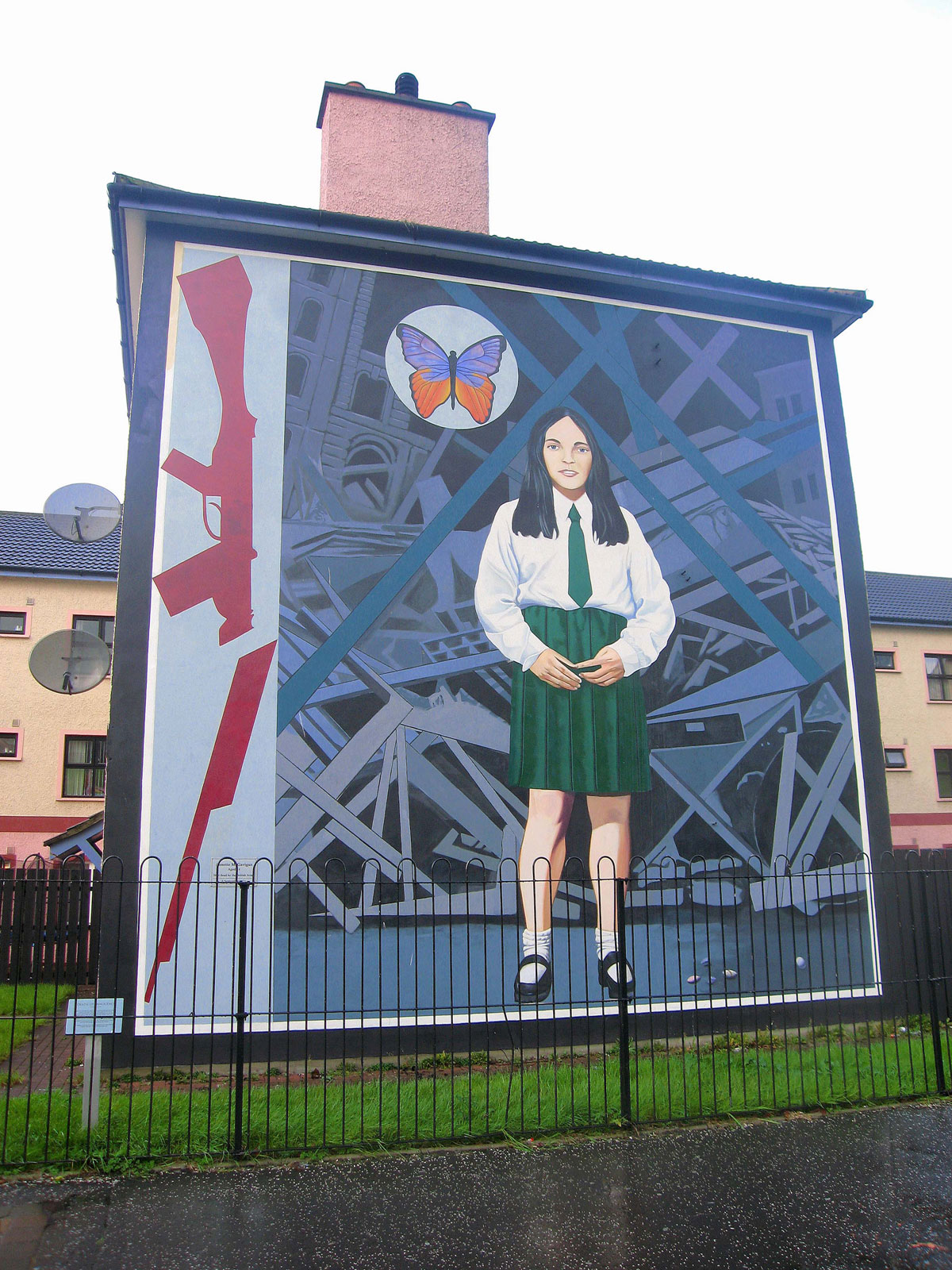
Rightly or wrongly, Catholics felt that they had been unfairly treated again, and when the British Army shot dead Annette McGavigan, an innocent 14 year old Bogside schoolgirl in September, the British Army were no longer seen as being there to protect the local community from the despised RUC – in fact, quite the opposite.
The introduction of internment by the Stormont government (now under the leadership of Brian Faulkner) caused deep resentment within the Catholic communities and had the opposite effect of what it was supposed to do: In actual fact support for the IRA increased.
The planned operation to round up those responsible in the IRA for the increase in violence was flawed right from the start because most of the hard-line suspects had been tipped off, leaving those who were not much of a threat to carry the can. Outdated information meant that men who were no longer in the IRA were included in those who were marched off to the Maze prison and treated like serial criminals – and this was all done without trial.
The New Year saw anti-internment marches planned by NICRA even though Faulker banned all marches and parades until the end of the year. The first one in the Derry area was due to be held at the Milligan Internment Camp at the head of Loch Foyle on the 18th January, but it was ruthlessly stopped in its tracks by the British Army.
Undaunted, NICRA set about organizing another one for the 30th January in Derry itself. The organizers would have been only too aware of how important it was to make sure that the event passed off peacefully as it was going to be controlled by the 1st Battalion of the Parachute Regiment, and they had already shown what they were capable of at Milligan.
The main organizer of the march, Ivan Cooper MP, gained assurances from the IRA that they would keep well away from the event, and at the same time, the RUC’s Chief Superintendent notified the army of NICRA’s peaceful intentions and asked that the march be allowed to take place without any military intervention.
The march itself was to start from the Creggan Estate and travel through the Bogside to the Guildhall where a rally would be held, and as the marchers assembled, there was nothing to suggest that the rally wouldn’t go according to plan.
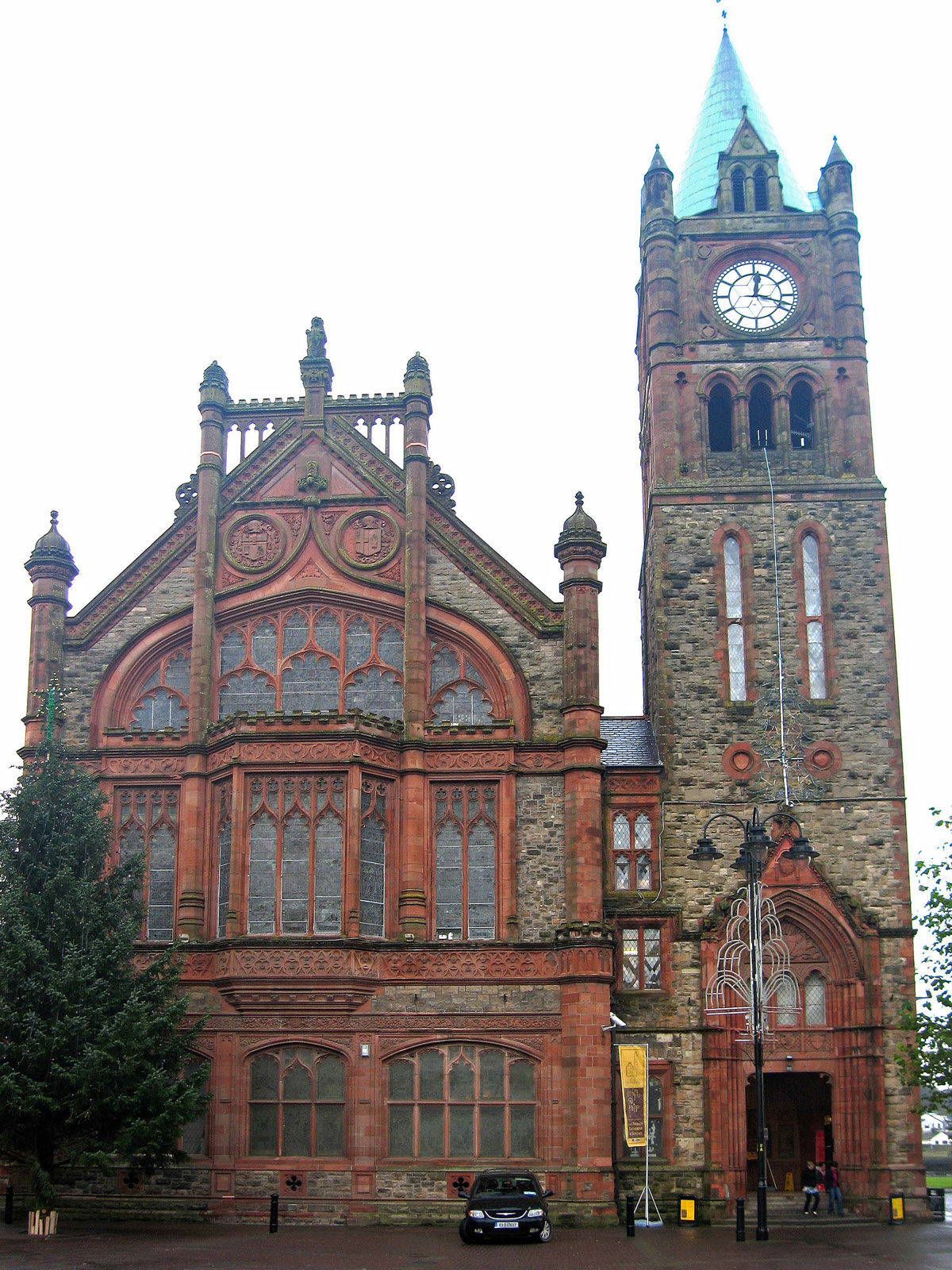
While the marchers were gathering in Bishop’s Field, the army was putting up barricades to prevent them reaching the Guildhall in the city centre. As the march proceeded through the Creggan and Bogside, more and more people joined in, and there were around 15,000 by the time they reached William Street, where an army barricade stopped them from continuing along the planned route. The organizers then did what no doubt the army expected them to do, and that was to divert along Rossville Street towards Free Derry Corner where they would be able to hold their rally well away from any potential Loyalist troublemakers in the city centre.
As the main march proceeded along Rossville Street, a section of the crowd, mainly youths, decided to confront the barricade with missiles – as they’d done on numerous occasions before, but they were dealing with the Paras now, and out came the water cannon, rubber bullets and CS gas. There were varying reports of exactly what happened next. As the army moved in to make arrests, live shots were fired – but who fired them was the question. The army insists that they were fired at first, but whatever the truth, within half an hour there were 13 dead marchers and 14 others badly wounded, one of whom was to die several months later.
Below are two clips, the first one is a short summary of the events, and the second one, a longer ITN report. You can choose which – if any – you prefer to watch.
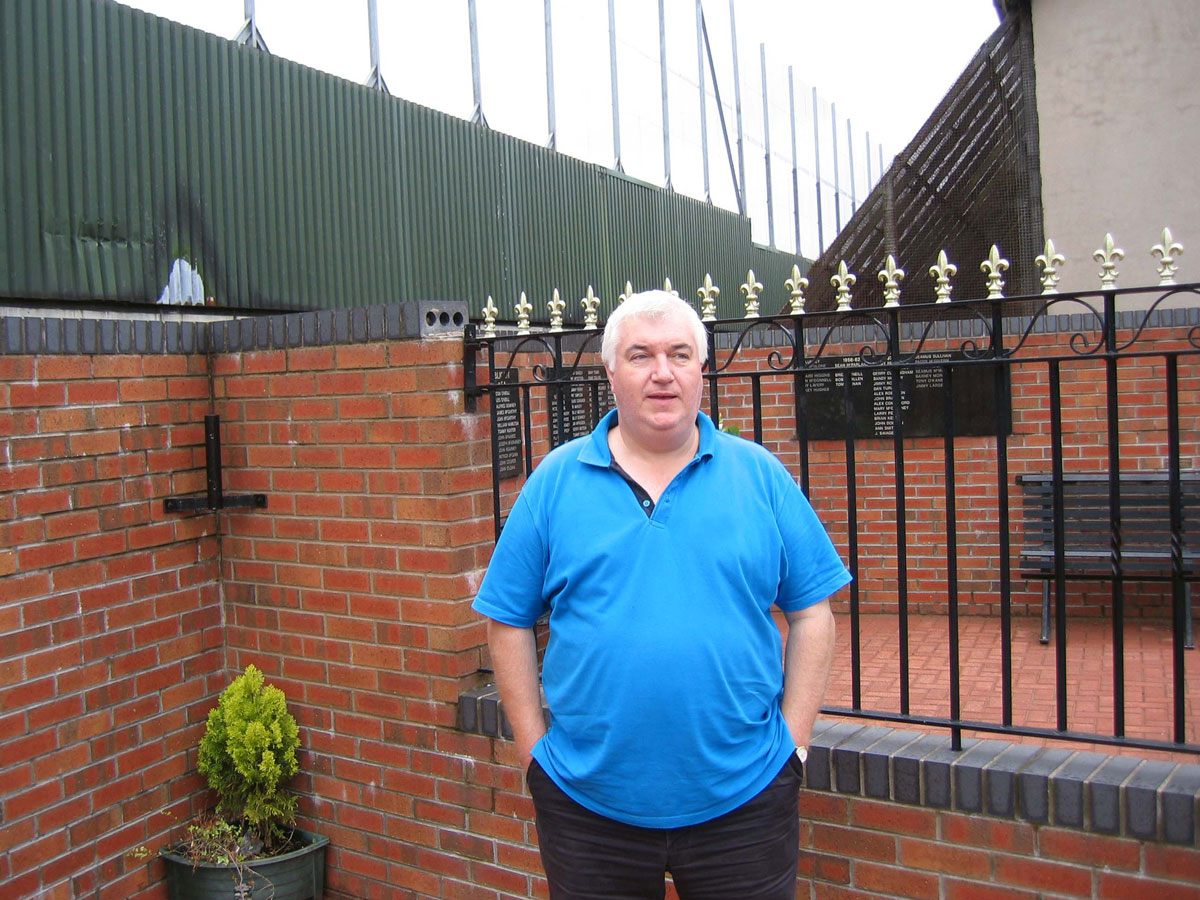
One of the people who was there that day was our guide. Up until now, his information was impartial laced with a good dose of humour, but when he started to discuss Bloody Sunday, his manner changed completely as he proceeded to describe his own experience. He told us how he had to dive for cover when one of the marchers he was with was shot and injured: His mate went to retrieve him, even though our guide warned him not to. Although waving a white handkerchief, he was then shot in the head and died instantly. Both men were unarmed and our guide called those responsible “murderers”. Piecing the information together, I’ve deduced the man who was injured was likely to have been Pat Docherty and his mate who was killed was probably Barney McGuigan. I don’t know for sure as I didn’t want to ask.


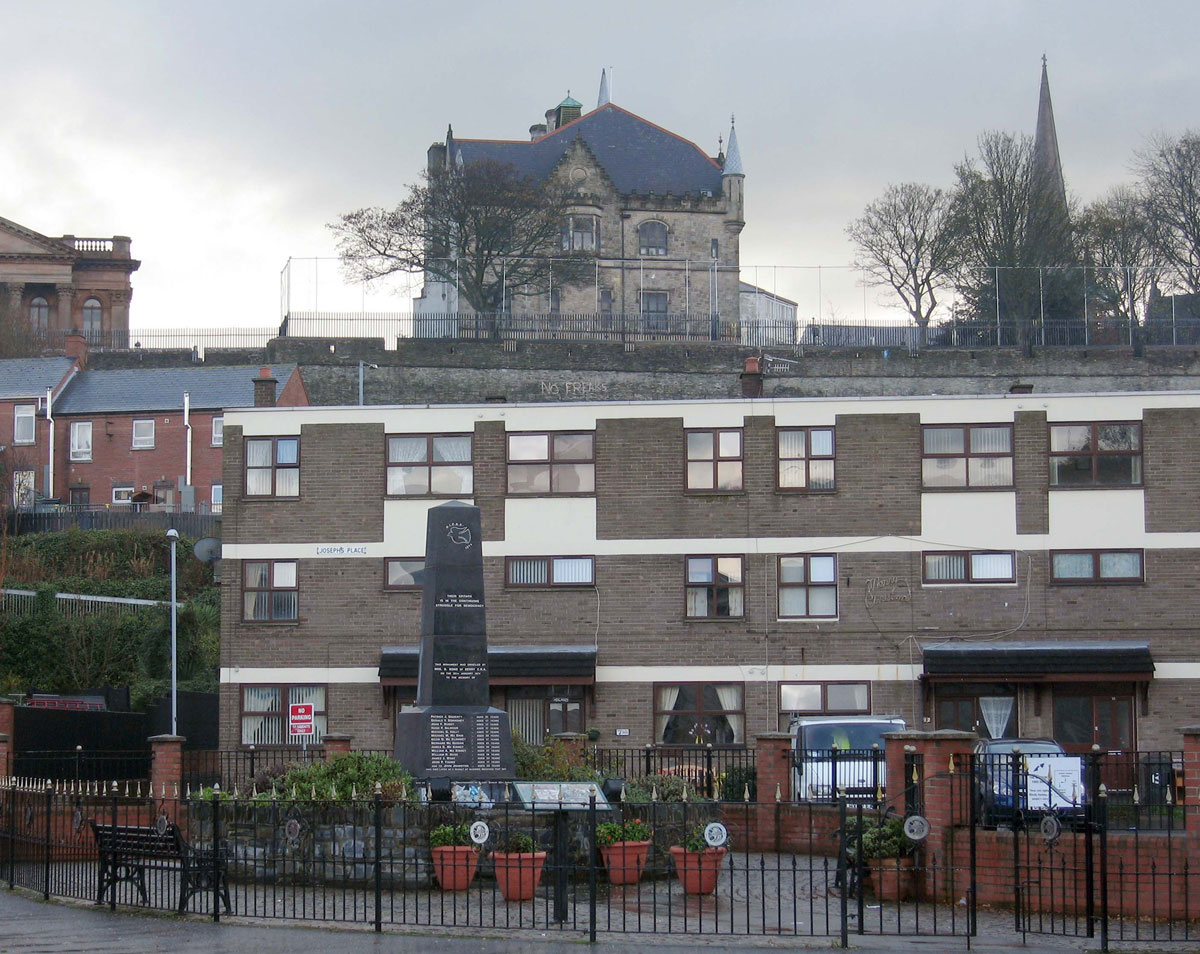
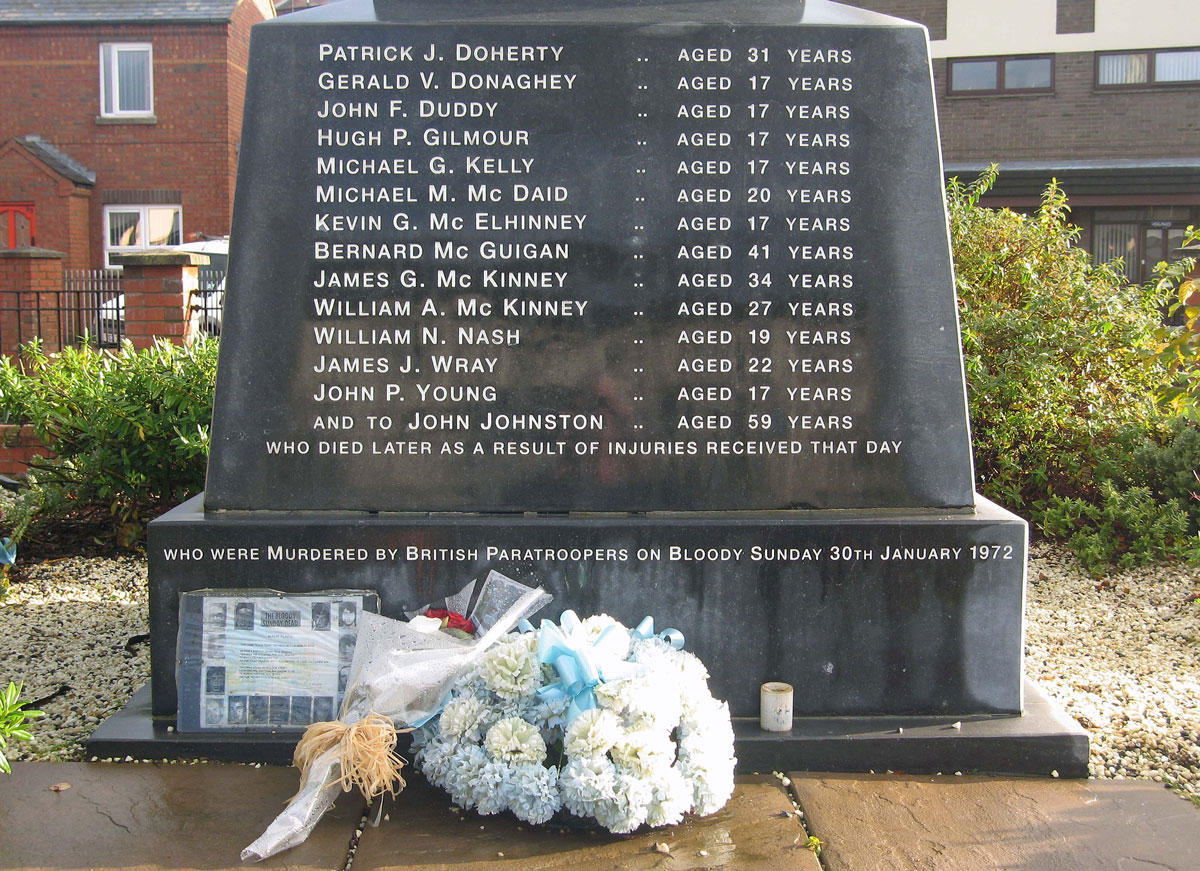
Our 2 hour walking tour ended at the Bloody Sunday Monument, which I think is as good a place as any to end the story of the Bogside during the Troubles. Bloody Sunday did nothing to curb the violence on the streets of the Bogside or anywhere else for that matter, and Operation Motorman only made matters worse. For years to come, Northern Ireland became immersed in a bitter war that had its roots in the Civil Rights marches of Derry/Londonderry, but there’s no point in discussing future events here. After all, these blogs are about my travel experiences, so I’ll just leave you with this song by Phil Coulter, and reflect about how things can escalate out of control when people don’t listen to what others are saying.
The Town I Loved So Well – Phil Coulter

POSTED – APRIL 2025
Originally posted 2025-04-23 14:23:34.
This is such a wonderful and thorough write-up about the event that became a defining moment in the Troubles, especially as the victims were largely innocent. Thanks for sharing, and have a good day 🙂 Aiva xx
Thank you so much Aiva 🤗
You describe the events leading up to Bloody Sunday very well and with your usual impartiality, but I can imagine that listening to your guide’s account of his own experiences that day must have been difficult.
It was Sarah. My dad was a paratrooper (not in N. Ireland) and it’s a regiment that’s always been held in high esteem, but hindsight tells us that this wasn’t one of their proudest moments, and it pains me to say it.
Back in the early 70s Ireland seemed to me be a world away so anything I saw on the tv news didn’t really resonate with my teenage self, however your words have really brought to life those tv images I remember seeing. A fascinating post with great summing up at the end, I think you’ve excelled yourself with this one.
Thanks a lot Eunice. As I said to Jo, I don’t think the Irish problem has completely gone away, but at least we have an idea now on what not to do in the future.
A tremendous post with an excellent summing up at the end in words, pictures and music.
Thanks Shey. You’re a star. Although I’ve basically ended the story of the city of Derry/Londonderry, I have one more post about a drive I did around the county.
Cannae wait.
It shouldn’t take too long.
I was away to add…no pressure or anything!!!
I know, but I’m sure you realise that I don’t work to a timetable for getting posts out, but this one won’t take too long 😊
But of course …lol
It’s not a pretty story and, of course, there’s guilt on both sides. I’m just glad that we seem to have peace today.
We do Jo, but we can’t take it for granted, as the wounds haven’t completely healed. Northern Ireland is still part of the UK, but there are still plenty of people who won’t rest until there’s a united island of Ireland – and that’s still problematic.
Gripping story, Malc. Hope it’s not a lesson to be learned on this side of the pond, with the growing trend to send anyone assumed to be an illegal immigrant to a holding tank for deportment without pretensions of due process.
Thanks Pat. It’s my view that bending the law or ignoring it altogether is not justice whatever the circumstances, but if the law’s unjust then it has to be changed – if you can get those in power to agree on how to do it.
Spot on, Malc. This crew is reinterpreting the laws to their preference. To better days ahead. 🍻🥂
I’d like to think so Pat, but when you see the Irish tricolour and Union Flag flying next to each other in protests on the streets of Belfast then that might give you an indication of how bad things are over here 🙁
Beautifully written. It’s a tricky subject to tackle without swaying one way or another and you do it very well. I’ve really enjoyed reading about your travels in NI.
Thank you Helen. You’re right about it being a tricky subject, but with the benefit of hindsight, it’s much easier to find the truth. Whether people like knowing the truth is another matter
Thank you for this beautiful history lesson.
I was horrified to note the very young age of most of the victims
Thank you Luisa for continuing to follow these posts that are not easy to read, but necessary if we want to avoid further similar conflicts. You’re a fantastic supporter of my blogs and I really can’t thank you enough. 💙🙏💙
Thanks a lot for saying so, Malc!
Much appreciated 😊