Tag Archives: Northern Ireland

Londonderry – The Walled City – Pt 1 Catholics Rebel against the Plantations

Londonderry - The Walled City - Pt 1 Catholics Rebel against the Plantations

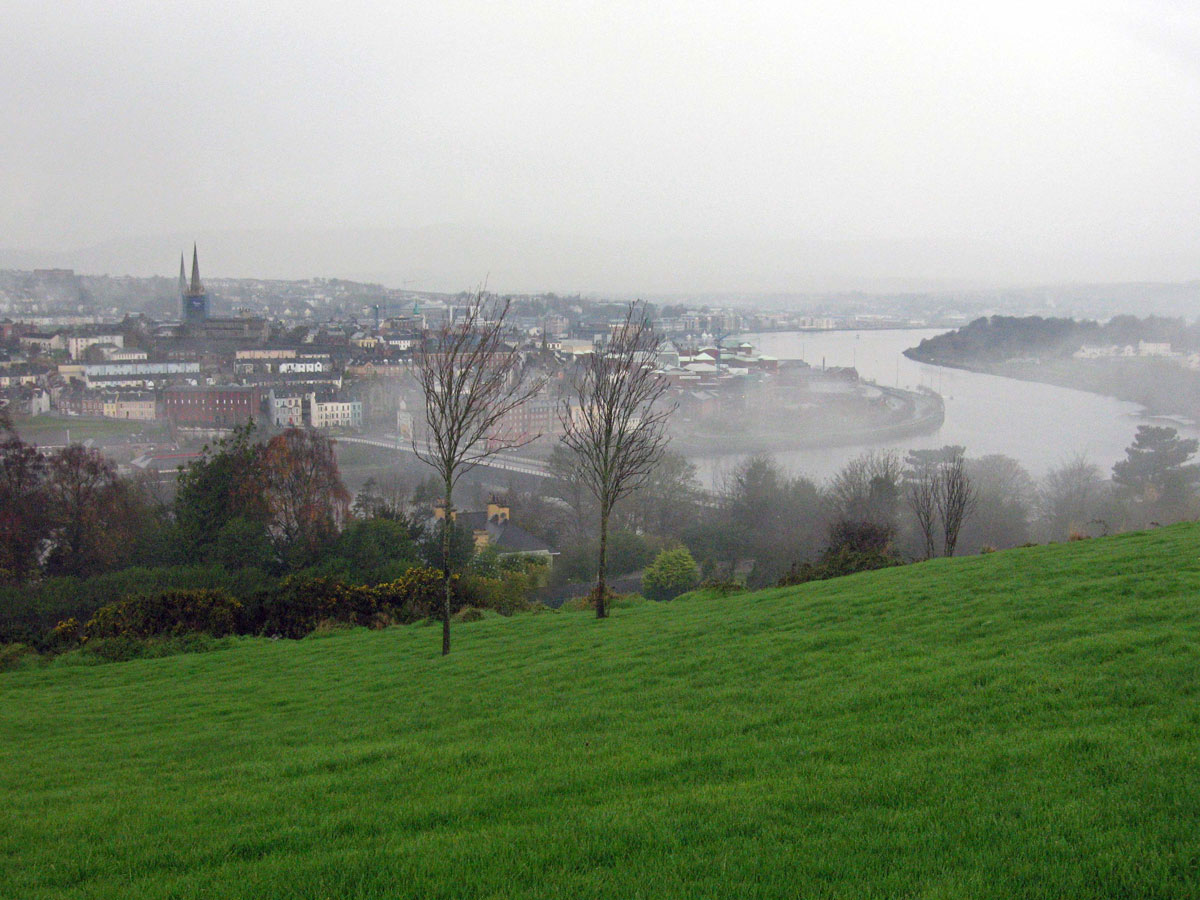
My last few posts have been focused on picture galleries where the images took precedence over the written word, but now I’m back in Ireland, the reverse is true. Unfortunately, Ireland is not a destination people go to get a suntan, and if it’s not already raining it’s usually about to. On my trip to Derry/Londonderry, the weather was grimmer than normal which says it all really.

On top of that, I was going to visit parts of the city where, at the time, it wouldn’t have made sense for an Englishman to be flashing an expensive camera around and so I took a cheap option instead. To be fair though, during my time here I only encountered any sort of hostility once, and most of the people I met were respectful. What all this amounts to is that I apologize in advance for the lack of quality pictures that would have shown the city in a much better light.

Continue reading →

Originally posted 2023-04-26 15:40:04.

Is it Derry or Londonderry – Pt 4 The Plantation of Ulster

Is it Derry or Londonderry? - Pt 4 The Plantation of Ulster

The Tudor conquest of Ireland was fraught with difficulties as we found out in Part 3, but there was a new king on the block now and he was determined to learn from his predecessors’ mistakes. It wasn’t that the idea of planting English settlers was a bad one, it was just that the way it was carried out left the newcomers vulnerable to attack, and so King James decided to take the plantation idea a step further.

If you remember, the first plantations were carried out by Queen Mary, an English Catholic, then it was the turn of Queen Elizabeth, an English Protestant, and now King James, a Scottish Protestant has come along to complicate things even further.

The problem the English had in ruling Ireland was exacerbated by the religious upheaval that had been spreading across Europe during the 16th century. Starting in Germany, the Reformation was a movement that had been gaining momentum ever since Martin Luther ‘protested’ about the way the Catholic Church was being run. Throughout the continent, different religious ideas were emerging that challenged the Pope’s authority: We saw it in England when Henry VIII created the Church of England, and Scotland also had its own dissenter in John Knox. Ireland, on the other hand, remained staunchly loyal to the Pope and the Catholic Church.

Continue reading →

Originally posted 2023-02-08 09:47:40.

Is it Derry or Londonderry – Pt 3 The Tudor Plantations and the Flight of the Earls

Is it Derry or Londonderry? - Pt 3 The Tudor Plantations and the Flight of the Earls

In Part 2 we saw how Henry VIII became King of Ireland as well as England, but being the monarch of a country isn’t necessarily the same thing as ruling it, as King Henry found out. The softly, softly approach he started out with ultimately ended with a heavy-handed attempt to enforce the Gaels and Anglo-Irish into accepting English culture and customs.

When his Catholic daughter, Mary, succeeded him the Irish were expecting a change of fortunes, but the new queen turned out to be just as ruthless as her father. She may have followed the religion of her mother Catherine of Aragon, but she was English, and in her quest to Anglicise Ireland, she began planting English settlers – and not just Catholics.

Mary’s Plantation started in 1556 when she ordered the removal of the troublesome O’Moore and O’Connor clans who had been constantly raiding The Pale. After their expulsion, two new counties were formed which she named Queen’s County (now Laois) and King’s County (Offaly). Two new towns were also created – Maryborough (now Portlaoise) and Philipstown (now Daingean), named after her husband, Philip, the King of Spain.

The plantation was not entirely successful for various reasons, not least because the O’Moores and O’Connors didn’t take the situation lying down, but how far she would have gone with the plantation idea is unclear because within two years she had died, and replaced by her half-sister, Elizabeth.

The map below shows how the counties of Ireland look today with Offaly near the centre and Laois just underneath.

Continue reading →

Originally posted 2023-01-24 09:27:37.

Is it Derry or Londonderry? – Pt 2 The English Take Control

Is it Derry or Londonderry? - Pt 2 The English Take Control

In Part 1 of this series, I explained how Derry came into existence and how the English came to be in Ireland, but now, I’m going to turn my attention to how Derry found itself under the rule of the British crown rather than one of an Irish king.

After the 12th century Norman/English invasion of Ireland, English interest and influence gradually diminished, thanks mainly to more pressing engagements at home. It wasn’t until the conclusion of the Battle of the Roses in 1487 that England was able to turn its attention elsewhere – and bringing Ireland completely under English control was on the new Tudor dynasty’s list of things to do.

Early attempts proved unsuccessful, not least because the intervening years had changed the geo-political landscape. By the 15th century, the English were left in control of just one part of Ireland known as The Pale, which covered an area between Dublin and Dundalk, but ‘beyond the Pale’, the rest of the country had largely returned to its Gaelic roots. Not only that, the Anglo-Norman lords (both inside and outside of The Pale) had inter-married with the Gaelic-Irish aristocracy.

The map below shows how Ireland looked before the Tudor dynasty took over in England. Land in green was owned by the native Irish, land in purple by the Anglo-Irish Lords and the land in grey was ‘The Pale’ owned by the English King.

Continue reading →

Originally posted 2023-01-05 08:09:23.

Is it Derry or Londonderry? – Pt 1 How it all Began

Is it Derry or Londonderry? - Pt 1 How it all Began

Discussing Northern Ireland is like stepping into a minefield, but here I go again. I have no Irish family connections, and so in that regard I have no personal interest, and all I knew about Derry/Londonderry before I came here was what I had seen and read in the news reports relating to The Troubles.

Unfortunately, media reports can’t always be relied upon to give a balanced view of things, and so one miserable weekend back in November 2007 I flew into Derry Airport with an open mind and made my way into Stroke City to see if I could unravel some of the reasons behind the conflict.

Stroke City is the nickname given to the city because, depending on a person’s religious or political persuasion (normally amounting to the same thing), it is either known as Derry or Londonderry, and so to keep everyone happy, it is often referred to as Derry/Londonderry – and as I follow the course of the city’s history, things should start to become clearer as to why.

Continue reading →

Originally posted 2022-12-09 16:49:52.

Two Black Belfast Taxis – One Orange and One Green – Pt 2

Two Black Belfast Taxis - One Orange and One Green - Pt 2

If I thought that yesterday was a bit of an eye-opener, then today was going to be even more so; and if you haven’t already read Part 1, this post will make more sense if you do.

If you have read it, you will already be aware that last night I managed to get a Catholic taxi firm to agree to send me a driver this morning who was prepared to show me a different perspective of sectarian Belfast than I had yesterday.

I met my taxi driver in the reception area of the hotel and he briefly introduced himself as a Republican, which said volumes already. Just as I could tell the difference yesterday between a protestant and a Loyalist, I sussed straight away that there was a difference between a Catholic and a Republican – in other words he was a member of the IRA. He asked me if I was ok with that, and even though I wasn’t really, I said yes. To be honest, I think he knew how I felt, and when we got into his taxi, he tried to reassure me that I was in safe hands and wanted to make sure I felt comfortable before we started off. I was and I wasn’t, because even though he came across as a very open and approachable chap, the front taxi seat must have been the most uncomfortable seat I’ve ever sat in.

As we drove off, he explained that I was staying in one of the very few places that he would be prepared to make a pick-up outside of a catholic area – the city centre and university area was about it really.

At the bottom of the street he turned right onto the Lower Ormeau Road, which just happens to be Catholic, and Brennan immediately pulled in near a betting office. He encouraged me to go and have a look, and outside was a memorial to the victims of a ruthless UDA gun attack in 1992. There were fifteen civilian customers inside at the time, five of whom were killed and nine injured. Five months later an Orange Order march passed the scene of the carnage with members shouting pro UDA slogans and holding up 5 fingers as they marched past. I was already beginning to see things from a different angle today.

Continue reading →

Originally posted 2020-11-15 07:30:40.

Two Black Belfast Taxis – One Orange and One Green – Pt 1

Two Black Belfast Taxis - One Orange and One Green - Pt 1

The topic under discussion here is a sensitive one, but I hope not controversial. If any offence is caused, I can assure you that it’s completely unintentional, therefore please accept my apologies in advance if I have.

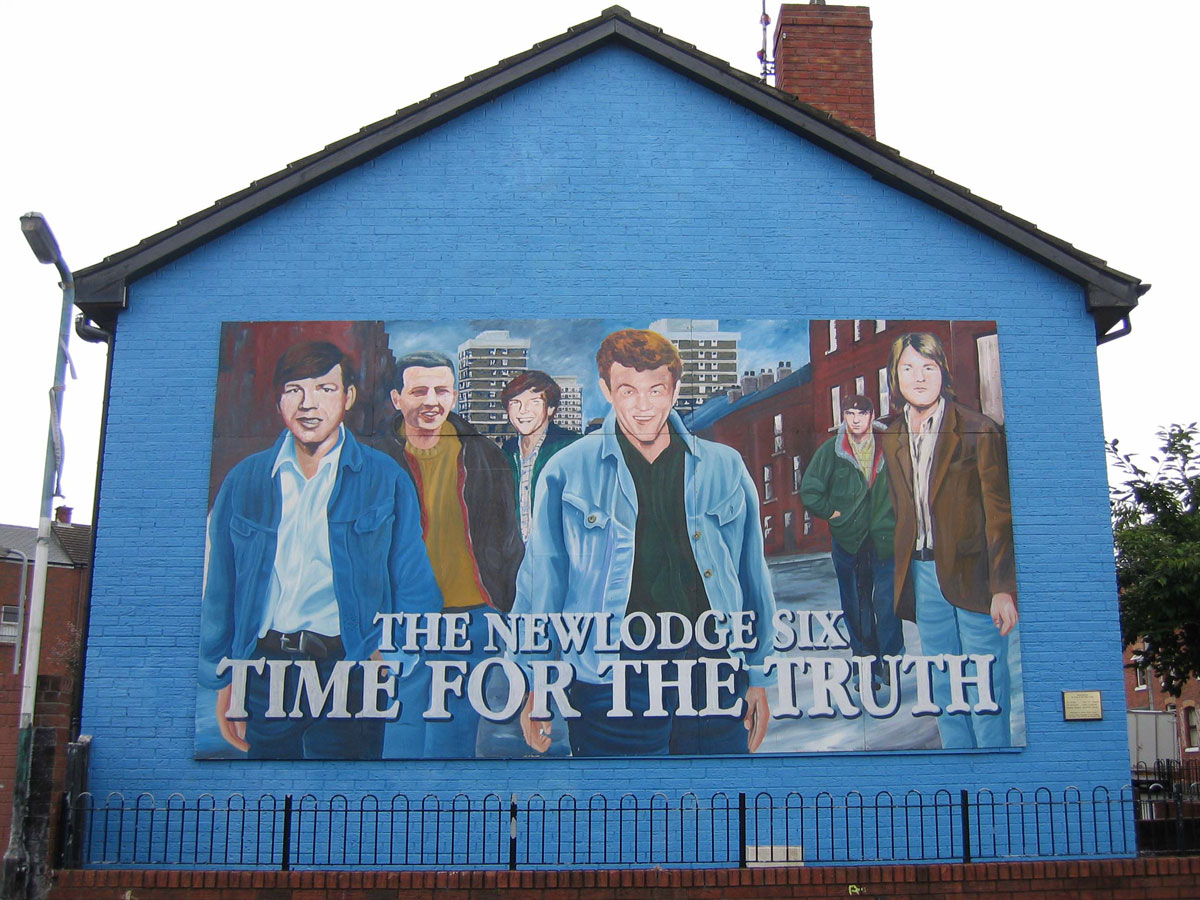
In 2004, six years after the signing of the Good Friday Agreement, I paid my first visit to Belfast. To have gone there as an English tourist before ‘The Troubles’ were officially ended would have been unthinkable for most people, and even after those peace documents were signed, not everybody approved of the outcome, and sporadic violence still wasn’t uncommon.

In my introduction to Northern Ireland I gave a brief explanation as to how the North got separated from the South after the 1921 Irish War of Independence; but the Government of Ireland Act may have solved one problem but it created another – and Belfast, being the North’s capital, found itself in the thick of it.

Different people have different opinions as to when The Troubles actually started because catholic discontent and protestant suspicion had been simmering for quite some time. On the one hand, the minority catholic population felt that they were being treated as second class citizens on issues such as jobs and housing (and there was little they could do about it under the prevailing voting system): Protestants, on the other hand, felt that there was a deliberate attempt by Irish Catholics to change the demographics of the province, and the Northern Ireland government was either inept or complicit in handling it. I think most people accept though, that it was during the late 1960s when things took a distinct turn for the worse, particularly around the time of the Civil Rights marches.

I’ve read numerous books, watched countless news reports and even witnessed first-hand how the conflict affected the UK mainland, but as far as Northern Ireland was concerned, only the people who were directly involved there during this tragic period of Irish history can come anywhere near close to describing what it was like to live in the province during those times. For these reasons, I don’t intend to delve too deeply into the background of Northern Ireland’s Troubles, but I will need to touch on some of the history for anything to make sense.

For anyone who would like to know more, I can highly recommend this excellent 2019 TV documentary series entitled Spotlight on the Troubles: A Secret History.

Continue reading →

Originally posted 2020-11-10 14:17:47.