Is it Derry or Londonderry? - Pt 4 The Plantation of Ulster
The Tudor conquest of Ireland was fraught with difficulties as we found out in Part 3, but there was a new king on the block now and he was determined to learn from his predecessors’ mistakes. It wasn’t that the idea of planting English settlers was a bad one, it was just that the way it was carried out left the newcomers vulnerable to attack, and so King James decided to take the plantation idea a step further.
If you remember, the first plantations were carried out by Queen Mary, an English Catholic, then it was the turn of Queen Elizabeth, an English Protestant, and now King James, a Scottish Protestant has come along to complicate things even further.
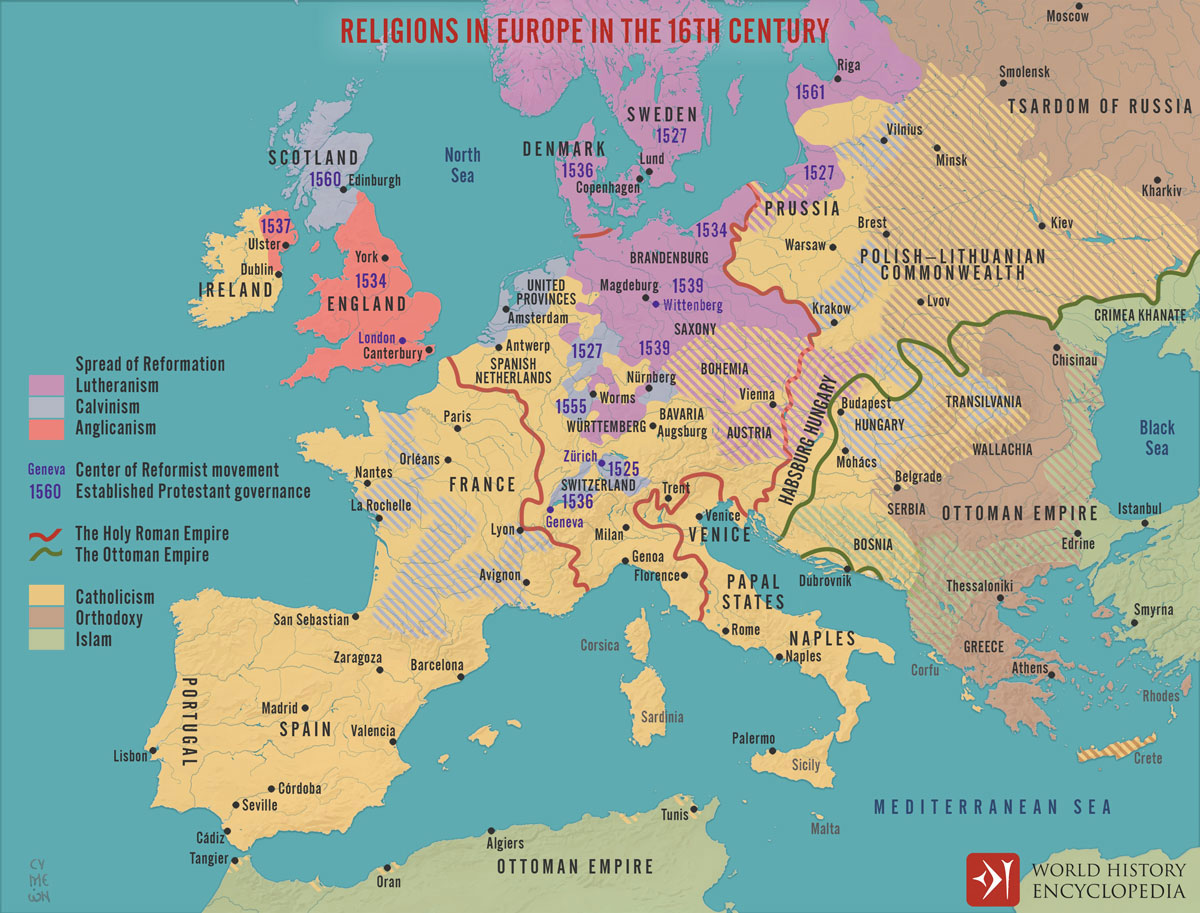
The problem the English had in ruling Ireland was exacerbated by the religious upheaval that had been spreading across Europe during the 16th century. Starting in Germany, the Reformation was a movement that had been gaining momentum ever since Martin Luther ‘protested’ about the way the Catholic Church was being run. Throughout the continent, different religious ideas were emerging that challenged the Pope’s authority: We saw it in England when Henry VIII created the Church of England, and Scotland also had its own dissenter in John Knox. Ireland, on the other hand, remained staunchly loyal to the Pope and the Catholic Church.
When King James succeeded Queen Elizabeth, he was already King James VI of Scotland, but his early life was not straightforward either. He was born in Edinburgh Castle in 1566 to the Catholic Mary Queen of Scots at a time when the Presbyterians (Scottish Protestants) were clamouring for her to be deposed – and not just for religious reasons either. In the end she had no choice but to abdicate, which left baby James as King of Scotland at just 1 year old. As was the norm, until he was old enough to become king in his own right, James was brought up by a succession of Regents – all of whom were Protestant.

King James VI of Scotland also became James I of England after Queen Elizabeth died without leaving an heir. He was crowned at Westminster Abbey on 25th July 1603, but the prospect of having a Scotsman as the King of England wasn’t universally popular, especially by those who still preferred England to be Catholic. The Gunpowder Plot which failed to blow up the king and his Parliament on November 5th 1605 must have still been in his mind when he turned his attention to the Plantation of Ulster.
No doubt it would have been obvious to the new king that if he wanted to get Ireland to join his new ‘United Kingdom’ then he would have to sort Ulster out, the most troublesome province in Ireland: It was almost wholly Gaelic, Catholic and rural – and seen as ‘uncivilized’ by the English. Its undeveloped rural economy had no towns to speak of and the local population resisted English control more than anywhere else. On top of that, James also had a grudge against Ulster because of the close connection it had with the Gaels of Western Scotland, who had been a thorn in the side of Scottish kings since the days of Dál Riata (see my post on Kilmartin Glen). In fact, Scottish Gaelic mercenaries (known as Gallowglass or Galloglaigh) had been migrating to Ireland to serve under the Irish chiefs for years, but now that the Earls were gone, James was in a position at long last to do something about it.
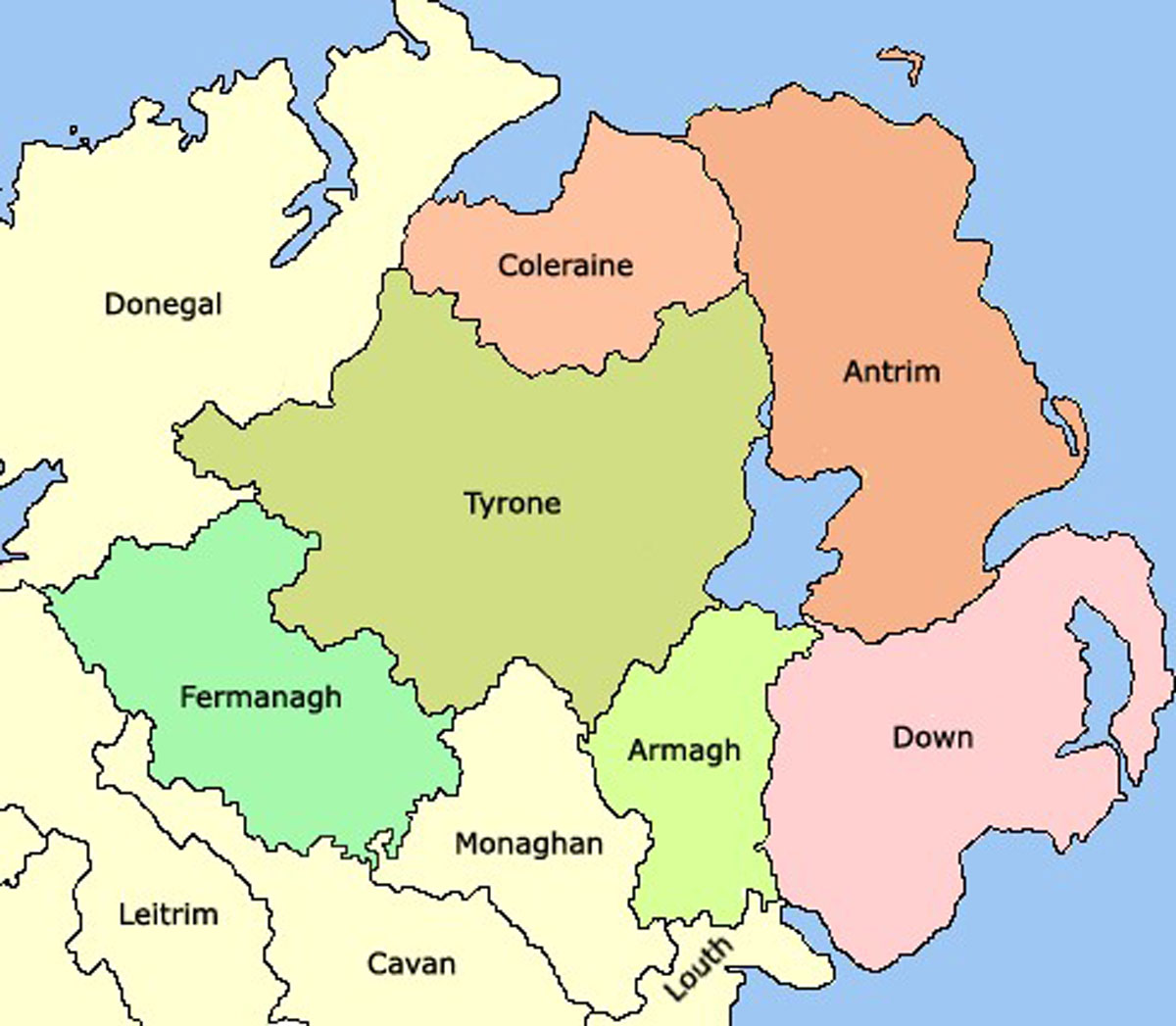
In 1606, three years before the official Plantation of Ulster, and even a year before the Flight of the Earls, there had already been a dress rehearsal if you like, when private colonisation of Counties Antrim, Down and Monaghan was introduced with the king’s blessing.
The plan for the remaining six counties of Armagh, Cavan, Fermanagh, Tyrone, Donegal and Coleraine was to rid them of the native Irish (both Gaelic Irish and Old English) completely, so as to prevent any chance of a rebellion within Ulster.
As James was both King of England and Scotland he wanted it to be a joint ‘British’ venture with half of the new settlers coming from England and half from Scotland, all of whom were required to be English-speaking and Protestant. Furthermore, the new landowners were not allowed to take Irish tenants and had to import workers from England and Scotland.
There were to be three types of Planters – Undertakers (wealthy men from England and Scotland who undertook to import tenants from their own estates), Servitors (Veterans of the 9 years’ war) and Deserving Irish (those who had remained loyal to the Crown). In the end though, not enough Planters were persuaded to take up the offer, and as a result, King James granted (or perhaps forced) twelve London Trade Guilds to form the Honourable Irish Society, who were given permission to form a new county – the county of Londonderry.

There was no County Derry before County Londonderry because the new county was made up chiefly from the existing County of Coleraine. The Irish Society, for practical reasons, was also granted bits of County Tyrone and County Antrim, plus the City of Derry that was in County Donegal.
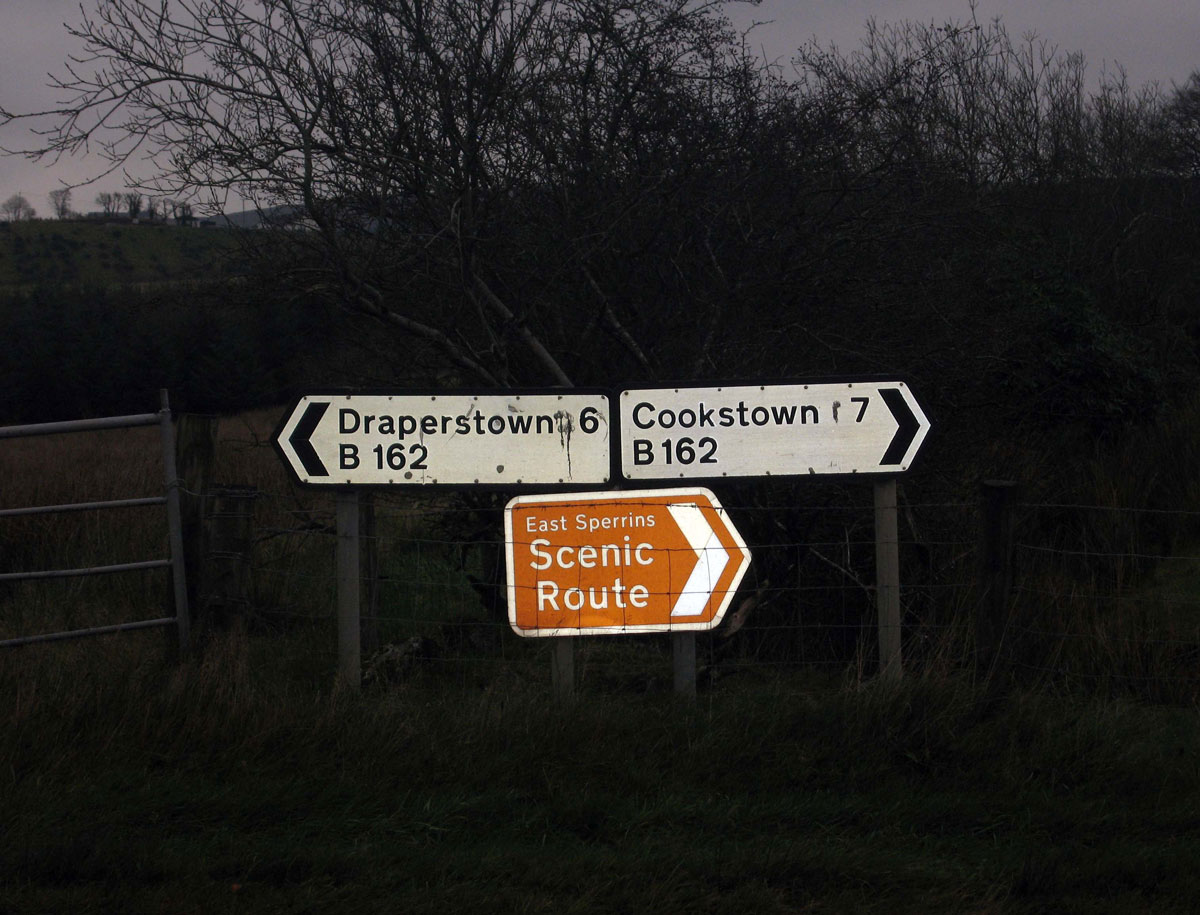
The Irish Society was made up of the 12 main livery companies of London, which themselves were composed of various guilds, and if you want to know a bit more about them you can visit my post about the City Of London Corporation. The individual companies were each granted approximately 3,210 acres of land throughout the county, and an obvious example of one of these settlements is Draperstown that was founded by the Worshipful Company of Drapers. They also owned land around Moneymore, and the picture below shows that the town is still fiercely Loyalist.

The Irish Society as a whole was given possession of the cities of Coleraine and Derry. They were included so that the Society could control both banks of the Rivers Bann at Coleraine and both banks of the River Foyle at Derry, and in my next post I’ll be talking about how Londonderry (as the city was about to be called) developed after the plantation.
POSTED – FEBRUARY 2023
Originally posted 2023-02-08 09:47:40.
Again an excellent piece on a pretty tortuous subject.
Tortuous is a good word Shey 🙂
This gets more interesting with each post, I’m looking forward to the next part now 🙂
I’m glad that you’re finding this mini-seroes interesting Eunice. I’m hoping that it will help piece together why Derry/Londonderry was so pivotal during ‘The Troubles’.
I too, like Nemotino, appreciate your clear and precise explanations, and the information you proffer in such an engaging manner. All the best!
It has to be kept simple Francesc – so that I can understand it 🙂
I know you understand it quite well my friend and explain it even better!
Thank you Francesc. I really appreciate that. Honestly!
It’s always a pleasure Malc. Good evening.
Another outstanding post full of details that are so interesting 💌
Your praise is always flattering Luisa. Thank you so much 🙂
I find your posts really fascinating, dear Malc👍
That’s high praise indeed Luisa. You’ve made my day 💙
🙏🎉🙏🎉🙏
Thank you, Malc, for your eloquent continuation of the history of Ireland. It helps to understand the complexity of the later troubles. I just wish that it was not the religion that makes people to commit atrocities.
Thank you, Malc, for your wonderful essays.
Joanna
Thank you too Joanna for your kind words. Unbelievably, I’m afraid religion can bring the worst out of human beings as well as the best.
Thanks, Malc. I appreciate your clear explanations.
Great! That is what my intentions are. Thanks Don