Derry and The Troubles - Pt 1 Consequences of the Partition
In previous articles, we started out by recounting how Derry was founded, through to why the English were invited into the country and then how eventually they took control. The argument about whether Ireland was Catholic or Protestant appeared to have been settled when the Protestant English king William III defeated the Catholic king, James II at the Battle of the Boyne, but the history of Ireland has never been that simple.
After that historic Battle Ireland continued to be ruled by a succession of Protestant monarchs as part of the United Kingdom and Ireland, but the Irish population as a whole remained mostly Catholic. A succession of failures by the British government to appease Catholic concerns (not least the Great Famine of the mid-19th century) led to calls for the country to break from the union, and by the first part of the 20th century the clamour for change was gathering pace.
As we’ve already seen, things were different in the north of the country where, since the Plantations, most of the Protestants lived – but not everyone who lived in the north were Protestant. To try and keep the majority of both sections of the Irish community happy, the government put forward a plan where six of the nine Ulster counties would be partitioned from the rest of Ireland. The three predominantly Catholic counties that were excluded were Cavan, Monaghan and Donegal. The aim of this plan was to provide independent Home Rule for both Catholics and Protestants, but which at the same time would remain part of the union under British jurisdiction.

I intend discussing the events that led up to the Partition of Ireland when I start writing posts about the Republic later on, but for now and on paper at least, it sounded like a decent compromise, and on 3rd May 1921, partition officially took place when the Government of Ireland 1920 Act was passed. For many in the south though there were too many issues that weren’t acceptable, and on 6th December 1922 the 26 counties in the south left the union and declared itself a Republic as the Irish Free State.
The separation left Derry in a difficult situation. Since the 1689 siege, an influx of migrants, especially during and after the great famine of the 1840s, had created a Catholic majority in the city, but not only that, it was situated right on the border with County Donegal which was in the new Irish Free State. It was now in the unenviable position of being a city with a Catholic majority on the border with a Catholic country but ruled by a unionist Protestant government.
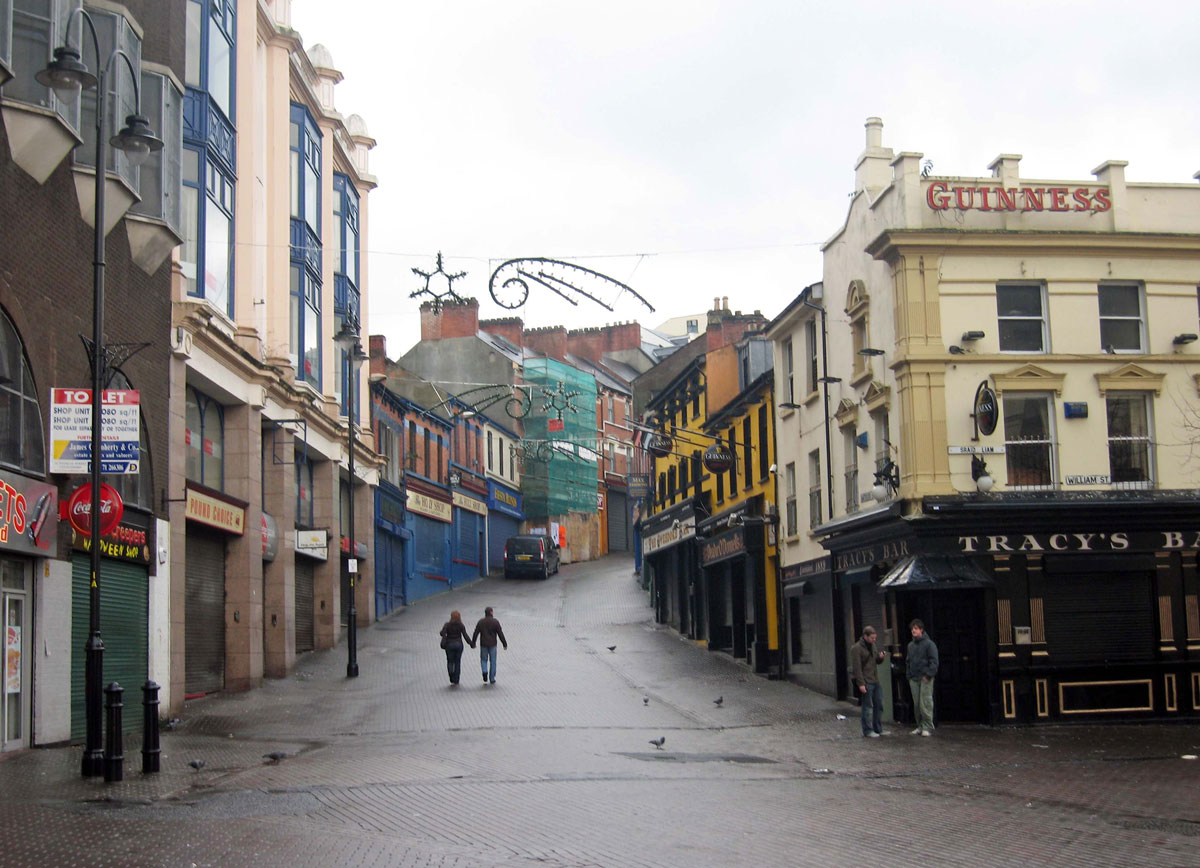
Some of you may have been wondering why I’ve reverted back to calling the city Derry rather than its official name of Londonderry, but you can possibly now begin to see why. With the vast majority of the population now Catholic (including those who ran its municipal affairs) it was probably inevitable that they would drop the London prefix and return the city to its original name of Derry – whether it was official or not. Now that I’ve pacified the Catholic community, I’ve probably upset its Protestant citizens – but that’s Northern Ireland for you.
Northern Ireland was undeniably conceived to protect the country’s Protestant population, and as its first prime minister Sir James Craig said, the province was “governed by a Protestant parliament for a Protestant people”. To ensure that Protestants remained in control, a policy known as gerrymandering was introduced whereby political boundaries were drawn up in a manner that prevented Catholics from having any real power in how the new province was run.

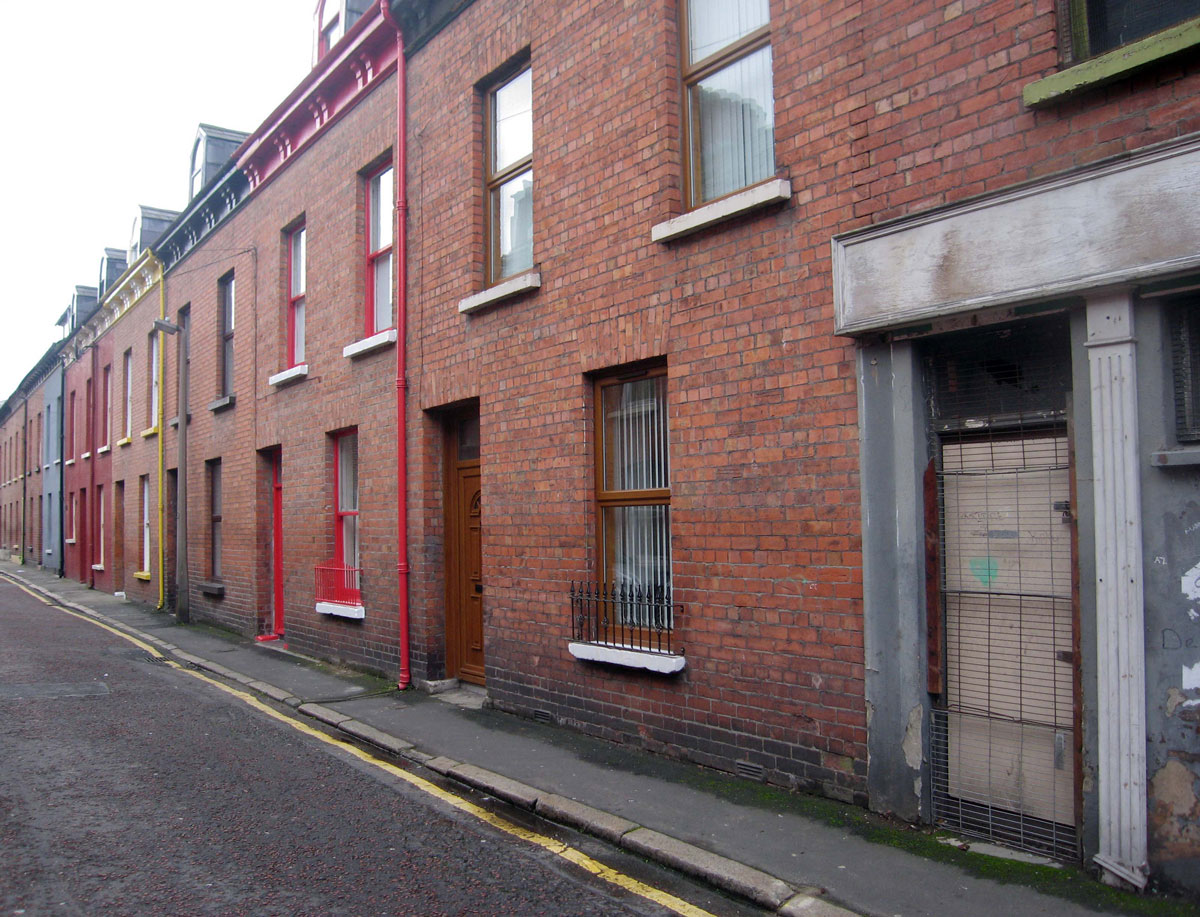
This bias, although perhaps politically understandable at the time, was bound to lead to discontent among the increasing number of Catholics that also lived here. Right from the outset, when it came to jobs and houses, they were at the back of the queue and sectarianism started to become a real problem: Derry for example, although having a large Catholic majority, didn’t even have a Catholic mayor, and there was no way that any of them would be allowed to live inside the city walls. Instead, they were confined to the boggy area below in cramped and unsatisfactory housing.
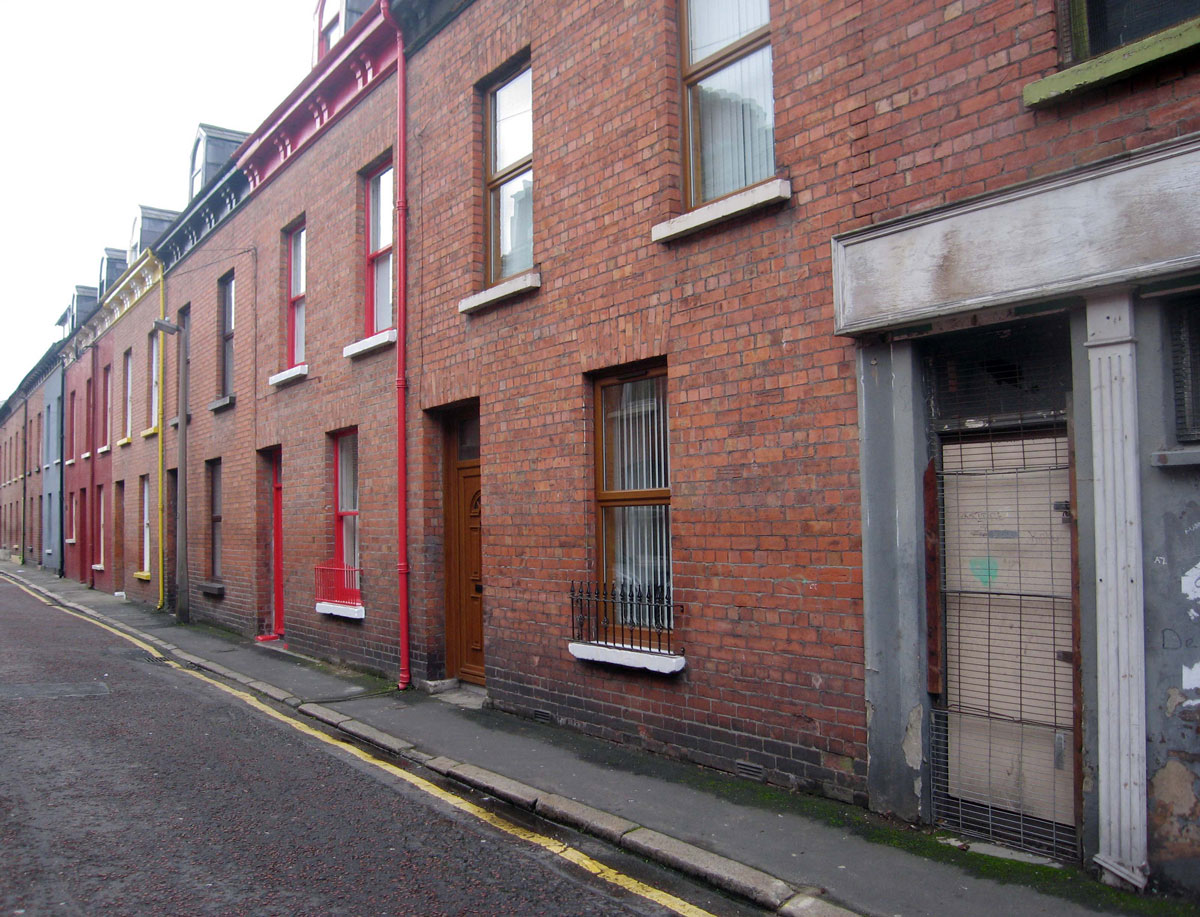
By the 1960s, resentment among the Catholic communities had reached a point where they were starting to demand equality with their Protestant neighbours, but at the same time, Protestant communities were becoming fearful that Catholics, with an ever- increasing percentage of the population, were going to change the demographics of Northern Ireland at their expense, and in part 2 I’ll explain how Derry became the flashpoint for the beginning of The Troubles.
POSTED – SEPTEMBER 2024
Originally posted 2024-09-28 11:22:26.
Oh goodness, it really was a toxic mix over in Ireland, wasn’t it? It’s fascinating to see how the Irish religious landscape shaped the story of Ireland all the way to the Troubles. Religion and politics is always an explosive mix, as history shows us only too well.
When I start writing about events in the Republic it will become even more confusing, but as I’m talking about the North, and Stroke City in particular, I want to try and make it as coherent as possible. I think not being a religious person helps me take an even-handed approach to the subject, but then as you quite rightly say, when you add politics into the mix things start to become more blurred.
I think it’s usually a slippery slope when politics rears it’s ugly head in issues that aren’t, or shouldn’t be, political. This is an area in which I’m very hazy, and such a relatively recent religious conflict does seem odd within the context of our modern secular society. But if anyone can explain it in a way I can get my head around it all, it’s you, Malc.
Ah! Thank you Alli. You’ve made my day.
I speak as I find, Malc. 🙂
It’s always lovely to hear from you Alli regardless 🙂
It’s easy to see how something that started off with valid intentions could go wrong, isn’t it, but it just seemed to spiral downwards, Malc. Wouldn’t it be a lovely world if we could all respect and tolerate each others views? Looking forward to the next episode.
I couldn’t agree more Jo. What I hate the most is when the truth gets distorted. Many contentious issues are complex enough without adding fuel to the fire.
Thank you, Malc, for your eloquent article on the complexities of Irish history. As always, your attention to detail and clear narrative make things easy to follow. I remember the story told by Boris Johnson about how he had to correct Emanuel Macron when he thought that NI was another country and not a part of the UK. Had he a teacher, like you, Malc, he would know better! Thank you, Malc, for your efforts to highlight and inform!
Joanna
Thank you Joanna as always for your lovely comments. I’m no expert on irish history but it’s worrying how ill informed some of the world’s politicians are about world affairs.
You are welcome as always, Malc!
Joanna
🙏
An interesting read. Currently living in NI and have taken a deep dive into the history, only to be left with the feeling that the more I know, the less I understand. Heading up towards Derry/Londonderry to do a spot of exploring in the not too distant future, so reading with interest.
I don’t know which part of NI you’re living in but it’s not all about The Troubles as you’ve probably already found out. That said, it would be impossible to understand the province without knowing something about its history. I’ve covered Derry’s history from its beginnings to the Siege, but I’m no expert. The locals will encourage you to visit County Donegal over the border and it does sound lovely but I’ve not made it there. The north coast of County Londonderry around Mussenden Temple is worth a visit and the Antrim Coast is even better if you haven’t already been there.
I’m Belfast based, enjoying the city but also good to push out to the coast & countryside. Northern Ireland is one big adventure!
An excellent post on a very difficult subject.
Thanks Shey. There’s more to come.
Well… you got this reader onboard forsure.
Imagine there’s no countries
It isn’t hard to do
Nothing to kill or die for
And no religion, too…
Interesting history and fine photography!
What a great response Francesc! Thank you!
Thank you so much for sharing this article, which as always is interesting and so well documented.
I liked it a lot, dear Malc!
Thank you so much Luisa. Writing about The Troubles in Northern Ireland is like treading on eggshells, but thankfully it’s easier to talk about these days than it used to be.
I remember well the days when what happened in Northern Ireland was almost always a real tragedy. ❤️
There will be more posts to come on this topic Luisa and I hope you stay with it 💙
Thanks a lot for telling me, dear Malc 💞
Fascinating history, Malc. Our gerrymandering is often based on skin color rather than religion.
Please don’t start me off on that one Pat 😶
Deal
😀