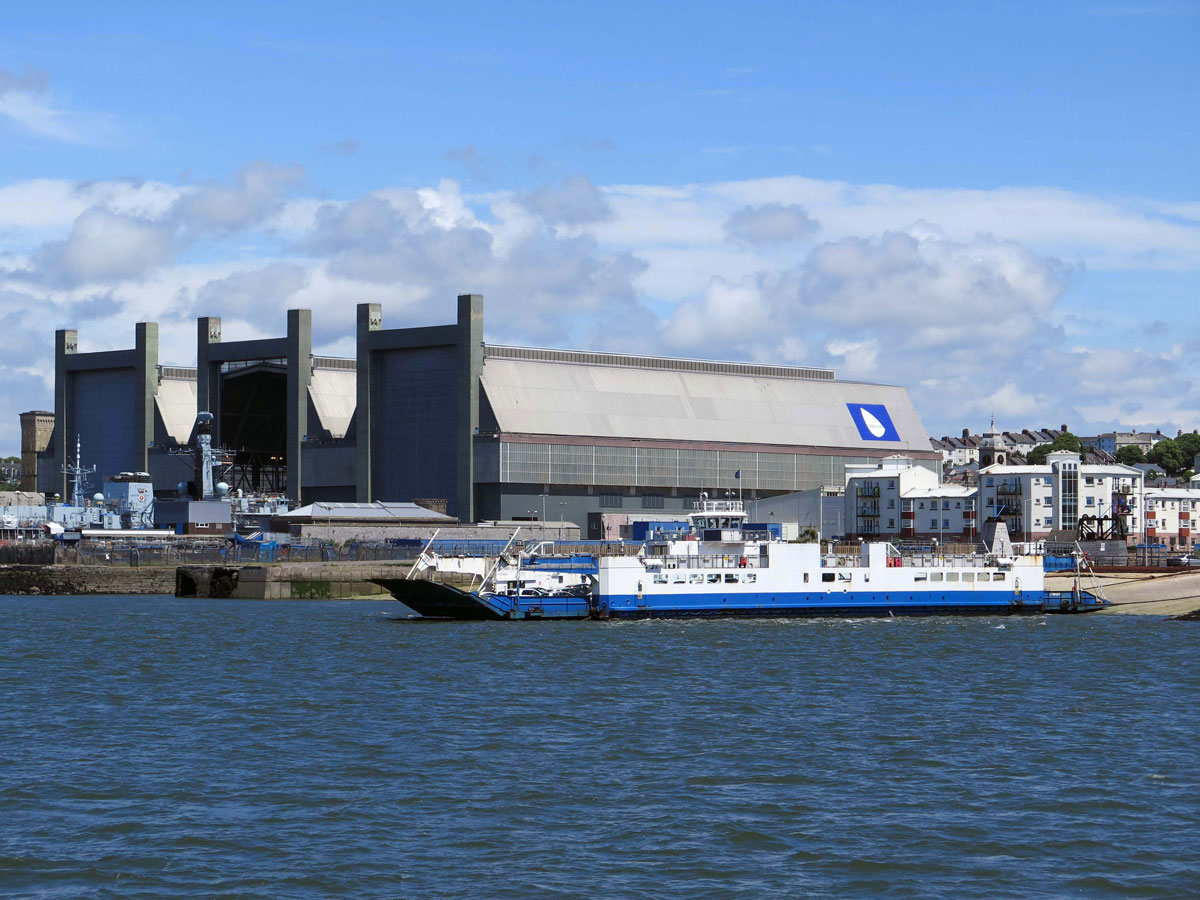
Devonport - Pt 5 What Does the Future Hold?
Before I can attempt to answer that question, we need to look at what’s been happening since the Keyham Extension was built. If you remember, in the previous post I recounted how it was officially opened by the Prince and Princess of Wales in 1907, but before I start talking about how the running of the dockyard has changed since then, I want to talk about the personnel who are stationed here.
Prior to a shore-based facility being established, naval personnel were housed in wooden hulks in the Hamoaze, but all that changed in 1890 when the first land-based barracks were commissioned. These stone frigates (as they are sometimes called) initially adopted the name of the floating barracks that they replaced, and is the reason why shore-based establishments are known by a ship’s name. The barracks that were built at Devonport were named HMS Vivid, not after the yacht that transported the royal couple to Keyham, but after the wooden paddle steamer (and Devonport flagship) that preceded it.
In 1934 the name of the barracks was changed to HMS Drake, and since the early part of the 21st century the entire naval base, officially called HMNB Devonport, has become known as HMS Drake, and just to clarify (or confuse) the situation further, HMS Vivid now refers to the Royal Naval Reserve Unit which has its headquarters within the base.

1914 saw the outbreak of WWI, and with it came the demand for an increase in manpower to build and maintain the fleet. Over the next four years around 20,000 personnel were employed at the yard – mostly men, but also women as well. The inter-war years required fewer workers, but they were needed again when WWII broke out in 1939. Being the navy’s main repair yard, Devonport became a prime target for the Luftwaffe, and heavy bombing over Plymouth during the raids of March and April 1941 inflicted heavy casualties on the civilian population. At Devonport, the newer facilities withstood the attacks better than the older ones, but generally speaking, work at the yard continued to be relatively unhindered, mainly thanks to a dedicated workforce.
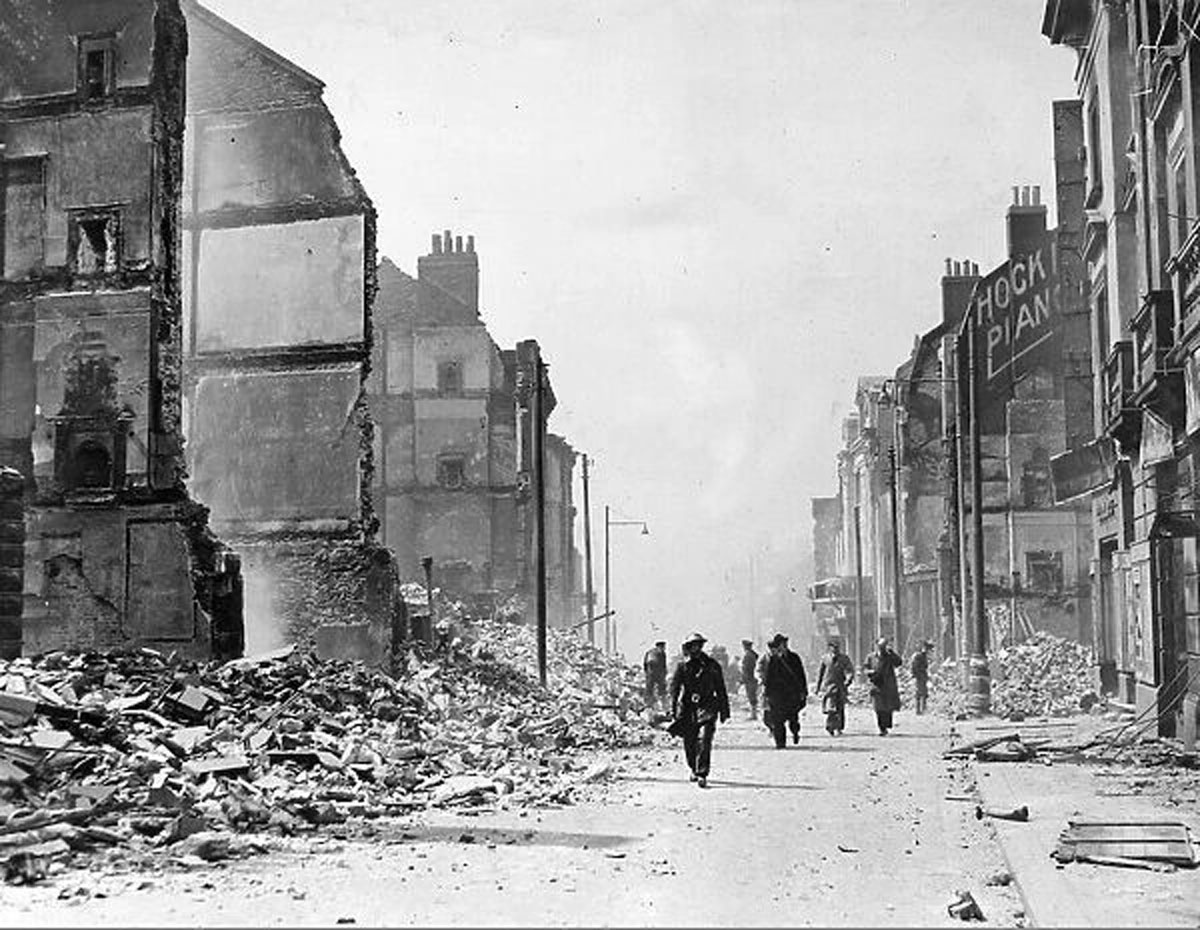
It was inevitable that the streets outside of the dockyard would also take a battering and that included the area around Goschen Street, but rather than rebuild the area for civilian use once the war ended, it was taken over by the Admiralty to allow for future expansion. In the late 1950s, a factory, workshops and even an apprentice training centre were built at the Goschen Yard, but other bombed-out streets were similarly annexed.
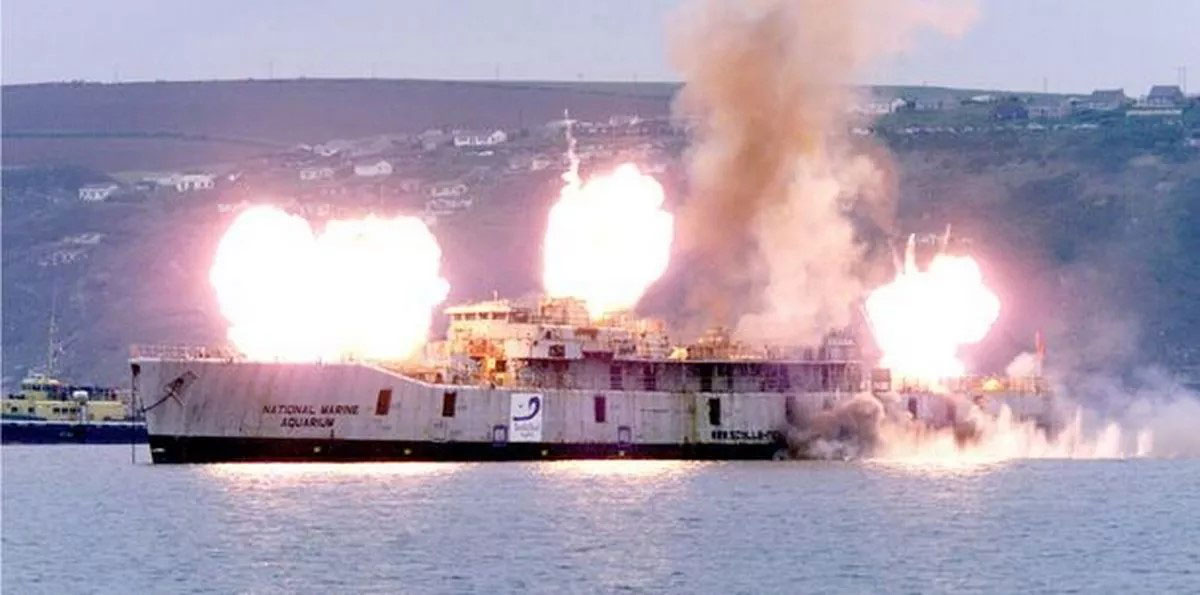
The post-war period led to a decline in shipbuilding, and after providing over 300 vessels for the Royal Navy, shipbuilding ceased altogether in the early 1970s. The last major ship to be built was the frigate, HMS Scylla, which was launched in 1968. Commissioned in 1970, she was taken out of service in 1993 and sunk as an artificial reef in 2004 off Whitsand Bay.
She wasn’t quite the last ship to be built as several much smaller vessels were constructed soon afterwards. One of them was a Research and Development vessel named ‘Crystal’ that was launched with the help of eighteen women. As wives of dockyard officials and Trade Union representatives, they were paid 6/- (6 shillings) for their work and given an ashtray as a souvenir. Inside their wage packet was a payslip that read – Rate for the job 6/- (6 shillings), less 2/- tax, 8d insurance – and 3/3 for the cost of the ashtray! In other words they were paid just 1d (one penny) for their contribution.
The 1970s also saw the first thaw in the Cold War: During WWII, the Western Powers and the Soviet Union had made an alliance to defeat Hitler’s Germany, but when the objective had been achieved, the opposing ideologies had brought the one-time allies into potential conflict, and for the next thirty years or so, the world was on a knife-edge while the threat of nuclear war existed.
The reason for the thaw was due to the agreements made between the USA and USSR to limit the number of nuclear missiles. The first Strategic Arms Limitation Talks (SALT 1) was implemented in May 1972, and SALT 2 was signed (but not ratified) in June 1979. The world breathed a sigh of relief – or at least it did for a while.
Maintaining a strong defence involves spending a lot of money, and with the breakthrough in peace talks between the Super-Powers came an opportunity for Britain to review its defence budget, and 1981 saw a huge reduction in defence spending by the incumbent conservative government.
Below is a short video from the Associated Press archive showing President Jimmy Carter and Soviet leader Leonid Brezhnev signing the SALT 2 Treaty in Vienna.
The following year made the cuts seem a bit premature as Britain and Argentina were involved in a conflict over the Falkland Islands. On April 2nd 1982, Argentina invaded and occupied the islands, prompting Britain to send a task force 8,000 miles down to the South Atlantic to reclaim them. To many, including the United States, it seemed like a “military impossibility”, but after 74 days, the Falkland Islands were back under British control.
At the outset, staff at Devonport worked around the clock preparing navy and merchant ships to take Plymouth-based members of the Royal Navy, Marines and Army down to the other side of the world. The islanders themselves wanted to remain British, and on 14th June they were liberated – but at a cost of 255 British lives and 755 wounded. Seven ships, 24 helicopters and 10 aircraft were also lost. Argentinian losses, both in men and equipment were much higher and three islanders also lost their lives.
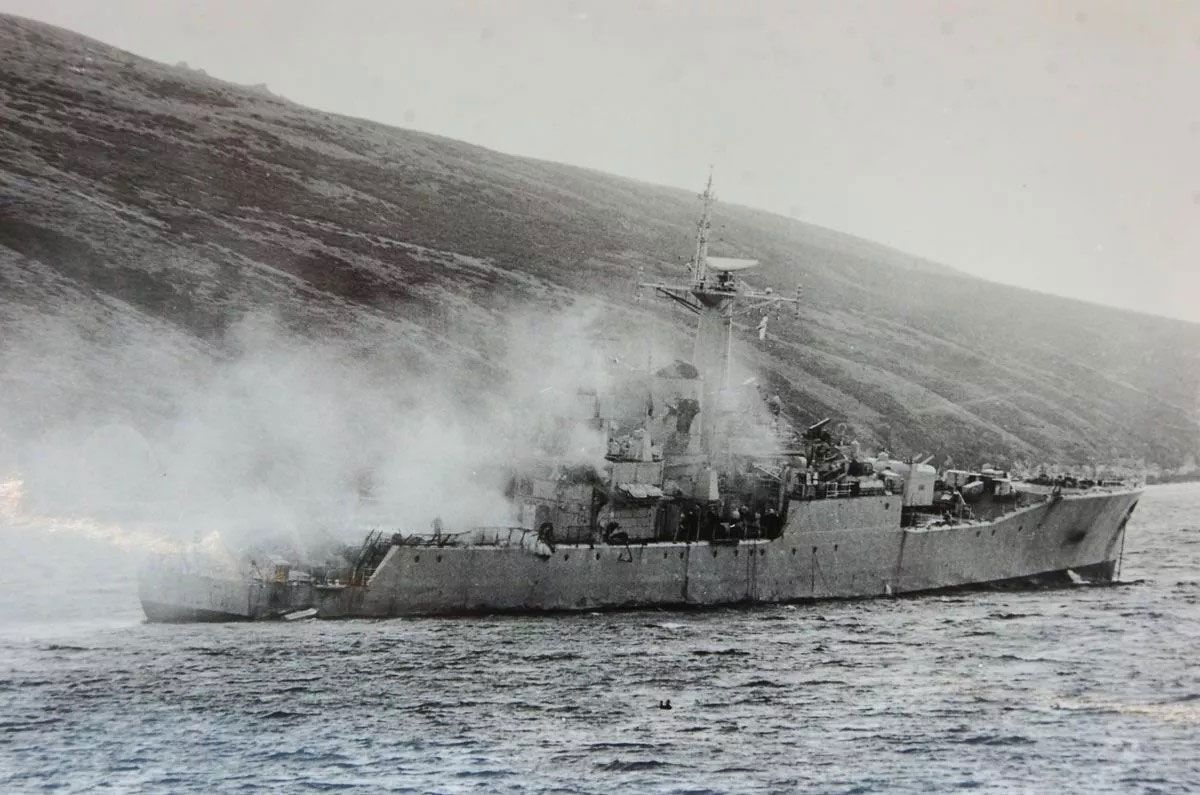
It may have been a successful operation against all the odds in military terms, but the operation had been stretched to the limit and the proposed cuts to the Royal Navy were immediately abandoned. Below is a picture of the frigate HMS Plymouth after being bombed in Falkland Sound.
The success in the Falklands campaign led to a resurgence in popularity for the incumbent Prime Minister, Margaret Thatcher: After winning the 1979 General Election, the initial enthusiasm for Britain’s first female Prime Minister had started to wane after the nation was thrust into recession and rising unemployment, but victory down in the South Atlantic and a recovering economy saw her win a landslide victory in the 1983 election.
Loved and loathed in equal measure for her domestic policies, Thatcher was one of the most influential politicians where international politics were concerned during the 1980s. The SALT agreements had made the world a safer place, but that didn’t mean to say that the world was entirely peaceful – far from it in fact. The Vietnam proxy war between United States backed forces in South Vietnam and Soviet backed forces in North Vietnam had ended in victory for the communists in 1975 – and bolstered by their success in Indo-China, the Soviet Union then invaded Afghanistan in support of the pro-communist government against the mujahedeen. This conflict became yet another proxy war between East and West, and the thaw in Cold War relations was over before it had hardly begun as other proxy wars between the super powers spread around the globe during the early 1980s.
During this period, the world was back on a heightened state of alert, which meant that the dockyard at Devonport was still the city’s largest employer by far, and when I started work in Plymouth back in the mid-1980s around 15,000 people were still working there.

The second half of the decade saw the beginning of the end of hostilities between East and West when Mikhail Gorbachev became the new Soviet leader in 1985, but on the home front, the Iron Lady was fighting the ‘Enemy Within’: In order to pursue her monetary policy of a free market economy, Margaret Thatcher brought in legal constraints on union power and introduced privatization. The financial markets loved it, and those that worked in the banking sector in places like the old London Docks at Canary Wharf, made a fortune moving money around while those in the long-standing industries that brought about the Industrial Revolution such as coal mining, steelworks and shipbuilding found themselves on the scrap heap.
As the Soviet Union was becoming less of a threat and the world a seemingly more peaceful place, Devonport started to go the same way as other nationalized businesses when large parts of the dockyard were sold off in 1987 to Devonport Management Ltd (DML). Inevitably, the number of people employed in the dockyard went into decline again, but it wasn’t all bad news. The millennium decade saw the town of Devonport change from being a “run-down, depressed and deprived” area into somewhere decent to live. A government initiative called a New Deal for Communities invested almost £50m for the regeneration scheme which was helped by the Ministry of Defence (MOD) releasing a sizeable area of the town centre that had been annexed after WWII.
Despite what some people would have us believe, the town of Devonport has not become an overnight thriving and vibrant part of Plymouth, but it’s certainly a much better place than it was forty years ago, and buildings such as the Guildhall and former Market Hall (which had been used as a storage depot) have now been restored as cultural venues where the local community can have somewhere to go instead of just a back street pub.
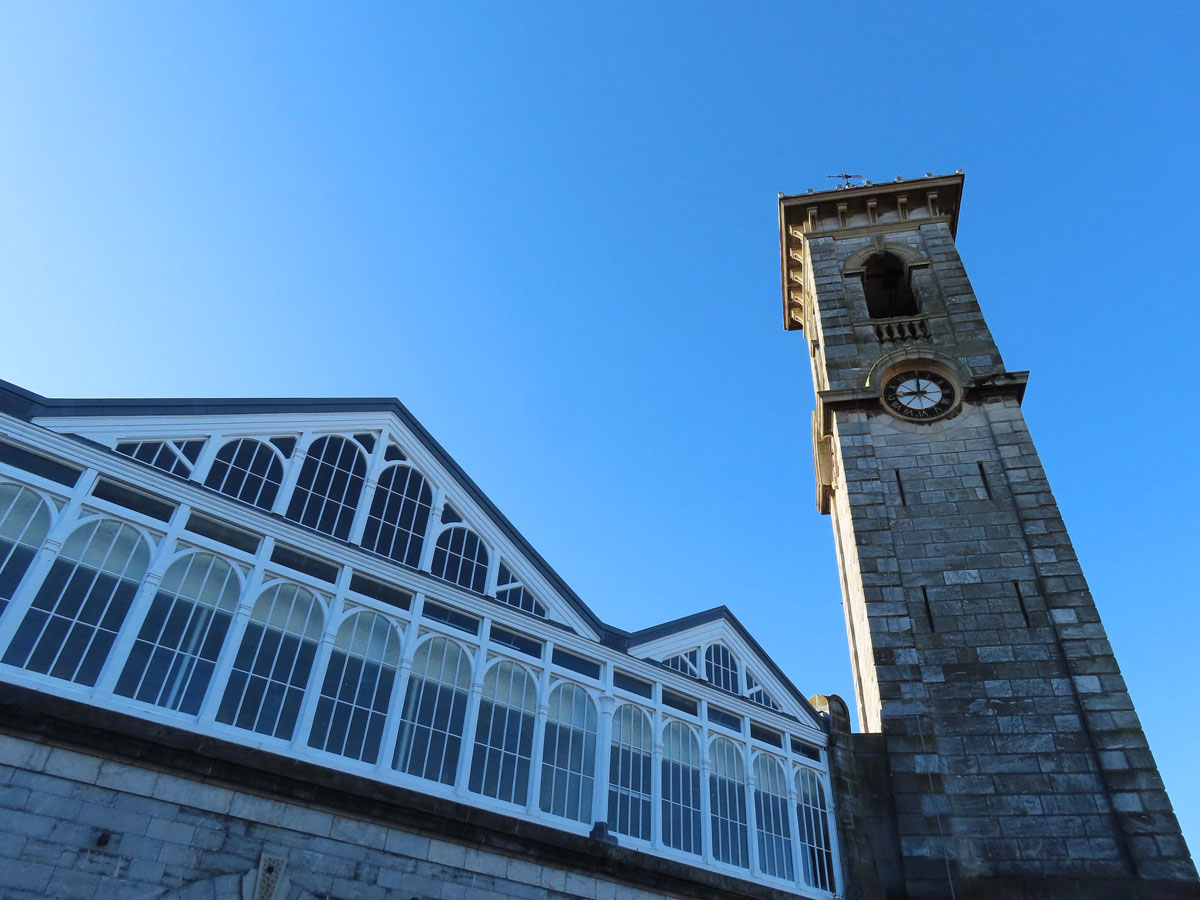
2007 saw new owners at the dockyard when DML sold out to the Babcock International Group who continued to repair and maintain ships under the name of Devonport Royal Dockyard. Rebranded as Babcock Marine, the company now owns around a third of the base, after the MOD sold it the freehold of much of the North Yard in 2011.
Privatization may have its critics, but Princess Yachts wouldn’t have been one of them. Formerly known as Marine Projects, Princess Yachts has been one of Plymouth’s success stories since building its first motor yacht at Stonehouse Creek in 1965. In 2011 it was able to acquire ownership of a large chunk of South Yard from the MOD, and although it probably wasn’t envisaged at the time, will become an integral part of Plymouth Freeport.
As it stands today, the Naval Base as a whole covers an area of 650 acres with four miles (6 km) of waterfront, twenty-five tidal berths, five basins, and fourteen dry docks. Including civilians, the base currently employs around 2,500 people, which means that with Plymouth University employing 3,000 staff, it’s not even Plymouth’s largest employer anymore.
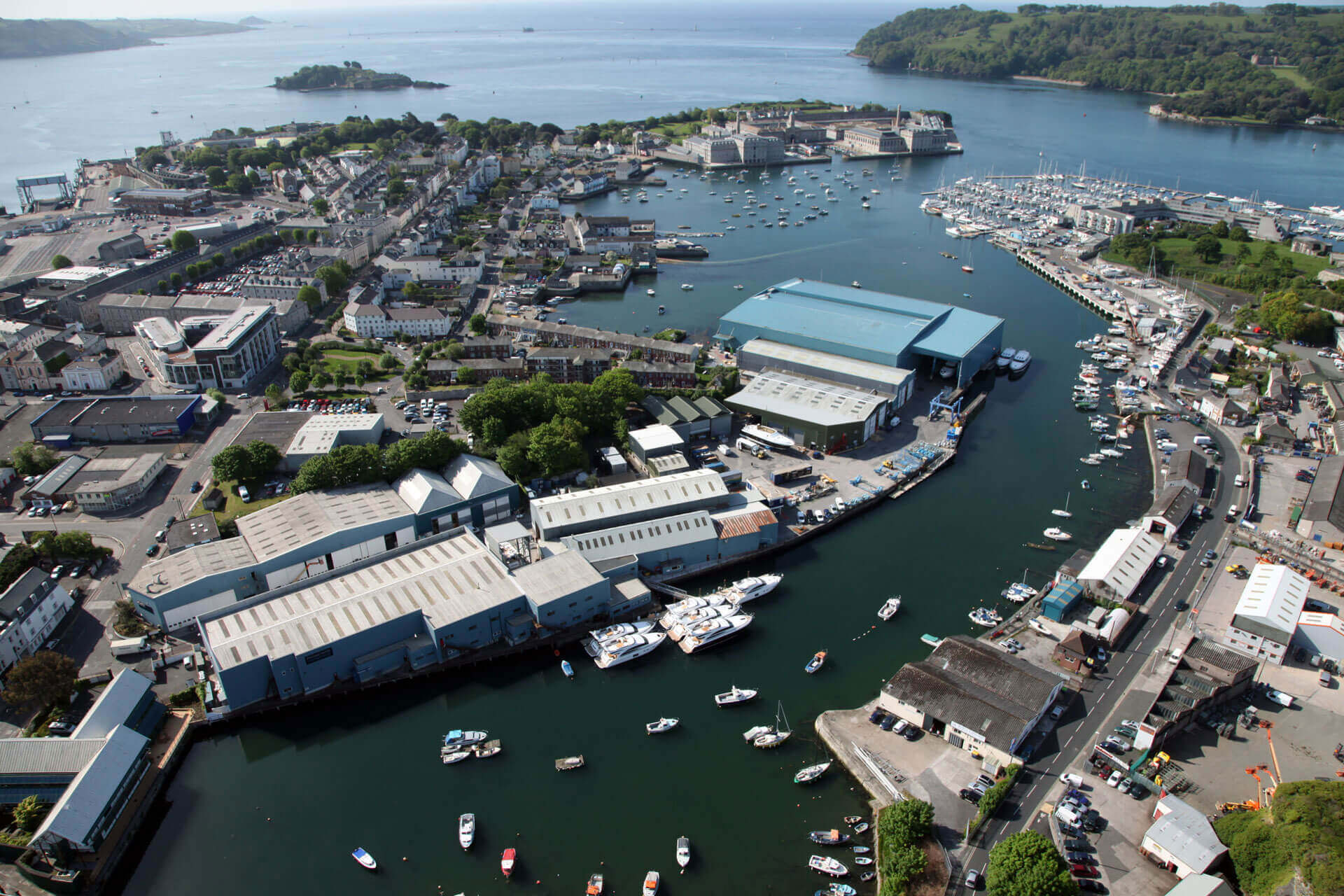
So now that you have an understanding of Devonport’s history, what about its future? In the Chancellor’s 2021 budget, it was announced that Plymouth would be one of eight new Freeports, which effectively means that businesses are able to take advantage of customs and tax benefits.
Theoretically, Freeports are designed to encourage investment in areas that need regeneration. It’s not a new phenomenon: Margaret Thatcher used the idea during her de-industrialization of Britain in the 1980s. It sounds great, but critics see them as potential tax havens and open to money laundering, and the licenses for Thatcher’s Freeports were never re-newed as they only had limited success anyway. So why should it work for Plymouth?
The Plymouth and South Devon Freeport (PASD) zone includes the whole of the environmentally sensitive areas of the South Hams and Dartmoor, which are hardly economic blackspots. That said, Plymouth could do with some serious investment, especially if it can’t rely on Devonport Dockyard as a major employer anymore.
Under the scheme, South Yard (probably because it’s the oldest part of the base), will be Plymouth’s focus of attention for investment. Sifting through the glossy images and jargon of the marketing men, it seems that South Yard will be used to support businesses involved in defence, space and marine activities, which on paper at least, doesn’t sound a bad idea.
Below is a map showing how the South Yard will be used as a Freeport. The orange areas will still be under MOD ownership and the hatched area will be under the Freehold of Princess Yachts.

All this makes sense of course if the future of Devonport is gradually shifting away from being a major naval port – but the question has to be asked – should it?
I’ve always thought that, from a scenic point of view, Plymouth’s fantastic waterfront would be even better if the industrial bits of it could be taken away, but strangely enough, I don’t necessarily include Devonport in that.
To ask the question as to whether Devonport will be relevant in the future, we firstly need to remind ourselves why it was built in the first place, and that was to guard the Western Approaches from French and Spanish warships – but those reasons don’t apply any more.
The days are long gone when Britannia ruled the waves and could defeat the mighty Spanish Armada, Napoleon’s ambitions at Trafalgar, or even rescue hundreds of thousands of troops from Dunkirk: Today, we can’t even stop thousands of illegal migrants coming ashore on tiny boats.
The threats today come from a variety of different sources and collectively put us in the most vulnerable position I can ever remember. Not only has the Russian bear started to get stroppy again, we now have China helping them, as well as using cyberspace to infiltrate our defence technologies – and according to some experts, Covid 19 did originate from that laboratory in Wuhan, although probably not deliberately. The Middle East has become a hot potato again ( not that it ever really went cold) and another terrorist attack can’t be too far off. In all probability, it won’t be a case of if, but when. How we deal with these threats will probably keep our security experts awake at night for some time to come.
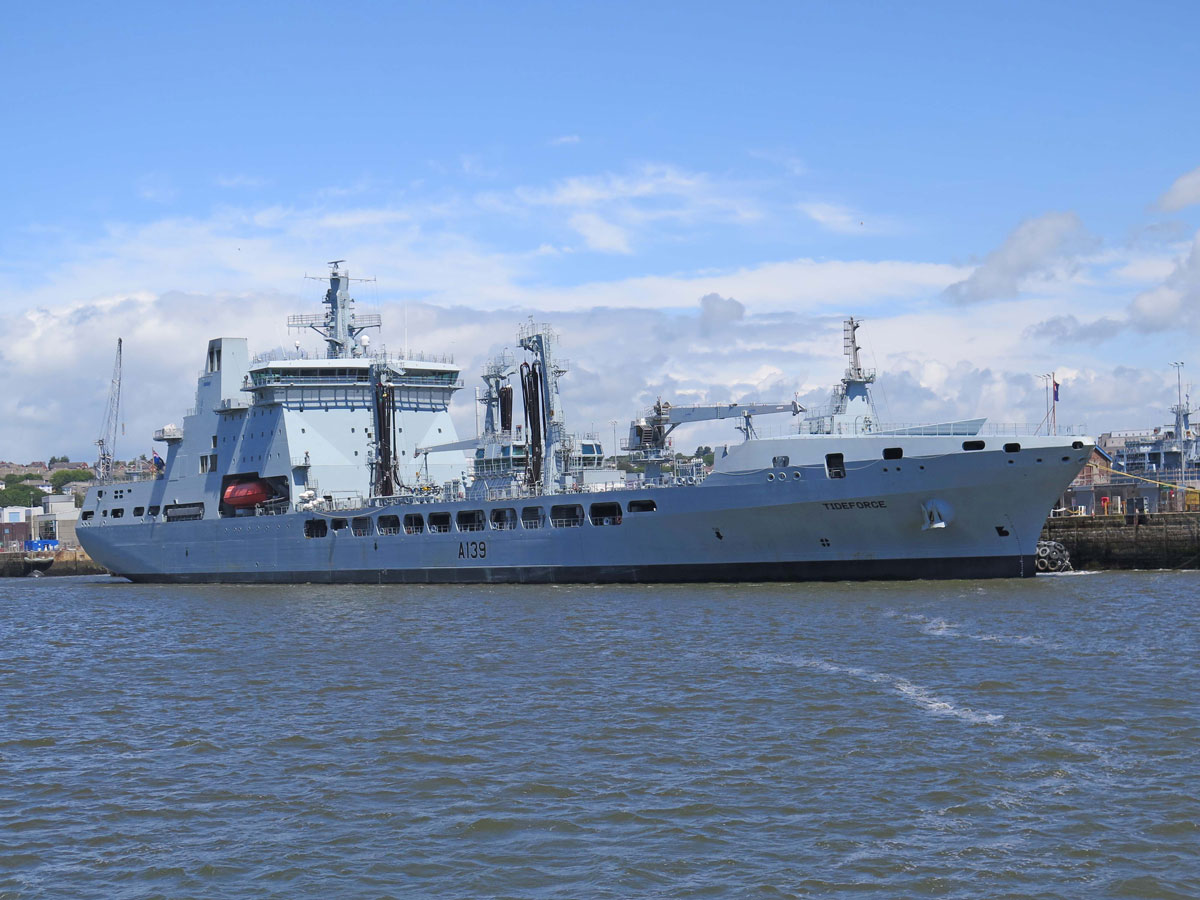
Thankfully, I don’t have to make those decisions, although I do have my own thoughts that would cover another half a dozen posts or more. So, will Devonport still be relevant in the future? The short answer I believe is yes, but it will obviously need to keep adapting to the changes that lie ahead. Regardless of whether we like them or not, nuclear submarines are a necessary deterrent, and for that reason alone, Devonport will still have a role to play. Other ships in the flotilla will also still have their uses, whether they be frigates, survey ships or support ships, and not forgetting the commandos that are also based here. It’s difficult to imagine Devonport without all these vessels and personnel – but who knows what lies ahead? The Roman author, Publius Flavius Vegetius Renatus, once said that “If you want peace, prepare for war”. If only we could have done better at remembering that, then perhaps we wouldn’t have been in such a precarious position as we are now.
POSTED – MAY 2024
Originally posted 2024-05-08 16:11:16.
Although I spent some time in Plymouth off and on a few years back (for a couple of my consultancy projects), I never really thought much about Devonport – neither its history nor its relevance today. Like Jo I wish we didn’t need so much weaponry and there are many things I’d rather we spent the money on. But sadly it does feel at the moment that we need to keep investing in defence. Perhaps though we need to be looking at ‘modern’ warfare deterrents, e.g. cyber and security matters, more than naval defence??? I’m no expert, I just throw that out as a thought!
I wanted to finish off this series of posts by discussing the relevance of the dockyard at Devonport in the future really Sarah. I may have discussed some of the other issues you raised in comments elsewhere, but if I was to seriously go down that road I’d be here until Christmas and beyond. You probably know what I think about it all anyway. Thanks, as always for commenting, and I’m looking forward to see where you’re jetting off to next. 😊
My next trip is in a week – off to the VT meet in SPlit and Kotor 🙂
Oh brill! If there’s anyone there who might still remember me, please pass on my best wishes -and have a good time 😎
I tend to be one of those burying my head in the sand people, Malc, but my husband is politically aware enough for both of us. I would so love to believe in a world where military might was irrelevant and unneeded. And then I look at those photos of homes blown to shreds in wartime and thank my lucky stars that I’ve never lived through that. Many are still living that nightmare. Does weaponry deterrent help them? You present the facts very well, but it surely is wrong that so many people are dependent on the armament industry for a living.
There must be very few people who are happy to see so much money spent on weaponry Jo – but just think of the alternative for a moment. if we were to live in a country that subjected women to being sex slaves for men, murdered for having a different point of view (Alexi Navalney immediately springs to mind), or forced to believe in a religion that is alien to us, then the civilized world that we’ve come to take for granted could disappear overnight.
Unfortunately, having a miltary deterrent is a necessary evil in my book – but as I always say, the threat that we can fight back is usually enough to deter any potential aggresssor – and long may it remain so. At least we’re still able to have rational discussions about subjects like these in the free world – for now.
I only present facts in my posts so that people can form their own opinions about issues such as this, but I’m happy to give my own point of view in comments if people want me to. I think you’re in that category Jo and I’m always happy to have a debate with somebody like you. Thanks for commenting and I really do value your opinion 😊
Thanks, hon. There’s a lot of truth in what you’ve said.
Believe me when I say I wish there wasn’t.
Apologies for the very late comment Malc, I wasn’t ignoring you, it’s just that my own latest blog post was a bit of tough one to do – too many conflicting bits of info which needed sorting out as they couldn’t possibly be correct so it took up a lot of my spare time. I’m often amazed and frustrated by the rubbish some people – even ‘journalists’ -write in internet articles. Maybe you find the same thing sometimes, especially if it’s a historical post with a lot of dates?
The photo of Fore Street interested me here because of the date – coincidentally April 23rd was my mum’s birthday and she would have been 18 on the day that was taken. An interesting story too about the HMS Scylla – to be given an ashtray and charged for it too would have been an insult after what those women contributed. I think I would have thrown mine at the head of the nearest official! 😠
Please don’t fret over the timing of your comment Eunice. There’s definitely no obligation to comment anyway, but that said, I’m always grateful for your support, as you well know. As for researching articles for a post, you can probably imagine that I cross-reference all the time as there are so many anomalies. I can’t tell you how many hours I’ve spent checking out facts before I post anything.
I suspect that my posts about Devonport didn’t fill you with enthusiasm, but it’s surprising how many people find some posts interesting. I expect you find the same. One of my most read posts is about a place that I imagine many people have never heard of. Sometimes that’s what makes it all worthwhile 😊
Fascinating history , Malc. Unexpected 21st century turn of events.
It’s not quite what we hoped for after the wall came down, but then again, that was part of the problem.
What apower of work you’ve done here. Past, present and future. Just shocked at these ladies being charged for these ashtrays…. I’d ahve been smoking..with rage!
Thanks Shey – and what about those ladies who didn’t smoke?
I was thinking that. Bet they got one too and just had to suck it up.
LOL If one ever appeared on the Antiques Roadshow it probably wouldn’t even be worth a packet of fags today.
Mind you the way the goo and ga over some stuff you never know. It would be it all if it was worth a fortune.
I always liked the stories where somebody brought somehing along they paid a fortune for and thought was very valuable but told that they may as well chuck it in the skip.
yeah. I aye say something is only worth what someone else will pay for it.
Another great post, dear Malc, full of history and interesting information and images. Thanks a lot for sharing it
I was struck by a fact I didn’t know: the sinking of a ship, in this case HMS Scylla, to transform her into an artificial coral reef
Thank you Luisa. Yes, HMS Scylla was sunk to create a haven for marine life and has become popular with divers. Unfortunately, in 2021 three divers got trapped in the wreck and two of them died. The third man escaped just as his air ran out and managed to raise the alarm, but it was too late to save the other two.
It was a terrible tragedy
Thank you for this further explanation, dearest Malc.
I wish you a good evening
It happens far too often I’m afraid. You have a lovely evening too Luisa 🌙
Thank you again, my dear friend
🙏
You are right, Malc, on all points but where do we find extraordinary leaders?!
You are more than welcome, Malc, reading your posts is always a pleasure!
Joanna
That’s the $64,000 question Joanna
Thank you, Malc, for your fascinating continuation of the history lesson of not only Devonport but the world in times long gone but never to be forgotten. I remember the famous saying that was thought of by a few military experts in various parts of the world, including ancient China, and wondered if the people in the government proposing defense cuts did not know about it. As always, Malc, your line of words and the selection and development of the course of events is a masterpiece of planning! The power of your words and your photography brings the historical events to life as if the whole post was a video, and are unforgettable! After reading your post, even a dedicated pacifist would be convinced that we must be well-armed to live peacefully! I am impressed with the developments, past and present at Devonport, and no doubt, Malc, you will update us again.
Thank you, Malc, for the nostalgic trip into the past of our political history in the past forty or so years!
I loved the video, thank you!
Joanna
Thank you for your fabulous response Joanna. As I implied in my response to Alli’s comment, I would like to think that this final post on Devonport will raise people’s awareness of what could happen if we ignore the consequences of what’s going on around us today. Bullies don’t respect any sign of weakness, that’s for sure.
Having a strong military deterrent is vital for our protection, but depending on who we are dealing with, there are other ways to safeguard our way of life without resorting to military action – but that would need strong leadership as well!
Followers like you Joanna make writing posts like this all the more worthwhile. Thank you so much.
A sobering thought to end on, but so true as well. You’ve given us a comprehensive and superbly written finale to the Devonport saga, which will clearly continue into the future, although the outcome, of course, is as yet unknown. I’m sure it will be relevant, it’s obviously been far too important a port to fade into the annals of history. But as you say, with the state of the world as it is today, we could do with all the security we can get!
Devonport’s fortunes have certainly waxed and waned, particularly with the World Wars (as that picture of Fore street in 1941 clearly shows!). I do think it’s sad that the UK shipbuilding industry has declined so much as we were good at ships. I feel sorry for the poor souls who were only paid a penny for their work on Crystal. And an ashtray wouldn’t cut it for me, that’s for sure!
I’ve learned a lot from your Devonport posts, Malc, and enjoyed it all. Thanks, as always, for enlightening me on another corner of our once great islands. 🙂
Thank you Alli. As you know, my posts always try and state facts rather than opinions when it comes to topics like this (I’ll leave the media in general to do their own brainwashing). That way, people can come to their own conclusions.
As you quite rightly point out, Devonport has had a chequered history, but I suppose it has to be expected in some ways, as spending vast sums of money on defence isn’t always universally popular, but having said that I think the defence budget could have stretched as far as giving those good ladies their ashtrays without charging for them😊
It pleases me no end that a post like this resonates with people like you Alli. I’m afraid too many people seem oblivious to what the consequences of burying our heads in the said might bring. Of course, we shouldn’t become paranoid – just aware.
Thanks also for your email which I promise to reply to before May 28th🤗
I’m so with you on the burying heads in the sand. Just look at what we’re doing to the planet for one thing, let alone dealing with the threats in the world.
Well done on another great post, anyway. I learn so much from you and I always enjoy your posts, whatever you’re writing about. And glad you got the email. Take care and speak soon. 🙂
Ah! It’s good to know that you enjoy these posts whatever they’re about. You don’t know how much that means, and you take care too! 🤗
😊💜