
The Treshnish Isles and Staffa
When I was growing up, water and me didn’t mix. From being badly scolded with boiling hot water to needing artificial insemination respiration, it’s no wonder I never became a Mark Spitz or Michael Phelps, but even though it’s nearly killed me, as we all know, water is the staff of life, and whenever I get the opportunity, I like to be out on a boat. Not mine I hasten to add because I just wouldn’t be safe being in charge of one. I’m no Captain Cook, more like a Captain Pugwash.
Fortunately, we were in a safe pair of hands when we left Ulva Ferry for the Treshnish Isles, a small group of uninhabited islands off Mull’s West Coast in Scotland’s Inner Hebrides. There’s not a lot to say about the Treshnish Isles except that they’re made up of a number of skerries and around eight larger islands, the largest being Lunga – our destination, and instead of waffling on, I’m just going to leave you with a gallery of pictures that, even on an inclement day, will show you why we thought it was worth the lumpy boat ride out here.
-
- Landing on Lunga

-
- Looking towards the Island of Sgeir a’ Chaisteil from Lunga

-
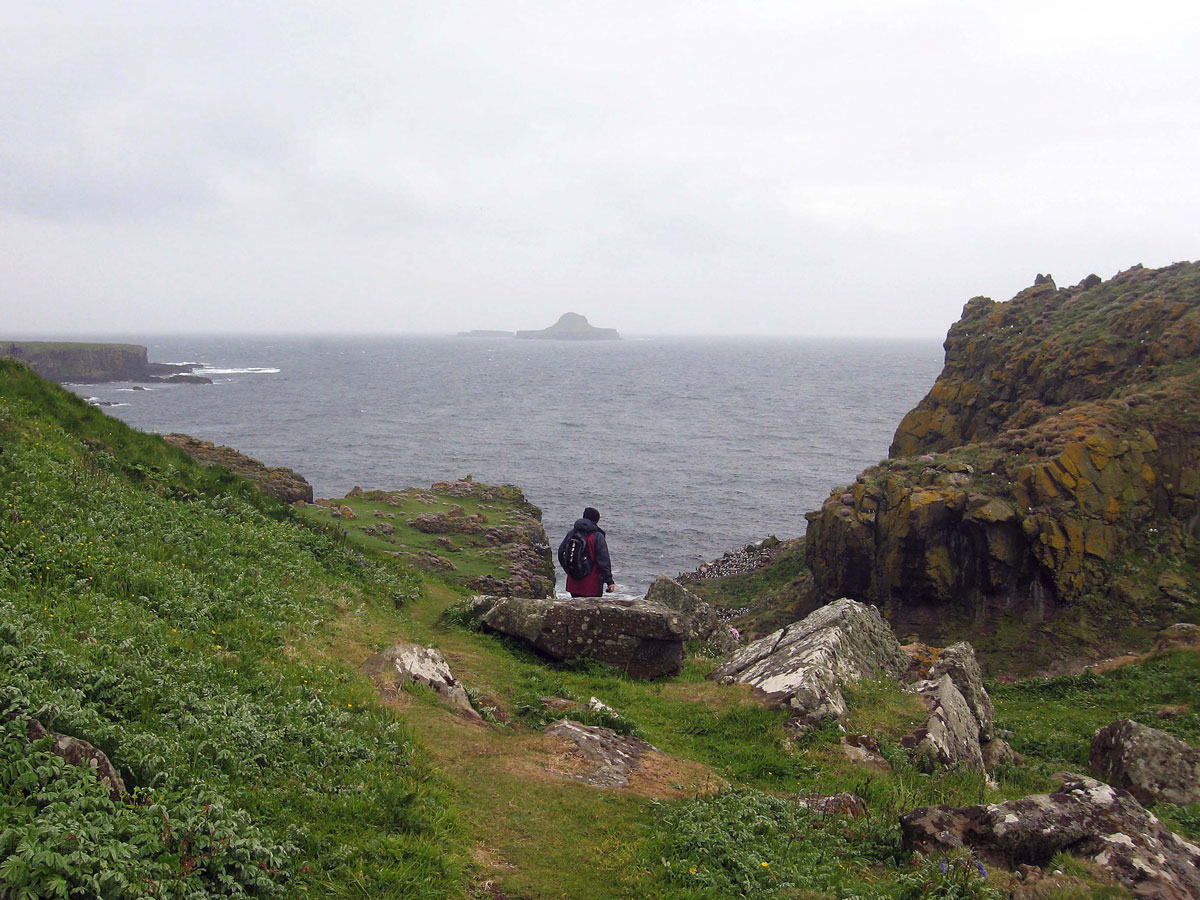
- Looking out towards the Dutchman’s Cap (Bac Mor) from Lunga
-
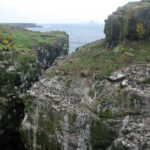
- Guillemots and Razorbills on Harp Rock

-
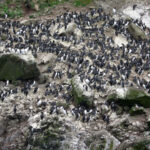
- Guillemots
-
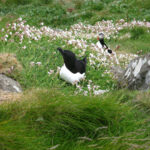
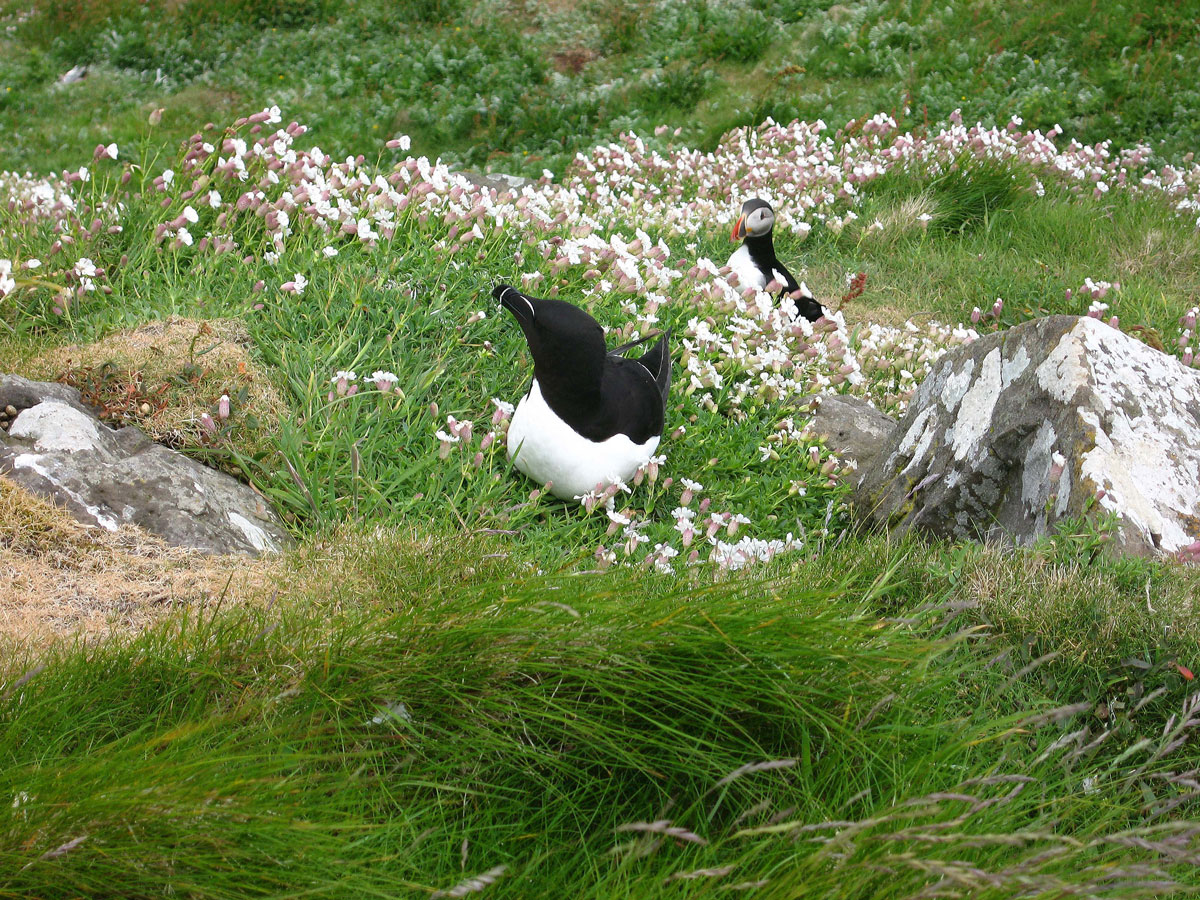
- A Razorbill and Puffin amongst the Thrift
-
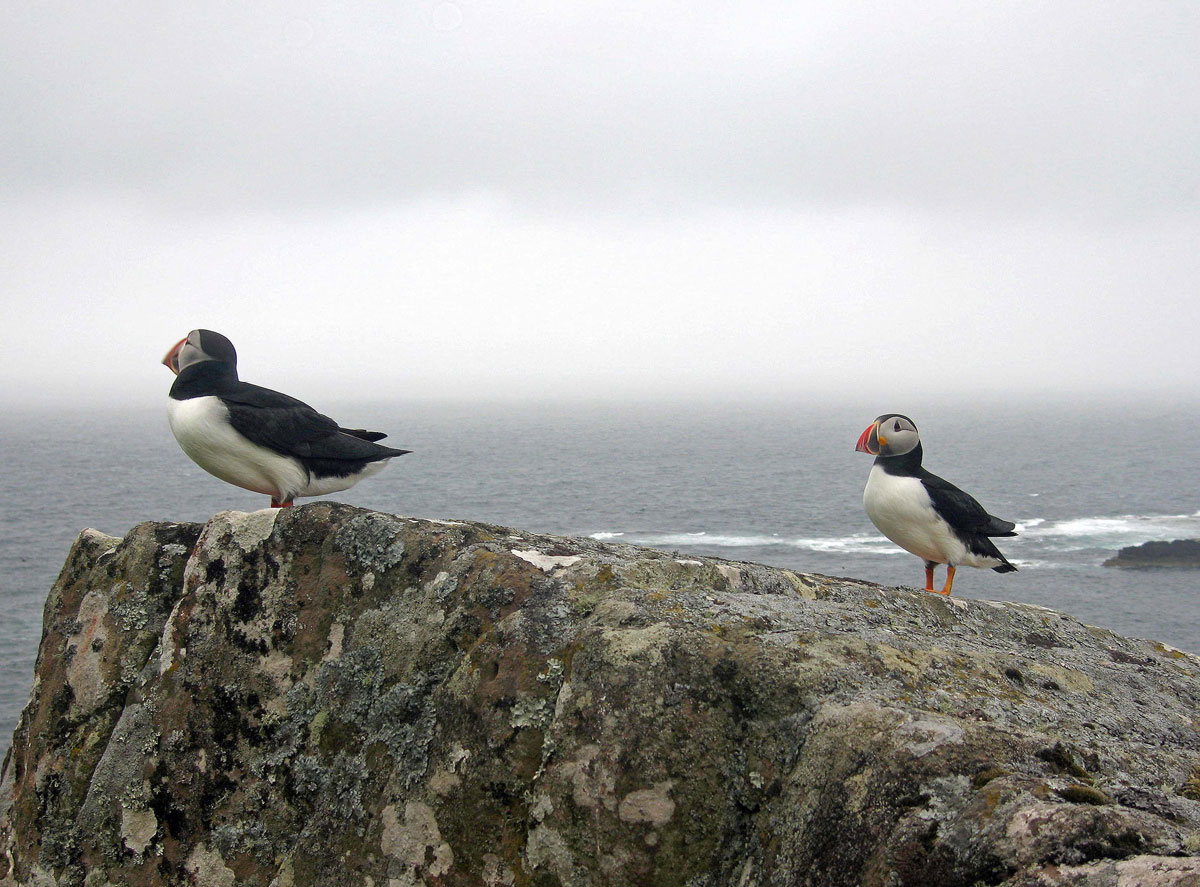
- A Pair of Puffins
-
- Puffins and their Burrows on Lunga
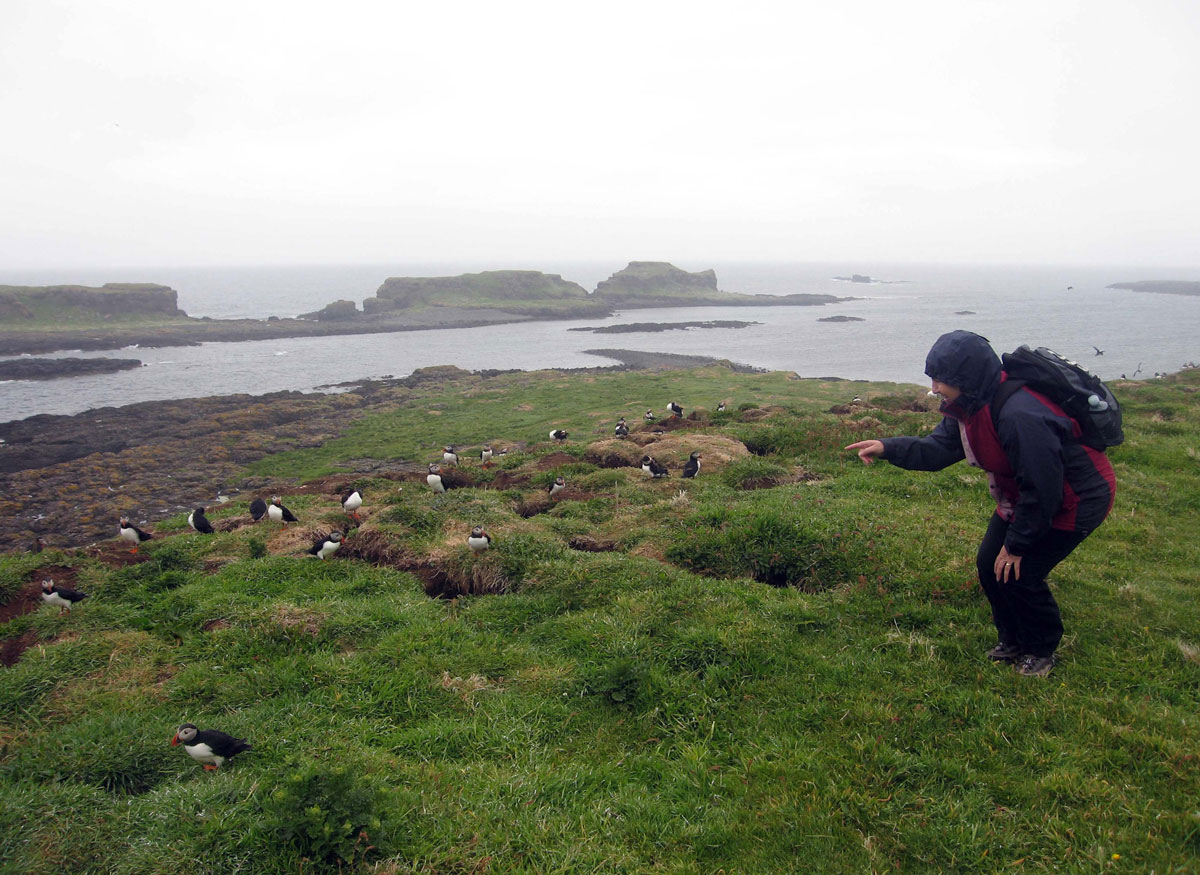
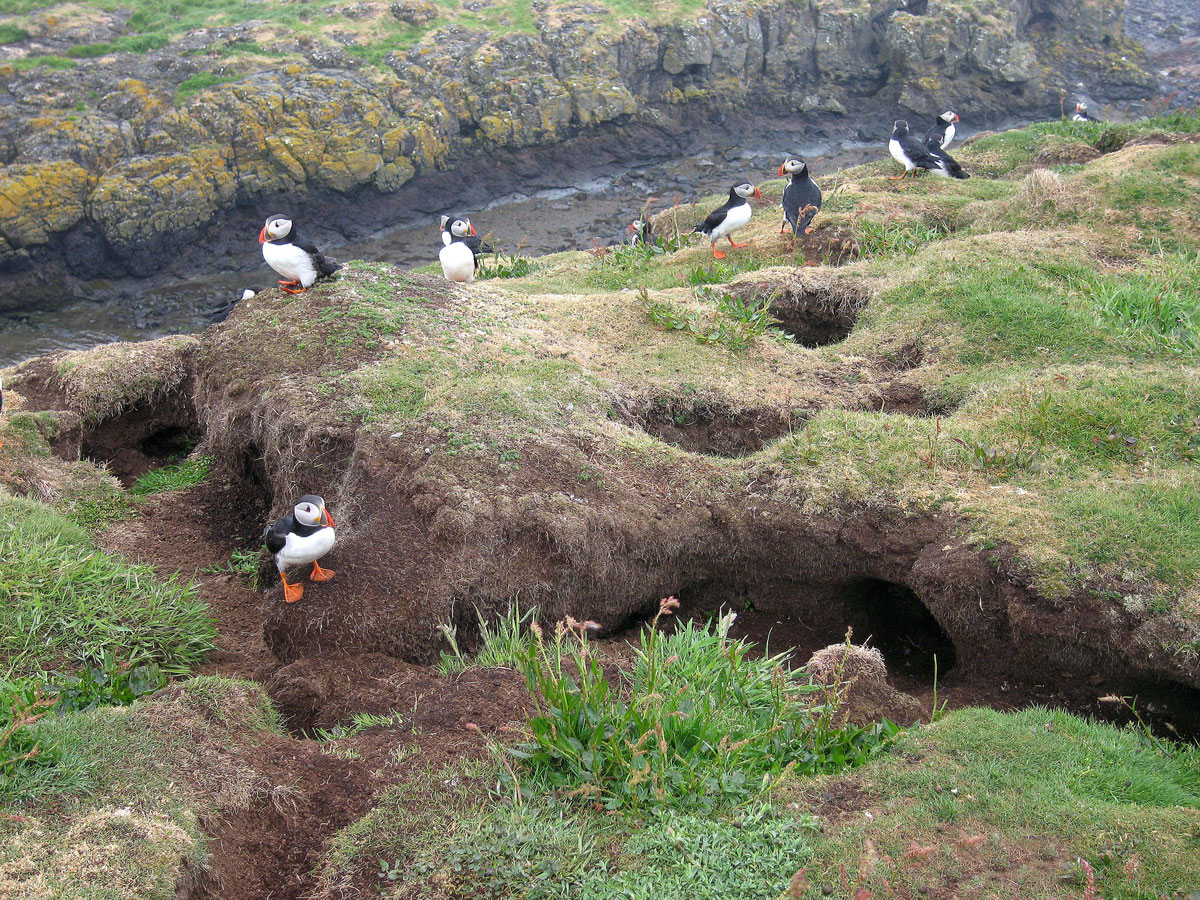
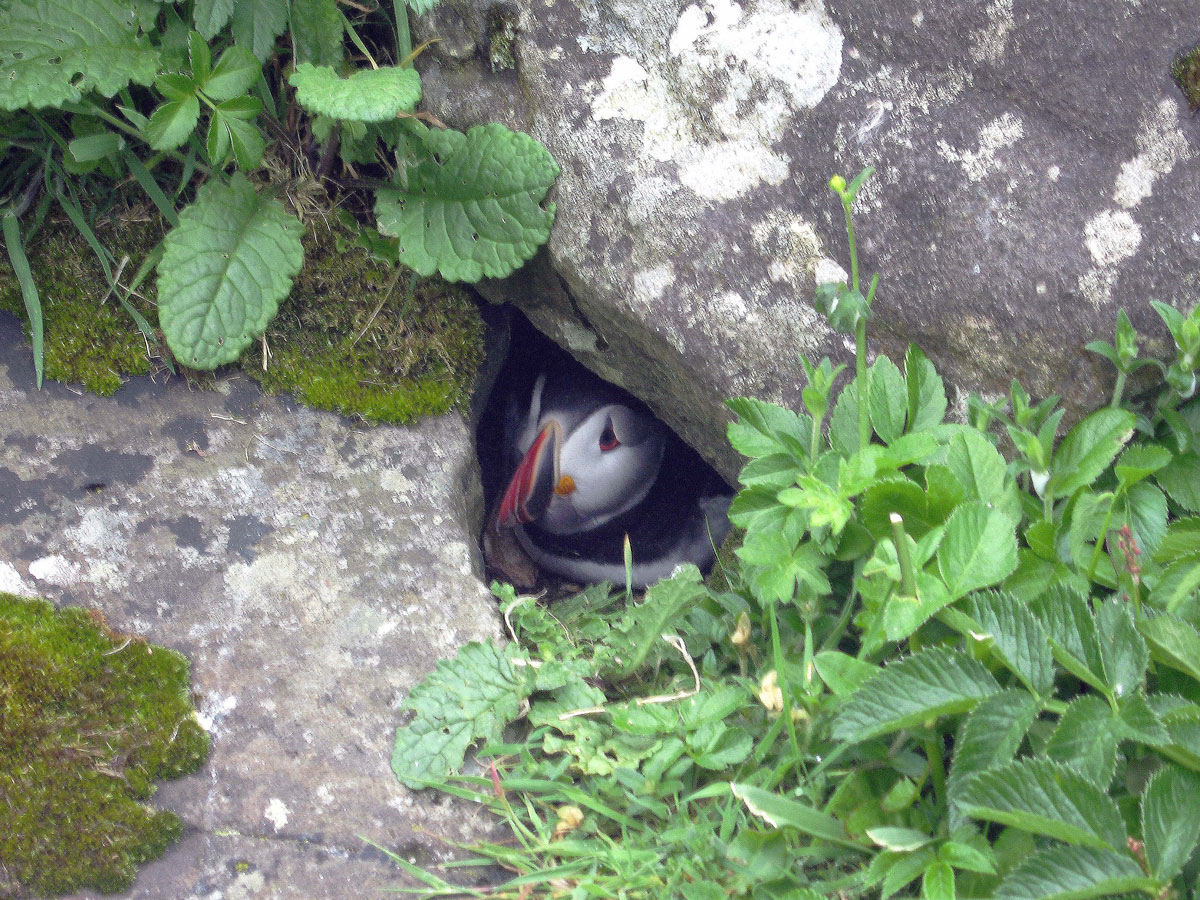
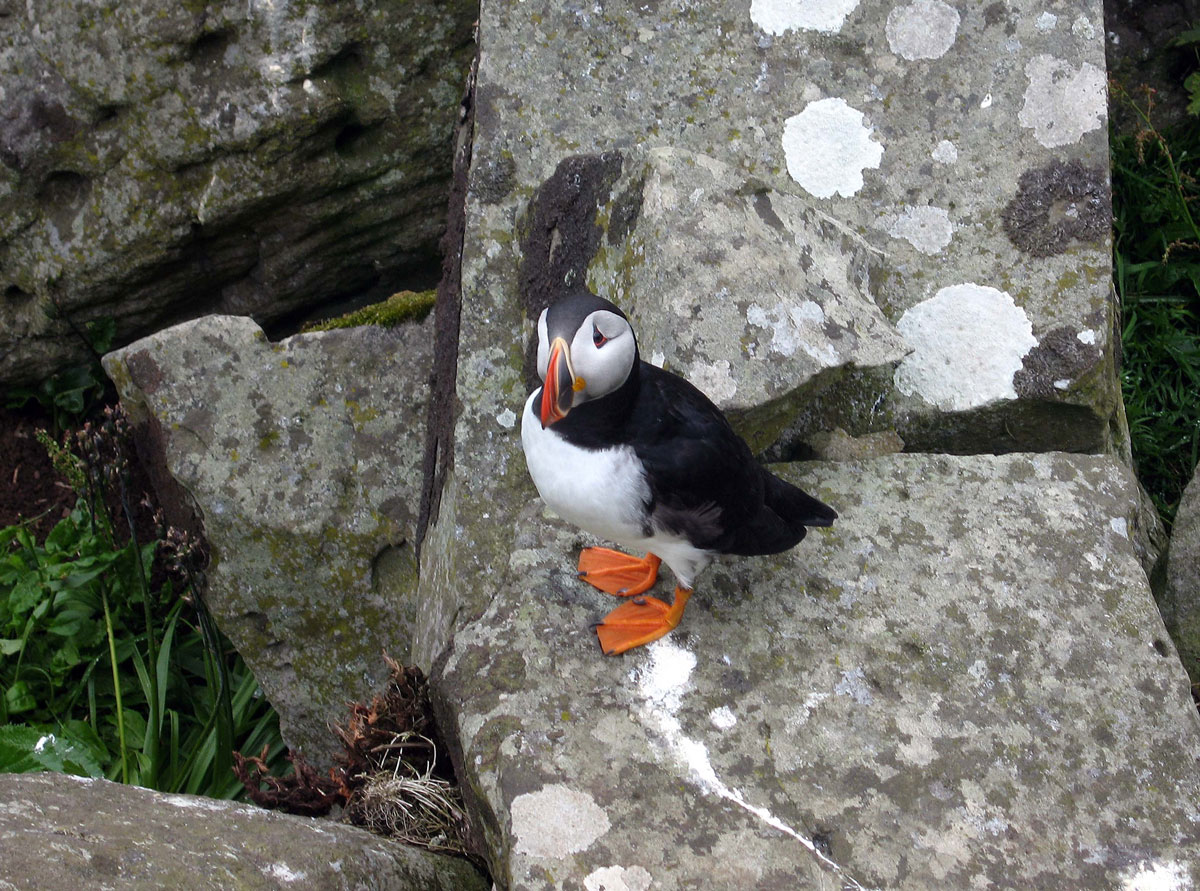
People may not have heard of the Treshnish Isles before, but many would have heard of Staffa and the famous Fingal’s Cave. Although it doesn’t belong to the Treshnish Isles archipelago it isn’t far away, and was where our skillful skipper took us to next.
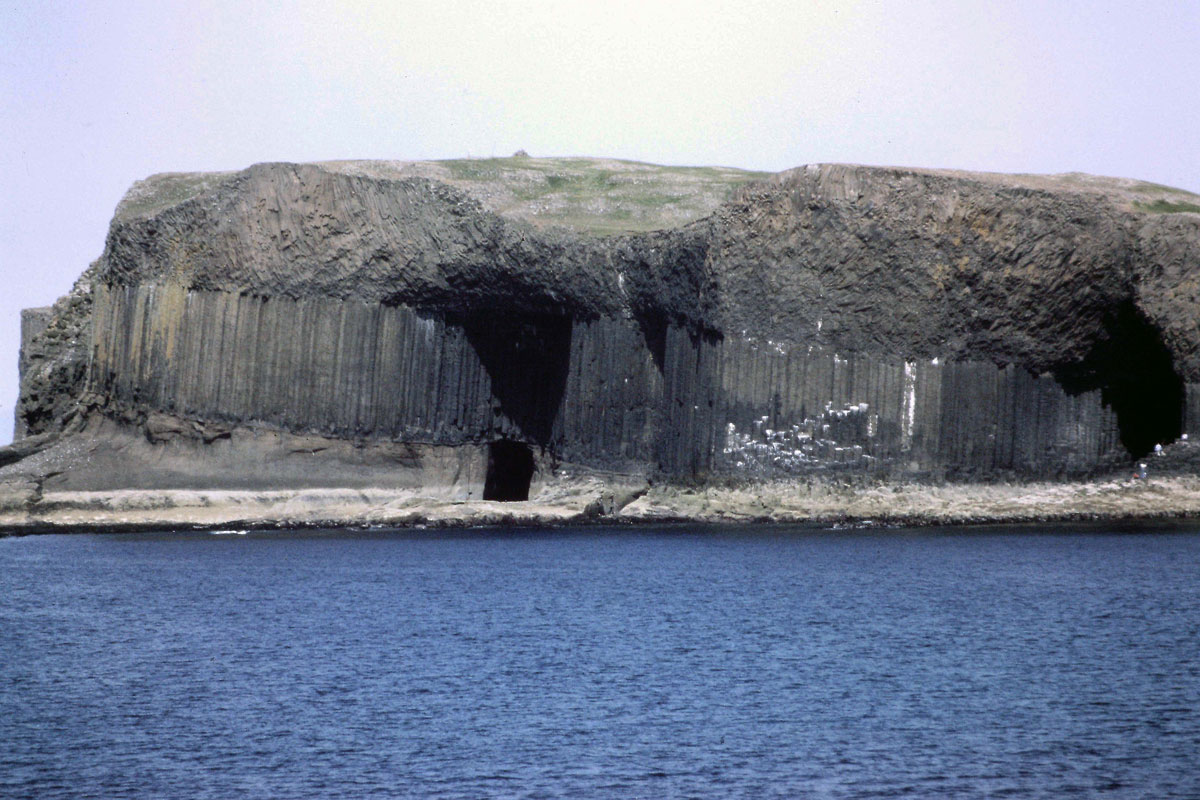
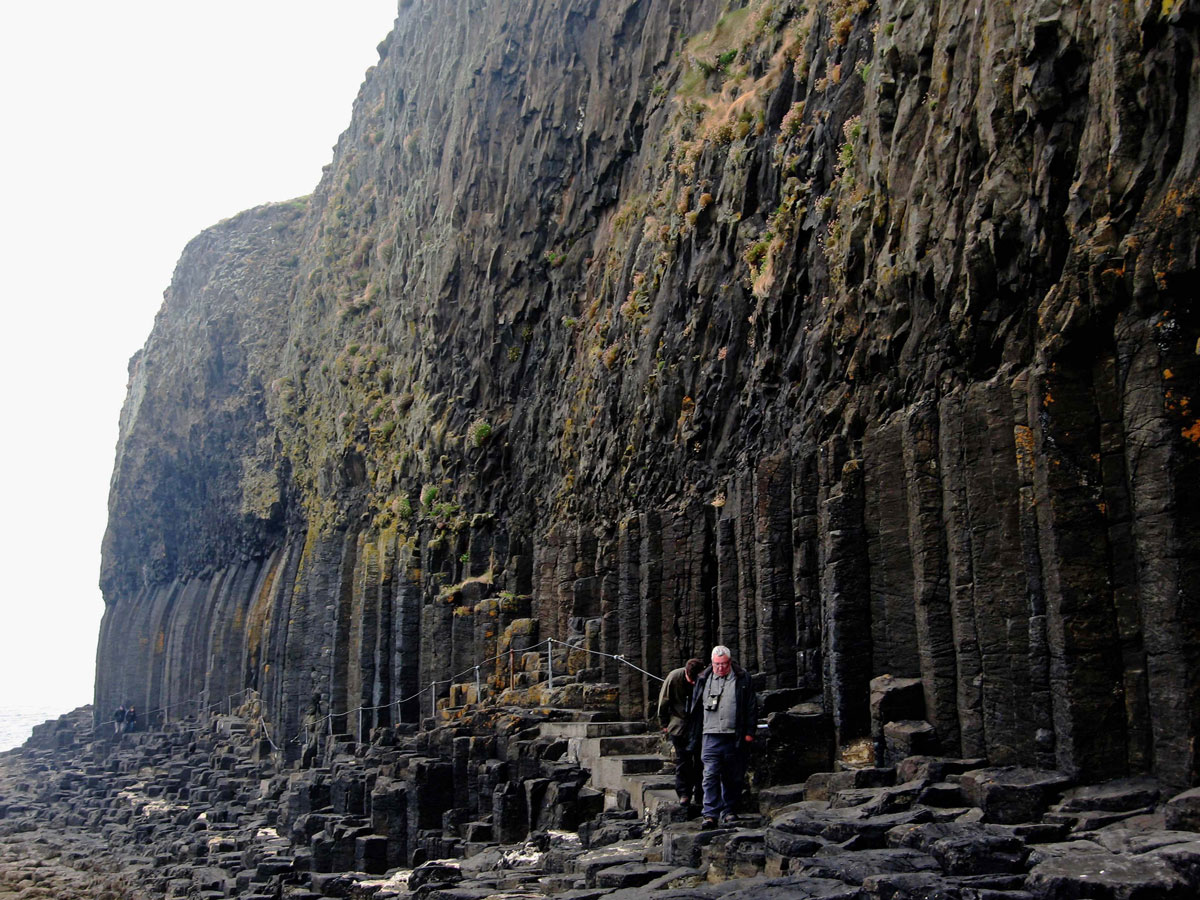
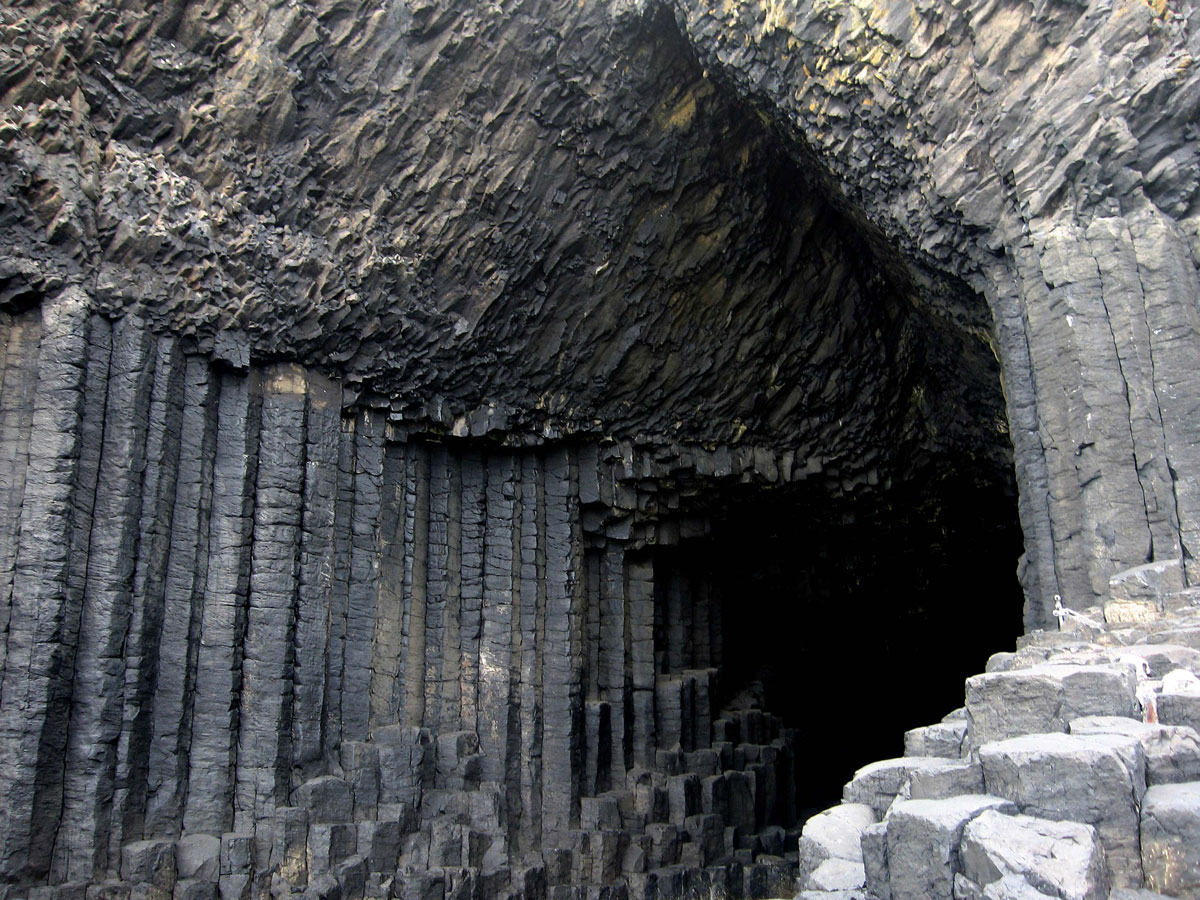
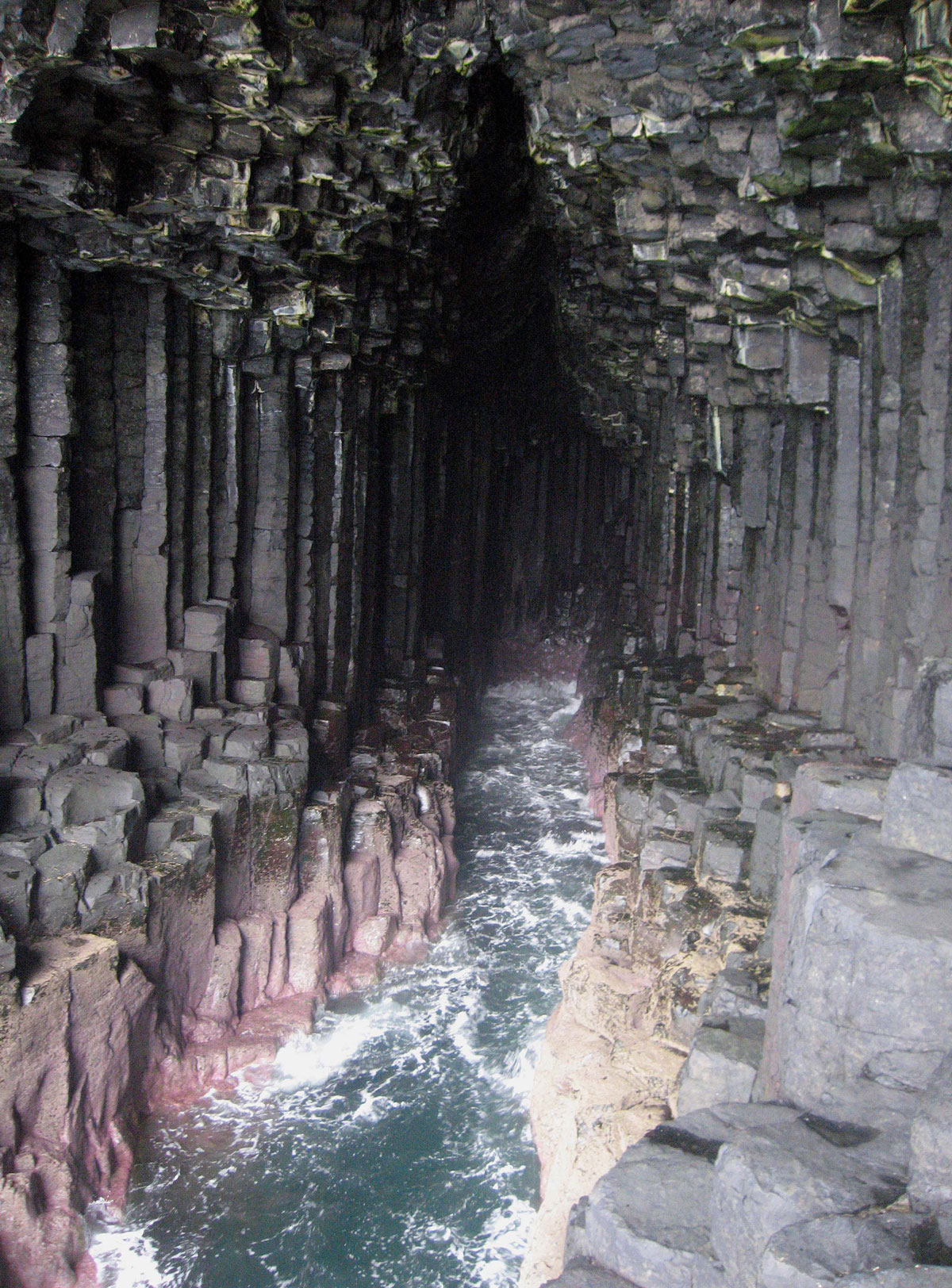
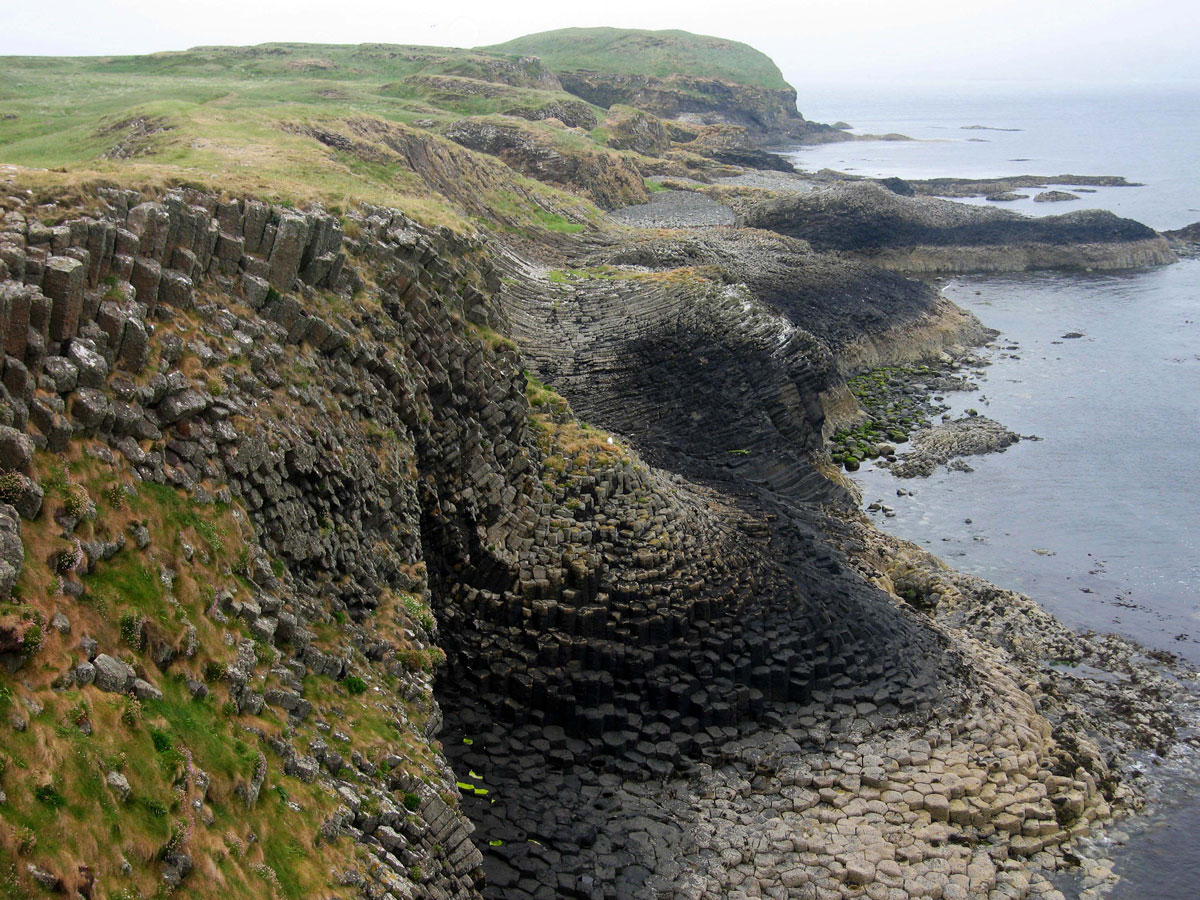
The island is purely volcanic in origin, and made up of three distinct layers: The base is made from Tuff (solidified volcanic ash), the top layer consists of the remains of the deposited lava, and in between is the iconic layer of hexagonal-shaped basalt rocks. In places, these rocks are reminiscent of those that can be found at the Giant’s Causeway in County Antrim, but probably the most awe-inspiring are those that have formed perpendicular columns around Fingal’s Cave known as the Colonnade.
The Cave is supposedly named after the Scottish giant Fingal, who was the arch rival of Fin McCool, the mythical Irish hunter/warrior, who ‘built’ the Giant’s Causeway as stepping stones to Scotland in order to avoid getting his feet wet. Funnily enough, I’ve never been able to find any evidence to corroborate this claim.
One thing that is for certain though is that it was the great naturalist, Sir Joseph Banks, who first brought Staffa to the world’s attention after a visit in 1772. People who liked to escape into a world of make-believe also started to come here: People like authors Sir Walter Scott, Jules Verne and Robert Louis Stevenson, artist JMW Turner, poet William Wordworth and even Queen Victoria herself.
In his poem, ‘Staffa’, John Keats, describes Fingal’s Cave as “ This Cathedral of the Sea”, no doubt referring, not only to the cave’s acoustics, but also to the Basalt columns that must have resembled organ pipes, and while we’re on the subject of music, it was Felix Mendelssohn who composed the haunting Hebrides Overture after visiting Fingal’s Cave in 1829, and I think it’s only right to leave you with a short audio clip of it – with some pictures of course.
The first picture is a scan from a transparency I took in 1983. The rest were taken in 2008.
The Hebrides Overture by Felix Mendelssohn (Fingal’s Cave)
The Royal Philharmonic Orchestra conducted by Sir Malcolm Sargent
-
- Fingal’s Cave in 1983 (The Entrance to Fingal’s Cave is on the right of the picture)
-
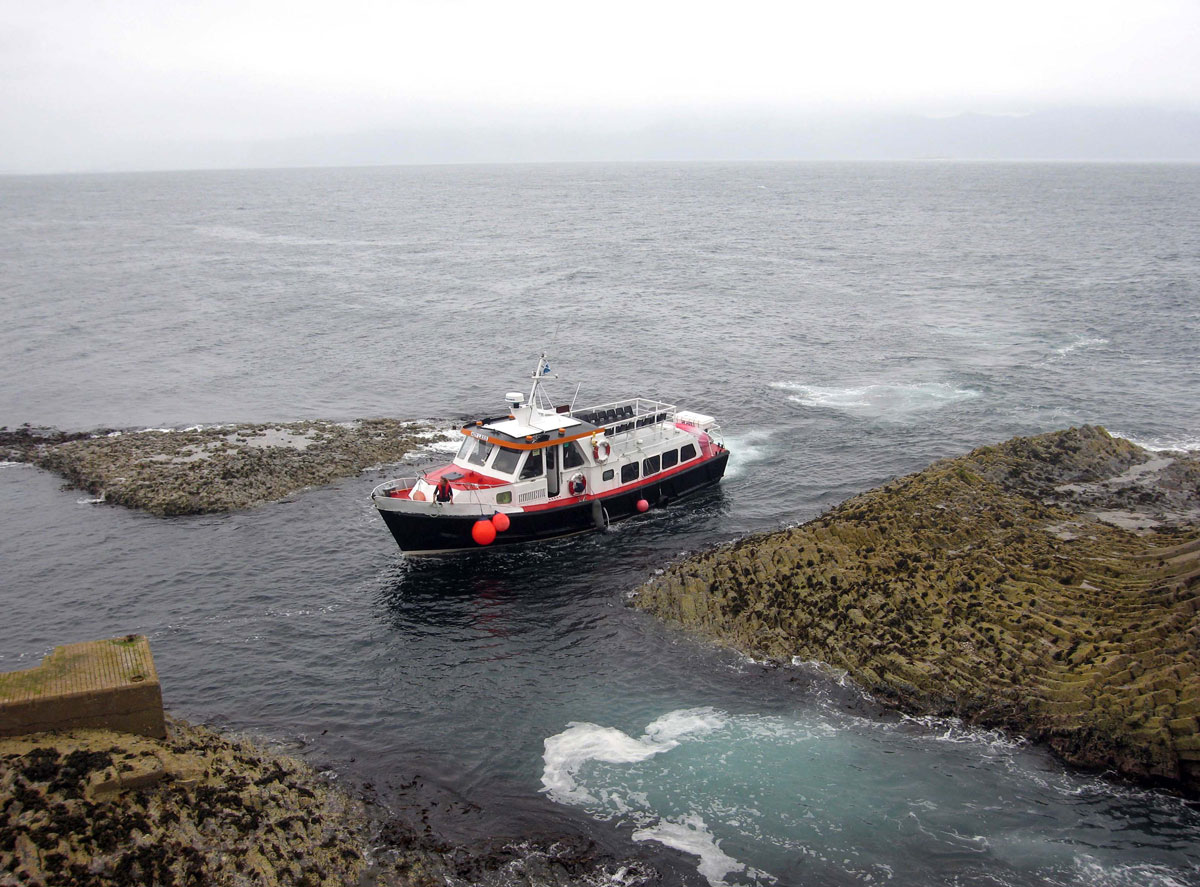
- Hoy Lass at Clamshell Cave – Not an easy place to land
-
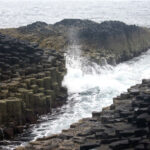
- Near to our Disembarkation point


-
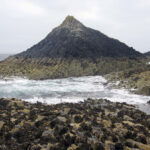
- The Herdsman (Am Buchaille)

-
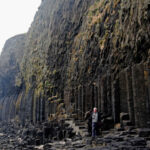
- The Causeway leading to Fingal’s Cave at Low Tide
-
- The Entrance to Fingal’s Cave
-
- Inside Fingal’s Cave
-
- The Eastern Coastline from the Island’s Plateau
-
- The Herdsman from Higher up


POSTED – JANUARY 2024
Originally posted 2024-01-11 16:26:12.
I’m behind with your posts but I’m glad I came back to this, it looks like an amazing place! Like you I can never resist a boat trip 🙂 That shy puffin in his burrow gave me the biggest smile but the rock formations came a close second!
It was 2 for the price of 1 on this trip Sarah – the bird life and the cave. It’s not until you get up close to Staffa that the rocks take on a similarity to the Giant’s Causeway, and I have to admit a very pleasant surprise – oh, and by the way there are puffins on Staffa too.
It just goes to show there are otherworldly beauty spots unspoiled by humans still to be found even in Britain. This looks wonderful and well worth getting on a boat for, even if you’re not a kindred spirit of the water! You got some incredible shots of puffins. We have them visiting a few places around Anglesey, and we adore watching them, but we’ve never managed to capture them anything like as well as you have. I was bowled over by the look of Staffa with it’s incredible geology. Fingal’s Cave does look like an organ, doesn’t it? So I can see why Keats thought along the lines of a cathedral when he wrote his poem, especially if the acoustics are that imposing as well. I love the legend too. Legends always enrich a landscape and engage the imagination. Funny really, I used to be able to play the overture to Fingal’s Cave on the piano, but I’ve never been there. Looks so worth the journey though. Nature really is magical, isn’t it? 🙂
For me, both the Inner and Outer Hebrides have always been magical. Each island has its own inimitable charm, but I sometimes find it difficult to come to terms with the fact that there are still those I haven’t been to and probably never will. Having said that, I’m really grateful that I’ve been blessed with having some fabulous memories of this wonderful part of our nation 😊
You’ve done better than me so far then. The Hebrides are a collection of treats yet to be explored for me, but the way you speak about them, I feel I must make sure I get to at least some of them too. I’m always keen to surround myself with a little magic these days. 🙂
To really appreciate Scotland, you do have to visit some of the islands, and more often than not, the smaller ones are the most magical 🙂
I’ve been to Mull, but that’s all so far. I can see why you’d say the smaller ones are the most magical though.
By the way, I’m having problems replying to your comments again. My dashboard repeatedly tells me my comment hasn’t taken so apologies for the repeat of my previous reply to yours. Didn’t even get a notification about your last reply either – just happened upon it when I tried to post directly onto your site. Seems our blogs aren’t talking to each other again.
I would rather you post a comment twice than not at all as you well know Alli. Don’t ask me why, but I had to approve your previous comment as well, believe it or not.
Regarding the Hebrides, I had a feeling you’d been to Mull and thought that you may have gone to Iona while you were there
Strangely, we planned to go to Iona but ran out of time. Still want to go though.
You’ve done better than me so far then. The Hebrides are a collection of treats yet to be explored for me, but the way you speak about them, I feel I must make sure I get to at least some of them too. I’m always keen to surround myself with a little magic these days. 🙂
Such a wonderfully dramatic part of the world, Malc. I’d love to have been. And those puffins are just adorable.
I agree with everything you say Jo. I absolutely love the Hebridean islands. Thanks for taking a look and commenting.
🤗🩵
I agree with previous comments, that your written dialogue and photography are well documented, captured and enjoyable to read. Taking most of us to places never ventured nor likely to. Thanks, Malc.
Thanks Suzanne. You’re so kind.
Wow, Malc! Just wow!
Thanks Mike. It sounds like you haven’t got there yet.
It’s a project without end, Malc! 🙂 Happy New Year!
Same to you Mike. Haven’t heard from you much lately. I hope all’s well.
My lord, Fingal’s Cave is something else. I’ve got the music somewhere in the house on vinyl. And the puffin pics are wonderful. What a place to visit. Alas the ferry looks like the one the Mr recently came to grief on so that is prob not gonna happen but then again you never know.
You’ve still got plenty of other great places to visit up there without needing a boat.
Indeed we do.
Well I’m one that had never heard of these islands but your pics and words have transported me there. Bang on excellent travelogue Malc!
Thanks Francesc. Glad to bring somewhere new to you.
Quite welcome.
What a lovely and nostalgic adventure this is, Malc! It reminds me of reading about the young Queen Victoria and Prince Albert having their conversations with friend Felix Mendelssohn in German, and his admiration for Scottish Fingal’s Cave making her interested in the remote Scottish places. Mendelssohn music is haunting indeed, and it appeals to me. Thank you for the snippet!
Who could not love puffins?! Everything about them is special, the way they feed their young and lead their lives.
Your choice of places to visit always makes me envious, and to see them through your eyes, and your excellent photographs is a dream come through, as I would never even have a half a chance to see them.
Thank you again, Malc, for this wonderful, my mind expanding writing and images that will stay with me for a long time.
Joanna
What a wonderful response Joanna. Thank you so much, especially as your blogs are so fabulous. I’m truly humbled.
I enjoyed your fabulous post and beautiful photos with immense pleasure. I had heard of Fingal’s Cave, mostly in relation to literature, but had never delved into the subject –
The basalt rocks are amazing… not to mention all those gorgeous puffins💗💗💗
Thank you Luisa. I had a feeling that you would enjoy this one 💗
You had me with the puffins Malc, such adorably cute little creatures. Fab photos as usual and even the dull weather doesn’t spoil the views. I like the look of Fingal’s Cave – not the music though as I often heard it played at home when I was a child and hated it back then – and the rocks of The Herdsman are amazing 🙂
I love your black and white honesty Eunice 🙂
Enjoyable travelogue with a lot of Malc isms.
Thanks Pat!