
Chepstow Castle - Is it Welsh or English?
I used to work with someone who came from Newport, and like most people from Wales, he was fervently patriotic. It was easier to have a bit of banter about somebody’s background in those days, and I often used to wind him up by saying that he was English, not Welsh. He could be fiery at times, and I knew it was time to back off when I saw flames coming out of his mouth like a Welsh dragon.
The reason I accused him of being English was because Newport was in Monmouthshire, and Monmouthshire was seen as an English county. If you’re already confused, then you’ll be even more so when I tell you that Chepstow is also in Monmouthshire, but in Wales – and what’s more, Chepstow Castle was built to protect England from the Welsh. If you haven’t given up the will to live yet, I’ll attempt to explain how all this came about.

It’s all down to the town’s proximity to the English/Welsh border of course, which came into being after the Romans left Britain around AD 410. To put it in simple terms, after the Roman departure, the Welsh tribes reverted back to their Celtic ways, whilst the tribes to the east were taken over by the Angles and Saxons that arrived from the continent.
In the 8th century, Offa, the Anglo-Saxon King of Mercia, had an 82 mile long earthwork constructed separating his kingdom from the Welsh Kingdom of Powys. Offa’s Dyke, as it’s known, has since become part of the boundary between England and Wales, which stretches for 160 miles from the Dee Estuary in the north to the Severn Estuary in the south.
For anyone who likes hiking by the way, there is a National Trail called the Offa’s Dyke Path which runs for 177 miles between Prestatyn on the North Wales Coast to Sedbury near Chepstow.
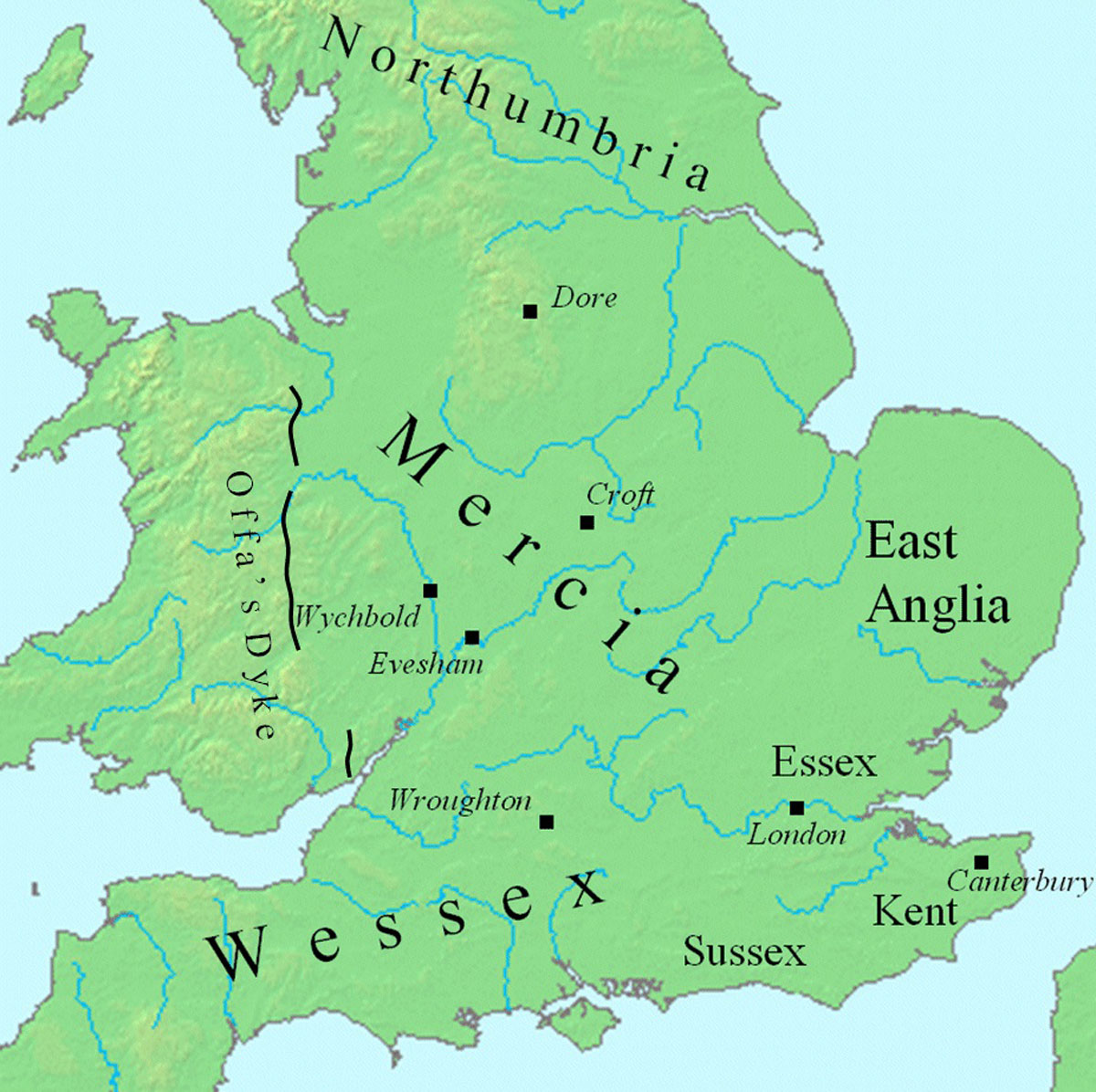
Offa’s Dyke remained part of the accepted boundary line between England and Wales, but there were still plenty of gaps, and in 926, the powerful Anglo-Saxon king, Athelstan, implemented changes to alleviate some of the disagreements in the disputed areas, which in the south resulted in the River Wye becoming part of the official boundary.
With William the Conqueror’s victory over the Anglo-Saxon King Harold at Hastings in 1066, the new King of England needed to consolidate his grip on power, and to achieve it without too much trouble, he set about pacifying the most powerful men in the land – namely the Church leaders and the Earls. The earldoms of Wessex, Mercia, Northumberland and East Anglia would have been William’s priority, but there were also the borders to think about, and as far as the Welsh border was concerned, there was still undefined territory, and so he decided to create three new earldoms – at Chester, Shrewsbury and Hereford.
These new earldoms were entrusted to some of his closest friends, and there was none closer than William fitz Osbern who had been a strong advocate of William’s invasion of England and fought alongside him at Hastings. For his allegiance to the new king, fitz Osbern was rewarded with the title of 1st Earl of Hereford, and to assert control over his new territory, he wasted no time in building several castles along the border, including one at the strategic location of Striguil (Chepstow) which was the lowest crossing point of the River Wye.

If fitz Osbern had any doubts about building a string of castles then they were quickly dispelled. Wales at the time was made up of six separate kingdoms, and Striguil (meaning ‘Bend in the River’) was located in the Kingdom of Gwent. There was no settlement here of any consequence, and suggestions have been made that the people of Gwent (who had fought against King Harold) were initially on good terms with the newcomers, but if that was the case, then it wasn’t to last. There were still some Anglo-Saxons who weren’t prepared to forfeit their lands to some upstart from across the channel, and one of them was Eadric the Wild of Herefordshire who teamed up with Cadwgan ap Meurig of Gwent to take fitz Osbern on. The resistance was short-lived however, as the earl wasted no time in showing them who was boss now.
In 1067, the earl started building a large Keep on top of the steep limestone cliffs that overlooked the river at Striguil, and it was built in stone right from the outset, giving it the distinction of probably being the oldest surviving stone fortification in post Roman Britain. It was built mainly for defensive purposes, but by the time the Great Tower was completed in 1090, Gwent had been completely taken over and was firmly under Norman/English control.
William fitz Osbern died in 1071 when he was killed at the Battle of Cassel in Flanders: He left behind a border area that was run independently from the king and separated into six Marcher Lordships (Abergavenny, Caerleon, Gwynllg, Monmouth, Striguil and Usk). Today, the English counties of Herefordshire and Shropshire are commonly referred to as the Welsh Marches.


After fitz Osbern’s death, his son, Roger de Breteuil, inherited the earldom, but the close relationship fitz Osbern had with the king didn’t extend to his son. While his father did everything he could to get William the English crown, Roger did everything he could to take it away. In 1075, in what became known as the Revolt of the Earls, he joined forces with the Earls of East Anglia and Northumberland in a failed attempt to overthrow the king. After being tried for treason, he was sentenced to life imprisonment and his earldom confiscated. With the death of William in 1087, he was released from prison, but the estate, including Striguil Castle, remained with the crown until 1115.
The exact date is uncertain, but it was around this time that Henry I handed the estate over to Walter fitz Richard de Clare, a member of a powerful Anglo-Norman family. He died without issue (no heir), and neither he nor his successors appeared to have done any major work at the castle, although he was responsible for the foundation of nearby Tintern Abbey.
The estate eventually fell into the hands of Isabel, the daughter of Richard de Clare, who was better known as Strongbow. As she was still a minor, the castle was held on her behalf by Henry II who, on his deathbed, promised her in marriage to his trusty friend, William Marshal. Henry died before completing the arrangements, but his son, enemy and successor, Richard I, honoured his father’s wishes and Isabel married ‘The Marshal’.
As tempting as it might be, I’m not going to talk at length about “the best knight that ever lived”, but just his involvement at Chepstow. On his marriage to 17 year old Isabel in 1189, the 43 year old Marshal catapulted himself from being a poor chivalrous knight into one of the richest and most powerful men in the kingdom.
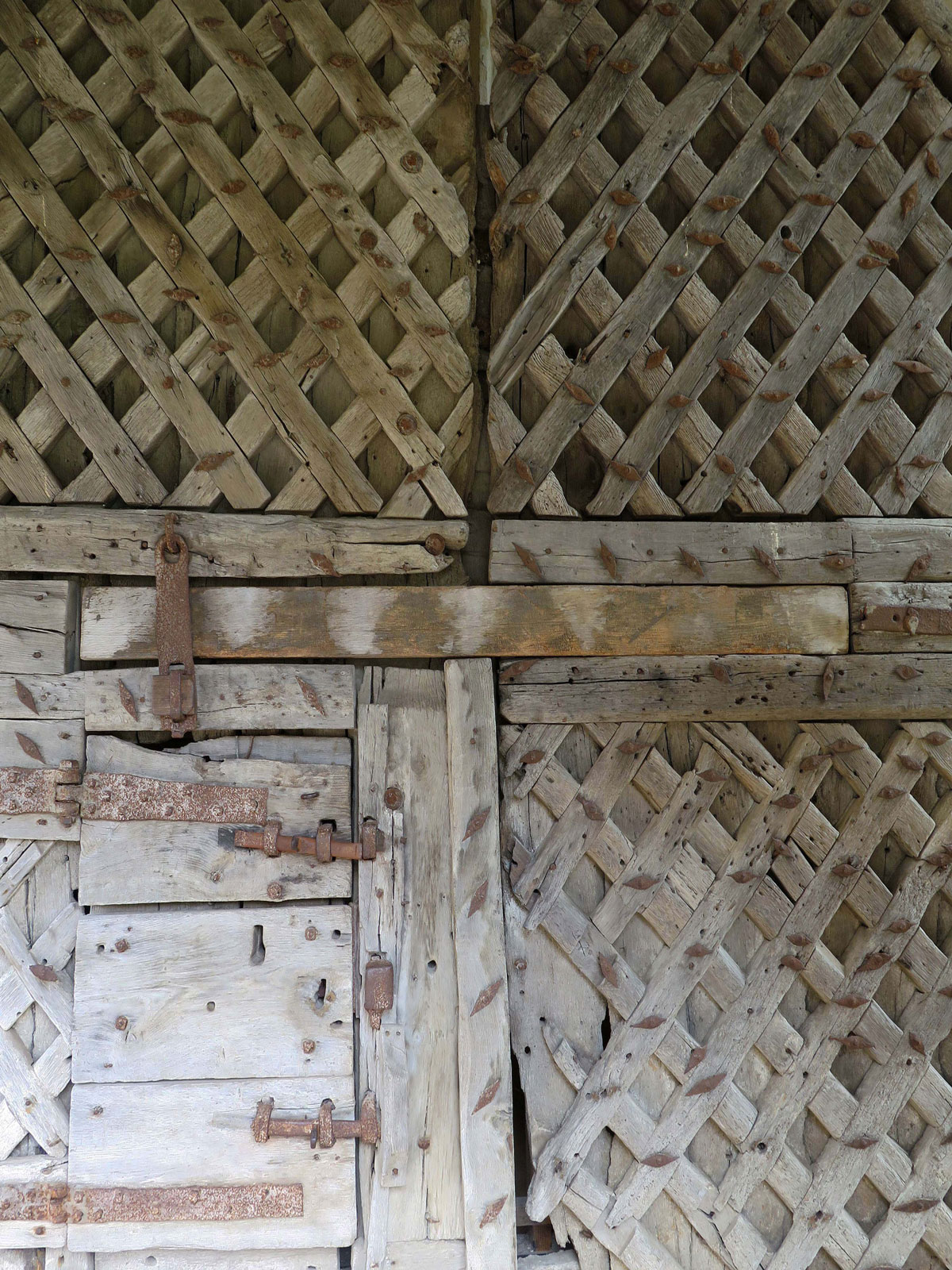
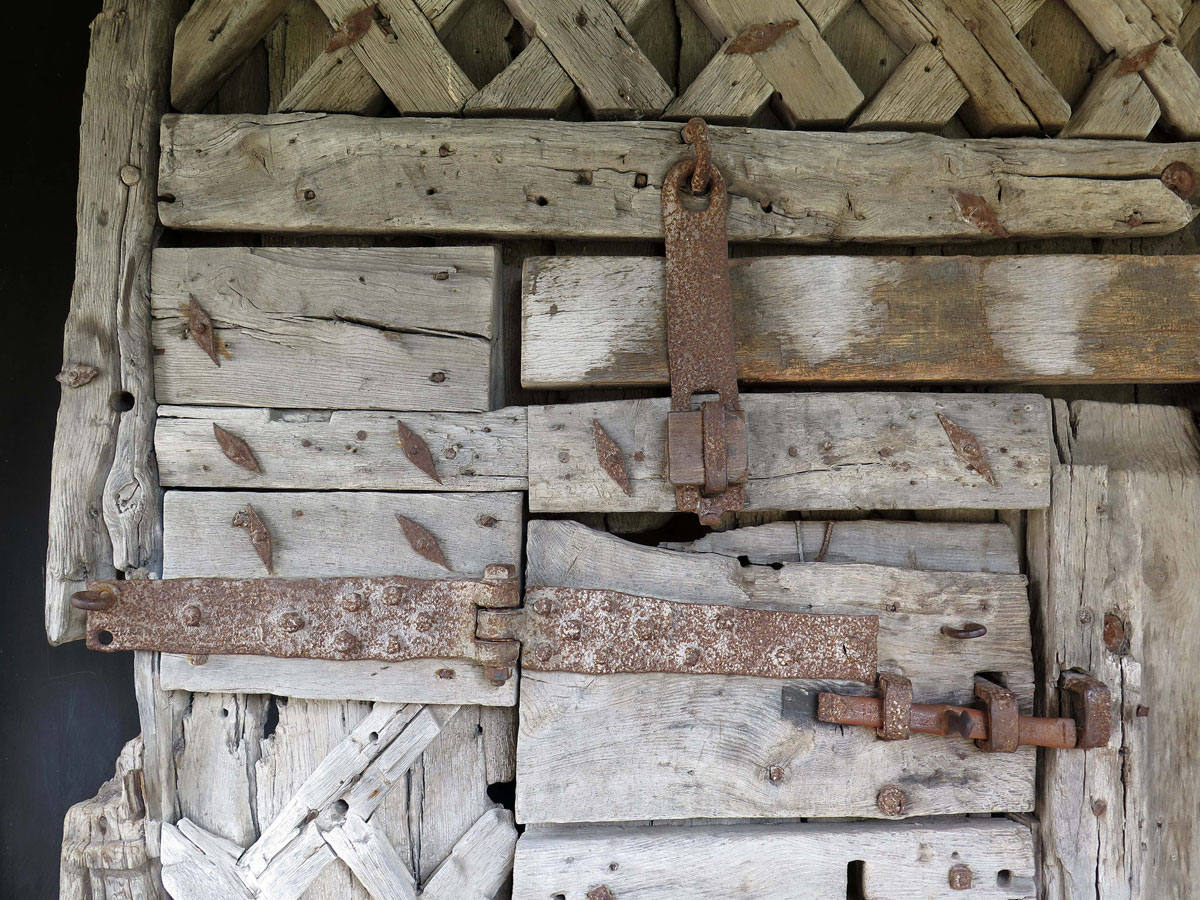
Part of his wife’s inheritance included Striguil and, starting in the 1190s, Marshal extended and modernised the old and outdated castle. He began by building the first twin-towered Gatehouse in Britain which was entered through, and protected by, wooden doors that have somehow miraculously survived since they were installed. They aren’t in the gatehouse anymore, but kept in the Hall Porch, and their age have been verified as no later than the 1190s by dendrochronology, or tree-ring dating to you and me.
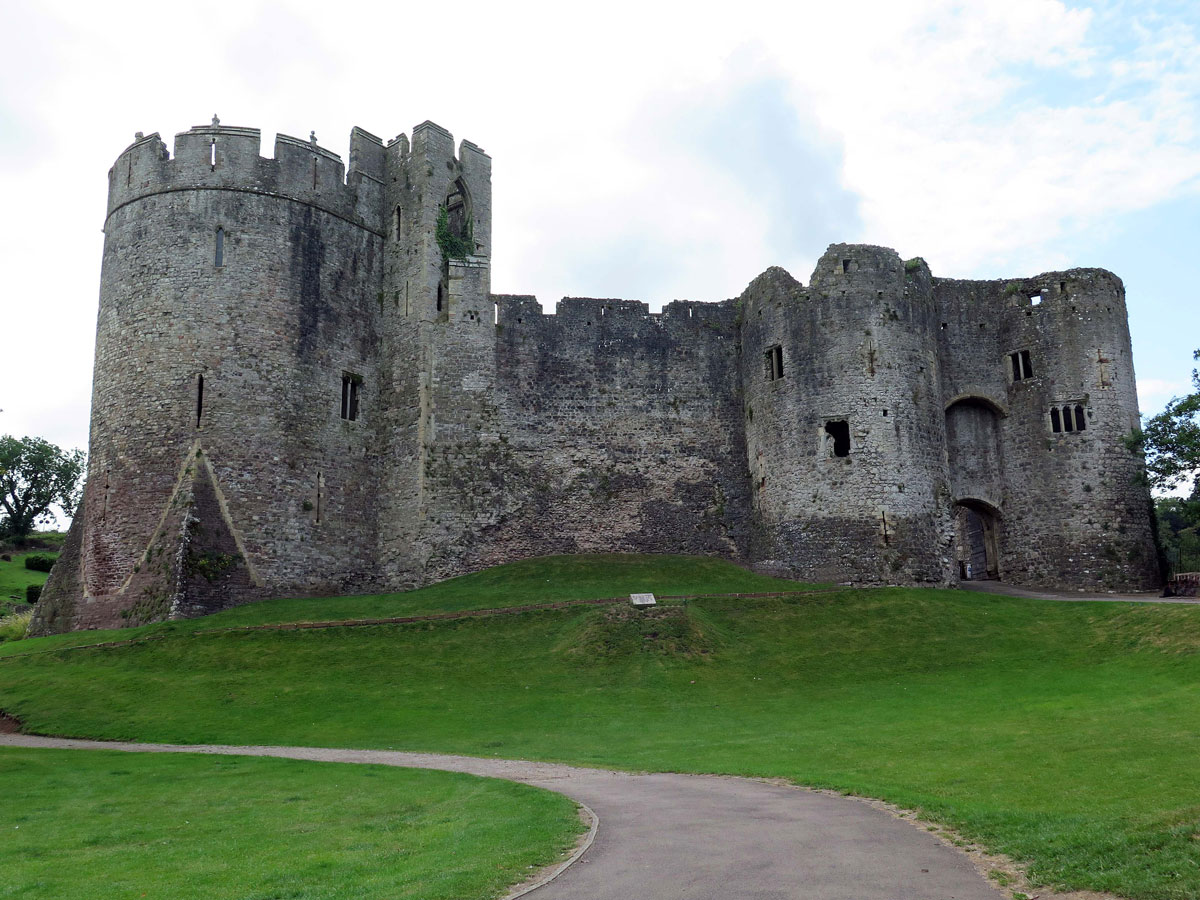

He also built a second line of defence between the Lower and Middle Baileys by erecting two round towers which were linked by a curtain wall. After completing the defence of the lower part of the castle, Marshal then turned his attention to the upper part, where he increased the height of the Norman curtain wall and added another tower, this time a rectangular one which was probably used as a private retreat. Unsurprisingly, it is now called Marshal’s Tower.

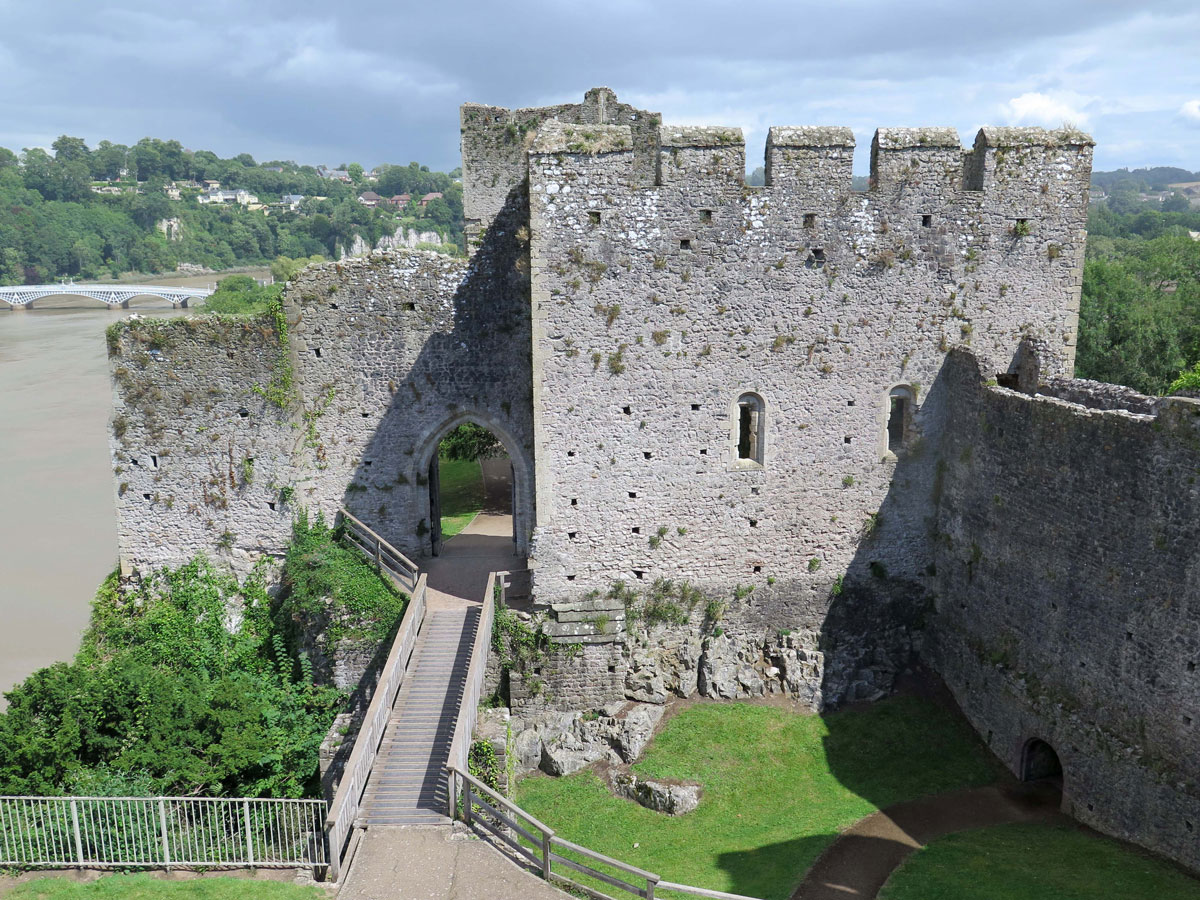
William Marshal died in 1219 and was succeeded in turn by each of his five sons. Their personal history was somewhat chequered, but by the time their tenure was over, the castle had reached its full extent. Between them they had made the Great Tower more comfortable, added another tower in the vulnerable south-west corner and built a Barbican at the western end of the castle.


It sounds like William’s sons weren’t as successful in the bedroom department as they were down the builders yard because when Roger Marshal died in 1245, there was no male heir to take their place, and the estate was left to their five sisters (or their descendants), which for Striguil meant that it fell into the hands of Maud.
Now, those of you who have been bored enough to follow my posts for any length of time, will know that I love history, but I’m no historian, and that’s because my weak link is family trees. I trip over at the first twig, because no matter how hard I try, I just can’t get my head around which uncle’s nephew was the bother of the sister of the person who married the niece of the eldest brother’s daughter. Alright, I made that bit up, but you get the gist. I even called my new next door neighbour Ron for six months before he plucked up the courage to tell me it was Paul.
Why I’m telling you all this is because the castle came into the hands of Roger Bigod through Maud’s marriage to the 3rd Earl of Norfolk. Now I’d like to tell you who he was exactly, but I can’t be bothered to go through his family tree and what’s more, I’m not sure that you would want me to anyway. Instead, just accept that Roger Bigod was the son of Hugh Bigod who married Maud, the eldest daughter of William Marshall.
Now that you’ve got all that sussed, I’m now going to enlighten you a bit more. Roger Bigod was the 4th Earl of Norfolk, and when he died in 1270, his nephew, another Roger Bigod became the 5th Earl. See what I mean? Anyway, he came into possession of Striguil Castle and embarked on an ambitious building programme, starting with some improved domestic accommodation in the Lower Bailey.


These home improvements would have been money well spent, as by now he was spending most of his time here. Marshall’s castle was now beginning to change from a stone fortress into something more palatial, and you could say somewhere fit for a king, because in December 1284 Edward I and his wife Eleanor spent four days here after his conquest of Wales.
There are no records to show the exact dates, but around four years later, work started on a mural tower (which later became known as Marten’s Tower) and was probably completed around 1293. Any estate agent would have been pleased to have this property on their books, but what the earl’s motives were can only be guessed at. He may just have wanted to live in as much luxury as he could afford, or perhaps he was hoping that the king may be encouraged to come and pay him another visit – but if that was the case then he wasted his money, because in 1297 he refused to follow the king’s orders when asked to lead a campaign in Gascony. The stand-off led to a climb-down by the king, but Edward had the last laugh because Bigod died without leaving an heir, and his estate passed to the crown, not that it done the king much good either, because seven months later on 7th July 1307 he was also dead.


After the death of Roger Bigod there were no alterations to the castle for the next couple of hundred years, and with the addition of a town wall, Striguil was not just a castle anymore, but a town with an annual fair and a market, and no doubt it was for this reason that towards the end of the 14th century the town changed its name to Chepstow (from the Old English chepe-stowe meaning market place).
Building work may have been suspended, but that didn’t mean to say that everything else had, and life in medieval England and Wales carried on as normal with treachery and debauchery the order of the day. Edward’s reign had brought Wales under the control of the English crown, but his fighting ability wasn’t passed on to his son and successor, Edward II.
In fact, it was worse than that, because a dodgy relationship between the king and Hugh Despenser the Younger (who had been granted the castle in 1324) led to them having to take refuge at Chepstow as they were trying to escape from a rebellion led by Edward’s wife, Queen Isabella and her lover, Roger Mortimer.
The king and his friend may have been a bit light on their feet but it didn’t get them very far, and inevitably their assailants caught up with them. Hugh Despenser had a nasty ending at Hereford, and if you believe the stories about what happened to Edward on the other side of the River Severn at Berkeley Castle, then the king could have had an even nastier one.
If this episode of English history is of interest, you might want to take a look at a previous post I did about Bristol Castle which you can find here.
The Wars of the Roses (1455-87) mostly passed Chepstow by, but when Henry Tudor acceded to the throne as Henry VII in 1485, life for the Marcher Lords was about to change. In 1507, his cousin, Charles Somerset became Lord of Chepstow, and even though you may not have heard of him, he was influential in the accession of Henry VIII and was largely responsible for laying out the Field of the Cloth of Gold for the summit meeting between the Kings of England and France in June 1520.
Henry VIII’s concerns about the power of the Marcher Lords might not have been uppermost in his mind while he was trying to offload his first wife for the next one, but that didn’t stop him introducing the Laws in Wales Acts (1535 and 1542), which basically amounted to the annexation of Wales to England. In the 1535 act the Marcher Lordships were abolished and five new counties added (Monmouthshire, Brecknockshire, Radnorshire, Montgomeryshire, and Denbighshire) which, with the other eight that were already in existence made a total of thirteen counties.

It was the 1542 act that started the confusion over whether Monmouthshire was English or Welsh. The map above clearly shows that Monmouthshire was part of Wales, but when Henry reorganised the court system he put Monmouthshire under English jurisdiction – and according to a report in Wales Online, here’s maybe the reason why. It states that there’s a document which shows Henry regarded most of Wales as “populated by barefooted clowns. Monmouthshire, however, was seen by him as having people who were rather better educated and more prosperous and for that reason he put the county under Oxford for court purposes”. I’m assuming that these words were the reporter’s interpretation of what the document said, but in practical terms it didn’t matter too much because the whole of Wales had become part of the Kingdom of England anyway. For some though, it meant that Henry didn’t really regard Monmouthshire as part of Wales, and for several centuries the English parliament referred to the region as Wales and Monmouthshire. This ambiguity was finally sorted out in the Local Government Act 1972 which confirmed that the county did in fact belong to Wales.
Royalist Monmouthshire’s location next to Parliamentarian Gloucestershire spelt trouble for Chepstow Castle during the Civil War. It was besieged twice, but in 1648 finally ended up in the hands of Oliver Cromwell. When the monarchy was restored it was used as a political prison, and one of its inmates was Henry Marten who was one of the commissioners who added his signature to the death warrant of Charles I.
Marten spent twelve fairly lenient years in Bigod’s Tower before dying here in 1680 (now you know how Marten’s Tower got its name). His body lies beneath an entryway to the Priory and Parish Church of St Mary.

In 1682 the castle came into the hands of the Duke of Beaufort and its life as a fortress gradually slipped away. Like so many castles that had outlived their usefulness, it fell into decline, but a steady stream of tourists that followed the ‘Wye Tour’ during the 19th century prompted a clean-up operation by the 8th Duke of Beaufort, and in 1905 it was acquired by the Lysaght family who continued with the conservation programme before handing it over to the state. Today, the castle is maintained by Cadw, the Welsh government’s historic environment service.
After the Local Government Act 1972 which I referred to earlier, Monmouthshire was mostly incorporated into the new County of Gwent (named after the original Welsh kingdom), one of eight ceremonial Preserved Counties, but just when I’ve lured you into thinking that we’ve got to the bottom of where Monmouthshire belongs, those who needed to justify their jobs came up with another boundary system in 1994 which seems to be more complicated than what the Welsh kings, Marcher Lords and Henry VIII could have ever dreamt of, but no matter what these bureaucrats have managed to achieve, there’s no disputing the fact that the historic county of Monmouthshire is in Wales. The River Wye is the undeniable border between Wales and England at Chepstow, and so Chepstow Castle, which is under the guardianship of a Welsh government office, has to be Welsh – or does it?

POSTED – SEPTEMBER 2022
Originally posted 2022-09-20 06:40:11.
Absolutely fascinating. It looks a really place from the pics and I liked all the asides.
A bit far for you to get to, and you’ve got some pretty good castle up there anyway, but Chepstow is a good one too.
I like a nice sort of semi ruin, one where the past lives in the walls as opposed to some the stately ones up here.
I know exactly what you mean Shey
Yeah I always have a wee smile when folks come here from abroad and tell me the castles they are visiting. I think…they ain’t no castles. Now THIS here’s a castle. I think one of my favs up here is Dunottar. Such a wonderful ruin and so much history attached.
I’ve never been to Dunottar Castle Shey and have always wanted to. It really is what I call a castle as well.
Me too. The setting is beyond belief and the history is the kind you know could only belong to a ruin in a setting like that.
Unfortunately I’ve never been to the area between Dundee and Aberdeen. What other places are worth visiting in that area?
Well Sontehave itsnelf is anice wee place. Nothing grand but nice square and old harbour front. I see that the old Tolooth on the front which was a cafe when I went as a kid, is now a museum. And ther wa s avery nice old pub on the other leg of that pier, yards from the water. Then there is obvi Dunottar. There’s Arbroath which is not far from Dundee. it has a great cliff walk and the ruined Abbey, teaming with history. There’s also an old lighthouse. I remenber walks from Stonehaven and Inverbervie along the coast. And there’s sort of small places like Johnshaven and Authmithie, that have their own little charm, for just a ten minute wander. There’s Lunan Bay which is a beautiful stretch of sands and the ruin of the Red Castle. If you are feeling adventurous there’s also falls somewhere about here that you have to climb down to and falls is the word if you don’t watch your step. BUT I am talking the coast here and that road is no longer the main one to Aberdeen. Inland there’s the magnificent Angus Glens. The homely JMBarrie birthplace museum, the Camera Obscura. But the entire bit is often called Pictavia, as in the Pictish capital of Scotland and it is cos of the amount of earth houses and yep..Pictish stones and stone circles. The Mearns –another area– is Grassic Gibbon country–talking being literary. So I often think something for everyone, from outdoor enthusiasts, walkers, hillies, museum-lovers, the past, wonderful history, literature, you can find it there… . AND as we’ve talked of re the borders and the East Neuk, often ignored.
And ps I shoulda added, there’s Glamis Castle and the village itself is quite picturesque.
Thanks for that Shey. Apart from the towns that have football teams I’ve only really heard of Stonehaven, but at least I know a bit more now. I didn’t know about the Angus glens, and the Pictish connection sounds really interesting, and as you say, some of the places like this that get looked over have a charm of their own.
Listen, folks haven’t heard cos like that it is aye the main big places that get the piblicity etc. What I find interesting is the landscape. I mean if I cut over to Wellbank which is not that far from where we live, the land suddenly is so flat cos it is Mearns’ fringes. You can see for miles there and Lewis Grassic Gibbon–there used be a centre for him , I dunno of there still is– well he set his Sunset Song Trilogy there. And it is all about the land really as well as what WW1 did to these farming communities. Then again if don’t veer off slightly horth at that point but head north west then I come to the Glens. And all the bits there. I meant to add there’s also the Catteran Trail that way. I am ashamed to say that despite doing most of Glencoe and Glen Etive, oh and round by Kinlochleven way, I’d never done the Glens. Not even the Sidlaws here. So when we were all ‘locked’ within a whatever mile radius of our houses here and anyway the Clachaig was shut, we started doing the Glens and the Sidlaws. The downside Glenn-wise was the roads. We are talking C roads here. In fact one drive we did in order to walk up Monnemenach eventually there was no road and we just had to leave the car down this track by a river, which then after we hit ablizzard we only hoped we could get it back up out of. But yes this entire area is very interesting depending on what you are looking for from it.
Thanks again for enlightening me about this unknown part of Scotland. If ever I was in a position to (which I doubt) I would love to visit those glens.
I think you’d probably like. In fact you’d prob have a damn good dander through Angus. So I hope I’ve amanged to bring you a bit of them if not much else.
I’m sure I would – and thanks
One of my favourite castles, and you’ve done it justice here, Malc, with fab photos and historical accounts, as always. I just wish it was in the north rather than the south of Wales! 🙂 Interesting thoughts on whether it’s Welsh or English – it’s always that marcher territory that blurs the boundaries, isn’t it? I’ve always thought of it as Anglo-Norman myself, as it was built by one of William the Conqueror’s cronies, but these days, as you say, it’s under the wing of Cadw, so…
I’ve fancied walking the Offa’s Dyke Path for a while, so maybe now I’d be able to set off from home to do it! Another great read, and thanks for brightening my day with this wonderful castle. 🙂
I was hoping that you got around to reading this one Alli, and I’m glad that you enjoyed it. I’d like to think that you’ll do one on Chepstow yourself as our approach to blogging is quite different.
I’m the same as you as regards thinking of the castle as Anglo-Norman, but I don’t suppose too many Welsh people would like to hear that 😊. I’d better be careful what I say about the Welsh now though hadn’t I? I hope you’re practising how to pronounce that Welsh railway station by the way. Thanks again for your lovely comments. I always appreciate them as you know 😊
Again, thanks for the reply, which WordPress had studiously avoided informing me about, but at least I’ve found it now.
I did cover Chepstow back in 2020 during the lockdown, but it was all linked to William Marshal and the story of his family’s demise following his death, so not focussed solely on the castle itself. I always enjoy reading any post on a castle though, from whatever angle it may take. I always say you can never have too many castle stories!
I think I’ll reserve some of my comments about Chepstow and it’s ownership for an email! But in the meantime, you certainly don’t have to be careful what you say. 😉 As for the railway station – not a chance! Not for a while anyway, but I suppose it’ll be fun trying to get my head round it in the months and years to come. 😀
Rhyl is quite easy to say really 😊
I got a bit lost in the who’s who, Malc, but it’s a fine looking castle. I’ll be in Newport this Christmas, if things go to plan and, depending on transport links and the weather, I might make an effort to visit Chepstow. Thanks for the suggestion.
It’s most definitely worth a visit Jo and it’s only a 15-20 minute train journey away. It’s closed on Christmas Eve, Christmas Day, Boxing Day and New Year’s Day. Apart from that, it should be open over the rest of the winter period.
Ah, no good for me then. It’s one of our whistle-stop visits, 23rd to 26th. Normally for Christmas in Leeds but this year we will be with the in-laws to be 🤣💖 Thanks though!
What a shame. Maybe you’ll visit them some other time.
A well researched and informative post Malc, it must have taken you ages to sort out the details. I’m just catching up after being computer-less for almost two weeks so this made a good read over my breakfast tea and toast and your light humour made me giggle more than once 🙂
Losing a computer for a couple of weeks must have felt like losing the use of a limb Eunice, but I’m pleased to see that you’ve managed to catch up with this latest post.
You’re right when you say that a post like this take more than five minutes, but whatever I’m writing about, takes as long as it needs to as far as I’m concerned, because I don’t work to deadlines. Whether people have the time or patience to read it is another matter. I’m glad you did though, and I hope you didn’t spill your tea when you found something to giggle at 😊
Goodness, Malc, they should make you The First Minister of Wales! The amount of historical details is mind bending towards the Wales! And your humor is priceless, as always. Big Thank You!
Joanna
Thank you Joanna and so are your lovely comments. I don’t think that you’re a football fan, but as a Bristol City supporter I can already see a lot of wide-open mouths at the suggestion I should be the First Minister of Wales 😊
They should , you would be perfect!
Joanna
Ah! Thank you Joanna 🙂
Fascinating and confusingly impressive or impressively confusing. I bring the dense branches of the family trees and the not the author.
Thank you Pat – I think 🙂
You may claim not to be good at keeping track of all these historical figures but from where I’m standing (or rather reading!) you’re doing an excellent job 🙂 I always thought that Wales started when I crossed the Severn Bridge so I’m happy to consider your former colleague a Welshman! Likewise Chepstow – I never previously questioned its Welshness 😉 I was interested to learn where the term Welsh Marches came from (I’ve used it for years but had no idea) and amazed to see those wonderful wooden doors – what a treasure!
Thank you Sarah. I’ve always thought that natural features such as rivers, mountains etc should be boundary lines – but if only life was that simple 🙂
Brilliant! Outstanding narrative with details and so much interesting information! And you’ve really outdone yourself…which is saying a lot…with the photographs! Marvellous! Thoroughly enjoyed it and again made me want to get on that train from Paris and take a visit. Cheers my friend for a lovely post!
I’m so glad that you find these sort of posts interesting Francesc. I don’t suppose too many people woul want to sit through a long post like mine too often, but I’m so pleased that people like your good self do. Thank you my friend.
As a lover of history, of course I am interested Malc, both the history of the UK, the US (much easier) and Spanish, as well as World history in general. History is a human endeavour so the history of any country is as important to one as the history of one’s own country. All the best!
I couldn’t have put it better myself Francesc. I’ll be checking your latest offerings out this afternoon 🙂
Thank you Malc!
Typically wonderful, thorough, post, Malc. Finely illustrated too, as always. I’m with you on the confusion of names and family trees, by the way (far too many similar names and confusing titles) – and William Marshal certainly was a fascinating figure. Wherever Chepstow is, it’s been on the ‘too visit’ list for far too long – so many castles, so little time!!
I know what you mean Mike about so many castles and too little time. You know only too well how many there are, and a big thank you for your wonderful comments. Coming from someone like you who knows our history inside out it really is really appreciated.
I don’t know about ‘inside out’, Malc – you’re no slouch yourself and it always strikes me there’s a mountain to learn. My usual excuse is, “not my period”. 🙂
LOL. I’ll try and remember that one 🙂
Another outstanding post! The historical details and wonderful photos make it a great treasure!
Thank you for your lovely comments again Luisa. They’re always greatly appreciated
You’re highly welcome, dear Malc. 🤗😘
😉