
Devonport - Pt 3 A Change of Name and a Change from Sail to Steam
As we saw in Pt 2, by the end of the 18th century there had been a large expansion at Plymouth Dock, but why? The simple answer is that the dock’s main business was that of war – something that Britain seemed to have had an appetite for.
When William III came to the throne in 1689 one of the first things he did was to respond to the threat of Louis XIV’s new naval yards at Brest by building his own at Plymouth Dock. From then until the end of the Napoleonic Wars in 1815 Britain was at war with France for a total of 67 out of those 127 years, and that wasn’t all. During the 18th century there was also the Seven Years War (1756-63) and the American War of Independence (1775-83) to contend with. As a consequence, Plymouth Dock had become Britain’s leading Western port for supplying warships, men and materials.
No expense was spared at providing the Royal Navy with the funds needed to ‘rule the waves’ and as Plymouth Dock grew, so did the town providing the labour around it. By 1811 the population had reached 30,000 – larger than the town that bore its name, but the residents weren’t over-enamoured with the fact that the town sounded like a suburb of Plymouth, and so in 1823 they petitioned King George IV for its name to be changed from Plymouth Dock to Devonport. On 1st Jan 1824 the king agreed, and to celebrate, a column was erected next to the recently completed Guildhall.


The 19th century also saw a sea-change in ship construction. Ships that traditionally used timber and sails were now being replaced by vessels with metal hulls propelled by steam power, and it was obvious that new facilities would be needed to build and maintain them. In 1846 work commenced on constructing a new self-contained steam yard at Keyham, a site just north of the Torpoint Ferry. This new facility officially opened in 1853 and a year later an underground tunnel was built linking the Devonport and Keyham yards.

The new Keyham Yard consisted of two basins, initially called South Basin and North Basin: South Basin gave access to three large docks, and in 1855 a huge ‘steam factory’, known as the Quadrangle, was opened at the North Basin.
The Quadrangle must have been a hive of activity, with skilled workers such as boilersmiths, coppersmiths, blacksmiths and millwrights all being employed in workshops such as the iron foundry, brass foundry and pattern shop. There were a host of other supporting jobs as well. The list was endless – and there was even an underground building that held prisoners who were used for doing the heavy work.
When I worked in Plymouth I was often told about all the different trades that were used in the dockyard, and even though it’s no doubt changed, if there is one building I would like the opportunity of visiting if I ever got the chance it would have to be the Quadrangle. Covering six acres, this Grade I listed building was designed by Charles Barry, the architect of the Houses of Parliament, and described by English Heritage as ‘one of the most remarkable engineering buildings in the country’.
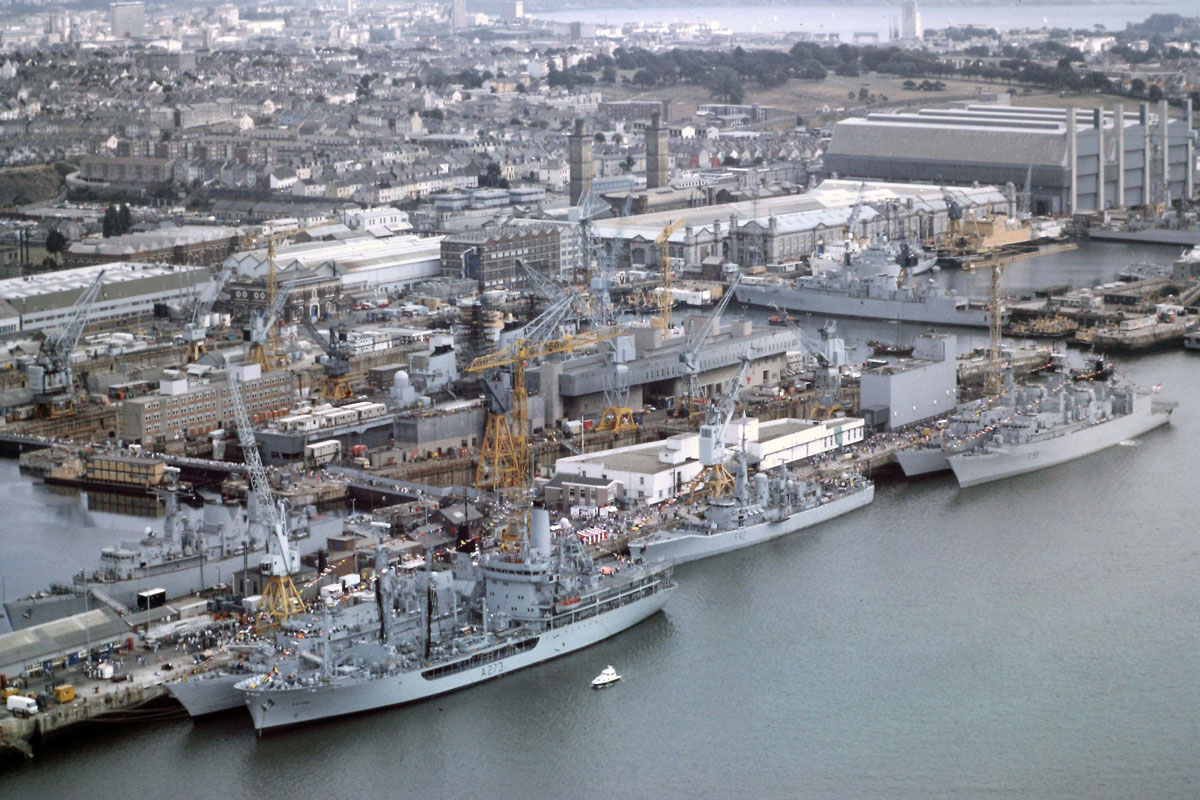
I took the picture below from a helicopter trip during Plymouth Navy Days in 1987. The Quadrangle still continues to fulfill its original purpose and is the building with the pair of chimneys at the top centre/right of the photograph.
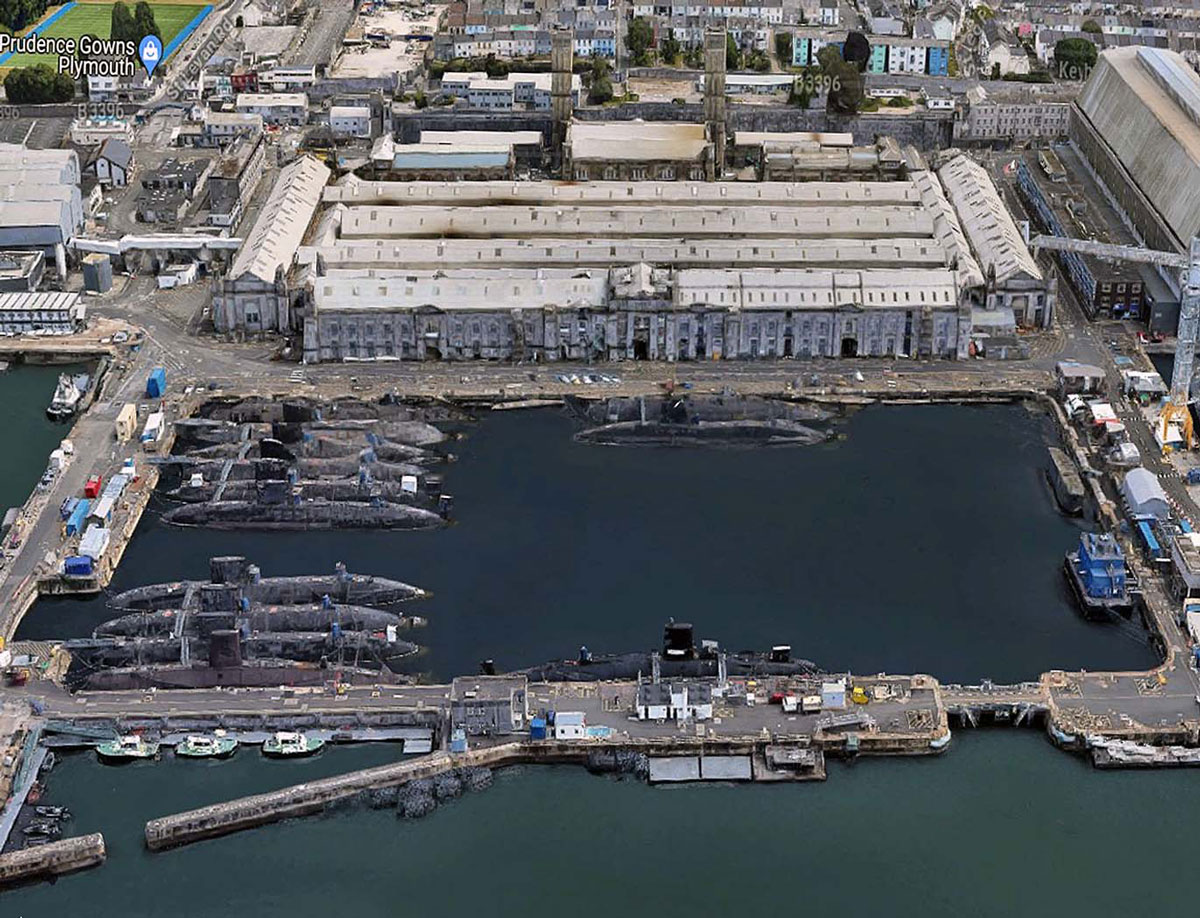
Today, North Basin (now renamed Basin No 3) is currently the graveyard of 13 nuclear submarines, some of which still contain nuclear fuel rods. The people of Plymouth have been assured that there’s no safety risk, but be that as it may, I wonder what they were thinking when a nuclear alert siren accidentally went off during a maintenance check.
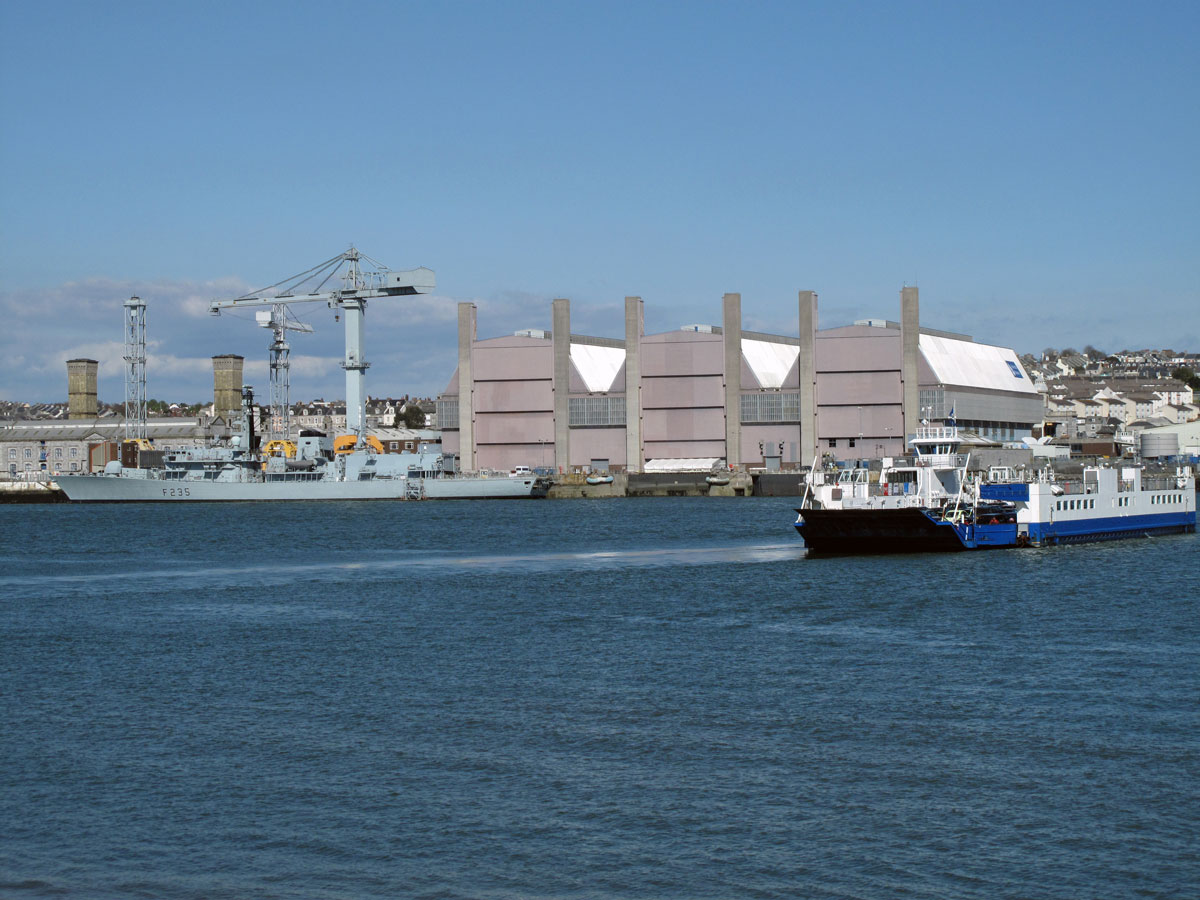
In the 1970s, the three dry docks at the South Basin (now Basin No 2), were enlarged and covered over to serve as a modern frigate refit complex.
The extension of the dock from Devonport into Keyham was not the end of the dock’s expansion, and in Pt 4 I’ll be explaining what happened next.
POSTED – MARCH 2024
Originally posted 2024-03-01 08:19:05.
No wonder the locals thought the place deserved it’s own name, judging by how much it grew in size and importance! In Portsmouth the change from sail to steam is also represented by the imposing presence of both the Victory and HMS Warrior, both of which we have visited many times. It’s a shame there isn’t a similar ship museum at Devonport as there’s clearly so much to represent the evolution of shipbuilding and design, along with so many crafts being practiced there too.
Fantastic pictures, as always, especially the aerial shots – well done! I have to admit though, the sight of those nuclear submarines – deceased or not – sent a shiver through me. Whatever the authorities might say about their safety, I’m not sure I’d like to live anywhere near them. And 13 is an unlucky number too! :-0
Portsmouth has always been considered the flagship of the Royal Navy for some reason. Probably, because it was the yard still going strong with the longest history. Devonport has always lived in its shadow where the public conciousness is concerned and the town suffered years of neglect. I’ve always thought that it’s a real shame, but sensitive work still goes on behind those dockyard walls
Obviously, more will be revealed in the next post, and I won’t be satisfied until I’ve raised awareness of Devonport’s significance to those who know very little about it. Thanks for your thoughtful comments as always Alli 🙏😊
Well you’re doing a good job, Malc, and you’ve certainly raised my awareness. 🙂
Thanks Alli 😊
Showed it to Les as he is very interested in all things to do with Maritime. Thoroughly enjoyed it.
That’s good to know. Thanks Suzanne.
You’re welcome, Malc.
A very interesting article: the story is interesting and the photos are beautiful.
Those dockyards are amazing
And so are you Luisa. Thank you 🙂
You’re more than welcome, my dear Malc🙏
Have a great weekend
You too 🙂
Fascinating post, Malc. I’m still not completely use to the silhouette of these modern more stealthy ship designs (of both navies.)
Thanks Pat. They don’t look quite so formidable somehow do they?
Not to my old-fashioned eyes. 😉
😊
Wow Malc! Great pics! Interesting history! All the best and a great weekend to you!
Thanks mate, and hope you have a great weekend too!
This post, Malc, is represented by one word, fascinating, as everything you have so eloquently described today, is just that, from the historical background, through the town’s creation details, the dramatic change of its name, the celebratory column, the significant change of town’s docks purpose, from sail to steam, the building of the tunnel and of the enigmatic Quadrangle, the vast expansion of town’s workforce,
the nuclear presence, and you are only half way through the story!
No doubt, the next part will be as fascinating too! I can hardly wait!
Joanna
Thank you Joanna. Your words always make doing these posts worthwhile. As you know, I write mainly from a geographical and historical perspective, but posts like this are bound to encroach on other aspects of life, and people can make up their own minds as to whether we still need a large navy or not. Thank you for all your support 🙂
You will always have my support, Malc, because I love your writing!
Thank you for your kind words!
Joanna
Thank YOU Joanna 🙂
You are more than welcome, Malc!
Joanna
PS. As to the question – an ancient saying is advising, “If you want peace, prepare for war!”
Joanna
You’re absolutely right and I was tempted to quote it myself, but I stuck to my principle of allowing people to think for themselves. Well done Joanna for quoting it. Thanks again 🙂
A great photo taken from the helicopter Malc, it certainly looks like a very huge and busy place back then.
Thanks Eunice. It really was a busy place back then. I won’t go into all the politics, but all the cutbacks have left us seriously vulnerable now I believe.
Now these are dockyards. I am totally impressed. Very interesting dockyards too.
When I took the helicopter pictures there were around 30,000 people working in the dockyard but it’s a fraction of that now.
SO many places like that now. Vanished industries.
That statement opens up a whole can of worms Shey
Fascinating stuff! The story behind it is quite interesting.
The historical significance and architectural marvel are definitely worth experiencing firsthand.
The problem at Devonport is that it’s all inside the dock gates for obvious reasons, which means that it’s difficult to get to know it intimately