Tag Archives: Historical Building

Salisbury Cathedral Pt 3 – The Highlights

Salisbury Cathedral Pt 3 - The Highlights


In Salisbury Cathedral Pt 2 I described the different parts of the church, and so for this final part I’m going to explain what there is to see inside – or at least some of the highlights.

Throughout the church there’s a good collection of tombs for anyone who’s interested in this sort of thing. The first person to be buried here was William Longespee Earl of Salisbury, illegitimate son of King Henry II, and half-brother of King John. He died in 1226 and next to his wooden tomb is a plaque stating that he was present at the laying of the foundation stones of the Cathedral in 1220.

The tomb of Bishop Giles de Bridport, who was at the consecration of the Cathedral in 1258 is considered to be one of the finest 13th cent tombs in Britain, but probably the most majestic is the Hertford tomb. The Earl of Hertford (1539-1621) was the nephew of Jane Seymour, Henry VIII’s third wife, and lying above him is the effigy of his wife Lady Catherine Grey, the sister of Lady Jane Grey who was Queen of England for 9 days in 1553.

I should also mention that former Prime Minister, Edward Heath, who lived at Arundells in The Close opposite the Cathedral was buried here in 2005 in a much simpler grave.

Continue reading

Originally posted 2018-03-09 10:39:52.

Salisbury Cathedral Pt 2 – The New Cathedral

Salisbury Cathedral Pt 2 - The New Cathedral


Having explained how the new Cathedral came about in Salisbury Cathedral Pt 1, I’d like to talk a bit more about the building itself.

To start with I don’t suppose any building that’s been around for almost 800 years would have been untouched in any way, and of course Salisbury Cathedral is no exception, but the good news is that this remarkable church is still essentially the same as when it was built.

There have been a few hiccups along the way mind you including the removal of many of the stained-glass windows during the Reformation, and even some damage during the Civil War, but as was often the case, well-meaning restorers probably did the most amount of damage.

According to the official Salisbury Cathedral guidebook, the late 18th century saw James Wyatt clear the churchyard, demolish the Bell Tower, lime-wash the vaulting, cover medieval paintings, and remove even more medieval glass.

It wasn’t all bad news though. If you take a look at the West Front, you’ll find that there are 79 statues adorning the façade, and 72 of them have been added since the 19th century. George Gilbert Scott was responsible for most of them during his period of restoration between 1860 and 1876, and I reckon the West Front looks fantastic.

Continue reading

Originally posted 2018-03-08 16:19:56.

Salisbury Cathedral Pt 1 – New for Old

Salisbury Cathedral Pt 1 - New for Old


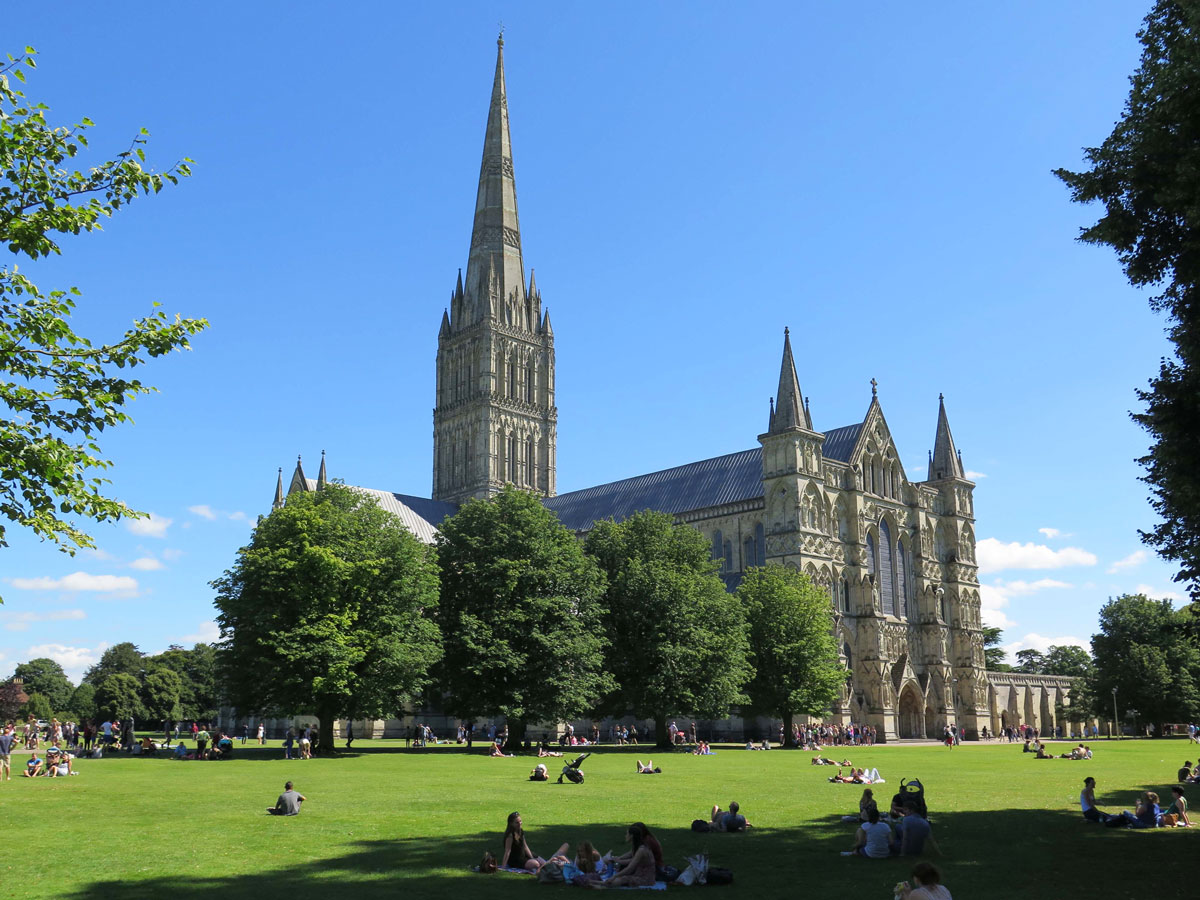
My favourite travel writer, Bill Bryson, said in his book ‘Notes from a Small Island’, that “There is no doubt in my mind that Salisbury Cathedral is the single most beautiful structure in England and the Close around it the most beautiful space”, and who am I to argue with Bill Bryson? It’s only his opinion of course, but I’m sure there are plenty of people who would agree with him.

If you’ve been to Old Sarum, you would have seen the Iron Age Hillfort where William the Conqueror built a castle, and successive Bishops built the first Salisbury Cathedral, but conditions were less than ideal for the clergy who lived here. It was windswept and cramped, and they didn’t get on too well with their neighbours in the castle either, and so early in the 13th century they decided to relocate down to the valley below.

Continue reading

Originally posted 2018-03-08 13:09:21.

Wandering Around Inside the Old City Walls

Wandering Around Inside the Old City Walls

If the title of this post gives anyone the impression that wandering around Old Bristol is similar to wandering around York or Chester then I apologise straight away. For a start, apart from one notable exception, there are no parts of the old city wall left, and don’t expect to come here and tick off a list of medieval buildings either.

That said, just because the city’s core isn’t set in aspic, it doesn’t mean to say that centuries of history hasn’t left anything of interest behind.

My previous post, From Brycgstowe to Bristol, explained how the Anglo-Saxon settlement became a Norman town and trading port. The diversion of the River Frome in the 13th century helped the port expand, and for the town to do the same it meant tearing down the city walls.

The other major event to change Bristol’s layout was the Second World War when air raids did enormous damage. As far as the Old City was concerned, virtually everything in the south-eastern quarter was destroyed. Apart from the remains of two churches – St. Mary-le-Port and St. Stephens – nothing else survived.

The western side though escaped the worst of the Blitz and it’s mainly this part of the Old City that I’m going to take you around in this virtual tour.

Continue reading

Originally posted 2019-09-05 13:00:06.

St. Michael’s Mount

St. Michael's Mount

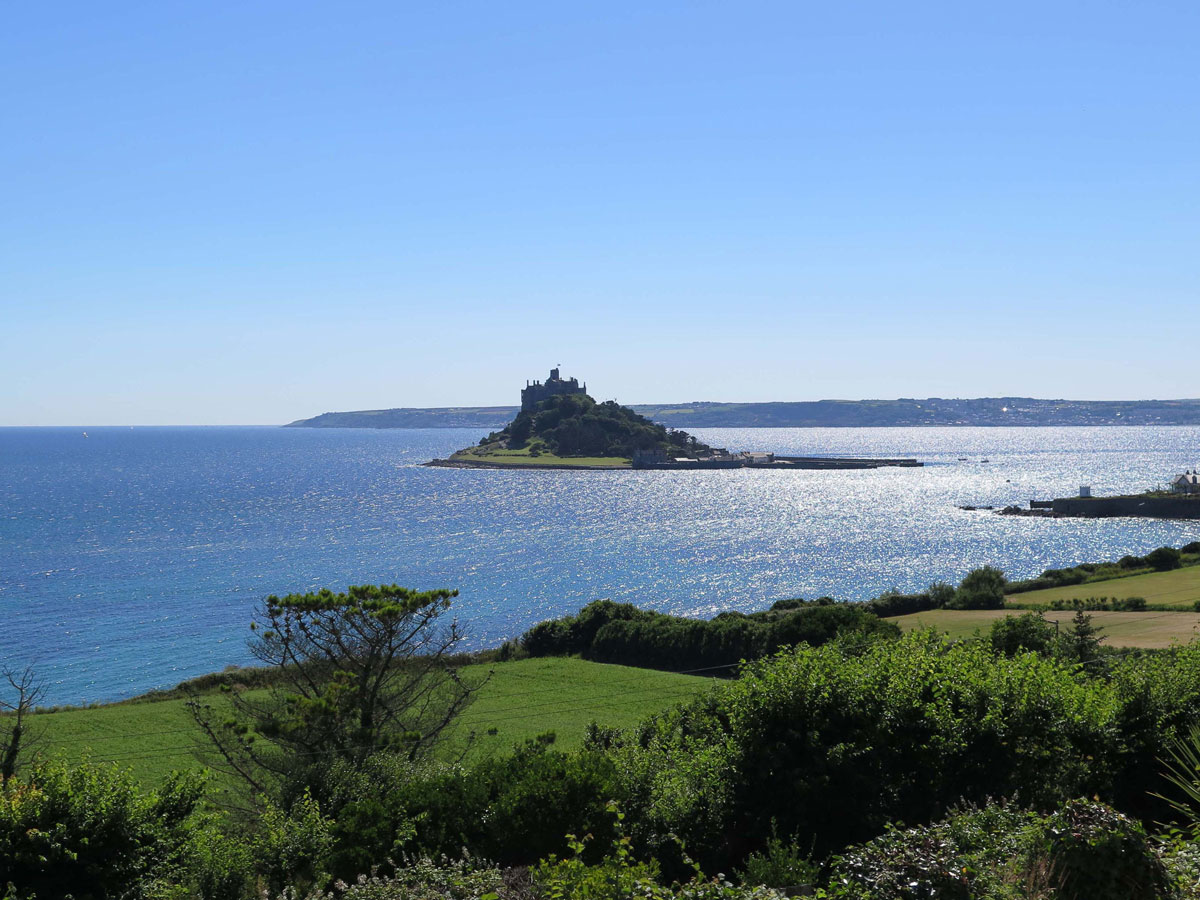
I’ve got a painting at home of St. Michael’s Mount under a moonlit sky, and to me it represents a classic Cornish seascape. I can almost hear the monks at prayer in their monastery and the sound of waves gently lapping the shore, but I can also imagine the Spaniards attacking the coastline and the smugglers offloading their barrels of brandy.

This painting was conceived from the artist’s imagination of course, but if you can be here when all the other visitors have gone, then it’s still possible to get a feel for the centuries of history that lie behind this evocative Cornish landmark.

Being Cornwall, it’s inevitable that this small rocky island half a mile offshore from Marazion, has attracted its fair share of myths and legends: Tales of seafarers being lured onto the rocks by mermaids were followed in the 5th century by an apparition of the Archangel Michael by local fishermen.

St. Michael (who is regarded as a protector from evil) is, amongst other things, the patron saint of fishermen, and his ‘appearance’ was seen as a vision to help keep the fishermen safe from harm.

Continue reading

Originally posted 2020-02-09 06:34:48.

The Cotehele Garland

The Cotehele Garland


The tradition of making a garland for the Tudor Hall at Cotehele House only started in the 1950s, but has since become a firm annual favourite at Christmastime.

People come from miles around to see this 18 metre (60 foot) long decoration that starts its life in the Cut Flower Garden at Cotehele. The seeds are sown in February, the flowers cut in the summer, and then hung in the potting shed to dry until the Autumn.

The aim is to get around 30,000 stems, but it will depend on the conditions which can vary from year to year.

In early November a 12mm diameter rope is laid out on the floor where bunches of evergreen pittosporum are attached and then hoisted up to the ceiling where it is hung in swags.
The flowers are then cut, sorted, and placed individually amongst the evergreen.

Apparently, the process from planting the seeds to the last flower being attached involves staff and volunteers working an equivalent number of hours to one full time employee a year.

The garland is usually on display from around the middle of November until the 12th night (Jan 6th), except Christmas Day and Boxing Day.

Continue reading

Originally posted 2017-11-19 05:49:09.

St Germans and a Maverick Earl

St. Germans and a Maverick Earl

Tucked away in the lovely countryside of South-East Cornwall between Saltash and Looe is the village of St. Germans.

Its small quayside sits under the shadow of a railway viaduct that crosses the River Tiddy near to where it joins the River Lynher. At one time the quayside used to handle minerals, coal, limestone and timber, but the working boats have long gone and now all you’ll see are a few boats used by the local sailing club. It’s a peaceful place to sit for a while doing nothing in particular, but there’s a bit more to the village than just a pleasant location.

Continue reading

Originally posted 2019-05-25 05:43:19.

Seeking Out Old Exeter

Seeking Out Old Exeter

The Baedeker Blitz had a devastating effect on Exeter, especially around the city centre, but there are still some interesting old nooks and crannies that are worth seeking out. I’d rather not call this a trail because in my mind a trail sounds like a picturesque ramble somewhere, but that would be misleading because this isn’t really a picturesque route at all. It just joins up places that are spread around a bit.

To keep things simple, I’m starting off in the city centre at the crossroads where High Street, Fore Street, North Street and South Street meet, and to reach Stepcote Hill, our first point of interest, we need to walk down Fore Street and take the first left into Market Street: Then, take the first right into Smythen Street and continue on down past the Fat Pig and cross over King Street into Stepcote Hill.

It may not be quite so obvious these days, but in Roman times Stepcote Hill was the main route between the city and the river. The worn steps either side of the cobbled street would suggest that this is where the hill got its name from, but in actual fact Stepcote means ‘steep enclosure’.

The first occupants would have been well respected merchants, but by Victorian times the area had gained a reputation for squalid living conditions and low life expectancy. The 1920s saw the slums cleared away, but there are still a couple of timber-framed survivors dating from around 1500 at the bottom of the hill opposite St. Mary Steps Church, and also a building known as the House that Moved.

Continue reading

Originally posted 2018-12-22 22:17:45.

Exeter Quayside

Exeter Quayside

The Roman and medieval city of Exeter grew up on a hill overlooking the River Exe, which means that the river runs below the city rather than through it. This also means that it requires an inconvenient 15-minute walk downhill from the city centre (unless you follow the nicer walk alongside the City Wall), or an even more inconvenient bus service to get here. That said, get here you must, because it’s one of the most enjoyable parts of the city.

A Celtic tribe called the Dumnonii were the first people to settle here, and although there doesn’t appear to be any hard evidence, it seems likely that they were trading at the Quayside before the Romans arrived. You might have expected the Romans to be trading here themselves, and although they probably did, their main port was at Topsham, some 4 miles downstream.

Even so, by the Middle Ages, trade was flourishing on the Quayside – or at least it was until Countess Isabella de Fortibus built a weir across the river above Topsham to run her mills. To bypass the problem a canal was built from the opposite side of the river down to a point just below Topsham. Exeter’s influence was restored, and by the mid-18th century trade reached its peak when woollen cloth became the chief export. This cloth was stored in warehouses along with imported olive oil, wine and salt cod.

Continue reading

Originally posted 2018-11-24 21:38:36.

Cathedral Green

Cathedral Green


The area around the Cathedral has been at the heart of Exeter ever since Roman times, and although German bombers tried their level best to destroy the core of this historic city during World War II, Cathedral Green managed to retain much of its charm – or at least it did until a devastating fire destroyed the famous Royal Clarence Hotel in October 2016.

Built in 1769, the Royal Clarence, which stands (stood) opposite the cathedral in Cathedral Yard, was reputed to be England’s first hotel and attracted many famous guests over the years from Lord Nelson to Thomas Hardy and Clark Gable. Franz Liszt, the famous Hungarian pianist and composer, gave two recitals here in 1840, an event that was commemorated by a blue plaque erected by the Exeter Civic Society. Between 2000 and 2015 the hotel was co-owned by Andrew Brownsword and the celebrity chef Michael Caines.

Continue reading

Originally posted 2021-09-19 08:47:06.

Lydford

Lydford

Lydford is a small village of around 500 people situated right on the western edge of Dartmoor National Park between Tavistock and Okehampton.

It may be small, but it’s a place worth seeking out if you find yourself in this part of the world. It has an interesting history and some lovely scenery nearby, and I’ve never understood why so few people come here.

Along with Barnstaple, Exeter and Halwell in South Devon, Lydford was one of the four principle Devon burghs that Alfred the Great created to defend his kingdom of Wessex against the Danes, and it was from this period that the town became an important coin minting centre.

Silver was the metal of preference for coins at the time and Lydford was fortunate in having a rich supply of the stuff nearby. The mines provided the silver and the ‘Moneyers’ made the coins. These silver coins were known as ‘Lydford Pennies’ and an estimated one and a half million of them were produced: A few of these have found their way into the Castle Inn, but if you happen to come from Scandinavia I wouldn’t mention the fact because most of these coins were whisked away by the Vikings during a late 10th century raid, and you have a far better chance of seeing some in Stockholm than you do in England.

Continue reading

Originally posted 2019-03-25 09:52:57.