Category Archives: Westminster

Piccadilly Circus

Piccadilly Circus


“It’s like Piccadilly Circus round here” is a phrase often used when somewhere is chaotically busy, just like the road junction was until the layout was changed in the 1980s.

Up until that point the famous Shaftesbury Memorial Fountain was the central point of the Circus (circle or roundabout) where Regent St, Piccadilly, Coventry St and Shaftesbury Avenue all converged. Not only was it traffic mayhem, it was also (and still is) a meeting point.

It’s also where London’s shopping and entertainment districts meet, and in my own mind, I think of Piccadilly Circus as the centre of the West End.

The Circus was built in 1819 to connect Piccadilly with John Nash’s Regent St, but when Shaftesbury Avenue was constructed in 1886 it lost its circular shape, and now that the Shaftesbury Memorial Fountain has been moved from its central position to improve traffic flow, it looks quite a bit different from its original creation.

The fountain, commemorating the Seventh Earl of Shaftesbury, was erected in 1893, and for years I was one of many who believed that the statue on top was that of Eros, the Greek God of Love, but in actual fact it’s his brother Anteros. If the sculptor, Sir Alfred Gilbert, had created the first Greek God, Chaos, on the top it might have been less confusing and more appropriate somehow.

Continue reading

Originally posted 2017-12-27 06:32:32.

The West End

The West End


“The West End” or “Up West” are phrases that are commonly heard around London, but there are no official geographical boundaries to determine exactly where it is, and so there will be many different interpretations as to what actually constitutes the area known as the West End – and this is mine.

Historically speaking, anywhere west of the City of London was the West End, but these days the area is somewhat more defined. Wikipedia suggests that it covers an area from Temple, Holborn and Bloomsbury in the east, Regent’s Park to the north, Paddington, Hyde Park and Knightsbridge to the west and Victoria and Westminster to the south.

From a visitor’s point of view though I would argue that the area is even more compact than that. I would include the entertainment areas of Covent Garden, Leicester Square, Chinatown and Soho, the shopping areas around Oxford St, Regent St and Bond St and also the focal points of Piccadilly Circus and Trafalgar Square – in other words the favourite spots for eating, drinking, shopping, and going to the theatre or cinema.

This list of course is subjective, but hopefully will give first time visitors to London an idea on what the West End is all about, and if there are any Londoners out there (or anyone else for that matter) who would like to add to the debate on what the West End means to them then please feel free to add your comments. I look forward to reading them.

Continue reading

Originally posted 2017-12-26 06:10:30.

Edith Cavell Memorial

Edith Cavell Memorial


I doubt that it was intentional, but the location of the Memorial to Edith Cavell seems appropriate somehow, standing just yards away from St Martin-in-the-Fields. At the same time as Dick Sheppard was keeping the doors open for troops returning from the WWI battlefields, Nurse Edith Cavell was helping Allied troops escape from occupied Belgium.

One of the most celebrated female figures of the war, Edith Cavell was born on 4th Dec 1865 in Swardeston, a small village near Norwich in Norfolk.
At the age of 20 she started her nursing career at The London Hospital (now the Royal London Hospital) and then went on to become assistant matron at the Shoreditch Infirmary.
In 1907 she moved to Belgium where she became matron of the Berkendael Institute in Brussels.

Continue reading

Originally posted 2017-12-25 06:02:16.

St Martin-in-the-Fields

St Martin-in-the-Fields


A visit to the church of St Martin-in-the-Fields will be especially rewarding for people with a social conscience.

Centrally located next to Trafalgar Square, records show that there was a church ‘in the fields’ between Westminster and the City of London from Norman times, but the present structure was built by James Gibbs and completed in 1726.

Although the design wasn’t universally popular at the time, it wasn’t long before copies were being made around the English speaking world, particularly in the United States.
The interior is also interesting, from both a modern and historic perspective. The restored Baroque ceiling is extremely impressive as is the fabulous organ that was built as recently as 1990, but probably the most eye catching feature is the East Window. Installed in 2008, the abstract cross was designed by Shirazeh Houshiary and her husband Pip Horne. From a modern point of view I think this window is quite outstanding in its simplicity.

Continue reading

Originally posted 2017-12-24 15:44:25.

The National Portrait Gallery

The National Portrait Gallery


I read somewhere that London has somewhere in the region of 1,500 permanent art galleries, and I wouldn’t have a clue as to whether that’s a true number or not, but however many it is, it’s definitely a large number.
Some are big and some are small, some are good, and some no doubt are not so good, but art is very often a matter of personal choice. The problem for visitors who don’t know their Constable from their Hockney is where to go to see the best examples of what London has to offer.

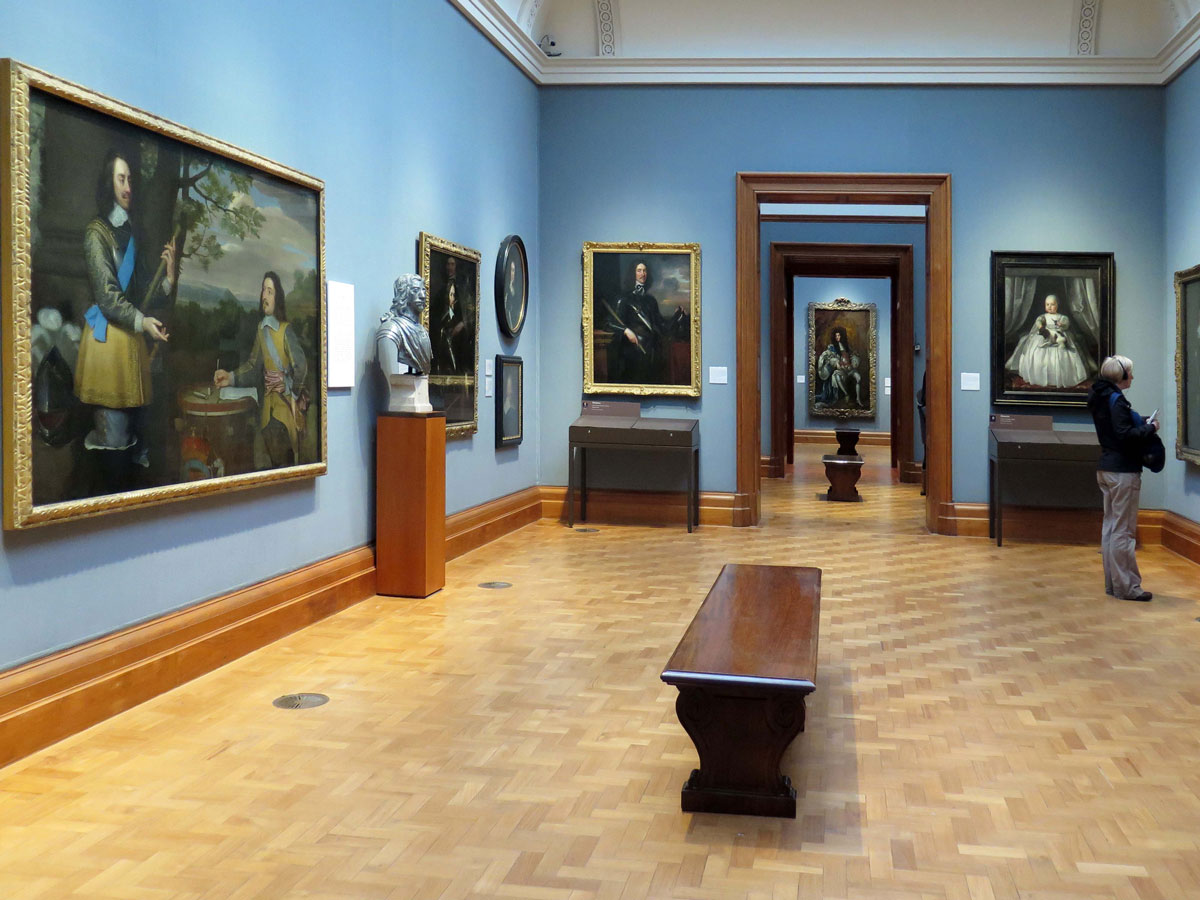
One of the most well known, and deservedly so in my opinion, is the National Gallery in Trafalgar Square, and next door just around the corner in St. Martin’s Place is the National Portrait Gallery (NPG).

Whereas the National Gallery’s name is a bit confusing because it includes works of art from all over Europe, the National Portrait Gallery’s collection is of “the most eminent persons in British History”.
That statement seems to sum up the NPG for me. The paintings are more about the subjects rather than the artists. There are some great subjects, but that doesn’t necessarily make them great works of art. Now, I have to admit that I can’t even paint an outside wall, and the only thing I’ve ever been able to draw is a pint, so what do I know really?

Continue reading

Originally posted 2017-12-24 12:53:05.

The National Gallery

The National Gallery


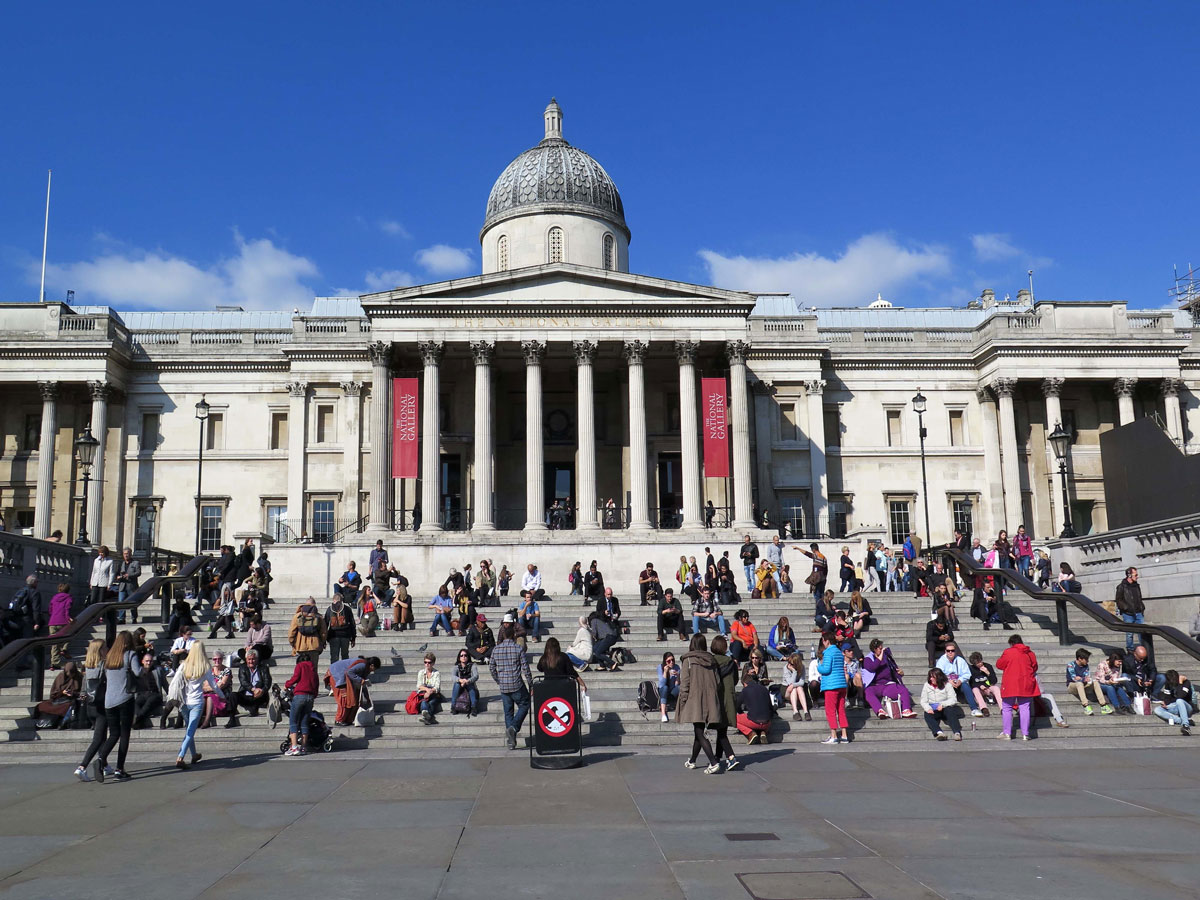
Looking at works of art is very subjective, and so it’s probably a good idea to have an understanding on what type of art is on display at the National Gallery and where you can find what you’re looking for.

Overlooking Trafalgar Square, the National Gallery has over 2,300 paintings that belong to UK citizens and consequently is free to go in. You can either walk up the steps and enter through the portico, or better still take the Getty entrance on the right, where, not only is there a lift for people who need it, but also other facilities such as cloakroom, toilets, coffee bar, café, restaurant, shop, and information point.

The lift will whisk you up to Level 2 where practically all the paintings are located. The layout is arranged in a total of four wings – the Sainsbury Wing (13th-15th century), the West Wing (16th century), the North Wing (17th century) and the East Wing (18th to early 20th century). The Sainsbury Wing is a modern extension added in 1991. In some ways this makes it slightly more confusing because although it houses the earliest paintings, the rooms are numbered the highest (from 51 to 66). Other than that all the other wings run in chronological order.

Given that the name is The National Gallery, you might think that it just houses British works of art, but in actual fact it exhibits the country’s collection of Western European paintings including Renaissance, Baroque and Impressionism. (For the National Gallery of British Art you need to go to Tate Britain on Millbank).

Continue reading

Originally posted 2017-12-24 09:44:50.

Trafalgar Square

Trafalgar Square


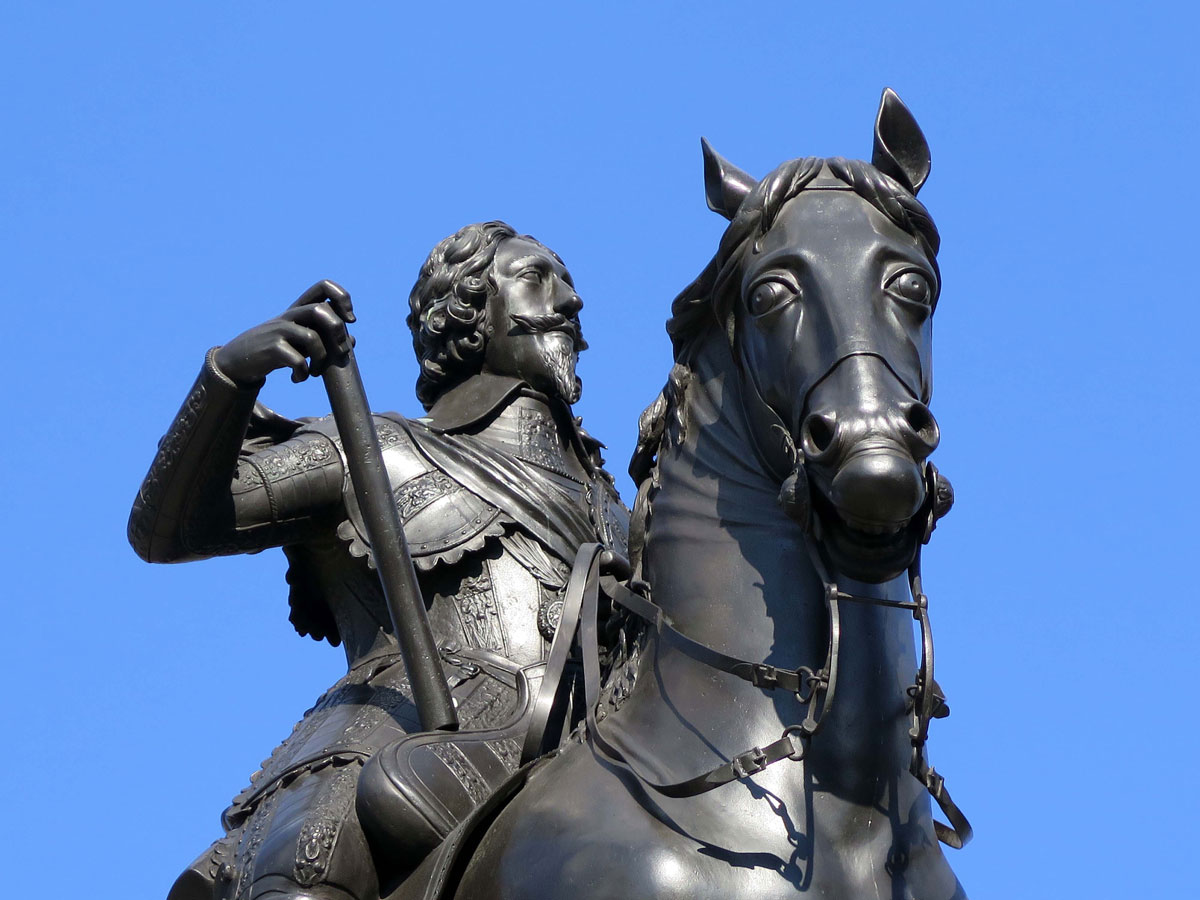
London’s foremost meeting point for social and political gatherings, Trafalgar Square takes its name from Horatio Nelson’s famous victory over Napoleon’s French and Spanish fleets at Cape Trafalgar in 1805. The battle cost Nelson his life and he’s remembered here with a 170ft column, at the base of which are four lions cast out of his enemy’s bronze cannons.

What started out as mews for the horses of Whitehall Palace, the area now occupied by the square was transformed in the early 18th century by the architect John Nash. It’s had several makeovers since, the latest being in 2003. The road between the National Gallery/National Portrait Gallery and the square was removed and replaced with a terrace making the whole thing much more pedestrian friendly.

Continue reading

Originally posted 2017-12-23 09:12:57.

Charing Cross

Charing Cross


I wouldn’t mind betting that the majority of visitors who walk up Whitehall are so focused on getting across the road to Trafalgar Square that they are completely oblivious to the fact that they are walking across the point that is regarded as the exact centre of London. It could be argued that it’s not the exact centre but it’s the point from which all distances to, and from, the capital are measured, and there’s a plaque in the floor to mark the spot.

I used to think that Charing Cross got its name from being at the intersection of Whitehall, The Mall, Cockspur St and The Strand, but it doesn’t. In actual fact the name originates from the Eleanor Cross that was erected here after Eleanor of Castile’s death in 1290. Eleanor was the wife of King Edward I who died on her way to Lincoln. Edward arranged a state funeral, and her journey back to Westminster involved twelve overnight stops, the final one being at the hamlet of Charing. A cross was erected at each of the stops.

Continue reading

Originally posted 2017-12-22 10:42:24.

Horse Guards and Horse Guards Parade

Horse Guards and Horse Guards Parade


I tend to regard the southern part of Whitehall as the political end, and the northern part as the military end. I’m not sure if it was meant to be that way, but that’s the way I see it.

From a tourist’s perspective the one thing that shouldn’t be overlooked at the northern end is Horse Guards and its Parade Ground. As you walk up Whitehall past Downing St and the Scotland Office you can’t fail to notice the handsome looking Horse Guards Building with two mounted troopers of the Household Cavalry symbolically protecting the entrance to Horse Guards Parade. This used to be the formal entrance to St. James’s Palace via St. James’s Park and only the monarch is usually allowed to drive through the central archway.

Continue reading

Originally posted 2017-12-20 11:30:48.

The Banqueting House

The Banqueting House


There are so many tourist attractions in Westminster that it’s inevitable that some worthy places to visit often get overlooked, and I reckon that the Banqueting House is one of them.

I’ve read that some people are somewhat underwhelmed when they come here, which is a bit of a shame really because there’s more substance to it than many people realise. I think it’s better to regard it as a Banqueting Hall rather than a house, because it’s just basically one room – but what a room!

Situated opposite The Horse Guards in Whitehall, the Banqueting House is the only complete part of the Palace of Whitehall to survive the devastating fire of 1698.

From 1530 until the fire, the palace was the home of the monarchy, and with more than 1,500 rooms, was also the largest palace in Europe, larger even than The Vatican and Versailles.
It was designed by Inigo Jones in 1622 for King James I in a style that Londoners had never seen before. Built in the classical style, the highlight without any shadow of doubt is the fantastic ceiling painted by Peter Paul Rubens, and the seating arrangements around the room enable visitors to gain the maximum amount of vision to see and understand the paintings.

Continue reading

Originally posted 2017-12-20 05:49:37.

The Churchill War Rooms

The Churchill War Rooms


Not as conspicuous as the nearby Houses of Parliament or Westminster Abbey, Churchill’s War Rooms is a must see for anyone interested in where Britain’s top brass and politicians directed the Second World War from.

Even before the outbreak of war, it was decided that these decision makers wouldn’t abandon London and its people, and so the basement of the Office of Works building opposite St James’s Park, was adapted and strengthened to suit its new purpose.
Officially known as the ‘New Public Offices‘, but unofficially as just ‘George St’, the corridors of this subterranean nerve centre became a bunker, with a cabinet war room, private rooms for the prime minister and chiefs of staff, a map room where plans were worked out, and several other rooms that would help to facilitate the war effort.
From 27th August 1939 until the lights finally went out on 15th August 1945, a total of 115 cabinet meetings were held here.

At the end of the war the rooms were left just as they were, and in 1948 they were given the status of a historic site. In 1981, the incumbent Prime Minister, Margaret Thatcher, decreed that the public should have access to this historic site and the Imperial War Museum opened the doors to the Cabinet War Rooms in 1984. In 2005 the Churchill Museum was added.

Continue reading

Originally posted 2017-12-18 16:19:48.

The Foreign and Commonwealth Office (FCO)

The Foreign and Commonwealth Office


Don’t ask me why, but I’ve always been intrigued by what goes on in the ‘corridors of power‘.

What do those ‘Mandarins of Whitehall’ actually do?, and is our destiny really at the mercy of those men in grey suits?

A few years ago I was looking down on those bastions of government control from the London Eye and they looked even more mysterious somehow, so when the opportunity to visit the Foreign and Commonwealth Office (FCO) arose during London’s Open House Weekend, I was determined not to miss it.

Obviously I wasn’t the only person curious to see what it was like inside because there was a huge queue to get in, largely because of the security checks that were taking place due to recent terrorist activity in London and elsewhere.

Continue reading

Originally posted 2017-10-17 17:02:45.

Whitehall

Whitehall


The Houses of Parliament may be the most obvious landmark of British politics, but the real corridors of power are trudged by the grey mandarins of Whitehall. This is where the Treasury, Foreign Office, and the Cabinet Office, amongst others, make some of the country’s most important political decisions.

Sandwiched between these large buildings of Portland stone is Downing St where the Prime Minister resides at No.10 and the Chancellor next door at No.11. For security reasons there isn’t much to see because everything is well guarded by gates, barriers and armed police.

The Ministry of Defence has its offices here and some of the other buildings used to belong to The Admiralty and War Office. Even the Metropolitan Police had their original headquarters at the famous ‘Scotland Yard’.

Continue reading

Originally posted 2017-12-18 06:03:46.

Victoria Tower Gardens

Victoria Tower Gardens


London is blessed with so many well known parks and gardens that it’s easy to overlook some of the less obvious ones, even in the centre of the city.

In Westminster, next to the Houses of Parliament, are the Victoria Tower Gardens, and as the name suggests, are located at the Victoria Tower end of the building.

I think the word ‘gardens’ is a bit misleading because it has a large open grassy area more reminiscent of a park, but whatever you think this open space should be called, it’s a welcome respite from the area around Parliament Square with all its hustle and bustle.

The gardens were created during the 1870s, but not officially opened until 1914.

Apart from the fact that it has a great riverside location, there are some interesting monuments here as well.

Just inside the entrance gate is a statue of Emmeline Pankhurst, the suffragette leader. It was unveiled in 1930 and is a timely reminder that 2018 is the centenary of the ‘Representation of the People Act’ which granted votes to all women over the age of thirty and all men over the age of twenty one. (The difference in ages was supposed to ensure that men didn’t become minority voters after the huge loss of life during WWI).

Emmeline Pankhurst died on 14th June 1928, just weeks before the Representation of the People Act (1928) which also allowed women over the age of twenty one to vote.

Continue reading

Originally posted 2018-02-05 09:04:21.

The Supreme Court

The Supreme Court


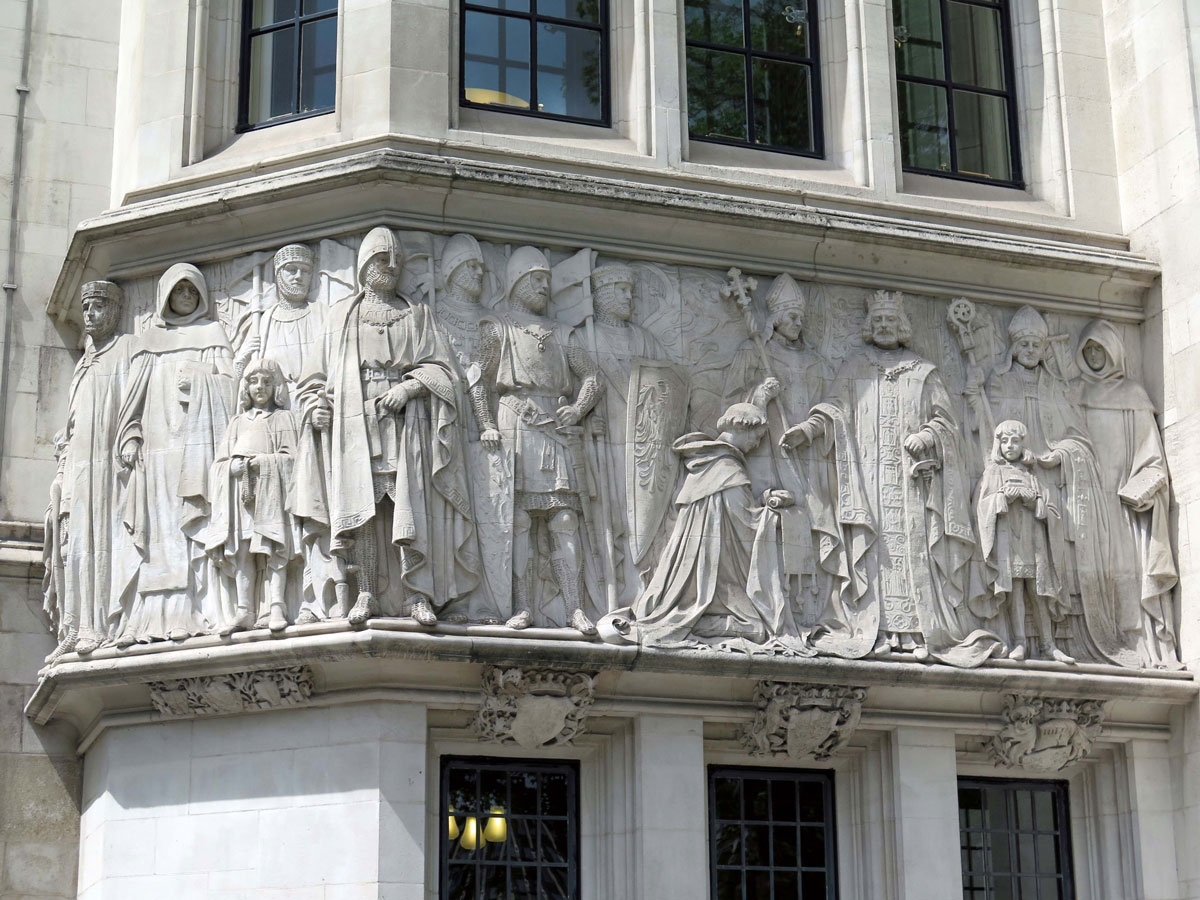
Being of an inquisitive disposition (some might prefer to call it nosey), I couldn’t resist the temptation to enter the doors of The Supreme Court in Parliament Square to see what goes on in there.

One of the good things about living in a free and democratic country is that any member of the public can enter a courtroom to witness the proceedings, and so after passing through security checks I made my way up to Court No 1 to listen to a case about which the highest court in the land was sitting in judgement.

The UK Supreme Court was only created in 2009 believe it or not. Before that a committee in the House of Lords was responsible for passing judgement.

Continue reading

Originally posted 2017-10-19 22:53:38.

Westminster Abbey – Pt 7 Poets, Parliament and a Church for the People

Westminster Abbey - Pt 7 Poets, Parliament and a Church for the People

I get the feeling that my previous post had too much information for some people, and so for this final chapter about Westminster Abbey I’ve cut down on the claptrap and increased the number of pictures. I hope this meets with everyone’s approval.

On leaving Henry VII’s Lady Chapel, head left down the South Ambulatory (which I covered in Part 5) towards the South Transept and Poets Corner. It’s one of the most popular places to visit in the abbey and the numbers are swelled by those who are looking to take the weight off their feet, especially as this is the first place seats are provided since leaving the nave.

There are over a hundred poets and authors buried or commemorated here and the size of the monument doesn’t always reflect on how famous they are, but none of the memorials are as large as those in the Statesmen’s Aisle in the North Transept opposite. It got me wondering though as to who decides whether a person warrants a burial or memorial in the abbey at all, and the answer is quite simple – the Dean. Incidentally, it’s rare for a recently deceased poet to be included in Poets’ Corner, as like anyone else, they can be flavour of the month one minute and the devil reincarnated the next.

The first poet to be buried here was Geoffrey Chaucer in 1400, not because he was the author of the Canterbury Tales, but because he was Clerk of the King’s Works in the Palace of Westminster across the road. His burial place was initially marked by a plain slab, and it wasn’t until 1556 that the present marble monument was erected in his memory.

Continue reading

Originally posted 2023-04-09 11:50:47.

Westminster Abbey – Pt 6 Henry VII’s Lady Chapel

Westminster Abbey - Pt 6 Henry VII's Lady Chapel

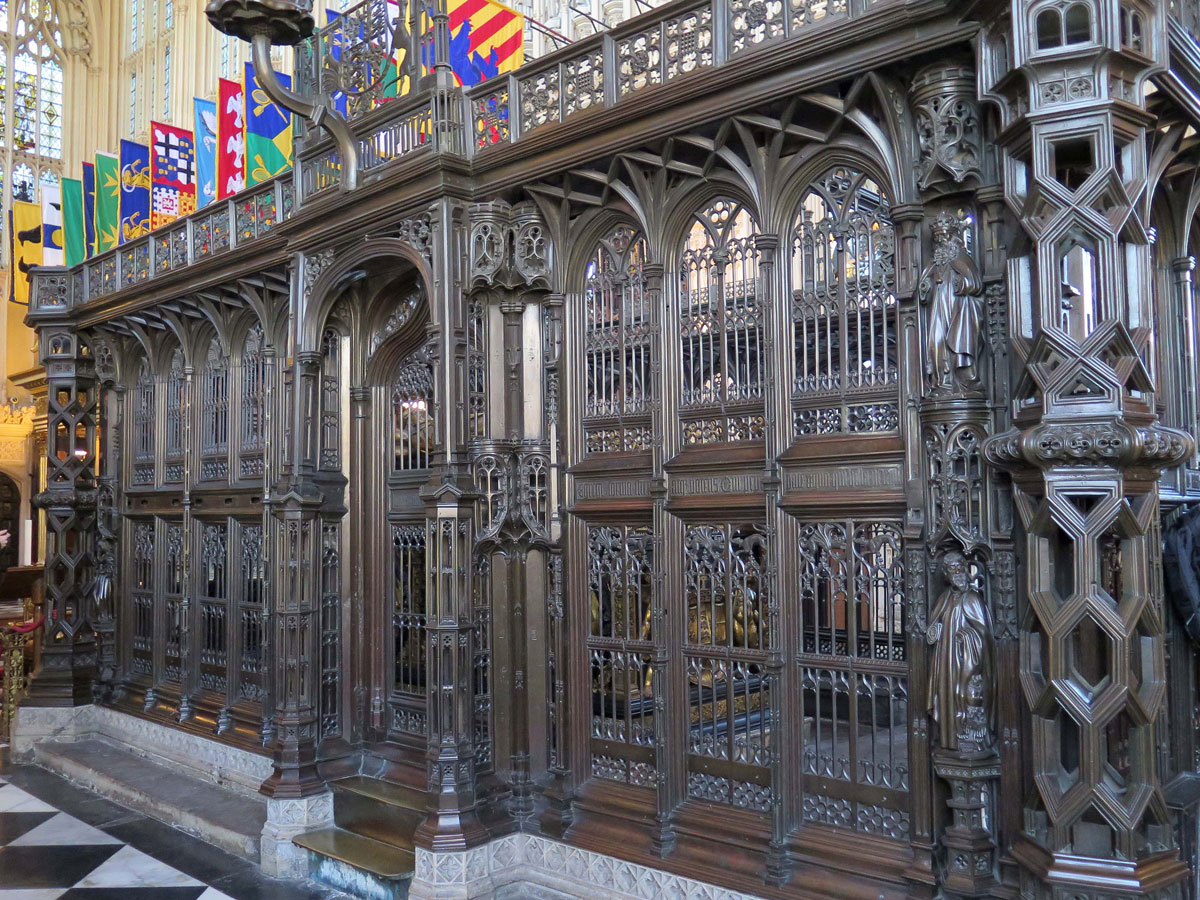
In previous posts we’ve seen how Westminster Abbey started off as a Saxon monastery, then rebuilt by Edward the Confessor in the Norman style, and finally transformed into a Gothic church by Henry III and his successors, but in my view, there was one other architectural development that surpassed them all – Henry VII’s Lady Chapel, and to do it justice, this will be one of my longer posts, so you might want to think of putting the kettle on first if you intend staying with it.

Before describing this breathtaking chapel in more detail, I think it’s worth explaining the reason why Henry VII wanted to pull down Henry III’s perfectly good chapel dedicated to the Blessed Virgin Mary in the first place. The simple answer is that he probably wanted to be buried in a chapel that nobody could forget, but there was a bit more to it than that.

If you remember, in Part 5 we saw how St Edward’s shrine was surrounded by the tombs of another five kings. Apart from Henry III who had the chapel built, we can also find the final resting places of Edward I, Edward III, Richard II and Henry V – all of whom were members of the Plantagenet dynasty. Altogether, there were a total of fourteen Plantagenet kings, including five Henrys (from Henry II to Henry VI), and if you’re still with me, you’ll notice that Henry VII wasn’t one of them, and that’s because he was to become the first Tudor monarch.

Continue reading

Originally posted 2023-04-02 15:40:05.

Westminster Abbey – Pt 5 St Edward’s Shrine and Medieval Tombs

Westminster Abbey - Pt 5 St Edward's Shrine and Medieval Tombs

Our  tour has now reached the most sacred part of the abbey – St Edward’s Shrine. His body lies in a chapel located behind the High Altar and circumnavigated by the North and South Ambulatories, but before I go any further I have to tell you that access isn’t freely available to the general public. The reason given is that the Cosmati studded shrine is very fragile, and whilst that is undoubtedly true, I suspect it’s also to do with the fact that the abbey would prefer the chapel to be treated with the utmost reverence. There are however, a few ways to gain admittance, and I’ll come to that in due course. Meanwhile, I’ll try and explain who St Edward was, why he was revered by Henry III, and what other tombs you can see here.

Edward was born in Islip, Oxfordshire sometime between 1002 and 1005. His parents were the Saxon king, Ethelred ‘the Unready’ and Emma of Normandy, but his father’s altercations with the Danes ultimately led to the House of Wessex losing control of England to the Vikings, and most of Edward’s early life was spent in Normandy.

While in exile, Edward developed a love for the simple life, and although there would have been doubts as to whether he would get to inherit his father’s kingdom, he pledged to make a pilgrimage to Rome if ever he was. In 1042 the opportunity came when his half-brother King Harthacnut died, and Edward’s claim to be the rightful successor gained general acceptance. He was crowned King of England in Winchester Cathedral on 3rd April 1043.

Continue reading

Originally posted 2023-03-20 15:25:48.

Westminster Abbey – Pt 4 The Coronation Church

Westminster Abbey - Pt 4 The Coronation Church

Westminster Abbey is known as the Coronation Church, and on 6th May, King Charles III will become the 40th monarch to be crowned here, and at the age of 74, he will also be the oldest. Along with his wife and consort, Queen Camilla, the Gold State Coach will bring the couple from Buckingham Palace to the abbey in what is known as the ‘King’s Procession’.

There won’t be that many people who saw the last coronation, and although this one is bound to include a certain amount of pageantry, there will be some differences. Preparations would have undoubtedly been finalised, but the arrangements and timing have yet to be officially announced, but it seems likely that the ceremony will reflect a mixture of traditional and modern Britain.

I expect the royal couple to enter the abbey through the West Door where the procession will continue up the nave towards the quire screen. An anthem written by Andrew Lloyd Webber is one of twelve new pieces of music commissioned by King Charles for the occasion, and it remains to be seen whether it will have the same impact as Handel’s Zadok the Priest which was written for the coronation of  King George II, Elgar’s Pomp and Circumstance (for Edward VII) or William Walton’s Crown Imperial (George VI).

Continue reading

Originally posted 2023-03-14 14:54:04.

Westminster Abbey – Pt 3 The Nave

Westminster Abbey - Pt 3 The Nave

Visiting Westminster Abbey to see the grand architecture and explore its history is one thing, but getting a spiritual experience from it is another. If you want the full spiritual experience, there’s no substitute for going to a service whether you’re religious or not, but that’s a different thing to wandering around and taking personal photographs, and as soon as you walk into the Nave you’ll see what I mean.

Standing next to the Grave of the Unknown Warrior looking up towards the Quire Screen is one of the abbey’s classic views: Inevitably though, the occasion will be somewhat let down by large numbers of people wanting to do the same thing as you, but as you can see from the featured image above, it is possible to have a much better experience if you know what to do, and you don’t have to be a magician or need special permission to achieve it. The answer is much simpler than that: Just make sure that you’re one of the last people to leave!

Continue reading

Originally posted 2023-03-10 14:52:31.