Tag Archives: Architecture

A Tour of Gloucester Cathedral in Pictures

A Tour of Gloucester Cathedral in Pictures

Mention Gloucester Cathedral to anyone and they often think of it as the final resting place of Edward II who was murdered in Berkeley Castle, but there are other reasons to come here, and in this post I’d like to show you what they are.

There has been a House of God on or near this spot since the 7th century when King Osric founded an abbey dedicated to St Peter, but after a major fire in 1088, the present abbey was established by Abbot Serlo. The Dissolution of the Monasteries by Henry VIII (1536-41) saw Gloucester Abbey become a Cathedral, but instead of rambling on about the rest of its history, I’m going to take you on a tour of the Cathedral with a brief explanation of what there is to see along the way.

Looking at the Cathedral from the outside, the Gothic appearance belies its Norman Nave, and that’s because a fire in 1222 damaged the roof, prompting a rebuilding programme that included the Central Tower. The picture gallery below shows the cathedral from the south and includes captions explaining the time-line of the building’s construction.

Continue reading

Originally posted 2023-05-29 16:02:20.
The Haunch of Venison

The Haunch of Venison

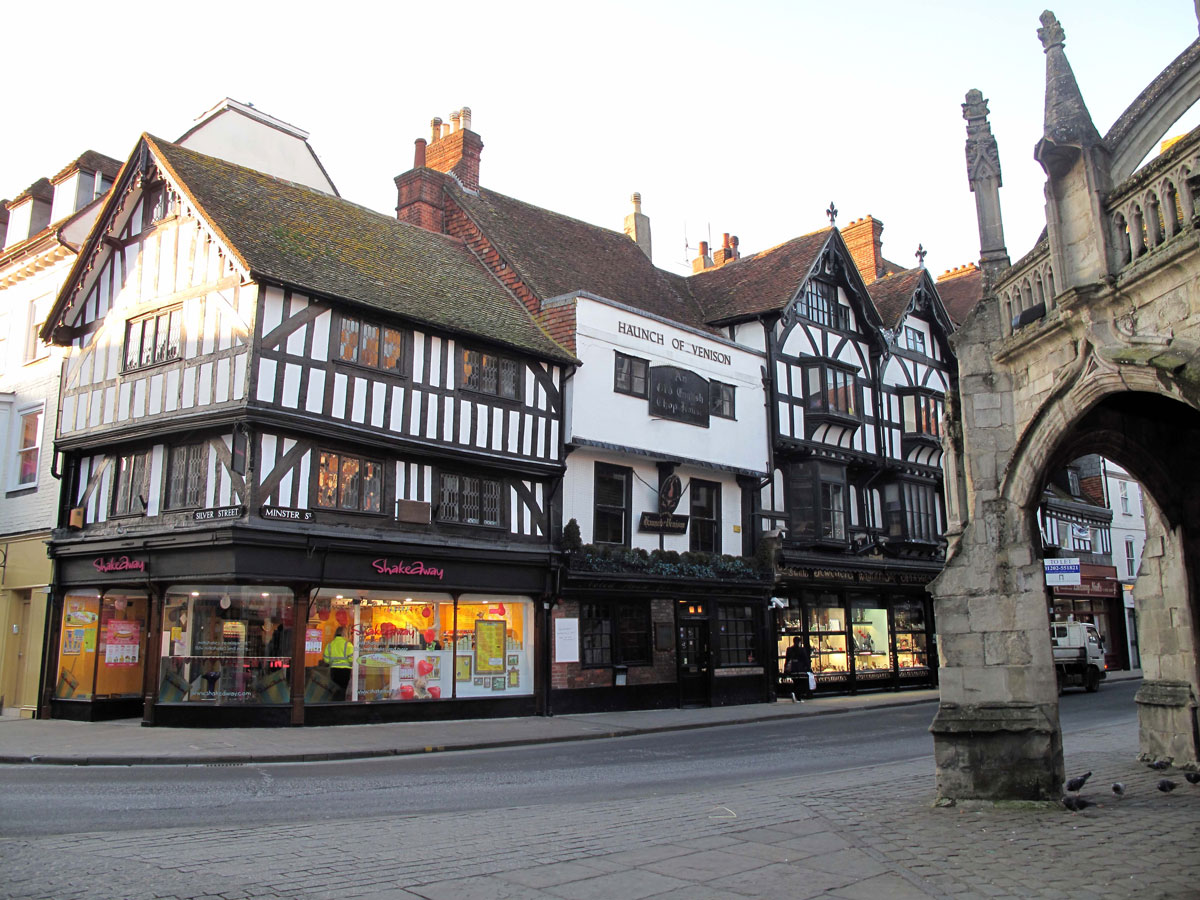
The Haunch of Venison is reputed to be 700 years old, and without doubt the most well-known pub in Salisbury.

In my experience pubs that have this sort of reputation can often be a let-down, but not this one.

The minute I walked in here I knew I was going to like it. It’s got all the credentials for being a great historical pub, with old oak beams, wood panelled walls, a good-looking bar – and most of all a friendly welcome.


Continue reading

Originally posted 2018-07-25 17:09:32.

A Wander around Salisbury City Centre

A Wander around Salisbury City Centre

There’s no denying that the Cathedral and its Close are the main attractions in Salisbury, but the small city centre is worth exploring in its own right, and so I’ve devised this short walk with the aim of helping visitors get acquainted with what else there is to see.

For the most part, the points of interest on this walk are places that can be taken in without spending too much time on them, but it will obviously depend on the individual’s personal interests. To give you some idea on how long it will take, it could probably take somebody who was on a mission no more than 45 minutes, but I recommend at least double that.

The walk starts from the Guildhall in Market Square, but before starting off take a look along the row of buildings next to it. If you look up on the wall above Reeve the Baker you’ll see that this is known as Ox Row. Formerly known as Pot Row, this was one of many rows of stalls that originated in the Middle Ages and which later became more substantial permanent fixtures. Other names around here included Cordwainer Row, Ironmonger Row and Wheeler Row.

Between the Guildhall and Reeve the Baker there’s a small passageway which, if you can tear yourself away from the pies, pasties and cakes in the shop window, will bring you out into Fish Row with the Tourist Information Centre (TIC) on the left. If you want any information on Salisbury and the surrounding area this is the best place to get it.

Continue reading

Originally posted 2018-04-15 16:55:36.

Arundells

Arundells

On the West Walk of Salisbury’s Cathedral Close is the former home of British Prime Minister Sir Edward Heath.

The house is open to the public, and although its history goes back long before ‘Ted’ Heath moved here in 1985, there’s only really one reason that people come here to visit, and that’s to see where Sir Edward Heath KG MBE spent some of the happiest moments of his life.

From a fairly ordinary background, Ted managed to make himself an extraordinary life. He worked his way through university into the corridors of power and eventually to leader of the Conservative party, a post he held from 1965 until 1975.

In 1970 he became Prime Minister and for the next four years struggled to contain the demands of the trade unions, curtail The Troubles in Northern Ireland, and the aspirations of Margaret Thatcher – although he did manage to take Britain into the European Economic Community in 1973.

He probably won’t be remembered as one of Britain’s greatest Prime Ministers, but he had many attributes, and even though my politics were different to his, I always thought of him as a warm and compassionate human being. Talking to the volunteers around the house I don’t think I was alone in thinking that.

Looking back, I think that maybe his political views weren’t conservative enough for his fellow party members, and not far enough to the left to embrace the working population.

Continue reading

Originally posted 2018-07-22 16:31:14.

The Close

The Close

In my Salisbury Cathedral Pt 2 review I gave James Wyatt a bit of a rough time for his so-called improvements to the church, but I’m going to give ’Wrecker’ Wyatt a bit of credit here for a change.

Between 1789 and 1792 he embarked on his mission to improve the Cathedral and its surroundings including the churchyard which was situated in an area of swampy marshland. He removed the tombstones, drained the swamp, and created a landscape fit for a Cathedral.

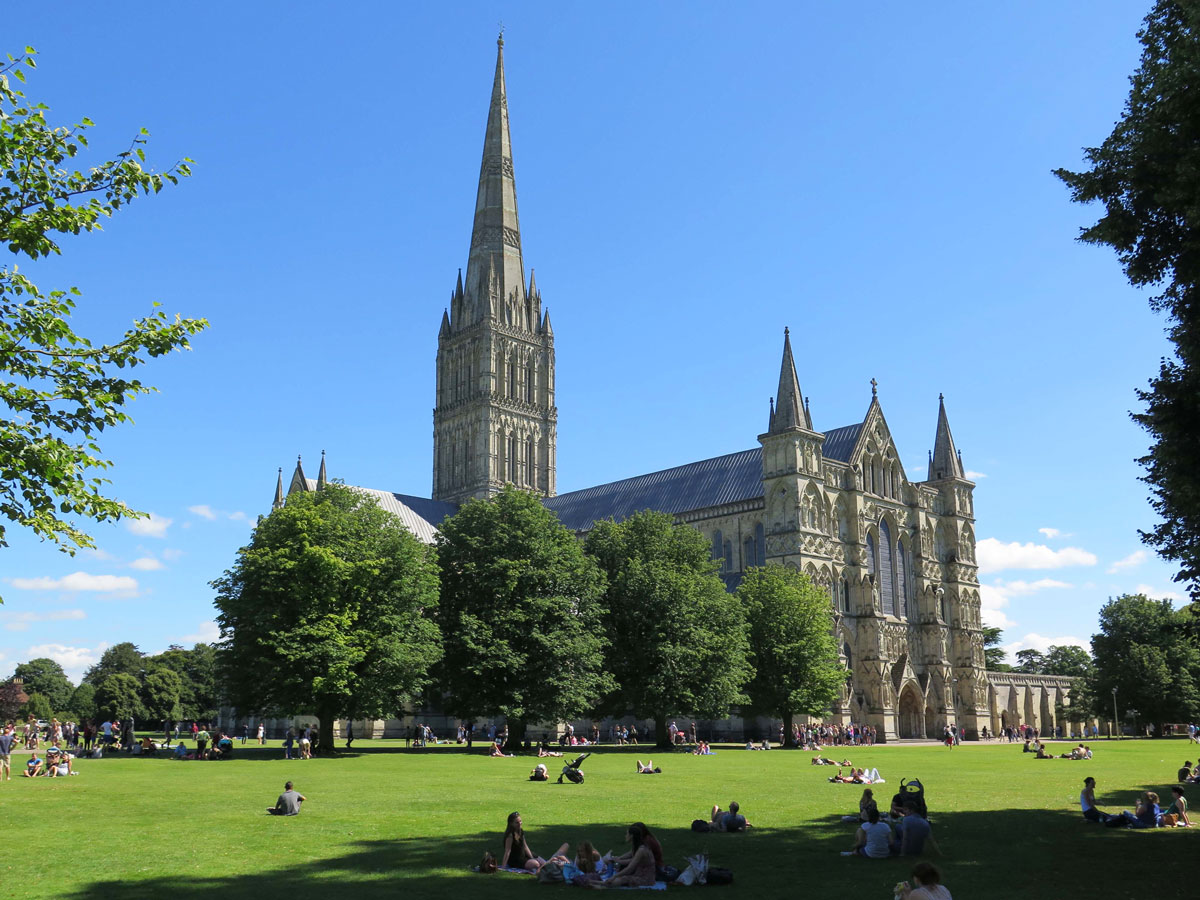
It now stands in the centre of a large enclosed Green known as ‘The Close’, which is entered by one of three gates – the North Gate, St. Ann’s Gate, and Harnham Gate. Inside these gates is an oasis of peace and tranquillity no matter how many people come to visit the Cathedral. This is the largest Close in England with plenty of room for everyone and the buildings surrounding it are an absolute architectural delight. They’ve evolved over the centuries into a harmonious composition of different styles.

Continue reading

Originally posted 2018-04-01 06:08:31.

Salisbury Cathedral Pt 3 – The Highlights

Salisbury Cathedral Pt 3 - The Highlights


In Salisbury Cathedral Pt 2 I described the different parts of the church, and so for this final part I’m going to explain what there is to see inside – or at least some of the highlights.

Throughout the church there’s a good collection of tombs for anyone who’s interested in this sort of thing. The first person to be buried here was William Longespee Earl of Salisbury, illegitimate son of King Henry II, and half-brother of King John. He died in 1226 and next to his wooden tomb is a plaque stating that he was present at the laying of the foundation stones of the Cathedral in 1220.

The tomb of Bishop Giles de Bridport, who was at the consecration of the Cathedral in 1258 is considered to be one of the finest 13th cent tombs in Britain, but probably the most majestic is the Hertford tomb. The Earl of Hertford (1539-1621) was the nephew of Jane Seymour, Henry VIII’s third wife, and lying above him is the effigy of his wife Lady Catherine Grey, the sister of Lady Jane Grey who was Queen of England for 9 days in 1553.

I should also mention that former Prime Minister, Edward Heath, who lived at Arundells in The Close opposite the Cathedral was buried here in 2005 in a much simpler grave.

Continue reading

Originally posted 2018-03-09 10:39:52.

Salisbury Cathedral Pt 2 – The New Cathedral

Salisbury Cathedral Pt 2 - The New Cathedral


Having explained how the new Cathedral came about in Salisbury Cathedral Pt 1, I’d like to talk a bit more about the building itself.

To start with I don’t suppose any building that’s been around for almost 800 years would have been untouched in any way, and of course Salisbury Cathedral is no exception, but the good news is that this remarkable church is still essentially the same as when it was built.

There have been a few hiccups along the way mind you including the removal of many of the stained-glass windows during the Reformation, and even some damage during the Civil War, but as was often the case, well-meaning restorers probably did the most amount of damage.

According to the official Salisbury Cathedral guidebook, the late 18th century saw James Wyatt clear the churchyard, demolish the Bell Tower, lime-wash the vaulting, cover medieval paintings, and remove even more medieval glass.

It wasn’t all bad news though. If you take a look at the West Front, you’ll find that there are 79 statues adorning the façade, and 72 of them have been added since the 19th century. George Gilbert Scott was responsible for most of them during his period of restoration between 1860 and 1876, and I reckon the West Front looks fantastic.

Continue reading

Originally posted 2018-03-08 16:19:56.

Salisbury Cathedral Pt 1 – New for Old

Salisbury Cathedral Pt 1 - New for Old


My favourite travel writer, Bill Bryson, said in his book ‘Notes from a Small Island’, that “There is no doubt in my mind that Salisbury Cathedral is the single most beautiful structure in England and the Close around it the most beautiful space”, and who am I to argue with Bill Bryson? It’s only his opinion of course, but I’m sure there are plenty of people who would agree with him.

If you’ve been to Old Sarum, you would have seen the Iron Age Hillfort where William the Conqueror built a castle, and successive Bishops built the first Salisbury Cathedral, but conditions were less than ideal for the clergy who lived here. It was windswept and cramped, and they didn’t get on too well with their neighbours in the castle either, and so early in the 13th century they decided to relocate down to the valley below.

Continue reading

Originally posted 2018-03-08 13:09:21.

Wells – Vicars’ Close and the Last Fighting Tommy

Wells - Vicars' Close and the Last Fighting Tommy

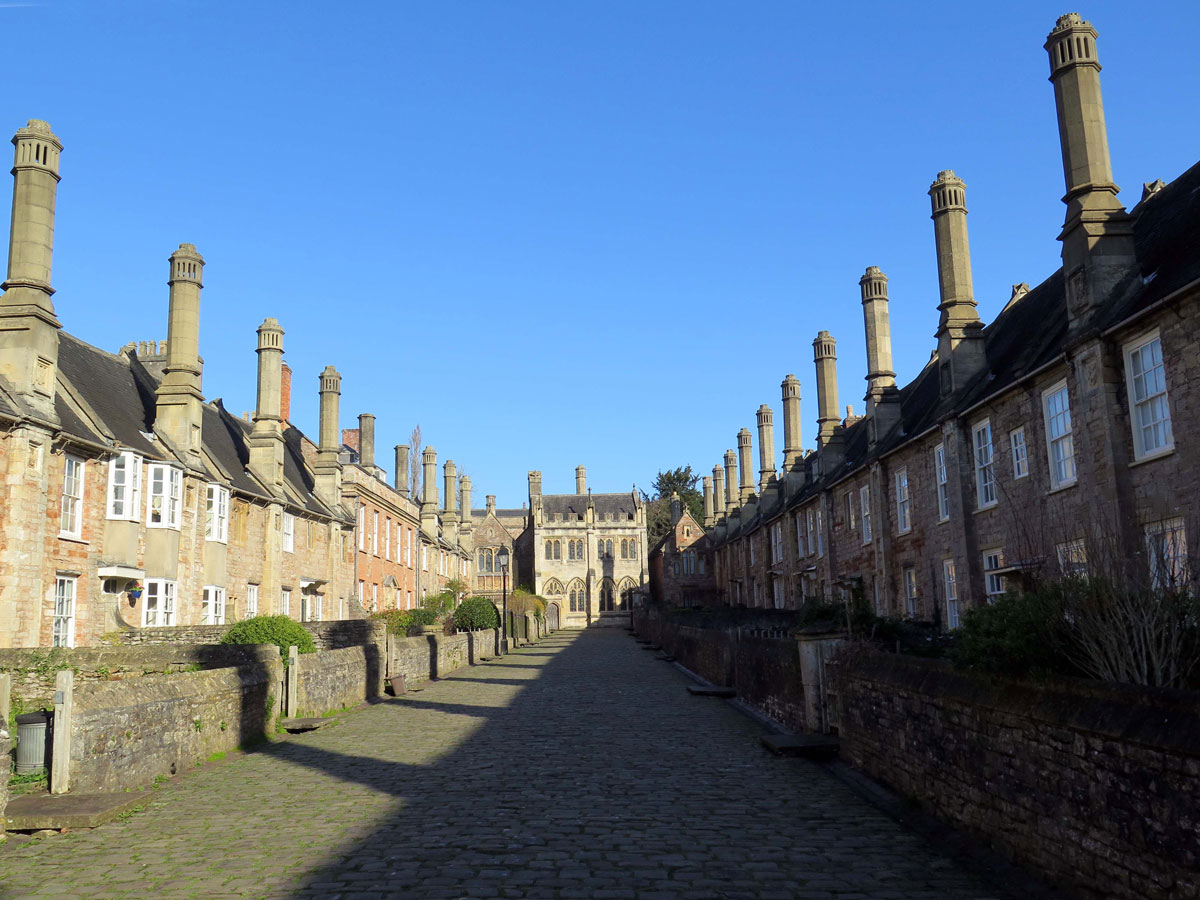
My final post on the city of Wells ends at Cathedral Green, and in particular, the famous Vicars’ Close. This isn’t going to be a lengthy post, but I’m not the sort of person who’ll condense something into a few words when a thousand will do, so what is a vicar exactly?

I think those of us who have been brought up in a country where Christianity is the main religion will regard a vicar much the same way as we do a priest, but the word in actual fact comes from the Latin Vicarius meaning substitute, and in medieval Wells a vicar was someone who deputized for the canons in providing music for the church while the cleric leaders were occupied with their other business.

Continue reading

Originally posted 2025-11-02 15:45:05.

Pirates, Slaves,and Riots

Pirates, Slaves, and Riots

No visit to Bristol would be complete without following in the footsteps of the merchants, explorers, and privateers who helped make the city one of England’s foremost ports.

Times have changed of course, and these days you won’t need to worry about bumping into press-gangs, one-legged sailors, or having a Black Spot thrust into the palm of your hand, so grab your treasure map and follow me around the riverside streets of old Bristol where I’ll attempt to sort out fact from fiction about the places and characters that gave Bristol its seafaring reputation.

My post, From Brycgstowe to Bristol, explains why a river crossing was made at the point where the River Frome joined the Avon near Bristol Bridge, and if you stand on the bridge and look downstream, you’ll see Redcliffe Back on the left hand side of the river and Welsh Back on the right. These ‘Backs’ were at the heart of Bristol’s early maritime trade until the Frome was diverted, and they were literally the backs of merchants’ houses where goods could be loaded directly onto the ships.

Continue reading

Originally posted 2020-05-07 13:19:50.

St Germans and a Maverick Earl

St. Germans and a Maverick Earl

Tucked away in the lovely countryside of South-East Cornwall between Saltash and Looe is the village of St. Germans.

Its small quayside sits under the shadow of a railway viaduct that crosses the River Tiddy near to where it joins the River Lynher. At one time the quayside used to handle minerals, coal, limestone and timber, but the working boats have long gone and now all you’ll see are a few boats used by the local sailing club. It’s a peaceful place to sit for a while doing nothing in particular, but there’s a bit more to the village than just a pleasant location.

Continue reading

Originally posted 2019-05-25 05:43:19.

Topsham

Topsham

Topsham is a village/small town on the eastern bank of the River Exe just 4 miles or so from Exeter’s city centre. Since 1966 it has officially been part of Exeter, but its distinctive character makes it feel very different from its larger neighbour.

It started out as a Roman settlement and developed as a port which grew in importance following the construction of the weir at Countess Wear. Even with the arrival of the canal in 1566 it still prospered as trade boomed with the Dutch who came for Devon wool. The Dutch influence can be seen all over Topsham with gable-fronted houses, some of which were built with the bricks that were used as ballast for their ships.

The port is no longer vital to Topsham’s prosperity as it has now become a desirable place to live for people who like to live near the city but not in it.

The River Exe and the surrounding marshes have an abundance of birdlife, and places like Bowling Green Marsh are protected habitats for the large flocks of waders, geese and migratory birds that also make Topsham their home.

Continue reading

Originally posted 2018-12-25 04:51:57.

Seeking Out Old Exeter

Seeking Out Old Exeter

The Baedeker Blitz had a devastating effect on Exeter, especially around the city centre, but there are still some interesting old nooks and crannies that are worth seeking out. I’d rather not call this a trail because in my mind a trail sounds like a picturesque ramble somewhere, but that would be misleading because this isn’t really a picturesque route at all. It just joins up places that are spread around a bit.

To keep things simple, I’m starting off in the city centre at the crossroads where High Street, Fore Street, North Street and South Street meet, and to reach Stepcote Hill, our first point of interest, we need to walk down Fore Street and take the first left into Market Street: Then, take the first right into Smythen Street and continue on down past the Fat Pig and cross over King Street into Stepcote Hill.

It may not be quite so obvious these days, but in Roman times Stepcote Hill was the main route between the city and the river. The worn steps either side of the cobbled street would suggest that this is where the hill got its name from, but in actual fact Stepcote means ‘steep enclosure’.

The first occupants would have been well respected merchants, but by Victorian times the area had gained a reputation for squalid living conditions and low life expectancy. The 1920s saw the slums cleared away, but there are still a couple of timber-framed survivors dating from around 1500 at the bottom of the hill opposite St. Mary Steps Church, and also a building known as the House that Moved.

Continue reading

Originally posted 2018-12-22 22:17:45.

Royal Albert Memorial Museum

Royal Albert Memorial Museum

There’s a danger of boring people to death when describing museums, so forgive me if I don’t include everything that this museum has to offer.

The Royal Albert Memorial Museum (RAMM) was built in the Gothic style in the 1860s. It’s a handsome building, and with a grant from the Heritage Lottery Fund, a multi-million pound re-development took place between 1999 and 2011.

The new-look museum was such a success that the Art Fund named it Museum of the Year in 2012.

It might have cost millions to bring up to date but it’s still free to go in, and so there’s no real reason not to pay it a visit. There are two entrances but the main one is in Queen St at the front of the building.

Briefly, the layout of the museum is spread over two levels, with the Ground Floor concentrating on local interest, whilst the upper First Floor includes items from other cultures and specimens from the natural world. There is more to it than that of course, but that’s the gist of it.

Continue reading

Originally posted 2018-08-22 16:18:34.

Cathedral Green

Cathedral Green


The area around the Cathedral has been at the heart of Exeter ever since Roman times, and although German bombers tried their level best to destroy the core of this historic city during World War II, Cathedral Green managed to retain much of its charm – or at least it did until a devastating fire destroyed the famous Royal Clarence Hotel in October 2016.

Built in 1769, the Royal Clarence, which stands (stood) opposite the cathedral in Cathedral Yard, was reputed to be England’s first hotel and attracted many famous guests over the years from Lord Nelson to Thomas Hardy and Clark Gable. Franz Liszt, the famous Hungarian pianist and composer, gave two recitals here in 1840, an event that was commemorated by a blue plaque erected by the Exeter Civic Society. Between 2000 and 2015 the hotel was co-owned by Andrew Brownsword and the celebrity chef Michael Caines.

Continue reading

Originally posted 2021-09-19 08:47:06.

Exeter Cathedral

Exeter Cathedral


Built on the hill where the original Roman camp was established, the Cathedral Church of St. Peter is without doubt Exeter’s crowning glory.

The church in its present form was conceived in 1114, but a Benedictine monastery and Minster was set up here in Saxon times around 670 AD. One of its pupils was Winfrith who was born in Crediton (c675), some 8 miles north-west of Exeter and where the See of Devon and Cornwall was based.

Winfrith later became known as St. Boniface, and his missionary work took him from Exeter across to Frisia and Germania, where he became venerated to such an extent that he eventually became the patron saint of Germany.

In 1050 Bishop Leofric transferred the See to the Minster at Exeter.

Continue reading

Originally posted 2017-09-07 08:34:34.

Picture of the Day – 6

Picture of the Day - 6

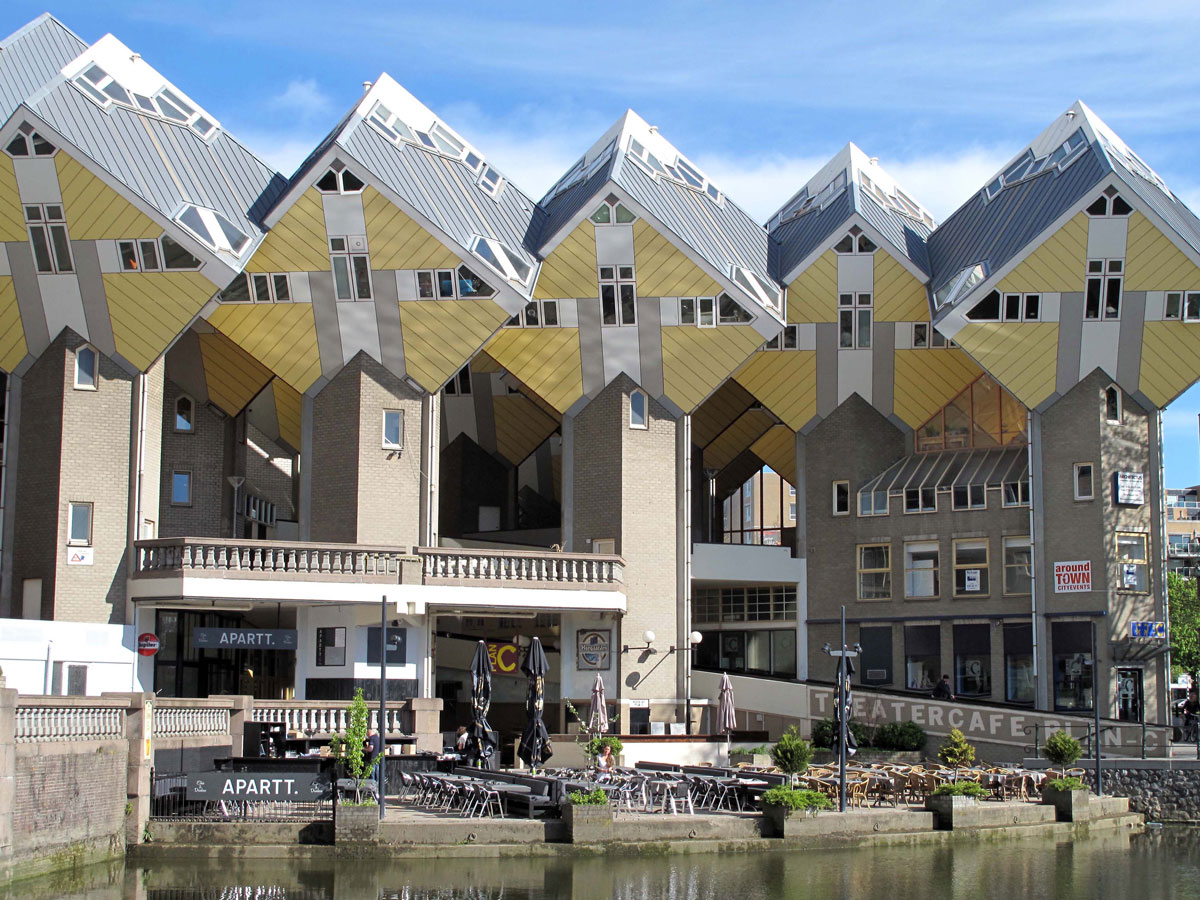
Today’s picture should be easier than the previous one and shows some houses of an unusual design. The architect, Piet Blom, sees his creation as a village within a city where the houses are like trees in a forest.

The houses have been here for 40 years now and altogether there are 40 of these houses in total, which are located next to the Old Harbour area of this port city.

The nearby modern railway station has given the nickname to the buildings as the Blaak Forest.

Location – Cube Houses, Rotterdam, The Netherlands

Date photograph taken – April 2012

POSTED – SEPTEMBER 2024

Originally posted 2024-09-01 14:02:24.