Tag Archives: Scenery

Exploring the Rame Peninsula

Exploring the Rame Peninsula

The Rame Peninsula, for anybody who doesn’t know it, is the bit of Cornwall you can see from Plymouth Hoe. It’s a natural assumption therefore to think that this part of Cornwall is frequented by Janners (Plymothians) more than visitors from elsewhere, and you would be right: But you would be wrong for thinking that it’s somewhere to pass by on your journey down west, and in this post I’m going to explain why.

There are several ways of getting there, but for people with a car who like to explore I’m suggesting that we travel the long way round to begin with and drive across the Tamar Bridge, and then return to Plymouth via the Torpoint Ferry. I have my reasons for saying this, but you can travel the other way round if you prefer.

Continue reading

Originally posted 2020-07-14 14:11:31.

Lympstone

Lympstone

Mention Lympstone to anyone, and they automatically think of the Commando Training Centre for the Royal Marines – but this small, attractive village on the River Exe is worth a butchers if you fancy a change of scenery on the journey between Exeter and Exmouth.

If you’re travelling by car it’s just a short detour off of the A376, but you can also travel by train using the single-track Avocet Line, which will give you the option of stopping in The Swan or The Globe for a drink and a bite to eat without worrying about the breathalyser.

Continue reading

Originally posted 2019-02-01 08:18:16.

Iddesleigh and the War Horse Story

Iddesleigh and the War Horse Story

Iddesleigh is one of those delightful little cob and thatch villages that lies hidden amongst the rolling hills of the West Devon countryside.

It’s not somewhere that you just stumble across, and even in this modern age where everywhere is near somewhere, thanks to the ever-increasing ability of motorists to seek out the most obscure places, it still takes a bit of finding – but it’s worth the effort.

The home of less than 200 people, Iddesleigh has a church and a pub but not much else, and were it not for a nearby farm I don’t suppose too many people would bother to seek it out at all.

Between 1830 and 1836 Parsonage Farm was the home of the Reverend ‘Jack’ Russell, the curate of St James’ Church. He was the first breeder of the terriers to which he gave his name, but this isn’t the reason why people come to take a look around the farm. They come here to find out more about another animal – Joey the War Horse.

Continue reading

Originally posted 2018-11-10 09:15:16.

Plymouth Hoe

Plymouth Hoe

The Hoe is one of the first places people head for on their first visit to Plymouth – and for good reason. This large open public space has one of the most fantastic views of any city in the country.

The views stretch out across The Breakwater and Plymouth Sound into the English Channel, and from Devon’s South Hams coastline in the east to Cornwall’s Rame Head in the west.

‘Hoe’ is an old Anglo-Saxon word meaning ‘High Ground’, and although it isn’t that high above sea level it still affords commanding views, such as those that can be had from the colonnaded Belvedere near West Hoe.

Built on the site of a previous camera obscura, it was completed in 1891 at the end of a decade that saw the Hoe change from farmland to a city park.

Below it is a former bull ring that is now a memorial garden for various veterans’ associations from WW2 onwards.

Continue reading

Originally posted 2019-02-13 15:43:00.

Topsham

Topsham

Topsham is a village/small town on the eastern bank of the River Exe just 4 miles or so from Exeter’s city centre. Since 1966 it has officially been part of Exeter, but its distinctive character makes it feel very different from its larger neighbour.

It started out as a Roman settlement and developed as a port which grew in importance following the construction of the weir at Countess Wear. Even with the arrival of the canal in 1566 it still prospered as trade boomed with the Dutch who came for Devon wool. The Dutch influence can be seen all over Topsham with gable-fronted houses, some of which were built with the bricks that were used as ballast for their ships.

The port is no longer vital to Topsham’s prosperity as it has now become a desirable place to live for people who like to live near the city but not in it.

The River Exe and the surrounding marshes have an abundance of birdlife, and places like Bowling Green Marsh are protected habitats for the large flocks of waders, geese and migratory birds that also make Topsham their home.

Continue reading

Originally posted 2018-12-25 04:51:57.

Wistman’s Wood

Wistman's Wood

Nowhere conjures up the spooky mood of Dartmoor more than Wistman’s Wood.

Legends abound about how this small remote wood of dwarf, stunted oak trees hanging with beards of lichen and moss have attracted ‘Wisht Hounds’ – a “pack of huge black dogs with blood red eyes, huge yellow fangs and an insatiable hunger for human flesh and souls” according to Legendary Dartmoor.

On a more down to earth level Wistman’s Wood is one of the highest oakwoods in Britain and is pretty difficult to walk through due to the clitter (granite boulders) that is scattered amongst the trees.

Although the wood is in a remote location it can be easily reached from Two Bridges via a well designated footpath which shouldn’t take any longer than half an hour.

On a summer’s day it’s a pleasant walk alongside the West Dart River, but even at this time of the year you need to keep your eyes open for adders (Britain’s only poisonous snake).

Continue reading

Originally posted 2019-10-17 15:54:01.

Lydford

Lydford

Lydford is a small village of around 500 people situated right on the western edge of Dartmoor National Park between Tavistock and Okehampton.

It may be small, but it’s a place worth seeking out if you find yourself in this part of the world. It has an interesting history and some lovely scenery nearby, and I’ve never understood why so few people come here.

Along with Barnstaple, Exeter and Halwell in South Devon, Lydford was one of the four principle Devon burghs that Alfred the Great created to defend his kingdom of Wessex against the Danes, and it was from this period that the town became an important coin minting centre.

Silver was the metal of preference for coins at the time and Lydford was fortunate in having a rich supply of the stuff nearby. The mines provided the silver and the ‘Moneyers’ made the coins. These silver coins were known as ‘Lydford Pennies’ and an estimated one and a half million of them were produced: A few of these have found their way into the Castle Inn, but if you happen to come from Scandinavia I wouldn’t mention the fact because most of these coins were whisked away by the Vikings during a late 10th century raid, and you have a far better chance of seeing some in Stockholm than you do in England.

Continue reading

Originally posted 2019-03-25 09:52:57.

Buckland-in-the-Moor

Buckland-in-the-Moor

This picturesque village with a population of less than a hundred, lies in a secluded valley under Buckland Beacon, just a few miles north-west of Ashburton.

A drive through the narrow lanes will bring you to a cluster of thatched cottages and an unusual church.

St Peter’s is a simple 12th c church probably built over an earlier Saxon one and still retains some Norman features, but what makes it unusual is the clock which was only installed in 1930.

Commissioned by the owner of the Buckland Estate, William Whitley, the clock was dedicated to his mother, Elizabeth, who had died the previous year.’, but instead of using numerals he replaced them with letters that spell “My Dear Mother”. If you take a closer look at my picture of the clock you’ll see that it was almost A past E when I was here.

Continue reading

Originally posted 2018-05-07 17:38:02.

From Torquay Harbour to Meadfoot Beach

From Torquay Harbour to Meadfoot Beach

Even though Torbay is generally thought of as an urban area next to the sea, it doesn’t mean to say that the South-West Coast Path isn’t worth following around the bay. I would agree that it wouldn’t make sense to follow it all the way around, but there are some lovely stretches of coastline between Torquay and Brixham, and I reckon this one from Torquay Harbour to Meadfoot Beach is one of them.

The footpath between Peaked Tor Cove and Daddyhole Plain is about a mile long and known locally as Rock End Walk, but to make it easier to find I’ve decided to start the walk from the Victoria Parade side of the harbour where it meets Beacon Hill.

As you start to walk up the hill, you’ll see a brown tourist sign that leads down to Beacon Cove. Unlike the red sandstone beaches that this part of Devon is well known for, this is a small rocky limestone bay, which until 1903, was a ladies-only beach and a favourite spot for the young Agatha Christie. Next to it is the now empty ‘hairnet’, which before the Covid-19 pandemic arrived, was the home of seabirds and other marine life that made up Paignton Zoo’s Living Coasts. There’s no access onto the coast path from Beacon Cove, so you’ll need to walk back up onto the road if you venture down here.

Continue reading

Originally posted 2019-02-20 22:00:41.

Picture of the Day – 7

Picture of the Day - 7

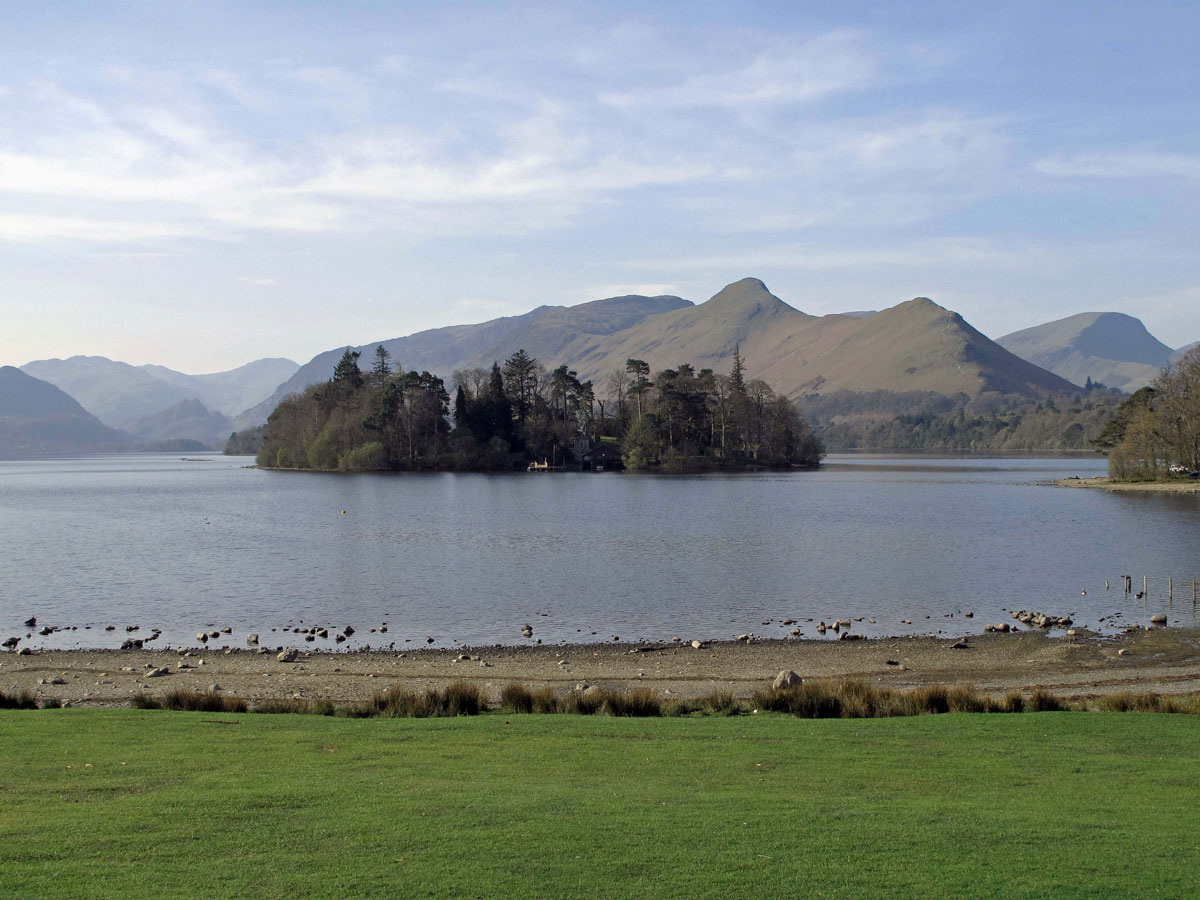
The area in which this lake is located was brought to people’s attention by several poets who praised its scenic beauty. The photograph was taken from the lake’s northern shore close to a market town with a well-known Moot Hall, which is an old Anglo-Saxon name for a meeting hall.

This particular lake is the third largest of several in the area and has a similar name to a reservoir in Derbyshire. What is the name of this lake situated in a popular English outdoor recreational area?

Location – Derwentwater, The Lake District, Cumbria, England

Date photograph taken – March 2012

POSTED – SEPTEMBER 2024

Originally posted 2024-09-05 07:38:37.